×

South Korea🇰🇷 | attractionsJeonju Hanok Village Cultural Areaclay-tiled roofs, local food stalls, paper workshops | things to do and best time to go

Explore Haedong Yonggungsa TempleExplore Gwangjang Market Food Alley

Backpacking in Jeonju Hanok Village Cultural Area
🏆 Top pickattraction ranked #4
By Johan Kruseman 🇳🇱 | Updated May 15, 2026

Here’s what nobody tells you until you’re already there: Jeonju Hanok Village is one of the rare places in South Korea where you can actually sleep inside a traditional hanok for less than the price of a Seoul hostel bunk—if you book early and dodge the weekend stampede. Smack in the heart of Jeonju city, southwest of Seoul, this district is a living patchwork of over 700 preserved wooden homes, tiled roofs, and alleyways that smell like roasted barley and sweet rice wine. The Instagram crowd floods in for hanbok selfies and street food, and yes, it gets packed—especially on Saturdays, when the selfie sticks outnumber the sparrows. But here’s the kicker: if you linger after sunset, the crowds thin, the lanterns flicker on, and the place feels like a time warp you can actually touch. It’s not cheap by backpacker standards, but it’s a richer, slower, more tactile slice of Korea than you’ll find in the neon chaos of Seoul or the tourist conveyor belt of Gyeongju.

Discover everything you want to know in the 📖 South Korea Travel Guide.
Loading the map 🌍
CLICK TO FILTER
cities
towns
villages
landmarks
national parks
hikes
beaches
attractions
festivals
regions
SHOW COUNTRY’S BESTSHOW ALL

✨ Why go?
Ranked #4 attraction in South Korea
Reasons people choose to visit here

Jeonju Hanok Village Cultural Area is not just another pretty postcard in South Korea—it’s a full-on cultural checkpoint that every backpacker swears by. Yes, it gets crowded, especially on weekends, and the costs for some experiences can feel a bit inflated compared to other parts of Korea. But here’s the kicker: this place is where history, tradition, and everyday life collide in a way that’s raw and real. The village’s 800+ traditional hanok houses aren’t just for show; they’re living, breathing spaces where you can witness centuries-old architecture and craftsmanship up close. It’s a rare chance to slow down and soak in Korea’s Joseon Dynasty heritage without the gloss of Seoul’s hyper-modern vibe.

Food lovers, brace yourself—Jeonju is the birthplace of bibimbap, and tasting it here … read more 👉
Jeonju Hanok Village Cultural Area is not just another pretty postcard in South Korea—it’s a full-on cultural checkpoint that every backpacker swears by. Yes, it gets crowded, especially on weekends, and the costs for some experiences can feel a bit inflated compared to other parts of Korea. But here’s the kicker: this place is where history, tradition, and everyday life collide in a way that’s raw and real. The village’s 800+ traditional hanok houses aren’t just for show; they’re living, breathing spaces where you can witness centuries-old architecture and craftsmanship up close. It’s a rare chance to slow down and soak in Korea’s Joseon Dynasty heritage without the gloss of Seoul’s hyper-modern vibe.

Food lovers, brace yourself—Jeonju is the birthplace of bibimbap, and tasting it here is a cultural rite, not just a meal. For backpackers trekking across Korea, this village is a major milestone: it’s a cultural reset, a sensory deep dive, and a reminder that Korea’s soul isn’t just in its skyscrapers but in its streets and kitchens. The effort to get here pays off in layers of history and flavor you won’t find anywhere else.
Want to include Jeonju Hanok Village Cultural Area in your South Korea route?
Create a personalized South Korea itinerary that includes Jeonju Hanok Village Cultural Area and the places that fit your trip — based on your travel style, budget, and available time. Get your route in seconds.

Generate my trip

💡 HighlightsDon't-miss highlights and experiences

Hanbok Rental and Street Stroll
Let’s get this out of the way: yes, you’ll see crowds of selfie-takers in rented hanbok (traditional Korean clothing), and yes, it’s a bit of a spectacle. But here’s the twist—when you slip into those vibrant silks and wander the stone lanes, you’re not just playing dress-up. You’re stepping into a living, breathing set piece. The hanok (traditional houses) aren’t museum props; they’re real homes, tea shops, and guesthouses. The contrast between the centuries-old architecture and the buzz of modern life is electric. If you want to feel like you’ve time-traveled without the filter, this is the way.


Jeonju Bibimbap: The Real Deal
Forget the Instagrammable food shots—Jeonju’s bibimbap is a culinary event, not a photo op. This is the city that claims to have invented … read more 👉
Hanbok Rental and Street Stroll
Let’s get this out of the way: yes, you’ll see crowds of selfie-takers in rented hanbok (traditional Korean clothing), and yes, it’s a bit of a spectacle. But here’s the twist—when you slip into those vibrant silks and wander the stone lanes, you’re not just playing dress-up. You’re stepping into a living, breathing set piece. The hanok (traditional houses) aren’t museum props; they’re real homes, tea shops, and guesthouses. The contrast between the centuries-old architecture and the buzz of modern life is electric. If you want to feel like you’ve time-traveled without the filter, this is the way.


Jeonju Bibimbap: The Real Deal
Forget the Instagrammable food shots—Jeonju’s bibimbap is a culinary event, not a photo op. This is the city that claims to have invented it, and the difference is in the details: chewy rice, mountain vegetables, a fried egg with a yolk that actually tastes like something, and gochujang (chili paste) that’s got a kick, not just color. Skip the tourist-trap restaurants lining the main drag. Instead, duck into a side alley and look for a place packed with locals and zero English signage. That’s where the magic happens.


Gyeonggijeon Shrine
Most people breeze past this, but Gyeonggijeon is the soul of the village. It’s not just another pretty gate. Inside, you’ll find the portrait of King Tae-jo, founder of the Joseon Dynasty, and a hush that feels almost out of place after the chaos outside. The bamboo groves and stone paths are a masterclass in understated beauty. If you want a break from the crowds and a hit of real history, this is your sanctuary.


Makgeolli Alley
Jeonju’s nightlife isn’t about neon or clubs—it’s about makgeolli, Korea’s milky rice wine, served in battered metal kettles alongside a parade of salty, spicy bar snacks. The alley’s joints are rowdy, unpretentious, and packed with locals who will absolutely rope you into a drinking game if you linger too long. It’s loud, it’s messy, and it’s the most honest fun you’ll have in the village. Don’t come for a quiet night; come for the stories you’ll tell after.


Traditional Craft Workshops
Skip the souvenir shops and sign up for a hands-on session: paper-making, fan-painting, or even trying your hand at calligraphy. These aren’t tourist traps—they’re run by artisans who actually care if you get it right. You’ll leave with ink on your fingers and a souvenir that means something. The best part? Watching your fellow travelers realize that folding hanji paper is a lot harder than it looks.
Spotted a mistake or missing something? Contact us.

Things to do around Jeonju Hanok Village Cultural Area

Ratings based on Tripadvisor reviews. When you book through this link, you support our work at no extra cost to you.

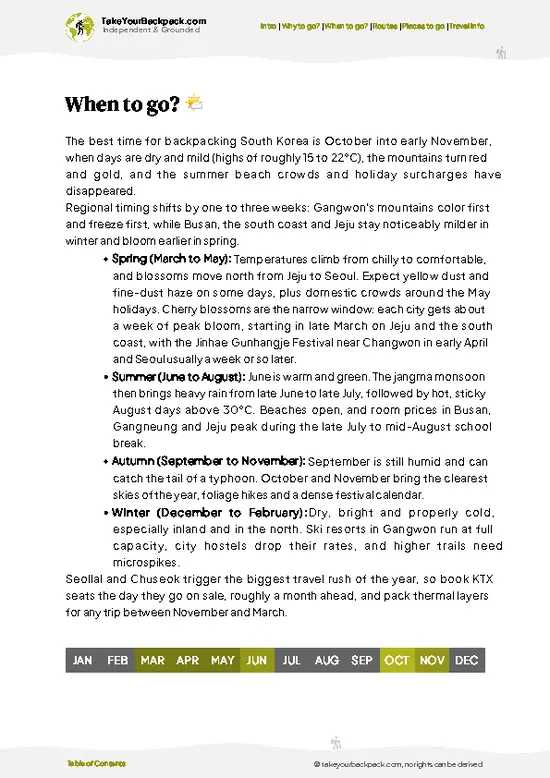
🌤️ When to go?Choosing the right time of year


  • Weather: Spring (April to June) and autumn (September to November) offer the most comfortable weather. Expect mild temperatures, avoiding the sweltering 30-35°C (86-95°F) heat of July and August, and the biting cold of winter, which can dip below freezing.

  • Temperature: Spring highs hover around 15-25°C (59-77°F), perfect for wandering without sweating buckets. Autumn cools down similarly, but winter can plunge to -5°C (23°F) or lower, making outdoor exploration less pleasant.

  • Daylight Hours: Longer days in spring and autumn mean more time to soak in the village’s charm. Around 12-14 hours of daylight lets you catch both morning markets and evening lantern-lit streets without rushing.

  • Crowds: Peak tourist season hits in May and October, especially weekends, when the village fills up
read more 👉

  • Weather: Spring (April to June) and autumn (September to November) offer the most comfortable weather. Expect mild temperatures, avoiding the sweltering 30-35°C (86-95°F) heat of July and August, and the biting cold of winter, which can dip below freezing.

  • Temperature: Spring highs hover around 15-25°C (59-77°F), perfect for wandering without sweating buckets. Autumn cools down similarly, but winter can plunge to -5°C (23°F) or lower, making outdoor exploration less pleasant.

  • Daylight Hours: Longer days in spring and autumn mean more time to soak in the village’s charm. Around 12-14 hours of daylight lets you catch both morning markets and evening lantern-lit streets without rushing.

  • Crowds: Peak tourist season hits in May and October, especially weekends, when the village fills up with day-trippers from Seoul. Visit midweek or shoulder months like March or November to dodge the crush.

  • Seasonal Activities: Spring brings cherry blossoms and vibrant festivals, while autumn showcases traditional harvest celebrations and colorful foliage. Winter’s quiet can be magical but expect many shops and eateries to close or reduce hours.

  • Price Fluctuations: Accommodation and local tours spike during festivals and peak months. Booking in shoulder seasons can save you a decent chunk without sacrificing the experience.


Pro-tip: Aim for late April or early October on a weekday—sweet spot for weather, light, and fewer crowds, letting you savor Jeonju’s soul without the selfie-stick battalion.


source: climatestotravel.comJANJanuary: fair for travelingFEBFebruary: fair for travelingMARMarch: highly recommended for travelingAPRApril: excellent for travelingMAYMay: highly recommended for travelingJUNJune: highly recommended for travelingJULJuly: fair for travelingAUGAugust: fair for travelingSEPSeptember: highly recommended for travelingOCTOctober: excellent for travelingNOVNovember: highly recommended for travelingDECDecember: fair for traveling
when-to-go

✈️ The backpacker research shortcutSouth Korea Travel Guide

An offline-friendly backpacking guide with optimized travel routes, ranked highlights, transport advice, and the best areas to stay.
example page 0 from our offline Travel Guide for South Korea
example page 1 from our offline Travel Guide for South Korea
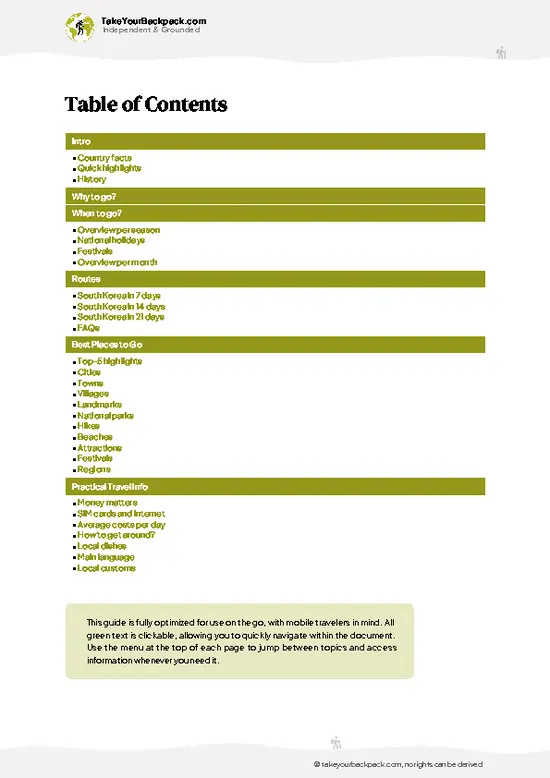
example page 2 from our offline Travel Guide for South Korea
example page 3 from our offline Travel Guide for South Korea
example page 4 from our offline Travel Guide for South Korea
example page 5 from our offline Travel Guide for South Korea
example page 6 from our offline Travel Guide for South Korea
example page 7 from our offline Travel Guide for South Korea
The digital guide (407 pages) contains:
115 highlights, ranked by travel appeal
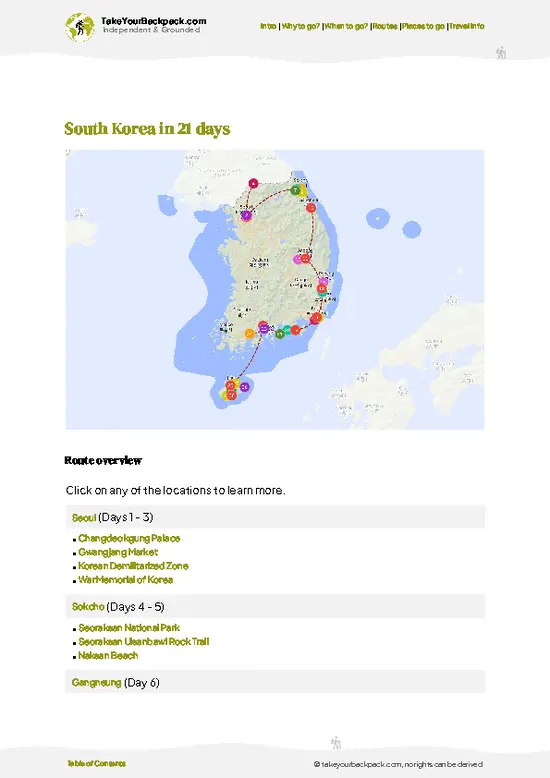
Optimized 7, 14 & 21-day travel routes
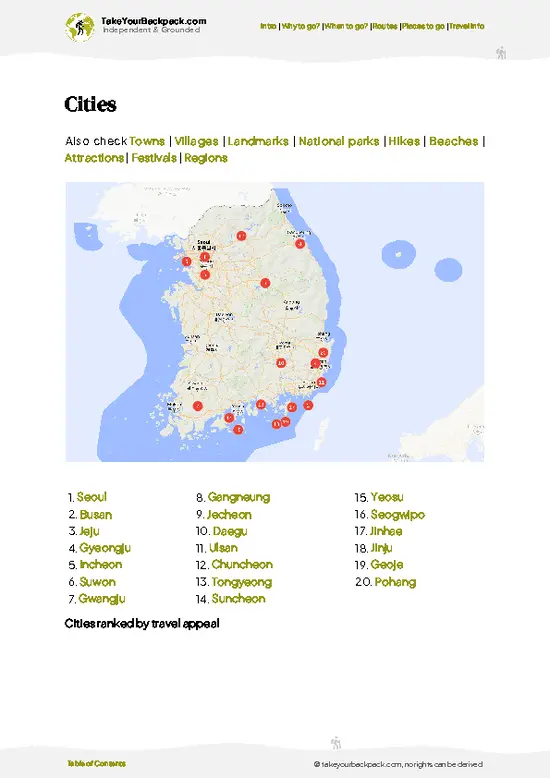
Cities, national parks, landmarks, beaches
How to get around
Offline-friendly for travel without Wi-Fi
👉 Click to see all 30+ guide features

📅 Plan smarter in minutes, not weeks
Month by month travel advice
Festivals & national holidays
Budget expectations

🗺️ Go to the right places, skip the overrated ones
Honest pros & cons of destinations
Top hikes, parks & viewpoints
Lesser-known places most travelers miss
Clear “worth it vs skip it” guidance

🛏️ Travel smoothly without rookie mistakes
Best areas to stay
Transport systems explained simply
Common scams & safety advice
SIM cards, money & practical tips

🌍 Understand the country, not just visit it
Culture & traditions
52 Essential phrases & customs
Festivals worth planning around
Traveler-friendly historical context
Insights that make places more meaningful

📱 Built for real travel conditions
Fully downloadable PDF
Works completely offline
Optimized for phone use
Useful in remote areas & buses
Everything in one place
Save weeks of stressful planning
Get instant access to your full guide. 30‑day money-back guarantee.


By proceeding you agree to our terms.
Sent to your inbox immediately after payment • 100% Secure Checkout
Best Backpacking Travel Advisor 2025 tourism awardBest Backpacking
Travel Advisor
2025
What others say about Take Your Backpack Guides:
⭐⭐⭐⭐⭐
Fantastic, amazing amount of information!
⭐⭐⭐⭐⭐
My goodness this is amazing, it's what I've been looking for hats off too you!
⭐⭐⭐⭐⭐
I think this is absolutely BRILLIANT
⭐⭐⭐⭐
Very complete and informative. It's still missing places, but I gotta to commend you
⭐⭐⭐⭐⭐
This is truly amazing, thank you, can't wait to explore it with my kids!
⭐⭐⭐⭐⭐
Awesome resource, thank you!
⭐⭐⭐⭐⭐
This is amazing! Can't wait to explore the ones I haven't seen
⭐⭐⭐⭐
I love this! Well done, great idea.
⭐⭐⭐⭐⭐
Thanks for taking the time to make this gem!
⭐⭐⭐⭐⭐
This might be the best website I've ever seen.
⭐⭐⭐⭐⭐
Congratulations, and thank you so much for your work; it's incredibly valuable.
⭐⭐⭐⭐
In all seriousness I think you did a great job pointing out the important spots
⭐⭐⭐⭐⭐
10/10 very good
⭐⭐⭐⭐⭐
As someone who's only just starting to visit regularly this is awesome, thank you.
⭐⭐⭐⭐
Thank you very much! I'm going to visit my dad, it's going to be very useful!
⭐⭐⭐⭐⭐
This is really cool! We'll be travelling for the first time and this definitely come in handy.
⭐⭐⭐⭐⭐
You are now our minister of culture, congratulations 👨‍💼
⭐⭐⭐⭐⭐
Just wanted to tell you that this is a pearl! Going to follow your recommendations.
⭐⭐⭐⭐⭐
This is so cool. I'll definitely be using the resource for my travels soon.
⭐⭐⭐⭐⭐
This is very impressive! Good work.
⭐⭐⭐⭐⭐
This is an amazing and informative site. Very well done!

🛏️ Where to stay?Where staying makes the most sense

Jeonju Hanok Village is often sold as this quaint, peaceful retreat where you can stroll ancient streets without a care. The truth? It’s a magnet for day-trippers and weekend crowds, especially on weekends and holidays. If you’re chasing Instagram-perfect shots, expect to elbow through selfie sticks and tour groups. The village itself isn’t sprawling, so staying right inside it means you’re in the thick of the buzz—great if you thrive on energy, less so if you want quiet.

For backpackers, the sweet spot is just outside the village perimeter, where you get a breather from the crowds but remain … read more 👉
Jeonju Hanok Village is often sold as this quaint, peaceful retreat where you can stroll ancient streets without a care. The truth? It’s a magnet for day-trippers and weekend crowds, especially on weekends and holidays. If you’re chasing Instagram-perfect shots, expect to elbow through selfie sticks and tour groups. The village itself isn’t sprawling, so staying right inside it means you’re in the thick of the buzz—great if you thrive on energy, less so if you want quiet.

For backpackers, the sweet spot is just outside the village perimeter, where you get a breather from the crowds but remain within easy walking distance. The neighborhoods to the south and east of the village are your best bets. These areas offer a safer, more relaxed vibe with plenty of guesthouses and budget stays that attract solo travelers and small groups. You’ll find a social atmosphere here—think communal kitchens, shared lounges, and the kind of easy conversations that turn strangers into instant travel buddies.

Plus, these spots are well connected by local buses and bike rentals, so you can explore beyond the village without hassle. You avoid the inflated prices inside the village while still soaking up the authentic rhythms of Jeonju’s culture. It’s the kind of balance that turns a tourist trap into a genuine experience.

👛 Costs (as of 7 March 2026)What things cost and how to budget

Jeonju Hanok Village offers free entry, but certain attractions within the village charge admission fees. For example, the Gyeonggijeon Shrine charges an entrance fee of 3,000 KRW (approximately €2.50) per adult. Additional costs may include hanbok rentals for traditional Korean attire, which range from 15,000 KRW (€12.50) for basic styles to 40,000 KRW (€33.50) for premium options. Dining expenses vary, with street food items priced between 3,000 KRW (€2.50) and 8,000 KRW (€6.70), and meals at traditional restaurants ranging from 15,000 KRW (€12.50) to 30,000 KRW (€25). Overall, visitors can expect to spend between €20 and €50 per day, depending on their activities and dining choices.
⚠️ Prices can change and everyone travels differently, so take this as a rough guide. Hope it helps you plan your adventure!

Other South Korean attractions near Jeonju Hanok Village Cultural Area

Explore more nearby:

  • Korean Folk Village—recreated rural homes, folk performances, craft demonstrations| 160 km away
  • Everland Resort—theme park rides, safari zone, seasonal festivals| 164 km away
  • Seoul Arts Center—concert halls, art museums, outdoor sculptures| 185 km away

💡 Not sure where to go next?
Create a personalized itinerary for South Korea including Jeonju Hanok Village Cultural Area and the places that fit your trip.

Generate my itinerary

👉 Discover all attractions

Or checkout all South Korea has to offer (think cities, towns, villages, national parks, hikes, beaches, festivals)
Country photo of South Korea

We 💚 feedbackSumming up the experience

Jeonju Hanok Village isn’t some quiet, untouched relic—it’s a bustling hotspot, especially on weekends. Expect crowds and prices that reflect its popularity. But here’s the kicker: wander beyond the main streets, and you’ll find narrow alleys where locals sip tea, and artisans quietly craft. That’s where the real charm lives—unpolished, genuine, and far from the tourist blitz. If you want the postcard, go for the photo ops; if you want the soul, slow down and listen to the village’s quieter stories.

✍️ Help improve this page!
The information on this page is based on in-depth research, insights shared by experienced travelers, and feedback from the local travel community in South Korea. While every effort is made to keep the information accurate and current, conditions can change — so if you spot anything incorrect or outdated, please get in touch.


🙋‍♂️ Give feedback

👋 Meet the founderWho’s Behind Take Your Backpack?

Johan, backpacker and founder of TakeYourBackpackHi, I’m Johan (Netherlands 🇳🇱), the creator of TakeYourBackpack. Over the past decade, I’ve backpacked through 80+ countries across six continents, gaining extensive experience with independent travel, long-term trips, and overland routes.

This site is built on a combination of firsthand travel experience and carefully curated insights from other backpackers. Many guides are based on places I’ve personally visited, while others bring together tips, observations, and practical advice shared by trusted travelers I’ve met along the way.

The goal is to provide realistic, experience-driven guidance — not generic itineraries — so you can explore destinations with better context, clearer expectations, and more confidence.

Get full country guide •
Instant download • 115 highlights • Full Offline guide