×

South Korea🇰🇷 | attractionsHaedong Yonggungsa Templeseaside sanctuary, stone pagodas, coastal cliffs | things to do and best time to go

Explore Busan Gamcheon Culture VillageExplore Jeonju Hanok Village Cultural Area

Backpacking in Haedong Yonggungsa Temple
🌟 Highlightattraction ranked #8
By Johan Kruseman 🇳🇱 | Updated May 25, 2026

Here’s what nobody tells you: if you hit Haedong Yonggungsa Temple at sunrise, you’ll dodge the tour-bus stampede and get the place nearly to yourself—plus, the early light on the sea cliffs is pure magic, no filter needed. Perched on the northeastern edge of Busan, this temple isn’t your standard mountain retreat; it’s a rare Korean sanctuary built right on the rocky coast, so the soundtrack is waves, not chanting monks. Yes, it’s photogenic—almost aggressively so—but the crowds can turn the main path into a slow-moving conga line by mid-morning, and the snack stalls outside are priced for tourists, not monks. Still, if you want a temple experience that feels kinetic and alive, with salt air and a dash of spectacle, this is the one. It’s not the cheapest or the quietest, but it’s got a pulse.

Discover everything you want to know in the 📖 South Korea Travel Guide.
Loading the map 🌍
CLICK TO FILTER
cities
towns
villages
landmarks
national parks
hikes
beaches
attractions
festivals
regions
SHOW COUNTRY’S BESTSHOW ALL

✨ Why go?
Ranked #8 attraction in South Korea
What makes it a must-see attraction

Haedong Yonggungsa Temple is not your typical mountain shrine tucked away in quiet woods. It’s a coastal spectacle, perched dramatically on rocky cliffs where the sea crashes below—an image that floods Instagram feeds but also delivers in real life. Yes, it gets crowded, especially at sunrise, but that’s part of the deal. The temple’s unique oceanfront setting sets it apart from the usual forest temples scattered across Korea. Beyond the photo ops, it’s a place steeped in Buddhist history, founded in the 14th century with a spiritual vibe that’s palpable once you push past the selfie sticks. For backpackers, it’s a milestone stop on the Busan route, offering a refreshing break from urban chaos with a mix of cultural depth and natural drama. The climb up the steps rewards you with views and … read more 👉
Haedong Yonggungsa Temple is not your typical mountain shrine tucked away in quiet woods. It’s a coastal spectacle, perched dramatically on rocky cliffs where the sea crashes below—an image that floods Instagram feeds but also delivers in real life. Yes, it gets crowded, especially at sunrise, but that’s part of the deal. The temple’s unique oceanfront setting sets it apart from the usual forest temples scattered across Korea. Beyond the photo ops, it’s a place steeped in Buddhist history, founded in the 14th century with a spiritual vibe that’s palpable once you push past the selfie sticks. For backpackers, it’s a milestone stop on the Busan route, offering a refreshing break from urban chaos with a mix of cultural depth and natural drama. The climb up the steps rewards you with views and a sense of accomplishment that’s more than just a pretty backdrop—it’s a moment where history, faith, and raw nature collide.
Want to include Haedong Yonggungsa Temple in your South Korea route?
Create a personalized South Korea itinerary that includes Haedong Yonggungsa Temple and the places that fit your trip — based on your travel style, budget, and available time. Get your route in seconds.

Generate my trip

💡 HighlightsDon't-miss highlights and experiences

The Oceanfront Setting
Forget the usual mountain-temple script. Haedong Yonggungsa is slammed right up against the East Sea, waves smashing the rocks below. It’s not peaceful in the postcard sense—there’s wind, salt, and the constant soundtrack of surf. But that’s the point: you’re not here for a meditative retreat. You’re here because this is one of the only major temples in Korea where you can watch the sunrise over the ocean, and it feels like the world’s edge. No filter needed; the drama is real.


The 108 Steps (and What They Actually Mean)
Yes, you’ll see people pausing for selfies on the staircase. But the 108 steps aren’t just a photo op—they’re a Buddhist ritual, representing the 108 earthly temptations. Locals and pilgrims count each one, sometimes pausing to reflect, sometimes just … read more 👉
The Oceanfront Setting
Forget the usual mountain-temple script. Haedong Yonggungsa is slammed right up against the East Sea, waves smashing the rocks below. It’s not peaceful in the postcard sense—there’s wind, salt, and the constant soundtrack of surf. But that’s the point: you’re not here for a meditative retreat. You’re here because this is one of the only major temples in Korea where you can watch the sunrise over the ocean, and it feels like the world’s edge. No filter needed; the drama is real.


The 108 Steps (and What They Actually Mean)
Yes, you’ll see people pausing for selfies on the staircase. But the 108 steps aren’t just a photo op—they’re a Buddhist ritual, representing the 108 earthly temptations. Locals and pilgrims count each one, sometimes pausing to reflect, sometimes just catching their breath. You’ll earn your view, and the climb gives you a rare, layered perspective of the temple complex, the sea, and the crowds below. It’s a physical reminder that beauty here isn’t handed to you; you work for it.


The Haesu Gwaneum Daebul (Seawater Great Goddess Buddha)
This massive white statue of the Bodhisattva of Compassion stands guard over the coastline. It’s not ancient, but it’s imposing—especially when the fog rolls in and she seems to float above the rocks. People leave offerings for luck, especially before exams or big life changes. The vibe is less about solemn worship and more about hope, which feels honest in a place that’s always in motion.


The Lantern Tunnel
If you hit the temple during Buddha’s Birthday (usually May), the lantern tunnel is a sensory overload—hundreds of colorful lanterns overhead, each one carrying a wish or prayer. Even off-season, the tunnel’s structure is there, and you can imagine the energy when it’s lit up. It’s a reminder that this place isn’t just a backdrop for photos; it’s alive with rituals that matter to real people.


Street Food Gauntlet
You will not find “serenity” on the approach to Haedong Yonggungsa. Instead, you’ll run a gauntlet of ajummas hawking hotteok, grilled squid, and fish cakes. It’s chaotic, loud, and smells incredible. Skip the overpriced souvenirs and grab a snack—this is the real welcome mat, and it’s a crash course in Busan’s food culture. If you want a sanitized temple experience, look elsewhere. Here, the chaos is part of the charm.
Spotted a mistake or missing something? Contact us.

Things to do around Haedong Yonggungsa Temple

Ratings based on Tripadvisor reviews. When you book through this link, you support our work at no extra cost to you.

🌤️ When to go?Choosing the right time of year


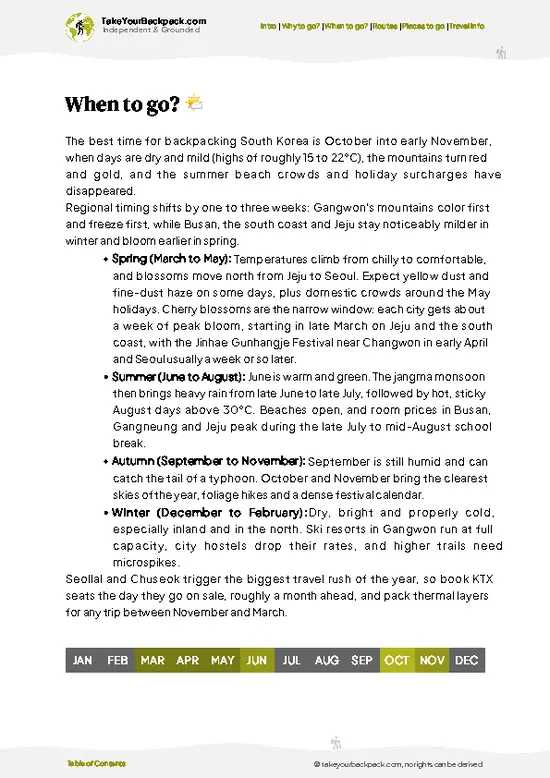
  • Weather: The best weather hits between April and June or September and October. Spring and fall bring mild, dry days perfect for wandering without sweating buckets or freezing your toes off.

  • Temperature: Expect 12-22°C (54-72°F) in spring and fall, which is comfortable for hiking and exploring. Summer (July-August) can scorch you with highs around 28-30°C (82-86°F), while winter dips below freezing, often near 0°C (32°F).

  • Daylight Hours: Longer days from May to August give you up to 14 hours of light, ideal for early starts or late finishes. Winter months shrink daylight to about 9-10 hours, limiting your exploration window.

  • Crowds: Summer and major Korean holidays (like Chuseok in September) pack the temple with tourists and locals alike. Early spring and late fall see fewer visitors,
read more 👉

  • Weather: The best weather hits between April and June or September and October. Spring and fall bring mild, dry days perfect for wandering without sweating buckets or freezing your toes off.

  • Temperature: Expect 12-22°C (54-72°F) in spring and fall, which is comfortable for hiking and exploring. Summer (July-August) can scorch you with highs around 28-30°C (82-86°F), while winter dips below freezing, often near 0°C (32°F).

  • Daylight Hours: Longer days from May to August give you up to 14 hours of light, ideal for early starts or late finishes. Winter months shrink daylight to about 9-10 hours, limiting your exploration window.

  • Crowds: Summer and major Korean holidays (like Chuseok in September) pack the temple with tourists and locals alike. Early spring and late fall see fewer visitors, letting you soak in the atmosphere without elbowing through selfie sticks.

  • Seasonal Activities: Cherry blossoms bloom in April, adding a soft pink glow, while autumn paints the temple grounds in fiery reds and oranges. Winter’s starkness offers a quiet, almost meditative vibe but can be chilly.

  • Price Fluctuations: Entry is generally free, but nearby transport and accommodation spike during peak seasons (summer and holidays). Booking early in shoulder seasons can save you cash and hassle.


Pro-tip: Aim for late April or early October mornings to dodge crowds, enjoy crisp air, and catch the temple’s raw beauty without the tourist circus.


source: climatestotravel.comJANJanuary: fair for travelingFEBFebruary: fair for travelingMARMarch: good for travelingAPRApril: excellent for travelingMAYMay: excellent for travelingJUNJune: highly recommended for travelingJULJuly: fair for travelingAUGAugust: fair for travelingSEPSeptember: good for travelingOCTOctober: excellent for travelingNOVNovember: highly recommended for travelingDECDecember: fair for traveling
when-to-go

✈️ The backpacker research shortcutSouth Korea Travel Guide

An offline-friendly backpacking guide with optimized travel routes, ranked highlights, transport advice, and the best areas to stay.
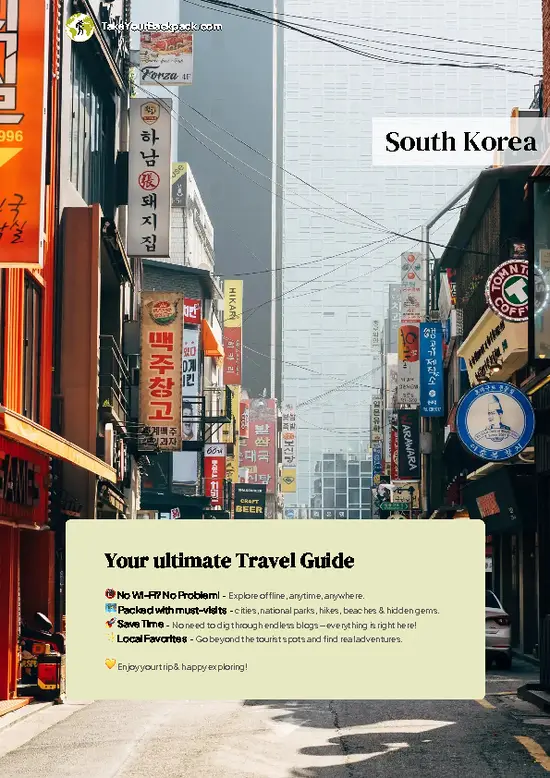
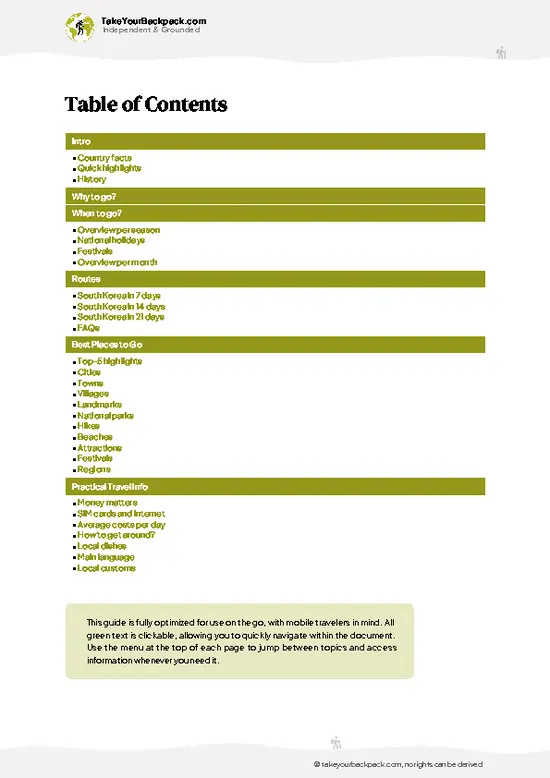
example page 0 from our offline Travel Guide for South Korea
example page 1 from our offline Travel Guide for South Korea
example page 2 from our offline Travel Guide for South Korea
example page 3 from our offline Travel Guide for South Korea
example page 4 from our offline Travel Guide for South Korea
example page 5 from our offline Travel Guide for South Korea
example page 6 from our offline Travel Guide for South Korea
example page 7 from our offline Travel Guide for South Korea
The digital guide (407 pages) contains:
115 highlights, ranked by travel appeal
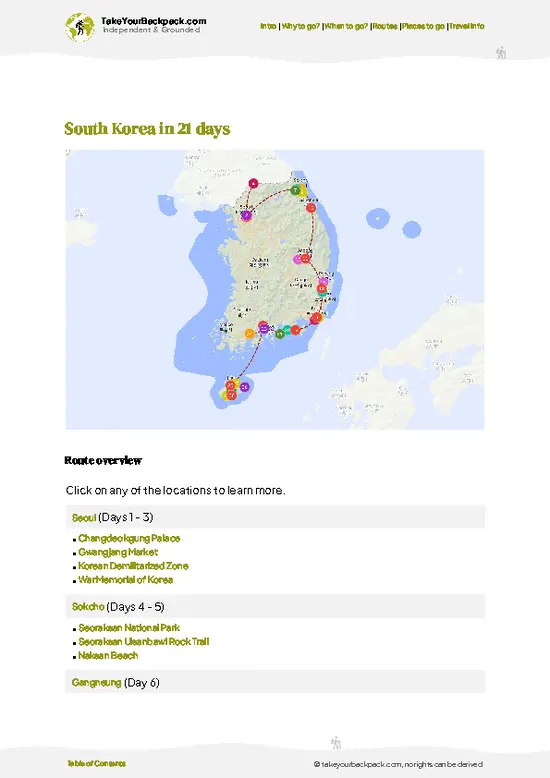
Optimized 7, 14 & 21-day travel routes
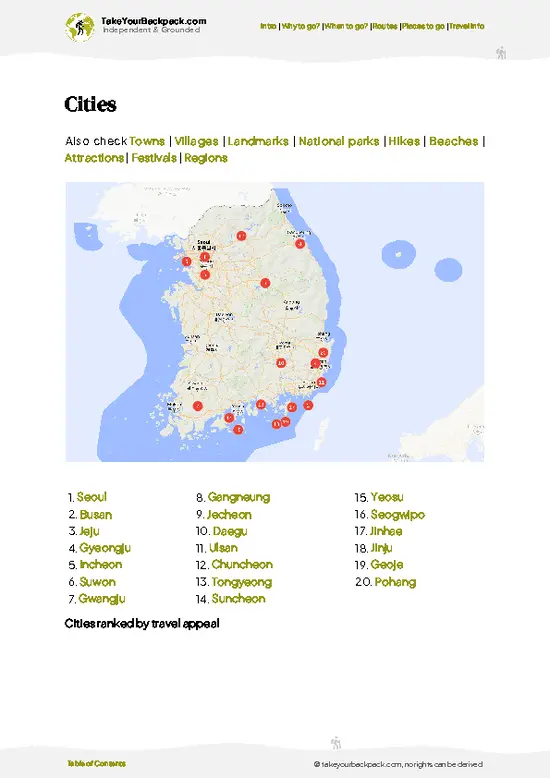
Cities, national parks, landmarks, beaches
How to get around
Offline-friendly for travel without Wi-Fi
👉 Click to see all 30+ guide features

📅 Plan smarter in minutes, not weeks
Month by month travel advice
Festivals & national holidays
Budget expectations

🗺️ Go to the right places, skip the overrated ones
Honest pros & cons of destinations
Top hikes, parks & viewpoints
Lesser-known places most travelers miss
Clear “worth it vs skip it” guidance

🛏️ Travel smoothly without rookie mistakes
Best areas to stay
Transport systems explained simply
Common scams & safety advice
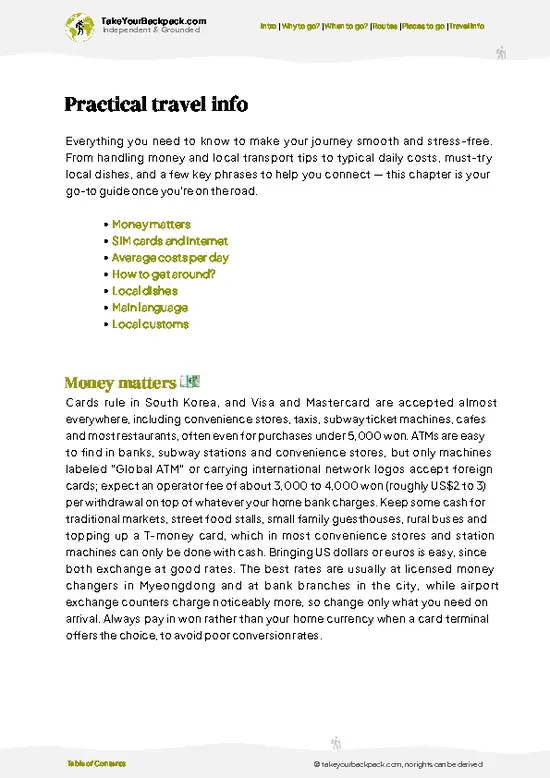
SIM cards, money & practical tips

🌍 Understand the country, not just visit it
Culture & traditions
52 Essential phrases & customs
Festivals worth planning around
Traveler-friendly historical context
Insights that make places more meaningful

📱 Built for real travel conditions
Fully downloadable PDF
Works completely offline
Optimized for phone use
Useful in remote areas & buses
Everything in one place
Save weeks of stressful planning
Get instant access to your full guide. 30‑day money-back guarantee.


By proceeding you agree to our terms.
Sent to your inbox immediately after payment • 100% Secure Checkout
Best Backpacking Travel Advisor 2025 tourism awardBest Backpacking
Travel Advisor
2025
What others say about Take Your Backpack Guides:
⭐⭐⭐⭐⭐
Fantastic, amazing amount of information!
⭐⭐⭐⭐⭐
My goodness this is amazing, it's what I've been looking for hats off too you!
⭐⭐⭐⭐⭐
I think this is absolutely BRILLIANT
⭐⭐⭐⭐
Very complete and informative. It's still missing places, but I gotta to commend you
⭐⭐⭐⭐⭐
This is truly amazing, thank you, can't wait to explore it with my kids!
⭐⭐⭐⭐⭐
Awesome resource, thank you!
⭐⭐⭐⭐⭐
This is amazing! Can't wait to explore the ones I haven't seen
⭐⭐⭐⭐
I love this! Well done, great idea.
⭐⭐⭐⭐⭐
Thanks for taking the time to make this gem!
⭐⭐⭐⭐⭐
This might be the best website I've ever seen.
⭐⭐⭐⭐⭐
Congratulations, and thank you so much for your work; it's incredibly valuable.
⭐⭐⭐⭐
In all seriousness I think you did a great job pointing out the important spots
⭐⭐⭐⭐⭐
10/10 very good
⭐⭐⭐⭐⭐
As someone who's only just starting to visit regularly this is awesome, thank you.
⭐⭐⭐⭐
Thank you very much! I'm going to visit my dad, it's going to be very useful!
⭐⭐⭐⭐⭐
This is really cool! We'll be travelling for the first time and this definitely come in handy.
⭐⭐⭐⭐⭐
You are now our minister of culture, congratulations 👨‍💼
⭐⭐⭐⭐⭐
Just wanted to tell you that this is a pearl! Going to follow your recommendations.
⭐⭐⭐⭐⭐
This is so cool. I'll definitely be using the resource for my travels soon.
⭐⭐⭐⭐⭐
This is very impressive! Good work.
⭐⭐⭐⭐⭐
This is an amazing and informative site. Very well done!

🛏️ Where to stay?Choosing the right base

Haedong Yonggungsa Temple is a knockout spot—right on the coast, with waves crashing below ancient stone steps. But here’s the real talk: it’s not a secret sanctuary. Weekends and holidays pack the place with selfie sticks and tour groups, so if you’re chasing solitude, you’ll want to time your visit early or late.

Now, where to crash? Skip the immediate temple vicinity—it’s quiet but dead after dark, and not much for social vibes. Instead, aim for the Haeundae Beach area, about a 20-minute ride away. This neighborhood is the backpacker’s playground: safe, buzzing with fellow travelers, and … read more 👉
Haedong Yonggungsa Temple is a knockout spot—right on the coast, with waves crashing below ancient stone steps. But here’s the real talk: it’s not a secret sanctuary. Weekends and holidays pack the place with selfie sticks and tour groups, so if you’re chasing solitude, you’ll want to time your visit early or late.

Now, where to crash? Skip the immediate temple vicinity—it’s quiet but dead after dark, and not much for social vibes. Instead, aim for the Haeundae Beach area, about a 20-minute ride away. This neighborhood is the backpacker’s playground: safe, buzzing with fellow travelers, and loaded with budget guesthouses and hostels that make it easy to swap stories over cheap beer. Plus, you get the bonus of nightlife, street food stalls, and a real sense of community that the temple’s tourist bubble can’t offer.

If you want to blend temple visits with genuine local energy and meet other solo adventurers, Haeundae is your base camp. It’s where the magic of South Korea’s coast isn’t just a postcard—it’s a lived-in, late-night conversation.

👛 Costs (as of 16 March 2026)What things cost and how to budget

As of the most recent estimates, Haedong Yonggungsa Temple in Busan, South Korea, does not charge an entrance fee. Visitors can explore the temple grounds free of charge. However, parking fees apply for those arriving by car: ₩2,000 for the first 30 minutes, with an additional ₩200 per 10 minutes thereafter, up to a daily maximum of ₩20,000. For those using public transportation, bus fares are approximately ₩1,200 per ride, and taxi fares from central Busan range from ₩10,000 to ₩15,000, depending on traffic conditions. Additionally, visitors may choose to make voluntary donations to support the temple's maintenance.
⚠️ Prices can change and everyone travels differently, so take this as a rough guide. Hope it helps you plan your adventure!

Other South Korean attractions near Haedong Yonggungsa Temple

Explore more nearby:


💡 Not sure where to go next?
Create a personalized itinerary for South Korea including Haedong Yonggungsa Temple and the places that fit your trip.

Generate my itinerary

👉 Discover all attractions

Or checkout all South Korea has to offer (think cities, towns, villages, national parks, hikes, beaches, festivals)
Country photo of South Korea

We 💚 feedbackSumming up the experience

Haedong Yonggungsa is no secret—expect crowds, especially on weekends and holidays. But here’s the kicker: the temple’s oceanfront setting isn’t just a backdrop for photos; it’s a rare blend of spiritual calm and raw sea energy you won’t find inland. Skip the peak hours, soak in the salty breeze, and watch monks in quiet ritual. That’s the real magic—no filters needed.

✍️ Help improve this page!
The information on this page is based on in-depth research, insights shared by experienced travelers, and feedback from the local travel community in South Korea. While every effort is made to keep the information accurate and current, conditions can change — so if you spot anything incorrect or outdated, please get in touch.


🙋‍♂️ Give feedback

👋 Meet the founderWho’s Behind Take Your Backpack?

Johan, backpacker and founder of TakeYourBackpackHi, I’m Johan (Netherlands 🇳🇱), the creator of TakeYourBackpack. Over the past decade, I’ve backpacked through 80+ countries across six continents, gaining extensive experience with independent travel, long-term trips, and overland routes.

This site is built on a combination of firsthand travel experience and carefully curated insights from other backpackers. Many guides are based on places I’ve personally visited, while others bring together tips, observations, and practical advice shared by trusted travelers I’ve met along the way.

The goal is to provide realistic, experience-driven guidance — not generic itineraries — so you can explore destinations with better context, clearer expectations, and more confidence.

Get full country guide •
Instant download • 115 highlights • Full Offline guide