×

South Korea🇰🇷 | townsJeonju Hanok Villagehanok houses, street food, artisan workshops | things to do and best time to go

Explore InjeExplore Sancheong

Backpacking in Jeonju Hanok Village
🏆 Top picktown ranked #1
By Johan Kruseman 🇳🇱 | Updated September 4, 2026

Steam from your tteokbokki bowl fogs your glasses as a breeze slides down the alley, carrying charcoal smoke, sweet rice batter, and the faint incense from a tiny shrine wedged between two hanok roofs. Lanterns click on one by one. A kid rides past on a scooter, rubber wheels squeaking over old stone.

Jeonju Hanok Village sits in Jeonju city, in Korea’s southwest, a few hours by bus or train from Seoul and Daejeon. For backpackers, it’s less “base camp” and more “slow detour”: a compact, walkable pocket of traditional houses, food stalls, and low-key teahouses where evenings wind down early. It’s easier and calmer than Gwangju, more atmospheric than most stops on the Seoul–Busan run, but also more tour-bus heavy on weekends and Korean-holiday crowds. You can stroll everywhere, maybe grab a short taxi to bus terminals or nearby viewpoints, and you’ll find a handful of hostels and social cafés, but not the party density of Hongdae or Busan. Prices sit mid-range for Korea: street food is friendly, hanok stays can spike. Safety is solid; the only real risk is spending too long snacking and missing your onward bus.

Discover everything you want to know in the 📖 South Korea Travel Guide.
Loading the map 🌍
CLICK TO FILTER
cities
towns
villages
landmarks
national parks
hikes
beaches
attractions
festivals
regions
SHOW COUNTRY’S BESTSHOW ALL

✨ Why go?
Ranked #1 town in South Korea
Why visitors keep coming back

In the heart of South Korea, Jeonju Hanok Village draws backpackers for its unique blend of culture and convenience. This town serves as a gateway to nearby hikes in the Jirisan National Park and is just a train ride away from the coastal beaches of Buan. The walkable streets are lined with traditional hanoks, inviting you to explore at your own pace.

Accommodations range from cozy guesthouses to small-scale hostels, fostering a friendly social atmosphere where solo travelers and small groups can easily connect. You’ll find communal spaces buzzing with conversation, perfect for sharing stories over a bowl of bibimbap or a cup of makgeolli.

Most backpackers tend to linger here for a few days, soaking in the local food experiences and the laid-back vibe. It’s not a party town, so if you’re … read more 👉
In the heart of South Korea, Jeonju Hanok Village draws backpackers for its unique blend of culture and convenience. This town serves as a gateway to nearby hikes in the Jirisan National Park and is just a train ride away from the coastal beaches of Buan. The walkable streets are lined with traditional hanoks, inviting you to explore at your own pace.

Accommodations range from cozy guesthouses to small-scale hostels, fostering a friendly social atmosphere where solo travelers and small groups can easily connect. You’ll find communal spaces buzzing with conversation, perfect for sharing stories over a bowl of bibimbap or a cup of makgeolli.

Most backpackers tend to linger here for a few days, soaking in the local food experiences and the laid-back vibe. It’s not a party town, so if you’re seeking nightlife, look elsewhere. Instead, Jeonju is ideal for slow travelers who appreciate the art of savoring each moment. Whether you’re hiking by day or enjoying the local cuisine by night, this town offers a meaningful prelude to the adventures that await in South Korea.
Want to include Jeonju Hanok Village in your South Korea route?
Create a personalized South Korea itinerary that includes Jeonju Hanok Village and the places that fit your trip — based on your travel style, budget, and available time. Get your route in seconds.

Generate my trip

💡 HighlightsEssential experiences to have while visiting Jeonju Hanok Village

  • Gyeonggijeon Shrine (경기전) — The heart of the hanok village: a quiet compound that houses the royal portrait of King Tae-jo, with low-roofed hanok buildings, shaded courtyard paths, and small museum displays about Joseon-era Jeonju.
  • Omokdae & Imokdae (오목대·임목대) — Two hilltop pavilions with one of the best views over the tiled roofs; historic spot where generals gathered and today it’s great for sunset, people-watching, and imagining early Joseon politics.
  • Jeondong Catholic Church (전동성당) — A striking Western-style brick church tucked against the hanoks; its mix of Romanesque architecture and Korean stonework is photogenic and speaks to Jeonju’s layered history.
  • Jeonju Hanji Museum (전주한지박물관) — Small but hands-on museum about traditional Korean paper (hanji); you can see demonstrations and
read more 👉
  • Gyeonggijeon Shrine (경기전) — The heart of the hanok village: a quiet compound that houses the royal portrait of King Tae-jo, with low-roofed hanok buildings, shaded courtyard paths, and small museum displays about Joseon-era Jeonju.
  • Omokdae & Imokdae (오목대·임목대) — Two hilltop pavilions with one of the best views over the tiled roofs; historic spot where generals gathered and today it’s great for sunset, people-watching, and imagining early Joseon politics.
  • Jeondong Catholic Church (전동성당) — A striking Western-style brick church tucked against the hanoks; its mix of Romanesque architecture and Korean stonework is photogenic and speaks to Jeonju’s layered history.
  • Jeonju Hanji Museum (전주한지박물관) — Small but hands-on museum about traditional Korean paper (hanji); you can see demonstrations and try basic paper-making — a tactile way to take local craft knowledge home.
  • Jeonju Traditional Wine Museum (전주전통술박물관) — Focused on makgeolli and traditional brewing: exhibits, stories about regional fermentation, and often small tastings or workshops if you time it right.
  • Hanok Living Experience Center / Guesthouses — Staying one night in a real hanok (with ondol floor heating and wooden beams) is the single best way to feel the village’s pace and domestic culture — breakfast included in many places.
  • Bibimbap and Food Alley (한옥마을 먹거리 골목) — Not just one restaurant: the alleys are full of bibimbap specialists, kongnamul gukbap stalls, and street snacks. Eating here is cultural research disguised as a meal.
  • Pungnammun Gate (풍남문) — The historic south gate that marks the entrance to the old city; great for context, quick photos, and understanding how the hanok cluster fits into older Jeonju layouts.
  • Hanbok rental and traditional-craft workshops — Walk in, pick a hanbok, and wander the tiled streets like a local royal — plus plenty of small shops offering papermaking, calligraphy, fan- or mask-painting sessions.
  • Small tea houses and artisan alleys — Tucked courtyards with low tables, local teas, and traditional sweets; perfect for slowing down, sipping a jujube or ginger tea, and watching daily life in the hanok lanes.
A few easy day trips from Jeonju: Maisan Provincial Park (the twin-peaked Maisan), the Mireuksaji temple site in nearby Iksan, and the bamboo groves of Damyang (Juknokwon).
Spotted a mistake or missing something? Contact us.

Things to do around Jeonju Hanok Village

Ratings based on Tripadvisor reviews. When you book through this link, you support our work at no extra cost to you.

🏘️ NeighborhoodsNeighborhood guide to Jeonju Hanok Village

Jeonju Hanok Village is a vibrant blend of history and modernity, where traditional Korean architecture meets contemporary culture. Each area offers a unique experience, so let’s break it down.

Hanok Village Core
This is the heart of Jeonju, where you’ll find the iconic hanoks. The vibe is lively, especially during the day with street vendors selling local snacks like bibimbap and tteokbokki. It’s walkable, making it easy to explore the narrow alleys. Costs are moderate; you can find guesthouses that fit a backpacker’s budget. Nightlife is low-key, perfect for unwinding after a day of exploration. Ideal for short stays, as you can soak in the essence of traditional Korea quickly.

Jeonju Arts Street
Just a short stroll from the core, this area pulses with creativity. Street art and galleries … read more 👉
Jeonju Hanok Village is a vibrant blend of history and modernity, where traditional Korean architecture meets contemporary culture. Each area offers a unique experience, so let’s break it down.

Hanok Village Core
This is the heart of Jeonju, where you’ll find the iconic hanoks. The vibe is lively, especially during the day with street vendors selling local snacks like bibimbap and tteokbokki. It’s walkable, making it easy to explore the narrow alleys. Costs are moderate; you can find guesthouses that fit a backpacker’s budget. Nightlife is low-key, perfect for unwinding after a day of exploration. Ideal for short stays, as you can soak in the essence of traditional Korea quickly.

Jeonju Arts Street
Just a short stroll from the core, this area pulses with creativity. Street art and galleries line the streets, giving it an artsy vibe. It’s slightly quieter than the core but still has a youthful energy. Costs here can vary; you’ll find both budget-friendly cafes and pricier restaurants. Walkability is excellent, and it’s a great spot for longer stays if you want to immerse yourself in local culture. The nightlife is more vibrant here, with live music and art events.

Deokjin Park Area
A bit further out, this area offers a serene escape from the hustle. The park is beautiful, especially during cherry blossom season. It’s less walkable to the main attractions, but public transport is accessible. Costs are lower here, making it a budget-friendly option. The atmosphere is peaceful, ideal for longer stays where you can recharge. Nightlife is minimal, focusing more on relaxation than revelry. Perfect for those who want to balance exploration with downtime.

⌛️ 1 day1-day itinerary for Jeonju Hanok Village

Jeonju Hanok Village is a living tapestry of traditional Korean culture, where the scent of grilled meats wafts through the air and the sound of laughter echoes off beautifully preserved hanoks. This town is a delightful blend of history and modernity, making it a perfect spot for a day of exploration.

Start your morning with a stroll through the narrow lanes of the village. The soft morning light filters through the wooden eaves, casting playful shadows on the cobblestone paths. Stop by a local café for a bowl of **bibimbap**, the town’s signature dish. The vibrant colors of the vegetables and the rich aroma of sesame oil will energize you for the day ahead.

After breakfast, head to the **Jeonju Hanok Village Museum**, tucked away in a quieter corner. This spot often gets overlooked but … read more 👉
Jeonju Hanok Village is a living tapestry of traditional Korean culture, where the scent of grilled meats wafts through the air and the sound of laughter echoes off beautifully preserved hanoks. This town is a delightful blend of history and modernity, making it a perfect spot for a day of exploration.

Start your morning with a stroll through the narrow lanes of the village. The soft morning light filters through the wooden eaves, casting playful shadows on the cobblestone paths. Stop by a local café for a bowl of **bibimbap**, the town’s signature dish. The vibrant colors of the vegetables and the rich aroma of sesame oil will energize you for the day ahead.

After breakfast, head to the **Jeonju Hanok Village Museum**, tucked away in a quieter corner. This spot often gets overlooked but offers a deep dive into the architectural styles and cultural practices of the area. You’ll find artifacts that tell stories of the past, and the peaceful atmosphere allows for reflection.

In the afternoon, wander over to **Omokdae**, a hill that provides a panoramic view of the village. The climb is worth it; the sight of the hanoks against the backdrop of the mountains is breathtaking. On your way back, explore the artisan shops selling handmade crafts. Pick up a piece of pottery or a traditional fan as a tangible memory of your visit.

As evening approaches, make your way to **Gyeonggijeon Shrine**. The golden hour casts a warm glow on the ancient structures, creating a serene ambiance. Here, you can witness a traditional performance if you’re lucky. For dinner, seek out a local **makgeolli** bar. The sweet, slightly tangy rice wine pairs perfectly with savory pancakes, and the lively atmosphere is a great way to wrap up your day.

Jeonju Hanok Village isn’t just a destination; it’s an experience that invites you to savor every moment. Each step reveals layers of culture and history, making your day feel rich and rewarding.
Turn your Jeonju Hanok Village visit into an South Korea adventure
Build a complete South Korea route with Jeonju Hanok Village, hidden gems, must-see destinations, and realistic travel times included.

Generate my trip

🌤️ When to go?When to go for the best experience


  • Weather: Spring (April to June) and autumn (September to November) bring mild, dry conditions perfect for wandering Jeonju Hanok Village’s narrow alleys without sweating through your layers or dodging rain. Summers hit 25-30°C (77-86°F) with sticky humidity, while winters dip below freezing, making outdoor strolls less inviting.

  • Temperature: Spring and autumn hover between 15-22°C (59-72°F), ideal for layering and lingering over street food without overheating or shivering. Winter chills can drop to -5°C (23°F), and summer’s heat can feel oppressive under the village’s traditional tiled roofs.

  • Daylight Hours: Longer days in late spring and early autumn give you more time to explore before dusk dims the lantern-lit streets. In winter, short days mean less wandering time, while summer’s
read more 👉

  • Weather: Spring (April to June) and autumn (September to November) bring mild, dry conditions perfect for wandering Jeonju Hanok Village’s narrow alleys without sweating through your layers or dodging rain. Summers hit 25-30°C (77-86°F) with sticky humidity, while winters dip below freezing, making outdoor strolls less inviting.

  • Temperature: Spring and autumn hover between 15-22°C (59-72°F), ideal for layering and lingering over street food without overheating or shivering. Winter chills can drop to -5°C (23°F), and summer’s heat can feel oppressive under the village’s traditional tiled roofs.

  • Daylight Hours: Longer days in late spring and early autumn give you more time to explore before dusk dims the lantern-lit streets. In winter, short days mean less wandering time, while summer’s long evenings can be a double-edged sword—great for night markets but exhausting if you’re trekking all day.

  • Crowds: Peak tourist influx hits during national holidays and weekends, especially in autumn when foliage draws visitors. Weekdays in spring offer a quieter vibe, letting you soak in the village’s atmosphere without elbowing through selfie sticks.

  • Seasonal Activities: Autumn hosts the Jeonju Bibimbap Festival and traditional craft fairs, adding cultural layers to your visit. Spring’s cherry blossoms and azaleas paint the village in soft pastels, while winter’s quieter months let you experience the village’s calm, snow-dusted charm.

  • Price Fluctuations: Accommodation and local tours spike during festivals and peak seasons (spring and autumn). Visiting just outside these windows can save you a chunk of cash without sacrificing the experience.


Pro-tip: Aim for late April or early October—cool air, manageable crowds, and the village’s colors at their best make every step feel like a reward, not a chore.


source: climatestotravel.comJANJanuary: fair for travelingFEBFebruary: fair for travelingMARMarch: good for travelingAPRApril: excellent for travelingMAYMay: excellent for travelingJUNJune: highly recommended for travelingJULJuly: fair for travelingAUGAugust: fair for travelingSEPSeptember: excellent for travelingOCTOctober: excellent for travelingNOVNovember: highly recommended for travelingDECDecember: fair for traveling
when-to-go

✈️ The backpacker research shortcutSouth Korea Travel Guide

An offline-friendly backpacking guide with optimized travel routes, ranked highlights, transport advice, and the best areas to stay.
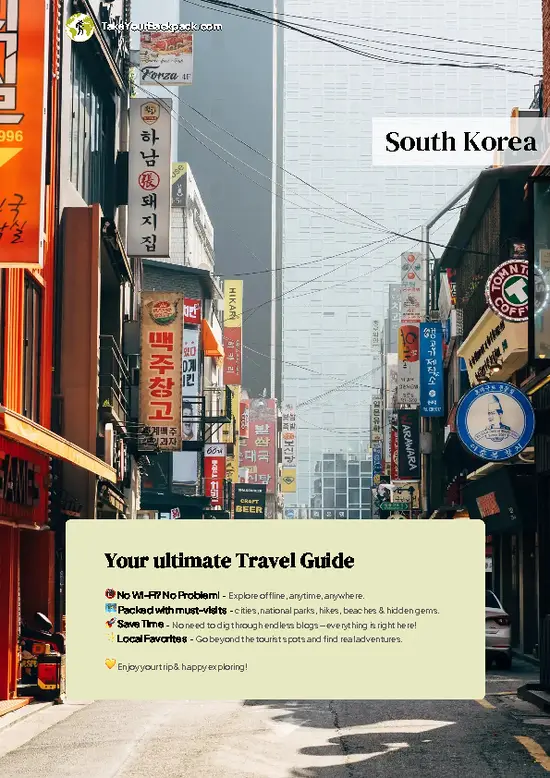
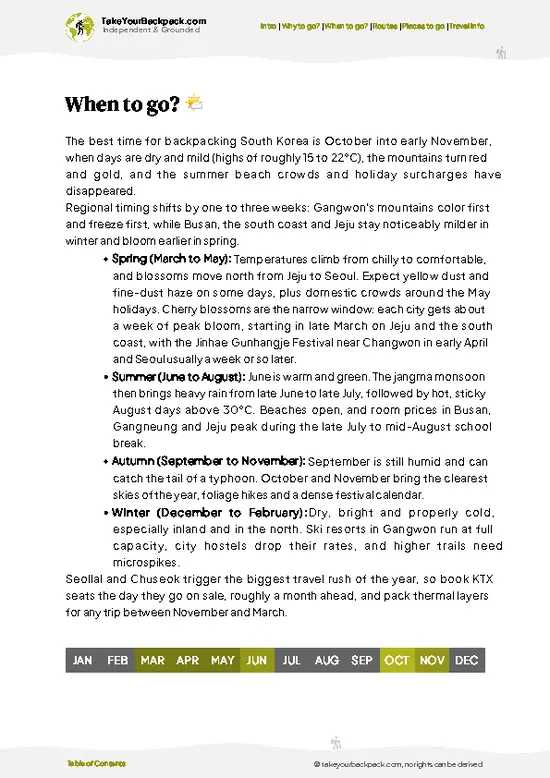
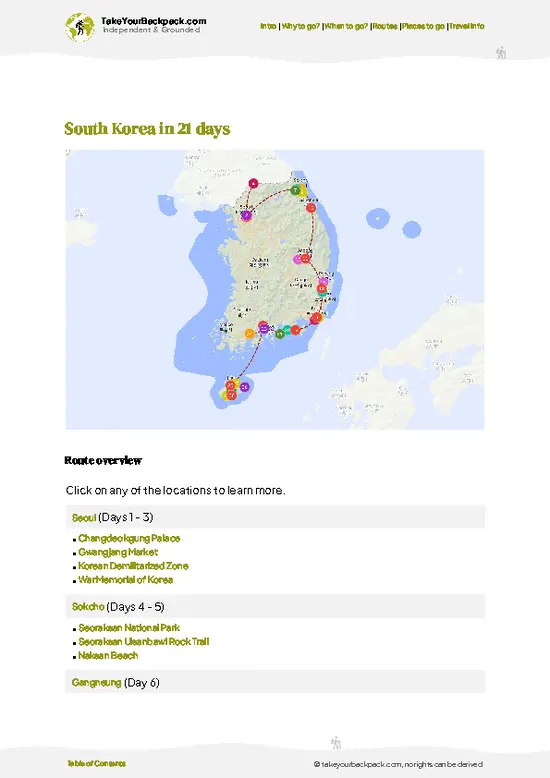
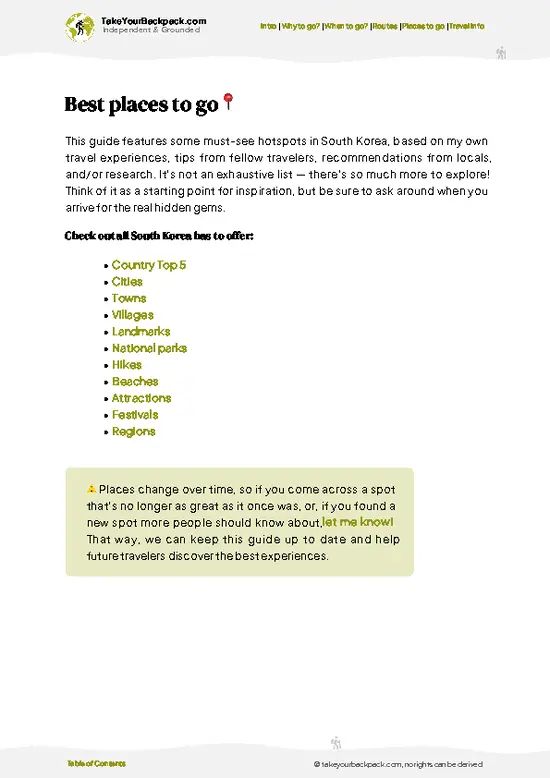
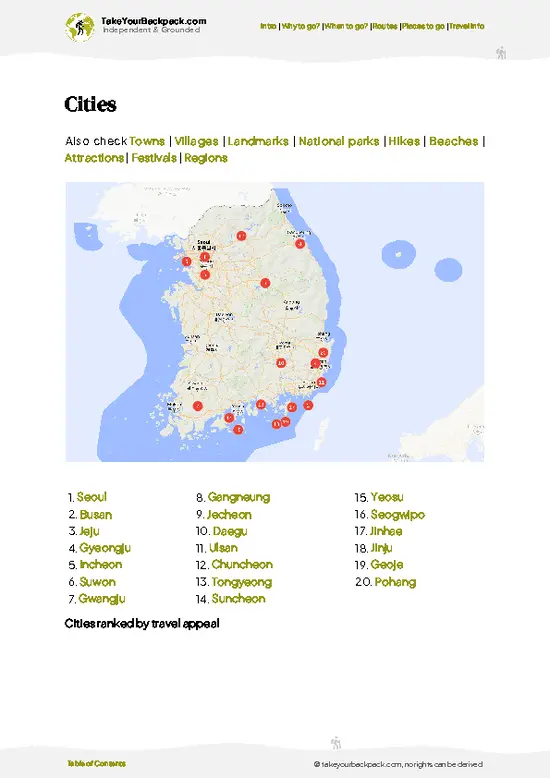
example page 0 from our offline Travel Guide for South Korea
example page 1 from our offline Travel Guide for South Korea
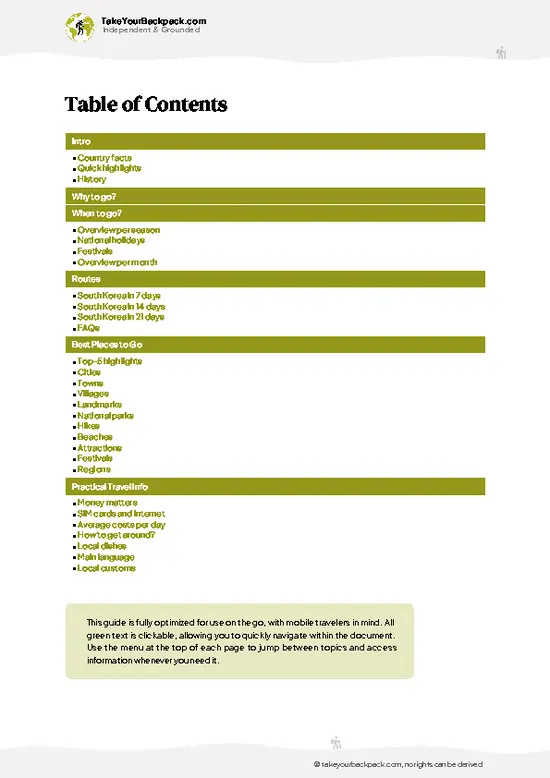
example page 2 from our offline Travel Guide for South Korea
example page 3 from our offline Travel Guide for South Korea
example page 4 from our offline Travel Guide for South Korea
example page 5 from our offline Travel Guide for South Korea
example page 6 from our offline Travel Guide for South Korea
example page 7 from our offline Travel Guide for South Korea
The digital guide (439 pages) contains:
124 highlights, ranked by travel appeal
Optimized 7, 14 & 21-day travel routes
Cities, national parks, landmarks, beaches
How to get around
Offline-friendly for travel without Wi-Fi
👉 Click to see all 30+ guide features

📅 Plan smarter in minutes, not weeks
Month by month travel advice
Festivals & national holidays
Budget expectations

🗺️ Go to the right places, skip the overrated ones
Honest pros & cons of destinations
Top hikes, parks & viewpoints
Lesser-known places most travelers miss
Clear “worth it vs skip it” guidance

🛏️ Travel smoothly without rookie mistakes
Best areas to stay
Transport systems explained simply
Common scams & safety advice
SIM cards, money & practical tips

🌍 Understand the country, not just visit it
Culture & traditions
52 Essential phrases & customs
Festivals worth planning around
Traveler-friendly historical context
Insights that make places more meaningful

📱 Built for real travel conditions
Fully downloadable PDF
Works completely offline
Optimized for phone use
Useful in remote areas & buses
Everything in one place
Save weeks of stressful planning
Get instant access to your full guide. 30‑day money-back guarantee.
+ Add another guide for just US$7.80

By proceeding you agree to our terms.
Sent to your inbox immediately after payment • 100% Secure Checkout
Best Backpacking Travel Advisor 2025 tourism awardBest Backpacking
Travel Advisor
2025
What others say about Take Your Backpack Guides:
⭐⭐⭐⭐⭐
Fantastic, amazing amount of information!
⭐⭐⭐⭐⭐
My goodness this is amazing, it's what I've been looking for hats off too you!
⭐⭐⭐⭐⭐
I think this is absolutely BRILLIANT
⭐⭐⭐⭐
Very complete and informative. It's still missing places, but I gotta to commend you
⭐⭐⭐⭐⭐
This is truly amazing, thank you, can't wait to explore it with my kids!
⭐⭐⭐⭐⭐
Awesome resource, thank you!
⭐⭐⭐⭐⭐
This is amazing! Can't wait to explore the ones I haven't seen
⭐⭐⭐⭐
I love this! Well done, great idea.
⭐⭐⭐⭐⭐
Thanks for taking the time to make this gem!
⭐⭐⭐⭐⭐
This might be the best website I've ever seen.
⭐⭐⭐⭐⭐
Congratulations, and thank you so much for your work; it's incredibly valuable.
⭐⭐⭐⭐
In all seriousness I think you did a great job pointing out the important spots
⭐⭐⭐⭐⭐
10/10 very good
⭐⭐⭐⭐⭐
As someone who's only just starting to visit regularly this is awesome, thank you.
⭐⭐⭐⭐
Thank you very much! I'm going to visit my dad, it's going to be very useful!
⭐⭐⭐⭐⭐
This is really cool! We'll be travelling for the first time and this definitely come in handy.
⭐⭐⭐⭐⭐
You are now our minister of culture, congratulations 👨‍💼
⭐⭐⭐⭐⭐
Just wanted to tell you that this is a pearl! Going to follow your recommendations.
⭐⭐⭐⭐⭐
This is so cool. I'll definitely be using the resource for my travels soon.
⭐⭐⭐⭐⭐
This is very impressive! Good work.
⭐⭐⭐⭐⭐
This is an amazing and informative site. Very well done!

🛏️ Where to stay?How to pick the right area

Jeonju Hanok Village is a living museum of traditional Korean architecture, but not every corner is equally welcoming for backpackers. The best place to drop your pack is right inside or just on the fringe of the Hanok Village itself. This area pulses with a unique rhythm—wooden eaves catching the soft afternoon light, the faint scent of pine and sizzling street food mingling in the air. Staying here means you’re steps away from the maze of narrow alleys lined with hanok houses, tea shops, and artisan workshops. It’s safe, well-trodden by travelers, and offers a social vibe without the chaos of … read more 👉
Jeonju Hanok Village is a living museum of traditional Korean architecture, but not every corner is equally welcoming for backpackers. The best place to drop your pack is right inside or just on the fringe of the Hanok Village itself. This area pulses with a unique rhythm—wooden eaves catching the soft afternoon light, the faint scent of pine and sizzling street food mingling in the air. Staying here means you’re steps away from the maze of narrow alleys lined with hanok houses, tea shops, and artisan workshops. It’s safe, well-trodden by travelers, and offers a social vibe without the chaos of a big city.

Hostels cluster near the village’s main entrance and along the quieter side streets, where you can find communal spaces perfect for swapping stories with fellow backpackers. The atmosphere is relaxed but lively, especially in the evenings when lanterns flicker on and the aroma of bibimbap and makgeolli drifts through the air. Compared to staying farther out in Jeonju’s modern districts, this spot cuts down on transport hassle and keeps you immersed in the cultural heartbeat. You’re not just passing through; you’re living the village’s daily pulse, which makes every step feel earned and every conversation richer.

🚌 Getting aroundHow to get around Jeonju Hanok Village

Jeonju Hanok Village moves at the pace of a slow breath, not a ticking clock. The streets are narrow, lined with traditional hanok roofs that catch the afternoon sun just right, casting long shadows that cool the cobblestones beneath your feet. This isn’t a place where you rush; it’s a place where the rhythm is set by the clatter of wooden shoes on stone and the occasional burst of laughter from a tea house tucked around a corner. The flow here is intuitive—follow the scent of grilled bibimbap or the sound of a shamisen string, and you’ll find your way. It’s a town that rewards wandering but respects the old ways, so knowing your transit options means you can stretch your legs without losing time or patience.


  • Walking: The heart of Jeonju Hanok Village is best explored on foot. The compact
read more 👉
Jeonju Hanok Village moves at the pace of a slow breath, not a ticking clock. The streets are narrow, lined with traditional hanok roofs that catch the afternoon sun just right, casting long shadows that cool the cobblestones beneath your feet. This isn’t a place where you rush; it’s a place where the rhythm is set by the clatter of wooden shoes on stone and the occasional burst of laughter from a tea house tucked around a corner. The flow here is intuitive—follow the scent of grilled bibimbap or the sound of a shamisen string, and you’ll find your way. It’s a town that rewards wandering but respects the old ways, so knowing your transit options means you can stretch your legs without losing time or patience.


  • Walking: The heart of Jeonju Hanok Village is best explored on foot. The compact layout means you can cover most of the village in a couple of hours, soaking in the texture of wooden beams, paper windows, and the faint aroma of fermented soy sauce wafting from kitchens. No cost, no schedule—just your own pace and the freedom to stop whenever a courtyard or shop catches your eye.


  • Local Buses: For budget travelers looking to reach the village from Jeonju Station or nearby neighborhoods, the local buses are a reliable choice. Routes 101 and 111 run frequently from early morning (around 6:00 AM) until about 10:00 PM, with fares hovering around 1,200 KRW (roughly $1). They’re slow but steady, giving you a glimpse of everyday life outside the tourist bubble. Expect a modest crowd during rush hours, so keep your backpack close.


  • City Shuttle Bus: The Jeonju City Shuttle Bus offers a convenient loop connecting major spots, including the Hanok Village. It’s a budget-friendly option at about 1,000 KRW per ride, running roughly every 20 minutes from 9:00 AM to 7:00 PM. The shuttle is more spacious than local buses, with clearer stops and announcements in English, making it a smoother ride for first-timers who want to avoid confusion.


  • Bicycles: Renting a bike is a smart move if you want to cover more ground without losing the tactile connection to the village’s atmosphere. Several rental shops near the village entrance offer bikes for about 5,000 to 8,000 KRW per hour. The streets are mostly flat, but watch for narrow alleys and pedestrian zones where you’ll need to dismount. Early morning or late afternoon rides catch the best light and the soft hum of village life waking or winding down.


  • Taxis: While not the cheapest, taxis are a practical fallback if you’re carrying heavy gear or arriving late. Flagging one down in Jeonju is straightforward, and fares from the station to the village usually stay under 5,000 KRW. Drivers often know the village well, but it helps to have your destination written in Korean to avoid detours. Taxis offer the fastest, most direct route, especially when time is tight.

👛 Costs (as of 4 September 2026)How expensive it really is

Backpacking in Jeonju Hanok Village offers a unique blend of traditional charm and modern convenience, but knowing the daily costs helps you plan without surprises.
  • Dorm Accommodation: Expect to pay around $15 to $25 per night for a bed in a guesthouse dorm. These places often have wooden floors and paper sliding doors, giving you a taste of traditional Korean living without breaking the bank.
  • Meals: Street food and local eateries dominate here. A hearty bibimbap or a plate of jeon (Korean pancakes) will set you back about $3 to $6. If you want to sit down for a full meal in a modest restaurant, budget $7 to $12. The aroma of sesame oil and sizzling batter fills the air, making every bite worth it.
  • Local Transport: The village is compact, so walking is your best bet and costs nothing. If
read more 👉
Backpacking in Jeonju Hanok Village offers a unique blend of traditional charm and modern convenience, but knowing the daily costs helps you plan without surprises.
  • Dorm Accommodation: Expect to pay around $15 to $25 per night for a bed in a guesthouse dorm. These places often have wooden floors and paper sliding doors, giving you a taste of traditional Korean living without breaking the bank.
  • Meals: Street food and local eateries dominate here. A hearty bibimbap or a plate of jeon (Korean pancakes) will set you back about $3 to $6. If you want to sit down for a full meal in a modest restaurant, budget $7 to $12. The aroma of sesame oil and sizzling batter fills the air, making every bite worth it.
  • Local Transport: The village is compact, so walking is your best bet and costs nothing. If you venture further, local buses cost about $1 per ride. Taxis start around $3, but they’re rarely necessary within the village itself.
  • Basic Activities/Entry Fees: Most of the village’s charm is free to explore, but some cultural sites and museums charge small fees, typically $2 to $5. Workshops like traditional crafts or hanji paper-making might run $10 to $20, adding hands-on depth to your visit.
  • Miscellaneous Expenses: Snacks, bottled water, or a coffee from a local café usually cost $1 to $3. Souvenirs like handmade fans or ceramics can vary widely, but budget at least $5 to $15 if you want something authentic without splurging.

All told, you’re looking at roughly $25 to $50 per day to cover the essentials in Jeonju Hanok Village. This range lets you soak in the atmosphere without rushing, balancing comfort and local flavor in a way that feels both accessible and richly rewarding.


source: english.visitkorea.or.kr
⚠️ Prices can change and everyone travels differently, so take this as a rough guide. Hope it helps you plan your adventure!

🚌 Day tripsBest day trips from Jeonju Hanok Village

Jeonju Hanok Village is a fantastic base for exploring the rich tapestry of South Korea. With its traditional houses and vibrant food scene, you can easily venture out for day trips that offer a taste of the country’s diverse landscapes and culture.

1. Naejangsan National Park
Just a couple of hours from Jeonju, Naejangsan National Park is a feast for the senses. The park is famous for its autumn foliage, but spring brings cherry blossoms that are equally breathtaking. The trails wind through dense forests, and the scent of pine fills the air. Expect to pay around 3,000 KRW for entry, plus transportation costs of about 10,000 KRW each way. Many first-timers underestimate the park’s size; plan for a full day to soak it all in. The best time to visit is during the fall or spring for the most … read more 👉
Jeonju Hanok Village is a fantastic base for exploring the rich tapestry of South Korea. With its traditional houses and vibrant food scene, you can easily venture out for day trips that offer a taste of the country’s diverse landscapes and culture.

1. Naejangsan National Park
Just a couple of hours from Jeonju, Naejangsan National Park is a feast for the senses. The park is famous for its autumn foliage, but spring brings cherry blossoms that are equally breathtaking. The trails wind through dense forests, and the scent of pine fills the air. Expect to pay around 3,000 KRW for entry, plus transportation costs of about 10,000 KRW each way. Many first-timers underestimate the park’s size; plan for a full day to soak it all in. The best time to visit is during the fall or spring for the most vibrant colors.
👉 Explore Naejangsan National Park

2. Gwangju
A quick bus ride of about an hour will land you in Gwangju, a city steeped in history and art. The May 18th National Cemetery is a poignant reminder of the struggle for democracy, while the nearby Gwangju Biennale showcases contemporary art. Budget around 15,000 KRW for the bus and a few thousand more for street food—don’t miss the local tteokgalbi (grilled short rib patties). Many backpackers overlook the cultural depth here, but it’s a chance to connect with South Korea’s modern history. Spring and fall are ideal for comfortable weather.
👉 Explore Gwangju

3. Jeonju’s Surrounding Countryside
If you want to stay close to home, consider a bike ride through the countryside surrounding Jeonju. Rent a bike for about 5,000 KRW and explore the peaceful rice paddies and small villages. The ride can take a few hours, depending on how far you venture. The golden fields sway in the breeze, and the air is filled with the earthy scent of harvest. A common mistake is to stick to the village; the real charm lies in the quiet roads less traveled. Late spring or early fall offers the best weather for cycling.


4. Sunchang Gochujang Village
Just a short bus ride away, Sunchang is the birthplace of gochujang, Korea’s famous red chili paste. The village offers a chance to see traditional fermentation methods and even participate in a gochujang-making workshop. Expect to spend around 20,000 KRW for the bus and workshop. Many travelers miss this culinary experience, thinking it’s just another village; it’s a deep dive into Korean flavors. Visit in the summer for the freshest ingredients and vibrant local markets.


Each of these trips enhances your experience in Jeonju, allowing you to savor the essence of South Korea while keeping your backpacking adventure alive.
Want to know what more South Korea offers?
The South Korea Travel Guide describes 124 highlights, from cities to national parks, from beaches to hikes

Get the Travel Guide -

🛡️ SafetySafety Tips and Common Scams in Jeonju Hanok Village

Jeonju Hanok Village is generally safe, but a few practical tips can enhance your experience. The narrow streets, lined with traditional hanoks, can get crowded, especially during weekends. Keep your belongings close, particularly in busy areas where pickpockets might lurk.

If you’re wandering solo at night, stick to well-lit paths. The village has a charming atmosphere after dark, but it’s wise to stay aware of your surroundings. Most locals are friendly, but if someone approaches you with overly enthusiastic offers for tours or food, it’s okay to politely decline.

One common annoyance is the occasional language barrier. Many signs are in Korean, so having a translation app can save you from confusion. Also, be prepared for some shops to close earlier than you might expect, especially … read more 👉
Jeonju Hanok Village is generally safe, but a few practical tips can enhance your experience. The narrow streets, lined with traditional hanoks, can get crowded, especially during weekends. Keep your belongings close, particularly in busy areas where pickpockets might lurk.

If you’re wandering solo at night, stick to well-lit paths. The village has a charming atmosphere after dark, but it’s wise to stay aware of your surroundings. Most locals are friendly, but if someone approaches you with overly enthusiastic offers for tours or food, it’s okay to politely decline.

One common annoyance is the occasional language barrier. Many signs are in Korean, so having a translation app can save you from confusion. Also, be prepared for some shops to close earlier than you might expect, especially on weekdays. Embrace the rhythm of the village, and don’t rush; the beauty lies in the details, from the scent of street food to the sound of laughter echoing through the alleys.

FAQCommon questions from travelers

Yes, Jeonju Hanok Village is worth visiting for its well-preserved traditional Korean houses and vibrant cultural experiences, not just as a stopover. It offers unique food, crafts, and historic sites that provide a deep dive into Korean heritage.
You need 1 to 2 days to explore Jeonju Hanok Village thoroughly. This allows time to visit key attractions like the Jeondong Catholic Church, Gyeonggijeon Shrine, and to enjoy local cuisine such as bibimbap.
Yes, Jeonju Hanok Village can be visited as a day trip from nearby cities like Seoul or Busan. It is about 2.5 hours by train from Seoul, making it feasible for a full-day visit if you start early.
⚠️ Things can change over time, so always validate details locally before you go.

Other South Korean towns near Jeonju Hanok Village

Explore more nearby:

  • Muju—mountain park, firefly festival, traditional markets| 50 km away
  • Damyang—bamboo groves, slow food, riverside cycling| 57 km away
  • Sancheong—herbal medicine, mountain trails, rural festivals| 79 km away

💡 Not sure where to go next?
Create a personalized itinerary for South Korea including Jeonju Hanok Village and the places that fit your trip.

Generate my itinerary

👉 Discover all towns

Or checkout all South Korea has to offer (think cities, towns, villages, national parks, hikes, beaches, festivals)
Country photo of South Korea

We 💚 feedbackWhat to keep in mind

Jeonju Hanok Village is a sensory delight. The air is rich with the scent of sizzling bibimbap and sweet rice cakes. Strolling through the narrow lanes, you’ll feel the warmth of traditional wooden houses and hear the laughter of locals. Here’s the kicker: don’t miss the hanbok experience; it transforms your visit into a living postcard. Just a heads-up—weekends can get crowded, so aim for early mornings or late afternoons to soak in the atmosphere without the hustle. Trust me, it’s worth the effort.

✍️ Help improve this page!
The information on this page is based on in-depth research, insights shared by experienced travelers, and feedback from the local travel community in South Korea. While every effort is made to keep the information accurate and current, conditions can change — so if you spot anything incorrect or outdated, please get in touch.


🙋‍♂️ Give feedback

👋 Meet the founderWho’s Behind Take Your Backpack?

Johan, backpacker and founder of TakeYourBackpackHi, I’m Johan (Netherlands 🇳🇱), the creator of TakeYourBackpack. Over the past decade, I’ve backpacked through 80+ countries across six continents, gaining extensive experience with independent travel, long-term trips, and overland routes.

This site is built on a combination of firsthand travel experience and carefully curated insights from other backpackers. Many guides are based on places I’ve personally visited, while others bring together tips, observations, and practical advice shared by trusted travelers I’ve met along the way.

The goal is to provide realistic, experience-driven guidance — not generic itineraries — so you can explore destinations with better context, clearer expectations, and more confidence.

Get full country guide •
Instant download • 124 highlights • Full Offline guide