×

South Korea🇰🇷 | attractionsKorean Demilitarized Zoneborder observatories, military tunnels, security checkpoints | things to do and best time to go

Explore Gwangjang MarketExplore Gwangalli Beach

Backpacking in Korean Demilitarized Zone
🏆 Top pickattraction ranked #3
By Johan Kruseman 🇳🇱 | Updated October 15, 2026

Everyone’s seen the photos: tourists grinning in front of blue conference huts, peering across the border at North Korean soldiers. But here’s the truth—if you’re coming to the Korean Demilitarized Zone just to say you “saw North Korea,” you’re missing the point. The real magic is the gut-punch of standing in a place where history is still raw, where the tension is not a museum exhibit but a living, breathing reality. Located about an hour north of Seoul, the DMZ isn’t cheap or crowd-free; you’ll pay for a guided tour, and you’ll share the experience with busloads of selfie-stick-wielders. But the adrenaline spike is real, and the stories from defectors and soldiers hit harder than any Instagram post. Compared to South Korea’s palaces or neon nightlife, the DMZ is less about beauty and more about perspective—sobering, surreal, and absolutely worth it if you want to understand the peninsula’s soul.

Discover everything you want to know in the 📖 South Korea Travel Guide.


example page 0 from our offline Travel Guide for South Korea
example page 1 from our offline Travel Guide for South Korea
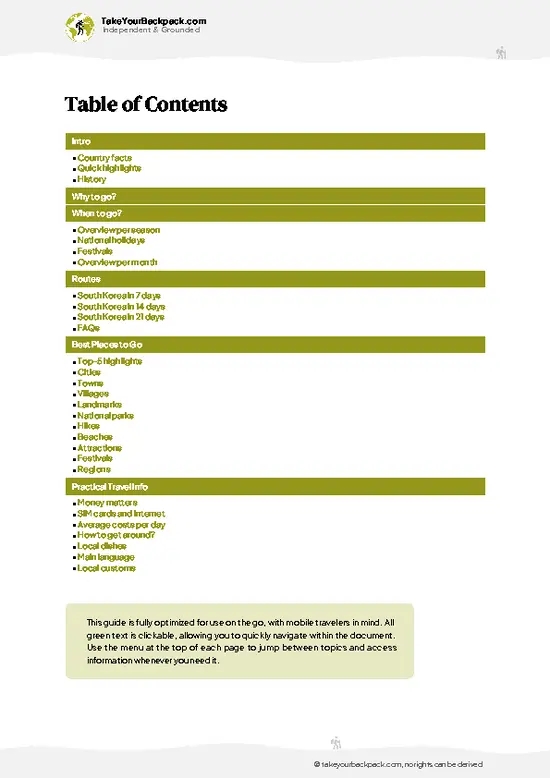
example page 2 from our offline Travel Guide for South Korea
example page 3 from our offline Travel Guide for South Korea
example page 4 from our offline Travel Guide for South Korea
example page 5 from our offline Travel Guide for South Korea
example page 6 from our offline Travel Guide for South Korea
example page 7 from our offline Travel Guide for South Korea
Loading the map 🌍
CLICK TO FILTER
cities
towns
villages
landmarks
national parks
hikes
beaches
attractions
festivals
regions
SHOW COUNTRY’S BESTSHOW ALL

✨ Why go?
Ranked #3 attraction in South Korea
Reasons people choose to visit here

The Korean Demilitarized Zone Tour Facilities in South Korea are not your typical tourist stop. Yes, it’s crowded and yes, it costs more than your average day trip, but that’s because this place is a living, breathing symbol of one of the most intense geopolitical standoffs in modern history. Backpackers don’t just come here for the photo ops—they come for the raw, unfiltered reality of a divided nation. The tension you feel walking along the border is palpable, a stark reminder of the Cold War frozen in time. This isn’t just a museum or a scenic overlook; it’s a frontline experience that demands your attention and respect. The adrenaline rush from peering into North Korea, combined with the deep cultural and historical weight, makes it a milestone on any South Korea route. It’s a place where … read more 👉
The Korean Demilitarized Zone Tour Facilities in South Korea are not your typical tourist stop. Yes, it’s crowded and yes, it costs more than your average day trip, but that’s because this place is a living, breathing symbol of one of the most intense geopolitical standoffs in modern history. Backpackers don’t just come here for the photo ops—they come for the raw, unfiltered reality of a divided nation. The tension you feel walking along the border is palpable, a stark reminder of the Cold War frozen in time. This isn’t just a museum or a scenic overlook; it’s a frontline experience that demands your attention and respect. The adrenaline rush from peering into North Korea, combined with the deep cultural and historical weight, makes it a milestone on any South Korea route. It’s a place where history isn’t just learned—it’s felt. If you want to understand Korea beyond K-pop and street food, this is where you start.

💡 HighlightsMust-see experiences and standout moments

Joint Security Area (JSA) - The Blue Conference Rooms
Forget the Instagram shots of tourists straddling the border. The JSA is the only place on Earth where you can literally stand with one foot in North Korea and one in the South—under the watchful eyes of both sides’ soldiers, separated by a line of concrete and decades of tension. The blue conference huts are not just props; they’re the stage for real, high-stakes negotiations. The air here is thick with history and nerves. You’ll feel it in your bones, not your camera roll.


Dora Observatory
This isn’t just a lookout with a view. It’s a front-row seat to the world’s most surreal staring contest. Peer through binoculars and you’ll see North Korean propaganda villages, guard posts, and—if you’re lucky—actual North Koreans going about their … read more 👉
Joint Security Area (JSA) - The Blue Conference Rooms
Forget the Instagram shots of tourists straddling the border. The JSA is the only place on Earth where you can literally stand with one foot in North Korea and one in the South—under the watchful eyes of both sides’ soldiers, separated by a line of concrete and decades of tension. The blue conference huts are not just props; they’re the stage for real, high-stakes negotiations. The air here is thick with history and nerves. You’ll feel it in your bones, not your camera roll.


Dora Observatory
This isn’t just a lookout with a view. It’s a front-row seat to the world’s most surreal staring contest. Peer through binoculars and you’ll see North Korean propaganda villages, guard posts, and—if you’re lucky—actual North Koreans going about their day. The sense of voyeurism is real, but so is the gut-punch realization that you’re gazing into a country sealed off from the world. It’s both fascinating and sobering.


Third Infiltration Tunnel
This is not a theme park ride, though it feels like one designed by a Cold War escape artist. Discovered in the 1970s, this tunnel was dug by North Korea for a potential surprise attack. You’ll don a hard hat and descend deep underground, ducking through cramped, damp rock. It’s claustrophobic, a little eerie, and absolutely unforgettable for the sheer audacity of its existence. No glossy filter can capture the adrenaline spike of walking a tunnel meant for invasion.


Dorasan Station
A train station to nowhere, but loaded with symbolism. Dorasan Station was built in hope, ready to connect South Korea to the North and beyond to Europe—if reunification ever happens. You can walk the empty platforms, see the customs desks gathering dust, and feel the optimism and heartbreak in equal measure. It’s a place that’s all about potential, not present-day convenience.


DMZ Museum
Skip the dry textbook version of history. The DMZ Museum pulls no punches: relics, photographs, and personal stories lay bare the human cost of division. It’s not flashy, but it’s honest. If you want to understand why this strip of land matters, this is where you get the context—and the emotional gut-check—that Instagram can’t deliver.
Spotted a mistake or missing something? Contact us.

Things to do near Korean Demilitarized Zone

Ratings based on Tripadvisor reviews. When you book through this link, you support our work at no extra cost to you.

🌤️ When to go?Seasonal considerations and timing

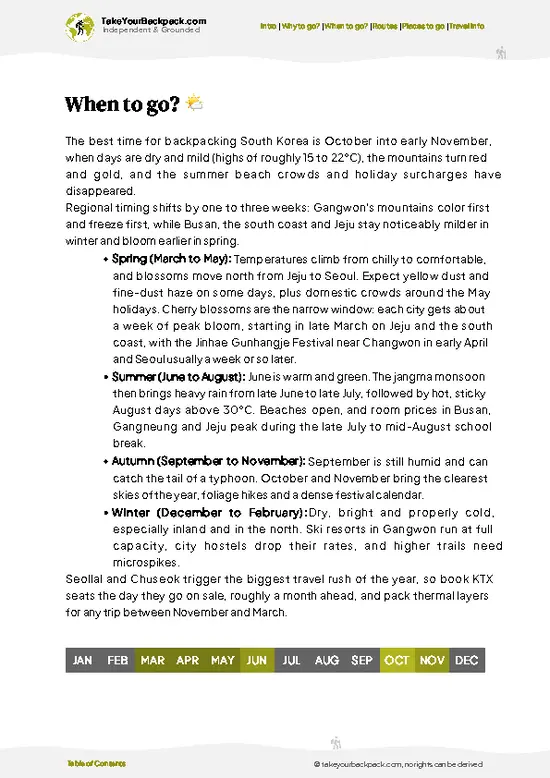
  • Weather & Temperature: The best window is late spring (May-June) and early autumn (September-October). Expect mild, comfortable temps ranging from 15-25°C (59-77°F). Summers scorch with humidity and 30°C+ (86°F+), while winters plunge below freezing, making the tour less enjoyable.
  • Daylight Hours: Spring and autumn offer balanced daylight—about 12-14 hours—enough to explore without rushing. Winter days shrink to 9-10 hours, limiting your time, and summer days stretch long but bring heat and crowds.
  • Crowds: Peak tourist season hits in summer and around Korean holidays like Chuseok (September). The DMZ tour can feel like a cattle call then. Shoulder seasons (spring and autumn) provide a quieter, more reflective experience.
  • Seasonal Activities: Spring blooms and autumn foliage add natural
… read more 👉
  • Weather & Temperature: The best window is late spring (May-June) and early autumn (September-October). Expect mild, comfortable temps ranging from 15-25°C (59-77°F). Summers scorch with humidity and 30°C+ (86°F+), while winters plunge below freezing, making the tour less enjoyable.
  • Daylight Hours: Spring and autumn offer balanced daylight—about 12-14 hours—enough to explore without rushing. Winter days shrink to 9-10 hours, limiting your time, and summer days stretch long but bring heat and crowds.
  • Crowds: Peak tourist season hits in summer and around Korean holidays like Chuseok (September). The DMZ tour can feel like a cattle call then. Shoulder seasons (spring and autumn) provide a quieter, more reflective experience.
  • Seasonal Activities: Spring blooms and autumn foliage add natural drama to the stark military landscape, enhancing the surreal vibe. Winter’s barren look is raw but harsh, and summer’s greenery can feel oddly out of place amid the tension.
  • Price Fluctuations: Tour prices tend to spike during summer and holiday periods due to demand. Booking in shoulder seasons often nets better deals and more flexible scheduling.
Pro-tip: Aim for May or October to dodge the heat, crowds, and inflated prices—this is when the DMZ’s eerie calm and history hit hardest without distractions.


source: climatestotravel.comJANJanuary: fair for travelingFEBFebruary: fair for travelingMARMarch: good for travelingAPRApril: highly recommended for travelingMAYMay: excellent for travelingJUNJune: excellent for travelingJULJuly: fair for travelingAUGAugust: fair for travelingSEPSeptember: highly recommended for travelingOCTOctober: excellent for travelingNOVNovember: good for travelingDECDecember: fair for traveling
when-to-go

✈️ The backpacker research shortcutSouth Korea Travel Guide

An offline-friendly backpacking guide with optimized travel routes, ranked highlights, transport advice, and the best areas to stay.
example page 0 from our offline Travel Guide for South Korea
example page 1 from our offline Travel Guide for South Korea
example page 2 from our offline Travel Guide for South Korea
example page 3 from our offline Travel Guide for South Korea
example page 4 from our offline Travel Guide for South Korea
example page 5 from our offline Travel Guide for South Korea
example page 6 from our offline Travel Guide for South Korea
example page 7 from our offline Travel Guide for South Korea
The digital guide (419 pages) contains:
✅ 117 highlights, ranked by travel appeal
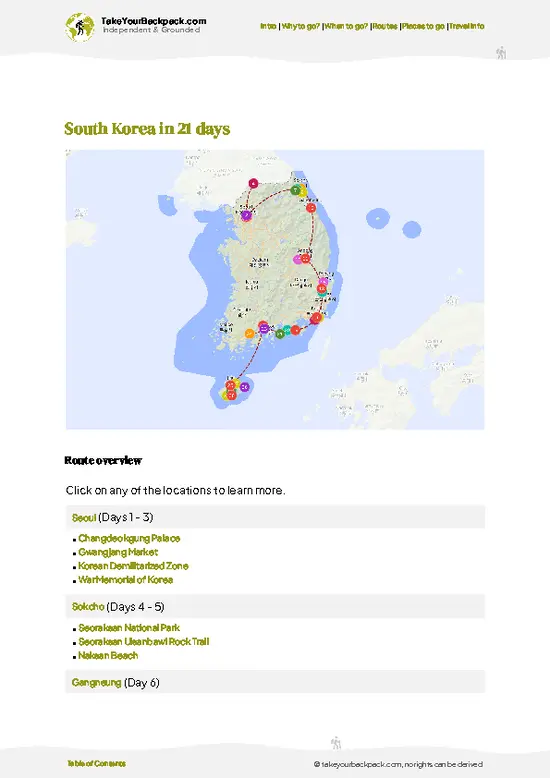
✅ Optimized 7, 14 & 21-day travel routes
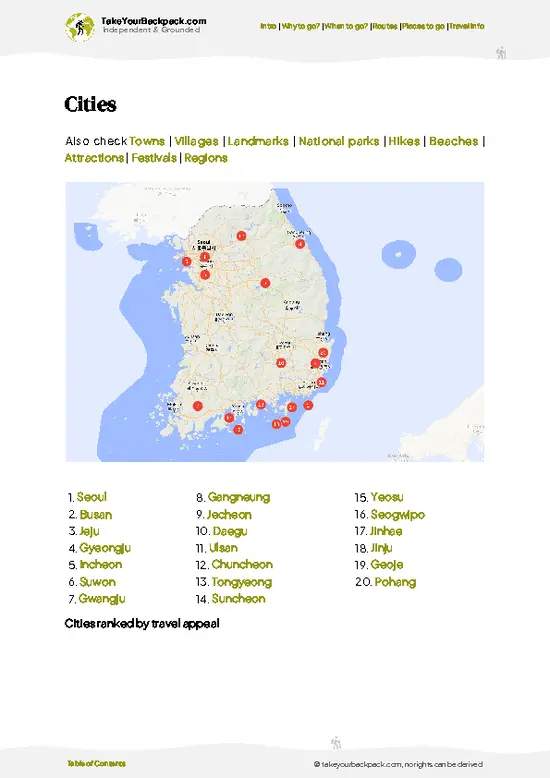
✅ Cities, national parks, landmarks, beaches
✅ How to get around
✅ Offline-friendly for travel without Wi-Fi
👉 Click to see all 30+ guide features

📅 Plan smarter in minutes, not weeks
✅ Month by month travel advice
✅ Festivals & national holidays
✅ Budget expectations

🗺️ Go to the right places, skip the overrated ones
✅ Honest pros & cons of destinations
✅ Top hikes, parks & viewpoints
✅ Lesser-known places most travelers miss
✅ Clear “worth it vs skip it” guidance

🛏️ Travel smoothly without rookie mistakes
✅ Best areas to stay
✅ Transport systems explained simply
✅ Common scams & safety advice
✅ SIM cards, money & practical tips

🌍 Understand the country, not just visit it
✅ Culture & traditions
✅ 52 Essential phrases & customs
✅ Festivals worth planning around
✅ Traveler-friendly historical context
✅ Insights that make places more meaningful

📱 Built for real travel conditions
✅ Fully downloadable PDF
✅ Works completely offline
✅ Optimized for phone use
✅ Useful in remote areas & buses
✅ Everything in one place
Stop searching, start planning
Get instant access to your full guide. 30‑day money-back guarantee.
+ Add another guide for just

By proceeding you agree to our terms.
Sent to your inbox immediately after payment • 100% Secure Checkout
Best Backpacking Travel Advisor 2025 tourism awardBest Backpacking
Travel Advisor
2025
What others say about Take Your Backpack Guides:
⭐⭐⭐⭐⭐
Fantastic, amazing amount of information!
⭐⭐⭐⭐⭐
My goodness this is amazing, it's what I've been looking for hats off too you!
⭐⭐⭐⭐⭐
I think this is absolutely BRILLIANT
⭐⭐⭐⭐
Very complete and informative. It's still missing places, but I gotta to commend you
⭐⭐⭐⭐⭐
This is truly amazing, thank you, can't wait to explore it with my kids!
⭐⭐⭐⭐⭐
Awesome resource, thank you!
⭐⭐⭐⭐⭐
This is amazing! Can't wait to explore the ones I haven't seen
⭐⭐⭐⭐
I love this! Well done, great idea.
⭐⭐⭐⭐⭐
Thanks for taking the time to make this gem!
⭐⭐⭐⭐⭐
This might be the best website I've ever seen.
⭐⭐⭐⭐⭐
Congratulations, and thank you so much for your work; it's incredibly valuable.
⭐⭐⭐⭐
In all seriousness I think you did a great job pointing out the important spots
⭐⭐⭐⭐⭐
10/10 very good
⭐⭐⭐⭐⭐
As someone who's only just starting to visit regularly this is awesome, thank you.
⭐⭐⭐⭐
Thank you very much! I'm going to visit my dad, it's going to be very useful!
⭐⭐⭐⭐⭐
This is really cool! We'll be travelling for the first time and this definitely come in handy.
⭐⭐⭐⭐⭐
You are now our minister of culture, congratulations 👨‍💼
⭐⭐⭐⭐⭐
Just wanted to tell you that this is a pearl! Going to follow your recommendations.
⭐⭐⭐⭐⭐
This is so cool. I'll definitely be using the resource for my travels soon.
⭐⭐⭐⭐⭐
This is very impressive! Good work.
⭐⭐⭐⭐⭐
This is an amazing and informative site. Very well done!

🛏️ Where to stay?Best areas to stay in South Korea

If you’re gearing up for the Korean Demilitarized Zone tour, brace yourself: this isn’t a spontaneous weekend getaway. The DMZ is a heavily controlled military area, and tours are strictly regulated, meaning you’ll need to book through authorized operators, usually departing from Seoul. So, where do you crash before or after your day in this tense no-man’s land?

Forget the DMZ itself—there’s no overnight stay there, and trying to get close without a tour is a non-starter. Instead, focus on Seoul’s northern districts, especially areas like Dongdaemun and Hongdae. Dongdaemun is a practical choice—close … read more 👉
If you’re gearing up for the Korean Demilitarized Zone tour, brace yourself: this isn’t a spontaneous weekend getaway. The DMZ is a heavily controlled military area, and tours are strictly regulated, meaning you’ll need to book through authorized operators, usually departing from Seoul. So, where do you crash before or after your day in this tense no-man’s land?

Forget the DMZ itself—there’s no overnight stay there, and trying to get close without a tour is a non-starter. Instead, focus on Seoul’s northern districts, especially areas like Dongdaemun and Hongdae. Dongdaemun is a practical choice—close to the main bus terminals and subway lines that connect you to the northern outskirts where tours launch. It’s safe, bustling, and packed with budget guesthouses and hostels where solo travelers mingle over cheap street food and late-night markets.

Hongdae, on the other hand, is the social hub for backpackers craving a lively vibe after a day of serious history and tension. It’s a bit farther but worth it for the community feel, affordable eats, and nightlife that helps you decompress. Both areas offer solid public transport links, so you’re never stranded.

Bottom line: stay in Seoul’s northern neighborhoods for safety, social buzz, and easy access to DMZ tours. The real magic isn’t just the border itself—it’s the gritty, lived-in city life that frames your journey into one of the world’s most charged frontiers.

👛 Costs (as of 15 October 2026)What things cost and how to budget

As of the most recent estimates, visiting the Korean Demilitarized Zone in South Korea involves various tour options with differing costs. Half-day tours typically range from 50,000 to 80,000 KRW (€35 to €55), while full-day tours can cost between 80,000 and 150,000 KRW (€55 to €105). Some tours also include visits to the Joint Security Area (JSA), which may increase the price to 100,000 to 150,000 KRW (€70 to €105). Additional expenses such as meals, drinks, and personal items are generally not included in these prices.

source: koreatraveleasy.com
⚠️ Prices can change and everyone travels differently, so take this as a rough guide. Hope it helps you plan your adventure!

FAQTraveler FAQ

A typical visit to the Korean Demilitarized Zone takes about half a day, usually 4 to 5 hours. This includes travel time from Seoul, the guided tour, and time to explore key sites like the Third Infiltration Tunnel and Dora Observatory.
Yes, the entrance fee is generally considered worth it for the unique historical and geopolitical insight it offers. The tour fee ranges around 50,000 to 70,000 KRW (approximately 40 to 60 USD), which includes transportation and a guided experience.
You get to the Korean Demilitarized Zone by booking an organized tour from Seoul, as private access is restricted. Most tours depart early morning from central Seoul and include round-trip transportation by bus to the DMZ area, about 50 kilometers north of the city.
⚠️ Things can change over time, so always validate details locally before you go.

Other South Korean attractions near Korean Demilitarized Zone

Explore more nearby:


💡 Not sure where to go next?
Create a personalized itinerary for South Korea including Korean Demilitarized Zone and the places that fit your trip.

Generate my itinerary

👉 Discover all attractions

Or checkout all South Korea has to offer (think cities, towns, villages, national parks, hikes, beaches, festivals)
Country photo of South Korea

We 💚 feedbackFinal thoughts on visiting Korean Demilitarized Zone

Visiting the DMZ isn’t a serene escape—it’s a front-row seat to a tense, living history that’s part museum, part military checkpoint. Expect crowds and a strict itinerary, but don’t let that fool you. The real magic is in the quiet moments—the distant North Korean village glimpsed through binoculars, the eerie silence at the Third Tunnel, the weight of standing on the world’s most fortified border. It’s not pretty, but it’s unforgettable.

✍️ Help improve this page!
The information on this page is based on in-depth research, insights shared by experienced travelers, and feedback from the local travel community in South Korea. While every effort is made to keep the information accurate and current, conditions can change — so if you spot anything incorrect or outdated, please get in touch.


🙋‍♂️ Give feedback

👋 Meet the founderWho’s Behind Take Your Backpack?

Johan, backpacker and founder of TakeYourBackpackHi, I’m Johan (Netherlands 🇳🇱), the creator of TakeYourBackpack. Over the past 3 decades, I’ve backpacked through 90+ countries across six continents, gaining extensive experience with independent travel, long-term trips, and overland routes.

This site is built on a combination of firsthand travel experience and carefully curated insights from other backpackers. Many guides are based on places I’ve personally visited, while others bring together tips, observations, and practical advice shared by trusted travelers I’ve met along the way.

The goal is to provide realistic, experience-driven guidance — not generic itineraries — so you can explore destinations with better context, clearer expectations, and more confidence.