v2.webp)


1. The Silla Gold Crowns
Forget the Instagram filters—these 1,500-year-old gold crowns from the Silla Kingdom are the real flex. They’re not just museum pieces; they’re proof that ancient Korea was dripping in artistry and ambition long before K-pop. The filigree work is so intricate you’ll wonder how anyone managed it without modern tools. Stand in front of the glass and try not to be hypnotized by the dangling gold spangles. This is the kind of bling that makes you rethink everything you thought you knew about “old stuff.”
2. The Pensive Bodhisattva
You’ll see this statue on every Korean history textbook, but nothing prepares you for the real thing. This sixth-century bronze is about as close as you’ll get to meeting a time traveler. The pose—one leg crossed, finger to cheek—captures a … read more 👉
Forget the Instagram filters—these 1,500-year-old gold crowns from the Silla Kingdom are the real flex. They’re not just museum pieces; they’re proof that ancient Korea was dripping in artistry and ambition long before K-pop. The filigree work is so intricate you’ll wonder how anyone managed it without modern tools. Stand in front of the glass and try not to be hypnotized by the dangling gold spangles. This is the kind of bling that makes you rethink everything you thought you knew about “old stuff.”
2. The Pensive Bodhisattva
You’ll see this statue on every Korean history textbook, but nothing prepares you for the real thing. This sixth-century bronze is about as close as you’ll get to meeting a time traveler. The pose—one leg crossed, finger to cheek—captures a … read more 👉
1. The Silla Gold Crowns
Forget the Instagram filters—these 1,500-year-old gold crowns from the Silla Kingdom are the real flex. They’re not just museum pieces; they’re proof that ancient Korea was dripping in artistry and ambition long before K-pop. The filigree work is so intricate you’ll wonder how anyone managed it without modern tools. Stand in front of the glass and try not to be hypnotized by the dangling gold spangles. This is the kind of bling that makes you rethink everything you thought you knew about “old stuff.”
2. The Pensive Bodhisattva
You’ll see this statue on every Korean history textbook, but nothing prepares you for the real thing. This sixth-century bronze is about as close as you’ll get to meeting a time traveler. The pose—one leg crossed, finger to cheek—captures a moment of pure, human contemplation. It’s not just a religious icon; it’s a masterclass in empathy, carved in metal. The room is usually quiet, and for good reason: this is the Mona Lisa of Korean sculpture, minus the crowds of Paris.
3. The Pagoda Hall (Ten-Story Pagoda from Gyeongcheonsa Temple)
The museum’s centerpiece isn’t a painting or a scroll—it’s a 14th-century, ten-story marble pagoda that towers over the main hall. It’s massive, it’s detailed, and it was painstakingly reassembled after being carted off during the Japanese occupation. The scale alone is jaw-dropping, but the real magic is in the carvings: dragons, lotus blossoms, and guardian figures, all stacked up like a stone skyscraper. This is architectural drama you can walk around, not just look at.
4. The Joseon Dynasty Room
If you want to understand why Korea looks the way it does today, this is your crash course. The Joseon Dynasty ruled for over 500 years, and the artifacts here—royal robes, calligraphy, scientific instruments—show a society obsessed with order, beauty, and innovation. The real kicker? The astronomical instruments that look like props from a steampunk movie, but were actually used to map the heavens. It’s a geek’s paradise, but also a window into the DNA of modern Korea.
5. The Outdoor Garden and Relics
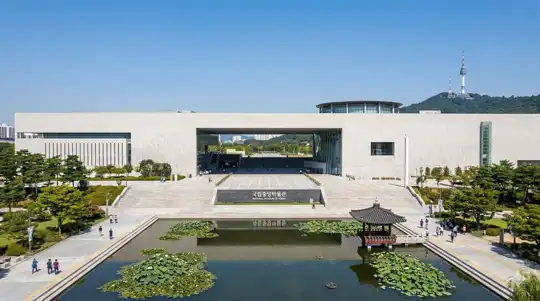
Most people rush past the museum’s outdoor section, but that’s a rookie mistake. The garden is scattered with ancient pagodas, stone lanterns, and Buddhist stupas rescued from across Korea. It’s the only place in Seoul where you can picnic next to a thousand-year-old monument and not get side-eyed by security. The vibe is peaceful, the air is fresher, and you get a rare sense of how these relics once fit into the landscape—not just behind glass.
Forget the Instagram filters—these 1,500-year-old gold crowns from the Silla Kingdom are the real flex. They’re not just museum pieces; they’re proof that ancient Korea was dripping in artistry and ambition long before K-pop. The filigree work is so intricate you’ll wonder how anyone managed it without modern tools. Stand in front of the glass and try not to be hypnotized by the dangling gold spangles. This is the kind of bling that makes you rethink everything you thought you knew about “old stuff.”
2. The Pensive Bodhisattva
You’ll see this statue on every Korean history textbook, but nothing prepares you for the real thing. This sixth-century bronze is about as close as you’ll get to meeting a time traveler. The pose—one leg crossed, finger to cheek—captures a moment of pure, human contemplation. It’s not just a religious icon; it’s a masterclass in empathy, carved in metal. The room is usually quiet, and for good reason: this is the Mona Lisa of Korean sculpture, minus the crowds of Paris.
3. The Pagoda Hall (Ten-Story Pagoda from Gyeongcheonsa Temple)
The museum’s centerpiece isn’t a painting or a scroll—it’s a 14th-century, ten-story marble pagoda that towers over the main hall. It’s massive, it’s detailed, and it was painstakingly reassembled after being carted off during the Japanese occupation. The scale alone is jaw-dropping, but the real magic is in the carvings: dragons, lotus blossoms, and guardian figures, all stacked up like a stone skyscraper. This is architectural drama you can walk around, not just look at.
4. The Joseon Dynasty Room
If you want to understand why Korea looks the way it does today, this is your crash course. The Joseon Dynasty ruled for over 500 years, and the artifacts here—royal robes, calligraphy, scientific instruments—show a society obsessed with order, beauty, and innovation. The real kicker? The astronomical instruments that look like props from a steampunk movie, but were actually used to map the heavens. It’s a geek’s paradise, but also a window into the DNA of modern Korea.
5. The Outdoor Garden and Relics
Most people rush past the museum’s outdoor section, but that’s a rookie mistake. The garden is scattered with ancient pagodas, stone lanterns, and Buddhist stupas rescued from across Korea. It’s the only place in Seoul where you can picnic next to a thousand-year-old monument and not get side-eyed by security. The vibe is peaceful, the air is fresher, and you get a rare sense of how these relics once fit into the landscape—not just behind glass.
Spotted a mistake or missing something? Contact us.

Full Day Private DMZ Highlight Tour with Licensed Tour Guide

Highlights of Seoul Full Day Tour

DIY Seoul Private Tour: Select 4 places you want to go

Korean War Memorial Guided Tour

Exclusive Private DMZ Tour & War Memorial Hall or Suspension Bridge(No Shopping)

Seoul Morning Tour: Seoul Tower, Namsan Hanok Village, The War Memorial of Korea
![[DMZ Private Full day Tour] & The War Memorial include Lunch](https://media-cdn.tripadvisor.com/media/attractions-splice-spp-720x480/0e/be/f1/f3.jpg)
[DMZ Private Full day Tour] & The War Memorial include Lunch

Private Korea DMZ Tour with Expert Guide & Suspension Bridge

7 days Flexible Tour for Major Cities(Seoul,Busan,Gyeongju etc)

 Best Backpacking
.jpg) Hi, I’m Johan (Netherlands 🇳🇱), the creator of TakeYourBackpack. Over the past 3 decades, I’ve backpacked through 90+ countries across six continents, gaining extensive experience with independent travel, long-term trips, and overland routes.
Hi, I’m Johan (Netherlands 🇳🇱), the creator of TakeYourBackpack. Over the past 3 decades, I’ve backpacked through 90+ countries across six continents, gaining extensive experience with independent travel, long-term trips, and overland routes.