×

South Korea🇰🇷 | citiesSeogwipoWaterfalls, coastal cliffs, citrus farms | things to do and best time to go

Explore GwangmyeongExplore Seosan

Backpacking in Seogwipo
By Johan Kruseman 🇳🇱 | Updated May 30, 2026

Most people sell Seogwipo as “quiet nature basecamp,” but for backpackers it’s closer to a compact, cliffside food-and-soju town that just happens to be wrapped in waterfalls and coastal trails. Sitting on the south coast of Jeju Island, it’s cheaper and looser than Jeju City, with easy buses, safe streets, and a small but real hostel scene. Expect night walks around Lee Jung Seop Street, day hikes on Olle Trails, moody harbors, limited nightlife, and slow-burn charm over instant thrills.

Discover everything you want to know in the 📖 South Korea Travel Guide.
Loading the map 🌍
CLICK TO FILTER
cities
towns
villages
landmarks
national parks
hikes
beaches
attractions
festivals
regions
SHOW COUNTRY’S BESTSHOW ALL

✨ Why go?
Ranked #99 city in South Korea
Why visitors keep coming back

Seogwipo is a backpacker’s hub that balances time, money, and comfort perfectly. It’s packed with highlights and activities, making it a great base for day trips without the hassle of constant packing. The hostels here are affordable and social, ideal for meeting fellow travelers. You can stroll through the city, enjoying its walkability and vibrant food scene—think fresh seafood and local specialties. When the sun sets, the nightlife offers a laid-back vibe, perfect for unwinding. Plus, onward travel is a breeze, connecting you to other parts of Jeju Island. If you’re after a mix of adventure and relaxation, Seogwipo is a solid choice.
Want to include Seogwipo in your South Korea route?
Create a personalized South Korea itinerary that includes Seogwipo and the places that fit your trip — based on your travel style, budget, and available time. Get your route in seconds.

Generate my trip

💡 HighlightsWhat this place is best known for

  1. Jeongbang Waterfall — One of the few waterfalls in Asia that pours straight into the sea. Short walk, dramatic cliff-top viewing platforms and good people-watching; come early or late to dodge the coach crowds and catch the light on the spray.
  2. Cheonjiyeon Waterfall — A wide, dramatic drop into a calm pool surrounded by subtropical plants and a well-kept boardwalk. It’s atmospheric at night when the falls are lit, and the walkways make it an easy nature stop inside the city.
  3. Cheonjeyeon Waterfalls — A three-tiered cascade with a mythic feel and neat wooden paths connecting pools, sea caves and a small seaside sanctuary. Good for a quieter nature stroll than the big tourist spots nearby.
  4. Jusangjeolli Cliffs — The hexagonal basalt pillars carved by cooling lava make for some of Jeju’s most
read more 👉
  1. Jeongbang Waterfall — One of the few waterfalls in Asia that pours straight into the sea. Short walk, dramatic cliff-top viewing platforms and good people-watching; come early or late to dodge the coach crowds and catch the light on the spray.
  2. Cheonjiyeon Waterfall — A wide, dramatic drop into a calm pool surrounded by subtropical plants and a well-kept boardwalk. It’s atmospheric at night when the falls are lit, and the walkways make it an easy nature stop inside the city.
  3. Cheonjeyeon Waterfalls — A three-tiered cascade with a mythic feel and neat wooden paths connecting pools, sea caves and a small seaside sanctuary. Good for a quieter nature stroll than the big tourist spots nearby.
  4. Jusangjeolli Cliffs — The hexagonal basalt pillars carved by cooling lava make for some of Jeju’s most cinematic coastline. Short paths and viewing terraces let you get up close to the waves pounding the cliffs—photogenic, solid geology lesson included.
  5. Oedolgae Rock — A lonely sea stack rising from the surf with a coastal cliff trail that’s peaceful and surprisingly green. Locals tell stories about the rock; the hike is short but the panoramas over Seogwipo’s coastline are worth it.
  6. Seogwipo Maeil Olle Market — Real local life: seafood stalls, cheap snacks, live fish tanks, tteok and black pork skewers. Great place to eat well on a budget and watch island vendors at work—perfect for lunch between sightseeing stops.
  7. Seongeup Folk Village — A well-preserved traditional Jeju village with thatched houses, stone walls and tactile glimpses into island life centuries ago. It’s small, walkable and full of details you won’t find in the glossy tourist brochures.
  8. Soesokkak Estuary — A clear, tranquil estuary with a photogenic wooden bridge, glass-lookout platforms and options for short kayak rides. It’s a peaceful contrast to the busier waterfalls and a nice spot for a picnic or sunset.
  9. Seogwipo Submarine / Undersea Tours — If you don’t dive but want coral and fish up close, these glassed submersible tours from Seogwipo Port show the nearby reefs and marine life. A unique, weather-dependent way to experience Jeju’s underwater world without getting wet.
  10. Jeju Olle Trail — Seogwipo Sections — The Olle routes that run through and around Seogwipo (coastal paths and village stretches) are the best way to experience the island’s pace: sea views, farmland, tiny cafés and island people. Pick a short section and walk slowly.
A few excellent day trips outside Seogwipo: Seongsan Ilchulbong (Sunrise Peak) for the classic sunrise climb, Udo Island for bike/scooter coastal loops, and Hallasan National Park if you want a proper mountain hike.
Spotted a mistake or missing something? Contact us.

Things to do in Seogwipo

Ratings based on Tripadvisor reviews. When you book through this link, you support our work at no extra cost to you.

🏘️ NeighborhoodsKey areas and districts to know

Seogwipo is a vibrant hub on Jeju Island, offering a mix of natural beauty and local culture. Here’s how the neighborhoods stack up for backpackers:

Seogwipo City Center: This area buzzes with energy. You’ll find affordable guesthouses and local eateries. It’s walkable, with easy access to public transport. Perfect for short stays, but the nightlife can get lively.

Jungmun Tourist Complex: A bit pricier, but worth it for the beaches and resorts. It’s quieter, ideal for relaxation. Great for longer stays if you want a more laid-back vibe, though nightlife options are limited.

Seongsan Ilchulbong: Famous for its sunrise views. Budget-friendly accommodations are available, but it’s more remote. Best for those seeking nature and tranquility, with less nightlife but stunning hikes.

⌛️ 1 dayHow to make the most of one day

Seogwipo, on Jeju Island, is a blend of natural beauty and vibrant local culture. Start your day at the stunning Cheonjiyeon Waterfall. The short walk through lush greenery sets a tranquil tone. After soaking in the sights, head to the nearby Seogwipo Maeil Olle Market. Here, you can savor fresh seafood and local delicacies like black pork.

In the afternoon, explore the picturesque coastline at the Seogwipo Harbor. Grab a coffee at a local café and watch fishermen at work. For a unique experience, venture to the less-traveled Jeongbang Waterfall, where the water cascades directly into the ocean.

As evening approaches, stroll through the charming streets of the old town, where you’ll find cozy eateries. Try some Jeju mandarin desserts for a sweet finish. This day in Seogwipo balances nature, … read more 👉
Seogwipo, on Jeju Island, is a blend of natural beauty and vibrant local culture. Start your day at the stunning Cheonjiyeon Waterfall. The short walk through lush greenery sets a tranquil tone. After soaking in the sights, head to the nearby Seogwipo Maeil Olle Market. Here, you can savor fresh seafood and local delicacies like black pork.

In the afternoon, explore the picturesque coastline at the Seogwipo Harbor. Grab a coffee at a local café and watch fishermen at work. For a unique experience, venture to the less-traveled Jeongbang Waterfall, where the water cascades directly into the ocean.

As evening approaches, stroll through the charming streets of the old town, where you’ll find cozy eateries. Try some Jeju mandarin desserts for a sweet finish. This day in Seogwipo balances nature, culture, and local flavors, making it a high-value experience without the tourist rush.
Turn your Seogwipo visit into an South Korea adventure
Build a complete South Korea route with Seogwipo, hidden gems, must-see destinations, and realistic travel times included.

Generate my trip

🌤️ When to go?Choosing the right time of year


  • Weather: Spring (April-May) and autumn (September-October) offer mild, dry conditions—around 15-22°C (59-72°F)—perfect for hiking and exploring without sweating buckets or freezing.

  • Temperature: Summer can hit 28-31°C (82-88°F) with humidity that drains energy fast; winter drops to 5-10°C (41-50°F), chilly but manageable with layers.

  • Daylight Hours: Longer days in summer (up to 14 hours) mean more daylight for adventures, but shorter days in winter (around 10 hours) limit your window.

  • Crowds: Peak tourist season is summer and major holidays, swelling prices and crowding trails; shoulder seasons are quieter and more authentic.

  • Seasonal Activities: Cherry blossoms bloom in spring; autumn brings colorful foliage and harvest festivals; winter offers fewer events but serene landscapes.
read more 👉

  • Weather: Spring (April-May) and autumn (September-October) offer mild, dry conditions—around 15-22°C (59-72°F)—perfect for hiking and exploring without sweating buckets or freezing.

  • Temperature: Summer can hit 28-31°C (82-88°F) with humidity that drains energy fast; winter drops to 5-10°C (41-50°F), chilly but manageable with layers.

  • Daylight Hours: Longer days in summer (up to 14 hours) mean more daylight for adventures, but shorter days in winter (around 10 hours) limit your window.

  • Crowds: Peak tourist season is summer and major holidays, swelling prices and crowding trails; shoulder seasons are quieter and more authentic.

  • Seasonal Activities: Cherry blossoms bloom in spring; autumn brings colorful foliage and harvest festivals; winter offers fewer events but serene landscapes.

  • Price Fluctuations: Accommodation and flights spike in summer and holidays; booking in shoulder seasons can save you a solid chunk of cash.


Pro-tip: Target late spring or early autumn to balance weather, crowds, and cost—maximizing comfort and value without sacrificing experience.


source: climatestotravel.comJANJanuary: fair for travelingFEBFebruary: fair for travelingMARMarch: good for travelingAPRApril: excellent for travelingMAYMay: excellent for travelingJUNJune: good for travelingJULJuly: fair for travelingAUGAugust: fair for travelingSEPSeptember: excellent for travelingOCTOctober: excellent for travelingNOVNovember: good for travelingDECDecember: fair for traveling
when-to-go

✈️ The backpacker research shortcutSouth Korea Travel Guide

An offline-friendly backpacking guide with optimized travel routes, ranked highlights, transport advice, and the best areas to stay.
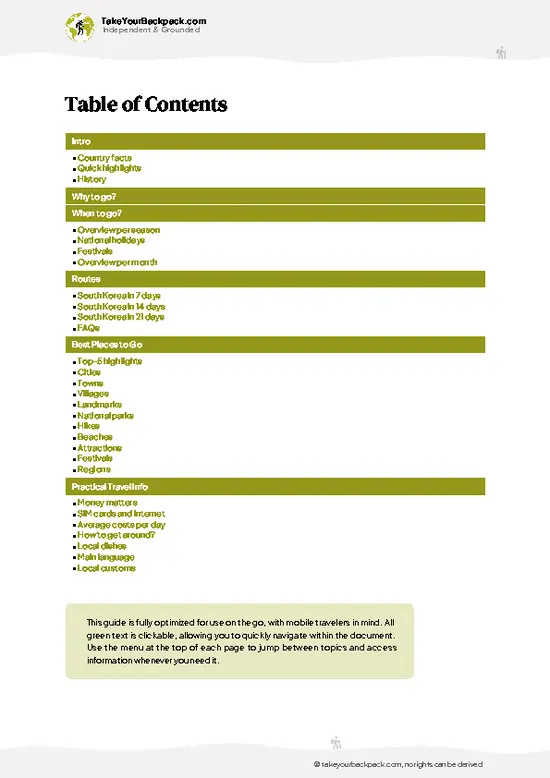
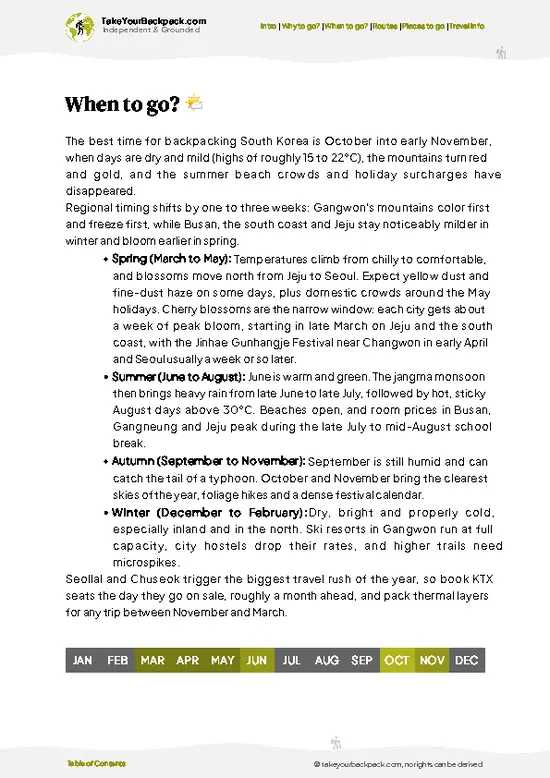
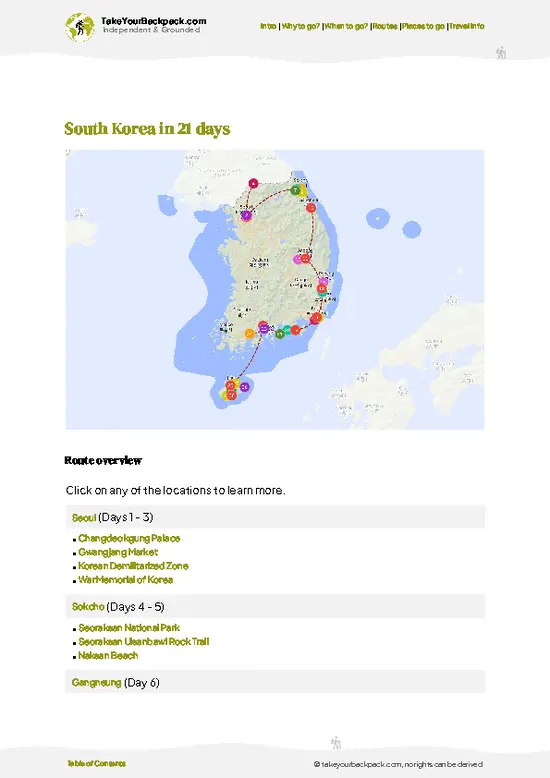
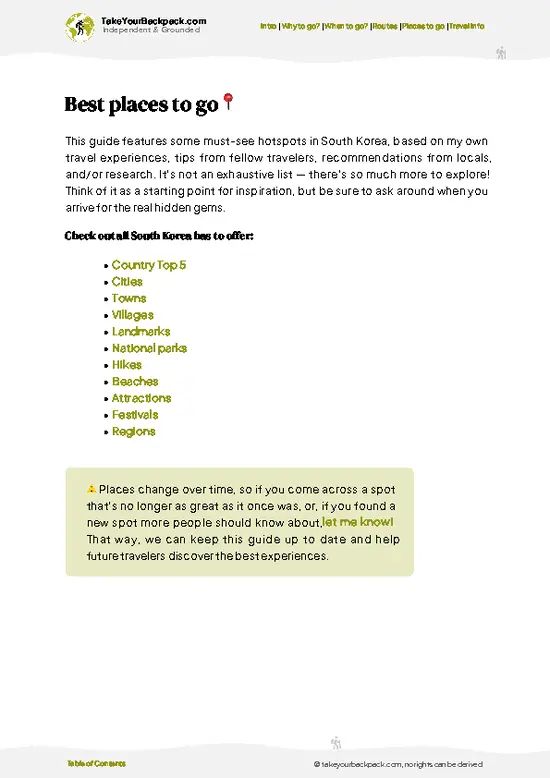
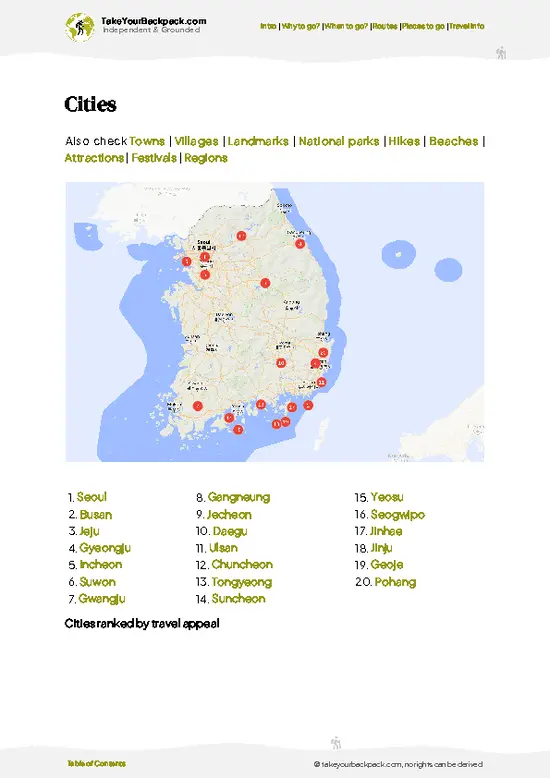
example page 0 from our offline Travel Guide for South Koreaexample page 1 from our offline Travel Guide for South Koreaexample page 2 from our offline Travel Guide for South Koreaexample page 3 from our offline Travel Guide for South Koreaexample page 4 from our offline Travel Guide for South Koreaexample page 5 from our offline Travel Guide for South Koreaexample page 6 from our offline Travel Guide for South Koreaexample page 7 from our offline Travel Guide for South Korea
The digital guide (408 pages) contains:
115 highlights, ranked by travel appeal
Optimized 7, 14 & 21-day travel routes
Cities, national parks, landmarks, beaches
How to get around
Offline-friendly for travel without Wi-Fi
👉 Click to see all 30+ guide features

📅 Plan smarter in minutes, not weeks
Month by month travel advice
Festivals & national holidays
Budget expectations

🗺️ Go to the right places, skip the overrated ones
Honest pros & cons of destinations
Top hikes, parks & viewpoints
Lesser-known places most travelers miss
Clear “worth it vs skip it” guidance

🛏️ Travel smoothly without rookie mistakes
Best areas to stay
Transport systems explained simply
Common scams & safety advice
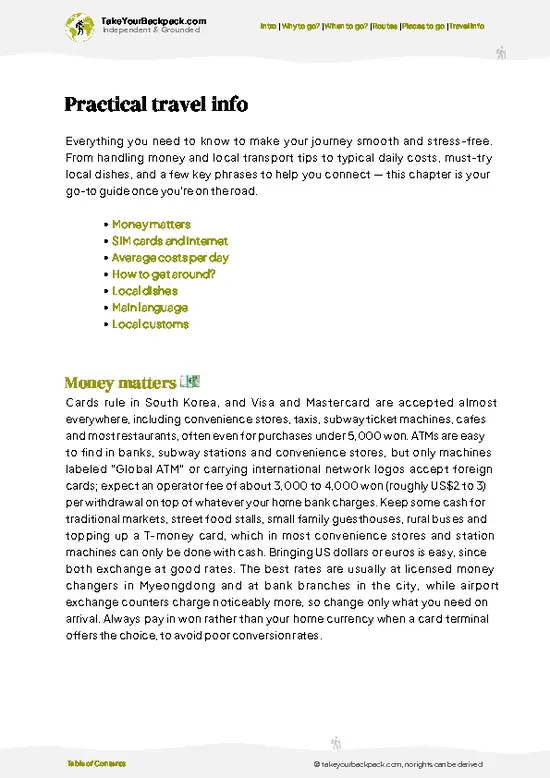
SIM cards, money & practical tips

🌍 Understand the country, not just visit it
Culture & traditions
52 Essential phrases & customs
Festivals worth planning around
Traveler-friendly historical context
Insights that make places more meaningful

📱 Built for real travel conditions
Fully downloadable PDF
Works completely offline
Optimized for phone use
Useful in remote areas & buses
Everything in one place
Save weeks of stressful planning
Get instant access to your full guide. 30‑day money-back guarantee.


By proceeding you agree to our terms.
Sent to your inbox immediately after payment • 100% Secure Checkout
Best Backpacking Travel Advisor 2025 tourism awardBest Backpacking
Travel Advisor
2025
What others say about Take Your Backpack Guides:
⭐⭐⭐⭐⭐
Fantastic, amazing amount of information!
⭐⭐⭐⭐⭐
My goodness this is amazing, it's what I've been looking for hats off too you!
⭐⭐⭐⭐⭐
I think this is absolutely BRILLIANT
⭐⭐⭐⭐
Very complete and informative. It's still missing places, but I gotta to commend you
⭐⭐⭐⭐⭐
This is truly amazing, thank you, can't wait to explore it with my kids!
⭐⭐⭐⭐⭐
Awesome resource, thank you!
⭐⭐⭐⭐⭐
This is amazing! Can't wait to explore the ones I haven't seen
⭐⭐⭐⭐
I love this! Well done, great idea.
⭐⭐⭐⭐⭐
Thanks for taking the time to make this gem!
⭐⭐⭐⭐⭐
This might be the best website I've ever seen.
⭐⭐⭐⭐⭐
Congratulations, and thank you so much for your work; it's incredibly valuable.
⭐⭐⭐⭐
In all seriousness I think you did a great job pointing out the important spots
⭐⭐⭐⭐⭐
10/10 very good
⭐⭐⭐⭐⭐
As someone who's only just starting to visit regularly this is awesome, thank you.
⭐⭐⭐⭐
Thank you very much! I'm going to visit my dad, it's going to be very useful!
⭐⭐⭐⭐⭐
This is really cool! We'll be travelling for the first time and this definitely come in handy.
⭐⭐⭐⭐⭐
You are now our minister of culture, congratulations 👨‍💼
⭐⭐⭐⭐⭐
Just wanted to tell you that this is a pearl! Going to follow your recommendations.
⭐⭐⭐⭐⭐
This is so cool. I'll definitely be using the resource for my travels soon.
⭐⭐⭐⭐⭐
This is very impressive! Good work.
⭐⭐⭐⭐⭐
This is an amazing and informative site. Very well done!

🛏️ Where to stay?How to pick the right area

Seogwipo’s best backpacker zone centers around the Jungmun Tourist Complex and the nearby downtown area. Jungmun offers a solid balance: safe streets, easy access to nature spots like waterfalls and coastal trails, plus a handful of hostels that cater to budget travelers. It’s social without being overwhelming—think small clusters of fellow adventurers rather than party crowds. Downtown Seogwipo, meanwhile, pulses with local markets, street food, and affordable guesthouses, perfect for solo travelers wanting to dive into authentic daily life. Compared to the quieter outskirts, these areas maximize … read more 👉
Seogwipo’s best backpacker zone centers around the Jungmun Tourist Complex and the nearby downtown area. Jungmun offers a solid balance: safe streets, easy access to nature spots like waterfalls and coastal trails, plus a handful of hostels that cater to budget travelers. It’s social without being overwhelming—think small clusters of fellow adventurers rather than party crowds. Downtown Seogwipo, meanwhile, pulses with local markets, street food, and affordable guesthouses, perfect for solo travelers wanting to dive into authentic daily life. Compared to the quieter outskirts, these areas maximize your time and comfort without blowing your budget, making them the logical hubs for anyone serious about squeezing value and vibe from their stay.

🚌 Getting aroundHow to get from A to B

Seogwipo moves at its own rhythm—less a strict timetable and more a pulse you feel in the air. It’s not a city where everything clicks like clockwork; instead, it’s a blend of laid-back island vibes and practical necessity. You’ll find that time here is flexible, but your choices about how to get around will shape your experience sharply. The trade-off between time, money, and comfort is clear: faster options cost more, slower ones test your patience, and comfort is often a luxury. Knowing this lets you play the system smartly, picking the right balance for your trip’s vibe and budget.


  • City Buses: Runs roughly from 6:00 AM to 10:00 PM, fares around 1,200 KRW. Slow but reliable, these buses cover most tourist spots and local neighborhoods. Expect some crowding during peak hours, but it’s
read more 👉
Seogwipo moves at its own rhythm—less a strict timetable and more a pulse you feel in the air. It’s not a city where everything clicks like clockwork; instead, it’s a blend of laid-back island vibes and practical necessity. You’ll find that time here is flexible, but your choices about how to get around will shape your experience sharply. The trade-off between time, money, and comfort is clear: faster options cost more, slower ones test your patience, and comfort is often a luxury. Knowing this lets you play the system smartly, picking the right balance for your trip’s vibe and budget.


  • City Buses: Runs roughly from 6:00 AM to 10:00 PM, fares around 1,200 KRW. Slow but reliable, these buses cover most tourist spots and local neighborhoods. Expect some crowding during peak hours, but it’s the cheapest way to get around.

  • Intercity Buses: Connects Seogwipo with Jeju City and other towns. Departures start early morning and taper off by 9:00 PM. Tickets cost about 3,000-5,000 KRW. Faster than city buses, but less frequent—plan ahead if you’re on a tight schedule.

  • Taxis: Available 24/7, fares start at 3,300 KRW with additional charges per kilometer. Comfortable and direct, but costs add up quickly. Best for late-night rides or when you’re carrying heavy gear.

  • Walking: Seogwipo’s compact downtown makes walking a top choice. No cost, full control over your pace, and a chance to soak in local life. Not ideal for longer distances or in hot weather, but unbeatable for short hops.

👛 Costs (as of 2 April 2026)Typical daily expenses

Backpacking in Seogwipo, South Korea, offers a mix of affordability and convenience, but knowing exactly where your money goes helps you play the system smartly.
  • Dorm Accommodation (High Season): Expect to pay around $20 to $30 per night. High season, typically spring and fall, pushes prices up due to demand from tourists chasing Jeju’s mild weather and festivals.
  • Dorm Accommodation (Off-Season): In winter or summer, prices drop to about $12 to $18 per night. Fewer visitors mean better deals, but some places might close or reduce services.
  • Meals: Street food and local eateries keep costs low, roughly $5 to $10 per day if you stick to simple Korean dishes like bibimbap or seafood pancakes. Splurging on a restaurant meal can push this to $15 or more.
  • Local Transport: Buses and taxis within
read more 👉
Backpacking in Seogwipo, South Korea, offers a mix of affordability and convenience, but knowing exactly where your money goes helps you play the system smartly.
  • Dorm Accommodation (High Season): Expect to pay around $20 to $30 per night. High season, typically spring and fall, pushes prices up due to demand from tourists chasing Jeju’s mild weather and festivals.
  • Dorm Accommodation (Off-Season): In winter or summer, prices drop to about $12 to $18 per night. Fewer visitors mean better deals, but some places might close or reduce services.
  • Meals: Street food and local eateries keep costs low, roughly $5 to $10 per day if you stick to simple Korean dishes like bibimbap or seafood pancakes. Splurging on a restaurant meal can push this to $15 or more.
  • Local Transport: Buses and taxis within Seogwipo are affordable; budget $2 to $5 daily depending on how much you move around. Buses are the cheapest, but taxis offer quick, if pricier, convenience.
  • City Transport Pass: A prepaid transport card (like T-money) costs about $3 to buy, with top-ups as needed. Using this pass can save you a few cents per ride and speeds up boarding.
  • Basic Activities/Entry Fees: Many natural attractions like waterfalls and beaches are free, but expect to pay $5 to $15 for museums, botanical gardens, or cultural sites. Guided tours or special experiences can cost $20+.
  • Miscellaneous Expenses: Snacks, bottled water, occasional coffee, or small souvenirs add up to around $3 to $7 daily. Internet cafes or laundry services might add a few dollars if needed.

All told, a savvy backpacker in Seogwipo can expect to spend between $30 and $50 a day, balancing comfort and cost. Push for the lower end by choosing off-season dorms and street food, or lean into convenience and extras for a richer experience closer to $50. Knowing these trade-offs lets you control your trip’s rhythm without surprises.


source: visitjeju.net
⚠️ Prices can change and everyone travels differently, so take this as a rough guide. Hope it helps you plan your adventure!

🚌 Day tripsShort trips worth adding

Seogwipo is a fantastic base for day trips that pack a punch without draining your wallet or energy. Let’s dive into some high-value adventures.

Hallasan National Park
A trek up Hallasan, South Korea’s highest peak, is a must. The trail offers stunning views and a chance to connect with nature. Expect about 1.5 hours to reach the trailhead by bus. The round trip costs around $5, and the best time to go is spring or fall for mild weather. A common mistake? Underestimating the trail’s length—it’s about 9.6 kilometers one way. Bring plenty of water and snacks to keep your energy up.
👉 Explore Hallasan National Park

Jeongbang Waterfall
Just a short bus ride from Seogwipo, Jeongbang Waterfall is unique because it drops directly into the ocean. The entrance fee is about $2, and you can soak … read more 👉
Seogwipo is a fantastic base for day trips that pack a punch without draining your wallet or energy. Let’s dive into some high-value adventures.

Hallasan National Park
A trek up Hallasan, South Korea’s highest peak, is a must. The trail offers stunning views and a chance to connect with nature. Expect about 1.5 hours to reach the trailhead by bus. The round trip costs around $5, and the best time to go is spring or fall for mild weather. A common mistake? Underestimating the trail’s length—it’s about 9.6 kilometers one way. Bring plenty of water and snacks to keep your energy up.
👉 Explore Hallasan National Park

Jeongbang Waterfall
Just a short bus ride from Seogwipo, Jeongbang Waterfall is unique because it drops directly into the ocean. The entrance fee is about $2, and you can soak in the views in under an hour. Early mornings are best to avoid crowds. Don’t forget your camera; the contrast of the waterfall against the sea is striking.


Seongsan Ilchulbong
This volcanic crater is a sunrise hotspot. It takes about 1 hour to get there by bus, costing around $3. Climbing to the top rewards you with panoramic views of the coastline. Aim for an early start, especially in summer when the heat kicks in. Many first-timers miss the best spots for photos—explore beyond the main path!


Oedolgae Rock
A scenic coastal walk leads to Oedolgae Rock, a striking sea stack. It’s about a 30-minute bus ride from Seogwipo, costing under $2. The trail is easy and offers breathtaking ocean views. Late afternoon is ideal for capturing the sunset. Watch out for slippery paths after rain; it can be tricky!
Want to know what more South Korea offers?
The South Korea Travel Guide describes 115 highlights, from cities to national parks, from beaches to hikes

Get the Travel Guide -

🍲 FoodWhat to Eat & Drink

In Seogwipo, **local cuisine** is a vibrant tapestry of flavors. Dive into **black pork**, a must-try, grilled to perfection and served with a side of spicy dipping sauce. Don’t miss **haemul pajeon**, a savory seafood pancake that pairs beautifully with a cold **makgeolli** (rice wine).

Backpackers often flock to **street food stalls** and bustling markets, where the air is thick with the scent of grilled skewers and sizzling pancakes. Casual eateries offer communal dining, so don’t hesitate to share dishes with fellow travelers.

Etiquette is simple: always say “**jal meokk겠습니다**” before digging in, a nod to the meal ahead. Embrace the lively atmosphere; it’s all part of the experience!

🛡️ SafetySafety Tips and Common Scams in Seogwipo

Seogwipo is generally safe, but awareness is key. Stick to well-lit areas at night, especially if you’re solo. The harbor area can get a bit quiet after dark, so plan your return accordingly.

While scams are rare, be cautious of overly friendly locals offering unsolicited help, especially around tourist spots. They might expect a tip or lead you to shops with inflated prices. Carry yourself confidently, keep your belongings secure, and trust your instincts. This way, you’ll navigate the city smoothly and enjoy its charm without unnecessary distractions.

Other South Korean cities near Seogwipo

Explore more nearby:

  • Jeju—Volcanic craters, tangerine orchards, lava tubes| 28 km away
  • Mokpo—Harborfront, modernist architecture, ferry terminal| 173 km away
  • Yeosu—Cable car, night markets, coastal promenade| 196 km away

💡 Not sure where to go next?
Create a personalized itinerary for South Korea including Seogwipo and the places that fit your trip.

Generate my itinerary

👉 Discover all cities

Or checkout all South Korea has to offer (think cities, towns, villages, national parks, hikes, beaches, festivals)
Country photo of South Korea

We 💚 feedbackWhat to keep in mind

Seogwipo’s laid-back charm sneaks up on you. The best surprise? The local markets bursting with flavors and friendly faces. Just a heads-up: the bus schedules can be tricky, so plan ahead to avoid missing out on those coastal views.

✍️ Help improve this page!
The information on this page is based on in-depth research, insights shared by experienced travelers, and feedback from the local travel community in South Korea. While every effort is made to keep the information accurate and current, conditions can change — so if you spot anything incorrect or outdated, please get in touch.


🙋‍♂️ Give feedback

👋 Meet the founderWho’s Behind Take Your Backpack?

Johan, backpacker and founder of TakeYourBackpackHi, I’m Johan (Netherlands 🇳🇱), the creator of TakeYourBackpack. Over the past decade, I’ve backpacked through 80+ countries across six continents, gaining extensive experience with independent travel, long-term trips, and overland routes.

This site is built on a combination of firsthand travel experience and carefully curated insights from other backpackers. Many guides are based on places I’ve personally visited, while others bring together tips, observations, and practical advice shared by trusted travelers I’ve met along the way.

The goal is to provide realistic, experience-driven guidance — not generic itineraries — so you can explore destinations with better context, clearer expectations, and more confidence.

Get full country guide •
Instant download • 115 highlights • Full Offline guide