×

South Korea🇰🇷 | citiesJejuVolcanic craters, tangerine orchards, lava tubes | things to do and best time to go

Explore IncheonExplore Seoul

Backpacking in Jeju
🏆 Top pickcity ranked #3
By Johan Kruseman 🇳🇱 | Updated July 24, 2026

Most people picture Jeju as a resort island for honeymooners and package tours, then assume it’s boring or too polished for backpackers. That’s wrong; the island is big, surprisingly wild in parts, and Jeju City is your scruffy, practical base camp. Sitting off Korea’s south coast, south of the mainland cities like Busan and Mokpo, Jeju City is where ferries, buses, and cheap flights converge, so logistics are easy and hitching around the island is common. The city itself isn’t gorgeous, but it’s safe, walkable, and full of cheap kimbap joints, late-night bars, and a few worthwhile stops like the Dongmun Market and the coastal Yongduam area. Hostels are social but less intense than Seoul; you meet hikers, cyclists, and domestic travelers more than gap-year crowds. Costs are slightly higher than mainland Korea, but nature access is far better, and that trade feels worth it.

Discover everything you want to know in the 📖 South Korea Travel Guide.
Loading the map 🌍
CLICK TO FILTER
cities
towns
villages
landmarks
national parks
hikes
beaches
attractions
festivals
regions
SHOW COUNTRY’S BESTSHOW ALL

✨ Why go?
Ranked #3 city in South Korea
The unique appeal for travelers

Jeju is a backpacker’s haven that strikes a balance between adventure and comfort. It’s not just a stopover; it’s a strategic basecamp for day trips to stunning natural wonders. The amount of highlights is impressive, making it easy to fill your itinerary without feeling rushed. You’ll find affordable hostels that foster a sense of community, perfect for swapping stories and tips with fellow travelers.

The food scene is a delightful mix of local flavors and international options, catering to every palate and budget. Plus, the city is walkable, allowing you to explore at your own pace without the hassle of public transport. When the sun sets, the nightlife offers a range of experiences, from laid-back bars to lively clubs, ensuring there’s something for everyone.

Onward travel is a breeze, … read more 👉
Jeju is a backpacker’s haven that strikes a balance between adventure and comfort. It’s not just a stopover; it’s a strategic basecamp for day trips to stunning natural wonders. The amount of highlights is impressive, making it easy to fill your itinerary without feeling rushed. You’ll find affordable hostels that foster a sense of community, perfect for swapping stories and tips with fellow travelers.

The food scene is a delightful mix of local flavors and international options, catering to every palate and budget. Plus, the city is walkable, allowing you to explore at your own pace without the hassle of public transport. When the sun sets, the nightlife offers a range of experiences, from laid-back bars to lively clubs, ensuring there’s something for everyone.

Onward travel is a breeze, with connections to the mainland and other parts of South Korea. If you’re looking for a place that combines value with a variety of experiences, Jeju fits the bill. It’s not just a destination; it’s a pivotal point in your backpacking journey.
Want to include Jeju in your South Korea route?
Create a personalized South Korea itinerary that includes Jeju and the places that fit your trip — based on your travel style, budget, and available time. Get your route in seconds.

Generate my trip

💡 HighlightsEssential experiences to have while visiting Jeju

  1. Yongduam (Dragon Head Rock) — A jagged volcanic rock sticking out of the sea right by the port; great for dramatic photos at sunrise and a quick lesson in Jeju’s lava-born coastline and local legends about dragons and fishermen.
  2. Dongmun Market — The city’s oldest market where you can gorge on fresh seafood, jeju black pork skewers, tteok (rice cakes) and pick up inexpensive travel essentials; it’s the best place to feel how locals eat and shop.
  3. Samseonghyeol Shrine — Three small holes in the ground said to be the birthplace of Jeju’s founding clan; a compact, atmospheric shrine right in the old town that ties myth to daily island life.
  4. Jeju Mokgwana (Former Government Office) — A carefully restored Joseon-era provincial office where you can see period architecture, official rooms and
read more 👉
  1. Yongduam (Dragon Head Rock) — A jagged volcanic rock sticking out of the sea right by the port; great for dramatic photos at sunrise and a quick lesson in Jeju’s lava-born coastline and local legends about dragons and fishermen.
  2. Dongmun Market — The city’s oldest market where you can gorge on fresh seafood, jeju black pork skewers, tteok (rice cakes) and pick up inexpensive travel essentials; it’s the best place to feel how locals eat and shop.
  3. Samseonghyeol Shrine — Three small holes in the ground said to be the birthplace of Jeju’s founding clan; a compact, atmospheric shrine right in the old town that ties myth to daily island life.
  4. Jeju Mokgwana (Former Government Office) — A carefully restored Joseon-era provincial office where you can see period architecture, official rooms and exhibits explaining how Jeju was governed for centuries—hands-on history without needing a mountain hike.
  5. Jeju National Museum — Clean, well-curated displays of Jeju artifacts, pottery and island history; excellent if you want context for everything you’ll see around the island without wandering into long guidebook blurbs.
  6. Jeju Folklore & Natural History Museum — Compact but rich with local folk objects, natural history dioramas and seasonal exhibits; good for families and anyone curious about daily life and ecology on Jeju.
  7. Jeju 4·3 Peace Park — A sobering, beautifully designed memorial and museum dedicated to the April 3rd events; essential if you care about contemporary history and understanding modern Jeju beyond beaches and lava.
  8. Iho Tewoo Beach & Horse Lighthouses — A short, sandy urban beach with quirky horse-shaped lighthouses, low-tide sandbars and a relaxed cafe strip—perfect for an easy seaside sunset without leaving the city.
  9. Arario Museum in Space — A striking contemporary-art venue housed in an unusual modern building; smaller than Seoul’s institutions but rewarding, especially if you like site-specific installations and offbeat architecture.
  10. Hamdeok Beach — Shallow, clear water with long sandbars and a friendly local vibe; popular with families and swimmers, yet still close enough to the city to be a no-fuss half-day escape.
A few real day-trip highlights just outside Jeju City: Seongsan Ilchulbong (Sunrise Peak), the lava-formed Manjanggul Cave, and hiking Hallasan in the island’s center.
Spotted a mistake or missing something? Contact us.

Things to do in Jeju

Ratings based on Tripadvisor reviews. When you book through this link, you support our work at no extra cost to you.

🏘️ NeighborhoodsUnderstanding the local layout

Jeju is a treasure trove for backpackers, offering diverse neighborhoods that cater to different travel styles and budgets. Here’s a breakdown to help you navigate your choices.

**Jeju City**
This is the bustling heart of the island. Expect a lively vibe with plenty of restaurants and shops. It’s walkable, making it easy to explore on foot. Nightlife here is vibrant, with bars and cafes buzzing until late. Transport access is excellent, with buses connecting you to major attractions. Ideal for short stays, but you’ll find enough to keep you entertained for longer.

**Seogwipo**
A bit more laid-back than Jeju City, Seogwipo has a charming coastal feel. It’s perfect for those seeking a quieter atmosphere while still having access to good food and local markets. The walkability is decent, … read more 👉
Jeju is a treasure trove for backpackers, offering diverse neighborhoods that cater to different travel styles and budgets. Here’s a breakdown to help you navigate your choices.

**Jeju City**
This is the bustling heart of the island. Expect a lively vibe with plenty of restaurants and shops. It’s walkable, making it easy to explore on foot. Nightlife here is vibrant, with bars and cafes buzzing until late. Transport access is excellent, with buses connecting you to major attractions. Ideal for short stays, but you’ll find enough to keep you entertained for longer.

**Seogwipo**
A bit more laid-back than Jeju City, Seogwipo has a charming coastal feel. It’s perfect for those seeking a quieter atmosphere while still having access to good food and local markets. The walkability is decent, but you might want to rent a bike to explore the stunning coastline. Nightlife is more subdued, focusing on cozy pubs. Great for longer stays, especially if you want to immerse yourself in nature.

**Hallasan National Park**
Not a neighborhood in the traditional sense, but a must-visit area. If you’re into hiking, this is your playground. The park offers stunning trails and breathtaking views. It’s less about nightlife and more about tranquility. Transport options are limited, so plan to stay nearby if you want to tackle the trails. Perfect for those looking to escape the hustle and immerse themselves in nature.

**Udo Island**
A short ferry ride from Jeju, Udo is a serene getaway. The vibe is relaxed, with beautiful beaches and scenic views. It’s walkable, but renting a bike is the best way to explore. Nightlife is virtually non-existent, making it ideal for a peaceful retreat. A day trip works, but consider an overnight stay to soak in the island’s charm.

⌛️ 1 dayA smart one-day plan

Jeju Island, a volcanic paradise off the southern coast of South Korea, offers a unique blend of natural beauty and rich culture. With its stunning beaches, lush landscapes, and intriguing local traditions, it’s a place that invites exploration.

Start your day in the charming neighborhood of Seogwipo. Grab a hearty breakfast at a local café, perhaps some fresh seafood or a bowl of warm, comforting kimchi jjigae. After fueling up, head to the iconic Cheonjiyeon Waterfall. The short, scenic walk to the falls is lined with subtropical plants, setting a tranquil tone for your morning. Spend some time soaking in the beauty of the cascading water before moving on.

In the afternoon, make your way to the nearby Jeongbang Waterfall, where the water crashes directly into the ocean. It’s a stunning … read more 👉
Jeju Island, a volcanic paradise off the southern coast of South Korea, offers a unique blend of natural beauty and rich culture. With its stunning beaches, lush landscapes, and intriguing local traditions, it’s a place that invites exploration.

Start your day in the charming neighborhood of Seogwipo. Grab a hearty breakfast at a local café, perhaps some fresh seafood or a bowl of warm, comforting kimchi jjigae. After fueling up, head to the iconic Cheonjiyeon Waterfall. The short, scenic walk to the falls is lined with subtropical plants, setting a tranquil tone for your morning. Spend some time soaking in the beauty of the cascading water before moving on.

In the afternoon, make your way to the nearby Jeongbang Waterfall, where the water crashes directly into the ocean. It’s a stunning sight, and you can even dip your toes in the cool water. Afterward, explore the vibrant Seogwipo Maeil Olle Market. This is where you can taste local delicacies like fresh tangerines and black pork. The market buzzes with energy, and you’ll find plenty of friendly locals eager to share their culinary secrets.

As evening approaches, head to the less-traveled area of Hallim Park. This expansive park features beautiful gardens and volcanic rock formations, offering a peaceful escape from the tourist crowds. Take a leisurely stroll as the sun sets, painting the sky in hues of orange and pink.

Wrap up your day with dinner at a local restaurant in the nearby Hyeopjae Beach area. Enjoy a plate of grilled mackerel while listening to the gentle waves lapping at the shore. This blend of experiences—nature, culture, and cuisine—will leave you feeling connected to the heart of Jeju.
Turn your Jeju visit into an South Korea adventure
Build a complete South Korea route with Jeju, hidden gems, must-see destinations, and realistic travel times included.

Generate my trip

🌤️ When to go?Seasonal considerations and timing


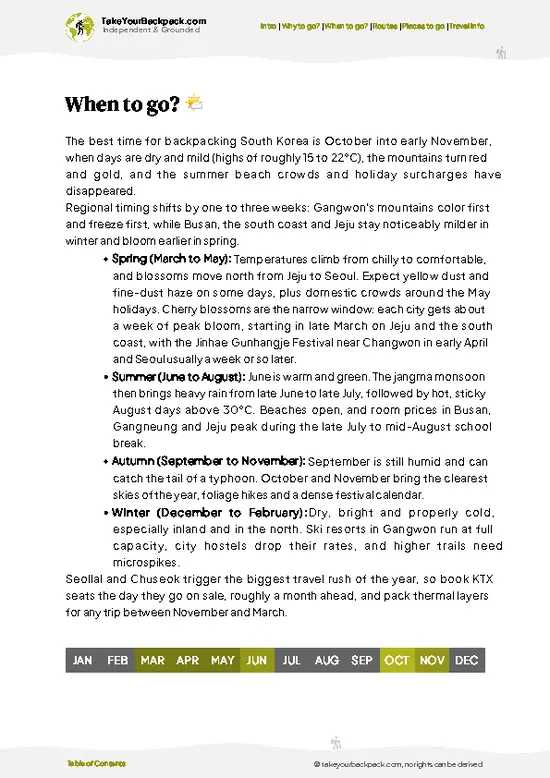
  • Topic: Weather and Temperature – Spring (April to June) and autumn (September to November) offer the most agreeable weather, with temperatures ranging from 13°C to 22°C (55°F to 72°F). These months avoid Jeju’s humid summers and chilly winters, making outdoor exploration comfortable without sweating or shivering.

  • Topic: Daylight Hours – Longer daylight in late spring and early autumn means more time to hike, bike, and explore without rushing. Expect around 12 to 14 hours of daylight, perfect for squeezing in those iconic coastal trails and waterfalls.

  • Topic: Crowds – Summer (July and August) draws the biggest crowds, especially domestic tourists escaping the mainland heat. Spring and autumn see fewer visitors, giving you breathing room at popular spots like Seongsan Ilchulbong and Hallasan
read more 👉

  • Topic: Weather and Temperature – Spring (April to June) and autumn (September to November) offer the most agreeable weather, with temperatures ranging from 13°C to 22°C (55°F to 72°F). These months avoid Jeju’s humid summers and chilly winters, making outdoor exploration comfortable without sweating or shivering.

  • Topic: Daylight Hours – Longer daylight in late spring and early autumn means more time to hike, bike, and explore without rushing. Expect around 12 to 14 hours of daylight, perfect for squeezing in those iconic coastal trails and waterfalls.

  • Topic: Crowds – Summer (July and August) draws the biggest crowds, especially domestic tourists escaping the mainland heat. Spring and autumn see fewer visitors, giving you breathing room at popular spots like Seongsan Ilchulbong and Hallasan National Park.

  • Topic: Seasonal Activities – Spring brings vibrant cherry blossoms and canola fields, while autumn showcases fiery foliage and harvest festivals. Winter offers quieter landscapes but limited outdoor activities due to cold and occasional snow.

  • Topic: Price Fluctuations – Peak summer and major holidays spike accommodation and flight prices. Shoulder seasons (spring and autumn) provide better deals without sacrificing experience quality, balancing cost and comfort smartly.


Pro-tip: Aim for late April to early June or mid-September to mid-October to maximize pleasant weather, manageable crowds, and wallet-friendly rates—your smartest move for a high-value Jeju trip.


source: climatestotravel.comJANJanuary: fair for travelingFEBFebruary: fair for travelingMARMarch: good for travelingAPRApril: excellent for travelingMAYMay: excellent for travelingJUNJune: highly recommended for travelingJULJuly: fair for travelingAUGAugust: fair for travelingSEPSeptember: highly recommended for travelingOCTOctober: excellent for travelingNOVNovember: highly recommended for travelingDECDecember: fair for traveling
when-to-go

✈️ The backpacker research shortcutSouth Korea Travel Guide

An offline-friendly backpacking guide with optimized travel routes, ranked highlights, transport advice, and the best areas to stay.
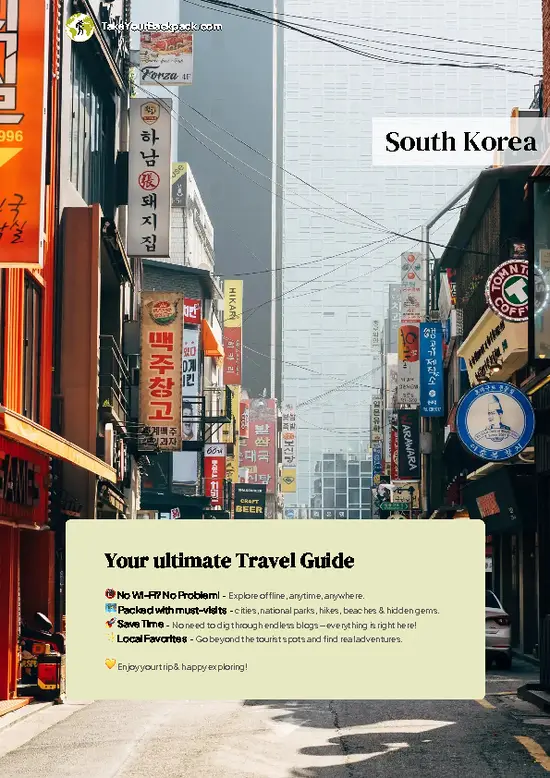
example page 0 from our offline Travel Guide for South Korea
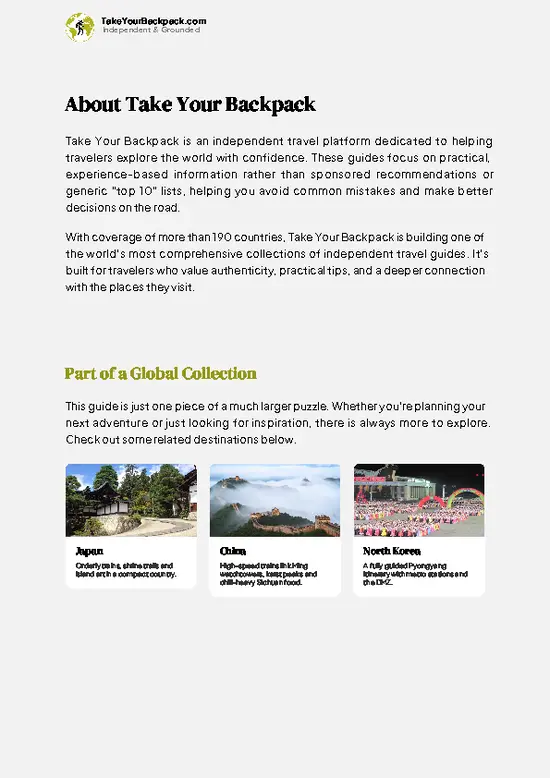
example page 1 from our offline Travel Guide for South Korea
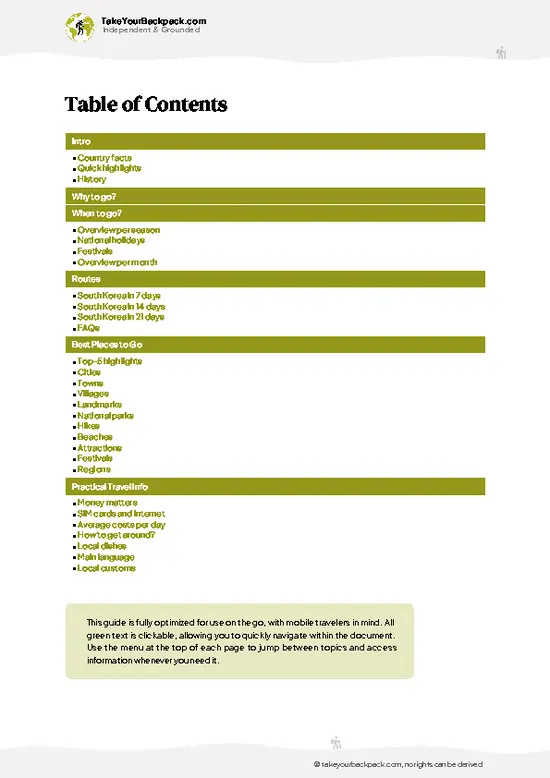
example page 2 from our offline Travel Guide for South Korea
example page 3 from our offline Travel Guide for South Korea
example page 4 from our offline Travel Guide for South Korea
example page 5 from our offline Travel Guide for South Korea
example page 6 from our offline Travel Guide for South Korea
example page 7 from our offline Travel Guide for South Korea
The digital guide (439 pages) contains:
124 highlights, ranked by travel appeal
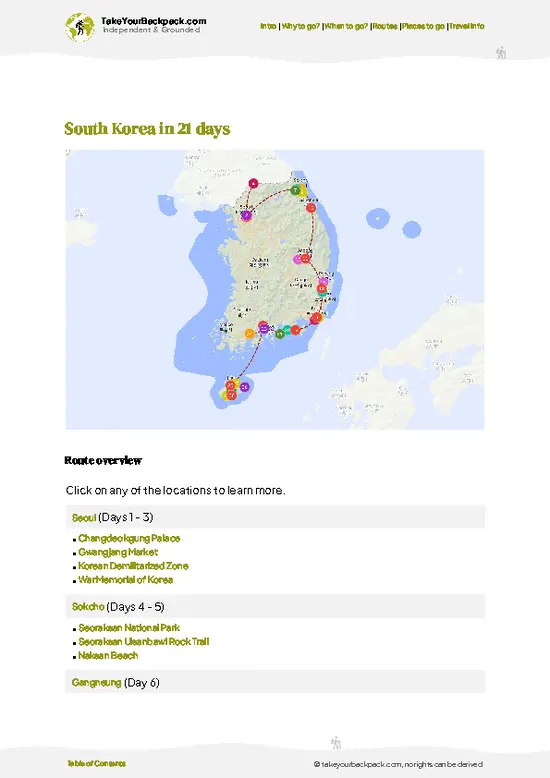
Optimized 7, 14 & 21-day travel routes
Cities, national parks, landmarks, beaches
How to get around
Offline-friendly for travel without Wi-Fi
👉 Click to see all 30+ guide features

📅 Plan smarter in minutes, not weeks
Month by month travel advice
Festivals & national holidays
Budget expectations

🗺️ Go to the right places, skip the overrated ones
Honest pros & cons of destinations
Top hikes, parks & viewpoints
Lesser-known places most travelers miss
Clear “worth it vs skip it” guidance

🛏️ Travel smoothly without rookie mistakes
Best areas to stay
Transport systems explained simply
Common scams & safety advice
SIM cards, money & practical tips

🌍 Understand the country, not just visit it
Culture & traditions
52 Essential phrases & customs
Festivals worth planning around
Traveler-friendly historical context
Insights that make places more meaningful

📱 Built for real travel conditions
Fully downloadable PDF
Works completely offline
Optimized for phone use
Useful in remote areas & buses
Everything in one place
Save weeks of stressful planning
Get instant access to your full guide. 30‑day money-back guarantee.


By proceeding you agree to our terms.
Sent to your inbox immediately after payment • 100% Secure Checkout
Best Backpacking Travel Advisor 2025 tourism awardBest Backpacking
Travel Advisor
2025
What others say about Take Your Backpack Guides:
⭐⭐⭐⭐⭐
Fantastic, amazing amount of information!
⭐⭐⭐⭐⭐
My goodness this is amazing, it's what I've been looking for hats off too you!
⭐⭐⭐⭐⭐
I think this is absolutely BRILLIANT
⭐⭐⭐⭐
Very complete and informative. It's still missing places, but I gotta to commend you
⭐⭐⭐⭐⭐
This is truly amazing, thank you, can't wait to explore it with my kids!
⭐⭐⭐⭐⭐
Awesome resource, thank you!
⭐⭐⭐⭐⭐
This is amazing! Can't wait to explore the ones I haven't seen
⭐⭐⭐⭐
I love this! Well done, great idea.
⭐⭐⭐⭐⭐
Thanks for taking the time to make this gem!
⭐⭐⭐⭐⭐
This might be the best website I've ever seen.
⭐⭐⭐⭐⭐
Congratulations, and thank you so much for your work; it's incredibly valuable.
⭐⭐⭐⭐
In all seriousness I think you did a great job pointing out the important spots
⭐⭐⭐⭐⭐
10/10 very good
⭐⭐⭐⭐⭐
As someone who's only just starting to visit regularly this is awesome, thank you.
⭐⭐⭐⭐
Thank you very much! I'm going to visit my dad, it's going to be very useful!
⭐⭐⭐⭐⭐
This is really cool! We'll be travelling for the first time and this definitely come in handy.
⭐⭐⭐⭐⭐
You are now our minister of culture, congratulations 👨‍💼
⭐⭐⭐⭐⭐
Just wanted to tell you that this is a pearl! Going to follow your recommendations.
⭐⭐⭐⭐⭐
This is so cool. I'll definitely be using the resource for my travels soon.
⭐⭐⭐⭐⭐
This is very impressive! Good work.
⭐⭐⭐⭐⭐
This is an amazing and informative site. Very well done!

🛏️ Where to stay?Best areas and accommodation options

Jeju’s backpacker sweet spot is the area around Jeju City’s Dongmun Market and the nearby Tapdong district. This zone nails the balance between budget and buzz. It’s safe, walkable, and packed with affordable guesthouses and hostels that cater specifically to solo travelers and budget adventurers. You’ll find a social vibe here without the chaos of a party district—think lively street food stalls, local markets, and cafés where striking up a conversation is as easy as ordering a tangerine juice.

Compared to the quieter, more residential neighborhoods or the resort-heavy Seogwipo area down south, … read more 👉
Jeju’s backpacker sweet spot is the area around Jeju City’s Dongmun Market and the nearby Tapdong district. This zone nails the balance between budget and buzz. It’s safe, walkable, and packed with affordable guesthouses and hostels that cater specifically to solo travelers and budget adventurers. You’ll find a social vibe here without the chaos of a party district—think lively street food stalls, local markets, and cafés where striking up a conversation is as easy as ordering a tangerine juice.

Compared to the quieter, more residential neighborhoods or the resort-heavy Seogwipo area down south, Dongmun and Tapdong offer a more authentic, on-the-ground experience. You’re close to public transport, which means easy access to Jeju’s natural highlights without the need for pricey taxis or rental cars. The hostels here tend to be smaller, fostering a community feel rather than the impersonal dorms you might find elsewhere.

If you’re after a place that’s both a launchpad for exploration and a hub for meeting fellow travelers, this is it. You sacrifice some luxury and polished resort amenities, but gain a genuine, budget-friendly slice of Jeju’s everyday life—and that’s the kind of trade-off that turns a trip from ordinary to memorable.

🚌 Getting aroundHow to get from A to B

Jeju’s rhythm is a curious blend of laid-back island time and bursts of tourist-driven urgency. It’s not a city that demands you sync your watch to a strict timetable, but it’s also not a place where you can wander aimlessly without consequences. The flow here is a dance between patience and planning. Buses run on schedules that are more guidelines than gospel, and taxis wait patiently but won’t come cheap if you’re not careful. Walking is often the best way to soak in the island’s unique volcanic landscapes and coastal views, but it’s not always practical for long distances. Understanding how time, money, and comfort interplay in Jeju’s transit options lets you hack your trip for maximum value without sacrificing the experience.


  • City Buses: The backbone of budget travel here, city buses
read more 👉
Jeju’s rhythm is a curious blend of laid-back island time and bursts of tourist-driven urgency. It’s not a city that demands you sync your watch to a strict timetable, but it’s also not a place where you can wander aimlessly without consequences. The flow here is a dance between patience and planning. Buses run on schedules that are more guidelines than gospel, and taxis wait patiently but won’t come cheap if you’re not careful. Walking is often the best way to soak in the island’s unique volcanic landscapes and coastal views, but it’s not always practical for long distances. Understanding how time, money, and comfort interplay in Jeju’s transit options lets you hack your trip for maximum value without sacrificing the experience.


  • City Buses: The backbone of budget travel here, city buses cover most tourist spots and local neighborhoods. They run roughly from 6:00 AM to 10:00 PM, with fares around 1,200 KRW ($1). They’re slow, often stopping frequently, but they’re reliable enough if you’re not in a rush and want to stretch your budget. Comfort is basic—expect crowded seats during peak hours and limited air conditioning in older buses.


  • Intercity Buses: For longer hauls, like getting from Jeju City to Seogwipo, intercity buses are your best bet. They run every 20-30 minutes from early morning until about 9:00 PM, costing around 2,000-3,000 KRW ($1.50-$2.50). Faster and more comfortable than city buses, they strike a good balance between saving time and money. The seats are cushioned, and the ride is smoother, but you’ll still share the space with locals and tourists alike.


  • Taxis: Taxis offer unmatched comfort and speed but at a steep price. The base fare starts around 3,300 KRW ($2.50), with additional charges per kilometer. They’re perfect for early mornings, late nights, or when you’re hauling gear to a trailhead. However, relying on taxis can quickly drain your budget, so use them strategically—think of them as a luxury reserve when time is tight or when public transit doesn’t reach your destination.


  • Rental Scooters: If you’re comfortable on two wheels, scooters are a brilliant way to combine speed, flexibility, and low cost. Rentals run about 30,000-40,000 KRW ($22-$30) per day. You control your schedule completely, can access remote spots, and avoid the stop-and-go of buses. The trade-off is safety and weather exposure, so weigh your confidence and the forecast before committing.


  • Walking: The ultimate zero-cost option, walking lets you experience Jeju’s textures and smells intimately. It’s perfect for short distances within towns or along coastal paths. But Jeju’s size and the spread-out nature of its attractions mean walking isn’t always practical for covering ground quickly. Use it to complement other transit modes, not replace them entirely.

👛 Costs (as of 6 April 2026)Money, prices, and spending tips

Backpacking in Jeju, South Korea, offers a mix of modern convenience and natural beauty, but knowing the daily costs upfront lets you play the budget game smartly.
  • Dorm Accommodation (High Season): Expect to pay around $20 to $30 per night. High season, typically summer and major holidays, pushes prices up due to demand, especially in popular areas near the beach or city center.
  • Dorm Accommodation (Off-Season): Drop to about $12 to $20 per night. Off-season rates are friendlier, giving you more room to negotiate or find quieter spots without sacrificing basic comfort.
  • Meals: Street food and casual eateries run about $5 to $10 per meal. Jeju’s local specialties like black pork or seafood might push a meal closer to $12 if you go for something a bit more substantial or sit-down.
  • Local Transport:
read more 👉
Backpacking in Jeju, South Korea, offers a mix of modern convenience and natural beauty, but knowing the daily costs upfront lets you play the budget game smartly.
  • Dorm Accommodation (High Season): Expect to pay around $20 to $30 per night. High season, typically summer and major holidays, pushes prices up due to demand, especially in popular areas near the beach or city center.
  • Dorm Accommodation (Off-Season): Drop to about $12 to $20 per night. Off-season rates are friendlier, giving you more room to negotiate or find quieter spots without sacrificing basic comfort.
  • Meals: Street food and casual eateries run about $5 to $10 per meal. Jeju’s local specialties like black pork or seafood might push a meal closer to $12 if you go for something a bit more substantial or sit-down.
  • Local Transport: Bus rides within Jeju typically cost $1 to $2 per trip. The island’s bus network is extensive but can be slow, so factor in time if you’re hopping around.
  • City Transport Pass: A day pass for unlimited bus travel costs around $4 to $6. This is a solid choice if you plan multiple stops or want to explore without worrying about exact change.
  • Basic Activities/Entry Fees: Many natural sites are free or very cheap, but expect to pay $5 to $15 for entry to museums, gardens, or cultural centers. Some popular spots like the Jeju Loveland or certain caves might be on the higher end.
  • Miscellaneous Expenses: This covers essentials like bottled water, snacks, or occasional coffee, usually around $3 to $7 daily. Small extras add up, so keep this in mind.

Jeju’s daily backpacking budget typically lands between $30 and $60, depending on season and how much you lean into comfort or convenience. This range balances basic needs with enough flexibility to enjoy the island’s unique offerings without breaking the bank.


source: visitjeju.net
⚠️ Prices can change and everyone travels differently, so take this as a rough guide. Hope it helps you plan your adventure!

🚌 Day tripsBest day trips from Jeju

Jeju Island is a backpacker’s paradise, offering a perfect launchpad for day trips that pack a punch without draining your wallet or time. Here are some standout options that will elevate your experience.

**Hallasan National Park**
This is where you can tackle South Korea’s highest peak, Hallasan. The hike is a solid day trip, taking about 4-8 hours round trip depending on your pace. The trail is well-marked, and the views from the top are a rewarding payoff for your effort. Expect to spend around $5 on transportation and snacks. Spring and fall are ideal for mild weather and stunning foliage. A common mistake? Underestimating the trail’s difficulty; come prepared with water and snacks.
👉 Explore Hallasan National Park

**Seongsan Ilchulbong (Sunrise Peak)**
An early morning trek to … read more 👉
Jeju Island is a backpacker’s paradise, offering a perfect launchpad for day trips that pack a punch without draining your wallet or time. Here are some standout options that will elevate your experience.

**Hallasan National Park**
This is where you can tackle South Korea’s highest peak, Hallasan. The hike is a solid day trip, taking about 4-8 hours round trip depending on your pace. The trail is well-marked, and the views from the top are a rewarding payoff for your effort. Expect to spend around $5 on transportation and snacks. Spring and fall are ideal for mild weather and stunning foliage. A common mistake? Underestimating the trail’s difficulty; come prepared with water and snacks.
👉 Explore Hallasan National Park

**Seongsan Ilchulbong (Sunrise Peak)**
An early morning trek to this volcanic crater is a must. The sunrise views are breathtaking, and the hike takes about 30 minutes to the top. You’ll spend around $10 on transportation and entrance fees. Late spring and early summer are fantastic for clear skies. Many first-timers miss the chance to explore the surrounding coastal area, which is equally stunning.


**Manjanggul Cave**
This lava tube is one of the longest in the world and offers a cool escape from the heat. The walk through the cave is about 1 km, taking roughly an hour. You’ll spend around $7 for entry and transport. Visit in the cooler months for a more comfortable experience. A common pitfall is not bringing a flashlight; while the cave is lit, having your own can enhance the experience.


**Jeongbang Waterfall**
This is one of the few waterfalls in Asia that falls directly into the ocean. It’s a short hike from the parking area, making it accessible for all. Expect to spend about $5 for transport and entry. The best time to visit is after heavy rains when the waterfall is at its most powerful. Many visitors overlook the nearby beach, which is perfect for a post-hike dip.


**Udo Island**
A quick ferry ride from Jeju, Udo is a charming island perfect for cycling and exploring. The round trip takes about 4-5 hours, and you’ll spend around $15 on the ferry and bike rental. Late spring is ideal for wildflowers. First-timers often miss the local peanut ice cream—don’t skip it!
Want to know what more South Korea offers?
The South Korea Travel Guide describes 124 highlights, from cities to national parks, from beaches to hikes

Get the Travel Guide -

🍲 FoodLocal Cuisine & Drinks

In Jeju, **food** is a celebration of the island’s unique bounty. You can’t miss **black pork**, a local specialty that’s rich and smoky, often grilled to perfection. Pair it with **gochujang** (red chili paste) for a kick that dances on your palate. Then there’s **haemul pajeon**, a savory seafood pancake that’s crispy on the outside and soft within, perfect for sharing over drinks.

Backpackers will find their culinary adventures in **markets** and along bustling streets. The **Dongmun Traditional Market** is a treasure trove of fresh produce and street food stalls. Grab a **hotteok** (sweet syrup-filled pancake) or some **tteokbokki** (spicy rice cakes) as you wander. Casual eateries abound, where you can sit on low stools and enjoy a hearty bowl of **bibimbap**, mixing rice with vegetables … read more 👉
In Jeju, **food** is a celebration of the island’s unique bounty. You can’t miss **black pork**, a local specialty that’s rich and smoky, often grilled to perfection. Pair it with **gochujang** (red chili paste) for a kick that dances on your palate. Then there’s **haemul pajeon**, a savory seafood pancake that’s crispy on the outside and soft within, perfect for sharing over drinks.

Backpackers will find their culinary adventures in **markets** and along bustling streets. The **Dongmun Traditional Market** is a treasure trove of fresh produce and street food stalls. Grab a **hotteok** (sweet syrup-filled pancake) or some **tteokbokki** (spicy rice cakes) as you wander. Casual eateries abound, where you can sit on low stools and enjoy a hearty bowl of **bibimbap**, mixing rice with vegetables and a fried egg, all topped with sesame oil.

When it comes to **drinking**, don’t overlook **makgeolli**, a traditional rice wine that’s slightly sweet and effervescent. It’s often served in bowls, encouraging a communal vibe. Remember, sharing food and drink is key in Jeju; it’s about connection, not just consumption. Embrace the local customs, and you’ll find that every bite and sip tells a story.

🛡️ SafetyScams, Hazards, and Annoyances

Jeju is generally safe, but like any destination, a little awareness goes a long way. Stick to well-lit areas at night, especially if you’re solo. The main streets are lively, but quieter spots can feel isolated. Trust your instincts; if something feels off, it probably is.

While scams are rare, be cautious around tourist-heavy areas. Some vendors may inflate prices or push you toward specific shops. Always ask for prices upfront and don’t hesitate to walk away if something feels off.

Annoyances can pop up, like aggressive sales tactics at markets. A polite but firm “no, thank you” usually does the trick. Keep your belongings secure, especially in crowded places, as pickpocketing can happen, though it’s not common.

Overall, carry yourself confidently, engage with locals, and enjoy the … read more 👉
Jeju is generally safe, but like any destination, a little awareness goes a long way. Stick to well-lit areas at night, especially if you’re solo. The main streets are lively, but quieter spots can feel isolated. Trust your instincts; if something feels off, it probably is.

While scams are rare, be cautious around tourist-heavy areas. Some vendors may inflate prices or push you toward specific shops. Always ask for prices upfront and don’t hesitate to walk away if something feels off.

Annoyances can pop up, like aggressive sales tactics at markets. A polite but firm “no, thank you” usually does the trick. Keep your belongings secure, especially in crowded places, as pickpocketing can happen, though it’s not common.

Overall, carry yourself confidently, engage with locals, and enjoy the rich culture without letting minor inconveniences dampen your experience.

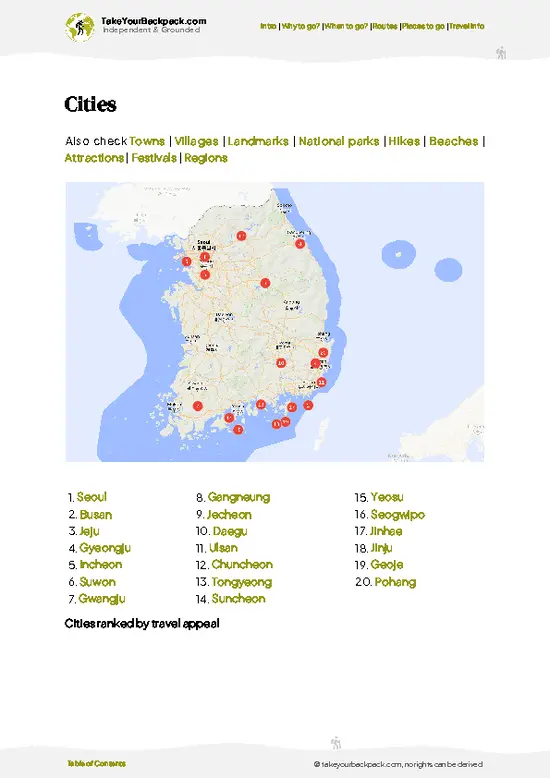
Other South Korean cities near Jeju

Explore more nearby:

  • Seogwipo—Waterfalls, coastal cliffs, citrus farms| 28 km away
  • Mokpo—Harborfront, modernist architecture, ferry terminal| 144 km away
  • Yeosu—Cable car, night markets, coastal promenade| 175 km away

💡 Not sure where to go next?
Create a personalized itinerary for South Korea including Jeju and the places that fit your trip.

Generate my itinerary

👉 Discover all cities

Or checkout all South Korea has to offer (think cities, towns, villages, national parks, hikes, beaches, festivals)
Country photo of South Korea

We 💚 feedbackParting advice and final tips

Jeju has this laid-back vibe that feels like a breath of fresh air. The best surprise? The local markets. You’ll find everything from fresh seafood to quirky souvenirs that scream authenticity. Just a heads-up: the weather can flip on you, so pack layers. Embrace the rain; it adds character to the island. If you’re up for it, hike Hallasan for a view that’ll stick with you. It’s the kind of place that lingers in your mind long after you leave.

✍️ Help improve this page!
The information on this page is based on in-depth research, insights shared by experienced travelers, and feedback from the local travel community in South Korea. While every effort is made to keep the information accurate and current, conditions can change — so if you spot anything incorrect or outdated, please get in touch.


🙋‍♂️ Give feedback

👋 Meet the founderWho’s Behind Take Your Backpack?

Johan, backpacker and founder of TakeYourBackpackHi, I’m Johan (Netherlands 🇳🇱), the creator of TakeYourBackpack. Over the past decade, I’ve backpacked through 80+ countries across six continents, gaining extensive experience with independent travel, long-term trips, and overland routes.

This site is built on a combination of firsthand travel experience and carefully curated insights from other backpackers. Many guides are based on places I’ve personally visited, while others bring together tips, observations, and practical advice shared by trusted travelers I’ve met along the way.

The goal is to provide realistic, experience-driven guidance — not generic itineraries — so you can explore destinations with better context, clearer expectations, and more confidence.

Get full country guide •
Instant download • 124 highlights • Full Offline guide