×

South Korea🇰🇷 | townsSokchoseafood markets, coastal boardwalks, national park gateway | things to do and best time to go

Explore SancheongExplore Yangdong

Backpacking in Sokcho
🏆 Top picktown ranked #3
By Johan Kruseman 🇳🇱 | Updated September 4, 2026

Sokcho is not for anyone chasing neon chaos, all-night bars, or big-city buzz. It’s for when you want sea air in your lungs, salt on your skin, and a mountain skyline instead of a skyline of glass. On Korea’s northeast coast in Gangwon-do, just north of Gangneung and east of Seoul, Sokcho works best as a soft landing pad for Seoraksan National Park and the quieter side of the East Sea. The town itself feels low-rise and lived-in: a harbor that smells like drying nets, a compact old center you can actually cross on foot, and a lakeside strip where locals stroll at dusk. Buses from Seoul are frequent and cheap; once you’re here, you’ll mostly walk or hop short local buses to the park and beaches. It’s calmer and more scenic than Gangneung, less polished than Seoul, with a small but real hostel scene where evenings lean more toward shared fried chicken and convenience-store beers than clubbing. Costs sit in the “reasonable coastal town” range, and safety is about as straightforward as South Korea gets, which makes Sokcho an easy, low-stress anchor point on a loop through the country’s east.

Discover everything you want to know in the 📖 South Korea Travel Guide.
Loading the map 🌍
CLICK TO FILTER
cities
towns
villages
landmarks
national parks
hikes
beaches
attractions
festivals
regions
SHOW COUNTRY’S BESTSHOW ALL

✨ Why go?
Ranked #3 town in South Korea
Reasons people choose to visit here

Sokcho is a backpacker’s hub that serves as a gateway to some of South Korea’s most breathtaking landscapes. Nestled near Seoraksan National Park, it’s a prime spot for hikers eager to tackle rugged trails and soak in panoramic views. The fresh mountain air mingles with the salty scent of the nearby East Sea, making every breath feel like a reward after a day of exploration.

The town itself is walkable, with charming streets lined by small-scale hostels and guesthouses that cater to budget travelers. You’ll find a friendly atmosphere, perfect for solo adventurers or small groups looking to share stories over a bowl of local seafood soup. While many backpackers pass through for a night or two, those who linger discover the joy of slow travel—savoring the local culture and cuisine.

Sokcho … read more 👉
Sokcho is a backpacker’s hub that serves as a gateway to some of South Korea’s most breathtaking landscapes. Nestled near Seoraksan National Park, it’s a prime spot for hikers eager to tackle rugged trails and soak in panoramic views. The fresh mountain air mingles with the salty scent of the nearby East Sea, making every breath feel like a reward after a day of exploration.

The town itself is walkable, with charming streets lined by small-scale hostels and guesthouses that cater to budget travelers. You’ll find a friendly atmosphere, perfect for solo adventurers or small groups looking to share stories over a bowl of local seafood soup. While many backpackers pass through for a night or two, those who linger discover the joy of slow travel—savoring the local culture and cuisine.

Sokcho isn’t about nightlife; it’s about connection—with nature and fellow travelers. If you’re seeking a place to recharge between hikes or simply want to enjoy a quiet beach day, this town fits the bill. It’s a practical stop that feels like a well-earned pause in your journey.
Want to include Sokcho in your South Korea route?
Create a personalized South Korea itinerary that includes Sokcho and the places that fit your trip — based on your travel style, budget, and available time. Get your route in seconds.

Generate my trip

💡 HighlightsTop highlights of Sokcho

  1. Seoraksan National Park (Sokcho side) — The reason most people come to Sokcho: dramatic granite peaks, waterfalls, and endless trails right on the town’s doorstep. Even a short walk from the entrance gives you a sense of Korea’s mountain culture and landscape that’s hard to beat.
  2. Sinheungsa Temple — A centuries-old Buddhist temple tucked into the lower slopes of Seorak with a huge bronze Buddha and quiet courtyards. It’s a good cultural counterpoint to the hiking—calm, photogenic, and historically significant.
  3. Gwongeumseong Cable Car — Quick, scenic lift up toward rocky ridgelines and lookout platforms. It’s an easy way to get big mountain views without a full-day hike, and the summit walk feels surprisingly otherworldly.
  4. Ulsanbawi Rock — The iconic jagged outcrop in Seorak that rewards
read more 👉
  1. Seoraksan National Park (Sokcho side) — The reason most people come to Sokcho: dramatic granite peaks, waterfalls, and endless trails right on the town’s doorstep. Even a short walk from the entrance gives you a sense of Korea’s mountain culture and landscape that’s hard to beat.
  2. Sinheungsa Temple — A centuries-old Buddhist temple tucked into the lower slopes of Seorak with a huge bronze Buddha and quiet courtyards. It’s a good cultural counterpoint to the hiking—calm, photogenic, and historically significant.
  3. Gwongeumseong Cable Car — Quick, scenic lift up toward rocky ridgelines and lookout platforms. It’s an easy way to get big mountain views without a full-day hike, and the summit walk feels surprisingly otherworldly.
  4. Ulsanbawi Rock — The iconic jagged outcrop in Seorak that rewards sweat with panoramic coastline-and-mountain views. It’s steep and rocky in parts, but the route and the summit views are classic Sokcho memories.
  5. Biseondae — A photogenic riverside rock platform and stream-side walk inside Seorak. Less crowded than main viewpoints, it’s perfect for a relaxed picnic or noodle stop surrounded by clear water and sculpted stone.
  6. Sokcho Beach & Yeonggeumjeong Pavilion — The long sandy beach and the small wooden pavilion on the pier are where locals gather at sunset. Good for a lazy swim, beach snacks, and people-watching after a day on the trails.
  7. Abai Village & the Gaetbae (hand-pulled ferry) — A tiny, historic neighborhood of North Korean refugees with unique dishes (Abai sundae, fish roe pasta) and a hand-pulled ferry crossing that feels lifted from another era. Real local character here.
  8. Sokcho Jungang (Seafood) Market — Fresh-caught seafood, live tanks, and cheap grilled plates you can eat on the spot. It’s the place to sample raw hwe, squid dishes, and the local market vibe—no frills, all flavor.
  9. Cheongchoho Lake Park — A mellow lakeside promenade with reed beds, sunset reflections, and a string of cafes. It’s an easy, low-energy way to soak up local life and snap some pretty photos without climbing anything.
  10. Daepo Port & Lighthouse area — Working harbor atmosphere, seafood stalls, and a walkable breakwater leading to a small lighthouse—great for an evening stroll and cheap fresh-catch dinners with ocean views.
A few great day trips close to Sokcho: Naksansa Temple (coastal temple with ocean views), the Goseong DMZ/Unification Observatory for a sober
Spotted a mistake or missing something? Contact us.

Things to do around Sokcho

Ratings based on Tripadvisor reviews. When you book through this link, you support our work at no extra cost to you.

🏘️ NeighborhoodsHow different areas shape the experience

Sokcho is a vibrant coastal town where the mountains meet the sea, offering a unique blend of adventure and relaxation. Here’s how to navigate its neighborhoods like a pro.

Downtown Sokcho
This is the heart of the action. Bustling streets filled with street food stalls and local shops create a lively atmosphere. It’s walkable, making it easy to explore on foot. Accommodations range from budget hostels to mid-range hotels, perfect for short stays. The nightlife is casual, with bars and cafes buzzing until late, but it’s not overwhelming. Public transport options are plentiful, connecting you to other parts of the town and nearby attractions.

Abai Village
A quaint area with a nostalgic vibe, Abai Village is known for its seafood and traditional houses. The scent of grilled squid fills … read more 👉
Sokcho is a vibrant coastal town where the mountains meet the sea, offering a unique blend of adventure and relaxation. Here’s how to navigate its neighborhoods like a pro.

Downtown Sokcho
This is the heart of the action. Bustling streets filled with street food stalls and local shops create a lively atmosphere. It’s walkable, making it easy to explore on foot. Accommodations range from budget hostels to mid-range hotels, perfect for short stays. The nightlife is casual, with bars and cafes buzzing until late, but it’s not overwhelming. Public transport options are plentiful, connecting you to other parts of the town and nearby attractions.

Abai Village
A quaint area with a nostalgic vibe, Abai Village is known for its seafood and traditional houses. The scent of grilled squid fills the air, drawing you into its narrow alleys. It’s quieter than Downtown, ideal for those seeking a more laid-back experience. You can easily spend a day here, enjoying the local cuisine and scenic views. Accommodations are limited, so it’s better for short visits.

Sokcho Beach
If sun and sand are your priorities, head to Sokcho Beach. The atmosphere is relaxed, with families and locals enjoying the shoreline. It’s a great spot for longer stays, with various guesthouses and beachside cafes. The beach is easily accessible, and you can stroll along the promenade. While nightlife is low-key, the sunsets here are breathtaking, making evening walks a must.

Seoraksan National Park Entrance
For the adventurous, this area is your gateway to hiking trails and stunning mountain views. It’s less about nightlife and more about nature. Stay here if you plan to hike extensively. The vibe is tranquil, with a focus on outdoor activities. Accommodations are basic but functional, catering to those who prioritize proximity to the trails.

⌛️ 1 day1-day itinerary for Sokcho

Sokcho, a coastal town in South Korea, is a delightful blend of sea, mountains, and culture. Nestled near Seoraksan National Park, it offers a unique mix of outdoor adventure and urban charm. The salty breeze carries the scent of fresh seafood, while the vibrant local markets pulse with life.

Start your day early at the Sokcho Fish Market. The air is crisp, and the sun is just beginning to warm the horizon. Grab a bowl of warm, spicy fish soup from one of the stalls. The flavors are bold, and the experience is authentic. As you sip your soup, watch the fishermen unload their catch, a lively scene that sets the tone for your day.

After breakfast, head to Seoraksan National Park. The trails here are well-marked, and even a short hike to Biryong Falls offers stunning views. The sound of rushing … read more 👉
Sokcho, a coastal town in South Korea, is a delightful blend of sea, mountains, and culture. Nestled near Seoraksan National Park, it offers a unique mix of outdoor adventure and urban charm. The salty breeze carries the scent of fresh seafood, while the vibrant local markets pulse with life.

Start your day early at the Sokcho Fish Market. The air is crisp, and the sun is just beginning to warm the horizon. Grab a bowl of warm, spicy fish soup from one of the stalls. The flavors are bold, and the experience is authentic. As you sip your soup, watch the fishermen unload their catch, a lively scene that sets the tone for your day.

After breakfast, head to Seoraksan National Park. The trails here are well-marked, and even a short hike to Biryong Falls offers stunning views. The sound of rushing water and the scent of pine create a serene atmosphere. If you’re feeling adventurous, take the cable car up to Gwongeumseong Fortress for panoramic vistas. The effort is rewarded with breathtaking sights that make the climb worthwhile.

In the afternoon, return to town and explore the Abai Village. This area, often overlooked by tourists, is a charming enclave with a rich history. Stroll through the narrow streets lined with traditional houses and sample some local delicacies like abai sundae, a unique twist on the Korean sausage. The village’s quiet charm contrasts beautifully with the bustling market you visited earlier.

As evening approaches, make your way to the Sokcho Beach. The golden light of sunset casts a warm glow over the sand. Find a spot to relax and enjoy the view, perhaps with a local beer in hand. The sound of waves crashing creates a soothing backdrop as you reflect on your day.

Sokcho is more than just a stopover; it’s a place where nature and culture intertwine, offering a day filled with rich experiences that linger long after you leave.
Turn your Sokcho visit into an South Korea adventure
Build a complete South Korea route with Sokcho, hidden gems, must-see destinations, and realistic travel times included.

Generate my trip

🌤️ When to go?Seasonal considerations and timing


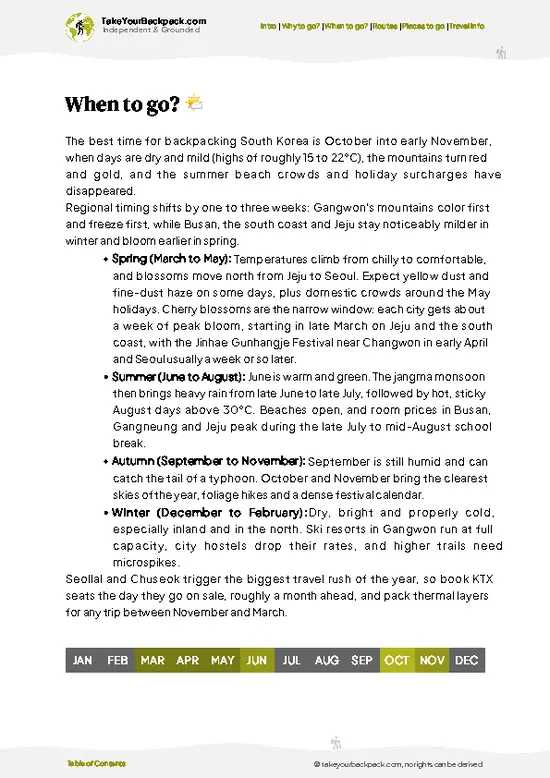
  • Weather: Spring (April to June) and fall (September to November) offer the most comfortable weather for backpacking. Expect mild temperatures around 15-22°C (59-72°F), perfect for hiking without the oppressive humidity or chill.

  • Temperature: Summers can spike to 25-30°C (77-86°F) with sticky humidity, making outdoor activities sweaty and draining. Winters drop to -5 to 5°C (23-41°F), which can freeze your motivation unless you’re geared for cold.

  • Daylight Hours: In spring and fall, you get roughly 12-13 hours of daylight—enough time to explore Seoraksan National Park trails without rushing, but not so much that you burn out.

  • Crowds: Summer and major Korean holidays bring throngs of domestic tourists, especially on weekends. Visiting in shoulder seasons means quieter trails and more
read more 👉

  • Weather: Spring (April to June) and fall (September to November) offer the most comfortable weather for backpacking. Expect mild temperatures around 15-22°C (59-72°F), perfect for hiking without the oppressive humidity or chill.

  • Temperature: Summers can spike to 25-30°C (77-86°F) with sticky humidity, making outdoor activities sweaty and draining. Winters drop to -5 to 5°C (23-41°F), which can freeze your motivation unless you’re geared for cold.

  • Daylight Hours: In spring and fall, you get roughly 12-13 hours of daylight—enough time to explore Seoraksan National Park trails without rushing, but not so much that you burn out.

  • Crowds: Summer and major Korean holidays bring throngs of domestic tourists, especially on weekends. Visiting in shoulder seasons means quieter trails and more breathing room in town.

  • Seasonal Activities: Fall paints the mountains in fiery reds and golds, a visual reward for the hike. Spring bursts with azaleas and cherry blossoms, adding color and scent to your trek.

  • Price Fluctuations: Accommodation and transport costs peak in summer and holiday periods. Booking in spring or fall often nets better rates and more availability.


Pro-tip: Aim for late September to early October—cool air, fewer crowds, and the mountain’s autumn palette make every step feel earned and every view worth the effort.


source: climatestotravel.comJANJanuary: fair for travelingFEBFebruary: fair for travelingMARMarch: good for travelingAPRApril: excellent for travelingMAYMay: excellent for travelingJUNJune: highly recommended for travelingJULJuly: fair for travelingAUGAugust: fair for travelingSEPSeptember: excellent for travelingOCTOctober: excellent for travelingNOVNovember: highly recommended for travelingDECDecember: fair for traveling
when-to-go

✈️ The backpacker research shortcutSouth Korea Travel Guide

An offline-friendly backpacking guide with optimized travel routes, ranked highlights, transport advice, and the best areas to stay.
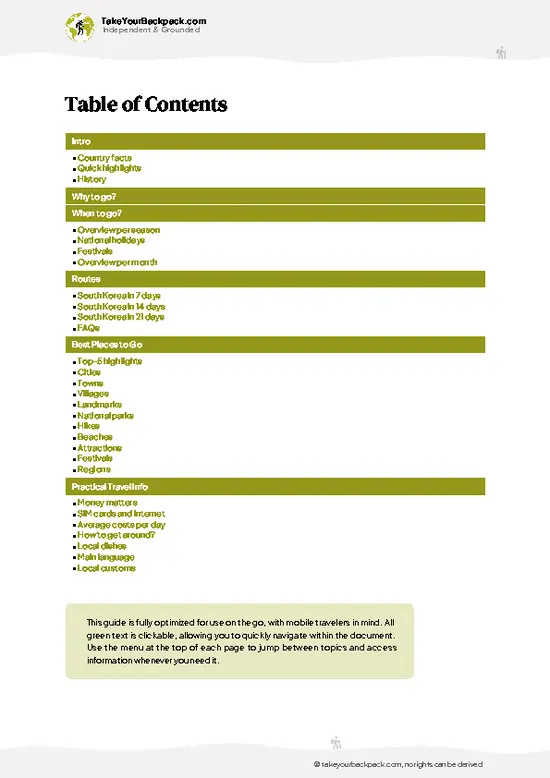
example page 0 from our offline Travel Guide for South Korea
example page 1 from our offline Travel Guide for South Korea
example page 2 from our offline Travel Guide for South Korea
example page 3 from our offline Travel Guide for South Korea
example page 4 from our offline Travel Guide for South Korea
example page 5 from our offline Travel Guide for South Korea
example page 6 from our offline Travel Guide for South Korea
example page 7 from our offline Travel Guide for South Korea
The digital guide (439 pages) contains:
124 highlights, ranked by travel appeal
Optimized 7, 14 & 21-day travel routes
Cities, national parks, landmarks, beaches
How to get around
Offline-friendly for travel without Wi-Fi
👉 Click to see all 30+ guide features

📅 Plan smarter in minutes, not weeks
Month by month travel advice
Festivals & national holidays
Budget expectations

🗺️ Go to the right places, skip the overrated ones
Honest pros & cons of destinations
Top hikes, parks & viewpoints
Lesser-known places most travelers miss
Clear “worth it vs skip it” guidance

🛏️ Travel smoothly without rookie mistakes
Best areas to stay
Transport systems explained simply
Common scams & safety advice
SIM cards, money & practical tips

🌍 Understand the country, not just visit it
Culture & traditions
52 Essential phrases & customs
Festivals worth planning around
Traveler-friendly historical context
Insights that make places more meaningful

📱 Built for real travel conditions
Fully downloadable PDF
Works completely offline
Optimized for phone use
Useful in remote areas & buses
Everything in one place
Save weeks of stressful planning
Get instant access to your full guide. 30‑day money-back guarantee.
+ Add another guide for just US$7.80

By proceeding you agree to our terms.
Sent to your inbox immediately after payment • 100% Secure Checkout
Best Backpacking Travel Advisor 2025 tourism awardBest Backpacking
Travel Advisor
2025
What others say about Take Your Backpack Guides:
⭐⭐⭐⭐⭐
Fantastic, amazing amount of information!
⭐⭐⭐⭐⭐
My goodness this is amazing, it's what I've been looking for hats off too you!
⭐⭐⭐⭐⭐
I think this is absolutely BRILLIANT
⭐⭐⭐⭐
Very complete and informative. It's still missing places, but I gotta to commend you
⭐⭐⭐⭐⭐
This is truly amazing, thank you, can't wait to explore it with my kids!
⭐⭐⭐⭐⭐
Awesome resource, thank you!
⭐⭐⭐⭐⭐
This is amazing! Can't wait to explore the ones I haven't seen
⭐⭐⭐⭐
I love this! Well done, great idea.
⭐⭐⭐⭐⭐
Thanks for taking the time to make this gem!
⭐⭐⭐⭐⭐
This might be the best website I've ever seen.
⭐⭐⭐⭐⭐
Congratulations, and thank you so much for your work; it's incredibly valuable.
⭐⭐⭐⭐
In all seriousness I think you did a great job pointing out the important spots
⭐⭐⭐⭐⭐
10/10 very good
⭐⭐⭐⭐⭐
As someone who's only just starting to visit regularly this is awesome, thank you.
⭐⭐⭐⭐
Thank you very much! I'm going to visit my dad, it's going to be very useful!
⭐⭐⭐⭐⭐
This is really cool! We'll be travelling for the first time and this definitely come in handy.
⭐⭐⭐⭐⭐
You are now our minister of culture, congratulations 👨‍💼
⭐⭐⭐⭐⭐
Just wanted to tell you that this is a pearl! Going to follow your recommendations.
⭐⭐⭐⭐⭐
This is so cool. I'll definitely be using the resource for my travels soon.
⭐⭐⭐⭐⭐
This is very impressive! Good work.
⭐⭐⭐⭐⭐
This is an amazing and informative site. Very well done!

🛏️ Where to stay?Choosing the right base

Sokcho’s best backpacker turf is the area around the Sokcho Tourist & Fishery Market and the nearby beachfront stretch. This zone hums with life from dawn till late, offering a practical base where safety feels like a given—not just because it’s well-trafficked, but because locals and travelers mingle freely in the open-air market’s salty, fishy air. The market’s narrow alleys, alive with vendors shouting over sizzling seafood and spicy tteokbokki, create a natural social hub. Staying here means you’re steps from budget-friendly hostels that cater to solo travelers and groups alike, with communal … read more 👉
Sokcho’s best backpacker turf is the area around the Sokcho Tourist & Fishery Market and the nearby beachfront stretch. This zone hums with life from dawn till late, offering a practical base where safety feels like a given—not just because it’s well-trafficked, but because locals and travelers mingle freely in the open-air market’s salty, fishy air. The market’s narrow alleys, alive with vendors shouting over sizzling seafood and spicy tteokbokki, create a natural social hub. Staying here means you’re steps from budget-friendly hostels that cater to solo travelers and groups alike, with communal spaces that invite easy conversation over instant noodles or shared beers.

Compared to the quieter, more residential neighborhoods farther from the coast, this area pulses with energy and convenience. You’re close to the bus station for day trips to Seoraksan National Park, and the beach’s cool breeze cuts through the summer heat, making evening strolls a ritual. The vibe is casual but charged, a perfect balance for backpackers who want to feel part of the local rhythm without sacrificing comfort or connection. Other parts of Sokcho might offer peace, but here you get the city’s pulse—raw, accessible, and alive.

🚌 Getting aroundMoving around without the hassle

Sokcho moves at its own pace—neither frantic nor sluggish, but a steady rhythm shaped by the sea breeze and mountain shadows. The mornings bring a crisp clarity, with fishermen unloading their catch and locals slipping into cafés for strong coffee and soft, warm buns. By afternoon, the streets hum with a mix of tourists and residents, the scent of grilled squid mingling with pine from nearby Seoraksan. This town doesn’t demand rigid schedules; it rewards those who flow with its natural tempo, where transit isn’t just about getting from A to B but about soaking in the atmosphere between stops. Knowing how to navigate Sokcho’s transit options means you spend less time waiting and more time feeling the pulse of the place.


  • Walking: Sokcho’s compact downtown is best explored on foot. The flat
read more 👉
Sokcho moves at its own pace—neither frantic nor sluggish, but a steady rhythm shaped by the sea breeze and mountain shadows. The mornings bring a crisp clarity, with fishermen unloading their catch and locals slipping into cafés for strong coffee and soft, warm buns. By afternoon, the streets hum with a mix of tourists and residents, the scent of grilled squid mingling with pine from nearby Seoraksan. This town doesn’t demand rigid schedules; it rewards those who flow with its natural tempo, where transit isn’t just about getting from A to B but about soaking in the atmosphere between stops. Knowing how to navigate Sokcho’s transit options means you spend less time waiting and more time feeling the pulse of the place.


  • Walking: Sokcho’s compact downtown is best explored on foot. The flat streets and wide sidewalks make wandering easy, and you’ll catch the subtle details—the salty tang in the air, the chatter of vendors—better up close. Most key spots, like the fish market, beaches, and bus terminals, are within 20-30 minutes of each other.


  • Local City Buses: These run frequently from early morning (around 6:00 AM) until about 10:00 PM, with fares under 1,500 KRW. They’re slow but reliable, threading through neighborhoods and stopping near major attractions like Seoraksan National Park’s entrance. Buses can get crowded during peak hours, so grab a seat early if you want to enjoy the views without the crush.


  • Intercity Buses: Departing from Sokcho Bus Terminal, these connect you to Seoul and other regional hubs. They start as early as 5:30 AM and run until late evening, with tickets around 10,000 to 15,000 KRW depending on the destination. These buses are comfortable and air-conditioned, a solid choice if you’re arriving or leaving early or late without fuss.


  • Taxi: Taxis are plentiful and affordable by Western standards, with a base fare around 3,800 KRW and reasonable per-kilometer rates. They’re your best bet for early mornings or late nights when buses aren’t running, or if you’re carrying heavy gear. Drivers generally know the main tourist spots, but having your destination written in Korean helps avoid confusion.


  • Bicycle Rentals: For the adventurous, renting a bike is a fantastic way to cover more ground without losing the intimacy of walking. Rental shops near the beach offer bikes for about 10,000 KRW per day. The coastal paths and flat terrain make for a refreshing ride, especially in the golden light of late afternoon.

👛 Costs (as of 4 September 2026)What things cost and how to budget

Backpacking in Sokcho, South Korea, offers a mix of coastal charm and mountain access without breaking the bank, but knowing where your money goes unlocks a smoother trip.
  • Dorm Accommodation: Expect to pay around $15 to $25 per night for a bed in a clean, basic hostel dorm. These places often have simple amenities—think shared bathrooms and communal kitchens—but they’re well-kept and usually within walking distance of the beach or bus terminals.
  • Meals: Local street food and small eateries keep costs low. A filling meal like a bowl of spicy seafood stew or bibimbap runs about $4 to $7. If you hit the fish markets or try grilled squid from street vendors, budget around $5 to $10 per meal. Convenience stores offer cheap snacks and drinks, perfect for quick refuels.
  • Local Transport: Sokcho
read more 👉
Backpacking in Sokcho, South Korea, offers a mix of coastal charm and mountain access without breaking the bank, but knowing where your money goes unlocks a smoother trip.
  • Dorm Accommodation: Expect to pay around $15 to $25 per night for a bed in a clean, basic hostel dorm. These places often have simple amenities—think shared bathrooms and communal kitchens—but they’re well-kept and usually within walking distance of the beach or bus terminals.
  • Meals: Local street food and small eateries keep costs low. A filling meal like a bowl of spicy seafood stew or bibimbap runs about $4 to $7. If you hit the fish markets or try grilled squid from street vendors, budget around $5 to $10 per meal. Convenience stores offer cheap snacks and drinks, perfect for quick refuels.
  • Local Transport: Sokcho is compact, so walking covers a lot, but buses are the go-to for reaching hiking trails or the national park. Bus rides typically cost under $1.50 each. Taxis start at about $3 and can be handy if you’re carrying gear or returning late.
  • Basic Activities/Entry Fees: Entrance to Seoraksan National Park, the main draw, costs roughly $3 to $5. Renting gear for hiking or joining a guided tour can add $10 to $20, but many trails are free to explore on your own. Museums and local cultural sites usually charge minimal fees, around $2 to $5.
  • Miscellaneous Expenses: Bottled water, snacks, and occasional coffee or tea runs add up to about $3 to $7 daily. If you want souvenirs or local crafts, budget extra, but casual browsing costs nothing.

All told, a realistic daily budget for backpacking in Sokcho lands between $30 and $50. This range covers basic comfort without skimping on the experiences that make Sokcho’s rugged coast and mountain air worth every cent.


source: english.visitkorea.or.kr
⚠️ Prices can change and everyone travels differently, so take this as a rough guide. Hope it helps you plan your adventure!

🚌 Day tripsBest day trips from Sokcho

Sokcho is a backpacker’s dream hub, perfectly positioned for day trips that blend adventure with the beauty of South Korea’s landscapes. Here are some standout excursions that make the most of your time in this coastal town.

Seoraksan National Park
Just a 30-minute bus ride from Sokcho, Seoraksan National Park is a must-visit for its jagged peaks and lush valleys. The trails range from easy strolls to challenging hikes, with the Ulsanbawi Rock route being a favorite for its breathtaking views. The crisp mountain air is invigorating, and the scent of pine trees fills your lungs as you ascend. Aim for early morning to beat the crowds and catch the sunrise illuminating the peaks. Expect to spend around 10,000 KRW for the bus and park entrance. Fall is particularly stunning here, with vibrant … read more 👉
Sokcho is a backpacker’s dream hub, perfectly positioned for day trips that blend adventure with the beauty of South Korea’s landscapes. Here are some standout excursions that make the most of your time in this coastal town.

Seoraksan National Park
Just a 30-minute bus ride from Sokcho, Seoraksan National Park is a must-visit for its jagged peaks and lush valleys. The trails range from easy strolls to challenging hikes, with the Ulsanbawi Rock route being a favorite for its breathtaking views. The crisp mountain air is invigorating, and the scent of pine trees fills your lungs as you ascend. Aim for early morning to beat the crowds and catch the sunrise illuminating the peaks. Expect to spend around 10,000 KRW for the bus and park entrance. Fall is particularly stunning here, with vibrant foliage painting the landscape. A common mistake? Underestimating the weather—bring layers, as it can change quickly.
👉 Explore Seoraksan National Park

Abai Village
A quick 15-minute bus ride takes you to Abai Village, a charming enclave known for its North Korean heritage. Stroll through the narrow streets, where the smell of grilled squid wafts through the air. Try the local specialty, Abai Sundae, a unique take on blood sausage. The village is small, so a couple of hours is sufficient to soak in the atmosphere and snap some photos. The best time to visit is during the spring when cherry blossoms bloom, adding a soft pink hue to the scenery. Many first-timers miss the ferry ride across the river, which offers a lovely view of the village from the water.


Yangyang Surf Beach
For a taste of the surf culture, head to Yangyang Surf Beach, about 40 minutes by bus. The sound of crashing waves and the salty breeze create a laid-back vibe that’s perfect for unwinding. Rent a board for around 20,000 KRW and catch some waves, or simply relax on the sand. Summer is peak season, but early fall offers warm water and fewer crowds. A common rookie error is not checking the surf conditions; make sure to ask locals for the best spots.


Chungang Market
If you’re looking for a slice of local life, Chungang Market is just a 10-minute walk from the center of Sokcho. The market buzzes with vendors selling everything from fresh seafood to handmade crafts. Grab a bite of tteokbokki (spicy rice cakes) while you wander. Plan to spend a couple of hours here, especially if you want to sample various street foods. The best time to visit is during the morning when the market is bustling with activity. First-timers often overlook the hidden food stalls tucked away in corners—don’t miss out on those local flavors!
Want to know what more South Korea offers?
The South Korea Travel Guide describes 124 highlights, from cities to national parks, from beaches to hikes

Get the Travel Guide -

🛡️ SafetySafety Tips and Common Scams in Sokcho

Sokcho is generally safe, but like any travel destination, a little awareness goes a long way. The bustling Sokcho Beach area can get crowded, especially during summer. Keep your belongings close; a crossbody bag is ideal.

If you’re wandering solo at night, stick to well-lit streets and populated areas. The waterfront is lively and offers a comforting vibe, but avoid quieter back alleys after dark.

While scams are rare, be cautious of overly friendly locals offering unsolicited help. Politely decline if someone seems too eager to guide you somewhere.

Everyday annoyances can include language barriers; not everyone speaks English fluently. Download a translation app to ease communication. Also, be prepared for some restaurants to have limited menus in English. A little patience and a smile … read more 👉
Sokcho is generally safe, but like any travel destination, a little awareness goes a long way. The bustling Sokcho Beach area can get crowded, especially during summer. Keep your belongings close; a crossbody bag is ideal.

If you’re wandering solo at night, stick to well-lit streets and populated areas. The waterfront is lively and offers a comforting vibe, but avoid quieter back alleys after dark.

While scams are rare, be cautious of overly friendly locals offering unsolicited help. Politely decline if someone seems too eager to guide you somewhere.

Everyday annoyances can include language barriers; not everyone speaks English fluently. Download a translation app to ease communication. Also, be prepared for some restaurants to have limited menus in English. A little patience and a smile can go a long way in these situations.

Overall, embrace the local culture, stay aware, and you’ll find Sokcho to be a welcoming spot for your adventures.

FAQFrequently asked questions about Sokcho

Yes, Sokcho is worth visiting for its natural beauty and access to Seoraksan National Park, a top hiking destination in South Korea. The town also offers fresh seafood markets and beaches, making it more than just a stopover.
You need 2 to 3 days in Sokcho to explore Seoraksan National Park thoroughly and enjoy the local attractions like Sokcho Beach and the fish market. This allows time for hiking, sightseeing, and sampling local cuisine.
Yes, Sokcho can be visited as a day trip from nearby cities like Gangneung or even Seoul, but it requires an early start. The bus from Seoul takes about 2.5 to 3 hours one way, so a day trip is possible but tight for hiking.
⚠️ Things can change over time, so always validate details locally before you go.

Other South Korean towns near Sokcho

Explore more nearby:

  • Yangyang—surf beaches, pine groves, seafood shacks| 14 km away
  • Inje—whitewater rafting, pine forests, mountain lodges| 39 km away
  • Pyeongchang—alpine meadows, ski resorts, Buddhist temples| 95 km away

💡 Not sure where to go next?
Create a personalized itinerary for South Korea including Sokcho and the places that fit your trip.

Generate my itinerary

👉 Discover all towns

Or checkout all South Korea has to offer (think cities, towns, villages, national parks, hikes, beaches, festivals)
Country photo of South Korea

We 💚 feedbackParting advice and final tips

Sokcho has this laid-back vibe that feels like a breath of fresh air after the hustle of Seoul. The best surprise? The raw beauty of Seoraksan National Park just a stone’s throw away. You’ll want to hit those trails early; the morning mist clings to the peaks, creating a magical atmosphere. Just a heads-up: weekends can get crowded, so aim for a weekday visit if you can. Trust me, the tranquility is worth it. Enjoy the local seafood too; it’s a flavor explosion you won’t forget.

✍️ Help improve this page!
The information on this page is based on in-depth research, insights shared by experienced travelers, and feedback from the local travel community in South Korea. While every effort is made to keep the information accurate and current, conditions can change — so if you spot anything incorrect or outdated, please get in touch.


🙋‍♂️ Give feedback

👋 Meet the founderWho’s Behind Take Your Backpack?

Johan, backpacker and founder of TakeYourBackpackHi, I’m Johan (Netherlands 🇳🇱), the creator of TakeYourBackpack. Over the past decade, I’ve backpacked through 80+ countries across six continents, gaining extensive experience with independent travel, long-term trips, and overland routes.

This site is built on a combination of firsthand travel experience and carefully curated insights from other backpackers. Many guides are based on places I’ve personally visited, while others bring together tips, observations, and practical advice shared by trusted travelers I’ve met along the way.

The goal is to provide realistic, experience-driven guidance — not generic itineraries — so you can explore destinations with better context, clearer expectations, and more confidence.

Get full country guide •
Instant download • 124 highlights • Full Offline guide