×

South Korea🇰🇷 | townsSancheongherbal medicine, mountain trails, rural festivals | things to do and best time to go

Explore Jeonju Hanok VillageExplore Sokcho

Backpacking in Sancheong
👀 For curious travelerstown ranked #15
By Johan Kruseman 🇳🇱 | Updated September 4, 2026

Your first real decision in Sancheong is whether to treat it as a quick temple-and-herb stop or to slow down and use it as your base for Jirisan’s quieter slopes; that choice decides if you just skim the surface or actually feel the mountain air in your lungs at dawn. Sancheong sits inland in South Gyeongsang Province, between Jinju and Jirisan National Park, a small town that smells faintly of pine, soil, and medicinal herbs after rain. For backpackers, it’s more staging ground than headline act: good for hiking Jirisan’s southern trails, visiting traditional medicine clinics and Donguibogam Village, and catching local buses deeper into the hills. It’s calmer and more rural than Jinju or Gurye, with early nights, a few motels and pensions instead of classic hostels, and social life limited to barbecue joints and quiet cafés where you’ll mostly meet locals, not other foreigners. Buses in and out are reliable but not frequent, so you plan around timetables, then walk most places in town; that friction keeps costs low and crowds thin, but also means you trade nightlife and convenience for dark, safe streets and the sound of river water instead of traffic.

Discover everything you want to know in the 📖 South Korea Travel Guide.
Loading the map 🌍
CLICK TO FILTER
cities
towns
villages
landmarks
national parks
hikes
beaches
attractions
festivals
regions
SHOW COUNTRY’S BESTSHOW ALL

✨ Why go?
Ranked #15 town in South Korea
What sets this place apart

Sancheong is a backpacker’s haven that thrives on its proximity to nature and cultural richness. Nestled between stunning hiking trails and serene beaches, it’s a perfect pit stop for those craving the outdoors. The small-scale hostels and guesthouses foster a friendly, communal vibe, making it easy to connect with fellow travelers. Streets are walkable, lined with local eateries serving hearty, authentic dishes that fuel your adventures. Most backpackers linger a few days, soaking in the slow pace and tranquility. This town suits solo travelers and small groups looking for a blend of exploration and relaxation. If you’re seeking vibrant nightlife, you might want to keep moving; here, the charm lies in the quiet moments.
Want to include Sancheong in your South Korea route?
Create a personalized South Korea itinerary that includes Sancheong and the places that fit your trip — based on your travel style, budget, and available time. Get your route in seconds.

Generate my trip

💡 HighlightsPlaces and moments you shouldn't skip

  • Jirisan National Park (Sancheong access) — The Jirisan slopes that sit inside Sancheong give you classic Korean mountain hiking: steep forest trails, small temple shrines tucked into gullies, and open ridgelines with big views. Entering Jirisan from Sancheong puts you closer to quieter trails and local mountain culture without the crowds at the bigger trailheads.
  • Daewonsa (대원사) — A local Buddhist temple set in forested hills near town, worth visiting for its peaceful courtyard, seasonal temple architecture, and the chance to see traditional rituals and temple-stay culture on a small scale.
  • Sancheong Traditional Market (산청 전통시장) — The town’s market showcases regional produce, medicinal herbs, and home-style stalls. It’s the best place to sample Sancheong’s flavors, watch daily life, and
read more 👉
  • Jirisan National Park (Sancheong access) — The Jirisan slopes that sit inside Sancheong give you classic Korean mountain hiking: steep forest trails, small temple shrines tucked into gullies, and open ridgelines with big views. Entering Jirisan from Sancheong puts you closer to quieter trails and local mountain culture without the crowds at the bigger trailheads.
  • Daewonsa (대원사) — A local Buddhist temple set in forested hills near town, worth visiting for its peaceful courtyard, seasonal temple architecture, and the chance to see traditional rituals and temple-stay culture on a small scale.
  • Sancheong Traditional Market (산청 전통시장) — The town’s market showcases regional produce, medicinal herbs, and home-style stalls. It’s the best place to sample Sancheong’s flavors, watch daily life, and pick up inexpensive souvenirs from local vendors.
  • Sancheong County Museum (산청군립박물관 / local history displays) — Small but focused exhibits on the county’s folk history, archaeology, and agricultural life give real context to the sights around town and are ideal for a short, informative visit.
A few real, visitable highlights just outside Sancheong that make great day trips are Jirisan’s higher ridgelines and famous peaks, the Hwagae (Hadong) cherry-blossom road and market area, and nearby Hamyang’s traditional sites and scenic valleys.
Spotted a mistake or missing something? Contact us.

Things to do near Sancheong

Ratings based on Tripadvisor reviews. When you book through this link, you support our work at no extra cost to you.

🏘️ NeighborhoodsNeighborhood guide to Sancheong

Sancheong is a charming town that offers a blend of nature and culture, perfect for backpackers seeking authenticity.

Downtown Sancheong: This is the heartbeat of the town. It’s walkable, with local eateries and shops lining the streets. The vibe is lively but not overwhelming. You’ll find affordable accommodations here, making it ideal for both short and longer stays. Nightlife is low-key, with cozy cafes and a few bars to unwind after a day of exploring.

Jirisan Area: If you’re drawn to nature, this area is your gateway to Jirisan National Park. The atmosphere shifts to a serene, almost meditative quality. Accommodations range from budget guesthouses to mid-range lodges. It’s less walkable, but the stunning trails make up for it. Perfect for longer stays if you want to immerse yourself … read more 👉
Sancheong is a charming town that offers a blend of nature and culture, perfect for backpackers seeking authenticity.

Downtown Sancheong: This is the heartbeat of the town. It’s walkable, with local eateries and shops lining the streets. The vibe is lively but not overwhelming. You’ll find affordable accommodations here, making it ideal for both short and longer stays. Nightlife is low-key, with cozy cafes and a few bars to unwind after a day of exploring.

Jirisan Area: If you’re drawn to nature, this area is your gateway to Jirisan National Park. The atmosphere shifts to a serene, almost meditative quality. Accommodations range from budget guesthouses to mid-range lodges. It’s less walkable, but the stunning trails make up for it. Perfect for longer stays if you want to immerse yourself in hiking.

Traditional Village: This area offers a glimpse into local life with its hanok-style houses. It’s quieter, ideal for those seeking peace. While transport is less frequent, the cultural experience is rich. Stay here for a few days to soak in the history and charm.

⌛️ 1 dayWhat you can realistically do in a day

Sancheong, a quaint town in South Korea, is a treasure trove of culture and nature, often overlooked by the typical tourist trail. Its lush landscapes and rich history invite you to slow down and soak in the local vibe.

Start your morning at the vibrant traditional market, where the air is thick with the scent of fresh produce and sizzling street food. Grab a warm, savory kimbap from a vendor; it’s the perfect fuel for your day. Afterward, stroll through the serene paths of the nearby Jirisan National Park. The morning light filters through the trees, creating a magical atmosphere as you hike a gentle trail. Keep an eye out for the local wildlife; the chirping of birds adds a soundtrack to your adventure.

In the afternoon, head to the historic village of Hwagae. This lesser-known spot is … read more 👉
Sancheong, a quaint town in South Korea, is a treasure trove of culture and nature, often overlooked by the typical tourist trail. Its lush landscapes and rich history invite you to slow down and soak in the local vibe.

Start your morning at the vibrant traditional market, where the air is thick with the scent of fresh produce and sizzling street food. Grab a warm, savory kimbap from a vendor; it’s the perfect fuel for your day. Afterward, stroll through the serene paths of the nearby Jirisan National Park. The morning light filters through the trees, creating a magical atmosphere as you hike a gentle trail. Keep an eye out for the local wildlife; the chirping of birds adds a soundtrack to your adventure.

In the afternoon, head to the historic village of Hwagae. This lesser-known spot is a gem, with its charming hanok houses and the tranquil Hwagae Stream. Dip your feet in the cool water and enjoy a moment of peace. For lunch, try a local specialty, like Sancheong’s famous medicinal herbs, at a cozy eatery.

As evening approaches, make your way to the picturesque Cheonghakdong Village. The sunset casts a warm glow over the traditional homes, and the atmosphere is perfect for reflection. Wrap up your day with a hearty dinner at a local restaurant, savoring dishes made from ingredients sourced right from the surrounding mountains. This day in Sancheong isn’t just a visit; it’s a journey into the heart of Korea’s rural charm.
Turn your Sancheong visit into an South Korea adventure
Build a complete South Korea route with Sancheong, hidden gems, must-see destinations, and realistic travel times included.

Generate my trip

🌤️ When to go?Seasonal considerations and timing


  • Weather: Spring (April-May) and autumn (September-October) bring mild, crisp air—around 15-22°C (59-72°F)—perfect for hiking without sweating through your shirt or shivering at night.

  • Temperature: Summers can spike to 30°C (86°F) with sticky humidity, while winters dip below freezing, making outdoor exploration less inviting.

  • Daylight Hours: Longer days in late spring and early autumn mean more time to soak in the landscapes and catch golden hour light on the mountains.

  • Crowds: Peak tourist flow hits in autumn during foliage season, so expect busier trails and pricier accommodations.

  • Seasonal Activities: Autumn’s maple leaves and spring’s cherry blossoms offer immersive nature experiences that reward the timing effort.

  • Price Fluctuations: Off-peak seasons like winter and early
read more 👉

  • Weather: Spring (April-May) and autumn (September-October) bring mild, crisp air—around 15-22°C (59-72°F)—perfect for hiking without sweating through your shirt or shivering at night.

  • Temperature: Summers can spike to 30°C (86°F) with sticky humidity, while winters dip below freezing, making outdoor exploration less inviting.

  • Daylight Hours: Longer days in late spring and early autumn mean more time to soak in the landscapes and catch golden hour light on the mountains.

  • Crowds: Peak tourist flow hits in autumn during foliage season, so expect busier trails and pricier accommodations.

  • Seasonal Activities: Autumn’s maple leaves and spring’s cherry blossoms offer immersive nature experiences that reward the timing effort.

  • Price Fluctuations: Off-peak seasons like winter and early spring see lower prices but come with trade-offs in weather and daylight.


Pro-tip: Aim for late April or early October to balance weather, light, and crowd levels—your backpack will thank you.


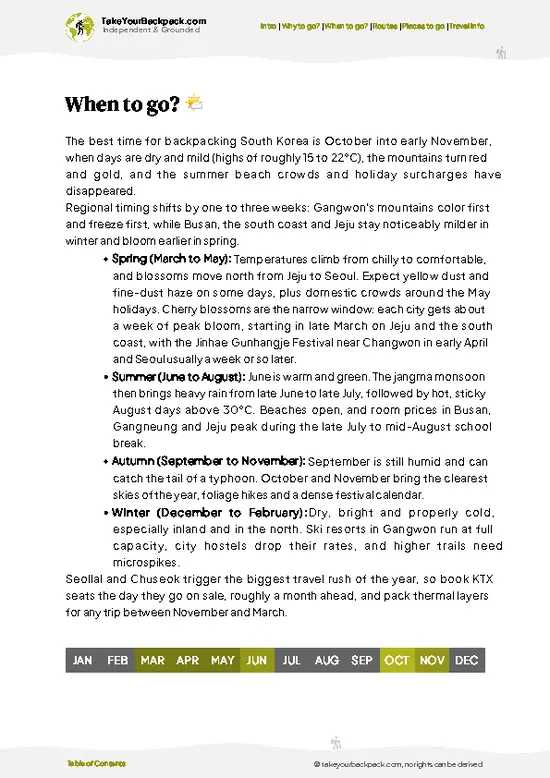
source: climatestotravel.comJANJanuary: fair for travelingFEBFebruary: fair for travelingMARMarch: good for travelingAPRApril: excellent for travelingMAYMay: excellent for travelingJUNJune: good for travelingJULJuly: fair for travelingAUGAugust: fair for travelingSEPSeptember: highly recommended for travelingOCTOctober: excellent for travelingNOVNovember: good for travelingDECDecember: fair for traveling
when-to-go

✈️ The backpacker research shortcutSouth Korea Travel Guide

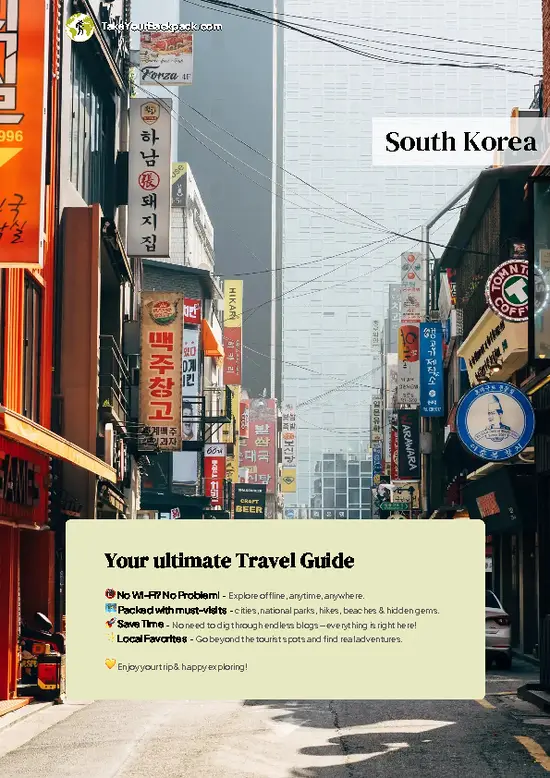
An offline-friendly backpacking guide with optimized travel routes, ranked highlights, transport advice, and the best areas to stay.
example page 0 from our offline Travel Guide for South Korea
example page 1 from our offline Travel Guide for South Korea
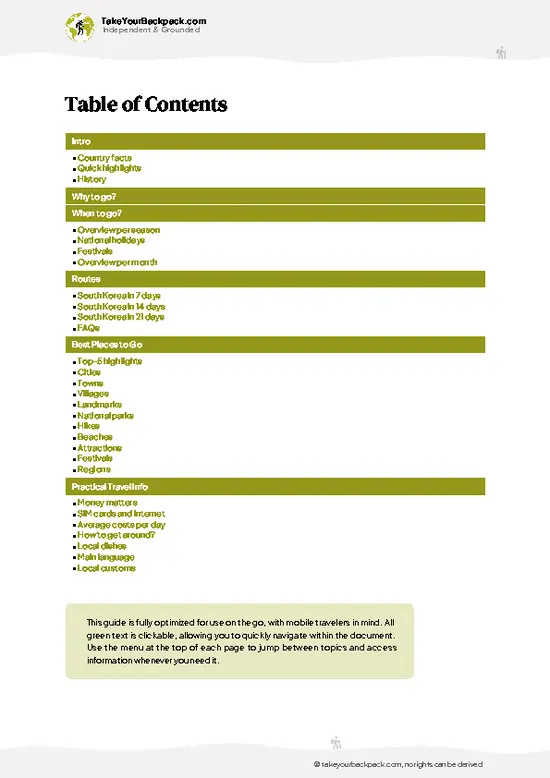
example page 2 from our offline Travel Guide for South Korea
example page 3 from our offline Travel Guide for South Korea
example page 4 from our offline Travel Guide for South Korea
example page 5 from our offline Travel Guide for South Korea
example page 6 from our offline Travel Guide for South Korea
example page 7 from our offline Travel Guide for South Korea
The digital guide (439 pages) contains:
124 highlights, ranked by travel appeal
Optimized 7, 14 & 21-day travel routes
Cities, national parks, landmarks, beaches
How to get around
Offline-friendly for travel without Wi-Fi
👉 Click to see all 30+ guide features

📅 Plan smarter in minutes, not weeks
Month by month travel advice
Festivals & national holidays
Budget expectations

🗺️ Go to the right places, skip the overrated ones
Honest pros & cons of destinations
Top hikes, parks & viewpoints
Lesser-known places most travelers miss
Clear “worth it vs skip it” guidance

🛏️ Travel smoothly without rookie mistakes
Best areas to stay
Transport systems explained simply
Common scams & safety advice
SIM cards, money & practical tips

🌍 Understand the country, not just visit it
Culture & traditions
52 Essential phrases & customs
Festivals worth planning around
Traveler-friendly historical context
Insights that make places more meaningful

📱 Built for real travel conditions
Fully downloadable PDF
Works completely offline
Optimized for phone use
Useful in remote areas & buses
Everything in one place
Save weeks of stressful planning
Get instant access to your full guide. 30‑day money-back guarantee.
+ Add another guide for just US$7.80

By proceeding you agree to our terms.
Sent to your inbox immediately after payment • 100% Secure Checkout
Best Backpacking Travel Advisor 2025 tourism awardBest Backpacking
Travel Advisor
2025
What others say about Take Your Backpack Guides:
⭐⭐⭐⭐⭐
Fantastic, amazing amount of information!
⭐⭐⭐⭐⭐
My goodness this is amazing, it's what I've been looking for hats off too you!
⭐⭐⭐⭐⭐
I think this is absolutely BRILLIANT
⭐⭐⭐⭐
Very complete and informative. It's still missing places, but I gotta to commend you
⭐⭐⭐⭐⭐
This is truly amazing, thank you, can't wait to explore it with my kids!
⭐⭐⭐⭐⭐
Awesome resource, thank you!
⭐⭐⭐⭐⭐
This is amazing! Can't wait to explore the ones I haven't seen
⭐⭐⭐⭐
I love this! Well done, great idea.
⭐⭐⭐⭐⭐
Thanks for taking the time to make this gem!
⭐⭐⭐⭐⭐
This might be the best website I've ever seen.
⭐⭐⭐⭐⭐
Congratulations, and thank you so much for your work; it's incredibly valuable.
⭐⭐⭐⭐
In all seriousness I think you did a great job pointing out the important spots
⭐⭐⭐⭐⭐
10/10 very good
⭐⭐⭐⭐⭐
As someone who's only just starting to visit regularly this is awesome, thank you.
⭐⭐⭐⭐
Thank you very much! I'm going to visit my dad, it's going to be very useful!
⭐⭐⭐⭐⭐
This is really cool! We'll be travelling for the first time and this definitely come in handy.
⭐⭐⭐⭐⭐
You are now our minister of culture, congratulations 👨‍💼
⭐⭐⭐⭐⭐
Just wanted to tell you that this is a pearl! Going to follow your recommendations.
⭐⭐⭐⭐⭐
This is so cool. I'll definitely be using the resource for my travels soon.
⭐⭐⭐⭐⭐
This is very impressive! Good work.
⭐⭐⭐⭐⭐
This is an amazing and informative site. Very well done!

🛏️ Where to stay?Choosing the right base

Sancheong’s heart for backpackers beats strongest around the downtown area near the Sancheong Bus Terminal. This neighborhood hums with a quiet energy—streets lined with small eateries serving up spicy, home-style Korean dishes and markets where the scent of fresh herbs mingles with the earthy aroma of nearby mountains. It’s safe, walkable, and the natural meeting point for solo travelers and budget adventurers. Hostels here tend to be modest but clean, offering a chance to swap stories over shared meals or late-night tea. Compared to the quieter outskirts, downtown keeps you plugged into local … read more 👉
Sancheong’s heart for backpackers beats strongest around the downtown area near the Sancheong Bus Terminal. This neighborhood hums with a quiet energy—streets lined with small eateries serving up spicy, home-style Korean dishes and markets where the scent of fresh herbs mingles with the earthy aroma of nearby mountains. It’s safe, walkable, and the natural meeting point for solo travelers and budget adventurers. Hostels here tend to be modest but clean, offering a chance to swap stories over shared meals or late-night tea. Compared to the quieter outskirts, downtown keeps you plugged into local life without the touristy gloss. You get the rhythm of a small town waking up and winding down, a perfect base to explore Sancheong’s trails and temples without losing touch with fellow wanderers.

🚌 Getting aroundHow to get from A to B

Sancheong moves at its own rhythm—more like a slow, deliberate breath than a frantic pulse. The town’s pace is shaped by the surrounding mountains and rice paddies, where mornings start with mist clinging to the fields and evenings settle into a quiet lull. It’s not a place where buses run like clockwork or taxis swarm the streets. Instead, you’ll find a blend of patient locals, occasional bursts of activity around markets, and stretches of calm where the scent of pine and earth fills the air. Understanding this flow means embracing a bit of waiting, a bit of wandering, and a lot of soaking in the natural calm that defines Sancheong.


  • Walking: The best way to absorb Sancheong’s atmosphere is on foot. The town center is compact, with narrow streets lined by traditional hanok and small shops.
read more 👉
Sancheong moves at its own rhythm—more like a slow, deliberate breath than a frantic pulse. The town’s pace is shaped by the surrounding mountains and rice paddies, where mornings start with mist clinging to the fields and evenings settle into a quiet lull. It’s not a place where buses run like clockwork or taxis swarm the streets. Instead, you’ll find a blend of patient locals, occasional bursts of activity around markets, and stretches of calm where the scent of pine and earth fills the air. Understanding this flow means embracing a bit of waiting, a bit of wandering, and a lot of soaking in the natural calm that defines Sancheong.


  • Walking: The best way to absorb Sancheong’s atmosphere is on foot. The town center is compact, with narrow streets lined by traditional hanok and small shops. Walking lets you catch the subtle scents of wood smoke and fresh herbs from local markets, and it’s free.

  • Local Bus: Buses run roughly every 30-60 minutes from 6:30 AM to 7:30 PM. They’re slow but cheap—around 1,200 KRW—and connect the town with nearby villages and hiking trailheads. Bring patience; the schedule is more guideline than gospel.

  • Shared Taxi (Jip-bul Taxi): These operate on a semi-fixed route and are a budget-friendly alternative to private taxis, costing about 3,000-5,000 KRW depending on distance. They fill up quickly, so be ready to hop in when you see one.

  • Private Taxi: More expensive but faster and flexible, expect to pay around 10,000-15,000 KRW for short trips within town or to nearby attractions. Useful if you’re on a tight schedule or carrying heavy gear.

  • Bicycle Rental: Available at select guesthouses and shops, renting a bike for about 10,000 KRW per day lets you explore beyond the town center at your own pace, with the added bonus of fresh air and scenic views.

👛 Costs (as of 4 September 2026)What things cost and how to budget

Backpacking in Sancheong, South Korea, offers a quiet, nature-rich experience with costs that stay comfortably low, making it a smart choice for travelers who want to stretch their budget without skimping on local flavor.
  • Dorm Accommodation: Expect to pay around $15 to $25 per night for a bed in a guesthouse dorm. Options are limited but cozy, often family-run with simple, clean rooms. The vibe is low-key, with a chance to chat with locals or fellow travelers over tea.
  • Meals: Local eateries serve up hearty Korean staples like bibimbap or spicy stews for about $4 to $7 per meal. Street food snacks like tteokbokki or hotteok hover around $1 to $3. If you want to splurge on a nicer sit-down meal, budget $10 to $15.
  • Local Transport: Sancheong is small, so walking covers most ground. For longer
read more 👉
Backpacking in Sancheong, South Korea, offers a quiet, nature-rich experience with costs that stay comfortably low, making it a smart choice for travelers who want to stretch their budget without skimping on local flavor.
  • Dorm Accommodation: Expect to pay around $15 to $25 per night for a bed in a guesthouse dorm. Options are limited but cozy, often family-run with simple, clean rooms. The vibe is low-key, with a chance to chat with locals or fellow travelers over tea.
  • Meals: Local eateries serve up hearty Korean staples like bibimbap or spicy stews for about $4 to $7 per meal. Street food snacks like tteokbokki or hotteok hover around $1 to $3. If you want to splurge on a nicer sit-down meal, budget $10 to $15.
  • Local Transport: Sancheong is small, so walking covers most ground. For longer trips, local buses cost roughly $1 to $2 per ride. Taxis are available but pricier, starting around $5 for short distances.
  • Basic Activities/Entry Fees: Nature is the main draw here. Entry to places like the Jirisan National Park visitor centers or local temples usually costs between $2 and $5. Guided hikes or cultural experiences might push that up to $10 to $15, but you can explore a lot on your own for free.
  • Miscellaneous Expenses: Budget $2 to $5 daily for essentials like bottled water, snacks, or a coffee. Wi-Fi is often free at guesthouses, but if you need a local SIM card, expect to pay around $10 to $20 for a basic data plan.

All told, a realistic daily budget for backpacking in Sancheong ranges from about $25 on the lean side to $50 if you want a bit more comfort or to join guided activities. The town’s quiet charm and natural surroundings make every dollar feel well spent, especially when you’re stepping out into fresh mountain air or savoring a simple, spicy meal after a day of exploring.
⚠️ Prices can change and everyone travels differently, so take this as a rough guide. Hope it helps you plan your adventure!

🚌 Day tripsShort trips worth adding

Sancheong is a fantastic base for exploring the heart of South Korea’s natural beauty and cultural richness. Here are some day trips that will elevate your experience.

**Jirisan National Park**
Just an hour away, Jirisan is a hiker’s paradise. The trails range from easy strolls to challenging climbs, with the scent of pine and wildflowers filling the air. Aim for the sunrise hike to see the mist rolling off the peaks; it’s a sight that makes the early wake-up worth it. Expect to spend around 10,000 KRW for transportation and park entry. Spring and fall are ideal for mild weather and vibrant foliage. A common mistake? Underestimating the trail difficulty—check the maps and choose wisely.
👉 Explore Jirisan National Park

**Hwagae Market**
A 30-minute bus ride lands you in Hwagae, where … read more 👉
Sancheong is a fantastic base for exploring the heart of South Korea’s natural beauty and cultural richness. Here are some day trips that will elevate your experience.

**Jirisan National Park**
Just an hour away, Jirisan is a hiker’s paradise. The trails range from easy strolls to challenging climbs, with the scent of pine and wildflowers filling the air. Aim for the sunrise hike to see the mist rolling off the peaks; it’s a sight that makes the early wake-up worth it. Expect to spend around 10,000 KRW for transportation and park entry. Spring and fall are ideal for mild weather and vibrant foliage. A common mistake? Underestimating the trail difficulty—check the maps and choose wisely.
👉 Explore Jirisan National Park

**Hwagae Market**
A 30-minute bus ride lands you in Hwagae, where the local market buzzes with life. Sample fresh produce and traditional snacks like rice cakes and spicy tteokbokki. The market is especially lively on weekends, so plan your visit accordingly. You’ll spend about 5,000 KRW on snacks and transport. The best time to go is during cherry blossom season in early April, when the surrounding trees burst into bloom. Don’t skip the local specialties—first-timers often miss the best stalls tucked away in corners.


**Gyeongju**
A bit further at about two hours by bus, Gyeongju is a treasure trove of ancient history. Explore the UNESCO World Heritage sites, including the stunning Bulguksa Temple and Seokguram Grotto. The atmosphere here is steeped in history, with the scent of incense wafting through the air. Budget around 15,000 KRW for transport and entry fees. Spring and fall offer the best weather for wandering. Many visitors rush through; take your time to soak in the stories behind the stones.
👉 Explore Gyeongju

**Namwon**
Just over an hour away, Namwon is known for its romantic gardens and the tale of Chunhyang. Stroll through the Gwanghalluwon Garden, where the cherry blossoms create a dreamy canopy. Expect to spend about 8,000 KRW for transport and entry. Late March to early April is prime time for blossoms. First-timers often miss the cultural performances in the park—check the schedule to catch a glimpse of local traditions.


**Hyangilam Hermitage**
A 40-minute drive takes you to this serene Buddhist hermitage perched on a cliff. The views of the coastline are breathtaking, especially at sunset. The hike up is steep but rewarding, with the scent of incense and the sound of chanting filling the air. Budget around 10,000 KRW for transport and donations. Visit in the early morning for a peaceful experience. Many overlook the meditation sessions offered—join in for a unique perspective.
Want to know what more South Korea offers?
The South Korea Travel Guide describes 124 highlights, from cities to national parks, from beaches to hikes

Get the Travel Guide -

🛡️ SafetyTraveler Safety Guide

Sancheong is generally safe, but a few practical tips can enhance your experience. Stay alert in crowded areas like local markets, where pickpockets might lurk. If you’re solo, avoid wandering too far off the beaten path after dark; the streets can feel quiet, and a little extra caution goes a long way.

While scams are rare, be mindful of overly friendly locals offering unsolicited help—politely decline and trust your instincts. Everyday annoyances might include language barriers; downloading a translation app can smooth interactions. Carry yourself with confidence, and you’ll blend in seamlessly, enjoying the town’s charm without a hitch.

FAQCommon questions from travelers

Yes, Sancheong is worth visiting for its natural beauty and cultural sites, not just as a stopover. It offers attractions like Jirisan National Park and Hwanseongul Cave, making it appealing for outdoor enthusiasts and history buffs.
You need about 2 to 3 days in Sancheong to explore the main attractions comfortably. This allows time for hiking in Jirisan, visiting local temples, and enjoying the traditional markets.
Yes, Sancheong can be visited as a day trip from nearby cities like Jinju or Masan. It is about 1 to 1.5 hours by bus or car, making it feasible for a day visit if you start early.
⚠️ Things can change over time, so always validate details locally before you go.

Other South Korean towns near Sancheong

Explore more nearby:

  • Namhae—island bridges, terraced fields, German village| 65 km away
  • Muju—mountain park, firefly festival, traditional markets| 69 km away
  • Jeonju Hanok Village—hanok houses, street food, artisan workshops| 79 km away

💡 Not sure where to go next?
Create a personalized itinerary for South Korea including Sancheong and the places that fit your trip.

Generate my itinerary

👉 Discover all towns

Or checkout all South Korea has to offer (think cities, towns, villages, national parks, hikes, beaches, festivals)
Country photo of South Korea

We 💚 feedbackSumming up the experience

Sancheong has a quiet charm that sneaks up on you. The scent of fresh herbs wafts through the air, especially at local markets. Don’t miss the herbal tea experience; it’s a delightful surprise. Just be ready for some steep trails if you venture into the mountains—your legs will feel it, but the views are worth every step.

✍️ Help improve this page!
The information on this page is based on in-depth research, insights shared by experienced travelers, and feedback from the local travel community in South Korea. While every effort is made to keep the information accurate and current, conditions can change — so if you spot anything incorrect or outdated, please get in touch.


🙋‍♂️ Give feedback

👋 Meet the founderWho’s Behind Take Your Backpack?

Johan, backpacker and founder of TakeYourBackpackHi, I’m Johan (Netherlands 🇳🇱), the creator of TakeYourBackpack. Over the past decade, I’ve backpacked through 80+ countries across six continents, gaining extensive experience with independent travel, long-term trips, and overland routes.

This site is built on a combination of firsthand travel experience and carefully curated insights from other backpackers. Many guides are based on places I’ve personally visited, while others bring together tips, observations, and practical advice shared by trusted travelers I’ve met along the way.

The goal is to provide realistic, experience-driven guidance — not generic itineraries — so you can explore destinations with better context, clearer expectations, and more confidence.

Get full country guide •
Instant download • 124 highlights • Full Offline guide