×

South Korea🇰🇷 | citiesSuncheonWetland reserve, reed fields, eco-park | things to do and best time to go

Explore MokpoExplore Tongyeong

Backpacking in Suncheon
🌟 Highlightcity ranked #15
By Johan Kruseman 🇳🇱 | Updated September 4, 2026

Everyone talks about Suncheon Bay Wetland Reserve, but the real power move in Suncheon is how it lets you slow down without wasting time or money. Down in South Jeolla, between Yeosu and Gwangju, it’s a compact, safe, mid-budget base with easy buses, chill riverside walks, and the surprisingly atmospheric Suncheon Open Film Set and Naganeupseong Folk Village. Nightlife is low-key, hostels are social but not wild, and compared with nearby cities it feels calmer, cheaper, and more local.

Discover everything you want to know in the 📖 South Korea Travel Guide.
Loading the map 🌍
CLICK TO FILTER
cities
towns
villages
landmarks
national parks
hikes
beaches
attractions
festivals
regions
SHOW COUNTRY’S BESTSHOW ALL

✨ Why go?
Ranked #15 city in South Korea
What makes it a must-see city

Suncheon is a strategic basecamp for backpackers, balancing affordability with a rich array of experiences. The city offers a solid mix of highlights and activities, making it a worthwhile stop rather than just a transit point. You’ll find budget-friendly hostels that foster a social vibe, perfect for meeting fellow travelers. The food scene is diverse, with local markets serving up delicious, wallet-friendly meals. Plus, Suncheon is walkable, allowing you to explore at your own pace. With easy onward travel options, it’s simple to venture out for day trips. This city is ideal for those seeking a blend of comfort and adventure without breaking the bank.
Want to include Suncheon in your South Korea route?
Create a personalized South Korea itinerary that includes Suncheon and the places that fit your trip — based on your travel style, budget, and available time. Get your route in seconds.

Generate my trip

💡 HighlightsMust-see experiences and standout moments

  1. Suncheonman Bay Wetland Reserve (Suncheon Bay) — A Ramsar-listed tidal flat with huge reedbeds and regular sightings of migratory birds (including the hooded crane). Walk the wooden boardwalks close to the water at sunrise or sunset — it’s nature up close, not just a pretty photo.
  2. Suncheon Bay National Garden — The sprawling post-Expo garden complex where themed national and international gardens meet Korean landscaping. It’s brilliant for lazy strolling, seasonal blooms, and easy bike rides through curated green spaces.
  3. Yongsan Observatory (Suncheon Bay Observatory) — A raised viewing platform that gives wide, unobstructed panoramas over the reedbeds and mudflats. Perfect place to watch flocks, sunsets, and the slow tidal drama of the bay.
  4. Suncheon Bay Wetland Center (Ecological Center)
read more 👉
  1. Suncheonman Bay Wetland Reserve (Suncheon Bay) — A Ramsar-listed tidal flat with huge reedbeds and regular sightings of migratory birds (including the hooded crane). Walk the wooden boardwalks close to the water at sunrise or sunset — it’s nature up close, not just a pretty photo.
  2. Suncheon Bay National Garden — The sprawling post-Expo garden complex where themed national and international gardens meet Korean landscaping. It’s brilliant for lazy strolling, seasonal blooms, and easy bike rides through curated green spaces.
  3. Yongsan Observatory (Suncheon Bay Observatory) — A raised viewing platform that gives wide, unobstructed panoramas over the reedbeds and mudflats. Perfect place to watch flocks, sunsets, and the slow tidal drama of the bay.
  4. Suncheon Bay Wetland Center (Ecological Center) — Small museum-style visitor center with interpretive exhibits, maps, and guided tour options. If you care about context (why the reserve matters and what to look for), this is where to start.
  5. Naganeupseong Folk Village — A living Joseon-era walled village with preserved hanok, earthen walls and local residents who maintain traditional crafts. It’s history you can walk through, with teahouses, craftsmen and seasonal events.
  6. Suncheon Open Film Set — A surprisingly fun place to wander: large outdoor film sets recreated as historical streets and houses used for K-dramas. Good for photos, for seeing costume culture on weekends, and for getting a feel for period architecture without going to a museum.
  7. Songgwangsa Temple — One of Korea’s most important Zen temples, surrounded by quiet forests and notable monastic architecture. Visiting here offers meditation vibes, ancient stonework and a strong sense of living Buddhist heritage.
  8. Seonamsa Temple — A scenic temple tucked into a valley with attractive footpaths, old bridges and classic Korean temple halls. Less crowded than some big-name temples but just as atmospheric — great for a reflective hike-and-temple combo.
  9. Suncheon Jungang Market (Central Market) — The city’s main market where you can eat cheaply and well: fresh seafood, jeon (savory pancakes), and local Jeolla flavors. It’s noisy, honest and the best place to try real regional food without the tourist price tag.
  10. Garden Expo Memorial & Themed Pavilions — The leftover pavilions and exhibition spaces from the 2013 International Garden Expo turned into small cultural spots inside the National Garden. They offer quirky displays, temporary exhibits and a sense of the city’s recent cultural push.
A few great day trips outside Suncheon: the rolling green tea fields of Boseong, Damyang’s famous Juknokwon bamboo forest, and the coastal sights of Yeosu (Odongdo island and the night-lit harbor) are all close enough for easy day trips.
Spotted a mistake or missing something? Contact us.

Things to do near Suncheon

Ratings based on Tripadvisor reviews. When you book through this link, you support our work at no extra cost to you.

🏘️ NeighborhoodsNeighborhood guide to Suncheon

Suncheon offers a blend of nature and culture, making it a unique stop for backpackers. Here’s how the neighborhoods stack up:

Suncheon Bay Area: This is where nature meets tranquility. The bay is a stunning spot for birdwatching and leisurely walks. It’s budget-friendly, with hostels nearby. The vibe is peaceful, perfect for a longer stay. Transport is easy, with buses connecting you to the city center.

Downtown Suncheon: The heart of the city buzzes with energy. Here, you’ll find cafes, shops, and a lively nightlife scene. It’s walkable, making it ideal for short stays. Prices vary, but you can find affordable eats. Public transport is accessible, linking you to attractions.

Old Town: Rich in history, this area offers a quieter experience. It’s less touristy, with charming streets and … read more 👉
Suncheon offers a blend of nature and culture, making it a unique stop for backpackers. Here’s how the neighborhoods stack up:

Suncheon Bay Area: This is where nature meets tranquility. The bay is a stunning spot for birdwatching and leisurely walks. It’s budget-friendly, with hostels nearby. The vibe is peaceful, perfect for a longer stay. Transport is easy, with buses connecting you to the city center.

Downtown Suncheon: The heart of the city buzzes with energy. Here, you’ll find cafes, shops, and a lively nightlife scene. It’s walkable, making it ideal for short stays. Prices vary, but you can find affordable eats. Public transport is accessible, linking you to attractions.

Old Town: Rich in history, this area offers a quieter experience. It’s less touristy, with charming streets and local eateries. Ideal for those seeking a slower pace, it’s also budget-friendly. Walkability is high, and you can easily explore on foot.

⌛️ 1 daySeeing the highlights in 24 hours

Suncheon, South Korea, is a blend of natural beauty and cultural richness. Start your day at Suncheon Bay, where the tidal flats and reed fields create a serene landscape. A morning stroll along the boardwalk offers a chance to spot migratory birds and soak in the tranquility.

Afterward, head to the charming neighborhood of Naganeupseong Folk Village. This traditional village showcases well-preserved hanok houses and gives you a glimpse into Korea’s past. Spend some time wandering the narrow streets, chatting with locals, and perhaps trying some homemade snacks from a vendor.

In the afternoon, make your way to the Suncheonman Bay National Garden. This sprawling garden is a feast for the senses, featuring themed areas and vibrant flora. It’s a perfect spot to relax and recharge.

As evening … read more 👉
Suncheon, South Korea, is a blend of natural beauty and cultural richness. Start your day at Suncheon Bay, where the tidal flats and reed fields create a serene landscape. A morning stroll along the boardwalk offers a chance to spot migratory birds and soak in the tranquility.

Afterward, head to the charming neighborhood of Naganeupseong Folk Village. This traditional village showcases well-preserved hanok houses and gives you a glimpse into Korea’s past. Spend some time wandering the narrow streets, chatting with locals, and perhaps trying some homemade snacks from a vendor.

In the afternoon, make your way to the Suncheonman Bay National Garden. This sprawling garden is a feast for the senses, featuring themed areas and vibrant flora. It’s a perfect spot to relax and recharge.

As evening approaches, explore the vibrant downtown area. Grab dinner at a local eatery, where you can savor dishes like bibimbap or grilled mackerel. For a unique experience, visit the Suncheon Art Center, often overlooked by tourists, where you can enjoy local art and performances. This day in Suncheon balances nature, culture, and culinary delights, making it a high-value experience you won’t forget.
Turn your Suncheon visit into an South Korea adventure
Build a complete South Korea route with Suncheon, hidden gems, must-see destinations, and realistic travel times included.

Generate my trip

🌤️ When to go?Seasonal considerations and timing


  • Weather: Spring (April-May) and autumn (September-October) offer mild, dry conditions ideal for hiking and exploring, with temperatures ranging from 15-22°C (59-72°F). Summer is hot and humid, often above 28°C (82°F), while winter can dip below freezing.

  • Daylight Hours: Longer days in spring and autumn provide 12-14 hours of light, perfect for maximizing outdoor activities without rushing.

  • Crowds: Peak tourist seasons align with spring cherry blossoms and autumn foliage, so expect more visitors then. Winter and summer see fewer tourists but come with weather trade-offs.

  • Seasonal Activities: Spring brings flower festivals, while autumn showcases vibrant foliage and local harvest events, enriching the cultural experience.

  • Price Fluctuations: Accommodation and transport costs spike
read more 👉

  • Weather: Spring (April-May) and autumn (September-October) offer mild, dry conditions ideal for hiking and exploring, with temperatures ranging from 15-22°C (59-72°F). Summer is hot and humid, often above 28°C (82°F), while winter can dip below freezing.

  • Daylight Hours: Longer days in spring and autumn provide 12-14 hours of light, perfect for maximizing outdoor activities without rushing.

  • Crowds: Peak tourist seasons align with spring cherry blossoms and autumn foliage, so expect more visitors then. Winter and summer see fewer tourists but come with weather trade-offs.

  • Seasonal Activities: Spring brings flower festivals, while autumn showcases vibrant foliage and local harvest events, enriching the cultural experience.

  • Price Fluctuations: Accommodation and transport costs spike during peak seasons; traveling in shoulder months can save money without sacrificing comfort.


Pro-tip: Aim for late April or early October to balance pleasant weather, manageable crowds, and better prices—turning timing into your secret weapon for a high-value trip.


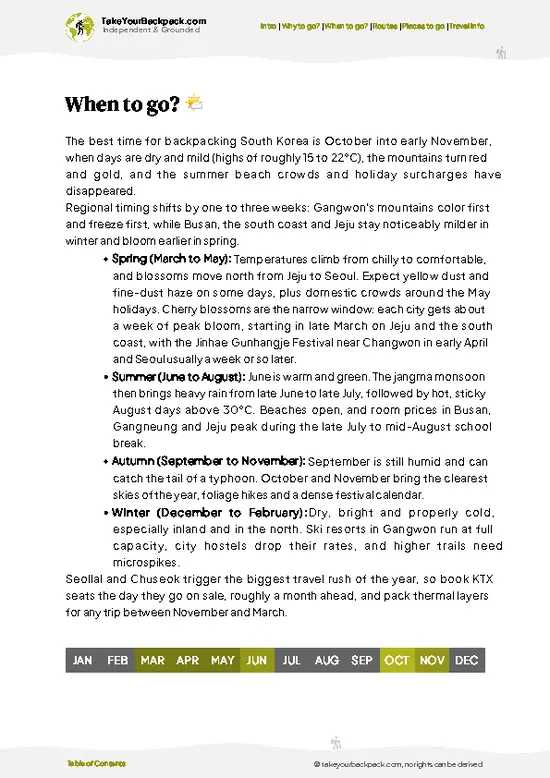
source: climatestotravel.comJANJanuary: fair for travelingFEBFebruary: fair for travelingMARMarch: good for travelingAPRApril: excellent for travelingMAYMay: excellent for travelingJUNJune: good for travelingJULJuly: fair for travelingAUGAugust: fair for travelingSEPSeptember: excellent for travelingOCTOctober: excellent for travelingNOVNovember: good for travelingDECDecember: fair for traveling
when-to-go

✈️ The backpacker research shortcutSouth Korea Travel Guide

An offline-friendly backpacking guide with optimized travel routes, ranked highlights, transport advice, and the best areas to stay.
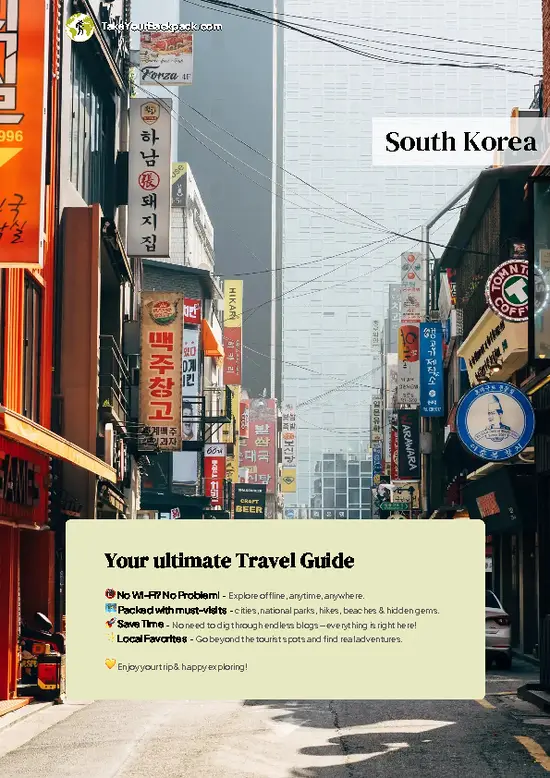
example page 0 from our offline Travel Guide for South Korea
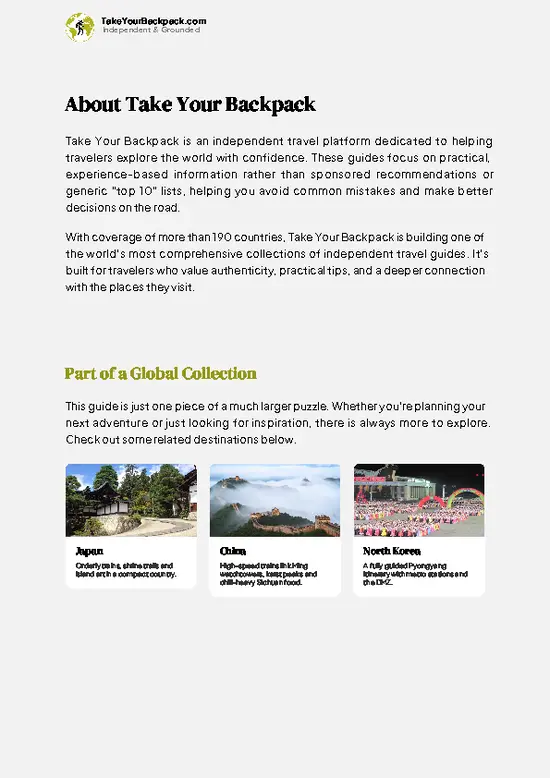
example page 1 from our offline Travel Guide for South Korea
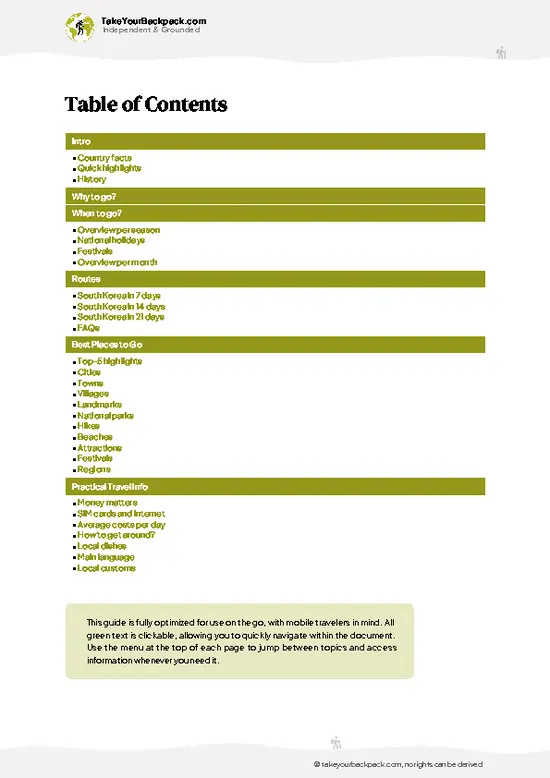
example page 2 from our offline Travel Guide for South Korea
example page 3 from our offline Travel Guide for South Korea
example page 4 from our offline Travel Guide for South Korea
example page 5 from our offline Travel Guide for South Korea
example page 6 from our offline Travel Guide for South Korea
example page 7 from our offline Travel Guide for South Korea
The digital guide (439 pages) contains:
124 highlights, ranked by travel appeal
Optimized 7, 14 & 21-day travel routes
Cities, national parks, landmarks, beaches
How to get around
Offline-friendly for travel without Wi-Fi
👉 Click to see all 30+ guide features

📅 Plan smarter in minutes, not weeks
Month by month travel advice
Festivals & national holidays
Budget expectations

🗺️ Go to the right places, skip the overrated ones
Honest pros & cons of destinations
Top hikes, parks & viewpoints
Lesser-known places most travelers miss
Clear “worth it vs skip it” guidance

🛏️ Travel smoothly without rookie mistakes
Best areas to stay
Transport systems explained simply
Common scams & safety advice
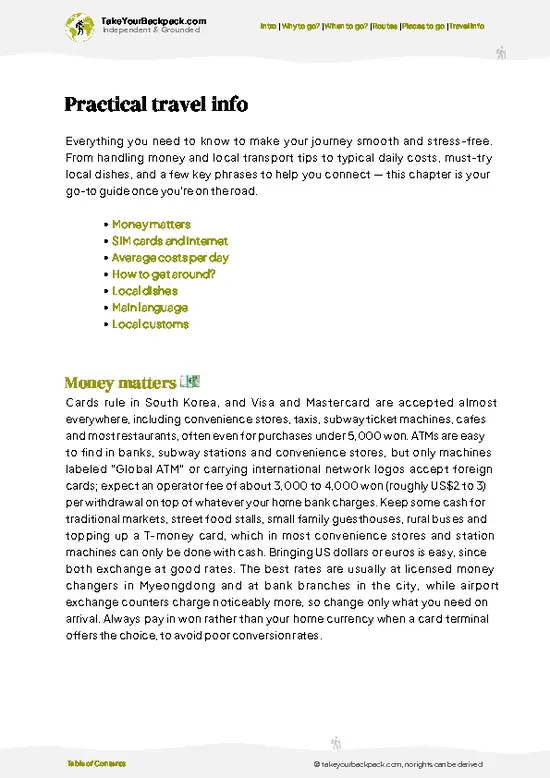
SIM cards, money & practical tips

🌍 Understand the country, not just visit it
Culture & traditions
52 Essential phrases & customs
Festivals worth planning around
Traveler-friendly historical context
Insights that make places more meaningful

📱 Built for real travel conditions
Fully downloadable PDF
Works completely offline
Optimized for phone use
Useful in remote areas & buses
Everything in one place
Save weeks of stressful planning
Get instant access to your full guide. 30‑day money-back guarantee.
+ Add another guide for just R$44.25

By proceeding you agree to our terms.
Sent to your inbox immediately after payment • 100% Secure Checkout
Best Backpacking Travel Advisor 2025 tourism awardBest Backpacking
Travel Advisor
2025
What others say about Take Your Backpack Guides:
⭐⭐⭐⭐⭐
Fantastic, amazing amount of information!
⭐⭐⭐⭐⭐
My goodness this is amazing, it's what I've been looking for hats off too you!
⭐⭐⭐⭐⭐
I think this is absolutely BRILLIANT
⭐⭐⭐⭐
Very complete and informative. It's still missing places, but I gotta to commend you
⭐⭐⭐⭐⭐
This is truly amazing, thank you, can't wait to explore it with my kids!
⭐⭐⭐⭐⭐
Awesome resource, thank you!
⭐⭐⭐⭐⭐
This is amazing! Can't wait to explore the ones I haven't seen
⭐⭐⭐⭐
I love this! Well done, great idea.
⭐⭐⭐⭐⭐
Thanks for taking the time to make this gem!
⭐⭐⭐⭐⭐
This might be the best website I've ever seen.
⭐⭐⭐⭐⭐
Congratulations, and thank you so much for your work; it's incredibly valuable.
⭐⭐⭐⭐
In all seriousness I think you did a great job pointing out the important spots
⭐⭐⭐⭐⭐
10/10 very good
⭐⭐⭐⭐⭐
As someone who's only just starting to visit regularly this is awesome, thank you.
⭐⭐⭐⭐
Thank you very much! I'm going to visit my dad, it's going to be very useful!
⭐⭐⭐⭐⭐
This is really cool! We'll be travelling for the first time and this definitely come in handy.
⭐⭐⭐⭐⭐
You are now our minister of culture, congratulations 👨‍💼
⭐⭐⭐⭐⭐
Just wanted to tell you that this is a pearl! Going to follow your recommendations.
⭐⭐⭐⭐⭐
This is so cool. I'll definitely be using the resource for my travels soon.
⭐⭐⭐⭐⭐
This is very impressive! Good work.
⭐⭐⭐⭐⭐
This is an amazing and informative site. Very well done!

🛏️ Where to stay?Best areas and accommodation options

Suncheon’s best backpacker base is the area around Suncheon Station and the nearby downtown streets. It’s a practical hub where budget hostels cluster, offering clean, affordable beds and a chance to meet fellow travelers. This zone scores high on safety and social energy without the touristy overload you find near the bay or parks. You’ll find convenience here—easy access to buses, markets, and local eateries that won’t drain your wallet. Compared to quieter residential neighborhoods, this spot balances comfort and connection, making it a smart choice for solo adventurers who want to plug into … read more 👉
Suncheon’s best backpacker base is the area around Suncheon Station and the nearby downtown streets. It’s a practical hub where budget hostels cluster, offering clean, affordable beds and a chance to meet fellow travelers. This zone scores high on safety and social energy without the touristy overload you find near the bay or parks. You’ll find convenience here—easy access to buses, markets, and local eateries that won’t drain your wallet. Compared to quieter residential neighborhoods, this spot balances comfort and connection, making it a smart choice for solo adventurers who want to plug into the city’s pulse without sacrificing their budget or peace of mind.

🚌 Getting aroundMoving around without the hassle

Suncheon moves at a pace that’s neither frantic nor sluggish—it’s a city where the rhythm is set by a blend of old-school punctuality and a relaxed, almost intuitive flow. You won’t find the rigid, unforgiving schedules of Seoul here, but neither is it a free-for-all. Instead, you get a system that rewards a bit of planning with smooth transitions, while still leaving room for spontaneous detours. Understanding this flow is your first win: it’s about balancing time, money, and comfort without feeling like you’re sacrificing the soul of the trip.


  • Walking: The most budget-friendly and immersive way to explore Suncheon’s compact downtown and the bay area; zero cost, zero schedule, but expect slower pace and some hilly stretches.

  • City Buses: Runs roughly from 5:30 AM to 11 PM, fares around
read more 👉
Suncheon moves at a pace that’s neither frantic nor sluggish—it’s a city where the rhythm is set by a blend of old-school punctuality and a relaxed, almost intuitive flow. You won’t find the rigid, unforgiving schedules of Seoul here, but neither is it a free-for-all. Instead, you get a system that rewards a bit of planning with smooth transitions, while still leaving room for spontaneous detours. Understanding this flow is your first win: it’s about balancing time, money, and comfort without feeling like you’re sacrificing the soul of the trip.


  • Walking: The most budget-friendly and immersive way to explore Suncheon’s compact downtown and the bay area; zero cost, zero schedule, but expect slower pace and some hilly stretches.

  • City Buses: Runs roughly from 5:30 AM to 11 PM, fares around 1,250 KRW; reliable and cheap, though buses can get crowded during rush hours and comfort varies by route.

  • Suncheon Taxi: Starting fare about 3,800 KRW, ideal for short hops or late-night returns when buses stop; faster and more comfortable but watch your budget if you rely on them heavily.

  • Intercity Bus Terminal: Connects Suncheon to nearby cities with frequent departures; tickets cost 5,000–10,000 KRW depending on destination, offering a good balance of speed and cost for day trips.

  • Bicycle Rentals: Available near major parks and the bay; low cost and flexible, perfect for covering more ground than walking without the expense or hassle of motorized transport.

👛 Costs (as of 4 September 2026)Travel costs and budget guide for Suncheon

Backpacking in Suncheon, South Korea, offers a clear trade-off between cost and comfort, with prices that reflect its status as a smaller city with solid local infrastructure but fewer tourist frills than Seoul or Busan.
  • Dorm Accommodation (High Season): Expect to pay around $15 to $20 per night for a bed in a shared dormitory during peak travel months. These are basic but clean hostels, often with communal kitchens and Wi-Fi.
  • Dorm Accommodation (Off-Season): Prices drop to about $10 to $15 per night when demand dips, giving you a bit more breathing room in your budget without sacrificing safety or cleanliness.
  • Meals: Street food and local eateries dominate the scene. Budget around $5 to $8 per day if you stick to simple meals like bibimbap, kimbap, or local noodle dishes. Splurging on
read more 👉
Backpacking in Suncheon, South Korea, offers a clear trade-off between cost and comfort, with prices that reflect its status as a smaller city with solid local infrastructure but fewer tourist frills than Seoul or Busan.
  • Dorm Accommodation (High Season): Expect to pay around $15 to $20 per night for a bed in a shared dormitory during peak travel months. These are basic but clean hostels, often with communal kitchens and Wi-Fi.
  • Dorm Accommodation (Off-Season): Prices drop to about $10 to $15 per night when demand dips, giving you a bit more breathing room in your budget without sacrificing safety or cleanliness.
  • Meals: Street food and local eateries dominate the scene. Budget around $5 to $8 per day if you stick to simple meals like bibimbap, kimbap, or local noodle dishes. Splurging on a sit-down meal can push this to $10 to $15.
  • Local Transport: Single bus rides within Suncheon typically cost about $1 to $1.50. Taxis start at roughly $3, but they’re less common for backpackers on a budget.
  • City Transport Pass: A day pass for buses and local transit runs about $3 to $5, which is a smart buy if you plan to move around a lot in a single day.
  • Basic Activities/Entry Fees: Many attractions like Suncheon Bay National Garden have entry fees around $3 to $5. Museums and cultural sites are similarly priced, making it easy to fill your days without breaking the bank.
  • Miscellaneous Expenses: Budget $2 to $5 for things like bottled water, snacks, or occasional small purchases. Internet cafes or printing services, if needed, are also low cost.

Add it all up and you’re looking at roughly $25 to $40 per day for a no-frills but comfortable backpacking experience in Suncheon. This range lets you decide if you want to stretch for a bit more comfort or keep it lean and mean, knowing exactly what you’re trading off in time, money, and convenience.
⚠️ Prices can change and everyone travels differently, so take this as a rough guide. Hope it helps you plan your adventure!

🚌 Day tripsBest day trips from Suncheon

Suncheon is a fantastic launchpad for day trips that blend culture, nature, and adventure. Here’s how to make the most of your time without breaking the bank.

**Boseong Green Tea Fields**
Just an hour away, the rolling hills of Boseong are a feast for the eyes and palate. Stroll through the lush tea plantations, where you can sip fresh green tea and even try your hand at picking leaves. The best time to visit is in spring when the fields are vibrant and alive. Budget around $10 for transport and a tea tasting. A common rookie mistake? Skipping the local tea house; it’s where the real flavors come alive.


**Naganeupseong Folk Village**
In about 30 minutes, you can step back in time at this well-preserved traditional village. Wander through thatched-roof houses and experience local crafts. … read more 👉
Suncheon is a fantastic launchpad for day trips that blend culture, nature, and adventure. Here’s how to make the most of your time without breaking the bank.

**Boseong Green Tea Fields**
Just an hour away, the rolling hills of Boseong are a feast for the eyes and palate. Stroll through the lush tea plantations, where you can sip fresh green tea and even try your hand at picking leaves. The best time to visit is in spring when the fields are vibrant and alive. Budget around $10 for transport and a tea tasting. A common rookie mistake? Skipping the local tea house; it’s where the real flavors come alive.


**Naganeupseong Folk Village**
In about 30 minutes, you can step back in time at this well-preserved traditional village. Wander through thatched-roof houses and experience local crafts. The village is especially lively during festivals, so aim for autumn when the harvest celebrations kick off. Expect to spend around $5 on transport and entry. Many first-timers overlook the guided tours, which can enrich your understanding of the culture.


**Yeosu**
A scenic hour-long bus ride takes you to Yeosu, where coastal views and fresh seafood await. Explore the picturesque harbor, and don’t miss the cable car ride for stunning panoramas. Summer is ideal for beach lovers, but spring offers pleasant weather without the crowds. Budget around $15 for transport and a meal. A common misstep is underestimating the time needed to explore; plan for a full day.
👉 Explore Yeosu
Want to know what more South Korea offers?
The South Korea Travel Guide describes 124 highlights, from cities to national parks, from beaches to hikes

Get the Travel Guide -

🍲 FoodWhat to Eat & Drink

In Suncheon, **food** is a vibrant dance of flavors. Dive into **bibimbap**, a colorful rice bowl topped with fresh veggies and a fried egg, or savor **sundubu jjigae**, a spicy tofu stew that warms you from the inside out. Street vendors line the bustling markets, serving up **tteokbokki**—chewy rice cakes slathered in a sweet-spicy sauce.

As for drinks, don’t miss the local **makgeolli**, a milky rice wine that pairs perfectly with savory pancakes. Eating here is communal; share dishes and enjoy the lively atmosphere. Remember, it’s polite to pour drinks for others first. Embrace the local customs, and you’ll find each meal is a celebration of connection and flavor.

🛡️ SafetyStaying Safe: What Travelers Should Know

Suncheon is generally safe, but staying aware enhances your experience. Stick to well-lit areas at night, especially if you’re solo. The downtown area is lively, but quieter streets can feel a bit isolated.

Watch for common scams like overly friendly locals offering unsolicited help; they might expect a tip. Everyday annoyances include occasional language barriers, so a translation app can be handy. Carry yourself confidently, and don’t hesitate to ask locals for directions or recommendations. They’re usually eager to help, and a smile goes a long way.

FAQCommon questions from travelers

2 to 3 days are sufficient to explore Suncheon. This allows time to visit Suncheon Bay Wetland Reserve, the Suncheonman Bay National Garden, and the historic Naganeupseong Folk Village. Each site requires a few hours to half a day for a thorough visit.
Yes, Suncheon is safe for solo backpackers. The city has low crime rates and a friendly local population. Basic precautions like avoiding poorly lit areas at night and keeping belongings secure are advised.
Suncheon is known for its vast coastal wetlands and ecological parks. The Suncheon Bay Wetland Reserve is a major attraction, famous for migratory birds and reed fields. It is also recognized for its traditional Korean folk village and beautiful gardens.
⚠️ Things can change over time, so always validate details locally before you go.

Other South Korean cities near Suncheon

Explore more nearby:

  • Gwangyang—Steelworks, plum blossom groves, riverside parks| 10 km away
  • Yeosu—Cable car, night markets, coastal promenade| 27 km away
  • Sacheon—Aerospace museum, tidal flats, fishing harbors| 56 km away

💡 Not sure where to go next?
Create a personalized itinerary for South Korea including Suncheon and the places that fit your trip.

Generate my itinerary

👉 Discover all cities

Or checkout all South Korea has to offer (think cities, towns, villages, national parks, hikes, beaches, festivals)
Country photo of South Korea

We 💚 feedbackParting advice and final tips

Suncheon has this laid-back charm that sneaks up on you. The wetlands are a must-see—unexpectedly serene and teeming with life. Just a heads-up: the public transport can be a bit tricky. But if you embrace the adventure, you’ll find it’s worth every moment.

✍️ Help improve this page!
The information on this page is based on in-depth research, insights shared by experienced travelers, and feedback from the local travel community in South Korea. While every effort is made to keep the information accurate and current, conditions can change — so if you spot anything incorrect or outdated, please get in touch.


🙋‍♂️ Give feedback

👋 Meet the founderWho’s Behind Take Your Backpack?

Johan, backpacker and founder of TakeYourBackpackHi, I’m Johan (Netherlands 🇳🇱), the creator of TakeYourBackpack. Over the past decade, I’ve backpacked through 80+ countries across six continents, gaining extensive experience with independent travel, long-term trips, and overland routes.

This site is built on a combination of firsthand travel experience and carefully curated insights from other backpackers. Many guides are based on places I’ve personally visited, while others bring together tips, observations, and practical advice shared by trusted travelers I’ve met along the way.

The goal is to provide realistic, experience-driven guidance — not generic itineraries — so you can explore destinations with better context, clearer expectations, and more confidence.

Get full country guide •
Instant download • 124 highlights • Full Offline guide