×

Spain🇪🇸 | landmarksAlcazar of SevilleMoorish courtyards, intricate tilework, royal palace | things to do and best time to go

Explore ÚbedaExplore Alhambra

Backpacking in Alcazar of Seville
UNESCO World Heritage site
🏆 Top pickunique site ranked #3
By Johan Kruseman 🇳🇱 | Updated September 4, 2026

Your fingertips graze the cool, carved stone as a drop from the garden fountain lands on your wrist; somewhere behind you, a guide’s voice bounces off the tiles in three different languages while a selfie stick nearly clips your shoulder. The Alcázar of Seville sits in the heart of Seville, down in Andalusia in southern Spain, and it’s every bit as dramatic as the photos suggest—just not as empty. This place is a Moorish–Christian fever dream of arches, courtyards, and orange-blossom air, with a level of detail that makes your brain short-circuit. It’s not cheap on a backpacker budget, and you’ll queue unless you book ahead, but the historical weight and sheer craftsmanship earn the ticket price. Crowds are heavy, photos are absurdly good, and yet if you duck into a side patio and just listen, it suddenly feels like the palace swallows the noise and you get a few stolen seconds of real magic.

Discover everything you want to know in the 📖 Spain Travel Guide.


Get your Spain guide
148 ranked highlights, routes & tips, works offline (542 pages)
Loading the map 🌍
CLICK TO FILTER
cities
towns
villages
landmarks
national parks
hikes
beaches
attractions
festivals
regions
SHOW COUNTRY’S BESTSHOW ALL

✨ Why go?
Ranked #3 unique site in Spain
What sets this place apart

The Alcazar of Seville is a must-see, but let’s cut through the Instagram haze. Yes, it’s crowded, especially in peak season, and the ticket prices can sting a bit. But here’s the kicker: the history and architecture are mind-blowing. This isn’t just another pretty building; it’s a living testament to centuries of cultural fusion.

You’ll wander through lush gardens and intricate tile work that tell stories of Moorish influence and Christian reclamation. It’s a place where you can almost hear the whispers of history.

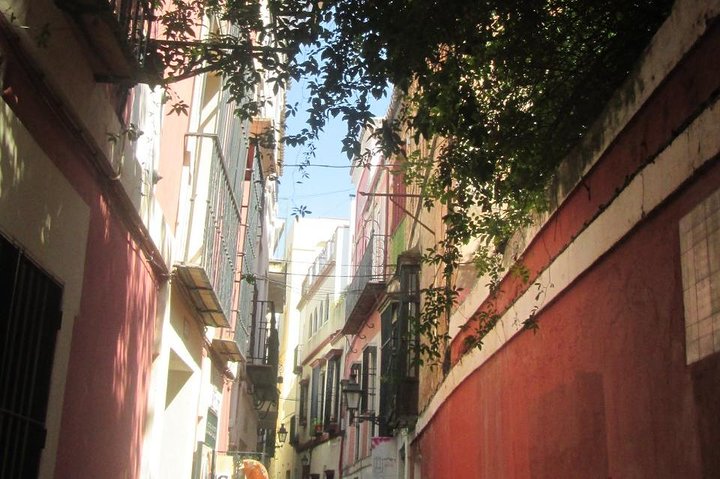
Accessibility is a breeze; it fits perfectly into a broader route through Andalusia. Pair it with a stroll through the Santa Cruz neighborhood, where narrow streets and local tapas bars await.

The effort-to-reward ratio is solid. Spend a few hours here, and you’ll walk away … read more 👉
The Alcazar of Seville is a must-see, but let’s cut through the Instagram haze. Yes, it’s crowded, especially in peak season, and the ticket prices can sting a bit. But here’s the kicker: the history and architecture are mind-blowing. This isn’t just another pretty building; it’s a living testament to centuries of cultural fusion.

You’ll wander through lush gardens and intricate tile work that tell stories of Moorish influence and Christian reclamation. It’s a place where you can almost hear the whispers of history.

Accessibility is a breeze; it fits perfectly into a broader route through Andalusia. Pair it with a stroll through the Santa Cruz neighborhood, where narrow streets and local tapas bars await.

The effort-to-reward ratio is solid. Spend a few hours here, and you’ll walk away with a deeper appreciation for Spain’s rich tapestry. It’s not just about the selfies; it’s about connecting with a piece of the past that still breathes today. Trust me, this is one landmark that delivers real magic.
Want to include Alcazar of Seville in your Spain route?
Create a personalized Spain itinerary that includes Alcazar of Seville and the places that fit your trip — based on your travel style, budget, and available time. Get your route in seconds.

Generate my trip

💡 HighlightsMust-see experiences and standout moments

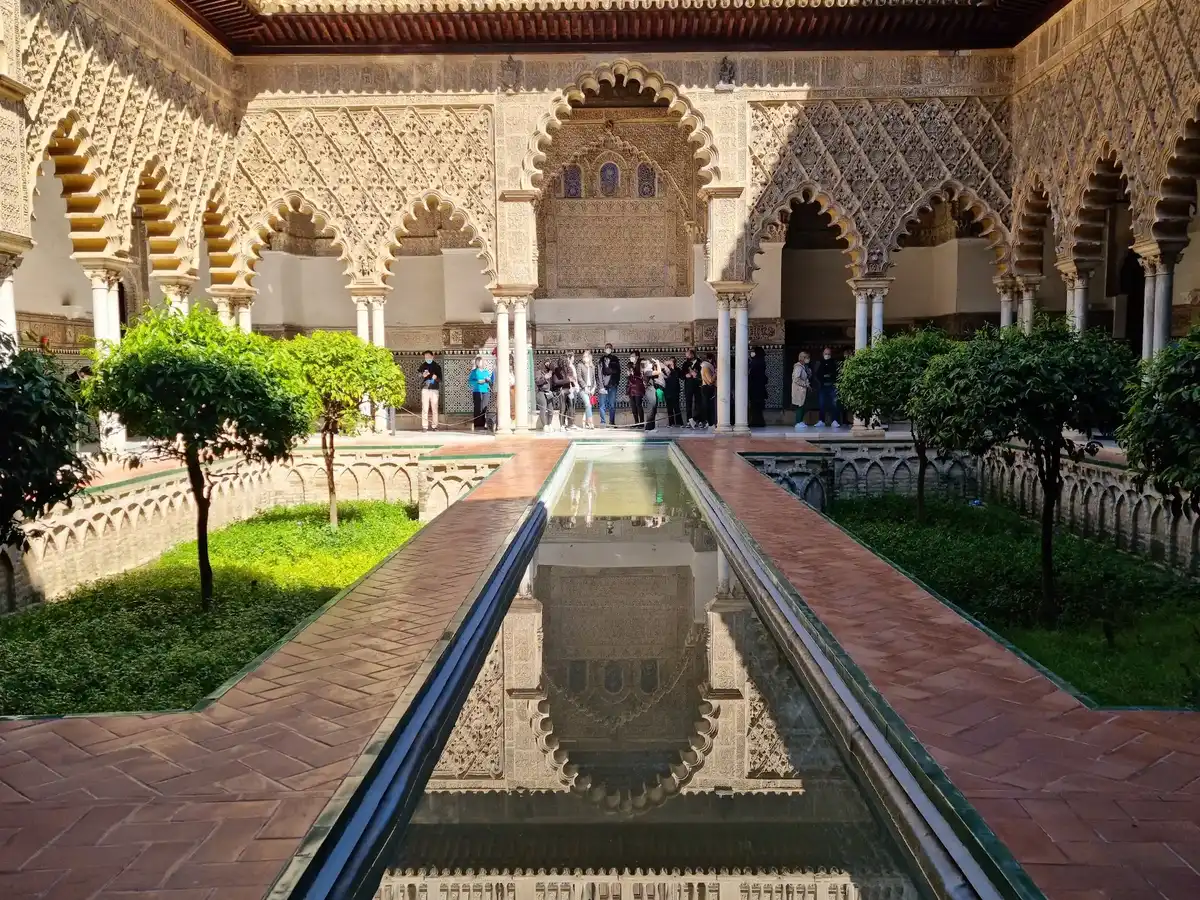
  • Patio de las Doncellas — A long, perfectly symmetric courtyard with a shallow reflecting pool that makes the carved arches and tilework pop. It’s the calm center of the palace and my personal favorite — light and reflections here are surprisingly cinematic, and the quiet corners feel like stepping back a few centuries.
  • Salón de los Embajadores (Ambassadors’ Hall) — The ceremonial heart: a domed, gilded ceiling, dazzling plasterwork and a sense of power that hasn’t faded. This room is the visual high point of the Mudéjar style and the place you’ll remember most.
  • Palacio Mudéjar — The palace’s core shows the best of Islamic workmanship adapted under Christian rule: intricate azulejos (tiles), stucco lace, horseshoe arches and carved wooden ceilings. The craftsmanship is unbelievably detailed
read more 👉
  • Patio de las Doncellas — A long, perfectly symmetric courtyard with a shallow reflecting pool that makes the carved arches and tilework pop. It’s the calm center of the palace and my personal favorite — light and reflections here are surprisingly cinematic, and the quiet corners feel like stepping back a few centuries.
  • Salón de los Embajadores (Ambassadors’ Hall) — The ceremonial heart: a domed, gilded ceiling, dazzling plasterwork and a sense of power that hasn’t faded. This room is the visual high point of the Mudéjar style and the place you’ll remember most.
  • Palacio Mudéjar — The palace’s core shows the best of Islamic workmanship adapted under Christian rule: intricate azulejos (tiles), stucco lace, horseshoe arches and carved wooden ceilings. The craftsmanship is unbelievably detailed when you get up close.
  • Jardines del Alcázar (Royal Gardens) — Terraced gardens, orange trees, shaded walks and fountains spread out like a green maze behind the palaces. Different eras are layered here, so you get Moorish water design, Renaissance geometry and later romantic plantings all in one stroll.
  • Baños de Doña María de Padilla — Sunken, atmospheric cistern-like pools beneath the palace with a quiet, almost eerie light. They’re beautiful photos and a reminder of the practical hydraulic genius behind the gardens and courtyards.
  • Salón de los Tapices & Royal Rooms — Big Flemish tapestries, ornate ceilings and Habsburg-era decor that overlay the older Islamic structure. These rooms show how the Alcázar kept evolving — a living palace, not a frozen museum.
  • Upper Floors & Rooftop Terraces — Walk the upper galleries for unexpected angles: chimneys, tiled roofs, and close-up views of Seville Cathedral and the Giralda. Great for a quieter moment and photos that capture the city-meets-palace vibe.
Spotted a mistake or missing something? Contact us.

Things to do around Alcazar of Seville

Ratings based on Tripadvisor reviews. When you book through this link, you support our work at no extra cost to you.

🌤️ When to go?Best time to visit Alcazar of Seville


  • Weather: Summers scorch Seville, with highs often hitting 35-40°C (95-104°F). If you’re not a fan of sweating through your shirt, avoid July and August. Spring and fall offer mild, pleasant weather—perfect for wandering the Alcazar’s gardens without feeling like you’re in a sauna.

  • Temperature: Winters are mild but can dip to 6-10°C (43-50°F) at night, so pack layers. Daytime temps hover around 15-20°C (59-68°F), making it comfortable for exploring without overheating or freezing.

  • Daylight Hours: Long summer days stretch to about 14 hours of light, giving you more time to explore but also more crowds. Winter days shrink to around 9-10 hours, which means less time but fewer tourists.

  • Crowds: The Alcazar is a magnet year-round, but spring (April-May) and fall (September-October) see
read more 👉

  • Weather: Summers scorch Seville, with highs often hitting 35-40°C (95-104°F). If you’re not a fan of sweating through your shirt, avoid July and August. Spring and fall offer mild, pleasant weather—perfect for wandering the Alcazar’s gardens without feeling like you’re in a sauna.

  • Temperature: Winters are mild but can dip to 6-10°C (43-50°F) at night, so pack layers. Daytime temps hover around 15-20°C (59-68°F), making it comfortable for exploring without overheating or freezing.

  • Daylight Hours: Long summer days stretch to about 14 hours of light, giving you more time to explore but also more crowds. Winter days shrink to around 9-10 hours, which means less time but fewer tourists.

  • Crowds: The Alcazar is a magnet year-round, but spring (April-May) and fall (September-October) see fewer tourists than summer. Weekdays early in the morning or late afternoon are your best bets to dodge the selfie-stick armies.

  • Seasonal Activities: Spring brings blooming gardens and local festivals that add authentic flair. Fall offers harvest season vibes and fewer tourists, letting you soak in the atmosphere without elbowing through crowds.

  • Price Fluctuations: Ticket prices stay fairly stable, but accommodation and flights spike in summer and during Semana Santa (Holy Week). Booking outside these peaks saves you serious cash and stress.


Pro-tip: Visit in late spring or early fall, early morning, to enjoy the Alcazar’s magic without melting in the heat or battling crowds. Trust me, the gardens and intricate Moorish details shine brightest when you’re not rushing past selfie sticks.


source: climatestotravel.comJANJanuary: good for travelingFEBFebruary: good for travelingMARMarch: highly recommended for travelingAPRApril: excellent for travelingMAYMay: excellent for travelingJUNJune: good for travelingJULJuly: below average for travelingAUGAugust: below average for travelingSEPSeptember: excellent for travelingOCTOctober: excellent for travelingNOVNovember: good for travelingDECDecember: good for traveling
spain-unique-site-alcazar-of-seville
© Google | Moorish Moorish

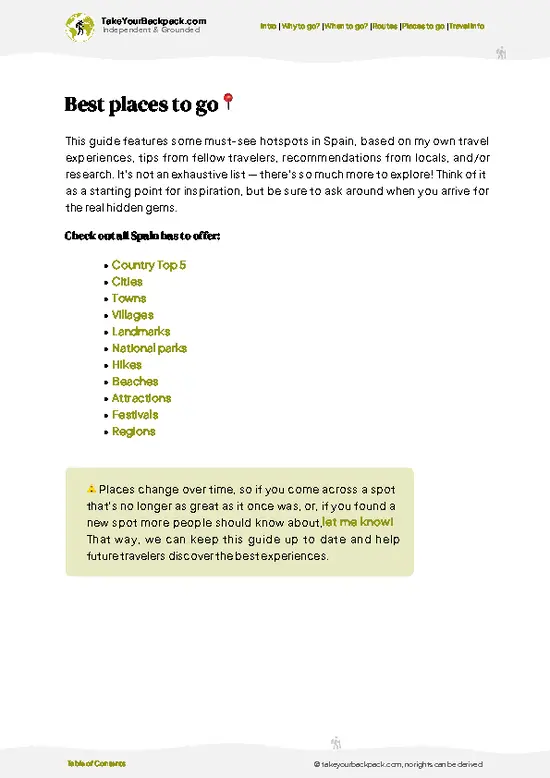
✈️ The backpacker research shortcutSpain Travel Guide

An offline-friendly backpacking guide with optimized travel routes, ranked highlights, transport advice, and the best areas to stay.
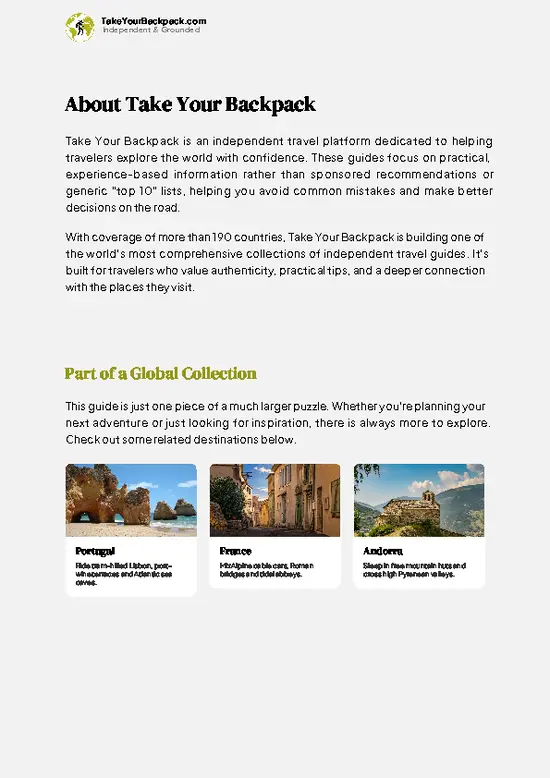
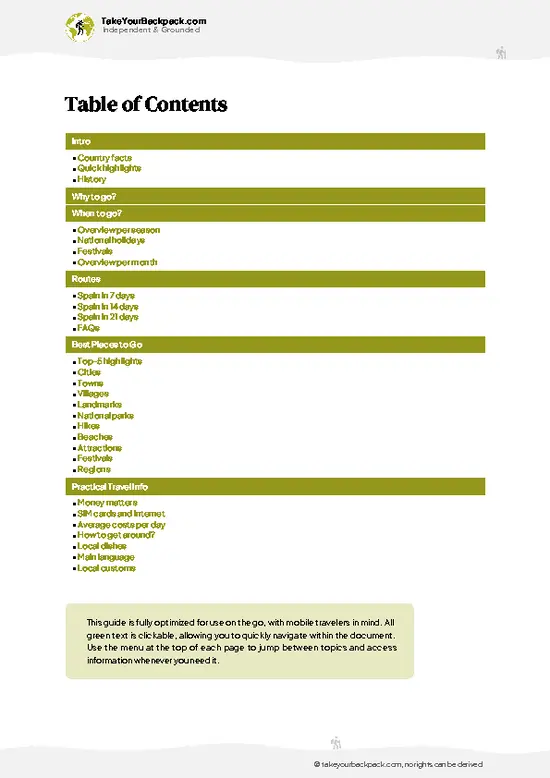
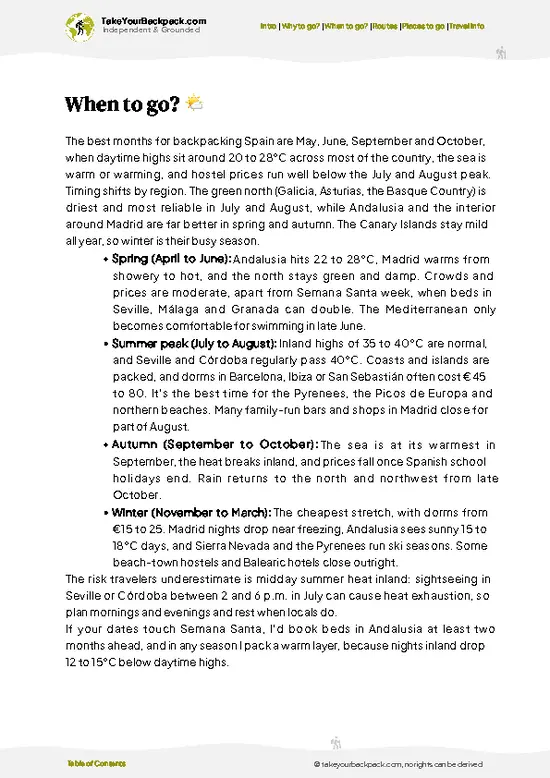
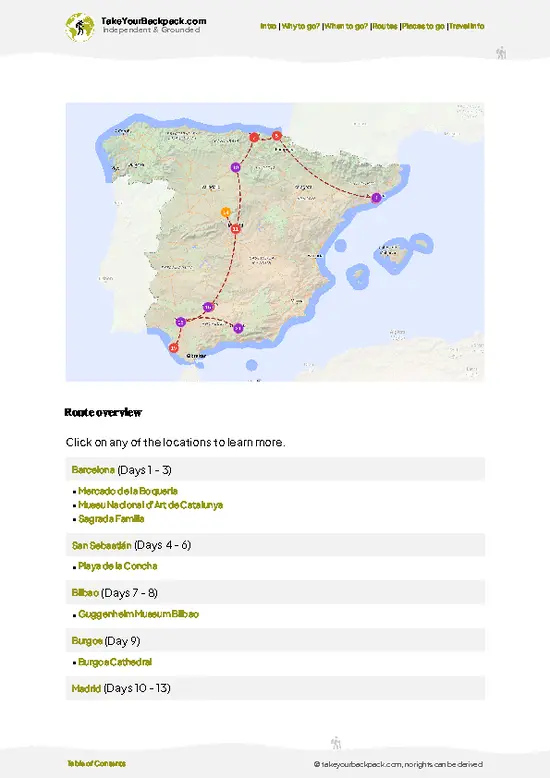
example page 0 from our offline Travel Guide for Spain
example page 1 from our offline Travel Guide for Spain
example page 2 from our offline Travel Guide for Spain
example page 3 from our offline Travel Guide for Spain
example page 4 from our offline Travel Guide for Spain
example page 5 from our offline Travel Guide for Spain
example page 6 from our offline Travel Guide for Spain
example page 7 from our offline Travel Guide for Spain
The digital guide (542 pages) contains:
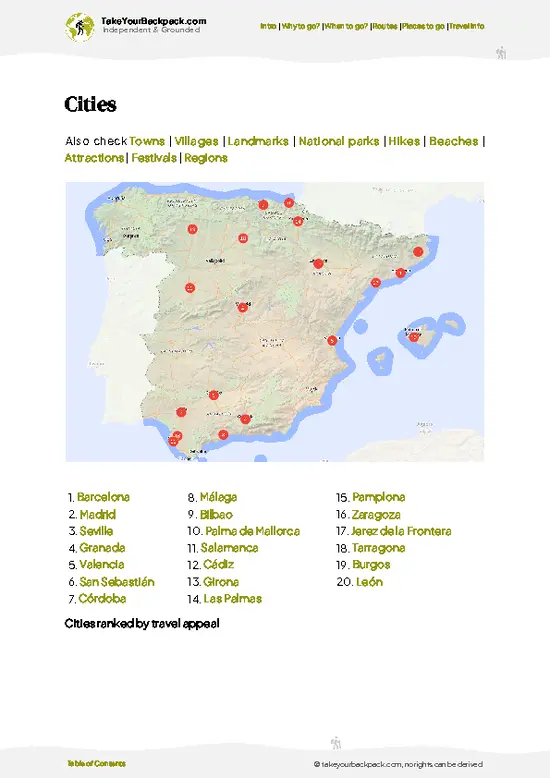
148 highlights, ranked by travel appeal
Optimized 7, 14 & 21-day travel routes
Cities, national parks, landmarks, beaches
How to get around
Offline-friendly for travel without Wi-Fi
👉 Click to see all 30+ guide features

📅 Plan smarter in minutes, not weeks
Month by month travel advice
Festivals & national holidays
Budget expectations

🗺️ Go to the right places, skip the overrated ones
Honest pros & cons of destinations
Top hikes, parks & viewpoints
Lesser-known places most travelers miss
Clear “worth it vs skip it” guidance

🛏️ Travel smoothly without rookie mistakes
Best areas to stay
Transport systems explained simply
Common scams & safety advice
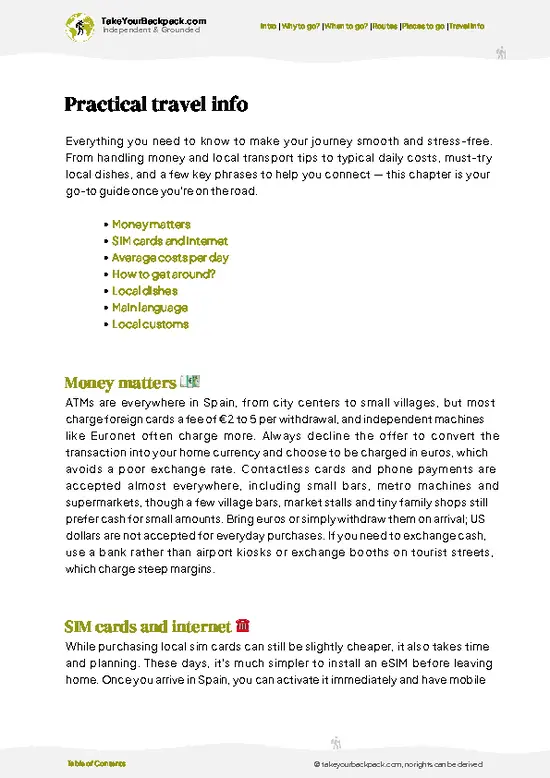
SIM cards, money & practical tips

🌍 Understand the country, not just visit it
Culture & traditions
52 Essential phrases & customs
Festivals worth planning around
Traveler-friendly historical context
Insights that make places more meaningful

📱 Built for real travel conditions
Fully downloadable PDF
Works completely offline
Optimized for phone use
Useful in remote areas & buses
Everything in one place
Save weeks of stressful planning
Get instant access to your full guide. 30‑day money-back guarantee.
+ Add another guide for just US$7.80

By proceeding you agree to our terms.
Sent to your inbox immediately after payment • 100% Secure Checkout
Best Backpacking Travel Advisor 2025 tourism awardBest Backpacking
Travel Advisor
2025
What others say about Take Your Backpack Guides:
⭐⭐⭐⭐⭐
Fantastic, amazing amount of information!
⭐⭐⭐⭐⭐
My goodness this is amazing, it's what I've been looking for hats off too you!
⭐⭐⭐⭐⭐
I think this is absolutely BRILLIANT
⭐⭐⭐⭐
Very complete and informative. It's still missing places, but I gotta to commend you
⭐⭐⭐⭐⭐
This is truly amazing, thank you, can't wait to explore it with my kids!
⭐⭐⭐⭐⭐
Awesome resource, thank you!
⭐⭐⭐⭐⭐
This is amazing! Can't wait to explore the ones I haven't seen
⭐⭐⭐⭐
I love this! Well done, great idea.
⭐⭐⭐⭐⭐
Thanks for taking the time to make this gem!
⭐⭐⭐⭐⭐
This might be the best website I've ever seen.
⭐⭐⭐⭐⭐
Congratulations, and thank you so much for your work; it's incredibly valuable.
⭐⭐⭐⭐
In all seriousness I think you did a great job pointing out the important spots
⭐⭐⭐⭐⭐
10/10 very good
⭐⭐⭐⭐⭐
As someone who's only just starting to visit regularly this is awesome, thank you.
⭐⭐⭐⭐
Thank you very much! I'm going to visit my dad, it's going to be very useful!
⭐⭐⭐⭐⭐
This is really cool! We'll be travelling for the first time and this definitely come in handy.
⭐⭐⭐⭐⭐
You are now our minister of culture, congratulations 👨‍💼
⭐⭐⭐⭐⭐
Just wanted to tell you that this is a pearl! Going to follow your recommendations.
⭐⭐⭐⭐⭐
This is so cool. I'll definitely be using the resource for my travels soon.
⭐⭐⭐⭐⭐
This is very impressive! Good work.
⭐⭐⭐⭐⭐
This is an amazing and informative site. Very well done!

🛏️ Where to stay?How to pick the right area

Staying near the Alcázar of Seville is a no-brainer for backpackers. This stunning palace is a must-see, but the area around it can be a mixed bag. Here’s the real scoop.

First, the Santa Cruz neighborhood is where you want to be. It’s the historic heart of Seville, with narrow, winding streets that ooze charm. You’ll find plenty of tapas bars and local shops. The vibe is social, making it easy to meet fellow travelers. Just be prepared for crowds; this area can feel like a tourist magnet, especially during peak season.

If you’re looking for something a bit quieter but still close, consider … read more 👉
Staying near the Alcázar of Seville is a no-brainer for backpackers. This stunning palace is a must-see, but the area around it can be a mixed bag. Here’s the real scoop.

First, the Santa Cruz neighborhood is where you want to be. It’s the historic heart of Seville, with narrow, winding streets that ooze charm. You’ll find plenty of tapas bars and local shops. The vibe is social, making it easy to meet fellow travelers. Just be prepared for crowds; this area can feel like a tourist magnet, especially during peak season.

If you’re looking for something a bit quieter but still close, consider the Alameda de Hércules. This area has a more local feel, with vibrant street art and a lively nightlife scene. It’s a bit further from the Alcázar, but the walk is worth it. Plus, you’ll encounter fewer tourists and more authentic experiences.

Safety is generally good in these neighborhoods, but keep your wits about you, especially at night. Stick to well-lit areas and stay aware of your surroundings.

In short, Santa Cruz for the buzz and Alameda for the local flavor—both offer a solid base for your Seville adventure.

👛 Costs (as of 4 September 2026)Travel costs and budget guide for Alcazar of Seville

Visiting the Alcázar of Seville is a journey into history, but it comes with its own set of costs. Here’s the breakdown:
  • Entrance Fee: Expect to pay around €13 for a standard ticket. If you want to skip the line, a fast-track ticket will set you back about €18. Guided tours can range from €25 to €50, depending on the depth of the experience.
  • Audio Guide: If you prefer to explore at your own pace, renting an audio guide costs about €5. This is a solid investment to grasp the rich history without feeling lost in the crowd.
  • Food and Drink: Inside the Alcázar, prices can be steep. A simple snack might cost you €5-€10, while a meal at a nearby café can range from €15 to €30. Plan ahead to avoid overpriced bites.
  • Transportation: Getting to the Alcázar is straightforward. A taxi from the city center
read more 👉
Visiting the Alcázar of Seville is a journey into history, but it comes with its own set of costs. Here’s the breakdown:
  • Entrance Fee: Expect to pay around €13 for a standard ticket. If you want to skip the line, a fast-track ticket will set you back about €18. Guided tours can range from €25 to €50, depending on the depth of the experience.
  • Audio Guide: If you prefer to explore at your own pace, renting an audio guide costs about €5. This is a solid investment to grasp the rich history without feeling lost in the crowd.
  • Food and Drink: Inside the Alcázar, prices can be steep. A simple snack might cost you €5-€10, while a meal at a nearby café can range from €15 to €30. Plan ahead to avoid overpriced bites.
  • Transportation: Getting to the Alcázar is straightforward. A taxi from the city center will cost around €5-€10. If you opt for public transport, a bus ticket is about €1.40. Walking is also a great option if you’re nearby.
  • Souvenirs: If you want to take a piece of the experience home, budget around €10-€30 for small items. The shops can be touristy, so keep an eye out for authentic crafts in the local markets instead.

The Alcázar is worth every cent. Just be prepared for the crowds and plan your visit wisely.


source: andalucia.org
⚠️ Prices can change and everyone travels differently, so take this as a rough guide. Hope it helps you plan your adventure!

FAQTraveler FAQ

The Alcazar of Seville is a royal palace originally developed by Moorish Muslim kings, known for its stunning Mudéjar architecture and lush gardens. It is one of the oldest palaces still in use in Europe and a UNESCO World Heritage Site since 1987.
You need about 2 to 3 hours to visit the Alcazar of Seville thoroughly, including exploring the palace rooms, courtyards, and gardens. Booking tickets in advance is recommended to avoid long lines, especially during peak tourist seasons like spring and autumn.
The Alcazar of Seville is located in the city center, near the Seville Cathedral. You can reach it by walking from major points like Plaza de España (about 20 minutes) or by taking bus lines 21, C3, or C4 that stop nearby.
⚠️ Things can change over time, so always validate details locally before you go.

Other Spanish landmarks near Alcazar of Seville

Explore more nearby:


💡 Not sure where to go next?
Create a personalized itinerary for Spain including Alcazar of Seville and the places that fit your trip.

Generate my itinerary

👉 Discover all landmarks

Or checkout all Spain has to offer (think cities, towns, villages, national parks, hikes, beaches, festivals)
Country photo of Spain

We 💚 feedbackParting advice and final tips

The Alcazar of Seville is a stunning testament to Moorish architecture, with intricate tile work and lush gardens that feel like stepping into a fairy tale. But let’s be real: the crowds can be overwhelming, especially in peak season. If you can navigate the throngs, though, you’ll find moments of pure magic—like the quiet corners of the gardens where you can catch your breath and soak in the history. It’s worth the hustle.

✈️ When did I visit Spain?
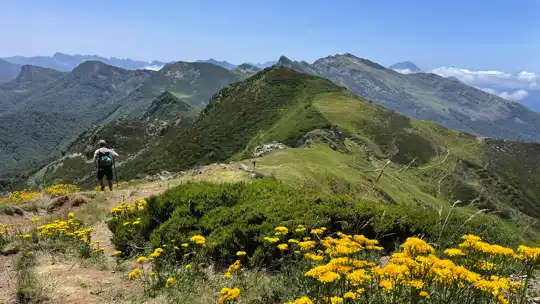
With Spain having so much to offer, I have visited it many times. Best trip was a hiking tour in the Picos de Europa in the North of Spain in July 2023.

✍️ Help improve this page!
The information on this page is based on my own backpacking experience in Spain, supplemented with up-to-date research and feedback from other travelers. Travel details can change, so if you notice anything outdated or incomplete, feel free to let me know.


🙋‍♂️ Give feedback

👋 Meet the founderWho’s Behind Take Your Backpack?

Johan, backpacker and founder of TakeYourBackpackHi, I’m Johan (Netherlands 🇳🇱), the creator of TakeYourBackpack. Over the past decade, I’ve backpacked through 80+ countries across six continents, gaining extensive experience with independent travel, long-term trips, and overland routes.

This site is built on a combination of firsthand travel experience and carefully curated insights from other backpackers. Many guides are based on places I’ve personally visited, while others bring together tips, observations, and practical advice shared by trusted travelers I’ve met along the way.

The goal is to provide realistic, experience-driven guidance — not generic itineraries — so you can explore destinations with better context, clearer expectations, and more confidence.

Get full Spain guide •
Instant download • 148 highlights • Full Offline guide