×

Sri Lanka🇱🇰 | citiesKurunegalarock outcrops, coconut plantations, regional markets | things to do and best time to go

Explore HambantotaExplore Matale

Backpacking in Kurunegala
👌 Worth visitingcity ranked #13
By Johan Kruseman 🇳🇱 | Updated September 4, 2026

Ten years ago Kurunegala felt like a dusty crossroads town you passed through between Kandy and Anuradhapura; today it’s busier, brighter, and just self-aware enough to have coffee shops and phone-repair stores on every corner, but still very local at its core. It sits in Sri Lanka’s North Western Province, roughly on the overland spine between Colombo and the Cultural Triangle. For backpackers, it’s cheap, safe, and easy to navigate, but light on classic “sights” beyond the big Buddha on Athugala Rock, a few colonial-era buildings, and everyday street life. Compared with Kandy or Dambulla, there’s less atmosphere and fewer travelers, which makes it great for observing real life, not great for nightlife or instant hostel friendships.

Discover everything you want to know in the 📖 Sri Lanka Travel Guide.
Loading the map 🌍
CLICK TO FILTER
cities
towns
villages
landmarks
national parks
hikes
beaches
attractions
festivals
regions
SHOW COUNTRY’S BESTSHOW ALL

✨ Why go?
Ranked #13 city in Sri Lanka
What makes this city worth visiting

Kurunegala is a strategic stop for backpackers weaving through Sri Lanka. It’s a basecamp that offers a mix of affordable hostels and local eateries, making it easy on the wallet while still delivering authentic experiences. The city’s walkability means you can explore its vibrant streets without the hassle of transport. Plus, the nightlife is laid-back yet lively, perfect for unwinding after a day of exploration.

What really sets Kurunegala apart is its proximity to day trips—you can easily venture to nearby attractions without losing too much time. This city isn’t just a pit stop; it’s a gateway to the heart of Sri Lanka, allowing you to balance comfort and adventure. If you’re looking for a place that enhances your journey rather than just filling a gap, Kurunegala fits the bill.
Want to include Kurunegala in your Sri Lanka route?
Create a personalized Sri Lanka itinerary that includes Kurunegala and the places that fit your trip — based on your travel style, budget, and available time. Get your route in seconds.

Generate my trip

💡 HighlightsThe experiences that define the visit

  • Ethagala (Elephant Rock) — the city’s signature landmark: a huge rock formation that looks like an elephant from some angles. Easy to spot from town, great for photos and short climbs to get a skyline view of Kurunegala.
  • The Seven Rocks ring — a cluster of large granite outcrops surrounding the town (including Ethagala and Ibbagala). Walks between these rocks give a feel for the landscape that shaped the city and reveal small shrines and viewpoints.
  • Ibbagala (Tortoise Rock) and its temple — a calmer, less touristy rock with a working temple on/around it. Climbing up delivers close-up rock scenery and a local religious atmosphere without fuss.
  • Kurunegala Clock Tower — the downtown meeting point and photo spot; an easy way to orient yourself in town and soak up everyday life around the
read more 👉
  • Ethagala (Elephant Rock) — the city’s signature landmark: a huge rock formation that looks like an elephant from some angles. Easy to spot from town, great for photos and short climbs to get a skyline view of Kurunegala.
  • The Seven Rocks ring — a cluster of large granite outcrops surrounding the town (including Ethagala and Ibbagala). Walks between these rocks give a feel for the landscape that shaped the city and reveal small shrines and viewpoints.
  • Ibbagala (Tortoise Rock) and its temple — a calmer, less touristy rock with a working temple on/around it. Climbing up delivers close-up rock scenery and a local religious atmosphere without fuss.
  • Kurunegala Clock Tower — the downtown meeting point and photo spot; an easy way to orient yourself in town and soak up everyday life around the market and bus stops.
  • Sri Maha Bodhiya (Kurunegala Bodhi) — an old sacred fig tree and adjoining temple complex where you can observe local Buddhist practice, offer respects, and see temple architecture up close.
  • Kurunegala Lake (Wewa) — a peaceful reservoir rimmed by a walking path. Locals exercise here, fishermen work quietly, and you’ll find decent birdwatching and sunset views without leaving town.
  • Kurunegala Central Market (Pettah) — chaotic, colorful and genuine: stalls selling fruit, spices, household goods and cheap eats. Best place to sample street food, buy supplies, and watch daily commerce.
  • Kurunegala Archaeological Museum (provincial exhibits) — a small museum with finds and displays from nearby ancient sites; compact but useful for historical context if you want to understand the region’s past before day-tripping.
  • Kurunegala Railway Station and surrounding colonial streets — the station is a working slice of Sri Lankan rail life; the nearby streets still show colonial-era buildings and local shops worth wandering for atmosphere and photography.
  • Small rock-top temples and cave shrines — dotted around the outcrops, these lesser-known places reward a short climb with quiet shrine spaces, carved images, and an authentic local vibe away from bigger tourist sites.
A few close, visitable day-trip options from Kurunegala: the rock fortress ruins at Yapahuwa, the nearby ancient capital of Dambadeniya, and Pinnawala Elephant Orphanage (all easily reached in a couple of hours).
Spotted a mistake or missing something? Contact us.

Things to do near Kurunegala

Ratings based on Tripadvisor reviews. When you book through this link, you support our work at no extra cost to you.

🏘️ NeighborhoodsWhere things are and how it's laid out

Kurunegala is a vibrant hub in Sri Lanka, offering a mix of local culture and accessibility for backpackers. Here’s how the neighborhoods stack up:

City Center: This is the heartbeat of Kurunegala. It’s bustling, with street vendors and shops. Costs are low, making it ideal for budget travelers. Walkability is high, but nightlife is limited to local eateries. Perfect for short stays where you want to soak in the local vibe.

Lake Area: A serene escape with beautiful views. It’s quieter, making it suitable for longer stays. Costs are slightly higher due to the scenic value. You can stroll around the lake, and transport options are decent, but nightlife is minimal. Great for those seeking peace.

Market District: This area is all about the hustle. It’s lively and colorful, with a mix of locals … read more 👉
Kurunegala is a vibrant hub in Sri Lanka, offering a mix of local culture and accessibility for backpackers. Here’s how the neighborhoods stack up:

City Center: This is the heartbeat of Kurunegala. It’s bustling, with street vendors and shops. Costs are low, making it ideal for budget travelers. Walkability is high, but nightlife is limited to local eateries. Perfect for short stays where you want to soak in the local vibe.

Lake Area: A serene escape with beautiful views. It’s quieter, making it suitable for longer stays. Costs are slightly higher due to the scenic value. You can stroll around the lake, and transport options are decent, but nightlife is minimal. Great for those seeking peace.

Market District: This area is all about the hustle. It’s lively and colorful, with a mix of locals and tourists. Costs are very low, and it’s walkable. Nightlife is vibrant here, with local bars and eateries. Ideal for short stays if you want to experience the local culture.

Suburban Outskirts: A bit further out, this area offers a glimpse into everyday life. Costs are the lowest, but transport can be tricky. It’s quieter, making it suitable for longer stays if you want to escape the tourist scene.

⌛️ 1 daySeeing the highlights in 24 hours

Kurunegala, a vibrant hub in Sri Lanka, offers a unique blend of history and local culture, making it a worthy stop on your journey. Start your day at the bustling Kurunegala Market. The aroma of spices and fresh produce fills the air as vendors call out to passersby. Grab a traditional breakfast of hoppers from a nearby stall; the crispy edges and soft center are a delightful way to fuel up.

After breakfast, head to the ancient rock fortress of the same name, just a short walk away. Climbing the steps rewards you with panoramic views of the city and surrounding countryside. It’s a perfect spot for some quiet reflection or a few great photos.

In the afternoon, explore the charming neighborhood of Wariyapola. Here, you’ll find the lesser-known Sri Sumanarama Temple, a serene place often … read more 👉
Kurunegala, a vibrant hub in Sri Lanka, offers a unique blend of history and local culture, making it a worthy stop on your journey. Start your day at the bustling Kurunegala Market. The aroma of spices and fresh produce fills the air as vendors call out to passersby. Grab a traditional breakfast of hoppers from a nearby stall; the crispy edges and soft center are a delightful way to fuel up.

After breakfast, head to the ancient rock fortress of the same name, just a short walk away. Climbing the steps rewards you with panoramic views of the city and surrounding countryside. It’s a perfect spot for some quiet reflection or a few great photos.

In the afternoon, explore the charming neighborhood of Wariyapola. Here, you’ll find the lesser-known Sri Sumanarama Temple, a serene place often overlooked by tourists. The intricate carvings and peaceful atmosphere provide a refreshing break from the more crowded sights.

As evening approaches, return to the city center and unwind at a local café. Sip on a cup of Ceylon tea while watching the world go by. If you’re feeling adventurous, try a plate of kottu roti for dinner. The lively atmosphere and the sound of chefs chopping the roti is an experience in itself.

By the end of the day, you’ll have tasted the essence of Kurunegala, balancing time, money, and comfort in a way that makes your trip truly rewarding.
Turn your Kurunegala visit into an Sri Lanka adventure
Build a complete Sri Lanka route with Kurunegala, hidden gems, must-see destinations, and realistic travel times included.

Generate my trip

🌤️ When to go?Seasonal considerations and timing


  • Topic: Weather – Kurunegala experiences a tropical climate with two main monsoon seasons. The best window is between December and March when rainfall is minimal, making trails and outdoor exploration more reliable.

  • Topic: Temperature – Expect daytime highs around 30-32°C (86-90°F) during the dry season, with nights cooling to 22-24°C (72-75°F). This balance keeps hiking comfortable without the oppressive heat of peak summer.

  • Topic: Daylight Hours – Consistent year-round, roughly 11 to 12 hours of daylight. This stability means you can plan long treks or cultural visits without worrying about early nightfall.

  • Topic: Crowds – Peak tourist season aligns with the dry months, so expect more visitors from December to February. For fewer crowds, shoulder months like November or March offer
read more 👉

  • Topic: Weather – Kurunegala experiences a tropical climate with two main monsoon seasons. The best window is between December and March when rainfall is minimal, making trails and outdoor exploration more reliable.

  • Topic: Temperature – Expect daytime highs around 30-32°C (86-90°F) during the dry season, with nights cooling to 22-24°C (72-75°F). This balance keeps hiking comfortable without the oppressive heat of peak summer.

  • Topic: Daylight Hours – Consistent year-round, roughly 11 to 12 hours of daylight. This stability means you can plan long treks or cultural visits without worrying about early nightfall.

  • Topic: Crowds – Peak tourist season aligns with the dry months, so expect more visitors from December to February. For fewer crowds, shoulder months like November or March offer a quieter experience without heavy rain.

  • Topic: Seasonal Activities – Festivals and local markets thrive in the dry season, offering authentic cultural immersion. The wet season limits outdoor events but brings lush greenery if you don’t mind occasional showers.

  • Topic: Price Fluctuations – Accommodation and transport costs spike during the dry, high-tourist months. Traveling just before or after this peak can save money while still enjoying favorable weather.


Pro-tip: Aim for late November or early March to strike the perfect balance between weather, crowd size, and cost—giving you a smart edge on comfort and value.


source: climatestotravel.comJANJanuary: excellent for travelingFEBFebruary: excellent for travelingMARMarch: highly recommended for travelingAPRApril: fair for travelingMAYMay: fair for travelingJUNJune: below average for travelingJULJuly: below average for travelingAUGAugust: below average for travelingSEPSeptember: fair for travelingOCTOctober: fair for travelingNOVNovember: highly recommended for travelingDECDecember: excellent for traveling
when-to-go

✈️ The backpacker research shortcutSri Lanka Travel Guide

An offline-friendly backpacking guide with optimized travel routes, ranked highlights, transport advice, and the best areas to stay.
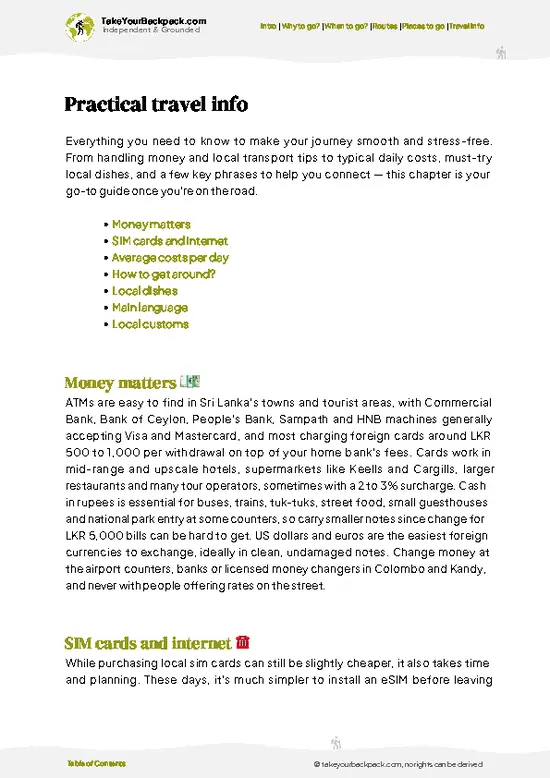
example page 0 from our offline Travel Guide for Sri Lanka
example page 1 from our offline Travel Guide for Sri Lanka
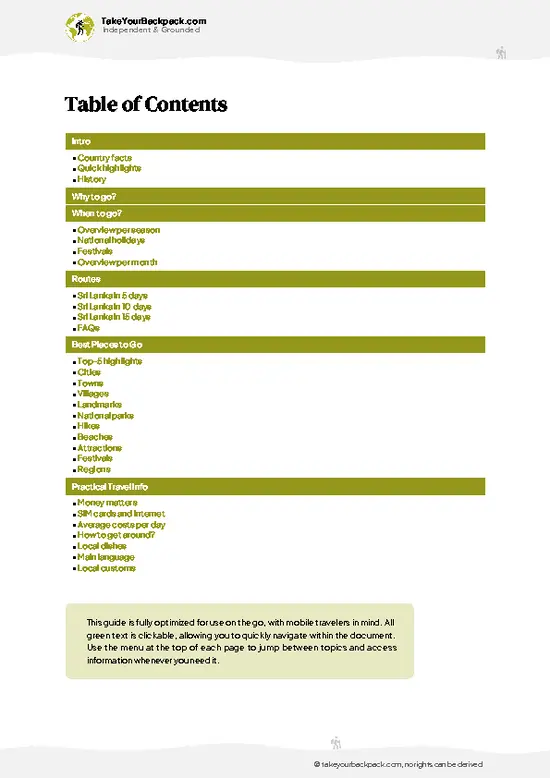
example page 2 from our offline Travel Guide for Sri Lanka
example page 3 from our offline Travel Guide for Sri Lanka
example page 4 from our offline Travel Guide for Sri Lanka
example page 5 from our offline Travel Guide for Sri Lanka
example page 6 from our offline Travel Guide for Sri Lanka
example page 7 from our offline Travel Guide for Sri Lanka
The digital guide (445 pages) contains:
124 highlights, ranked by travel appeal
Optimized 5, 10 & 15-day travel routes
Cities, national parks, landmarks, beaches
How to get around
Offline-friendly for travel without Wi-Fi
👉 Click to see all 30+ guide features

📅 Plan smarter in minutes, not weeks
Month by month travel advice
Festivals & national holidays
Budget expectations

🗺️ Go to the right places, skip the overrated ones
Honest pros & cons of destinations
Top hikes, parks & viewpoints
Lesser-known places most travelers miss
Clear “worth it vs skip it” guidance

🛏️ Travel smoothly without rookie mistakes
Best areas to stay
Transport systems explained simply
Common scams & safety advice
SIM cards, money & practical tips

🌍 Understand the country, not just visit it
Culture & traditions
52 Essential phrases & customs
Festivals worth planning around
Traveler-friendly historical context
Insights that make places more meaningful

📱 Built for real travel conditions
Fully downloadable PDF
Works completely offline
Optimized for phone use
Useful in remote areas & buses
Everything in one place
Save weeks of stressful planning
Get instant access to your full guide. 30‑day money-back guarantee.
+ Add another guide for just US$7.80

By proceeding you agree to our terms.
Sent to your inbox immediately after payment • 100% Secure Checkout
Best Backpacking Travel Advisor 2025 tourism awardBest Backpacking
Travel Advisor
2025
What others say about Take Your Backpack Guides:
⭐⭐⭐⭐⭐
Fantastic, amazing amount of information!
⭐⭐⭐⭐⭐
My goodness this is amazing, it's what I've been looking for hats off too you!
⭐⭐⭐⭐⭐
I think this is absolutely BRILLIANT
⭐⭐⭐⭐
Very complete and informative. It's still missing places, but I gotta to commend you
⭐⭐⭐⭐⭐
This is truly amazing, thank you, can't wait to explore it with my kids!
⭐⭐⭐⭐⭐
Awesome resource, thank you!
⭐⭐⭐⭐⭐
This is amazing! Can't wait to explore the ones I haven't seen
⭐⭐⭐⭐
I love this! Well done, great idea.
⭐⭐⭐⭐⭐
Thanks for taking the time to make this gem!
⭐⭐⭐⭐⭐
This might be the best website I've ever seen.
⭐⭐⭐⭐⭐
Congratulations, and thank you so much for your work; it's incredibly valuable.
⭐⭐⭐⭐
In all seriousness I think you did a great job pointing out the important spots
⭐⭐⭐⭐⭐
10/10 very good
⭐⭐⭐⭐⭐
As someone who's only just starting to visit regularly this is awesome, thank you.
⭐⭐⭐⭐
Thank you very much! I'm going to visit my dad, it's going to be very useful!
⭐⭐⭐⭐⭐
This is really cool! We'll be travelling for the first time and this definitely come in handy.
⭐⭐⭐⭐⭐
You are now our minister of culture, congratulations 👨‍💼
⭐⭐⭐⭐⭐
Just wanted to tell you that this is a pearl! Going to follow your recommendations.
⭐⭐⭐⭐⭐
This is so cool. I'll definitely be using the resource for my travels soon.
⭐⭐⭐⭐⭐
This is very impressive! Good work.
⭐⭐⭐⭐⭐
This is an amazing and informative site. Very well done!

🛏️ Where to stay?How to pick the right area

In Kurunegala, the sweet spot for backpackers is the area around the town center, especially near the Kurunegala Clock Tower. This neighborhood strikes a solid balance between safety and social energy. It’s where budget travelers naturally gravitate because it’s walkable, with plenty of small eateries, local markets, and affordable guesthouses or hostels. You won’t find a sprawling backpacker district here, but the cluster of budget accommodations creates a low-key social vibe, perfect for meeting fellow travelers without the noise of a party hub.

Compared to the outskirts or more residential … read more 👉
In Kurunegala, the sweet spot for backpackers is the area around the town center, especially near the Kurunegala Clock Tower. This neighborhood strikes a solid balance between safety and social energy. It’s where budget travelers naturally gravitate because it’s walkable, with plenty of small eateries, local markets, and affordable guesthouses or hostels. You won’t find a sprawling backpacker district here, but the cluster of budget accommodations creates a low-key social vibe, perfect for meeting fellow travelers without the noise of a party hub.

Compared to the outskirts or more residential zones, staying near the center means cutting down on transport time and cost—critical when you’re juggling time, money, and comfort. The streets are busy but manageable, and you get a genuine feel for local life without sacrificing basic safety. If you stray too far from this core, you risk isolation or higher transport expenses, which eats into your travel budget and time. This central zone is your best bet for a practical, social, and budget-friendly base in Kurunegala.

🚌 Getting aroundMoving around without the hassle

Kurunegala moves at its own rhythm—neither a frantic rush nor a laid-back drift. The city’s pulse is a blend of predictable routines and bursts of spontaneous energy. You’ll find that time here is flexible but not sloppy; schedules exist, but they bend around local habits and the weather. It’s a place where you can plan your day but should always leave room for the unexpected, like a tuk-tuk driver who suddenly decides to take a shortcut or a bus that waits until it’s full before leaving. Understanding this flow is your first win in mastering Kurunegala’s transit game.


  • Walking: The most straightforward and cost-free way to navigate Kurunegala’s compact center. Streets are generally safe and shaded, making walking both practical and pleasant. Ideal for short hops and soaking in local life
read more 👉
Kurunegala moves at its own rhythm—neither a frantic rush nor a laid-back drift. The city’s pulse is a blend of predictable routines and bursts of spontaneous energy. You’ll find that time here is flexible but not sloppy; schedules exist, but they bend around local habits and the weather. It’s a place where you can plan your day but should always leave room for the unexpected, like a tuk-tuk driver who suddenly decides to take a shortcut or a bus that waits until it’s full before leaving. Understanding this flow is your first win in mastering Kurunegala’s transit game.


  • Walking: The most straightforward and cost-free way to navigate Kurunegala’s compact center. Streets are generally safe and shaded, making walking both practical and pleasant. Ideal for short hops and soaking in local life without spending a rupee.


  • Public Bus: Runs roughly from 5:00 AM to 9:00 PM, with fares typically under 50 LKR. Buses are slow but reliable, often packed, and follow fixed routes connecting Kurunegala to nearby towns. Expect basic comfort and a chance to observe daily life up close.


  • Tuk-Tuk: Available 24/7, tuk-tuks offer flexible, door-to-door service. Prices vary but usually start around 100-150 LKR for short trips. Faster than buses and more comfortable, but fares can spike during peak hours or bad weather. Negotiation skills pay off here.


  • Private Taxi: Less common and pricier, starting around 1000 LKR for short distances. Offers maximum comfort and speed with air conditioning, but it’s a luxury rather than a budget staple. Best reserved for early mornings or late nights when other options dwindle.


Mastering Kurunegala’s transit means balancing patience and flexibility. You trade strict schedules for local color, and a few extra minutes for authentic encounters. Your choice between time, money, and comfort here isn’t just about logistics—it’s about tuning into the city’s unique tempo.

👛 Costs (as of 4 September 2026)Travel costs and budget guide for Kurunegala

Backpacking in Kurunegala, Sri Lanka, offers a straightforward cost structure that rewards those who understand the trade-offs between time, money, and comfort.
  • Dorm Accommodation (High Season): Expect to pay around $8 to $12 per night. These are basic but clean hostels, often with fan rooms rather than air conditioning, reflecting the city’s modest tourist flow during peak months.
  • Dorm Accommodation (Off-Season): Prices drop to about $5 to $8 per night. Fewer travelers mean better bargaining power, but some places might close or reduce services, so flexibility is key.
  • Meals: Street food and local eateries dominate here, with meals costing between $1.50 and $3.50. You can stretch your budget by opting for rice and curry plates or hoppers, which are filling and authentic without breaking
read more 👉
Backpacking in Kurunegala, Sri Lanka, offers a straightforward cost structure that rewards those who understand the trade-offs between time, money, and comfort.
  • Dorm Accommodation (High Season): Expect to pay around $8 to $12 per night. These are basic but clean hostels, often with fan rooms rather than air conditioning, reflecting the city’s modest tourist flow during peak months.
  • Dorm Accommodation (Off-Season): Prices drop to about $5 to $8 per night. Fewer travelers mean better bargaining power, but some places might close or reduce services, so flexibility is key.
  • Meals: Street food and local eateries dominate here, with meals costing between $1.50 and $3.50. You can stretch your budget by opting for rice and curry plates or hoppers, which are filling and authentic without breaking the bank.
  • Local Transport: Tuk-tuks are the go-to for short distances, typically costing $0.50 to $1.50 depending on distance and negotiation skills. Buses are even cheaper, around $0.20 to $0.50, but slower and less predictable.
  • City Transport Pass: Kurunegala doesn’t have a formal city transport pass system. Budget travelers rely on individual bus or tuk-tuk rides, so factor in daily transport costs rather than a pass.
  • Basic Activities/Entry Fees: Most local temples and small attractions charge nominal fees, usually under $2. Guided tours or special activities might push this to $5-$10, but many worthwhile experiences are free or donation-based.
  • Miscellaneous Expenses: This includes bottled water, snacks, and occasional internet top-ups, averaging around $1 to $3 daily. Kurunegala’s small size means you won’t need much extra for incidentals.

All told, a realistic daily budget for backpacking in Kurunegala ranges from about $10 on a shoestring to $20 if you lean toward a bit more comfort or convenience. The city’s compact layout means you can save time and money by walking or using tuk-tuks selectively, turning transport choices into a small strategic game rather than a fixed cost.


source: srilanka.travel
⚠️ Prices can change and everyone travels differently, so take this as a rough guide. Hope it helps you plan your adventure!

🚌 Day tripsBest day trips from Kurunegala

Kurunegala is a fantastic launchpad for exploring Sri Lanka’s rich tapestry of culture and nature. Here are some day trips that pack a punch without draining your wallet.

**Dambulla Cave Temple**
Just a two-hour bus ride from Kurunegala, the Dambulla Cave Temple is a treasure trove of ancient Buddhist art. The intricate murals and massive Buddha statues carved into the rock face are awe-inspiring. Expect to pay around 1,500 LKR for entry. The best time to visit is early morning to beat the crowds and the heat. A common mistake is underestimating the climb to the caves—wear sturdy shoes!


**Sigiriya Rock Fortress**
About a two-and-a-half-hour journey, Sigiriya is worth every minute. This UNESCO World Heritage site features a massive rock fortress with stunning views from the top. The … read more 👉
Kurunegala is a fantastic launchpad for exploring Sri Lanka’s rich tapestry of culture and nature. Here are some day trips that pack a punch without draining your wallet.

**Dambulla Cave Temple**
Just a two-hour bus ride from Kurunegala, the Dambulla Cave Temple is a treasure trove of ancient Buddhist art. The intricate murals and massive Buddha statues carved into the rock face are awe-inspiring. Expect to pay around 1,500 LKR for entry. The best time to visit is early morning to beat the crowds and the heat. A common mistake is underestimating the climb to the caves—wear sturdy shoes!


**Sigiriya Rock Fortress**
About a two-and-a-half-hour journey, Sigiriya is worth every minute. This UNESCO World Heritage site features a massive rock fortress with stunning views from the top. The entry fee is around 4,500 LKR, but the panoramic vistas and ancient frescoes make it a worthwhile splurge. Aim for the late afternoon to catch the sunset. Many first-timers forget to bring water; trust me, you’ll need it!


**Kandy**
Roughly an hour and a half away, Kandy is a cultural hub with the Temple of the Tooth Relic at its heart. The train ride is scenic and costs about 100 LKR. Spend your day exploring the temple and wandering around the beautiful lake. The best time to visit is during the Esala Perahera festival in July or August, but be prepared for larger crowds. A common pitfall is not allowing enough time to soak in the atmosphere—don’t rush!
👉 Explore Kandy

**Minneriya National Park**
For wildlife enthusiasts, Minneriya is about a two-hour drive from Kurunegala. Known for its elephant gatherings, the park offers a chance to see these majestic creatures in their natural habitat. A safari costs around 3,000 LKR, and the best time to visit is during the dry season from May to September. Many backpackers miss the early morning or late afternoon slots when wildlife is most active.
👉 Explore Minneriya National Park
Want to know what more Sri Lanka offers?
The Sri Lanka Travel Guide describes 124 highlights, from cities to national parks, from beaches to hikes

Get the Travel Guide -

🍲 FoodEating & Drinking in Kurunegala

In **Kurunegala**, the food scene is a vibrant tapestry of flavors that beckons every backpacker. Dive into **kottu roti**, a sizzling stir-fry of chopped flatbread, vegetables, and your choice of meat or egg. The street vendors whip it up right before your eyes, the sound of metal spatulas clanging is music to your ears.

Don’t miss out on **hoppers**, those bowl-shaped pancakes made from fermented rice flour. They’re often served with a runny egg in the center, perfect for breakfast or a late-night snack. Pair it with a spicy sambol for a kick that’ll wake you up.

As for drinks, try a **king coconut**—its sweet, refreshing water is a local favorite. You’ll find it sold by roadside vendors, a perfect thirst-quencher after a day of exploring.

Eating here is communal; locals often share … read more 👉
In **Kurunegala**, the food scene is a vibrant tapestry of flavors that beckons every backpacker. Dive into **kottu roti**, a sizzling stir-fry of chopped flatbread, vegetables, and your choice of meat or egg. The street vendors whip it up right before your eyes, the sound of metal spatulas clanging is music to your ears.

Don’t miss out on **hoppers**, those bowl-shaped pancakes made from fermented rice flour. They’re often served with a runny egg in the center, perfect for breakfast or a late-night snack. Pair it with a spicy sambol for a kick that’ll wake you up.

As for drinks, try a **king coconut**—its sweet, refreshing water is a local favorite. You’ll find it sold by roadside vendors, a perfect thirst-quencher after a day of exploring.

Eating here is communal; locals often share dishes, so don’t hesitate to join in. Embrace the **casual vibe**—it’s all about enjoying the moment and savoring every bite.

🛡️ SafetyTraveler Safety Guide

Kurunegala is generally safe, but awareness is key. Stick to well-lit areas at night, especially if you’re solo. The town has a relaxed vibe, but be cautious around bus stations and markets where pickpockets might lurk.

Common scams include overly friendly locals offering unsolicited help, which can lead to inflated prices. Politely decline and keep your plans close to your chest.

Annoyances like aggressive tuk-tuk drivers can be managed by agreeing on fares upfront. Carry yourself confidently; a relaxed demeanor often deters unwanted attention. Embrace the local culture, but stay alert to ensure your experience remains enjoyable.

FAQCommon questions from travelers

2 to 3 days are sufficient to explore Kurunegala, covering key sites like the Kurunegala Rock and nearby ancient temples. This allows time for local markets and a day trip to the nearby Wilpattu National Park.
Yes, Kurunegala is generally safe for solo backpackers. The city has low crime rates, and locals are friendly, but standard precautions like avoiding isolated areas at night are advised.
Kurunegala is known for its large rock outcrops, especially the Elephant Rock, and as a historical city with ancient Buddhist temples. It also serves as a regional hub connecting to cultural sites and national parks.
⚠️ Things can change over time, so always validate details locally before you go.

Other Sri Lankan cities near Kurunegala

Explore more nearby:

  • Matale—spice gardens, Hindu shrines, mountain passes| 29 km away
  • Kandy—temple lake, royal gardens, hillside neighborhoods| 37 km away
  • Gampola—hill station, railway bridge, Buddhist relics| 42 km away

💡 Not sure where to go next?
Create a personalized itinerary for Sri Lanka including Kurunegala and the places that fit your trip.

Generate my itinerary

👉 Discover all cities

Or checkout all Sri Lanka has to offer (think cities, towns, villages, national parks, hikes, beaches, festivals)
Country photo of Sri Lanka

We 💚 feedbackFinal thoughts on visiting Kurunegala

Kurunegala offers a raw slice of Sri Lankan life, where you can sip tea with locals and explore ancient temples without the tourist crowds. But be ready for the heat; it can be relentless. Embrace the sweat, and you’ll find the real heart of the island. Just know that comfort might take a backseat to authenticity here.

✈️ When did I visit Sri Lanka?
In December 2025 I visited Sri Lanka.

✍️ Help improve this page!
The information on this page is based on my own backpacking experience in Sri Lanka, supplemented with up-to-date research and feedback from other travelers. Travel details can change, so if you notice anything outdated or incomplete, feel free to let me know.


🙋‍♂️ Give feedback

👋 Meet the founderWho’s Behind Take Your Backpack?

Johan, backpacker and founder of TakeYourBackpackHi, I’m Johan (Netherlands 🇳🇱), the creator of TakeYourBackpack. Over the past decade, I’ve backpacked through 80+ countries across six continents, gaining extensive experience with independent travel, long-term trips, and overland routes.

This site is built on a combination of firsthand travel experience and carefully curated insights from other backpackers. Many guides are based on places I’ve personally visited, while others bring together tips, observations, and practical advice shared by trusted travelers I’ve met along the way.

The goal is to provide realistic, experience-driven guidance — not generic itineraries — so you can explore destinations with better context, clearer expectations, and more confidence.

Get full Sri Lanka guide •
Instant download • 124 highlights • Full Offline guide