×

Sri Lanka🇱🇰 | best citiesEssential 10 cities to Explore in Sri Lanka

Cities in Sri Lanka are loud, humid and rarely polished, and that is much of the appeal. Expect tuk-tuk horns, the smell of frying curry leaves and diesel, and afternoon light that turns colonial walls the color of tea. The southwest coast is the busiest and most expensive, with traffic and crowds. The hill country is cooler, damp and slow, reached by winding roads and trains. The north and east are quieter, cheaper and less visited, with longer, hotter transfers. For backpacking or independent travel, distance matters more than size: the island is small, but every road is slow, so choose places that suit your pace.

By Johan Kruseman 🇳🇱 | Updated October 19, 2026
Explore the best towns in Sri Lanka

Why go?What Makes Them Special

Sri Lanka packs 2,500 years of urban history into an island roughly 440 kilometers long. Ancient Buddhist capitals, Portuguese, Dutch and British forts, Tamil temple towns and Muslim trading quarters all sit within a few hours of each other, so a single trip crosses very different urban worlds. Heat, humidity and the smell of salt, incense and woodsmoke follow you everywhere.

The infrastructure is the hard part. Roads are narrow and crowded, buses are packed and noisy, and trains are scenic but slow and often full. Distances look short on a map and still eat half a day. Pavements are patchy, and walking in midday heat is tiring, so most cities are best explored early and late.

Before choosing Sri Lanka for its cities, know that they are compact rather than huge. Few have the museum density … read more 👉
Sri Lanka packs 2,500 years of urban history into an island roughly 440 kilometers long. Ancient Buddhist capitals, Portuguese, Dutch and British forts, Tamil temple towns and Muslim trading quarters all sit within a few hours of each other, so a single trip crosses very different urban worlds. Heat, humidity and the smell of salt, incense and woodsmoke follow you everywhere.

The infrastructure is the hard part. Roads are narrow and crowded, buses are packed and noisy, and trains are scenic but slow and often full. Distances look short on a map and still eat half a day. Pavements are patchy, and walking in midday heat is tiring, so most cities are best explored early and late.

Before choosing Sri Lanka for its cities, know that they are compact rather than huge. Few have the museum density of European capitals; the draw is temples, markets, forts, street food and everyday life. Monsoon patterns split the island, so one coast is often wet while the other is dry. Cash is still widely used, though ATMs are common in larger towns. Cities here reward people who accept noise, heat and delays in return for spice-heavy food, friendly conversation and a lot of variety in a small space.
Our Approach to Ranking
The list of best cities in Sri Lanka is created based on culture, vibe, attractions, transport ease, and local charm. If you feel a city is missing in this list, please let us know.

When to go?Seasonal Guide to Visiting

Best months: The best months for cities in Sri Lanka are December to March on the west and south coasts and in the hill country, when skies are mostly dry and bright and daytime temperatures sit around 28 to 32°C at sea level. Roads are dusty, the air smells of sun-baked stone and sea salt, and walking tours are comfortable in the morning.
Shoulder seasons: April and October to November are transitional. Expect heat of 30 to 34°C, thick humidity and sudden afternoon downpours that flood gutters and cool the air for an hour. In the hill country, temperatures drop to 15 to 22°C, with mist and a chill in the evenings. The southwest monsoon runs May to September on the west and south coasts, with heavy rain, rough seas and gray skies, though cultural sites remain open and prices drop by roughly … read more 👉
Best months: The best months for cities in Sri Lanka are December to March on the west and south coasts and in the hill country, when skies are mostly dry and bright and daytime temperatures sit around 28 to 32°C at sea level. Roads are dusty, the air smells of sun-baked stone and sea salt, and walking tours are comfortable in the morning.
Shoulder seasons: April and October to November are transitional. Expect heat of 30 to 34°C, thick humidity and sudden afternoon downpours that flood gutters and cool the air for an hour. In the hill country, temperatures drop to 15 to 22°C, with mist and a chill in the evenings. The southwest monsoon runs May to September on the west and south coasts, with heavy rain, rough seas and gray skies, though cultural sites remain open and prices drop by roughly 20 to 40 percent.
East and north: The east and the north follow a different cycle. Their dry season runs roughly April to September, while the northeast monsoon brings rain from October to January. Plan accordingly if you head that way.
Peak periods: Crowds and prices peak from late December to early January and around the April Sinhala and Tamil New Year, when buses and trains fill and rooms in popular places must be booked ahead. Poya full-moon days close alcohol sales and bring pilgrims to temples.

city hoppingPlanning Your Route Efficiently

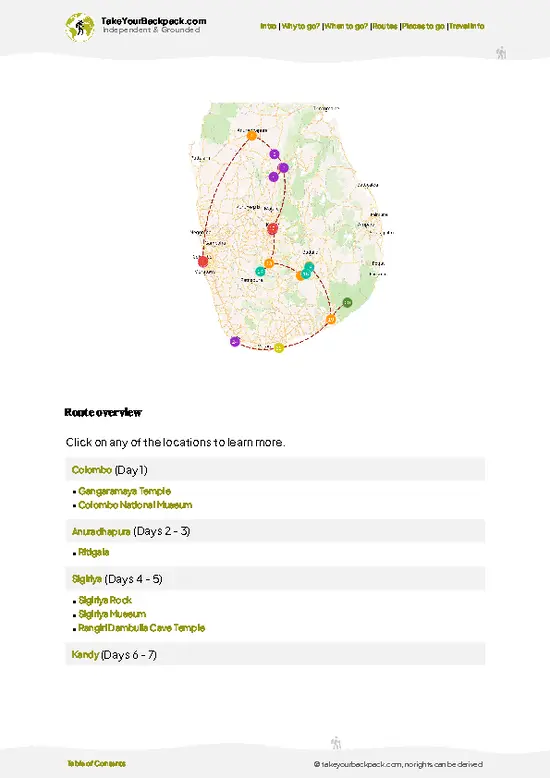
How long you need: A trip combining several cities in Sri Lanka needs 10 to 14 days, because even short distances are slow. Plan 2 to 3 nights per stop so you are not spending every other morning packing a bag in the sticky heat.
Grouping regions: Group places by region. The cultural triangle in the north-central dry zone, the hill country around Kandy and the tea districts, and the southwest coast from Colombo to Galle each work as a cluster. A loop starting at Colombo’s airport, moving into the dry zone, climbing to the hills and descending to the south coast avoids backtracking. Typical transfers run 3 to 6 hours: Colombo to Kandy takes about 3 to 4 hours, and hill country to the south coast often takes 5 to 7 hours by road. Scenic train rides in the hills are slow, so allow extra time.
Common … read more 👉
How long you need: A trip combining several cities in Sri Lanka needs 10 to 14 days, because even short distances are slow. Plan 2 to 3 nights per stop so you are not spending every other morning packing a bag in the sticky heat.
Grouping regions: Group places by region. The cultural triangle in the north-central dry zone, the hill country around Kandy and the tea districts, and the southwest coast from Colombo to Galle each work as a cluster. A loop starting at Colombo’s airport, moving into the dry zone, climbing to the hills and descending to the south coast avoids backtracking. Typical transfers run 3 to 6 hours: Colombo to Kandy takes about 3 to 4 hours, and hill country to the south coast often takes 5 to 7 hours by road. Scenic train rides in the hills are slow, so allow extra time.
Common mistakes: The biggest mistake is judging distance by kilometers. A 120-kilometer journey can easily take 4 hours behind trucks and buses. Travelers also schedule long transfers on the same day as sightseeing, and arrive wrung out, sweating and short of daylight. Book popular trains (reserved seats) days ahead, and leave long road days free of other plans. Avoid crossing the island from east to west in a single push, and travel before midday when roads are calmer and the air is cooler.

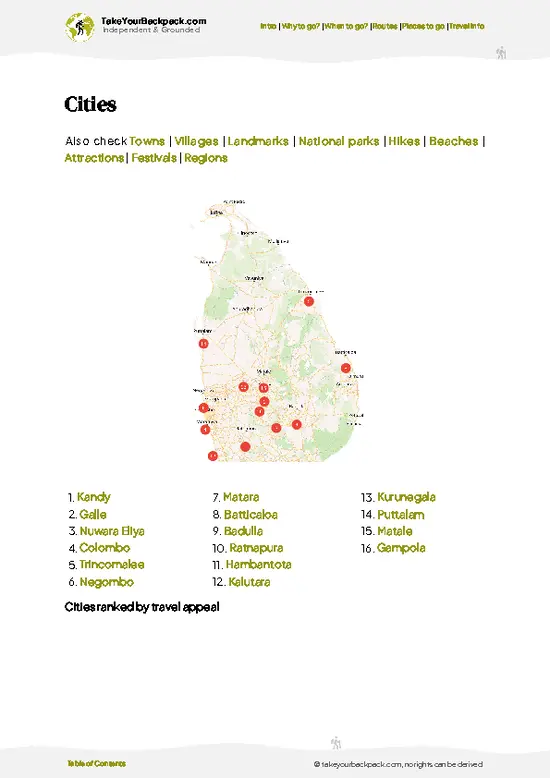
The ListTop cities of Sri Lanka

1 Kandy

temple lake, royal gardens, hillside neighborhoods

Circle the central lake, visit sacred shrines, and climb winding roads to viewpoints above the city’s leafy, mist-shrouded hills.

2 Galle

fortified old town, art galleries, seaside ramparts

Stroll along stone walls, browse local art, and watch the Indian Ocean crash against centuries-old bastions in a compact coastal enclave.

3 Nuwara Eliya

colonial-era town, racecourse, cool gardens

Stroll past old hotels and manicured lawns in a high-altitude town with a climate and architecture unlike anywhere else in Sri Lanka.

4 Colombo

urban sprawl, street food, colonial architecture

Navigate crowded streets, sample snacks from roadside stalls, and trace the city’s layered history through its diverse neighborhoods.

5 Trincomalee

harbor views, Hindu temples, coastal forts

Experience a port city where religious rituals, colonial relics, and daily fishing routines shape life along the turquoise eastern shore.

sri-lanka-city-trincomalee
© Google |

6 Negombo

lagoon fishing, Catholic churches, seafood markets

Sample fresh catch at sunrise, watch catamarans glide past colonial churches, and observe daily life along the lagoon’s edge.

sri-lanka-city-negombo
© Google |

7 Matara

Dutch ramparts, southern beaches, river mouth

Wander through a city where fort walls meet the sea, and local markets bustle near the confluence of river and ocean.

8 Batticaloa

lagoon islands, colonial lighthouse, Tamil culture

Cycle across narrow bridges to discover a city shaped by waterways, music traditions, and the rhythms of daily coastal life.

9 Badulla

tea estates, railway terminus, mountain valleys

Arrive by train to a town surrounded by tea slopes, where cool air and quiet streets invite slow exploration.

10 Ratnapura

gem markets, rainforest foothills, river crossings

Navigate a city defined by gem trading, muddy rivers, and the constant backdrop of misty hills and tropical downpours.

11 Hambantota

dry zone, salt pans, fishing harbors

Travel through open plains dotted with salt fields and watch fishing boats return to a town shaped by the southern coast’s arid winds.

12 Kalutara

river estuary, Buddhist stupa, mangrove wetlands

Cross the broad river to find a city where religious sites, lush wetlands, and local trade intersect at the edge of the sea.

13 Kurunegala

rock outcrops, coconut plantations, regional markets

Climb ancient boulders for sweeping views, then descend into a city where rural trade and agriculture drive the local economy.

14 Puttalam

salt pans, wind farms, Muslim quarters

See salt harvested by hand, wind turbines spinning on the horizon, and a blend of cultures shaping the rhythm of daily commerce.

15 Matale

spice gardens, Hindu shrines, mountain passes

Smell cardamom and clove in the air, visit ornate temples, and travel winding roads through the heart of Sri Lanka’s interior.

16 Gampola

hill station, railway bridge, Buddhist relics

Ride the train over dramatic spans and explore a town with royal-era relics, set amid rolling hills and tea gardens.

Think you know Sri Lanka?

Prove you’re a true local — uncover 6 lesser-known cities in Sri Lanka that locals tend to keep to themselves.
Loading the map 🌍

Expert viewInsights from Locals and Experts

How many cities to visit: I recommend four to five cities on a trip of two weeks. That gives each place two or three nights, enough to adjust to the heat, wander at dawn and dusk, and avoid spending your life on buses. Add more and you trade street-corner tea stops for hours staring out of a vehicle window at roadside fruit stalls and traffic.
Choosing the kind of city: Mix the types. Ancient capitals suit history lovers who can handle dust and midday sun, with ruins that are spread out and best seen by bicycle or tuk-tuk. Hill towns suit people who want cool air, wet mornings and tea-scented markets. Coastal colonial towns suit those who like forts, cafes and sea breeze, but they are the most touristy and the priciest. The commercial capital is loud, humid and chaotic, and best treated as … read more 👉
How many cities to visit: I recommend four to five cities on a trip of two weeks. That gives each place two or three nights, enough to adjust to the heat, wander at dawn and dusk, and avoid spending your life on buses. Add more and you trade street-corner tea stops for hours staring out of a vehicle window at roadside fruit stalls and traffic.
Choosing the kind of city: Mix the types. Ancient capitals suit history lovers who can handle dust and midday sun, with ruins that are spread out and best seen by bicycle or tuk-tuk. Hill towns suit people who want cool air, wet mornings and tea-scented markets. Coastal colonial towns suit those who like forts, cafes and sea breeze, but they are the most touristy and the priciest. The commercial capital is loud, humid and chaotic, and best treated as a short stop for food and markets rather than a base.
What it costs: Budget US$30 to 50 a day as a backpacker, covering dorm or guesthouse rooms at about US$10 to 25, street meals at US$2 to 5 and local buses at under US$1 to 3 for most hops. Tuk-tuks run about US$2 to 8 for short rides. Entry fees at major archaeological and heritage sites are a different scale: foreigners often pay roughly US$20 to 35 at the headline ancient sites, and about US$10 to 25 at major temples and gardens. A guide costs around US$10 to 30 for a few hours. Budget extra US$20 to 60 per city for entry fees and guides if you visit headline attractions. Trains in second or third class cost only a few dollars, while reserved observation-car seats cost somewhat more.
Safety and etiquette: Violent crime against travelers is uncommon, but petty theft, overcharging and touts are routine in tourist areas. Agree tuk-tuk fares before you get in, or use a ride-hailing app in Colombo. Dress modestly at temples, with shoulders and knees covered. Shoes and hats come off, and the stone can be scorching, so carry socks. Never pose with your back to a Buddha statue, and do not wear clothing with Buddha imagery. Poya days limit alcohol sales. Women traveling alone should expect staring and occasional harassment on crowded buses, so sitting near the front helps.
Worth the journey: Despite heat, crowds and slow roads, cities here reward you with tiny details: kottu roti being chopped on a hot griddle in a steady clatter, temple bells at dawn, frangipani on stone steps and tea poured from a height. Those moments cost almost nothing, and that is why I would keep the pace unhurried and the list short.

✈️ The backpacker research shortcutSri Lanka Travel Guide

An offline-friendly backpacking guide with optimized travel routes, ranked highlights, transport advice, and the best areas to stay.
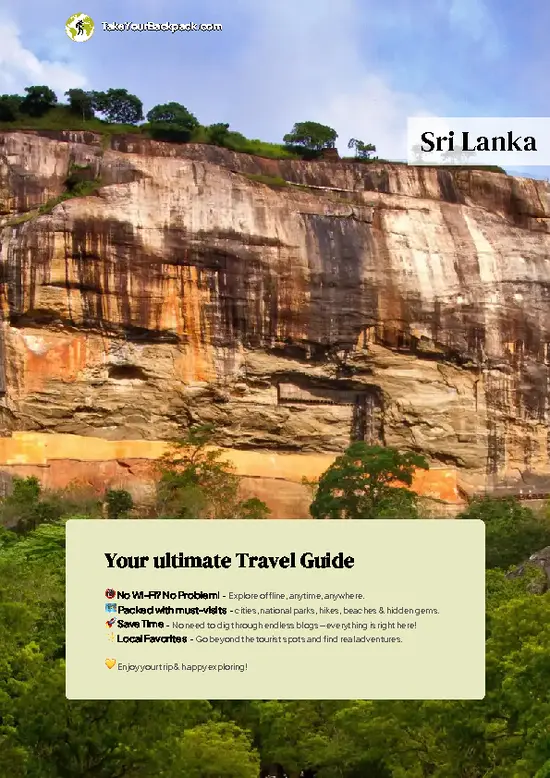
example page 0 from our offline Travel Guide for Sri Lanka
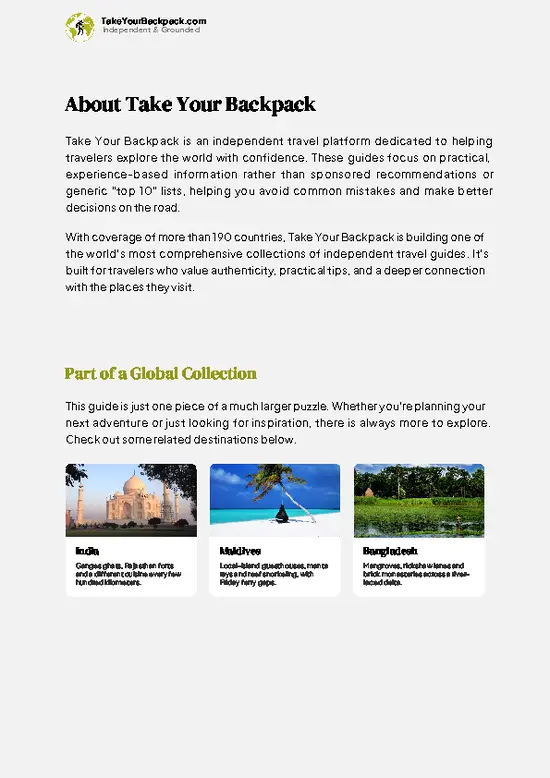
example page 1 from our offline Travel Guide for Sri Lanka
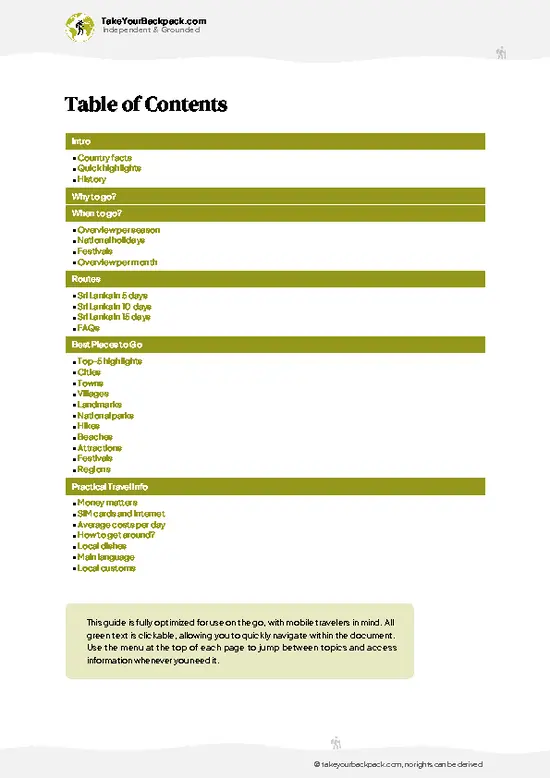
example page 2 from our offline Travel Guide for Sri Lanka
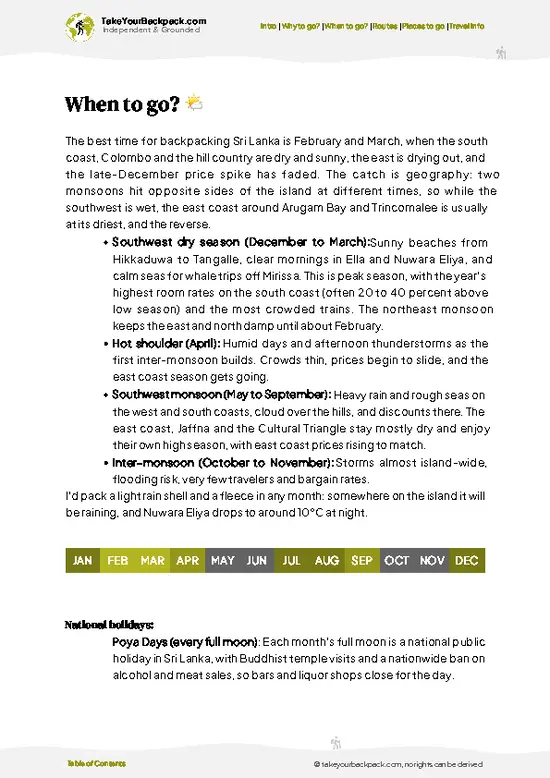
example page 3 from our offline Travel Guide for Sri Lanka
example page 4 from our offline Travel Guide for Sri Lanka
example page 5 from our offline Travel Guide for Sri Lanka
example page 6 from our offline Travel Guide for Sri Lanka
example page 7 from our offline Travel Guide for Sri Lanka
The digital guide (435 pages) contains:
✅ 121 highlights, ranked by travel appeal
✅ Optimized 5, 10 & 15-day travel routes
✅ Cities, national parks, landmarks, beaches
✅ How to get around
✅ Offline-friendly for travel without Wi-Fi
👉 Click to see all 30+ guide features

📅 Plan smarter in minutes, not weeks
✅ Month by month travel advice
✅ Festivals & national holidays
✅ Budget expectations

🗺️ Go to the right places, skip the overrated ones
✅ Honest pros & cons of destinations
✅ Top hikes, parks & viewpoints
✅ Lesser-known places most travelers miss
✅ Clear “worth it vs skip it” guidance

🛏️ Travel smoothly without rookie mistakes
✅ Best areas to stay
✅ Transport systems explained simply
✅ Common scams & safety advice
✅ SIM cards, money & practical tips

🌍 Understand the country, not just visit it
✅ Culture & traditions
✅ 52 Essential phrases & customs
✅ Festivals worth planning around
✅ Traveler-friendly historical context
✅ Insights that make places more meaningful

📱 Built for real travel conditions
✅ Fully downloadable PDF
✅ Works completely offline
✅ Optimized for phone use
✅ Useful in remote areas & buses
✅ Everything in one place
Stop searching, start planning
Get instant access to your full guide. 30‑day money-back guarantee.
+ Add another guide for just

By proceeding you agree to our terms.
Sent to your inbox immediately after payment • 100% Secure Checkout
Best Backpacking Travel Advisor 2025 tourism awardBest Backpacking
Travel Advisor
2025
What others say about Take Your Backpack Guides:
⭐⭐⭐⭐⭐
Fantastic, amazing amount of information!
⭐⭐⭐⭐⭐
My goodness this is amazing, it's what I've been looking for hats off too you!
⭐⭐⭐⭐⭐
I think this is absolutely BRILLIANT
⭐⭐⭐⭐
Very complete and informative. It's still missing places, but I gotta to commend you
⭐⭐⭐⭐⭐
This is truly amazing, thank you, can't wait to explore it with my kids!
⭐⭐⭐⭐⭐
Awesome resource, thank you!
⭐⭐⭐⭐⭐
This is amazing! Can't wait to explore the ones I haven't seen
⭐⭐⭐⭐
I love this! Well done, great idea.
⭐⭐⭐⭐⭐
Thanks for taking the time to make this gem!
⭐⭐⭐⭐⭐
This might be the best website I've ever seen.
⭐⭐⭐⭐⭐
Congratulations, and thank you so much for your work; it's incredibly valuable.
⭐⭐⭐⭐
In all seriousness I think you did a great job pointing out the important spots
⭐⭐⭐⭐⭐
10/10 very good
⭐⭐⭐⭐⭐
As someone who's only just starting to visit regularly this is awesome, thank you.
⭐⭐⭐⭐
Thank you very much! I'm going to visit my dad, it's going to be very useful!
⭐⭐⭐⭐⭐
This is really cool! We'll be travelling for the first time and this definitely come in handy.
⭐⭐⭐⭐⭐
You are now our minister of culture, congratulations 👨‍💼
⭐⭐⭐⭐⭐
Just wanted to tell you that this is a pearl! Going to follow your recommendations.
⭐⭐⭐⭐⭐
This is so cool. I'll definitely be using the resource for my travels soon.
⭐⭐⭐⭐⭐
This is very impressive! Good work.
⭐⭐⭐⭐⭐
This is an amazing and informative site. Very well done!

🛏️ Where to stay?Where to Stay in Sri Lanka

Sri Lanka has plenty of hostels and family-run guesthouses, with dorm beds typically around LKR 2,500 to 4,500 (US$8 to 15) and simple private doubles from about LKR 5,000 to 9,000 (US$17 to 30). In Colombo, Fort puts you next to the main train and bus stations but goes quiet after dark, while Kollupitiya and Bambalapitiya offer more restaurants and bars at slightly higher prices. In the hill country, Ella has the densest cluster of social hostels within walking distance of the main trails, and Kandy concentrates its budget beds on the hillsides around the lake, which are quiet but involve steep walks. On the south coast, Mirissa and Hikkaduwa are the party-leaning beach bases, Unawatuna and … read more 👉
Sri Lanka has plenty of hostels and family-run guesthouses, with dorm beds typically around LKR 2,500 to 4,500 (US$8 to 15) and simple private doubles from about LKR 5,000 to 9,000 (US$17 to 30). In Colombo, Fort puts you next to the main train and bus stations but goes quiet after dark, while Kollupitiya and Bambalapitiya offer more restaurants and bars at slightly higher prices. In the hill country, Ella has the densest cluster of social hostels within walking distance of the main trails, and Kandy concentrates its budget beds on the hillsides around the lake, which are quiet but involve steep walks. On the south coast, Mirissa and Hikkaduwa are the party-leaning beach bases, Unawatuna and Tangalle are calmer, and Arugam Bay on the east coast fills with surfers from roughly April to October, when prices climb.

If you enjoy meeting fellow travelers, consider choosing hostels with high ratings for atmosphere. On the other hand, if you prefer having your own space, a hotel might be a better option.

Sri LankaMore of Sri Lanka

👋 Meet the founderWho’s Behind Take Your Backpack?

Johan, backpacker and founder of TakeYourBackpackHi, I’m Johan (Netherlands 🇳🇱), the creator of TakeYourBackpack. Over the past 3 decades, I’ve backpacked through 90+ countries across six continents, gaining extensive experience with independent travel, long-term trips, and overland routes.

This site is built on a combination of firsthand travel experience and carefully curated insights from other backpackers. Many guides are based on places I’ve personally visited, while others bring together tips, observations, and practical advice shared by trusted travelers I’ve met along the way.

The goal is to provide realistic, experience-driven guidance — not generic itineraries — so you can explore destinations with better context, clearer expectations, and more confidence.