×

Sudan🇸🇩 | townsKarimaJebel Barkal, ancient temples, desert oasis | things to do and best time to go

Explore Kordofan RegionExplore Wadi Halfa

Backpacking in Karima
🏆 Top picktown ranked #1
By Johan Kruseman 🇳🇱 | Updated June 8, 2026

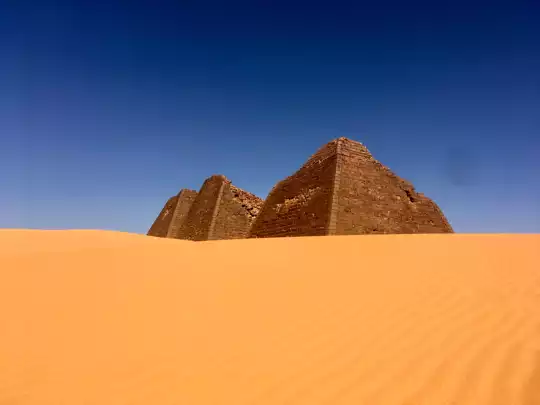
Karima used to be the kind of place where the desert wind carried more stories than tourists—just a handful of travelers, a sleepy market, and the ever-present silhouette of Jebel Barkal rising out of the sand like a promise. Today, Karima is still quiet by global standards, but the secret’s out: the pyramids and ancient temples draw a steady trickle of backpackers chasing the raw, sun-bleached grandeur that northern Sudan does better than anywhere. You’ll find Karima in the heart of Nubia, north of Khartoum, where the Nile bends and the landscape shifts from riverbank green to ochre dust. For backpackers, Karima is less a destination for urban thrills and more a launchpad—base yourself here and you’re within walking distance of Jebel Barkal’s summit at sunrise, the crumbling pyramids at El Kurru, and the kind of market where you’ll haggle for dates under a corrugated roof. The town itself is compact, easy to cross on foot, but you’ll need a tuk-tuk or a shared taxi for anything beyond the center. Social life is mellow: don’t expect hostels or a café scene, but you might share tea with locals or swap stories with other travelers over a simple meal. Costs are low, safety is generally good, and compared to busier Atbara or the more industrial Dongola, Karima feels like a pause button—more scenic, less practical, and just remote enough that every sunrise feels earned.

Discover everything you want to know in the 📖 Sudan Travel Guide.
Safety warning

The current risk level for Sudan is high. Check the advice before going.


Get your Sudan guide
72 ranked highlights, routes & tips, works offline (300 pages)
Loading the map 🌍
CLICK TO FILTER
cities
towns
landmarks
national parks
hikes
beaches
attractions
festivals
regions
SHOW COUNTRY’S BESTSHOW ALL

✨ Why go?
Ranked #1 town in Sudan
Reasons people choose to visit here

Karima serves as a gateway for backpackers exploring Sudan’s rich landscapes and history. Its proximity to the Nubian pyramids makes it a prime stop for those eager to hike and delve into ancient cultures. The small-scale hostels and guesthouses here offer a cozy atmosphere, perfect for solo travelers or small groups looking to connect. Streets are walkable, lined with local eateries where you can savor spicy stews and fresh bread, immersing yourself in the local flavor. While some travelers might just pass through, many linger for a few days, soaking in the friendly social vibe. This town suits those who appreciate a slower pace, blending exploration with genuine cultural experiences. If you’re after a quick stop or a deeper dive, Karima has you covered.
Want to include Karima in your Sudan route?
Create a personalized Sudan itinerary that includes Karima and the places that fit your trip — based on your travel style, budget, and available time. Get your route in seconds.

Generate my trip

💡 HighlightsPlaces and moments you shouldn't skip

  1. Jebel Barkal (the sacred mountain and archaeological complex) — A compact sandstone ridge that dominates Karima’s skyline and was a religious center for the Napatan Kingdom; you can walk among temple ruins, giant rock-cut shrines and standing stelae while the mountain itself feels like living history.
  2. Great Temple of Amun at Jebel Barkal — The core temple complex at the foot of the mountain with impressive pylons, carved reliefs and royal inscriptions; it’s where the ancient Kushite kings staged ceremonies, and the scale of the ruins makes the history tangible.
  3. Jebel Barkal Museum (Karima Museum) — Small, well-focused museum near the site that houses Napatan artifacts, pottery, statuary fragments and interpretive panels; seeing the finds here first makes the on-site ruins much richer.
read more 👉
  1. Jebel Barkal (the sacred mountain and archaeological complex) — A compact sandstone ridge that dominates Karima’s skyline and was a religious center for the Napatan Kingdom; you can walk among temple ruins, giant rock-cut shrines and standing stelae while the mountain itself feels like living history.
  2. Great Temple of Amun at Jebel Barkal — The core temple complex at the foot of the mountain with impressive pylons, carved reliefs and royal inscriptions; it’s where the ancient Kushite kings staged ceremonies, and the scale of the ruins makes the history tangible.
  3. Jebel Barkal Museum (Karima Museum) — Small, well-focused museum near the site that houses Napatan artifacts, pottery, statuary fragments and interpretive panels; seeing the finds here first makes the on-site ruins much richer.
  4. Karima Nile corniche and boat landings — The riverfront is where locals gather, fishermen work and boats run short trips; take a felucca or motorboat at sunrise or sunset for a calm river view back toward Jebel Barkal.
  5. Karima souq (local market and town streets) — A lively, authentic market with dates, spices, household goods and simple cafés; it’s the best place to watch daily life, sample local snacks and pick up basic supplies or souvenirs.
A few visitable highlights just outside Karima that make easy day trips are the Nuri pyramid field (Royal Cemetery of Nuri), the El-Kurru pyramids and the other Napatan necropolises; Nuri’s pyramid field is my personal favorite.
Spotted a mistake or missing something? Contact us.

🏘️ NeighborhoodsWhere things are and how it's laid out

Karima offers a unique blend of history and local life, making it a fascinating stop for backpackers. Here’s how to navigate its neighborhoods:

Downtown Karima: This is the bustling heart of the town. You’ll find local markets filled with spices and textiles. The vibe is lively, perfect for those who thrive on energy. Costs here are reasonable, and it’s walkable, with most attractions within a short stroll. Nightlife is minimal, but the evening street food scene is vibrant. Ideal for short stays.

Old Town: A quieter area steeped in history. Cobblestone streets and ancient architecture create a charming atmosphere. It’s less touristy, making it a great spot for longer stays if you want to soak in local culture. Costs are slightly lower, and it’s a peaceful retreat after a day of exploration. … read more 👉
Karima offers a unique blend of history and local life, making it a fascinating stop for backpackers. Here’s how to navigate its neighborhoods:

Downtown Karima: This is the bustling heart of the town. You’ll find local markets filled with spices and textiles. The vibe is lively, perfect for those who thrive on energy. Costs here are reasonable, and it’s walkable, with most attractions within a short stroll. Nightlife is minimal, but the evening street food scene is vibrant. Ideal for short stays.

Old Town: A quieter area steeped in history. Cobblestone streets and ancient architecture create a charming atmosphere. It’s less touristy, making it a great spot for longer stays if you want to soak in local culture. Costs are slightly lower, and it’s a peaceful retreat after a day of exploration. Walkability is good, but transport options are limited.

Riverfront: This area offers stunning views of the Nile. It’s perfect for sunset strolls and has a few cozy cafes. Costs can vary, but you can find budget-friendly options. The vibe is relaxed, making it suitable for both short and longer stays. Transport access is decent, with local buses nearby.

⌛️ 1 dayA smart one-day plan

Karima, Sudan, is a town steeped in history, where the whispers of ancient Nubian culture mingle with the vibrant pulse of daily life. The sun rises over the sandstone cliffs, casting a warm glow that beckons you to explore.

Start your morning at the local market, where the air is rich with the scent of spices and fresh produce. Engage with friendly vendors selling everything from colorful textiles to fragrant herbs. Grab a breakfast of ful medames—mashed fava beans drizzled with olive oil and served with warm bread. It’s a hearty way to fuel up for the day.

In the afternoon, head to the nearby Jebel Barkal, a UNESCO World Heritage site. The towering pyramids and temples are a testament to the region’s ancient glory. Climb to the summit for a panoramic view of the Nile and the surrounding … read more 👉
Karima, Sudan, is a town steeped in history, where the whispers of ancient Nubian culture mingle with the vibrant pulse of daily life. The sun rises over the sandstone cliffs, casting a warm glow that beckons you to explore.

Start your morning at the local market, where the air is rich with the scent of spices and fresh produce. Engage with friendly vendors selling everything from colorful textiles to fragrant herbs. Grab a breakfast of ful medames—mashed fava beans drizzled with olive oil and served with warm bread. It’s a hearty way to fuel up for the day.

In the afternoon, head to the nearby Jebel Barkal, a UNESCO World Heritage site. The towering pyramids and temples are a testament to the region’s ancient glory. Climb to the summit for a panoramic view of the Nile and the surrounding desert. The climb is a bit challenging, but the reward is a breathtaking perspective that few tourists experience.

As the sun begins to set, wander through the Al-Mahdi neighborhood. This area is often overlooked, but it’s where you’ll find local artisans crafting pottery and weaving baskets. Stop by a small café for a cup of sweet Sudanese tea, and soak in the atmosphere as the day winds down.

End your evening by visiting the Nile’s banks. The soft lapping of water against the shore creates a serene backdrop. Reflect on your day, knowing you’ve not just seen Karima, but felt its heartbeat.
Turn your Karima visit into an Sudan adventure
Build a complete Sudan route with Karima, hidden gems, must-see destinations, and realistic travel times included.

Generate my trip

🌤️ When to go?Seasonal considerations and timing


  • Topic: Weather – Karima bakes under the Sudanese sun most of the year. The best window is between November and February when daytime highs hover around a manageable 25-30°C (77-86°F). Outside this, expect brutal heat soaring past 40°C (104°F), which can drain your energy fast.

  • Topic: Temperature – Nights in the cooler months dip to a comfortable 15-20°C (59-68°F), perfect for camping or evening strolls without the oppressive heat. Summers, however, bring relentless warmth even after sunset, making rest and recovery tougher.

  • Topic: Daylight Hours – Daylight is fairly consistent year-round, roughly 11 to 12 hours. This steady rhythm means you can plan your hikes and explorations without worrying about sudden shifts in light, but starting early is key to avoid midday scorch.

  • Topic: Crowds
read more 👉

  • Topic: Weather – Karima bakes under the Sudanese sun most of the year. The best window is between November and February when daytime highs hover around a manageable 25-30°C (77-86°F). Outside this, expect brutal heat soaring past 40°C (104°F), which can drain your energy fast.

  • Topic: Temperature – Nights in the cooler months dip to a comfortable 15-20°C (59-68°F), perfect for camping or evening strolls without the oppressive heat. Summers, however, bring relentless warmth even after sunset, making rest and recovery tougher.

  • Topic: Daylight Hours – Daylight is fairly consistent year-round, roughly 11 to 12 hours. This steady rhythm means you can plan your hikes and explorations without worrying about sudden shifts in light, but starting early is key to avoid midday scorch.

  • Topic: Crowds – Tourist traffic is light year-round, but the cooler months see a slight uptick as travelers escape harsher climates. This means fewer crowds but enough company to share tips and stories without feeling isolated.

  • Topic: Seasonal Activities – The dry season (November to February) is prime for trekking and visiting archaeological sites around Karima. The Nile’s flow is steady, making boat trips possible but less dramatic than during the flood season.

  • Topic: Price Fluctuations – Accommodation and local services tend to be more affordable in the hotter months due to lower demand. However, the trade-off is enduring extreme heat, which can sap your enjoyment and energy.


Pro-tip: Aim for late November to early February—cooler days, manageable nights, and just enough fellow travelers to keep the vibe lively without the heat stealing your adventure’s soul.


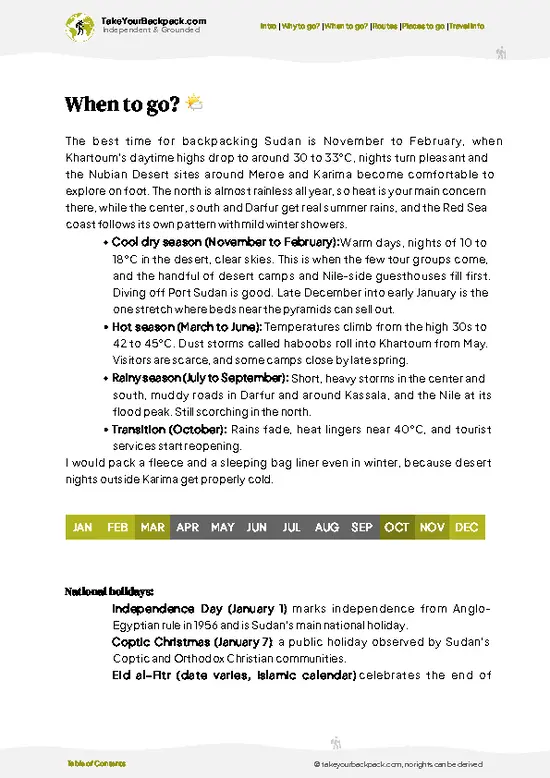
source: climatestotravel.comJANJanuary: excellent for travelingFEBFebruary: excellent for travelingMARMarch: fair for travelingAPRApril: below average for travelingMAYMay: below average for travelingJUNJune: below average for travelingJULJuly: below average for travelingAUGAugust: below average for travelingSEPSeptember: fair for travelingOCTOctober: good for travelingNOVNovember: highly recommended for travelingDECDecember: excellent for traveling
when-to-go

✈️ The backpacker research shortcutSudan Travel Guide

An offline-friendly backpacking guide with optimized travel routes, ranked highlights, transport advice, and the best areas to stay.
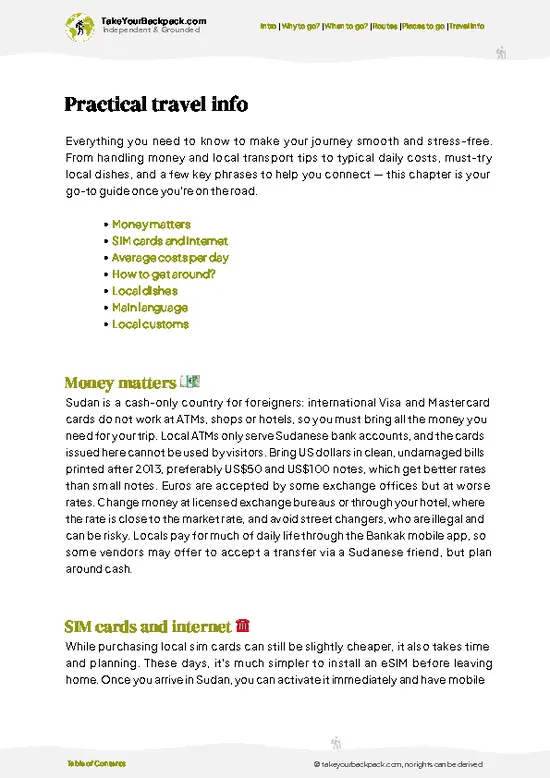
example page 0 from our offline Travel Guide for Sudanexample page 1 from our offline Travel Guide for Sudanexample page 2 from our offline Travel Guide for Sudanexample page 3 from our offline Travel Guide for Sudanexample page 4 from our offline Travel Guide for Sudanexample page 5 from our offline Travel Guide for Sudanexample page 6 from our offline Travel Guide for Sudanexample page 7 from our offline Travel Guide for Sudan
The digital guide (300 pages) contains:
72 highlights, ranked by travel appeal
Optimized 5, 10 & 15-day travel routes
Cities, national parks, landmarks, beaches
How to get around
Offline-friendly for travel without Wi-Fi
👉 Click to see all 30+ guide features

📅 Plan smarter in minutes, not weeks
Month by month travel advice
Festivals & national holidays
Budget expectations

🗺️ Go to the right places, skip the overrated ones
Honest pros & cons of destinations
Top hikes, parks & viewpoints
Lesser-known places most travelers miss
Clear “worth it vs skip it” guidance

🛏️ Travel smoothly without rookie mistakes
Best areas to stay
Transport systems explained simply
Common scams & safety advice
SIM cards, money & practical tips

🌍 Understand the country, not just visit it
Culture & traditions
52 Essential phrases & customs
Festivals worth planning around
Traveler-friendly historical context
Insights that make places more meaningful

📱 Built for real travel conditions
Fully downloadable PDF
Works completely offline
Optimized for phone use
Useful in remote areas & buses
Everything in one place
Save weeks of stressful planning
Get instant access to your full guide. 30‑day money-back guarantee.


By proceeding you agree to our terms.
Sent to your inbox immediately after payment • 100% Secure Checkout
Best Backpacking Travel Advisor 2025 tourism awardBest Backpacking
Travel Advisor
2025
What others say about Take Your Backpack Guides:
⭐⭐⭐⭐⭐
Fantastic, amazing amount of information!
⭐⭐⭐⭐⭐
My goodness this is amazing, it's what I've been looking for hats off too you!
⭐⭐⭐⭐⭐
I think this is absolutely BRILLIANT
⭐⭐⭐⭐
Very complete and informative. It's still missing places, but I gotta to commend you
⭐⭐⭐⭐⭐
This is truly amazing, thank you, can't wait to explore it with my kids!
⭐⭐⭐⭐⭐
Awesome resource, thank you!
⭐⭐⭐⭐⭐
This is amazing! Can't wait to explore the ones I haven't seen
⭐⭐⭐⭐
I love this! Well done, great idea.
⭐⭐⭐⭐⭐
Thanks for taking the time to make this gem!
⭐⭐⭐⭐⭐
This might be the best website I've ever seen.
⭐⭐⭐⭐⭐
Congratulations, and thank you so much for your work; it's incredibly valuable.
⭐⭐⭐⭐
In all seriousness I think you did a great job pointing out the important spots
⭐⭐⭐⭐⭐
10/10 very good
⭐⭐⭐⭐⭐
As someone who's only just starting to visit regularly this is awesome, thank you.
⭐⭐⭐⭐
Thank you very much! I'm going to visit my dad, it's going to be very useful!
⭐⭐⭐⭐⭐
This is really cool! We'll be travelling for the first time and this definitely come in handy.
⭐⭐⭐⭐⭐
You are now our minister of culture, congratulations 👨‍💼
⭐⭐⭐⭐⭐
Just wanted to tell you that this is a pearl! Going to follow your recommendations.
⭐⭐⭐⭐⭐
This is so cool. I'll definitely be using the resource for my travels soon.
⭐⭐⭐⭐⭐
This is very impressive! Good work.
⭐⭐⭐⭐⭐
This is an amazing and informative site. Very well done!

🛏️ Where to stay?How to pick the right area

Karima’s backpacker sweet spot is the area around the town center, close to the Nile’s edge. This neighborhood hums with local life—vendors selling fresh dates and spices, the scent of grilled meat wafting through the dry air, and the steady rhythm of daily market chatter. It’s where you’ll find the few budget guesthouses and hostels that cater to travelers who want to stretch their pounds without sacrificing safety or social connection.

Why this area? Because it’s compact and walkable, meaning you can explore on foot without the hassle of unreliable transport or the risk of wandering into less … read more 👉
Karima’s backpacker sweet spot is the area around the town center, close to the Nile’s edge. This neighborhood hums with local life—vendors selling fresh dates and spices, the scent of grilled meat wafting through the dry air, and the steady rhythm of daily market chatter. It’s where you’ll find the few budget guesthouses and hostels that cater to travelers who want to stretch their pounds without sacrificing safety or social connection.

Why this area? Because it’s compact and walkable, meaning you can explore on foot without the hassle of unreliable transport or the risk of wandering into less secure districts after dark. The streets here are alive but not overwhelming, offering a genuine slice of Sudanese small-town life. You’ll bump into other backpackers swapping stories over mint tea, making it easy to find company for excursions to the nearby archaeological sites.

Other parts of Karima tend to be quieter or more residential, lacking the social pulse and traveler infrastructure. Venturing too far out means losing that easy access to essentials and the comforting buzz of fellow explorers. Staying near the Nile also means cooler evenings and a chance to soak in the golden light reflecting off the water—a simple pleasure that makes the sometimes dusty, sunbaked days feel worthwhile.

🚌 Getting aroundTransportation options and practical tips

Karima moves at its own rhythm—less a clockwork town and more a place where the sun’s angle and the scent of the Nile set the pace. The streets pulse with a mix of purposeful strides and spontaneous pauses, where vendors call out over the hum of motorbikes and the occasional bleat of a goat. It’s not about rigid schedules here; it’s about reading the flow, catching the right moment to move or linger. The light shifts quickly, turning dusty gold in the late afternoon, and that’s when the town’s true character emerges—slow, deliberate, and deeply human. To navigate Karima like a local, you’ll want to blend patience with a bit of street-smart agility.

Walking: The heart of Karima is compact enough to explore on foot. Streets are uneven and sometimes dusty, but walking lets you soak in the smells … read more 👉
Karima moves at its own rhythm—less a clockwork town and more a place where the sun’s angle and the scent of the Nile set the pace. The streets pulse with a mix of purposeful strides and spontaneous pauses, where vendors call out over the hum of motorbikes and the occasional bleat of a goat. It’s not about rigid schedules here; it’s about reading the flow, catching the right moment to move or linger. The light shifts quickly, turning dusty gold in the late afternoon, and that’s when the town’s true character emerges—slow, deliberate, and deeply human. To navigate Karima like a local, you’ll want to blend patience with a bit of street-smart agility.

Walking: The heart of Karima is compact enough to explore on foot. Streets are uneven and sometimes dusty, but walking lets you soak in the smells of spices and fresh bread wafting from small shops. It’s free, obviously, and the best way to catch the town’s subtle rhythms. Just watch your step—sidewalks can be patchy, and stray animals are common.

Local Minibuses: These are the budget traveler’s lifeline for hopping between Karima and nearby villages. They run roughly from dawn until early evening, with fares usually under a dollar. Expect crowded, no-frills rides with frequent stops. The minibuses don’t follow strict schedules; they leave when full, so timing is flexible but unpredictable. It’s a chance to ride alongside locals, absorbing the chatter and the occasional burst of laughter.

Motorbike Taxis (Boda Bodas): When time is tight or the sun is blazing, motorbike taxis offer a quick, nimble way to get around. Prices are negotiable but generally low; always agree on a fare before hopping on. They weave through traffic and narrow alleys, cutting your travel time in half compared to walking. The trade-off is less comfort and a bit of adrenaline—helmets aren’t always standard, so hold on tight.

Shared Taxis: For trips to farther destinations like Dongola or the Nile ferry terminal, shared taxis provide a middle ground between minibuses and private cars. They leave once full, usually mid-morning and late afternoon, with fares higher than minibuses but still affordable. These rides are faster and more comfortable, with some air circulation but no air conditioning. It’s a practical choice if you want to cover distance without breaking the bank.

Boat Ferries: Crossing the Nile is a sensory experience—the smell of river water, the creak of wooden boats, the splash of oars. Ferries run on a loose schedule, mostly during daylight hours, and cost just a few cents. They’re slow but essential if your route requires crossing the river. Bring a hat and water; the sun can be relentless on the open deck.

Understanding Karima’s transit isn’t just about getting from A to B—it’s about syncing with the town’s pulse. Each mode offers a different slice of life, a way to feel the place rather than just pass through it. Embrace the unpredictability, and you’ll find the journey here is as rich as the destination.

👛 Costs (as of 29 March 2025)Travel costs and budget guide for Karima

Backpacking in Karima, Sudan, offers a raw, authentic experience where costs stay modest but the setting demands a bit of savvy budgeting to keep things smooth.
  • Dorm Accommodation: Expect to pay around $10 to $15 per night for basic guesthouses or simple hostels. These places are no-frills—think a clean bed, a fan, and maybe a shared bathroom. The lighting is often dim, and the walls thin, so earplugs are a good call.
  • Meals: Street food and local eateries serve up hearty, filling meals for $2 to $5. Think flatbreads, stews, and fresh fruit. Western-style or imported foods will hike your costs, so stick to local flavors to keep your wallet happy and your palate engaged.
  • Local Transport: Getting around Karima is mostly by shared minibuses or tuk-tuks, costing about $0.50 to $1 per ride. The rides
read more 👉
Backpacking in Karima, Sudan, offers a raw, authentic experience where costs stay modest but the setting demands a bit of savvy budgeting to keep things smooth.
  • Dorm Accommodation: Expect to pay around $10 to $15 per night for basic guesthouses or simple hostels. These places are no-frills—think a clean bed, a fan, and maybe a shared bathroom. The lighting is often dim, and the walls thin, so earplugs are a good call.
  • Meals: Street food and local eateries serve up hearty, filling meals for $2 to $5. Think flatbreads, stews, and fresh fruit. Western-style or imported foods will hike your costs, so stick to local flavors to keep your wallet happy and your palate engaged.
  • Local Transport: Getting around Karima is mostly by shared minibuses or tuk-tuks, costing about $0.50 to $1 per ride. The rides can be bumpy and crowded, but they’re the best way to soak in the town’s rhythm and interact with locals.
  • Basic Activities/Entry Fees: Visiting the nearby archaeological sites or museums usually costs between $5 and $10. These fees support preservation efforts and give you access to some seriously impressive ancient Nubian history. Hiring a local guide might add $10 to $15 but is worth it for the stories and context.
  • Miscellaneous Expenses: Budget around $2 to $5 for water, snacks, or small tips. Bottled water is essential in the dry heat, and it’s wise to carry your own refillable bottle to avoid constant purchases.

Altogether, you’re looking at roughly $20 to $40 per day to cover the essentials in Karima. It’s a modest sum that unlocks a deep dive into Sudan’s heritage without the tourist gloss. The dry air and dusty streets might challenge you, but the payoff is the quiet power of ancient ruins and genuine local encounters that feel earned, not packaged.


source: sudan.gov.sd
⚠️ Prices can change and everyone travels differently, so take this as a rough guide. Hope it helps you plan your adventure!

🚌 Day tripsWhere to go beyond the main area

Karima, Sudan, serves as a fantastic base for day trips that reveal the region’s rich history and stunning landscapes. The charm of this town lies in its accessibility to some truly remarkable sites, making it easy to dive into the heart of Sudanese culture and nature.

Trip to Jebel Barkal
Just a short drive from Karima, Jebel Barkal is a UNESCO World Heritage site that feels like stepping into a time machine. The towering sandstone mountain, with its ancient temples and pyramids, offers a glimpse into the Kingdom of Kush. The hike up the mountain rewards you with panoramic views of the Nile and the surrounding desert. Plan for about 1.5 hours of travel each way, and budget around $10 for transportation. The best time to visit is during the cooler months from November to February. A common … read more 👉
Karima, Sudan, serves as a fantastic base for day trips that reveal the region’s rich history and stunning landscapes. The charm of this town lies in its accessibility to some truly remarkable sites, making it easy to dive into the heart of Sudanese culture and nature.

Trip to Jebel Barkal
Just a short drive from Karima, Jebel Barkal is a UNESCO World Heritage site that feels like stepping into a time machine. The towering sandstone mountain, with its ancient temples and pyramids, offers a glimpse into the Kingdom of Kush. The hike up the mountain rewards you with panoramic views of the Nile and the surrounding desert. Plan for about 1.5 hours of travel each way, and budget around $10 for transportation. The best time to visit is during the cooler months from November to February. A common mistake is underestimating the sun; bring plenty of water and a hat to avoid dehydration.
👉 Explore Jebel Barkal

Trip to the Nile Valley
A day spent along the Nile Valley is a sensory delight. The lush greenery contrasts sharply with the arid landscape, creating a vibrant ecosystem. You can rent a small boat for a leisurely ride, soaking in the sights and sounds of local life along the riverbanks. Expect to spend about 30 minutes getting there, with a boat rental costing around $15. Early mornings are ideal for cooler temperatures and stunning sunrises. Many first-timers overlook the importance of timing; the midday sun can be brutal.


Trip to the Nubian Villages
Visiting the nearby Nubian villages offers an authentic cultural experience. The colorful homes and warm hospitality of the locals create a welcoming atmosphere. You can learn about traditional crafts and even try your hand at some local cooking. It’s about an hour’s journey, costing roughly $5 for transport. Aim for a visit in the late afternoon when the light softens, enhancing the vibrant colors of the village. A common pitfall is rushing through; take your time to engage with the locals for a richer experience.
Want to know what more Sudan offers?
The Sudan Travel Guide describes 72 highlights, from cities to national parks, from beaches to hikes

Get the Travel Guide -

🛡️ SafetyTraveler Safety Guide

Karima is generally safe, but awareness is key. Stick to well-lit areas at night, especially near the market and bus station. Solo travelers should blend in; avoid flashy attire and keep your valuables discreet.

Watch for common scams, like overly friendly locals offering unsolicited help that leads to inflated prices. If someone insists on guiding you, politely decline and navigate on your own.

Annoyances can include persistent vendors; a firm but friendly “no, thank you” usually does the trick. Trust your instincts. If something feels off, it probably is. Carry yourself with confidence, and you’ll unlock a smoother experience in this vibrant town.

Other Sudanese towns near Karima

Explore more nearby:

  • Wadi Halfa—Lake Nubia port, Egyptian border, ferry terminal| 367 km away
  • Abu Jubaiha—Kordofan woodlands, seasonal streams, rural markets| 827 km away
  • Talodi—Nuba Mountains, mining legacy, remote villages| 891 km away

💡 Not sure where to go next?
Create a personalized itinerary for Sudan including Karima and the places that fit your trip.

Generate my itinerary

👉 Discover all towns

Or checkout all Sudan has to offer (think cities, towns, villages, national parks, hikes, beaches, festivals)
Country photo of Sudan

We 💚 feedbackIs it worth it?

Karima’s ancient pyramids whisper stories of a rich past, their sun-baked stones radiating warmth and history. But be ready for the heat—daytime temps can be brutal. Embrace the early mornings and late afternoons when the light softens and the air cools. That’s when the magic happens, and you’ll feel the pulse of this remarkable place.

✈️ When did I visit Sudan?
Sudan I visited back in October 2017. I combined the trip with a visit to Ethiopia.

✍️ Help improve this page!
The information on this page is based on my own backpacking experience in Sudan, supplemented with up-to-date research and feedback from other travelers. Travel details can change, so if you notice anything outdated or incomplete, feel free to let me know.


🙋‍♂️ Give feedback

👋 Meet the founderWho’s Behind Take Your Backpack?

Johan, backpacker and founder of TakeYourBackpackHi, I’m Johan (Netherlands 🇳🇱), the creator of TakeYourBackpack. Over the past decade, I’ve backpacked through 80+ countries across six continents, gaining extensive experience with independent travel, long-term trips, and overland routes.

This site is built on a combination of firsthand travel experience and carefully curated insights from other backpackers. Many guides are based on places I’ve personally visited, while others bring together tips, observations, and practical advice shared by trusted travelers I’ve met along the way.

The goal is to provide realistic, experience-driven guidance — not generic itineraries — so you can explore destinations with better context, clearer expectations, and more confidence.

Get full Sudan guide •
Instant download • 72 highlights • Full Offline guide