v2.webp)
- Jebel Barkal (the sacred sandstone peak) — That jagged limestone outcrop is the reason the place exists: a natural landmark worshipped as the dwelling of Amun. You can’t miss its silhouette from miles away, and standing beneath it gives a real sense of why ancient kings built a city here.
- Temple of Amun — The religious heart of the site and the biggest temple complex here. It’s a rare Kushite/Egyptian hybrid: huge pylons, columned halls and reliefs showing Kushite pharaohs. Historically it was the kingdom’s spiritual capital, so the carvings and layout actually matter for understanding Nubian power.
- Taharqa’s chapels and reliefs — Temples and chapels added by King Taharqa (one of the better-known Kushite rulers). The stone reliefs and inscriptions are unusually well-preserved for the region,
- Jebel Barkal (the sacred sandstone peak) — That jagged limestone outcrop is the reason the place exists: a natural landmark worshipped as the dwelling of Amun. You can’t miss its silhouette from miles away, and standing beneath it gives a real sense of why ancient kings built a city here.
- Temple of Amun — The religious heart of the site and the biggest temple complex here. It’s a rare Kushite/Egyptian hybrid: huge pylons, columned halls and reliefs showing Kushite pharaohs. Historically it was the kingdom’s spiritual capital, so the carvings and layout actually matter for understanding Nubian power.
- Taharqa’s chapels and reliefs — Temples and chapels added by King Taharqa (one of the better-known Kushite rulers). The stone reliefs and inscriptions are unusually well-preserved for the region, giving you direct visual links to the era when Kushite kings ruled both Sudan and Egypt.
- Nubian-style pyramids and royal tombs — Small, steep pyramids and their attached chapels dot the area (and there’s the larger Nuri cemetery nearby). They look nothing like the Giza behemoths; their scale and chapel art tell the story of Kushite burial customs and royal memory.
- Rock-cut shrines, stelae and inscriptions — Scattered carved stelae and small shrines record decrees, dedications and religious scenes. They’re great for history nerds and anyone who likes seeing history written into the landscape rather than placed in a glass case.
- Ruins of palaces and the temple enclosure — Foundations, walls and brickwork of administrative buildings show this wasn’t just a holy site but a functioning royal center. The layout helps you picture how rulers and priests lived and worked when Jebel Barkal was a capital.
- Sunrise/sunset over the Nile and the mountain (personal favorite) — The light here is ridiculous: golden sun on the sandstone while the Nile glints below. It’s the most atmospheric moment to explore, photograph, or just sit and imagine the site in its heyday. Budget tip: arrive early or stay late to avoid the midday heat and crowds.
Spotted a mistake or missing something? Contact us.

 Best Backpacking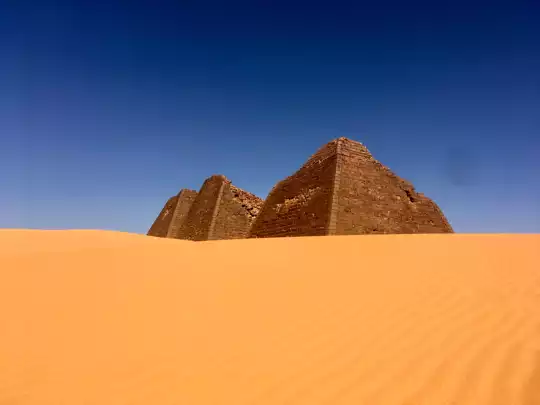
.jpg) Hi, I’m Johan (Netherlands 🇳🇱), the creator of TakeYourBackpack. Over the past 3 decades, I’ve backpacked through 90+ countries across six continents, gaining extensive experience with independent travel, long-term trips, and overland routes.
Hi, I’m Johan (Netherlands 🇳🇱), the creator of TakeYourBackpack. Over the past 3 decades, I’ve backpacked through 90+ countries across six continents, gaining extensive experience with independent travel, long-term trips, and overland routes.