×

Sudan🇸🇩 | citiesPort SudanRed Sea coast, coral reefs, shipping docks | things to do and best time to go

Explore OmdurmanExplore Shendi

Backpacking in Port Sudan
🏆 Top pickcity ranked #2
By Johan Kruseman 🇳🇱 | Updated May 21, 2026

Most travelers assume Port Sudan is just a gritty shipping hub—skip it, they say, unless you’re chasing cargo. That’s a rookie mistake. Port Sudan sits on Sudan’s Red Sea coast, northeast of Khartoum, and it’s the country’s salt-and-sun gateway to the water. As a backpacker, you’ll find a city that’s more functional than flashy, but the payoff is access to some of the world’s best, least-crowded diving at Sanganeb Reef and the haunting, salt-bleached ruins of Suakin nearby. The city itself is no architectural marvel, but the fish market’s chaos and the old colonial buildings along the waterfront have their own, sun-baked charm. Sudan isn’t the easiest country to travel—bureaucracy and checkpoints slow you down, and you’ll rarely bump into other backpackers swapping stories over coffee. Costs are low, safety is manageable if you keep a low profile, and compared to Khartoum’s sprawl, Port Sudan feels more relaxed, with the Red Sea breeze cutting the heat and the pace.

Discover everything you want to know in the 📖 Sudan Travel Guide.
Safety warning

The current risk level for Sudan is high. Check the advice before going.


Get your Sudan guide
72 ranked highlights, routes & tips, works offline (300 pages)
Loading the map 🌍
CLICK TO FILTER
city
town
unique site
national park
hike
beach
attraction
festival
region
SHOW COUNTRY’S BESTSHOW ALL

✨ Why go?
Ranked #2 city in Sudan
What makes this city worth visiting

Port Sudan is a strategic basecamp for backpackers exploring Sudan’s Red Sea coast. The city’s walkability makes it easy to navigate, with local markets and eateries just a stroll away. You’ll find a range of hostels that cater to budget travelers, offering a chance to meet fellow adventurers while keeping costs low. The food scene is a delightful mix of local flavors, from street vendors to cozy restaurants, ensuring you won’t go hungry after a day of exploration.

While Port Sudan isn’t packed with tourist traps, it serves as a launchpad for day trips to stunning beaches and historical sites. This means you can enjoy the comforts of the city while planning your next adventure. The nightlife is laid-back but lively, with local cafes and bars where you can unwind after a day of activities. … read more 👉
Port Sudan is a strategic basecamp for backpackers exploring Sudan’s Red Sea coast. The city’s walkability makes it easy to navigate, with local markets and eateries just a stroll away. You’ll find a range of hostels that cater to budget travelers, offering a chance to meet fellow adventurers while keeping costs low. The food scene is a delightful mix of local flavors, from street vendors to cozy restaurants, ensuring you won’t go hungry after a day of exploration.

While Port Sudan isn’t packed with tourist traps, it serves as a launchpad for day trips to stunning beaches and historical sites. This means you can enjoy the comforts of the city while planning your next adventure. The nightlife is laid-back but lively, with local cafes and bars where you can unwind after a day of activities.

In terms of onward travel, the city is well-connected, making it easy to hop on a bus or train to your next destination. If you’re looking for a place that balances comfort and value, Port Sudan is worth considering, whether for a quick stop or a more extended stay.
Get the complete Travel Guide for Sudan
Everything organized for offline planning — routes, highlights, costs & tips

See what’s inside 👉

Get the Travel Guide -

💡 HighlightsMust-see experiences and standout moments

  • Port Sudan Harbor and Dhow Port — The working heart of the city: watch massive cargo ships, wooden dhows being loaded, and fishermen hauling in the day’s catch. It’s gritty, noisy, and totally alive — great for people-watching and photos of real maritime commerce.
  • Port Sudan Fish Market (Suq al-Samak) — A chaotic, colourful early-morning spectacle where you can see price bargaining, fish auctions, and the varieties of Red Sea seafood that locals actually eat. Bring cash and a strong stomach; it’s authentic.
  • Port Sudan War Cemetery (Commonwealth War Graves) — Quiet, well-kept graves from the World War II era. It’s a sober, moving place that tells a slice of the city’s strategic past and is easy to visit for a reflective hour.
  • Old Railway Terminus and Tracks — Remnants of the Sudan Railways
read more 👉
  • Port Sudan Harbor and Dhow Port — The working heart of the city: watch massive cargo ships, wooden dhows being loaded, and fishermen hauling in the day’s catch. It’s gritty, noisy, and totally alive — great for people-watching and photos of real maritime commerce.
  • Port Sudan Fish Market (Suq al-Samak) — A chaotic, colourful early-morning spectacle where you can see price bargaining, fish auctions, and the varieties of Red Sea seafood that locals actually eat. Bring cash and a strong stomach; it’s authentic.
  • Port Sudan War Cemetery (Commonwealth War Graves) — Quiet, well-kept graves from the World War II era. It’s a sober, moving place that tells a slice of the city’s strategic past and is easy to visit for a reflective hour.
  • Old Railway Terminus and Tracks — Remnants of the Sudan Railways terminus that linked Port Sudan to the interior. The old station area and rusty carriages give a tangible feel for the colonial transport history that built the port — photographers and history nerds love it.
  • Port Sudan Museum — The small municipal museum with maritime and local ethnographic exhibits. Not flashy, but it’s where you’ll find context for the city’s seafaring life and some artifacts you won’t see elsewhere in town.
  • The Corniche / Seafront Promenade — The city’s social spine at sunset: cafés, tea stalls, fishermen mending nets, and a breeze off the Red Sea. Perfect for a cheap dinner, watching locals gather, and easy nightlife without pretense.
  • Central Souq (Main Market) — A compact market district selling spices, fabrics, basic electronics and everyday clothing. It’s where you feel the daily rhythm of Port Sudan — barter, small shops, and the chance to pick up inexpensive travel gear or gifts.
  • Port Sudan Lighthouse — A simple but atmospheric coastal landmark. Climb the nearby headland for views across the harbor and the city — a good low-effort vantage point for both sunrise and sunset shots.
  • Local Dive and Boat Operators (Corniche area) — The booking offices and warehouses along the seafront are the practical gateway to the Red Sea. Even if you don’t dive, talking to skippers and crews and arranging a short glass-bottom boat or snorkeling trip is a great hands-on way to experience the maritime culture.
  • Public Beaches and Shallow Mangrove Fringes — Small stretches of sand used by families and fishermen; simple, unpolished and very local. Good for a swim, a picnic, or watching traditional boats come and go — not a resort beach, but genuine seaside life.
A few excellent day trips from Port Sudan: the atmospheric Ottoman-era ruins of Suakin (my personal favorite), and the nearby marine protected areas — Sanganeb Marine National Park and Dungonab Bay with Mukkawar Island — all visitable by boat from the city.
Spotted a mistake or missing something? Contact us.

🏘️ NeighborhoodsNeighborhood guide to Port Sudan

Port Sudan offers a unique blend of coastal charm and cultural depth, making it a fascinating stop for backpackers. Here’s how the neighborhoods stack up:

Downtown Port Sudan: This is the bustling heart of the city. Expect a lively atmosphere with local markets and street vendors. It’s cost-effective, with plenty of budget-friendly accommodations. Walkability is decent, but be prepared for some traffic. Nightlife is low-key, with a few cafes and eateries. Ideal for short stays to soak in the local vibe.

Al-Ghazala: A quieter residential area, Al-Ghazala is perfect for those seeking a more laid-back experience. It’s a bit further from the main attractions, so transport is necessary. Accommodations here are affordable, and the local eateries offer authentic Sudanese cuisine. Great for longer … read more 👉
Port Sudan offers a unique blend of coastal charm and cultural depth, making it a fascinating stop for backpackers. Here’s how the neighborhoods stack up:

Downtown Port Sudan: This is the bustling heart of the city. Expect a lively atmosphere with local markets and street vendors. It’s cost-effective, with plenty of budget-friendly accommodations. Walkability is decent, but be prepared for some traffic. Nightlife is low-key, with a few cafes and eateries. Ideal for short stays to soak in the local vibe.

Al-Ghazala: A quieter residential area, Al-Ghazala is perfect for those seeking a more laid-back experience. It’s a bit further from the main attractions, so transport is necessary. Accommodations here are affordable, and the local eateries offer authentic Sudanese cuisine. Great for longer stays if you want to immerse yourself in daily life.

Port Sudan Waterfront: This area boasts stunning views of the Red Sea. It’s a bit pricier, but the experience is worth it. The waterfront is walkable, with a few upscale restaurants and cafes. Perfect for evening strolls. Ideal for short stays, especially if you want to enjoy the sunset by the sea.

Sharkia: A more upscale neighborhood, Sharkia offers a mix of comfort and convenience. It’s well-connected by public transport, making it easy to explore. Accommodations are pricier, but you’ll find modern amenities. Suitable for both short and longer stays, especially for those who appreciate a bit more comfort.

⌛️ 1 daySeeing the highlights in 24 hours

Port Sudan, a bustling port city on the Red Sea, is a blend of rich history and vibrant local culture. It’s not just a gateway to Sudan’s stunning coastline; it’s a place where you can feel the pulse of everyday life. The city’s charm lies in its mix of traditional markets, colonial architecture, and the warm hospitality of its people.

Start your day in the early morning at the bustling Souq al-Madina. The air is filled with the scent of spices and fresh bread. As you wander through the narrow alleys, take a moment to chat with local vendors. They’re often eager to share stories about their goods, from colorful textiles to fragrant herbs. Grab a breakfast of ful medames (fava beans) from a street vendor; it’s hearty and will fuel your adventures ahead.

After soaking in the market’s energy, … read more 👉
Port Sudan, a bustling port city on the Red Sea, is a blend of rich history and vibrant local culture. It’s not just a gateway to Sudan’s stunning coastline; it’s a place where you can feel the pulse of everyday life. The city’s charm lies in its mix of traditional markets, colonial architecture, and the warm hospitality of its people.

Start your day in the early morning at the bustling Souq al-Madina. The air is filled with the scent of spices and fresh bread. As you wander through the narrow alleys, take a moment to chat with local vendors. They’re often eager to share stories about their goods, from colorful textiles to fragrant herbs. Grab a breakfast of ful medames (fava beans) from a street vendor; it’s hearty and will fuel your adventures ahead.

After soaking in the market’s energy, head to the waterfront. The Corniche offers a scenic stroll along the Red Sea, where you can watch fishermen at work and enjoy the gentle sea breeze. If you’re feeling adventurous, consider a quick dip in the sea or even a snorkeling session at nearby coral reefs—this isn’t on every tourist’s radar, but it’s a refreshing escape.

As the sun climbs higher, make your way to the historic district of Port Sudan. Explore the old railway station and the remnants of colonial buildings. These structures tell stories of a bygone era and provide a unique backdrop for some memorable photos.

For lunch, find a local eatery in the Al-Gharb neighborhood. Try grilled fish, freshly caught and seasoned to perfection.

As evening approaches, return to the Corniche for sunset. The sky transforms into a canvas of colors, and it’s the perfect spot to reflect on your day. Grab a cup of Sudanese coffee from a nearby café, and enjoy the lively atmosphere as locals gather to unwind.

In just one day, you’ve tasted the essence of Port Sudan—its flavors, sights, and the warmth of its people. You’ve navigated the trade-offs of time and comfort, making choices that lead to high-value experiences.
Build the Right Itinerary
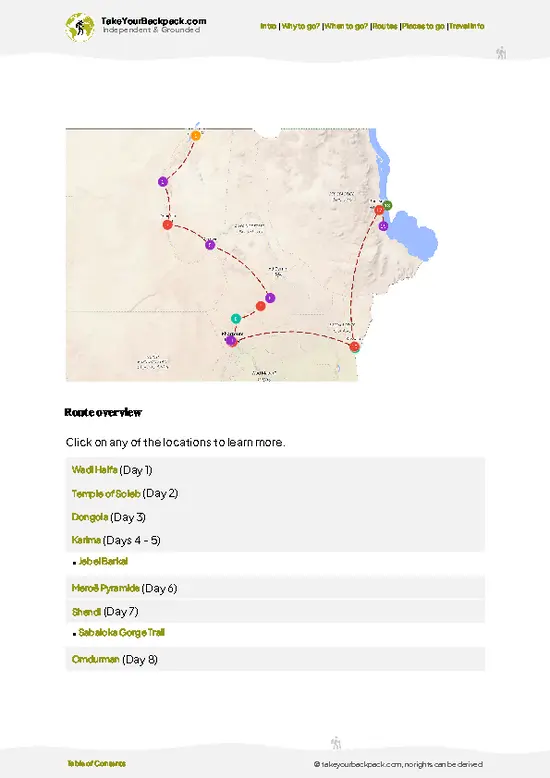
Use the Sudan Travel Guide’s 5, 10 & 15-day routes as a starting point to plan a trip that actually works on the ground.

Get the Travel Guide -

🌤️ When to go?Seasonal considerations and timing


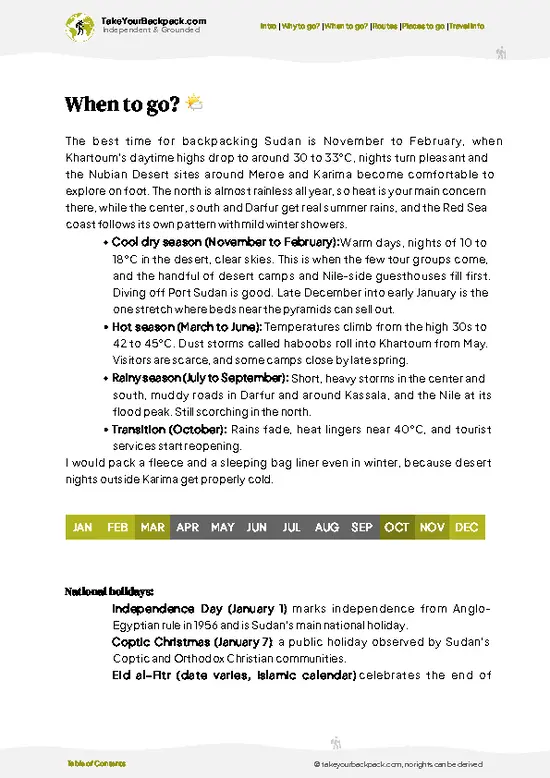
  • Topic: Weather – Port Sudan’s climate is desert-arid, meaning scorching heat dominates most of the year. The best window is between November and February when temperatures drop to a manageable 22-28°C (72-82°F). Outside this, expect relentless heat often soaring above 40°C (104°F), which can drain your energy fast.

  • Topic: Temperature – Daytime highs in the cooler months hover around 25°C (77°F), perfect for hiking and exploring without melting. Nights can dip to 15°C (59°F), so pack a light jacket. Avoid the summer months when daytime temps spike to 45°C (113°F), making outdoor activities brutal.

  • Topic: Daylight Hours – Near the equator, daylight is steady year-round, roughly 11-12 hours daily. This consistency means you don’t have to juggle your schedule around shifting sunrise or
read more 👉

  • Topic: Weather – Port Sudan’s climate is desert-arid, meaning scorching heat dominates most of the year. The best window is between November and February when temperatures drop to a manageable 22-28°C (72-82°F). Outside this, expect relentless heat often soaring above 40°C (104°F), which can drain your energy fast.

  • Topic: Temperature – Daytime highs in the cooler months hover around 25°C (77°F), perfect for hiking and exploring without melting. Nights can dip to 15°C (59°F), so pack a light jacket. Avoid the summer months when daytime temps spike to 45°C (113°F), making outdoor activities brutal.

  • Topic: Daylight Hours – Near the equator, daylight is steady year-round, roughly 11-12 hours daily. This consistency means you don’t have to juggle your schedule around shifting sunrise or sunset times—ideal for planning long excursions.

  • Topic: Crowds – Tourism in Port Sudan is low-key year-round, but the cooler months see a slight uptick as travelers escape harsher climates elsewhere. You’ll rarely face overcrowding, so timing is more about comfort than dodging crowds.

  • Topic: Seasonal Activities – The cooler season aligns with the best diving and snorkeling conditions in the Red Sea. Visibility peaks, and marine life is active, making November to February the prime time for underwater adventures.

  • Topic: Price Fluctuations – Expect modest price hikes in accommodation and tours during the cooler months due to increased demand. Off-season (hot months) offers cheaper rates but at the cost of comfort and activity options.


Pro-tip: Aim for late November to early February—this sweet spot balances mild weather, vibrant marine life, and manageable prices, turning Port Sudan into a smart, high-value backpacking choice.


source: climatestotravel.comJANJanuary: excellent for travelingFEBFebruary: excellent for travelingMARMarch: good for travelingAPRApril: fair for travelingMAYMay: below average for travelingJUNJune: below average for travelingJULJuly: below average for travelingAUGAugust: below average for travelingSEPSeptember: fair for travelingOCTOctober: good for travelingNOVNovember: excellent for travelingDECDecember: excellent for traveling
when-to-go

✈️ The backpacker research shortcutSudan Travel Guide

An offline-friendly backpacking guide with optimized travel routes, ranked highlights, transport advice, and the best areas to stay.
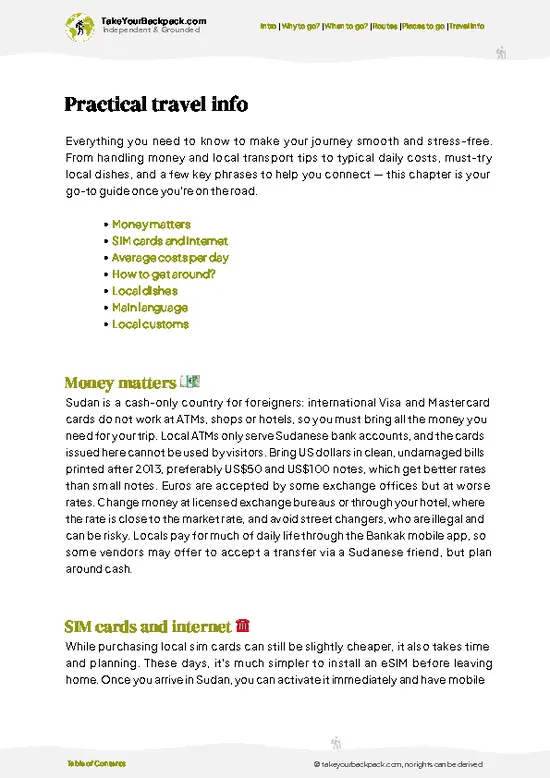
example page 0 from our offline Travel Guide for Sudanexample page 1 from our offline Travel Guide for Sudanexample page 2 from our offline Travel Guide for Sudanexample page 3 from our offline Travel Guide for Sudanexample page 4 from our offline Travel Guide for Sudanexample page 5 from our offline Travel Guide for Sudanexample page 6 from our offline Travel Guide for Sudanexample page 7 from our offline Travel Guide for Sudan
The digital guide (300 pages) contains:
72 highlights, ranked by travel appeal
Optimized 5, 10 & 15-day travel routes
Cities, national parks, beaches, historical sites, ...
How to get around
Offline-friendly for travel without Wi-Fi
👉 Click to see all 30+ guide features

📅 Plan smarter in minutes, not weeks
Month by month travel advice
Festivals & national holidays
Budget expectations

🗺️ Go to the right places, skip the overrated ones
Honest pros & cons of destinations
Top hikes, parks & viewpoints
Lesser-known places most travelers miss
Clear “worth it vs skip it” guidance

🛏️ Travel smoothly without rookie mistakes
Best areas to stay
Transport systems explained simply
Common scams & safety advice
SIM cards, money & practical tips

🌍 Understand the country, not just visit it
Culture & traditions
52 Essential phrases & customs
Festivals worth planning around
Traveler-friendly historical context
Insights that make places more meaningful

📱 Built for real travel conditions
Fully downloadable PDF
Works completely offline
Optimized for phone use
Useful in remote areas & buses
Everything in one place
Save weeks of stressful planning
Get instant access to the full guide directly. 30-day money-back guarantee.


Sent to your inbox immediately after payment • 100% Secure Checkout
Best Backpacking Travel Advisor 2025 tourism awardBest Backpacking
Travel Advisor
2025
What others say about Take Your Backpack Guides:
⭐⭐⭐⭐⭐
Fantastic, amazing amount of information!
⭐⭐⭐⭐⭐
My goodness this is amazing, it's what I've been looking for hats off too you!
⭐⭐⭐⭐⭐
I think this is absolutely BRILLIANT
⭐⭐⭐⭐
Very complete and informative. It's still missing places, but I gotta to commend you
⭐⭐⭐⭐⭐
This is truly amazing, thank you, can't wait to explore it with my kids!
⭐⭐⭐⭐⭐
Awesome resource, thank you!
⭐⭐⭐⭐⭐
This is amazing! Can't wait to explore the ones I haven't seen
⭐⭐⭐⭐
I love this! Well done, great idea.
⭐⭐⭐⭐⭐
Thanks for taking the time to make this gem!
⭐⭐⭐⭐⭐
This might be the best website I've ever seen.
⭐⭐⭐⭐⭐
Congratulations, and thank you so much for your work; it's incredibly valuable.
⭐⭐⭐⭐
In all seriousness I think you did a great job pointing out the important spots
⭐⭐⭐⭐⭐
10/10 very good
⭐⭐⭐⭐⭐
As someone who's only just starting to visit regularly this is awesome, thank you.
⭐⭐⭐⭐
Thank you very much! I'm going to visit my dad, it's going to be very useful!
⭐⭐⭐⭐⭐
This is really cool! We'll be travelling for the first time and this definitely come in handy.
⭐⭐⭐⭐⭐
You are now our minister of culture, congratulations 👨‍💼
⭐⭐⭐⭐⭐
Just wanted to tell you that this is a pearl! Going to follow your recommendations.
⭐⭐⭐⭐⭐
This is so cool. I'll definitely be using the resource for my travels soon.
⭐⭐⭐⭐⭐
This is very impressive! Good work.
⭐⭐⭐⭐⭐
This is an amazing and informative site. Very well done!

🛏️ Where to stay?Choosing the right base

Port Sudan’s backpacker scene is compact but distinct, and your best bet is to anchor yourself near the city center, specifically around the Al-Qasr and Al-Shate’ districts. These neighborhoods strike a rare balance between safety and social buzz, crucial for solo travelers who want to plug into local rhythms without wandering into sketchy zones.

Al-Qasr offers a practical base: it’s where you’ll find the bulk of budget accommodations, simple guesthouses, and a handful of hostels that cater to international backpackers. The vibe here is straightforward—functional, with enough foot traffic to … read more 👉
Port Sudan’s backpacker scene is compact but distinct, and your best bet is to anchor yourself near the city center, specifically around the Al-Qasr and Al-Shate’ districts. These neighborhoods strike a rare balance between safety and social buzz, crucial for solo travelers who want to plug into local rhythms without wandering into sketchy zones.

Al-Qasr offers a practical base: it’s where you’ll find the bulk of budget accommodations, simple guesthouses, and a handful of hostels that cater to international backpackers. The vibe here is straightforward—functional, with enough foot traffic to feel secure but not so crowded that you lose your bearings. It’s a place where you can meet other travelers without the pressure of a party scene, which is sparse in Port Sudan anyway.

Al-Shate’, closer to the waterfront, adds a splash of local color and a slightly more relaxed atmosphere. It’s less polished but more authentic, with street vendors and small cafés where you can strike up conversations with locals and fellow travelers alike. The trade-off here is comfort for character—expect basic facilities but a richer social texture.

Avoid the outskirts and industrial zones; they’re neither safe nor social, and you’ll waste time and money on transport. Stick to these central neighborhoods to maximize your experience: you’re trading a bit of luxury for genuine connection and ease of movement, which in Port Sudan, is the real currency of a memorable trip.

🚌 Getting aroundHow to get around Port Sudan

Port Sudan moves at its own pace—somewhere between the stubborn precision of a clock and the unpredictable rhythm of the Red Sea tides. You won’t find a city obsessed with timetables here; instead, it’s a blend of informal hustle and a loose sense of order. The streets pulse with vendors, minibuses, and locals who know when to push and when to wait. For a budget traveler, understanding this flow is your secret weapon. You’re not just hopping from point A to B; you’re reading the city’s tempo, choosing when to blend in and when to assert your own rhythm.


  • Walking: The most reliable and cost-free way to get around, especially in the central parts of Port Sudan. The city’s compact layout means you can cover key markets, the port area, and some beaches on foot. It’s slow, but you absorb the
read more 👉
Port Sudan moves at its own pace—somewhere between the stubborn precision of a clock and the unpredictable rhythm of the Red Sea tides. You won’t find a city obsessed with timetables here; instead, it’s a blend of informal hustle and a loose sense of order. The streets pulse with vendors, minibuses, and locals who know when to push and when to wait. For a budget traveler, understanding this flow is your secret weapon. You’re not just hopping from point A to B; you’re reading the city’s tempo, choosing when to blend in and when to assert your own rhythm.


  • Walking: The most reliable and cost-free way to get around, especially in the central parts of Port Sudan. The city’s compact layout means you can cover key markets, the port area, and some beaches on foot. It’s slow, but you absorb the city’s texture—dust, chatter, smells—without missing a beat.


  • Minibuses: The backbone of local transit. These shared vans run roughly from 6 AM to 8 PM, with fares around 10-20 Sudanese pounds (very cheap). They’re cramped, often overloaded, and unpredictable in timing, but they cover most routes. Expect stops on demand and a ride that’s more about social navigation than comfort.


  • Local Taxis: Metered taxis exist but are rare and often replaced by informal shared taxis. Prices vary, but expect to pay 50-100 pounds for short trips. They’re faster and more comfortable than minibuses but less budget-friendly. Negotiation skills come in handy, especially after dark.


  • Motorcycle Taxis (Boda-Bodas): For quick, nimble trips through traffic or narrow alleys, these are your go-to. They operate all day and night, with fares starting at 20 pounds. They’re fast but expose you to dust and the city’s chaotic energy. Not for the faint-hearted, but a thrilling way to slice through the city’s pulse.


  • Port Ferries and Boats: If your budget allows and you want a break from the city’s dust, short boat rides along the coast offer a unique perspective. Prices vary, and schedules are informal—more about catching the tide than a timetable. Not essential for budget travel but a memorable splurge.


Mastering Port Sudan’s transit means balancing time, money, and comfort like a chess game. Walk when you want immersion and zero cost. Jump on a minibus if you’re patient and want to stretch your pounds. Use taxis or motorcycles when time is tight or you crave a bit of comfort. Each choice reveals a different layer of the city, so pick your moves wisely and enjoy the ride.

👛 Costs (as of 25 March 2025)Money, prices, and spending tips

Backpacking in Port Sudan means navigating a tight balance between cost, convenience, and comfort. Here’s the breakdown of what you’re likely to spend daily, so you can decide where to lean in or hold back.
  • Dorm Accommodation (High Season): Expect to pay around $10 to $15 per night. The high season pushes prices up slightly due to demand, but dorms remain basic—think simple beds, shared bathrooms, and minimal extras.
  • Dorm Accommodation (Off-Season): Drop to about $6 to $10 per night. Fewer travelers mean better bargaining power, and some places might throw in a fan or a slightly quieter room to sweeten the deal.
  • Meals: Street food and local eateries will cost you roughly $3 to $7 per day. Staples like ful medames, grilled fish, and fresh bread keep you fueled without breaking the bank.
read more 👉
Backpacking in Port Sudan means navigating a tight balance between cost, convenience, and comfort. Here’s the breakdown of what you’re likely to spend daily, so you can decide where to lean in or hold back.
  • Dorm Accommodation (High Season): Expect to pay around $10 to $15 per night. The high season pushes prices up slightly due to demand, but dorms remain basic—think simple beds, shared bathrooms, and minimal extras.
  • Dorm Accommodation (Off-Season): Drop to about $6 to $10 per night. Fewer travelers mean better bargaining power, and some places might throw in a fan or a slightly quieter room to sweeten the deal.
  • Meals: Street food and local eateries will cost you roughly $3 to $7 per day. Staples like ful medames, grilled fish, and fresh bread keep you fueled without breaking the bank. Avoid tourist spots if you want to keep it lean.
  • Local Transport: Individual rides on minibuses or shared taxis hover around $0.20 to $0.50 per trip. It’s cheap but expect crowded conditions and irregular schedules.
  • City Transport Pass: There’s no formal city transport pass in Port Sudan. Budgeting for daily rides individually is your best bet.
  • Basic Activities/Entry Fees: Most local attractions are free or cost under $2. Museums and cultural sites are modestly priced, but don’t expect a wide range of paid tourist activities.
  • Miscellaneous Expenses: Water, snacks, occasional tips, and small essentials add up to about $1 to $3 daily. Bottled water is a must, given the climate.

All told, you’re looking at roughly $15 to $30 per day for a no-frills backpacking experience in Port Sudan. The key trade-off here is comfort versus cost—spend a bit more on accommodation if you want a break from the heat and noise, or save by embracing the local rhythm with street food and shared rides. Knowing these numbers upfront lets you play the system smartly, squeezing value without surprises.


source: sudan.gov.sd
⚠️ Prices can change and everyone travels differently, so take this as a rough guide. Hope it helps you plan your adventure!

🚌 Day tripsExploring the surroundings

Port Sudan is a fantastic launchpad for day trips that blend adventure with cultural immersion. Here’s how you can make the most of your time without breaking the bank.

Snorkeling at Sanganeb Island
Just a short boat ride from Port Sudan, Sanganeb Island offers some of the best snorkeling in the Red Sea. Picture vibrant coral reefs teeming with fish, all within a day’s reach. The trip usually takes about 30 minutes by boat, and you can expect to spend around $20 for the round trip, plus a small fee for gear rental. The best time to go is between October and May when the water is clear and the marine life is active. A common mistake is underestimating the sun; bring plenty of sunscreen and a hat to avoid a painful burn.


Exploring Suakin
The ancient port city of Suakin is a must-see, … read more 👉
Port Sudan is a fantastic launchpad for day trips that blend adventure with cultural immersion. Here’s how you can make the most of your time without breaking the bank.

Snorkeling at Sanganeb Island
Just a short boat ride from Port Sudan, Sanganeb Island offers some of the best snorkeling in the Red Sea. Picture vibrant coral reefs teeming with fish, all within a day’s reach. The trip usually takes about 30 minutes by boat, and you can expect to spend around $20 for the round trip, plus a small fee for gear rental. The best time to go is between October and May when the water is clear and the marine life is active. A common mistake is underestimating the sun; bring plenty of sunscreen and a hat to avoid a painful burn.


Exploring Suakin
The ancient port city of Suakin is a must-see, just an hour’s drive from Port Sudan. This once-thriving trade hub is now a fascinating ghost town, with crumbling coral buildings and a rich history. You can easily spend a few hours wandering the ruins and soaking in the atmosphere. Expect to pay around $10 for transportation and maybe a few bucks for snacks. The cooler months, from November to February, are ideal for exploring without the sweltering heat. Many first-timers miss the local market, where you can grab unique souvenirs and interact with friendly locals.
👉 Explore Suakin

Diving at Marsa Alam
If you’re a certified diver, Marsa Alam is worth the trip. It’s about a three-hour drive, but the underwater scenery is jaw-dropping. Expect to pay around $50 for transportation and dive fees. The best time for diving is from April to June when visibility is at its peak. A common rookie mistake is not checking the dive conditions beforehand; always consult local dive shops for the latest updates.


Visit the Red Sea Mountains
For a taste of the desert, head to the Red Sea Mountains, about two hours from Port Sudan. The rugged landscape is perfect for hiking and offers stunning views. You can do this trip for around $15, including transport and a packed lunch. The cooler months are best for hiking, as summer can be brutally hot. Many travelers forget to bring enough water; don’t make that mistake.
👉 Explore Red Sea Mountains

Cultural Experience in Port Sudan
Stay local and explore the vibrant markets and street food scene in Port Sudan itself. You can easily spend a day sampling local dishes and chatting with vendors. This is a budget-friendly option, costing around $10 for food and transport. Anytime is good for this, but evenings are particularly lively. A common oversight is sticking to familiar foods; be adventurous and try something new!
👉 Explore Port Sudan
Want to know what more Sudan offers?
The Sudan Travel Guide describes 72 highlights, from cities to national parks, from beaches to hikes

Get the Travel Guide -

🍲 FoodWhat to Eat & Drink

In Port Sudan, food is a vibrant tapestry of flavors that tells the story of the region. Dive into ful medames, a hearty dish made from fava beans, often served with a drizzle of olive oil and a sprinkle of spices. Pair it with ta’amiya, Sudanese falafel, for a satisfying street-side snack. The local fish is a must-try, especially when it’s freshly caught and grilled right on the beach.

Street food stalls are where the magic happens. The air is thick with the scent of spices and grilled meats, drawing you in. You’ll find locals gathered around, sharing stories and laughter over plates of kebabs and sambusas. Markets buzz with energy, offering everything from fresh produce to sweet treats like basbousa, a semolina cake soaked in syrup.

When it comes to drinks, don’t miss out on sugarcane read more 👉
In Port Sudan, food is a vibrant tapestry of flavors that tells the story of the region. Dive into ful medames, a hearty dish made from fava beans, often served with a drizzle of olive oil and a sprinkle of spices. Pair it with ta’amiya, Sudanese falafel, for a satisfying street-side snack. The local fish is a must-try, especially when it’s freshly caught and grilled right on the beach.

Street food stalls are where the magic happens. The air is thick with the scent of spices and grilled meats, drawing you in. You’ll find locals gathered around, sharing stories and laughter over plates of kebabs and sambusas. Markets buzz with energy, offering everything from fresh produce to sweet treats like basbousa, a semolina cake soaked in syrup.

When it comes to drinks, don’t miss out on sugarcane juice—it’s refreshing and energizing, perfect for the warm climate. As for customs, sharing food is a sign of hospitality. Expect to be offered a taste, and don’t hesitate to join in. Eating with your right hand is the norm, so keep that in mind. Immerse yourself in the local dining culture, and you’ll find that every bite is a connection to the heart of Port Sudan.

🛡️ SafetyTraveler Safety Guide

Port Sudan is generally safe for travelers, but a few situational awareness tips can enhance your experience. Stick to well-trodden areas, especially around the bustling port and markets. These spots can get crowded, so keep your belongings close.

If you’re solo, be mindful when wandering after dark. While the city isn’t known for high crime, it’s wise to avoid poorly lit streets and quiet corners. A confident demeanor goes a long way; blend in and act like you know where you’re headed.

Scams are rare, but some vendors may inflate prices for tourists. Always negotiate before buying, whether it’s a trinket or a meal. A friendly smile and a firm “no” can help you navigate any unwanted attention.

Overall, with a bit of awareness and a dash of savvy, you can enjoy Port Sudan’s unique charm without unnecessary hassle.

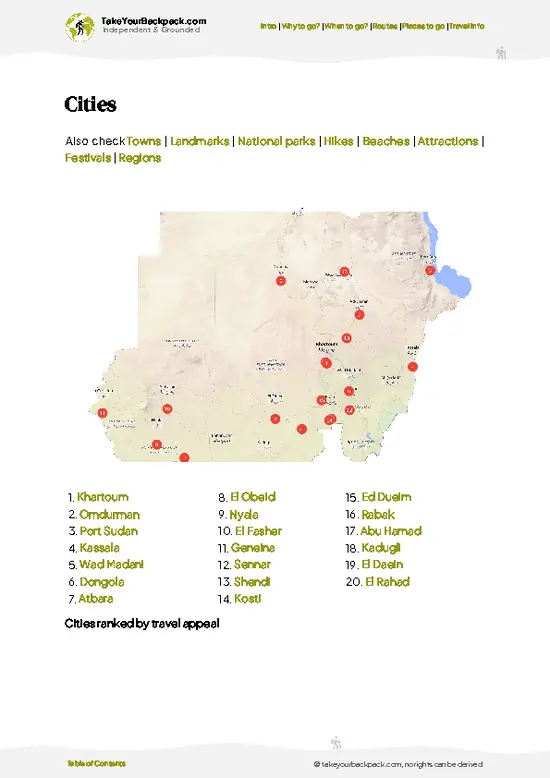
Other Sudanese cities near Port Sudan

Explore more nearby:

  • Atbara—railway heritage, Nile confluence, industrial center| 396 km away
  • Abu Hamad—Nubian Desert, Nile bend, gold mining| 404 km away
  • Kassala—Taka Mountains, Eritrean border, fruit gardens| 467 km away

👉 Discover all cities

Or checkout all Sudan has to offer (think cities, towns, villages, national parks, hikes, beaches, festivals)
Country photo of Sudan

We 💚 feedbackSumming up the experience

Port Sudan is a treasure for those who crave authentic coastal experiences. The vibrant local markets and the stunning Red Sea diving spots are worth every moment. But let’s be real: the infrastructure can feel a bit rough around the edges. Expect some hiccups with transportation and amenities. Embrace the unpredictability; it’s part of the adventure. You’ll leave with stories that outshine any polished tourist brochure.

✈️ When did I visit Sudan?
Sudan I visited back in October 2017. I combined the trip with a visit to Ethiopia.

✍️ Help improve this page!
The information on this page is based on my own backpacking experience in Sudan, supplemented with up-to-date research and feedback from other travelers. Travel details can change, so if you notice anything outdated or incomplete, feel free to let me know.


🙋‍♂️ Give feedback

👋 Meet the founderWho’s Behind Take Your Backpack?

Johan, backpacker and founder of TakeYourBackpackHi, I’m Johan (Netherlands 🇳🇱), the creator of TakeYourBackpack. Over the past decade, I’ve backpacked through 80+ countries across six continents, gaining extensive experience with independent travel, long-term trips, and overland routes.

This site is built on a combination of firsthand travel experience and carefully curated insights from other backpackers. Many guides are based on places I’ve personally visited, while others bring together tips, observations, and practical advice shared by trusted travelers I’ve met along the way.

The goal is to provide realistic, experience-driven guidance — not generic itineraries — so you can explore destinations with better context, clearer expectations, and more confidence.

Get full Sudan guide •
Instant download • 72 highlights • Full Offline guide