×

Sudan🇸🇩 | best citiesYour Guide to the 10 Best cities in Sudan

Sudan’s cities are a tapestry of cultural richness and historical depth, each offering a unique experience for the backpacker or independent traveler. Major hubs like Khartoum pulse with life, showcasing vibrant markets and a bustling nightlife, while smaller urban centers like Port Sudan provide a more laid-back vibe, perfect for those seeking authentic interactions.

Seasonal nuances affect everything from transport connections to safety, with the dry season being ideal for exploration. Choosing the right city can significantly impact your budget and ease of travel, shaping your journey into a true immersion in Sudanese culture. Understanding these dynamics is key to maximizing your adventure.

By Johan Kruseman 🇳🇱 | Updated June 13, 2026
Explore the best towns in Sudan

Why go?Why Travelers Love These Spots

Sudan’s cities are a tapestry of cultural diversity shaped by millennia of history and regional identities. Unlike many other countries, Sudan’s urban centers reflect a complex interplay of Arab, African, and indigenous influences, creating a rich mosaic that’s palpable in the local customs, cuisine, and languages. This diversity is not just a backdrop; it’s the essence of the urban experience, offering travelers a chance to engage with a society that has navigated profound changes over centuries.

However, accessibility can be a double-edged sword. While major cities may have transport networks that connect them, the infrastructure can be inconsistent. Travelers might find themselves weighing the benefits of quick transit against the depth of exploration. Rushing through cities can lead to … read more 👉
Sudan’s cities are a tapestry of cultural diversity shaped by millennia of history and regional identities. Unlike many other countries, Sudan’s urban centers reflect a complex interplay of Arab, African, and indigenous influences, creating a rich mosaic that’s palpable in the local customs, cuisine, and languages. This diversity is not just a backdrop; it’s the essence of the urban experience, offering travelers a chance to engage with a society that has navigated profound changes over centuries.

However, accessibility can be a double-edged sword. While major cities may have transport networks that connect them, the infrastructure can be inconsistent. Travelers might find themselves weighing the benefits of quick transit against the depth of exploration. Rushing through cities can lead to missed opportunities for meaningful interactions and insights into local life.

The climatic conditions also play a role. The heat can be intense, particularly in the summer months, which may limit outdoor exploration and affect how you experience the urban landscape. Understanding these factors is crucial for planning a trip that balances comfort with discovery.

Ultimately, Sudan’s cities offer a unique lens through which to understand the country’s historical depth and cultural richness. Embracing the trade-offs in travel time and accessibility will lead to a more rewarding experience, allowing for genuine connections and a deeper appreciation of Sudan’s vibrant urban life.
Why These Made the Cut
The list of best cities in Sudan is created based on culture, vibe, attractions, transport ease, and local charm. If you feel a city is missing in this list, please let us know.

When to go?Timing Your Visit for the Best Experience

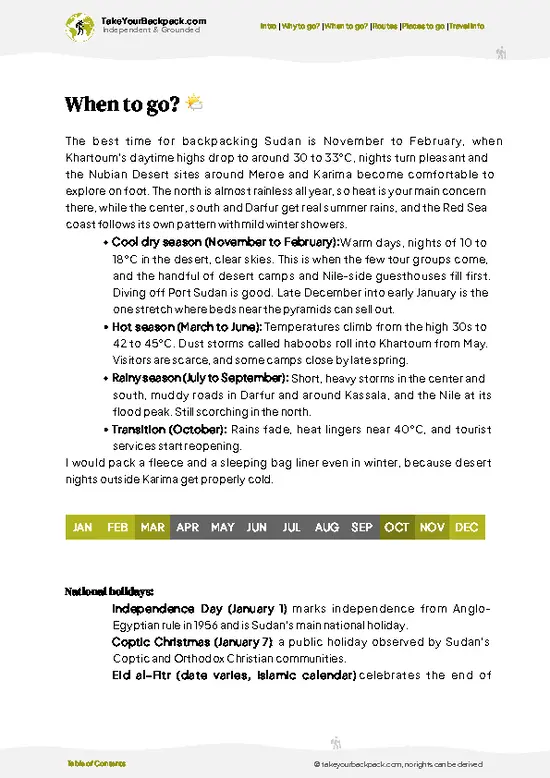
Seasonality plays a crucial role in experiencing Sudan’s cities. The climate varies significantly, impacting both comfort and cultural engagement. The hottest months stretch from May to August, with temperatures soaring. This heat can drain energy and limit outdoor activities. Crowds are generally thinner during this period, but the oppressive heat may not be worth the trade-off.

Optimal months for visiting typically fall between October and March. During this time, temperatures are milder, making exploration more enjoyable. This is when many cultural events and festivals occur, offering a vibrant glimpse into local life. However, this peak season attracts more tourists, which can lead to higher costs and busier streets.

Shoulder seasons—the months just before and after peak season—offer … read more 👉
Seasonality plays a crucial role in experiencing Sudan’s cities. The climate varies significantly, impacting both comfort and cultural engagement. The hottest months stretch from May to August, with temperatures soaring. This heat can drain energy and limit outdoor activities. Crowds are generally thinner during this period, but the oppressive heat may not be worth the trade-off.

Optimal months for visiting typically fall between October and March. During this time, temperatures are milder, making exploration more enjoyable. This is when many cultural events and festivals occur, offering a vibrant glimpse into local life. However, this peak season attracts more tourists, which can lead to higher costs and busier streets.

Shoulder seasons—the months just before and after peak season—offer a balance. Visiting in late September or early April can mean fewer crowds and lower prices, but the weather may still be unpredictable. Travelers might face lingering heat or unexpected rain, which could affect plans.

Considerations include the timing of local festivals, which can enhance the experience but also bring larger crowds. Weighing the benefits of cultural immersion against the potential discomfort of peak tourist periods is essential for planning an effective trip.

city hoppingPlanning Your Route Efficiently

Transport Networks and Regional Clustering


Sudan’s geography demands smart planning. Start by clustering cities regionally. The north is home to Khartoum, the capital, and its surrounding historical sites. Head south to explore cities like Omdurman and Port Sudan. This approach minimizes travel time and maximizes your experience.

Routing Logic


Traveling from Khartoum to Omdurman is a quick hop. Expect about 30 minutes by taxi. From there, Port Sudan is roughly a 10-hour bus ride. This sequence allows for a logical flow, but be ready for the trade-offs. Speed can mean skimming the surface of a city rather than diving deep.

Time Management


Allocate at least two days for major cities. This pacing lets you absorb local culture without feeling rushed. Common mistakes include trying to cram … read more 👉

Transport Networks and Regional Clustering


Sudan’s geography demands smart planning. Start by clustering cities regionally. The north is home to Khartoum, the capital, and its surrounding historical sites. Head south to explore cities like Omdurman and Port Sudan. This approach minimizes travel time and maximizes your experience.

Routing Logic


Traveling from Khartoum to Omdurman is a quick hop. Expect about 30 minutes by taxi. From there, Port Sudan is roughly a 10-hour bus ride. This sequence allows for a logical flow, but be ready for the trade-offs. Speed can mean skimming the surface of a city rather than diving deep.

Time Management


Allocate at least two days for major cities. This pacing lets you absorb local culture without feeling rushed. Common mistakes include trying to cram too many stops into a short timeframe. It’s tempting to see everything, but this often leads to burnout.

Trade-offs and Constraints


Consider comfort versus budget. Public transport is cheaper but less reliable. Private taxis or arranged transport can save time but at a higher cost. Flexibility is key; plans may shift due to weather or local events. Prioritize experiences that resonate with you, even if it means skipping a city.

The ListThe Best cities of Sudan

1 Khartoum

Nile confluence, government quarter, museums

Stand at the meeting of the Blue and White Nile, explore national museums, and navigate Khartoum’s administrative and cultural core.

2 Port Sudan

Red Sea coast, coral reefs, shipping docks

Dive into Port Sudan’s marine world, explore coral reefs, and watch ships unload goods at the country’s main gateway to the sea.

3 Dongola

Nubian heartland, date palm groves, archaeological sites

Travel through a fertile stretch of the Nile, where ancient ruins and lush groves reveal the depth of Nubian heritage.

4 Omdurman

Sufi tombs, traditional souks, colonial relics

Absorb Omdurman’s spiritual energy, browse its sprawling markets, and encounter traces of Mahdist and colonial history along the riverbank.

5 Kassala

Taka Mountains, Eritrean border, fruit gardens

Climb granite outcrops, sample seasonal fruit, and experience Kassala’s blend of Sudanese and Eritrean cultures near the eastern frontier.

6 Shendi

Nile-side market, ancient Meroë proximity, local trade hub

Experience a lively riverside town where daily commerce meets the gateway to Sudan’s most accessible pyramids and archaeological sites.

7 Sennar

Blue Nile crossing, sugar plantations, railway junction

Navigate a transport crossroads surrounded by agricultural fields, where the river shapes both the landscape and the pace of local life.

8 Wad Madani

Gezira irrigation, cotton fields, university town

Discover Wad Madani’s agricultural backbone, where canal-fed fields and student life create a relaxed, productive atmosphere along the Blue Nile.

9 El Obeid

gum arabic markets, sandy streets, central mosque

Navigate El Obeid’s sandy lanes, where gum arabic trade and religious landmarks anchor a city at the crossroads of Sudan’s interior.

10 Geneina

Darfur plateau, borderland markets, seasonal wadis

Venture to a remote western outpost where cross-border influences and dramatic landscapes define the rhythm of daily activity.

11 Nyala

bustling markets, Darfur plateau, livestock trade

Experience the pulse of Darfur in Nyala, where market days, camel caravans, and regional influences shape daily life and commerce.

12 Kadugli

Nuba Mountains capital, local festivals, administrative center

Experience a regional hub at the foot of the hills, where cultural events and government activity draw people from across South Kordofan.

13 Ed Dueim

White Nile banks, university town, river ferries

Discover a student-centered community with easy river access, offering a practical stopover for those traveling between Khartoum and the south.

14 El Fasher

Sultan’s palace, Sahel crossroads, humanitarian hub

Walk through El Fasher’s layered history, from sultanate relics to aid convoys, in a city shaped by migration and regional trade.

15 Atbara

railway heritage, Nile confluence, industrial center

Trace Sudan’s railway legacy in Atbara, a city defined by its workshops, union history, and the meeting of two great rivers.

16 Rabak

Industrial zone, White Nile bridge, sugar refinery

Cross a major river link and observe the industrial side of Sudan, where factories and transport routes shape the local experience.

17 Kosti

White Nile banks, river port, railway junction

Cross the White Nile by ferry, watch river traffic, and see how Kosti’s transport links connect Sudan’s heartland to the south.

18 El Daein

Desert edge, livestock trading, nomadic encampments

Travel through a transitional zone where camel caravans and seasonal markets reflect the movement of people across eastern Darfur.

19 Abu Hamad

Nubian Desert, Nile bend, gold mining

Journey to a desert settlement where the river’s sharp turn and nearby mining activity create a unique stop for overland travelers.

20 Umm Ruwaba

Central crossroads, millet trade, open savanna

Stop at a key junction in the heart of Sudan, where open landscapes and grain markets support a steady flow of travelers and goods.

21 El Rahad

Railway stop, gum arabic markets, agricultural hinterland

Pause in a functional town known for its role in Sudan’s gum trade, with easy rail connections and a distinctly rural feel.

22 Renk

Upper Nile, border crossing, agricultural schemes

Cross into a northern outpost where the river and fields support a mix of farming communities and cross-border movement.

Think you know Sudan?

Prove you’re a true local — uncover 12 lesser-known cities in Sudan that locals tend to keep to themselves.
Loading the map 🌍

Expert viewTips and Advice from Travelers

Transport Hubs
Sudan’s transport infrastructure is a mixed bag. Major cities have bus stations, but the quality varies. Expect a range of comfort levels, from air-conditioned coaches to cramped minibuses. If you’re planning to hop between cities, know that travel times can stretch longer than expected due to road conditions and traffic. It’s not uncommon for a journey to take twice as long as you’d anticipate. Factor in delays and plan for flexibility. If you’re in a hurry, consider flying between key locations. Domestic flights can save you time, but they come with a cost. Weigh the expense against the value of your time.

Urban Pacing
The rhythm of life in Sudanese cities is distinct. You’ll find a slower pace, especially in the afternoons when the heat drives many indoors. This can be … read more 👉
Transport Hubs
Sudan’s transport infrastructure is a mixed bag. Major cities have bus stations, but the quality varies. Expect a range of comfort levels, from air-conditioned coaches to cramped minibuses. If you’re planning to hop between cities, know that travel times can stretch longer than expected due to road conditions and traffic. It’s not uncommon for a journey to take twice as long as you’d anticipate. Factor in delays and plan for flexibility. If you’re in a hurry, consider flying between key locations. Domestic flights can save you time, but they come with a cost. Weigh the expense against the value of your time.

Urban Pacing
The rhythm of life in Sudanese cities is distinct. You’ll find a slower pace, especially in the afternoons when the heat drives many indoors. This can be a blessing or a curse. If you’re looking to dive deep into local culture, embrace the slower tempo. Spend time in markets, chat with locals, and savor the food. But if you’re on a tight schedule, this can feel frustrating. You might find yourself wishing for a faster pace. Prioritize your interests. If cultural immersion is your goal, slow down. If you want to see more cities, be prepared to skim the surface.

Local Costs
Budgeting in Sudan requires a keen eye. Costs can fluctuate based on location and availability. In urban centers, you’ll find a range of accommodations, from budget hostels to mid-range hotels. Eating local street food is affordable and delicious, but dining in touristy spots can drain your wallet quickly. Always ask locals for recommendations to avoid overpriced meals. Keep in mind that while some experiences are worth the splurge, others are not. Prioritize what matters to you. If you’re keen on a guided tour, ensure it’s reputable and worth the investment.

Exploring More Cities vs. Deeper Immersion
Here’s the trade-off: you can either visit several cities quickly or immerse yourself deeply in a few. If you choose the former, you’ll miss the nuances of local life. You’ll see the highlights but might not connect with the culture. If you opt for deeper immersion, you’ll gain insights and stories that enrich your experience. Consider your travel style. Are you a collector of experiences or a storyteller? If you lean toward the latter, spend more time in fewer places. This approach allows you to build relationships and understand the local way of life.

Safety & Cultural Considerations
Safety is paramount. While Sudan is generally safe for travelers, be aware of regional variations. Some areas may have restrictions or require permits. Always stay informed about local customs and dress modestly, especially in rural areas. Engaging with locals respectfully can open doors and enhance your experience. Understand that cultural norms may differ significantly from what you’re used to. Approach interactions with curiosity and respect. This mindset not only keeps you safe but also enriches your journey.

In Sudan, the key is balance. Whether you’re racing through cities or savoring each moment, make choices that align with your travel goals. The journey is yours to shape, so embrace the adventure, and let the country’s rich tapestry unfold at your pace.

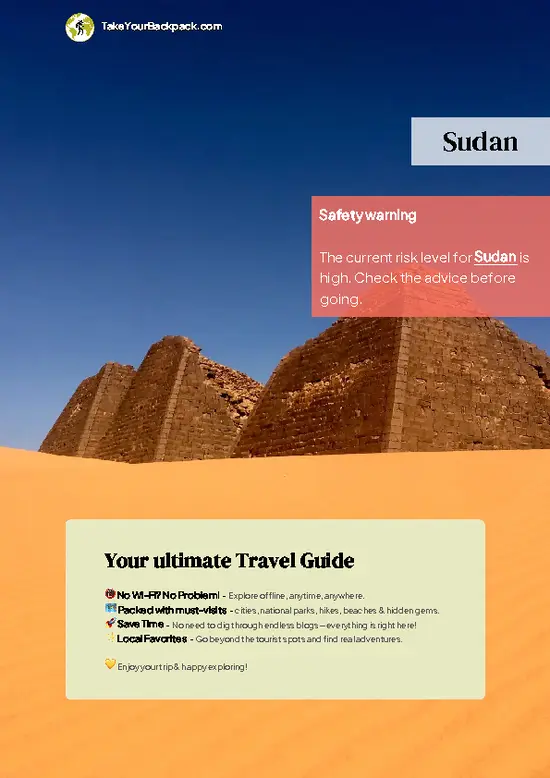
✈️ The backpacker research shortcutSudan Travel Guide

An offline-friendly backpacking guide with optimized travel routes, ranked highlights, transport advice, and the best areas to stay.
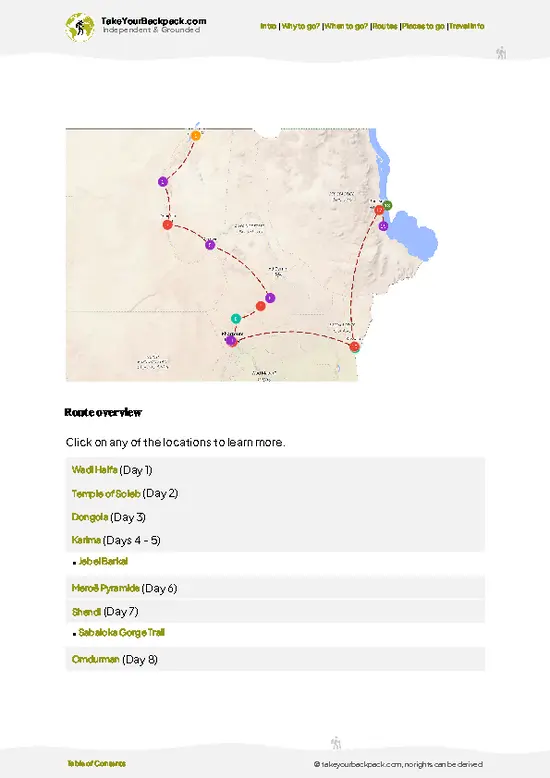
example page 0 from our offline Travel Guide for Sudan
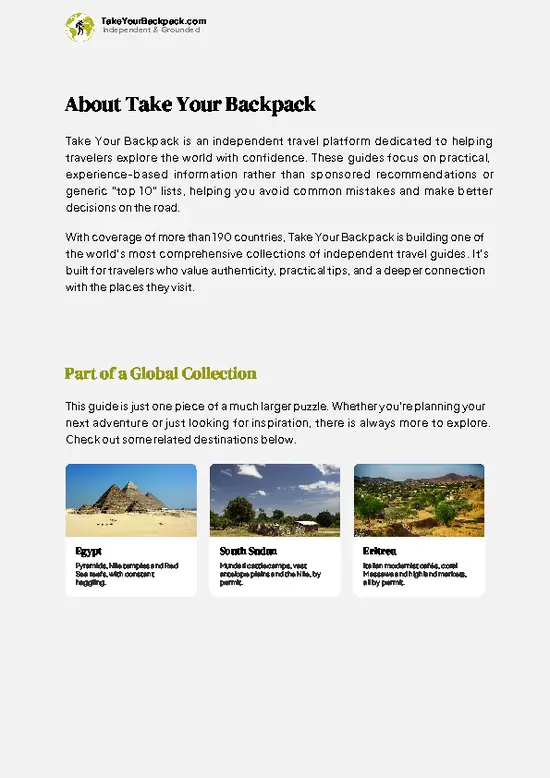
example page 1 from our offline Travel Guide for Sudan
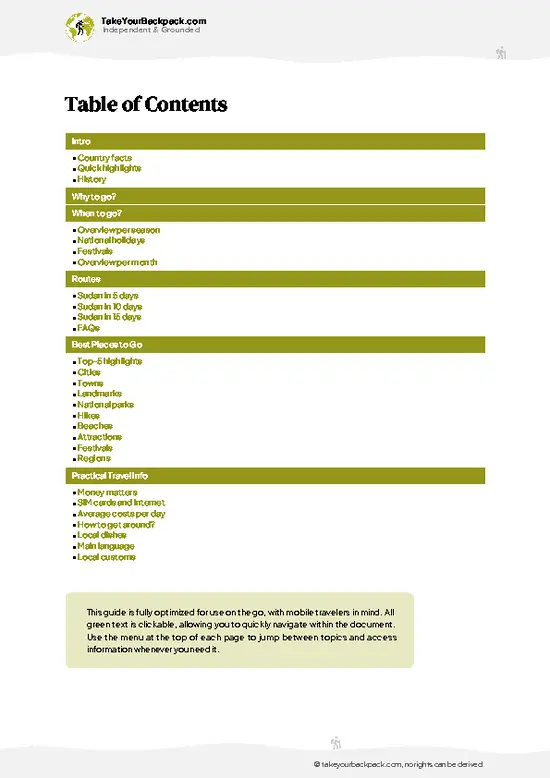
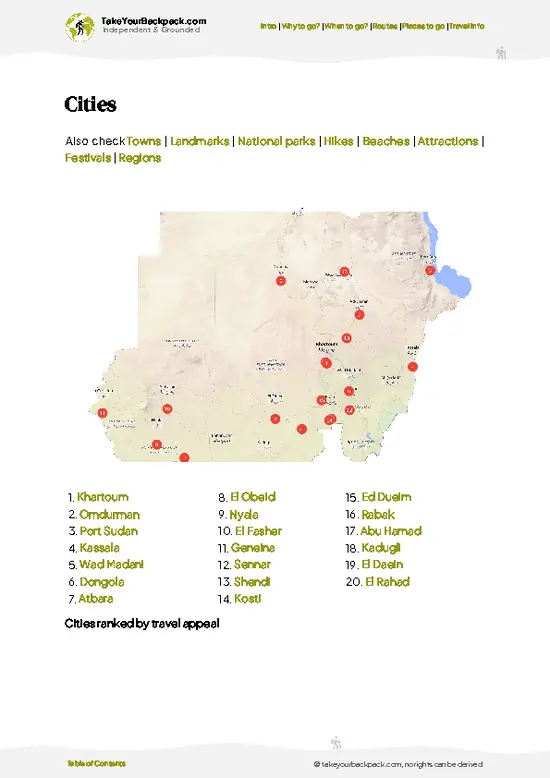
example page 2 from our offline Travel Guide for Sudan
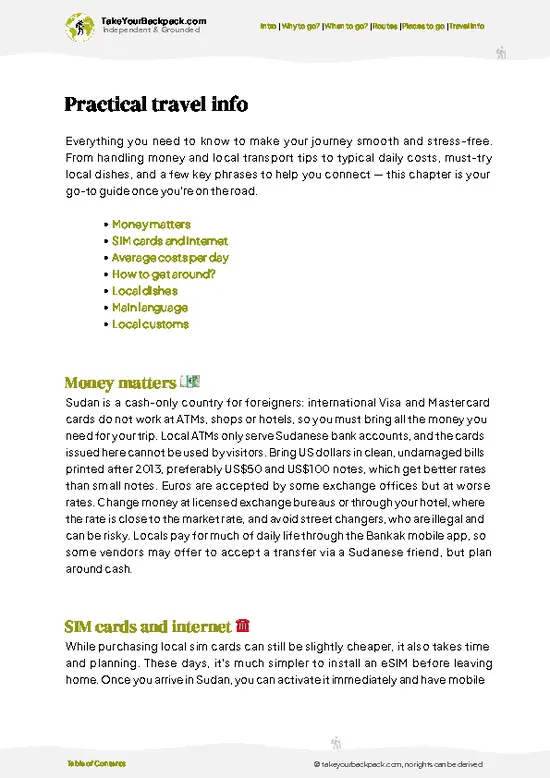
example page 3 from our offline Travel Guide for Sudan
example page 4 from our offline Travel Guide for Sudan
example page 5 from our offline Travel Guide for Sudan
example page 6 from our offline Travel Guide for Sudan
example page 7 from our offline Travel Guide for Sudan
The digital guide (300 pages) contains:
72 highlights, ranked by travel appeal
Optimized 5, 10 & 15-day travel routes
Cities, national parks, landmarks, beaches
How to get around
Offline-friendly for travel without Wi-Fi
👉 Click to see all 30+ guide features

📅 Plan smarter in minutes, not weeks
Month by month travel advice
Festivals & national holidays
Budget expectations

🗺️ Go to the right places, skip the overrated ones
Honest pros & cons of destinations
Top hikes, parks & viewpoints
Lesser-known places most travelers miss
Clear “worth it vs skip it” guidance

🛏️ Travel smoothly without rookie mistakes
Best areas to stay
Transport systems explained simply
Common scams & safety advice
SIM cards, money & practical tips

🌍 Understand the country, not just visit it
Culture & traditions
52 Essential phrases & customs
Festivals worth planning around
Traveler-friendly historical context
Insights that make places more meaningful

📱 Built for real travel conditions
Fully downloadable PDF
Works completely offline
Optimized for phone use
Useful in remote areas & buses
Everything in one place
Save weeks of stressful planning
Get instant access to your full guide. 30‑day money-back guarantee.


By proceeding you agree to our terms.
Sent to your inbox immediately after payment • 100% Secure Checkout
Best Backpacking Travel Advisor 2025 tourism awardBest Backpacking
Travel Advisor
2025
What others say about Take Your Backpack Guides:
⭐⭐⭐⭐⭐
Fantastic, amazing amount of information!
⭐⭐⭐⭐⭐
My goodness this is amazing, it's what I've been looking for hats off too you!
⭐⭐⭐⭐⭐
I think this is absolutely BRILLIANT
⭐⭐⭐⭐
Very complete and informative. It's still missing places, but I gotta to commend you
⭐⭐⭐⭐⭐
This is truly amazing, thank you, can't wait to explore it with my kids!
⭐⭐⭐⭐⭐
Awesome resource, thank you!
⭐⭐⭐⭐⭐
This is amazing! Can't wait to explore the ones I haven't seen
⭐⭐⭐⭐
I love this! Well done, great idea.
⭐⭐⭐⭐⭐
Thanks for taking the time to make this gem!
⭐⭐⭐⭐⭐
This might be the best website I've ever seen.
⭐⭐⭐⭐⭐
Congratulations, and thank you so much for your work; it's incredibly valuable.
⭐⭐⭐⭐
In all seriousness I think you did a great job pointing out the important spots
⭐⭐⭐⭐⭐
10/10 very good
⭐⭐⭐⭐⭐
As someone who's only just starting to visit regularly this is awesome, thank you.
⭐⭐⭐⭐
Thank you very much! I'm going to visit my dad, it's going to be very useful!
⭐⭐⭐⭐⭐
This is really cool! We'll be travelling for the first time and this definitely come in handy.
⭐⭐⭐⭐⭐
You are now our minister of culture, congratulations 👨‍💼
⭐⭐⭐⭐⭐
Just wanted to tell you that this is a pearl! Going to follow your recommendations.
⭐⭐⭐⭐⭐
This is so cool. I'll definitely be using the resource for my travels soon.
⭐⭐⭐⭐⭐
This is very impressive! Good work.
⭐⭐⭐⭐⭐
This is an amazing and informative site. Very well done!

🛏️ Where to stay?Best Stay Options in Sudan

There are budget hotels and guesthouses in Sudan, mainly in Khartoum, but true backpacker hostels with dorms are rare; plan for small guesthouses or budget hotels rather than large hostel chains.

Khartoum City Centre/Nile Corniche: closest to museums, markets and restaurants and reasonably safe with some evening activity; Al‑Amarat: quieter and more residential with better security but slightly higher prices; Omdurman: cheapest local guesthouses and excellent daytime markets but more traditional, less evening infrastructure and quieter at night; Khartoum North (Bahri): most basic and inexpensive options, more industrial and farther from tourist highlights.

Book ahead during busy periods, … read more 👉
There are budget hotels and guesthouses in Sudan, mainly in Khartoum, but true backpacker hostels with dorms are rare; plan for small guesthouses or budget hotels rather than large hostel chains.

Khartoum City Centre/Nile Corniche: closest to museums, markets and restaurants and reasonably safe with some evening activity; Al‑Amarat: quieter and more residential with better security but slightly higher prices; Omdurman: cheapest local guesthouses and excellent daytime markets but more traditional, less evening infrastructure and quieter at night; Khartoum North (Bahri): most basic and inexpensive options, more industrial and farther from tourist highlights.

Book ahead during busy periods, carry cash, expect modest facilities and variable internet, and prioritize central Khartoum or Amarat for convenience and safety while using Omdurman for daytime visits.

If you enjoy meeting fellow travelers, consider choosing hostels with high ratings for atmosphere. On the other hand, if you prefer having your own space, a hotel might be a better option.

SudanWhere to Go Next

👋 Meet the founderWho’s Behind Take Your Backpack?

Johan, backpacker and founder of TakeYourBackpackHi, I’m Johan (Netherlands 🇳🇱), the creator of TakeYourBackpack. Over the past decade, I’ve backpacked through 80+ countries across six continents, gaining extensive experience with independent travel, long-term trips, and overland routes.

This site is built on a combination of firsthand travel experience and carefully curated insights from other backpackers. Many guides are based on places I’ve personally visited, while others bring together tips, observations, and practical advice shared by trusted travelers I’ve met along the way.

The goal is to provide realistic, experience-driven guidance — not generic itineraries — so you can explore destinations with better context, clearer expectations, and more confidence.

Get full Sudan guide •
Instant download • 72 highlights • Full Offline guide