v2.webp)
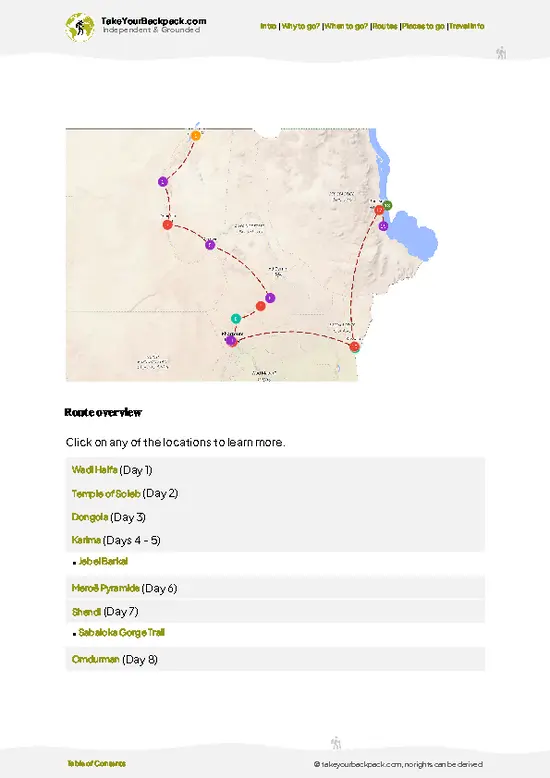
- Abu Hamed railway terminus and yards — the town grew around this colonial-era railhead; you can still walk among old tracks, workshops and rusting rolling stock. It’s a tangible lesson in Sudan’s rail history and a great place for gritty photos or to chat with local railway folk.
- Nile river bend and ferry crossing — the river’s big bend at Abu Hamed is the town’s living room: fishermen at dawn, ferries hauling people and goods, and wide views of river life. Perfect for a slow riverside stroll or a sunset watch with locals.
- Abu Hamed souq (main market) — packed, colorful and honest: fruit, dates, spices, clothing and small household goods. Visit early for the best energy and to sample local snacks while practicing your bargaining.
- Main Friday Mosque (al-Jami’) — the mosque is a social
- Abu Hamed railway terminus and yards — the town grew around this colonial-era railhead; you can still walk among old tracks, workshops and rusting rolling stock. It’s a tangible lesson in Sudan’s rail history and a great place for gritty photos or to chat with local railway folk.
- Nile river bend and ferry crossing — the river’s big bend at Abu Hamed is the town’s living room: fishermen at dawn, ferries hauling people and goods, and wide views of river life. Perfect for a slow riverside stroll or a sunset watch with locals.
- Abu Hamed souq (main market) — packed, colorful and honest: fruit, dates, spices, clothing and small household goods. Visit early for the best energy and to sample local snacks while practicing your bargaining.
- Main Friday Mosque (al-Jami’) — the mosque is a social as well as religious centre. Even if you don’t join prayers, the courtyard atmosphere on Friday and the mosque’s simple architecture show how the town gathers and organizes communal life.
- Old town alleys and traditional houses — narrow lanes, mudbrick and painted doors, and compact courtyards: wander slowly to see everyday Nubian-Sudanese architecture and meet families who still live the old ways.
- Livestock market (market day) — when it’s on, this is a loud, chaotic, very local show of camels, goats and cattle being bought and sold. It’s raw, social and revealing about the regional economy—go with an open mind and a local guide if possible.
- Boatbuilding and repair yards — small workshops along the Nile where dhows and feluccas are built or repaired by hand. Watching the craftsmen is a quiet, tactile way to understand how river transport is kept alive.
- Palm groves and riverside gardens — narrow strips of cultivated land and date palms along the riverbanks; walking through them gives you a direct feel for Nile irrigation, local food production and the shade that villagers prize in hot months.
- Railway-era cemetery and memorial spots — modest graveyards and memorials near the railway precinct mark the town’s colonial and multi-ethnic past. They’re peaceful places to reflect and pick up small historical details you won’t see in guidebooks.
- Town lookout / river bluff — a short climb out of the center brings you to a sandy bluff with sweeping views of the Nile bend and the town laid out below. Best at sunrise or sunset for light, people-watching and simple panoramas.
Spotted a mistake or missing something? Contact us.

 Best Backpacking
.jpg) Hi, I’m Johan (Netherlands 🇳🇱), the creator of TakeYourBackpack. Over the past 3 decades, I’ve backpacked through 90+ countries across six continents, gaining extensive experience with independent travel, long-term trips, and overland routes.
Hi, I’m Johan (Netherlands 🇳🇱), the creator of TakeYourBackpack. Over the past 3 decades, I’ve backpacked through 90+ countries across six continents, gaining extensive experience with independent travel, long-term trips, and overland routes.