×

Suriname🇸🇷 | national parksCoppename Monding Nature ReserveRiver mouth estuary, shorebird flats, shell ridges, Ramsar wetland | things to do and best time to go

Explore Brownsberg Nature ParkExplore Boven Coesewijne Nature Reserve

Backpacking in Coppename Monding Nature Reserve
👌 Worth visitingnational park ranked #8
By Johan Kruseman 🇳🇱 | Updated October 19, 2026

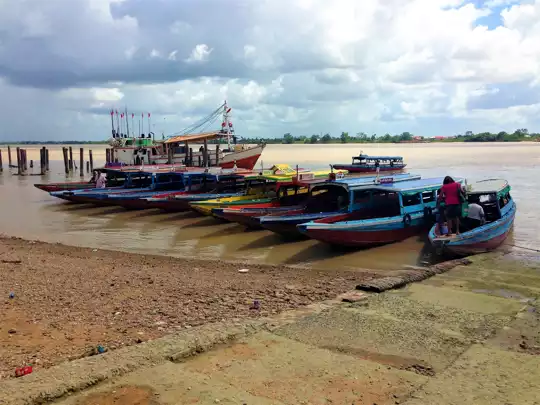
Coppename Monding Nature Reserve has no road, no trail network and no walk-in access, so every visit is a boat trip arranged through a tour operator or the nature authority. It lies in the north of Suriname, in the Coronie and Saramacca districts, where the Coppename River reaches the Atlantic. On the ground that means mangrove channels, mudflats that smell of salt and rot, and the clatter of thousands of waders lifting off at once. Scarlet ibis flocks flush the sky orange, and the reward is a bird count most reserves can’t touch. Mosquitoes, heat and long, slow boat hours are the price. Unlike Brownsberg, which has marked forest paths you can walk alone, Coppename is a water-only wetland where a guide and a boat do all the work.

Discover everything you want to know in the 📖 Suriname Travel Guide.


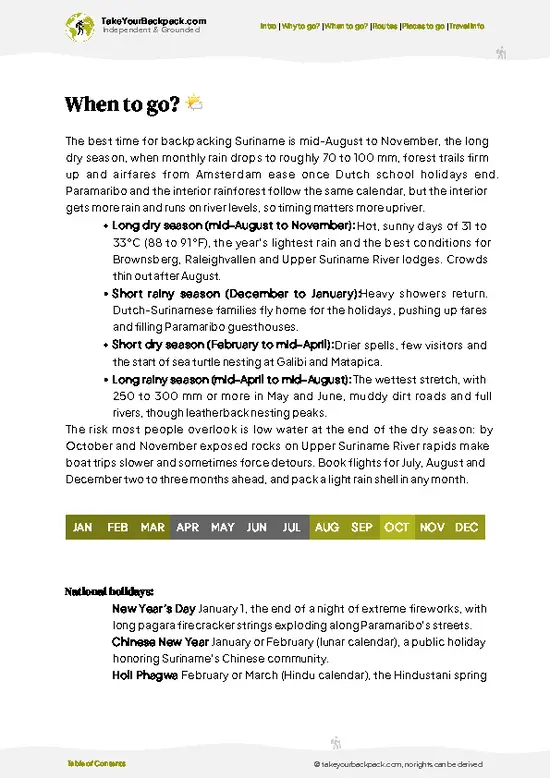
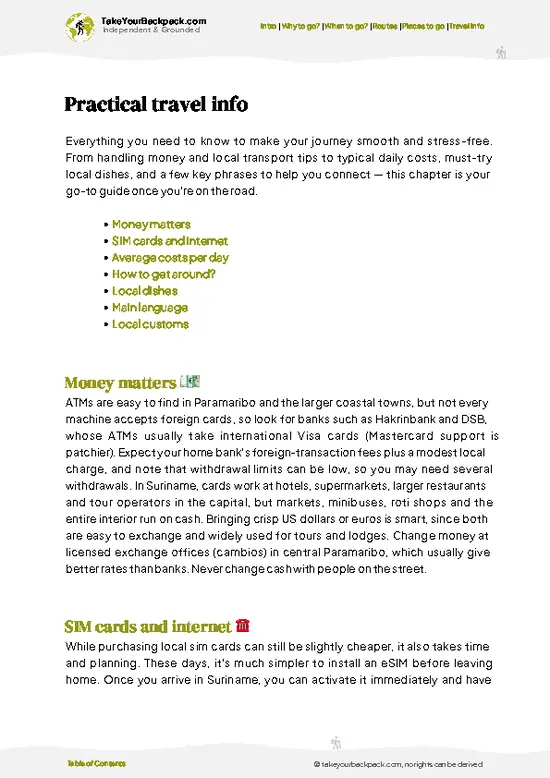
example page 0 from our offline Travel Guide for Suriname
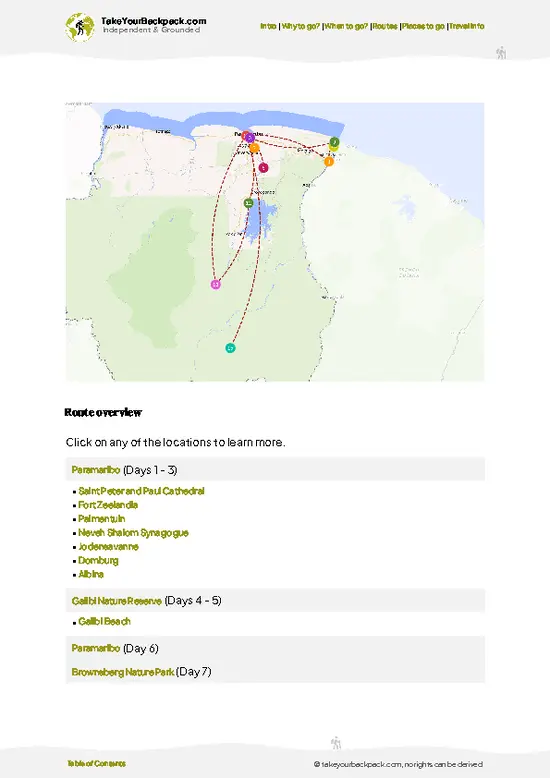
example page 1 from our offline Travel Guide for Suriname
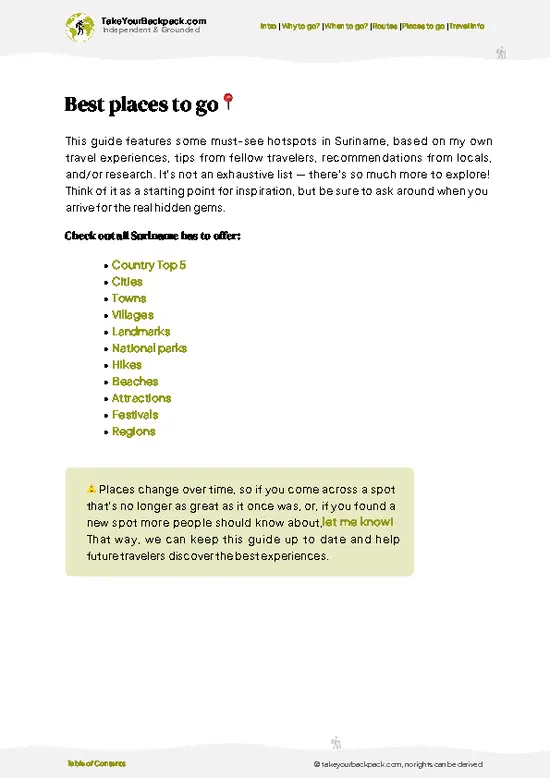
example page 2 from our offline Travel Guide for Suriname
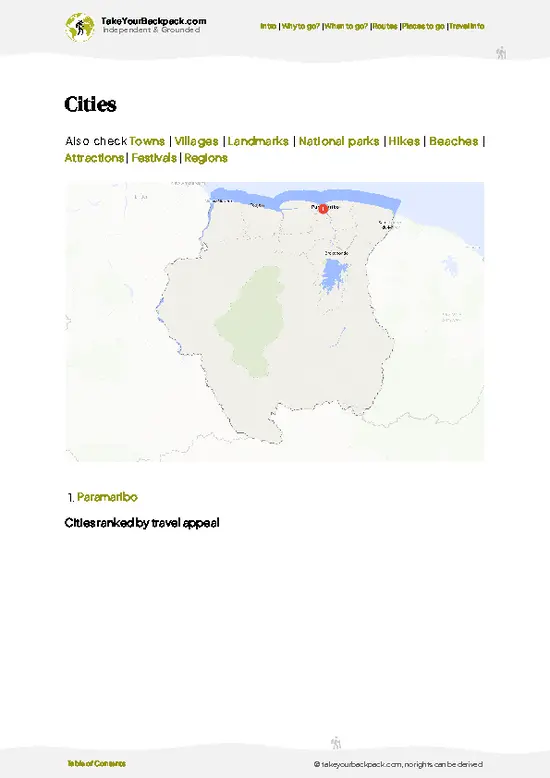
example page 3 from our offline Travel Guide for Suriname
example page 4 from our offline Travel Guide for Suriname
example page 5 from our offline Travel Guide for Suriname
example page 6 from our offline Travel Guide for Suriname
example page 7 from our offline Travel Guide for Suriname
Loading the map 🌍
CLICK TO FILTER
cities
towns
villages
landmarks
national parks
hikes
beaches
attractions
festivals
regions
SHOW COUNTRY’S BESTSHOW ALL

✨ Why go?
Ranked #8 national park in Suriname
The unique appeal for travelers

Coppename Monding Nature Reserve suits backpackers who want a wetland that almost nobody else sees, and it works only if you accept guided access. The big draw is the Coppename River mouth, a Ramsar-listed wetland and a major stopover for migratory shorebirds from North America, most numerous roughly between September and April. Birders come for the scarlet ibis roosts and for flocks of sandpipers and plovers on the mudflats at low tide. Mangrove, swamp and sandbar habitats sit within a short boat ride of each other, so one outing covers more ecosystems than a week of forest walking elsewhere. You also get a real sense of independence from the way a trip is built: small boats, a local guide, simple food, and time to watch instead of rush. Few places in Suriname feel this unscripted, and the crowds are close to zero.

💡 HighlightsThe experiences that define the visit

  1. Coppename River Mouth: The estuary where freshwater meets the Atlantic, with mudflats, sandbars and wide skies. It is the core of the Ramsar wetland and the reason the reserve exists.
  2. Scarlet Ibis Roosts: At dusk, flocks of red birds settle into mangrove trees. The color against dark green is the image most visitors come for.
  3. Migratory Shorebird Flats: Thousands of sandpipers, plovers and terns feed on the exposed mud at low tide. Binoculars matter here.
  4. Mangrove Channels: Narrow creeks lined with black and red mangrove roots, quiet apart from birdsong and the knock of the hull. Caimans and herons use the banks.
  5. Coastal Sandbars and Shell Ridges: Pale ridges of crushed shell sit above the mud, a stopping point for resting birds and a place to stretch your legs.
  6. Swamp Forest Edge: Where the mangrove
… read more 👉
  1. Coppename River Mouth: The estuary where freshwater meets the Atlantic, with mudflats, sandbars and wide skies. It is the core of the Ramsar wetland and the reason the reserve exists.
  2. Scarlet Ibis Roosts: At dusk, flocks of red birds settle into mangrove trees. The color against dark green is the image most visitors come for.
  3. Migratory Shorebird Flats: Thousands of sandpipers, plovers and terns feed on the exposed mud at low tide. Binoculars matter here.
  4. Mangrove Channels: Narrow creeks lined with black and red mangrove roots, quiet apart from birdsong and the knock of the hull. Caimans and herons use the banks.
  5. Coastal Sandbars and Shell Ridges: Pale ridges of crushed shell sit above the mud, a stopping point for resting birds and a place to stretch your legs.
  6. Swamp Forest Edge: Where the mangrove gives way to freshwater swamp, you can hear howler monkeys and see kingfishers working the water.
  7. Night on the Water: Dark skies, frog chorus and eyeshine from caimans along the bank make the evening boat ride one of the best parts.
The ibis roosts and the night boat ride combine well in one day, since the birds arrive near dusk and the darkness follows.
Spotted a mistake or missing something? Contact us.

🌤️ When to go?Best time to explore Coppename Monding Nature Reserve

  • Long Dry Season (Aug to mid-Nov): River levels drop, trails firm up and boat travel is easiest. Days run 30 to 34°C (86 to 93°F), nights 22 to 24°C (72 to 75°F). Daylight stays near 12 hours all year. Expect the highest demand and prices for river lodge packages.
  • Short Wet Season (mid-Nov to Jan): Showers are brief, and the forest is green and quiet. Rates soften slightly.
  • Short Dry Season (Feb to early Apr): Hot, fairly dry, and good for birding at the river edges. Fewer visitors than August to October.
  • Long Wet Season (mid-Apr to Jul): Heavy downpours raise the Coppename and Saramacca rivers, flood low trails and cancel some boat runs. Temperatures stay 27 to 31°C (81 to 88°F). Prices are lowest and you may have camps to yourself.
Book the transfer by early August if you want an October trip, since seats on the few departures fill first.

source: climatestotravel.comJANJanuary: fair for travelingFEBFebruary: fair for travelingMARMarch: fair for travelingAPRApril: fair for travelingMAYMay: fair for travelingJUNJune: fair for travelingJULJuly: fair for travelingAUGAugust: excellent for travelingSEPSeptember: excellent for travelingOCTOctober: excellent for travelingNOVNovember: highly recommended for travelingDECDecember: fair for traveling
suriname-national-park-coppename-monding-nature-reserve
© Google |

✈️ The backpacker research shortcutSuriname Travel Guide

An offline-friendly backpacking guide with optimized travel routes, ranked highlights, transport advice, and the best areas to stay.
example page 0 from our offline Travel Guide for Suriname
example page 1 from our offline Travel Guide for Suriname
example page 2 from our offline Travel Guide for Suriname
example page 3 from our offline Travel Guide for Suriname
example page 4 from our offline Travel Guide for Suriname
example page 5 from our offline Travel Guide for Suriname
example page 6 from our offline Travel Guide for Suriname
example page 7 from our offline Travel Guide for Suriname
The digital guide (153 pages) contains:
✅ 40 highlights, ranked by travel appeal
✅ Optimized 5, 10 & 15-day travel routes
✅ Cities, national parks, landmarks, beaches
✅ How to get around
✅ Offline-friendly for travel without Wi-Fi
👉 Click to see all 30+ guide features

📅 Plan smarter in minutes, not weeks
✅ Month by month travel advice
✅ Festivals & national holidays
✅ Budget expectations

🗺️ Go to the right places, skip the overrated ones
✅ Honest pros & cons of destinations
✅ Top hikes, parks & viewpoints
✅ Lesser-known places most travelers miss
✅ Clear “worth it vs skip it” guidance

🛏️ Travel smoothly without rookie mistakes
✅ Best areas to stay
✅ Transport systems explained simply
✅ Common scams & safety advice
✅ SIM cards, money & practical tips

🌍 Understand the country, not just visit it
✅ Culture & traditions
✅ 52 Essential phrases & customs
✅ Festivals worth planning around
✅ Traveler-friendly historical context
✅ Insights that make places more meaningful

📱 Built for real travel conditions
✅ Fully downloadable PDF
✅ Works completely offline
✅ Optimized for phone use
✅ Useful in remote areas & buses
✅ Everything in one place
Stop searching, start planning
Get instant access to your full guide. 30‑day money-back guarantee.
+ Add another guide for just

By proceeding you agree to our terms.
Sent to your inbox immediately after payment • 100% Secure Checkout
Best Backpacking Travel Advisor 2025 tourism awardBest Backpacking
Travel Advisor
2025
What others say about Take Your Backpack Guides:
⭐⭐⭐⭐⭐
Fantastic, amazing amount of information!
⭐⭐⭐⭐⭐
My goodness this is amazing, it's what I've been looking for hats off too you!
⭐⭐⭐⭐⭐
I think this is absolutely BRILLIANT
⭐⭐⭐⭐
Very complete and informative. It's still missing places, but I gotta to commend you
⭐⭐⭐⭐⭐
This is truly amazing, thank you, can't wait to explore it with my kids!
⭐⭐⭐⭐⭐
Awesome resource, thank you!
⭐⭐⭐⭐⭐
This is amazing! Can't wait to explore the ones I haven't seen
⭐⭐⭐⭐
I love this! Well done, great idea.
⭐⭐⭐⭐⭐
Thanks for taking the time to make this gem!
⭐⭐⭐⭐⭐
This might be the best website I've ever seen.
⭐⭐⭐⭐⭐
Congratulations, and thank you so much for your work; it's incredibly valuable.
⭐⭐⭐⭐
In all seriousness I think you did a great job pointing out the important spots
⭐⭐⭐⭐⭐
10/10 very good
⭐⭐⭐⭐⭐
As someone who's only just starting to visit regularly this is awesome, thank you.
⭐⭐⭐⭐
Thank you very much! I'm going to visit my dad, it's going to be very useful!
⭐⭐⭐⭐⭐
This is really cool! We'll be travelling for the first time and this definitely come in handy.
⭐⭐⭐⭐⭐
You are now our minister of culture, congratulations 👨‍💼
⭐⭐⭐⭐⭐
Just wanted to tell you that this is a pearl! Going to follow your recommendations.
⭐⭐⭐⭐⭐
This is so cool. I'll definitely be using the resource for my travels soon.
⭐⭐⭐⭐⭐
This is very impressive! Good work.
⭐⭐⭐⭐⭐
This is an amazing and informative site. Very well done!

🛏️ Where to stay?How to pick the right area

The only practical place to sleep for visitors is Raleighvallen (Foengoe Island) within the reserve, where the Foengoe Island Lodge offers simple screened cabins and basic bunk-style rooms right on the Coppename River. The setting is rustic, with a communal dining area, and meals are included in package stays. Further in, a few basic forest camps and hammock sites serve trekkers heading toward Voltzberg, the granite dome, and the Voltzberg camp has hammock space at its foot. Everything is arranged through Stinasu, the Suriname nature foundation, which runs bookings, boats and guides, so reserve … read more 👉
The only practical place to sleep for visitors is Raleighvallen (Foengoe Island) within the reserve, where the Foengoe Island Lodge offers simple screened cabins and basic bunk-style rooms right on the Coppename River. The setting is rustic, with a communal dining area, and meals are included in package stays. Further in, a few basic forest camps and hammock sites serve trekkers heading toward Voltzberg, the granite dome, and the Voltzberg camp has hammock space at its foot. Everything is arranged through Stinasu, the Suriname nature foundation, which runs bookings, boats and guides, so reserve before arriving. Nothing is available to walk up to and book on the spot. Outside the reserve, most travelers overnight in Paramaribo before the road transfer, and Brownsweg or Atjoni are not on this route. Small guesthouses near Kwakoegron or Boven Coppename can break up the drive, but options are limited. Bring your own mosquito net if you plan to use hammocks, and pack snacks, since supplies beyond the lodge are non-existent.

👛 Costs (as of 19 October 2026)Typical daily expenses

Budget about US$110 to 210 a day for Coppename Monding Nature Reserve, since nearly everything is sold as an organized package through Stinasu and the lodge.
CategoryBudget RangeLocal Reality
Entrance feeUS$5 to 15Charged per visitor through Stinasu, usually folded into your booking
Accommodation (high season)US$40 to 80Basic lodge cabin or bunk on Foengoe Island, hammock sites cost less
Local transportUS$30 to 60Share of the road transfer and boat from Paramaribo, split between group members
FoodUS$20 to 30Meals included in most packages, bring snacks from Paramaribo
Guides and activitiesUS$15 to 25Guide fees for Voltzberg and forest walks, shared among the group
Total Daily BudgetUS$110 to 210Cheaper in larger groups and during the wet season
⚠️ Prices can change and everyone travels differently, so take this as a rough guide. Hope it helps you plan your adventure!

🥾 TrailsExploring Coppename Monding Nature Reserve: trails, terrain, and views

Coppename Monding Nature Reserve has no marked trail network in the usual sense, so the hiking here is jungle walking and river travel run from a few fixed bases. Most visits start at the Raleighvallen (Foengoe Island) lodge area, where short forest paths lead out from camp, and the reserve’s core is a lowland rainforest of towering trees, granite outcrops and rapids on the Coppename River.
  • Voltzberg climb: The best-known walk in the area, reached by boat and then a forest path of roughly 1 to 2 hours to the foot of a bare granite dome. The final stretch is a steep scramble over rock with fixed
… read more 👉
Coppename Monding Nature Reserve has no marked trail network in the usual sense, so the hiking here is jungle walking and river travel run from a few fixed bases. Most visits start at the Raleighvallen (Foengoe Island) lodge area, where short forest paths lead out from camp, and the reserve’s core is a lowland rainforest of towering trees, granite outcrops and rapids on the Coppename River.
  • Voltzberg climb: The best-known walk in the area, reached by boat and then a forest path of roughly 1 to 2 hours to the foot of a bare granite dome. The final stretch is a steep scramble over rock with fixed ropes in places, and the top gives a view over an unbroken green canopy and the river. Plan on a very early start, and allow a full day with the boat ride. Difficulty: moderate to hard, and slippery when wet.
  • Foengoe Island forest paths: Short loops of about 1 to 3 hours from the lodge through shaded primary forest, with buttress roots, lianas and noisy cicadas. Flat to gently rolling, easy, and good for a first feel of the rainforest.
  • Wildlife: Guides point out black spider monkeys, red howlers, capuchins and brown bearded saki, along with agoutis and many birds. The reserve is known for the Guianan cock-of-the-rock, a bright orange bird seen at its display sites in the early morning.
  • River and rapids: Boat trips on the Coppename pass rapids and rocky islets, with stops for swimming in calmer pools. Expect hot, humid days and sudden downpours.
Practical details: there is no public transport into the reserve. Travelers arrive by small charter plane from Paramaribo to the airstrip at Kayser, or by a long combined road and river trip arranged through operators. Visits are almost always organized as multi-day stays, and local guides are required for forest walks. Crowds are close to nonexistent, with only a handful of other visitors at a time. An entrance fee is usually folded into the package price, paid through the operator or the foundation that manages the reserve. Bring sturdy shoes with grip for the granite, insect repellent, a rain layer and plenty of water.
⚠️ Hiking info can sometimes be outdated or inaccurate. Before you hit the trail, check the latest conditions with locals. If you do spot anything that's off, I'd love to hear from you, so I can update it for fellow travelers.

🛡️ SafetyTraveler Safety Guide

Coppename Monding Nature Reserve is remote, so the main risks are logistical rather than dramatic. Heat and humidity are constant, so drink plenty and start hikes early. The Voltzberg climb involves a rooty forest trail, then a steep granite slab that gets slick after rain, so wear shoes with good grip and skip it in a downpour. Go with a Stinasu guide, since trails are lightly marked and the canopy blocks any view of landmarks. Wildlife such as jaguars, snakes and monkeys keeps its distance. Watch where you put hands and feet, keep food sealed in camp and never feed animals. The nearest clinic is hours away by boat and road, so carry a first aid kit, insect repellent, any personal medication, and ask your doctor about malaria and yellow fever precautions before you go.

FAQTraveler FAQ

Plan on 3 days and 2 nights for Coppename Monding Nature Reserve, since the trip to Raleighvallen takes most of a day each way. That gives you one full day for the Voltzberg hike and river walks. Add a fourth day if you want to visit Foengoe Island birding spots or stay at the Voltzberg camp.
Visiting Coppename Monding Nature Reserve without your own car is normal, because most travelers arrive on a package arranged by Stinasu or a Paramaribo tour operator. The drive from Paramaribo takes roughly 3 to 4 hours, followed by a river boat ride of about 1 to 2 hours. Ordinary public minibuses do not reach the boat landing, so book transport in advance.
Yes, Coppename Monding Nature Reserve requires an entrance fee and permit arranged through Stinasu, typically US$5 to 15 per person and usually included in your package. You should book ahead, since Stinasu coordinates lodge beds, boats and guides. Bring your passport for the registration.
⚠️ Things can change over time, so always validate details locally before you go.

Other Surinamese national parks near Coppename Monding Nature Reserve

Explore more nearby:


💡 Not sure where to go next?
Create a personalized itinerary for Suriname including Coppename Monding Nature Reserve and the places that fit your trip.

Generate my itinerary

👉 Discover all national parks

Or checkout all Suriname has to offer (think cities, towns, villages, national parks, hikes, beaches, festivals)
Country photo of Suriname

We 💚 feedbackSumming up the experience

Coppename Monding Nature Reserve is not somewhere you can improvise, and travelers who arrive hoping to walk in on their own find a river and no path. Book a boat and guide through a Paramaribo operator ahead of time, and time the trip for a low tide in the migratory season. Bring strong repellent and a dry bag.

✍️ Help improve this page!
The information on this page is based on in-depth research, insights shared by experienced travelers, and feedback from the local travel community in Suriname. While every effort is made to keep the information accurate and current, conditions can change — so if you spot anything incorrect or outdated, please get in touch.


🙋‍♂️ Give feedback

👋 Meet the founderWho’s Behind Take Your Backpack?

Johan, backpacker and founder of TakeYourBackpackHi, I’m Johan (Netherlands 🇳🇱), the creator of TakeYourBackpack. Over the past 3 decades, I’ve backpacked through 90+ countries across six continents, gaining extensive experience with independent travel, long-term trips, and overland routes.

This site is built on a combination of firsthand travel experience and carefully curated insights from other backpackers. Many guides are based on places I’ve personally visited, while others bring together tips, observations, and practical advice shared by trusted travelers I’ve met along the way.

The goal is to provide realistic, experience-driven guidance — not generic itineraries — so you can explore destinations with better context, clearer expectations, and more confidence.