×

Sweden🇸🇪 | townsJokkmokkSámi culture, Arctic circle, winter market | things to do and best time to go

Explore HöganäsExplore Karlskrona

Backpacking in Jokkmokk
🌟 Highlighttown ranked #6
By Johan Kruseman 🇳🇱 | Updated June 15, 2026

Your breath fogs in the blue half-light as snow squeaks under your boots, the air dry and faintly smoky from someone’s wood stove; somewhere nearby, a reindeer snorts, and the crunch of a distant car on packed ice reminds you this isn’t wilderness, it’s town. Jokkmokk sits just north of the Arctic Circle in Swedish Lapland, a small Sámi hub that feels more like a stretched-out village than a “destination.” For backpackers, it’s less about nightlife and more about access: a practical base for winter activities, Sámi culture, and trips deeper into Laponia’s national parks, with trains and buses linking it to Gällivare, Murjek, and further south. It’s walkable, quiet, and safe, with a couple of hostels and cafés where meeting other travelers is possible but never guaranteed, and prices high enough to make self-catering feel smart. Compared to Kiruna, Jokkmokk is calmer, more cultural than industrial, and better if you want slow evenings, northern lights, and conversations that last as long as the coffee.

Discover everything you want to know in the 📖 Sweden Travel Guide.


Get your Sweden guide
119 ranked highlights, routes & tips, works offline (446 pages)
Loading the map 🌍
CLICK TO FILTER
cities
towns
villages
landmarks
national parks
hikes
beaches
attractions
festivals
regions
SHOW COUNTRY’S BESTSHOW ALL

✨ Why go?
Ranked #6 town in Sweden
What makes this town worth visiting

Backpackers flock to Jokkmokk for its gateway status to the wild beauty of Swedish Lapland. The town is a launchpad for nearby hikes, like the stunning trails of Sarek National Park. You’ll find cozy hostels and guesthouses that encourage a friendly vibe, perfect for solo travelers or small groups. The walkable streets are lined with local eateries serving hearty dishes, where the scent of smoked reindeer fills the air. Most travelers linger a few days, soaking in the cultural richness and the slow pace. It’s not a party town; it’s a place to connect with nature and fellow adventurers.
Want to include Jokkmokk in your Sweden route?
Create a personalized Sweden itinerary that includes Jokkmokk and the places that fit your trip — based on your travel style, budget, and available time. Get your route in seconds.

Generate my trip

💡 HighlightsThe experiences that define the visit

  • Ájtte — Swedish Mountain and Sami Museum: The town’s flagship museum covering Sami culture, Lapland natural history and traditional duodji (handicraft). Exhibits include taxidermy, historic Sami objects, seasonal displays and a museum shop—essential for understanding the region before heading into the wilderness.
  • Jokkmokk Winter Market (Jokkmokks marknad): The centuries-old February market that brings Sami traders, reindeer races, food stalls and cultural performances to town. Visiting during market week is the most concentrated way to experience authentic Sami commerce, food and performance traditions.
  • Gamla kyrkan (the Old Church): A preserved wooden church at the heart of Jokkmokk that showcases traditional Scandinavian ecclesiastical timber architecture and historic interiors; it gives
read more 👉
  • Ájtte — Swedish Mountain and Sami Museum: The town’s flagship museum covering Sami culture, Lapland natural history and traditional duodji (handicraft). Exhibits include taxidermy, historic Sami objects, seasonal displays and a museum shop—essential for understanding the region before heading into the wilderness.
  • Jokkmokk Winter Market (Jokkmokks marknad): The centuries-old February market that brings Sami traders, reindeer races, food stalls and cultural performances to town. Visiting during market week is the most concentrated way to experience authentic Sami commerce, food and performance traditions.
  • Gamla kyrkan (the Old Church): A preserved wooden church at the heart of Jokkmokk that showcases traditional Scandinavian ecclesiastical timber architecture and historic interiors; it gives a real sense of local life over the last centuries and sits by the old churchyard.
  • Jokkmokk kyrka (the newer parish church): The town’s 19th-century stone/wood church with distinctive interior furnishings and a cemetery area that locals maintain—good for seeing community life and traditional northern church architecture.
  • Duodji and Sami craft shops on the town streets: Small, authentic shops and galleries selling Sami handicraft (knives, textiles, reindeer leather, silverwork) and contemporary Sami art. Great for talking with makers, picking up real souvenirs and seeing living craft traditions.
Stora Sjöfallet, Sarek and Muddus National Park are all reachable as day trips from Jokkmokk and are the best nearby places to experience Laponia’s world-heritage mountains, waterfalls and wilderness.
Spotted a mistake or missing something? Contact us.

🏘️ NeighborhoodsHow different areas shape the experience

Jokkmokk is a charming blend of Sami culture and Swedish wilderness, perfect for backpackers seeking authenticity.

Center of Jokkmokk: This area buzzes with local life. You’ll find cozy cafes and shops selling handmade crafts. It’s walkable, making it easy to explore. Prices are moderate, and the vibe is friendly. Perfect for short stays, but you might want to linger longer to soak in the atmosphere.

Jokkmokk’s Nature Reserve: A bit quieter, this area offers stunning views and trails. Ideal for those who want to escape the hustle. It’s less populated, so expect solitude. Great for longer stays if you’re into hiking and nature photography. Transport access is limited, but the peace is worth it.

Old Jokkmokk: Rich in history, this neighborhood showcases traditional Sami architecture. It’s … read more 👉
Jokkmokk is a charming blend of Sami culture and Swedish wilderness, perfect for backpackers seeking authenticity.

Center of Jokkmokk: This area buzzes with local life. You’ll find cozy cafes and shops selling handmade crafts. It’s walkable, making it easy to explore. Prices are moderate, and the vibe is friendly. Perfect for short stays, but you might want to linger longer to soak in the atmosphere.

Jokkmokk’s Nature Reserve: A bit quieter, this area offers stunning views and trails. Ideal for those who want to escape the hustle. It’s less populated, so expect solitude. Great for longer stays if you’re into hiking and nature photography. Transport access is limited, but the peace is worth it.

Old Jokkmokk: Rich in history, this neighborhood showcases traditional Sami architecture. It’s a quieter spot, perfect for reflection. Prices are lower here, making it budget-friendly. Walkability is decent, and it’s suitable for both short and extended visits.

⌛️ 1 dayA smart one-day plan

Jokkmokk, Sweden, is a charming blend of Sami culture and stunning Arctic landscapes. The crisp air carries the scent of pine and wood smoke, setting the stage for a day filled with exploration.

Start your morning at the Jokkmokk Market, a lively hub where locals gather. The vibrant stalls brim with handmade crafts and traditional Sami foods. Grab a warm reindeer sausage and a cup of coffee; the flavors are as rich as the stories shared around you.

In the afternoon, head to the Ajtte Museum. This isn’t just any museum; it’s a deep dive into Sami history and the natural environment of the region. The exhibits are engaging, and the staff is passionate, eager to share their knowledge. Afterward, take a stroll along the Lule River. The soft sound of flowing water and the sight of the surrounding … read more 👉
Jokkmokk, Sweden, is a charming blend of Sami culture and stunning Arctic landscapes. The crisp air carries the scent of pine and wood smoke, setting the stage for a day filled with exploration.

Start your morning at the Jokkmokk Market, a lively hub where locals gather. The vibrant stalls brim with handmade crafts and traditional Sami foods. Grab a warm reindeer sausage and a cup of coffee; the flavors are as rich as the stories shared around you.

In the afternoon, head to the Ajtte Museum. This isn’t just any museum; it’s a deep dive into Sami history and the natural environment of the region. The exhibits are engaging, and the staff is passionate, eager to share their knowledge. Afterward, take a stroll along the Lule River. The soft sound of flowing water and the sight of the surrounding birch trees create a serene atmosphere.

As evening falls, find your way to the nearby village of Vuollerim. It’s often overlooked, but the cozy local restaurant serves up traditional dishes that will warm you from the inside out. The day wraps up with a sense of connection to both the land and its people, making every moment feel worthwhile.
Turn your Jokkmokk visit into an Sweden adventure
Build a complete Sweden route with Jokkmokk, hidden gems, must-see destinations, and realistic travel times included.

Generate my trip

🌤️ When to go?Seasonal considerations and timing


  • Weather: Jokkmokk’s climate swings dramatically. Winters plunge to -20°C (-4°F) or colder, blanketing the town in snow and ice, perfect for winter sports but demanding serious gear. Summers hover around 15-20°C (59-68°F), offering mild, crisp air that’s ideal for hiking and exploring without overheating.

  • Daylight Hours: Winter days shrink to just a few hours of dim light, often under 3 hours in December, creating a surreal twilight perfect for northern lights but limiting daytime activities. Summer flips this with the midnight sun, bathing the landscape in 24-hour light from late May to mid-July, extending your adventure time but disrupting sleep cycles.

  • Crowds: Peak tourist influx hits during the Jokkmokk Winter Market in early February, a cultural magnet that swells the town with
read more 👉

  • Weather: Jokkmokk’s climate swings dramatically. Winters plunge to -20°C (-4°F) or colder, blanketing the town in snow and ice, perfect for winter sports but demanding serious gear. Summers hover around 15-20°C (59-68°F), offering mild, crisp air that’s ideal for hiking and exploring without overheating.

  • Daylight Hours: Winter days shrink to just a few hours of dim light, often under 3 hours in December, creating a surreal twilight perfect for northern lights but limiting daytime activities. Summer flips this with the midnight sun, bathing the landscape in 24-hour light from late May to mid-July, extending your adventure time but disrupting sleep cycles.

  • Crowds: Peak tourist influx hits during the Jokkmokk Winter Market in early February, a cultural magnet that swells the town with visitors. Outside this, expect solitude, especially in shoulder seasons when the town feels like a quiet outpost surrounded by wilderness.

  • Seasonal Activities: Winter offers dog sledding, snowmobiling, and Sami cultural experiences, while summer opens trails for hiking, fishing, and birdwatching. Autumn’s brief burst of color and spring’s thaw are quieter but less predictable for outdoor plans.

  • Price Fluctuations: Accommodation and tours spike during the Winter Market and summer months. Shoulder seasons—late spring and early autumn—offer better deals and fewer crowds, though some services may be limited.


Pro-tip: Aim for late January or early March to catch winter’s magic with fewer crowds and better prices, or mid-June for endless daylight and accessible trails without the summer rush.


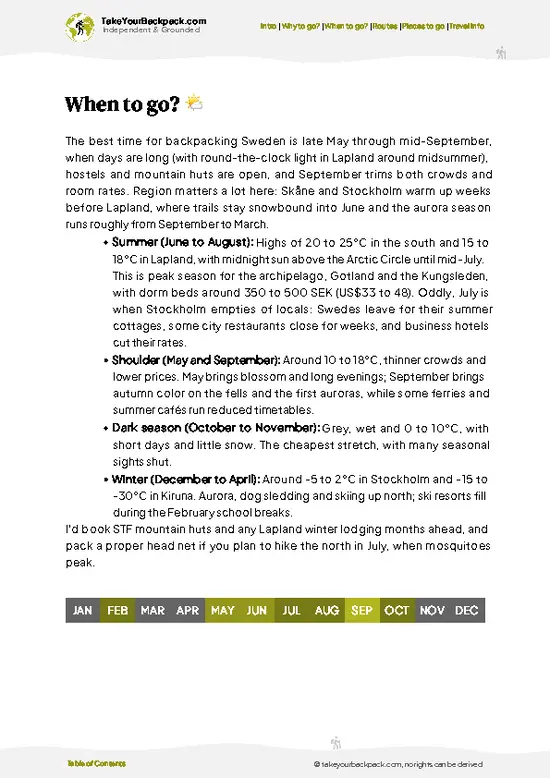
source: climatestotravel.comJANJanuary: highly recommended for travelingFEBFebruary: good for travelingMARMarch: highly recommended for travelingAPRApril: fair for travelingMAYMay: good for travelingJUNJune: excellent for travelingJULJuly: highly recommended for travelingAUGAugust: good for travelingSEPSeptember: good for travelingOCTOctober: fair for travelingNOVNovember: fair for travelingDECDecember: fair for traveling
when-to-go

✈️ The backpacker research shortcutSweden Travel Guide

An offline-friendly backpacking guide with optimized travel routes, ranked highlights, transport advice, and the best areas to stay.
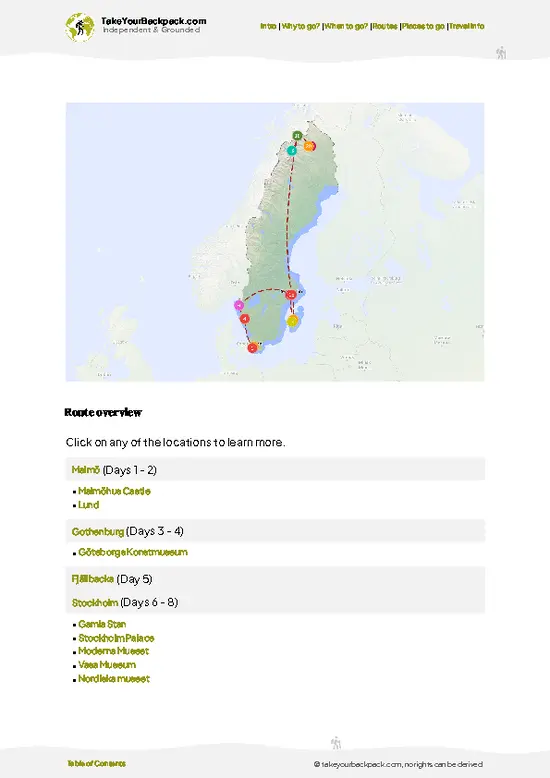
example page 0 from our offline Travel Guide for Sweden
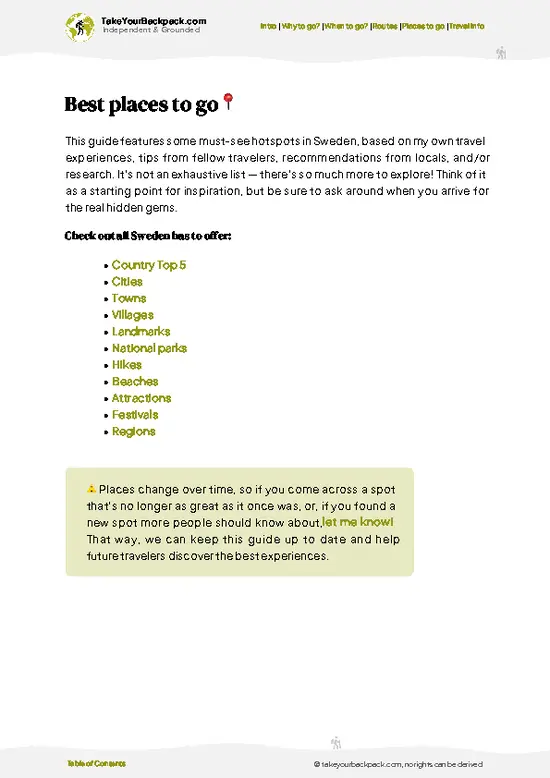
example page 1 from our offline Travel Guide for Sweden
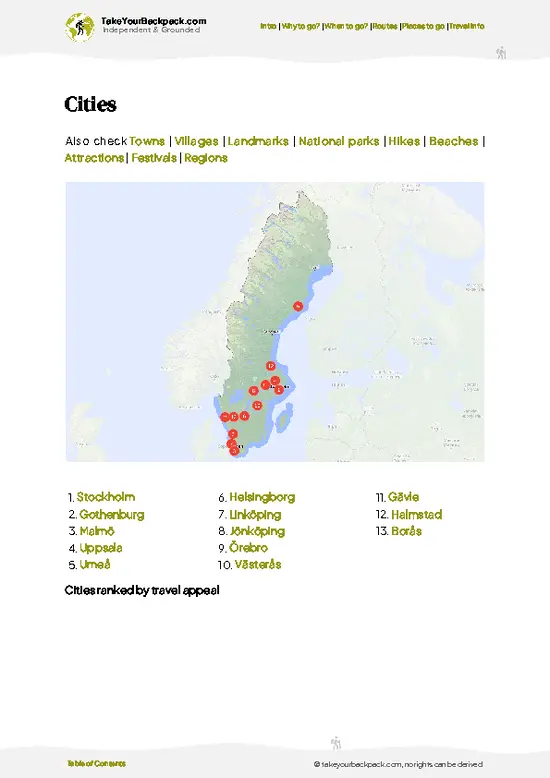
example page 2 from our offline Travel Guide for Sweden
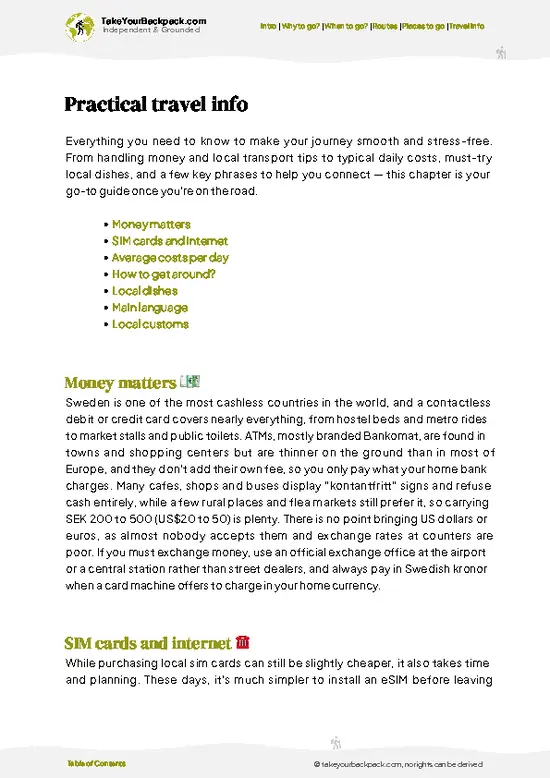
example page 3 from our offline Travel Guide for Sweden
example page 4 from our offline Travel Guide for Sweden
example page 5 from our offline Travel Guide for Sweden
example page 6 from our offline Travel Guide for Sweden
example page 7 from our offline Travel Guide for Sweden
The digital guide (446 pages) contains:
119 highlights, ranked by travel appeal
Optimized 5, 10 & 15-day travel routes
Cities, national parks, landmarks, beaches
How to get around
Offline-friendly for travel without Wi-Fi
👉 Click to see all 30+ guide features

📅 Plan smarter in minutes, not weeks
Month by month travel advice
Festivals & national holidays
Budget expectations

🗺️ Go to the right places, skip the overrated ones
Honest pros & cons of destinations
Top hikes, parks & viewpoints
Lesser-known places most travelers miss
Clear “worth it vs skip it” guidance

🛏️ Travel smoothly without rookie mistakes
Best areas to stay
Transport systems explained simply
Common scams & safety advice
SIM cards, money & practical tips

🌍 Understand the country, not just visit it
Culture & traditions
52 Essential phrases & customs
Festivals worth planning around
Traveler-friendly historical context
Insights that make places more meaningful

📱 Built for real travel conditions
Fully downloadable PDF
Works completely offline
Optimized for phone use
Useful in remote areas & buses
Everything in one place
Save weeks of stressful planning
Get instant access to your full guide. 30‑day money-back guarantee.


By proceeding you agree to our terms.
Sent to your inbox immediately after payment • 100% Secure Checkout
Best Backpacking Travel Advisor 2025 tourism awardBest Backpacking
Travel Advisor
2025
What others say about Take Your Backpack Guides:
⭐⭐⭐⭐⭐
Fantastic, amazing amount of information!
⭐⭐⭐⭐⭐
My goodness this is amazing, it's what I've been looking for hats off too you!
⭐⭐⭐⭐⭐
I think this is absolutely BRILLIANT
⭐⭐⭐⭐
Very complete and informative. It's still missing places, but I gotta to commend you
⭐⭐⭐⭐⭐
This is truly amazing, thank you, can't wait to explore it with my kids!
⭐⭐⭐⭐⭐
Awesome resource, thank you!
⭐⭐⭐⭐⭐
This is amazing! Can't wait to explore the ones I haven't seen
⭐⭐⭐⭐
I love this! Well done, great idea.
⭐⭐⭐⭐⭐
Thanks for taking the time to make this gem!
⭐⭐⭐⭐⭐
This might be the best website I've ever seen.
⭐⭐⭐⭐⭐
Congratulations, and thank you so much for your work; it's incredibly valuable.
⭐⭐⭐⭐
In all seriousness I think you did a great job pointing out the important spots
⭐⭐⭐⭐⭐
10/10 very good
⭐⭐⭐⭐⭐
As someone who's only just starting to visit regularly this is awesome, thank you.
⭐⭐⭐⭐
Thank you very much! I'm going to visit my dad, it's going to be very useful!
⭐⭐⭐⭐⭐
This is really cool! We'll be travelling for the first time and this definitely come in handy.
⭐⭐⭐⭐⭐
You are now our minister of culture, congratulations 👨‍💼
⭐⭐⭐⭐⭐
Just wanted to tell you that this is a pearl! Going to follow your recommendations.
⭐⭐⭐⭐⭐
This is so cool. I'll definitely be using the resource for my travels soon.
⭐⭐⭐⭐⭐
This is very impressive! Good work.
⭐⭐⭐⭐⭐
This is an amazing and informative site. Very well done!

🛏️ Where to stay?How to pick the right area

Jokkmokk’s heart beats strongest around its compact center, where backpackers find the best mix of safety, social buzz, and budget options. Staying close to the town square means you’re steps away from the local market, cafés, and the cultural pulse that pulses especially during the Sami winter markets. The streets here are quiet at night, lit by soft street lamps reflecting off snow or the occasional flicker of northern lights, giving a cozy, secure feeling that’s rare in more spread-out towns.

Venture just a little beyond the center, and you hit residential pockets where locals live—calm, safe, … read more 👉
Jokkmokk’s heart beats strongest around its compact center, where backpackers find the best mix of safety, social buzz, and budget options. Staying close to the town square means you’re steps away from the local market, cafés, and the cultural pulse that pulses especially during the Sami winter markets. The streets here are quiet at night, lit by soft street lamps reflecting off snow or the occasional flicker of northern lights, giving a cozy, secure feeling that’s rare in more spread-out towns.

Venture just a little beyond the center, and you hit residential pockets where locals live—calm, safe, and perfect for those who want to soak in everyday life without the tourist gloss. These areas offer a quieter base but still keep you within easy walking distance of the town’s social hubs. Hostels and guesthouses tend to cluster near the center, making it easy to meet fellow travelers without the hassle of long commutes or expensive taxis.

Compared to the outskirts, where isolation can feel more like being cut off than peaceful, the central and near-central neighborhoods strike the right balance. You get the fresh pine air mixed with the hum of small-town life, and the chance to connect with both locals and other backpackers—exactly what you want when you’re chasing authentic northern Sweden vibes without breaking the bank.

🚌 Getting aroundTransportation options and practical tips

Jokkmokk moves at the pace of the northern light—slow, deliberate, and shaped by the rhythm of nature rather than the clock. The air carries a crispness that sharpens your senses, and the town’s pulse is tied to the seasons: long, dark winters where the silence feels almost tactile, and brief summers when the sun barely dips below the horizon. Here, schedules exist but flex like the branches of the birch trees swaying in the Arctic breeze. You’ll find that moving through Jokkmokk isn’t about rushing; it’s about syncing with the flow of the place, where every step reveals a layer of Sami culture and wilderness waiting just beyond the edge of town.

Walking is your best friend in Jokkmokk. The town is compact, with most key spots—museums, shops, and cafes—within a 10-15 minute stroll. The streets … read more 👉
Jokkmokk moves at the pace of the northern light—slow, deliberate, and shaped by the rhythm of nature rather than the clock. The air carries a crispness that sharpens your senses, and the town’s pulse is tied to the seasons: long, dark winters where the silence feels almost tactile, and brief summers when the sun barely dips below the horizon. Here, schedules exist but flex like the branches of the birch trees swaying in the Arctic breeze. You’ll find that moving through Jokkmokk isn’t about rushing; it’s about syncing with the flow of the place, where every step reveals a layer of Sami culture and wilderness waiting just beyond the edge of town.

Walking is your best friend in Jokkmokk. The town is compact, with most key spots—museums, shops, and cafes—within a 10-15 minute stroll. The streets are quiet, often dusted with snow in winter, and walking lets you soak in the scent of pine and the faint smoke from wood stoves. It’s free, flexible, and the best way to catch the subtle shifts in light and shadow that define the town’s character.

Local Bus connects Jokkmokk to nearby villages and some trailheads. It runs a few times daily, typically from early morning around 7:30 AM until early evening, with a single ticket costing roughly 50 SEK. It’s slow but reliable, perfect if you want to explore beyond the town without the hassle of renting a car. The bus’s modest size means it’s cozy, but expect limited luggage space.

Taxi services are available but pricey, reflecting the remote location. A short ride within town can cost upwards of 150 SEK, so reserve this for when you’re carrying heavy gear or traveling late at night. Taxis don’t run on a fixed schedule, so you’ll need to book in advance or rely on phone calls, which can be tricky if your signal is spotty.

Car Rental is the most flexible option if you want to chase the Northern Lights or reach remote hiking trails on your own timetable. Rental offices are small and often require booking ahead, especially in winter. Roads can be icy and narrow, so winter tires and some driving experience in snow are essential. Prices start around 600 SEK per day, but splitting costs with a group makes it a smart investment.

Train service stops in Jokkmokk on the Inlandsbanan line, linking it to larger hubs like Luleå and Östersund. Trains run a few times a day, with tickets starting at about 150 SEK. It’s a scenic, slow ride through the wilderness, ideal if you want to arrive relaxed and ready to explore without the stress of driving.

Mastering Jokkmokk’s transit means embracing its measured pace and rugged charm. Walk when you want to absorb the town’s soul, take the bus or train to stretch your reach affordably, and call on taxis or rentals when your plans demand speed or distance. This blend keeps your trip smooth, budget-friendly, and deeply connected to the land.

👛 Costs (as of 27 August 2025)Money, prices, and spending tips

Backpacking in Jokkmokk, Sweden, means stepping into a crisp, northern atmosphere where the air carries a faint scent of pine and cold earth, but it also means navigating a place where costs reflect its remote charm and sparse population.
  • Dorm Accommodation: Expect to pay around €40-€60 per night for a bed in a hostel dorm. Options are limited, so booking ahead is smart. The rooms are simple, often with wood-paneled walls that hold the chill but offer a cozy refuge after a day outside.
  • Meals: Food here leans toward local, hearty fare. A basic meal at a café or small restaurant will run you about €15-€25. If you’re self-catering, groceries for a day might cost €10-€15, with staples like bread, cheese, and reindeer sausage available but pricier than in bigger cities.
  • Local Transport: Jokkmokk
read more 👉
Backpacking in Jokkmokk, Sweden, means stepping into a crisp, northern atmosphere where the air carries a faint scent of pine and cold earth, but it also means navigating a place where costs reflect its remote charm and sparse population.
  • Dorm Accommodation: Expect to pay around €40-€60 per night for a bed in a hostel dorm. Options are limited, so booking ahead is smart. The rooms are simple, often with wood-paneled walls that hold the chill but offer a cozy refuge after a day outside.
  • Meals: Food here leans toward local, hearty fare. A basic meal at a café or small restaurant will run you about €15-€25. If you’re self-catering, groceries for a day might cost €10-€15, with staples like bread, cheese, and reindeer sausage available but pricier than in bigger cities.
  • Local Transport: Jokkmokk is small, so walking covers most needs. For longer trips or excursions, local buses cost around €3-€5 per ride. Renting a bike is another option, roughly €15-€25 per day, letting you explore the surrounding forests and lakes at your own pace.
  • Basic Activities/Entry Fees: Many outdoor experiences, like hiking or visiting nature reserves, are free. Museums and cultural centers charge modest fees, typically €5-€10. Guided tours, especially those focusing on Sami culture or northern lights, start around €50 and can go higher depending on length and exclusivity.
  • Miscellaneous Expenses: Think small extras like coffee (€3-€5), snacks, or occasional souvenirs. Budget around €5-€10 daily here, as shops are few and prices reflect the town’s remote location.

All told, a realistic daily budget for Jokkmokk lands between €75 and €120. It’s not the cheapest spot in Sweden, but the price buys you access to a unique northern wilderness and culture that feels untouched by time. The crisp air and quiet streets make every euro feel like an investment in a rare kind of calm.


source: visitsweden.com
⚠️ Prices can change and everyone travels differently, so take this as a rough guide. Hope it helps you plan your adventure!

🚌 Day tripsExploring the surroundings

Jokkmokk is a fantastic base for day trips that immerse you in Sweden’s wild beauty and rich culture. Each journey offers a unique slice of the Arctic experience, making the effort worthwhile.

1. Sarek National Park
A trek into Sarek is like stepping into a postcard of untouched wilderness. The park is a hiker’s paradise, with rugged peaks and rushing rivers. It takes about two hours to reach the park entrance, and you can easily spend a full day exploring its trails. Bring a packed lunch to savor while soaking in the views. Costs are minimal—just the bus fare, around 200 SEK. Late summer is ideal for wildflowers, but be prepared for sudden weather changes. A common mistake? Underestimating the terrain; sturdy boots are a must.
👉 Explore Sarek National Park

2. Ájtte Museum
Dive into … read more 👉
Jokkmokk is a fantastic base for day trips that immerse you in Sweden’s wild beauty and rich culture. Each journey offers a unique slice of the Arctic experience, making the effort worthwhile.

1. Sarek National Park
A trek into Sarek is like stepping into a postcard of untouched wilderness. The park is a hiker’s paradise, with rugged peaks and rushing rivers. It takes about two hours to reach the park entrance, and you can easily spend a full day exploring its trails. Bring a packed lunch to savor while soaking in the views. Costs are minimal—just the bus fare, around 200 SEK. Late summer is ideal for wildflowers, but be prepared for sudden weather changes. A common mistake? Underestimating the terrain; sturdy boots are a must.
👉 Explore Sarek National Park

2. Ájtte Museum
Dive into Sámi culture at the Ájtte Museum, just a short walk from Jokkmokk. This gem showcases the history and traditions of the indigenous Sámi people. You can explore the exhibits in a couple of hours, making it a perfect morning stop. Entry is around 100 SEK, and the best time to visit is during the winter months when the museum hosts special events. Many first-timers overlook the guided tours, which add depth to your experience.


3. Lule River
A day by the Lule River is a sensory delight. The sound of rushing water and the scent of pine trees create a tranquil atmosphere. It’s about a 30-minute bus ride from Jokkmokk. Pack a fishing rod or a book to enjoy by the riverbank. Costs are low—just the bus fare and maybe a fishing license if you’re angling. Late spring is perfect for fishing, but be cautious of the mosquitoes. Many miss the best spots by sticking too close to the bus stop; venture further for solitude.


4. Stora Sjöfallet National Park
This park is a hidden treasure, offering breathtaking views of waterfalls and vast landscapes. It’s a two-hour bus ride, but once you arrive, the scenery makes the journey worthwhile. Plan for a full day of hiking; costs are again just bus fare and perhaps a small fee for park access. Late summer is best for clear skies and vibrant colors. A common mistake is not checking the bus schedule; services can be sparse, so plan ahead.
Want to know what more Sweden offers?
The Sweden Travel Guide describes 119 highlights, from cities to national parks, from beaches to hikes

Get the Travel Guide -

🛡️ SafetyScams, Hazards, and Annoyances

Jokkmokk is generally safe, but staying aware enhances your experience. When wandering the quieter streets, especially at night, keep your phone handy for navigation and let someone know your plans. Solo travelers should embrace the local culture; a friendly chat with a shopkeeper can lead to valuable tips.

While scams are rare, be cautious of overly eager vendors at markets. Trust your instincts—if something feels off, it probably is. Carry yourself confidently, and you’ll blend in seamlessly, enjoying the town’s charm without a hitch.

Other Swedish towns near Jokkmokk

Explore more nearby:

  • Kiruna—iron mine, northern lights, relocated town center| 140 km away
  • Luleå—ice roads, coastal archipelago, Gammelstad church town| 155 km away
  • Skellefteå—wooden bridges, cultural center, northern rivers| 213 km away

💡 Not sure where to go next?
Create a personalized itinerary for Sweden including Jokkmokk and the places that fit your trip.

Generate my itinerary

👉 Discover all towns

Or checkout all Sweden has to offer (think cities, towns, villages, national parks, hikes, beaches, festivals)
Country photo of Sweden

We 💚 feedbackWhat to keep in mind

Jokkmokk’s charm lies in its raw connection to Sámi culture, where the air is thick with the scent of pine and wood smoke. But brace yourself for the cold—winter can bite hard. Embrace it, though; the Northern Lights are worth every chill.

✈️ When did I visit Sweden?
Having played floorball (famous sport in Sweden, known as innebandy) for many years, I have visited Sweden many times too in the years between 1999 and 2012.

✍️ Help improve this page!
The information on this page is based on my own backpacking experience in Sweden, supplemented with up-to-date research and feedback from other travelers. Travel details can change, so if you notice anything outdated or incomplete, feel free to let me know.


🙋‍♂️ Give feedback

👋 Meet the founderWho’s Behind Take Your Backpack?

Johan, backpacker and founder of TakeYourBackpackHi, I’m Johan (Netherlands 🇳🇱), the creator of TakeYourBackpack. Over the past decade, I’ve backpacked through 80+ countries across six continents, gaining extensive experience with independent travel, long-term trips, and overland routes.

This site is built on a combination of firsthand travel experience and carefully curated insights from other backpackers. Many guides are based on places I’ve personally visited, while others bring together tips, observations, and practical advice shared by trusted travelers I’ve met along the way.

The goal is to provide realistic, experience-driven guidance — not generic itineraries — so you can explore destinations with better context, clearer expectations, and more confidence.

Get full Sweden guide •
Instant download • 119 highlights • Full Offline guide