v2.webp)
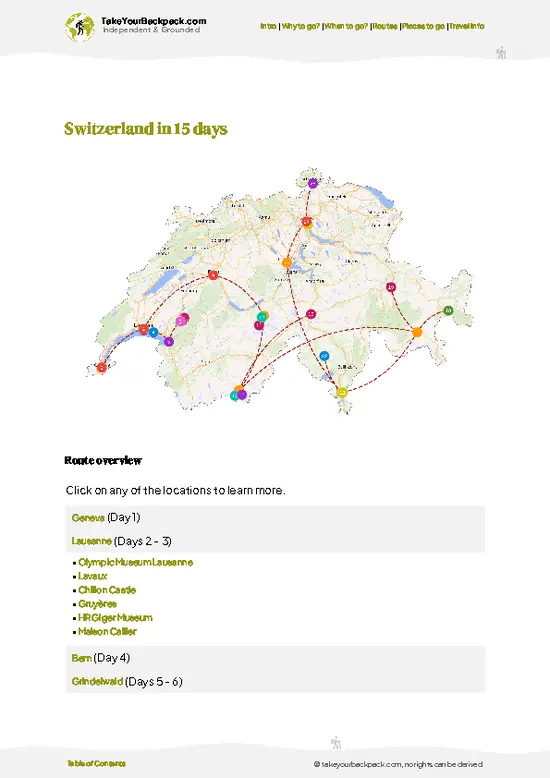
- Ruins of St. Peter’s Monastery — The stone remains of the old monastery are the island’s heart: compact, atmospheric and genuinely old. You can walk around cloister outlines and imagine the monks’ view over the lake—real medieval bones, not a reconstructed museum piece.
- St. Peter’s Chapel — A tiny lakeside chapel with simple architecture and quiet gravestones. It’s intimate and un-touristy, a good spot to sit for a while and catch how the light moves across the water in the afternoon.
- Rousseau’s refuge site — Jean-Jacques Rousseau stayed on the island for a spell; there’s a marked spot and a few placards explaining his visit. For literature fans it’s a neat, tangible connection to 18th-century thinking without any fanfare.
- Western-peninsula viewpoint — Walk to the island’s western tip
- Ruins of St. Peter’s Monastery — The stone remains of the old monastery are the island’s heart: compact, atmospheric and genuinely old. You can walk around cloister outlines and imagine the monks’ view over the lake—real medieval bones, not a reconstructed museum piece.
- St. Peter’s Chapel — A tiny lakeside chapel with simple architecture and quiet gravestones. It’s intimate and un-touristy, a good spot to sit for a while and catch how the light moves across the water in the afternoon.
- Rousseau’s refuge site — Jean-Jacques Rousseau stayed on the island for a spell; there’s a marked spot and a few placards explaining his visit. For literature fans it’s a neat, tangible connection to 18th-century thinking without any fanfare.
- Western-peninsula viewpoint — Walk to the island’s western tip for unobstructed panoramas of Lake Biel, the rolling Jura foothills and the Alps beyond. Sunsets here are quietly explosive—bring a thermos and don’t rush it.
- Protected reedbeds and birdwatching spots — The island’s reed fringes are a proper sanctuary for waterfowl and migrating birds. There are a few discreet observation points where locals come with binoculars; it’s surprisingly lively in spring and autumn.
- Pebble beaches and swim bays — Small, clean pebble beaches tucked into the shoreline make for excellent swims on warm days. No big beach infrastructure—just water, sun, and space—so you get a proper lakeside escape rather than a crowded park.
- Short island circuit trail — A compact loop trail threads meadows, low woodland and shoreline. It’s the most efficient way to get a full sense of the place in under two hours: views, history and nature all stitched together without long climbs.
- Hidden gem: the northern pebble spit — Lesser-known and often empty, this narrow spit is where locals bring dogs, picnics and sketchbooks. It’s a simple place—close to the water, wind in your face—and it feels like a private stage on the lake.
- Hidden gem: late-spring wildflower meadow — A small meadow on the island bursts into colour in May-June and attracts butterflies and quiet walkers. Most visitors overlook it in favor of the monastery ruins, which is why locals love it: peaceful and photogenic without the crowd.
- Hidden gem: the linden-tree bench behind the chapel — There’s an old linden (or lime) tree with a bench tucked just off the chapel path where locals read, nap or eat their lunch. It’s nothing grand, but sitting there feels like borrowing a secret the island keeps for itself.
Spotted a mistake or missing something? Contact us.


 Best Backpacking
.jpg) Hi, I’m Johan (Netherlands 🇳🇱), the creator of TakeYourBackpack. Over the past 3 decades, I’ve backpacked through 90+ countries across six continents, gaining extensive experience with independent travel, long-term trips, and overland routes.
Hi, I’m Johan (Netherlands 🇳🇱), the creator of TakeYourBackpack. Over the past 3 decades, I’ve backpacked through 90+ countries across six continents, gaining extensive experience with independent travel, long-term trips, and overland routes.