×

Tanzania🇹🇿 | attractionsBagamoyo Catholic Museummissionary heritage, coastal relics, religious artifacts | things to do and best time to go

Explore Nafasi Art SpaceExplore Kaole Ruins

Backpacking in Bagamoyo Catholic Museum
👍 Recommendedattraction ranked #10
By Johan Kruseman 🇳🇱 | Updated July 30, 2026

Forget the Instagram myth: Bagamoyo Catholic Museum is not some untouched, photogenic relic where you’ll have the place to yourself and emerge with a life-changing epiphany. It’s in Bagamoyo town, about an hour north of Dar es Salaam on Tanzania’s coast—a place that’s seen more history than most entire countries. Here’s the real deal: the museum is small, sometimes a bit musty, and you’ll probably share the space with a handful of school groups or a tour bus or two. But if you’re chasing the soul of East Africa, this is where the story gets real. The museum sits on the grounds of one of the oldest Catholic missions in the region, and the exhibits—while not flashy—hit hard if you care about the tangled, raw history of slavery, colonialism, and faith colliding on the Swahili Coast. It’s cheap, easy to reach, and a million miles away in spirit from the safari circuit or Zanzibar’s beaches. If you want adrenaline, look elsewhere. If you want context, grit, and a sense of place that lingers, Bagamoyo delivers.

Discover everything you want to know in the 📖 Tanzania Travel Guide.
Loading the map 🌍
CLICK TO FILTER
cities
towns
landmarks
national parks
hikes
beaches
attractions
festivals
SHOW COUNTRY’S BESTSHOW ALL

✨ Why go?
Ranked #10 attraction in Tanzania
Why visitors keep coming back

The Bagamoyo Catholic Museum isn’t just another stop on Tanzania’s backpacker trail—it’s a checkpoint where history punches you in the gut. Forget the glossy Instagram shots of pristine beaches or wildlife selfies; this place drags you into the raw, tangled past of East Africa’s colonial and missionary saga. Yes, it’s often crowded, especially with tour groups, and the entrance fee isn’t dirt cheap by local standards. But here’s the kicker: the museum’s collection is a rare, unfiltered window into the cultural collisions that shaped modern Tanzania. You’ll find artifacts that tell stories of resilience and resistance, not just relics behind glass.

For backpackers grinding through the coastal route, Bagamoyo is a milestone that breaks the monotony of natural landscapes with something deeply … read more 👉
The Bagamoyo Catholic Museum isn’t just another stop on Tanzania’s backpacker trail—it’s a checkpoint where history punches you in the gut. Forget the glossy Instagram shots of pristine beaches or wildlife selfies; this place drags you into the raw, tangled past of East Africa’s colonial and missionary saga. Yes, it’s often crowded, especially with tour groups, and the entrance fee isn’t dirt cheap by local standards. But here’s the kicker: the museum’s collection is a rare, unfiltered window into the cultural collisions that shaped modern Tanzania. You’ll find artifacts that tell stories of resilience and resistance, not just relics behind glass.

For backpackers grinding through the coastal route, Bagamoyo is a milestone that breaks the monotony of natural landscapes with something deeply human and complex. It’s a place where you can feel the weight of history in the air, the kind that doesn’t come from a textbook but from objects and narratives that survived centuries of upheaval. The effort to get here—whether by rickety bus or a sweaty bike ride—is rewarded with a perspective shift that no wildlife park can offer. If you want to understand Tanzania beyond the safari clichés, this museum is non-negotiable.
Want to include Bagamoyo Catholic Museum in your Tanzania route?
Create a personalized Tanzania itinerary that includes Bagamoyo Catholic Museum and the places that fit your trip — based on your travel style, budget, and available time. Get your route in seconds.

Generate my trip

💡 HighlightsPlaces and moments you shouldn't skip

The Old Mission Building
Let’s get real: the Instagram crowd will show you the whitewashed facade and a palm tree or two, but the real punch is inside. This is the oldest Catholic mission building in East Africa, and it’s not some sanitized relic. The walls are thick, the air is heavy with the scent of old wood and salt, and you can feel the collision of cultures—German, Swahili, Arab—etched into every creak of the floorboards. It’s not pretty in a postcard way; it’s powerful because it’s raw and honest about the colonial past.


The Slave Trade Exhibit
Skip the sugarcoating. Bagamoyo was a final stop for thousands of enslaved people before their forced journey across the Indian Ocean. The museum doesn’t hide from this. The exhibit is blunt, sometimes uncomfortable, and that’s the point. You’ll … read more 👉
The Old Mission Building
Let’s get real: the Instagram crowd will show you the whitewashed facade and a palm tree or two, but the real punch is inside. This is the oldest Catholic mission building in East Africa, and it’s not some sanitized relic. The walls are thick, the air is heavy with the scent of old wood and salt, and you can feel the collision of cultures—German, Swahili, Arab—etched into every creak of the floorboards. It’s not pretty in a postcard way; it’s powerful because it’s raw and honest about the colonial past.


The Slave Trade Exhibit
Skip the sugarcoating. Bagamoyo was a final stop for thousands of enslaved people before their forced journey across the Indian Ocean. The museum doesn’t hide from this. The exhibit is blunt, sometimes uncomfortable, and that’s the point. You’ll see shackles, chains, and haunting photos. If you want to understand Tanzania’s soul, you have to look this history in the eye. It’s not entertainment, but it’s essential—and it’s handled with a respect that’s rare.


Father Antoine Horner’s Room
This isn’t your usual “famous missionary’s study” setup. Father Horner was the Swiss priest who founded the mission, and his room is preserved with a kind of lived-in chaos. His battered desk, handwritten letters, and personal effects are all there, untouched by the urge to over-curate. It’s a time capsule, and it’s the closest you’ll get to feeling the daily grind of a 19th-century missionary on the Swahili Coast.


Ancient Printing Press
This is where the first Swahili-language catechisms and schoolbooks were printed. The press itself is a beast—iron, wood, and stubbornness. It’s not just a museum piece; it’s a symbol of how ideas and language spread in East Africa. Stand here and you’re at the crossroads of literacy, religion, and colonial ambition. It’s a nerdy thrill, but a real one.


Graves of Early Missionaries
Out back, under the shade of frangipani trees, you’ll find the graves of the first missionaries. The stones are weathered, the names half-erased by rain and time. It’s quiet, a little eerie, and deeply moving. This isn’t a tourist photo-op; it’s a reminder of the human cost of empire and faith. If you want a moment of reflection, this is where you’ll find it.


Local School Connection
If you’re lucky, you’ll catch the local students who still use the mission grounds. This isn’t a museum frozen in time—it’s a living place. The sound of kids laughing, the sight of uniforms darting between mango trees, the blend of history and daily life. That’s the real magic: the past and present colliding in a way no Instagram filter can fake.
Spotted a mistake or missing something? Contact us.

Things to do near Bagamoyo Catholic Museum

Ratings based on Tripadvisor reviews. When you book through this link, you support our work at no extra cost to you.

🌤️ When to go?When to go for the best experience


  • Weather: The best time to visit Bagamoyo Catholic Museum is during the dry season, from June to October. Expect clear skies and minimal rain, which means no soggy shoes or museum closures. The wet season, from March to May, brings heavy rains that can make travel tricky and dampen your experience.

  • Temperature: Daytime temps hover around 25-30°C (77-86°F) during the dry months, perfect for wandering without melting. The wet season is warmer and more humid, often hitting 30-33°C (86-91°F), which can sap your energy fast.

  • Daylight Hours: Daylight is fairly consistent year-round, roughly 12 hours, but the dry season offers clearer mornings and evenings, ideal for exploring the museum and nearby historic sites without rushing.

  • Crowds: Peak tourist months are July and August, when international
read more 👉

  • Weather: The best time to visit Bagamoyo Catholic Museum is during the dry season, from June to October. Expect clear skies and minimal rain, which means no soggy shoes or museum closures. The wet season, from March to May, brings heavy rains that can make travel tricky and dampen your experience.

  • Temperature: Daytime temps hover around 25-30°C (77-86°F) during the dry months, perfect for wandering without melting. The wet season is warmer and more humid, often hitting 30-33°C (86-91°F), which can sap your energy fast.

  • Daylight Hours: Daylight is fairly consistent year-round, roughly 12 hours, but the dry season offers clearer mornings and evenings, ideal for exploring the museum and nearby historic sites without rushing.

  • Crowds: Peak tourist months are July and August, when international visitors flood in. If you want fewer people and a more personal vibe, aim for June or September. The museum is quietest during the rainy season, but that comes with travel hassles.

  • Seasonal Activities: The dry season aligns with local festivals and cultural events in Bagamoyo, adding layers to your visit beyond the museum’s walls. The rainy season sees fewer events, so you miss out on that local buzz.

  • Price Fluctuations: Expect higher prices for accommodation and transport during July and August. June and September offer better deals without sacrificing weather quality, making them sweet spots for budget-conscious backpackers.


Pro-tip: Visit in June or September to dodge crowds and rain, enjoy comfortable temperatures, and catch local culture in full swing without paying a premium.


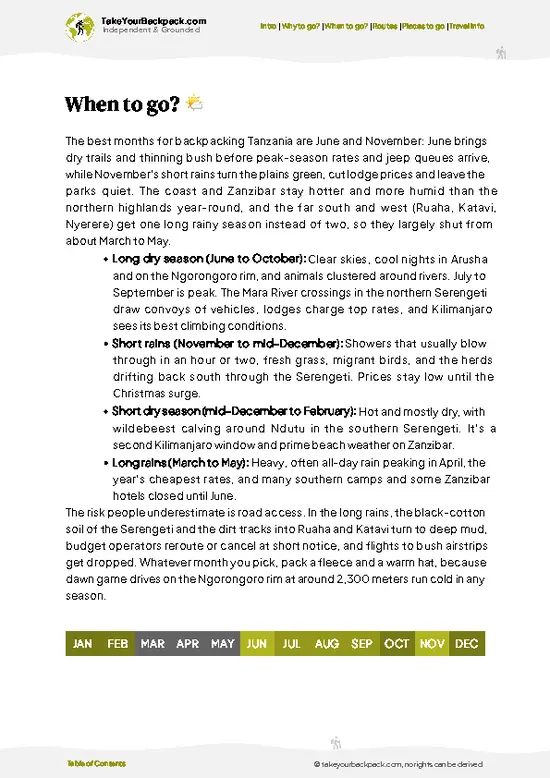
source: climatestotravel.comJANJanuary: good for travelingFEBFebruary: good for travelingMARMarch: fair for travelingAPRApril: fair for travelingMAYMay: fair for travelingJUNJune: excellent for travelingJULJuly: highly recommended for travelingAUGAugust: highly recommended for travelingSEPSeptember: excellent for travelingOCTOctober: excellent for travelingNOVNovember: good for travelingDECDecember: good for traveling
when-to-go

✈️ The backpacker research shortcutTanzania Travel Guide

An offline-friendly backpacking guide with optimized travel routes, ranked highlights, transport advice, and the best areas to stay.
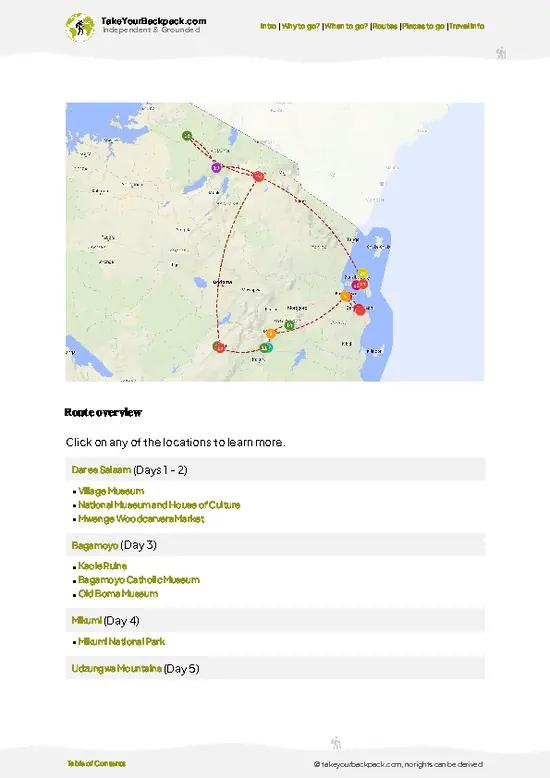
example page 0 from our offline Travel Guide for Tanzania
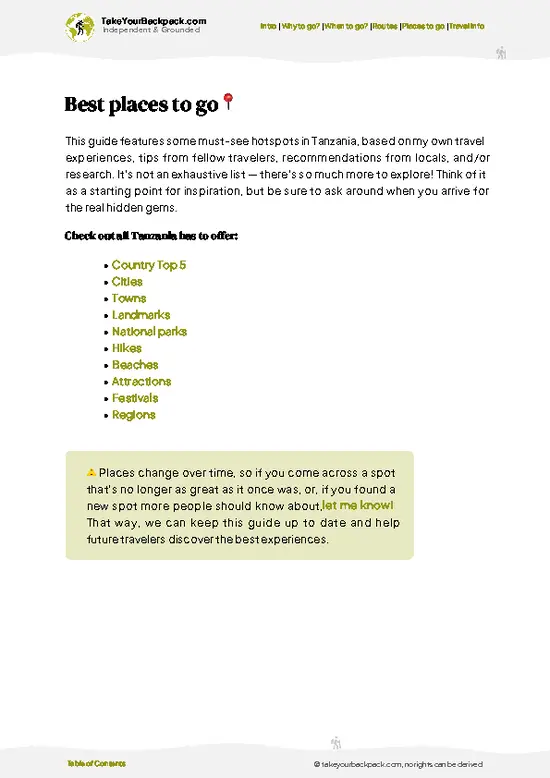
example page 1 from our offline Travel Guide for Tanzania
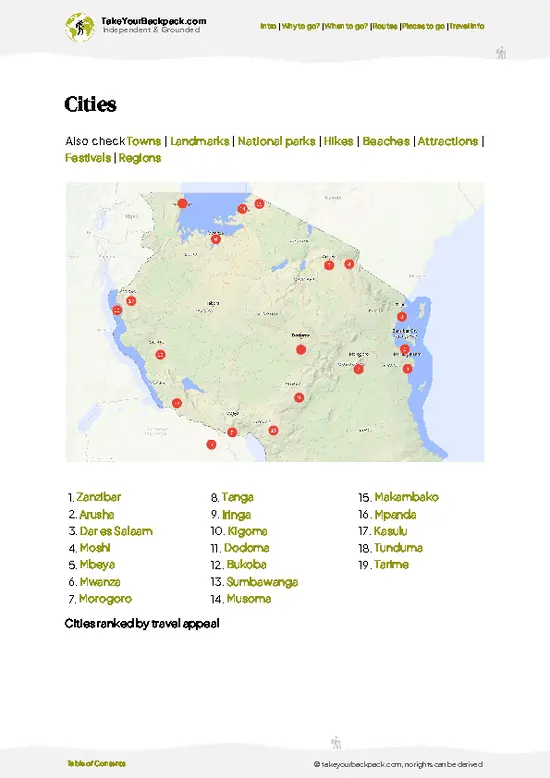
example page 2 from our offline Travel Guide for Tanzania
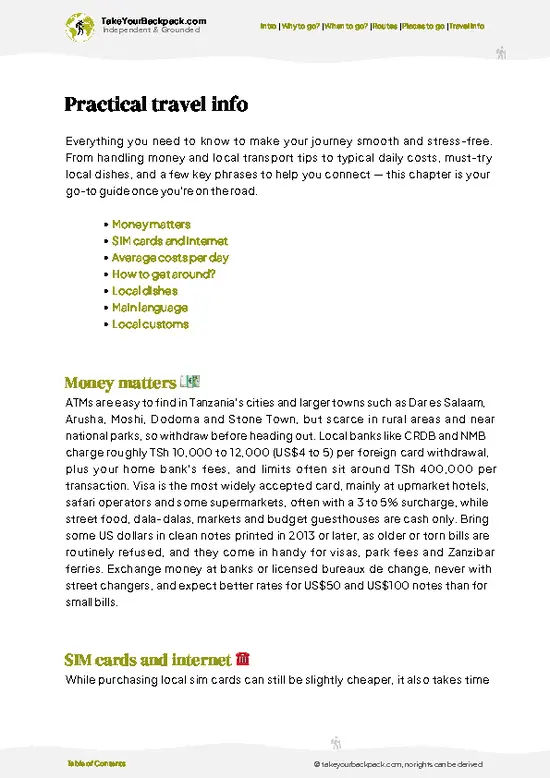
example page 3 from our offline Travel Guide for Tanzania
example page 4 from our offline Travel Guide for Tanzania
example page 5 from our offline Travel Guide for Tanzania
example page 6 from our offline Travel Guide for Tanzania
example page 7 from our offline Travel Guide for Tanzania
The digital guide (377 pages) contains:
100 highlights, ranked by travel appeal
Optimized 7, 14 & 21-day travel routes
Cities, national parks, landmarks, beaches
How to get around
Offline-friendly for travel without Wi-Fi
👉 Click to see all 30+ guide features

📅 Plan smarter in minutes, not weeks
Month by month travel advice
Festivals & national holidays
Budget expectations

🗺️ Go to the right places, skip the overrated ones
Honest pros & cons of destinations
Top hikes, parks & viewpoints
Lesser-known places most travelers miss
Clear “worth it vs skip it” guidance

🛏️ Travel smoothly without rookie mistakes
Best areas to stay
Transport systems explained simply
Common scams & safety advice
SIM cards, money & practical tips

🌍 Understand the country, not just visit it
Culture & traditions
52 Essential phrases & customs
Festivals worth planning around
Traveler-friendly historical context
Insights that make places more meaningful

📱 Built for real travel conditions
Fully downloadable PDF
Works completely offline
Optimized for phone use
Useful in remote areas & buses
Everything in one place
Save weeks of stressful planning
Get instant access to your full guide. 30‑day money-back guarantee.


By proceeding you agree to our terms.
Sent to your inbox immediately after payment • 100% Secure Checkout
Best Backpacking Travel Advisor 2025 tourism awardBest Backpacking
Travel Advisor
2025
What others say about Take Your Backpack Guides:
⭐⭐⭐⭐⭐
Fantastic, amazing amount of information!
⭐⭐⭐⭐⭐
My goodness this is amazing, it's what I've been looking for hats off too you!
⭐⭐⭐⭐⭐
I think this is absolutely BRILLIANT
⭐⭐⭐⭐
Very complete and informative. It's still missing places, but I gotta to commend you
⭐⭐⭐⭐⭐
This is truly amazing, thank you, can't wait to explore it with my kids!
⭐⭐⭐⭐⭐
Awesome resource, thank you!
⭐⭐⭐⭐⭐
This is amazing! Can't wait to explore the ones I haven't seen
⭐⭐⭐⭐
I love this! Well done, great idea.
⭐⭐⭐⭐⭐
Thanks for taking the time to make this gem!
⭐⭐⭐⭐⭐
This might be the best website I've ever seen.
⭐⭐⭐⭐⭐
Congratulations, and thank you so much for your work; it's incredibly valuable.
⭐⭐⭐⭐
In all seriousness I think you did a great job pointing out the important spots
⭐⭐⭐⭐⭐
10/10 very good
⭐⭐⭐⭐⭐
As someone who's only just starting to visit regularly this is awesome, thank you.
⭐⭐⭐⭐
Thank you very much! I'm going to visit my dad, it's going to be very useful!
⭐⭐⭐⭐⭐
This is really cool! We'll be travelling for the first time and this definitely come in handy.
⭐⭐⭐⭐⭐
You are now our minister of culture, congratulations 👨‍💼
⭐⭐⭐⭐⭐
Just wanted to tell you that this is a pearl! Going to follow your recommendations.
⭐⭐⭐⭐⭐
This is so cool. I'll definitely be using the resource for my travels soon.
⭐⭐⭐⭐⭐
This is very impressive! Good work.
⭐⭐⭐⭐⭐
This is an amazing and informative site. Very well done!

🛏️ Where to stay?Best areas and accommodation options

Bagamoyo is not your typical backpacker hotspot, and that’s exactly why it’s worth your time. The Catholic Museum itself is a quiet, reflective place, far from the tourist throngs you might expect in Tanzania. But don’t get it twisted—this isn’t a bustling city with endless nightlife or a backpacker party scene. If you want to stay close to the museum, your best bet is to settle into the town center of Bagamoyo itself. This area is safe, low-key, and where you’ll find the handful of budget guesthouses and small inns that cater to travelers who want to soak up the history without breaking the bank. … read more 👉
Bagamoyo is not your typical backpacker hotspot, and that’s exactly why it’s worth your time. The Catholic Museum itself is a quiet, reflective place, far from the tourist throngs you might expect in Tanzania. But don’t get it twisted—this isn’t a bustling city with endless nightlife or a backpacker party scene. If you want to stay close to the museum, your best bet is to settle into the town center of Bagamoyo itself. This area is safe, low-key, and where you’ll find the handful of budget guesthouses and small inns that cater to travelers who want to soak up the history without breaking the bank.

Bagamoyo’s charm lies in its slow pace and the chance to connect with locals and fellow travelers who are genuinely interested in the cultural and historical significance of the place. You won’t find flashy hostels or big social hubs, but you will find communal spaces where stories are shared over simple meals and local brews. Staying near the town center means you’re within walking distance of the museum, the old German colonial buildings, and the waterfront where fishermen still haul in their catch.

If you’re after safety and a social vibe, avoid the outskirts or isolated lodgings. The town center is where the pulse is—quiet but alive in its own way. It’s not about Instagram-perfect scenes; it’s about grounding yourself in a place that’s raw, real, and deeply rooted in history. That’s the real magic of Bagamoyo.

👛 Costs (as of 30 July 2026)Money, prices, and spending tips

As of the most recent estimates, the entrance fee for non-resident adults to the Bagamoyo Catholic Museum is approximately 5,000 to 10,000 Tanzanian Shillings (TZS), which is roughly €2 to €4. Additional costs may include guided tours, photography permits, and transportation, which can vary depending on the provider and specific services chosen.

source: mof.go.tz
⚠️ Prices can change and everyone travels differently, so take this as a rough guide. Hope it helps you plan your adventure!

Other Tanzanian attractions near Bagamoyo Catholic Museum

Explore more nearby:

  • Kaole Ruins—coral stone tombs, ancient mosque, coastal archaeology| 6 km away
  • Old Fort—stone battlements, open-air amphitheater, market stalls| 44 km away
  • Hamamni Persian Baths—stone chambers, 19th-century architecture, bathing rituals| 44 km away

💡 Not sure where to go next?
Create a personalized itinerary for Tanzania including Bagamoyo Catholic Museum and the places that fit your trip.

Generate my itinerary

👉 Discover all attractions

Or checkout all Tanzania has to offer (think cities, towns, villages, national parks, hikes, beaches, festivals)
Country photo of Tanzania

We 💚 feedbackIs it worth it?

The Bagamoyo Catholic Museum isn’t some polished, Instagram-perfect spot. Expect a modest setup and a handful of other curious visitors, not crowds. What hits you isn’t the gloss but the raw stories—the artifacts whispering centuries of faith, struggle, and resilience. The real magic is in the quiet corners where history feels alive, not staged. If you’re after flashy displays, look elsewhere. But if you want a place that makes you pause and rethink East Africa’s layered past, this museum quietly delivers. Just bring your curiosity and a bit of patience.

✍️ Help improve this page!
The information on this page is based on in-depth research, insights shared by experienced travelers, and feedback from the local travel community in Tanzania. While every effort is made to keep the information accurate and current, conditions can change — so if you spot anything incorrect or outdated, please get in touch.


🙋‍♂️ Give feedback

👋 Meet the founderWho’s Behind Take Your Backpack?

Johan, backpacker and founder of TakeYourBackpackHi, I’m Johan (Netherlands 🇳🇱), the creator of TakeYourBackpack. Over the past decade, I’ve backpacked through 80+ countries across six continents, gaining extensive experience with independent travel, long-term trips, and overland routes.

This site is built on a combination of firsthand travel experience and carefully curated insights from other backpackers. Many guides are based on places I’ve personally visited, while others bring together tips, observations, and practical advice shared by trusted travelers I’ve met along the way.

The goal is to provide realistic, experience-driven guidance — not generic itineraries — so you can explore destinations with better context, clearer expectations, and more confidence.

Get full Tanzania guide •
Instant download • 100 highlights • Full Offline guide