×

Tanzania🇹🇿 | festivalsKilimanjaro MarathonMoshi Club start, 42K, half marathon, 5K fun run | things to do and best time to go

Explore ZanzibarExplore Nane Nane Agricultural Show

Backpacking in Kilimanjaro Marathon
👍 Recommendedfestival ranked #6
By Johan Kruseman 🇳🇱 | Updated October 22, 2026

The marathon does not climb the mountain; it runs on flat to rolling roads around Moshi, in the north of Tanzania, starting and finishing at the Moshi Club grounds. Held in late February or early March, it offers a full marathon, a half marathon and a 5K fun run, and draws thousands of Tanzanians, Kenyans and international runners. The mood is loud, friendly and sweaty, with locals lining the route to cheer. Book lodging in Moshi months ahead, because rooms vanish and prices jump. Register on the official site rather than through resellers, and carry cash for taxis. Pick up your race pack early to dodge long queues, and drink water from sealed bottles. It suits runners, walkers and Kilimanjaro-bound trekkers who want a party day; it won’t suit anyone seeking solitude or a flat-out fast course in heat.

Discover everything you want to know in the 📖 Tanzania Travel Guide.


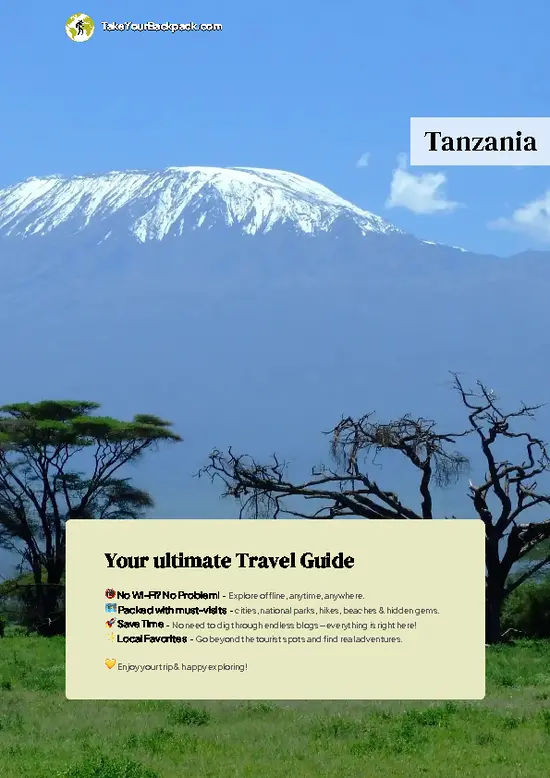
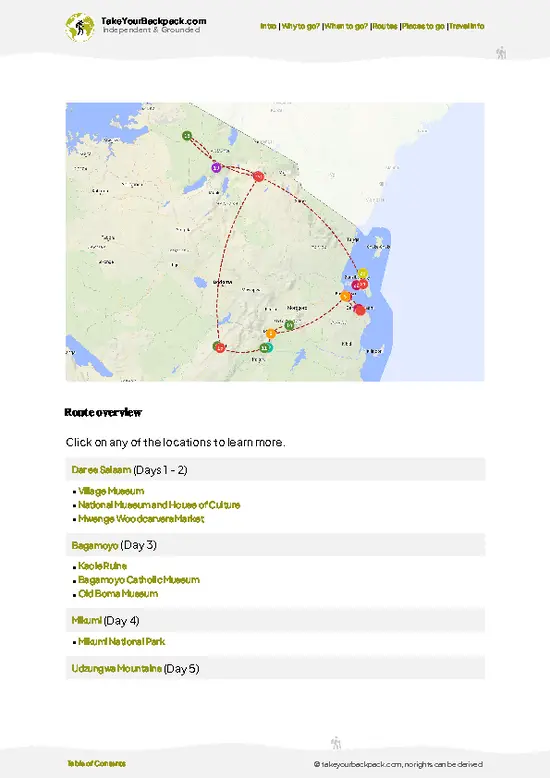
example page 0 from our offline Travel Guide for Tanzania
example page 1 from our offline Travel Guide for Tanzania
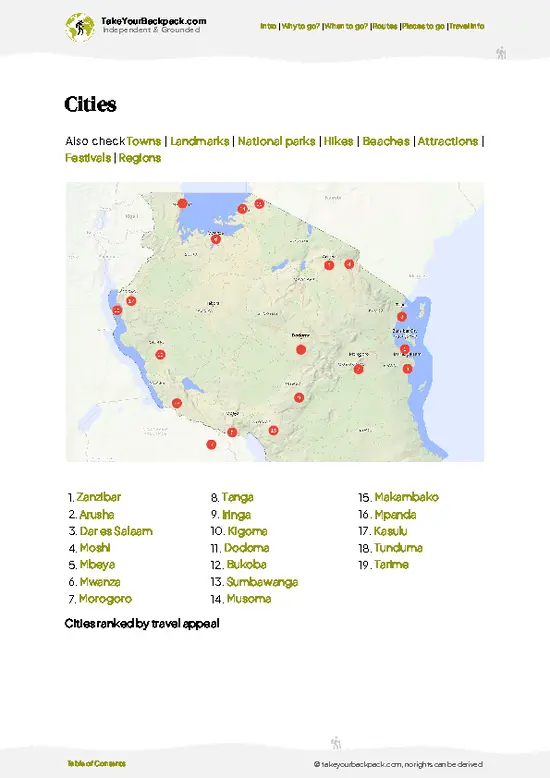
example page 2 from our offline Travel Guide for Tanzania
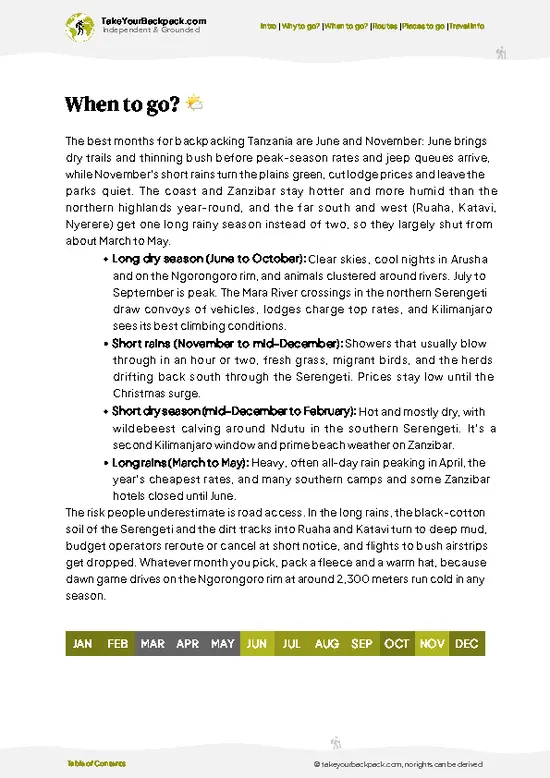
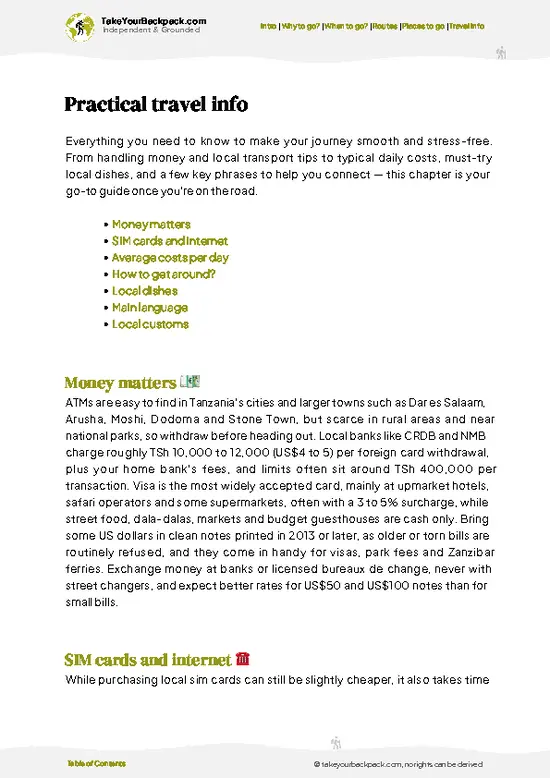
example page 3 from our offline Travel Guide for Tanzania
example page 4 from our offline Travel Guide for Tanzania
example page 5 from our offline Travel Guide for Tanzania
example page 6 from our offline Travel Guide for Tanzania
example page 7 from our offline Travel Guide for Tanzania
Loading the map 🌍
CLICK TO FILTER
cities
towns
landmarks
national parks
hikes
beaches
attractions
festivals
regions
SHOW COUNTRY’S BESTSHOW ALL

✨ Why go?
Ranked #6 festival in Tanzania
What makes it a must-see festival

Kilimanjaro Marathon turns Moshi into a three-day party where backpackers, trekkers and local families share the same sidewalks. The draw is the crowd: runners from Kenya and across Europe line up beside schoolchildren in the 5K, and the finish area at Moshi Club feels like a street fair with music, grilled meat and a lot of sunburned laughter. Because everyone is hunting for the same thing, a good run and a cold Kilimanjaro lager, strangers swap stories fast, and you leave with new travel partners.

The event also fits neatly into a bigger Tanzania loop. Many people pair it with a Kilimanjaro climb on the Machame or Marangu routes, a safari around Arusha, or a beach finish on Zanzibar. The 5K fun run costs far less than comparable races in Europe, and you can walk it without anyone caring … read more 👉
Kilimanjaro Marathon turns Moshi into a three-day party where backpackers, trekkers and local families share the same sidewalks. The draw is the crowd: runners from Kenya and across Europe line up beside schoolchildren in the 5K, and the finish area at Moshi Club feels like a street fair with music, grilled meat and a lot of sunburned laughter. Because everyone is hunting for the same thing, a good run and a cold Kilimanjaro lager, strangers swap stories fast, and you leave with new travel partners.

The event also fits neatly into a bigger Tanzania loop. Many people pair it with a Kilimanjaro climb on the Machame or Marangu routes, a safari around Arusha, or a beach finish on Zanzibar. The 5K fun run costs far less than comparable races in Europe, and you can walk it without anyone caring about your pace. Add the chance to see Kibo’s snowcap above the start line on a clear morning, and the route plans itself.

💡 HighlightsThe experiences that define the visit

  1. The Moshi Start at Memorial Gate, Moshi Club: The race kicks off in Moshi town, with Kilimanjaro’s snowy top looming over the pack on clear mornings. Runners from dozens of countries crowd the line while drummers and dancers warm up the street. The full marathon, half marathon and 5K all begin around here, so the energy is hard to match.
  2. The 42K Full Marathon Course: A rolling route through Moshi’s suburbs, banana farms and coffee country, with red volcanic soil underfoot. Roadside villagers hand out cheers, and kids chase runners for high-fives. It is warm and humid at this altitude of roughly 800 meters, so pace yourself in the opening kilometers.
  3. The Half Marathon: The most popular distance for travelers who want a medal without a full-day commitment. You run the same lively stretches of
… read more 👉
  1. The Moshi Start at Memorial Gate, Moshi Club: The race kicks off in Moshi town, with Kilimanjaro’s snowy top looming over the pack on clear mornings. Runners from dozens of countries crowd the line while drummers and dancers warm up the street. The full marathon, half marathon and 5K all begin around here, so the energy is hard to match.
  2. The 42K Full Marathon Course: A rolling route through Moshi’s suburbs, banana farms and coffee country, with red volcanic soil underfoot. Roadside villagers hand out cheers, and kids chase runners for high-fives. It is warm and humid at this altitude of roughly 800 meters, so pace yourself in the opening kilometers.
  3. The Half Marathon: The most popular distance for travelers who want a medal without a full-day commitment. You run the same lively stretches of road as the marathoners, and the crowds along the route are thick and loud. Many first-timers choose this one and finish grinning.
  4. The 5K Fun Run: A relaxed loop open to walkers, families, locals and anyone in costume. Schoolchildren and community groups join in, so the mood is closer to a street party than a race. Entry is the cheapest of the three events and needs no training.
  5. The Finish Line Festival: After crossing, you land in a field of music, grilled food stalls and sponsor tents, where runners swap stories and compare blisters. Local brass bands and cultural troupes perform, and strangers share cold drinks and plastic chairs. Many people stay for hours, then plan a Kilimanjaro trek for the following days.
Kilimanjaro Marathon spectating costs nothing, and the 5K fun run carries the lowest entry fee of the three races.
Spotted a mistake or missing something? Contact us.

Things to do near Kilimanjaro Marathon

Ratings based on Tripadvisor reviews. When you book through this link, you support our work at no extra cost to you.

🌤️ When to go?When is the celebration of Kilimanjaro Marathon?

Kilimanjaro Marathon is held on a Sunday in late February or early March, a one-day event (with a 5K fun run the same morning) that starts and finishes at Moshi Union Cooperative Stadium in Moshi, with the date set each year by the organizers.
  • Best day: Race day is the whole point, with the 42 km, 21 km and 5 km starts leaving at dawn. Saturday is for expo registration and bib pickup only.
  • Weather: Expect warm, sticky mornings of about 20 to 25°C (68 to 77°F) rising past 30°C (86°F) by late morning, plus a chance of showers. Bring a cap, sunscreen, a light rain shell and a hydration belt.
  • Booking: Register and book a bed two to three months ahead. Moshi rooms often cost 30 to 50 percent more that weekend.
  • Getting there: Arrive Thursday or Friday. Leave Monday, when buses and Kilimanjaro Airport
… read more 👉
Kilimanjaro Marathon is held on a Sunday in late February or early March, a one-day event (with a 5K fun run the same morning) that starts and finishes at Moshi Union Cooperative Stadium in Moshi, with the date set each year by the organizers.
  • Best day: Race day is the whole point, with the 42 km, 21 km and 5 km starts leaving at dawn. Saturday is for expo registration and bib pickup only.
  • Weather: Expect warm, sticky mornings of about 20 to 25°C (68 to 77°F) rising past 30°C (86°F) by late morning, plus a chance of showers. Bring a cap, sunscreen, a light rain shell and a hydration belt.
  • Booking: Register and book a bed two to three months ahead. Moshi rooms often cost 30 to 50 percent more that weekend.
  • Getting there: Arrive Thursday or Friday. Leave Monday, when buses and Kilimanjaro Airport transfers are less crowded than Sunday afternoon.
Book your Moshi bed before your flight, because the cheap places fill first.


source: climatestotravel.comJANJanuary: not recommended for travelingFEBFebruary: not recommended for travelingMARMarch: not recommended for travelingAPRApril: not recommended for travelingMAYMay: excellent for travelingJUNJune: not recommended for travelingJULJuly: not recommended for travelingAUGAugust: not recommended for travelingSEPSeptember: not recommended for travelingOCTOctober: not recommended for travelingNOVNovember: not recommended for travelingDECDecember: not recommended for traveling

✈️ The backpacker research shortcutTanzania Travel Guide

An offline-friendly backpacking guide with optimized travel routes, ranked highlights, transport advice, and the best areas to stay.
example page 0 from our offline Travel Guide for Tanzania
example page 1 from our offline Travel Guide for Tanzania
example page 2 from our offline Travel Guide for Tanzania
example page 3 from our offline Travel Guide for Tanzania
example page 4 from our offline Travel Guide for Tanzania
example page 5 from our offline Travel Guide for Tanzania
example page 6 from our offline Travel Guide for Tanzania
example page 7 from our offline Travel Guide for Tanzania
The digital guide (396 pages) contains:
✅ 103 highlights, ranked by travel appeal
✅ Optimized 7, 14 & 21-day travel routes
✅ Cities, national parks, landmarks, beaches
✅ How to get around
✅ Offline-friendly for travel without Wi-Fi
👉 Click to see all 30+ guide features

📅 Plan smarter in minutes, not weeks
✅ Month by month travel advice
✅ Festivals & national holidays
✅ Budget expectations

🗺️ Go to the right places, skip the overrated ones
✅ Honest pros & cons of destinations
✅ Top hikes, parks & viewpoints
✅ Lesser-known places most travelers miss
✅ Clear “worth it vs skip it” guidance

🛏️ Travel smoothly without rookie mistakes
✅ Best areas to stay
✅ Transport systems explained simply
✅ Common scams & safety advice
✅ SIM cards, money & practical tips

🌍 Understand the country, not just visit it
✅ Culture & traditions
✅ 52 Essential phrases & customs
✅ Festivals worth planning around
✅ Traveler-friendly historical context
✅ Insights that make places more meaningful

📱 Built for real travel conditions
✅ Fully downloadable PDF
✅ Works completely offline
✅ Optimized for phone use
✅ Useful in remote areas & buses
✅ Everything in one place
Stop searching, start planning
Get instant access to your full guide. 30‑day money-back guarantee.
+ Add another guide for just

By proceeding you agree to our terms.
Sent to your inbox immediately after payment • 100% Secure Checkout
Best Backpacking Travel Advisor 2025 tourism awardBest Backpacking
Travel Advisor
2025
What others say about Take Your Backpack Guides:
⭐⭐⭐⭐⭐
Fantastic, amazing amount of information!
⭐⭐⭐⭐⭐
My goodness this is amazing, it's what I've been looking for hats off too you!
⭐⭐⭐⭐⭐
I think this is absolutely BRILLIANT
⭐⭐⭐⭐
Very complete and informative. It's still missing places, but I gotta to commend you
⭐⭐⭐⭐⭐
This is truly amazing, thank you, can't wait to explore it with my kids!
⭐⭐⭐⭐⭐
Awesome resource, thank you!
⭐⭐⭐⭐⭐
This is amazing! Can't wait to explore the ones I haven't seen
⭐⭐⭐⭐
I love this! Well done, great idea.
⭐⭐⭐⭐⭐
Thanks for taking the time to make this gem!
⭐⭐⭐⭐⭐
This might be the best website I've ever seen.
⭐⭐⭐⭐⭐
Congratulations, and thank you so much for your work; it's incredibly valuable.
⭐⭐⭐⭐
In all seriousness I think you did a great job pointing out the important spots
⭐⭐⭐⭐⭐
10/10 very good
⭐⭐⭐⭐⭐
As someone who's only just starting to visit regularly this is awesome, thank you.
⭐⭐⭐⭐
Thank you very much! I'm going to visit my dad, it's going to be very useful!
⭐⭐⭐⭐⭐
This is really cool! We'll be travelling for the first time and this definitely come in handy.
⭐⭐⭐⭐⭐
You are now our minister of culture, congratulations 👨‍💼
⭐⭐⭐⭐⭐
Just wanted to tell you that this is a pearl! Going to follow your recommendations.
⭐⭐⭐⭐⭐
This is so cool. I'll definitely be using the resource for my travels soon.
⭐⭐⭐⭐⭐
This is very impressive! Good work.
⭐⭐⭐⭐⭐
This is an amazing and informative site. Very well done!

🛏️ Where to stay?Choosing the right base

Central Moshi is the smartest place to sleep, because the start line, the stadium and most race-weekend events sit within a short walk or a cheap ride. The streets around the clock tower and the main market give you the most choice. Dorm beds, guesthouses and small lodges cluster here, and the area has plenty of other travelers, so it is easy to find a running buddy or share a taxi to the start. It is also the safest area to walk back in after dark, though you should still take a taxi late at night rather than wander.
The quieter neighborhoods just north of the center, toward the Kilimanjaro Christian … read more 👉
Central Moshi is the smartest place to sleep, because the start line, the stadium and most race-weekend events sit within a short walk or a cheap ride. The streets around the clock tower and the main market give you the most choice. Dorm beds, guesthouses and small lodges cluster here, and the area has plenty of other travelers, so it is easy to find a running buddy or share a taxi to the start. It is also the safest area to walk back in after dark, though you should still take a taxi late at night rather than wander.
The quieter neighborhoods just north of the center, toward the Kilimanjaro Christian Medical Centre road, have a calmer feel, with gardens, home-style guesthouses and better sleep before a dawn start. They suit solo runners who want rest more than nightlife. Expect a ten to fifteen minute taxi ride to the stadium.
If Moshi is full, Arusha is the fallback, with many hostels and a lively backpacker scene, but it is about two hours away by road, which makes a pre-dawn start impractical. Book Moshi first and only look elsewhere if you must.

👛 Costs (as of 22 October 2026)What things cost and how to budget

A race weekend at Kilimanjaro Marathon costs roughly US$85 to 140 a day for an independent traveler, with the entry fee the biggest single item. The table shows typical figures.
CategoryBudget RangeLocal Reality
Festival ticketsUS$30 to 80Entry fees vary by distance, with the 5K fun run cheapest and international entrants paying more for the full or half marathon. Packet pickup is included.
AccommodationUS$10 to 60Dorm beds start around US$10 to 15. Private rooms in Moshi run US$30 to 60 in race weekend high season.
Local transportUS$3 to 12Taxis and bajaj rides around Moshi cost US$1 to 4. A dala-dala (minibus) is under US$1. An airport transfer is around US$25 to 40 split between riders.
Food & drinksUS$8 to 20Street plates cost US$1.50 to 4. Restaurant meals cost US$5 to 10. A beer costs about
… read more 👉
A race weekend at Kilimanjaro Marathon costs roughly US$85 to 140 a day for an independent traveler, with the entry fee the biggest single item. The table shows typical figures.
CategoryBudget RangeLocal Reality
Festival ticketsUS$30 to 80Entry fees vary by distance, with the 5K fun run cheapest and international entrants paying more for the full or half marathon. Packet pickup is included.
AccommodationUS$10 to 60Dorm beds start around US$10 to 15. Private rooms in Moshi run US$30 to 60 in race weekend high season.
Local transportUS$3 to 12Taxis and bajaj rides around Moshi cost US$1 to 4. A dala-dala (minibus) is under US$1. An airport transfer is around US$25 to 40 split between riders.
Food & drinksUS$8 to 20Street plates cost US$1.50 to 4. Restaurant meals cost US$5 to 10. A beer costs about US$1.50 to 3.
Miscellaneous expensesUS$5 to 15Race shirts, a massage, sunscreen and tips. Pay in shillings for most small items.
Total Daily BudgetUS$96Based on high season rates with one night of lodging.
⚠️ Prices can change and everyone travels differently, so take this as a rough guide. Hope it helps you plan your adventure!

🍲 FoodLocal Flavors for Backpackers

Expect the post-race scene at the stadium to be where the food lives. Vendors fry chipsi mayai (a chips omelet) on the spot, grill mishkaki (marinated meat skewers), and sell roasted maize and bananas from charcoal braziers. Cold sodas, bottled water and fresh juices from passion fruit, mango and sugarcane are everywhere, and chai with ginger is the best way to warm up if the morning is damp.
For something properly local, try ugali with beans or stew, or a bowl of supu, a peppery soup that is popular for recovery. In Moshi town, nyama choma (grilled meat) joints fill up on race night, and the Kilimanjaro lager is the traditional celebration drink. Ask for a Kilimanjaro beer, or just have a chilled Stoney Tangawizi, a sharp ginger soda that lands well after 21 km.
Carry small cash in Tanzanian … read more 👉
Expect the post-race scene at the stadium to be where the food lives. Vendors fry chipsi mayai (a chips omelet) on the spot, grill mishkaki (marinated meat skewers), and sell roasted maize and bananas from charcoal braziers. Cold sodas, bottled water and fresh juices from passion fruit, mango and sugarcane are everywhere, and chai with ginger is the best way to warm up if the morning is damp.
For something properly local, try ugali with beans or stew, or a bowl of supu, a peppery soup that is popular for recovery. In Moshi town, nyama choma (grilled meat) joints fill up on race night, and the Kilimanjaro lager is the traditional celebration drink. Ask for a Kilimanjaro beer, or just have a chilled Stoney Tangawizi, a sharp ginger soda that lands well after 21 km.
Carry small cash in Tanzanian shillings, since stalls rarely take cards, and mobile money is common. Portions are generous and made for sharing, so order one plate for two. Lines move fast but are informal, so be patient and polite, and drink only sealed bottled water.

FAQFrequently asked questions about Kilimanjaro Marathon

Kilimanjaro Marathon takes place on a Sunday in late February or early March, with the exact date set each year by the organizers. Racing starts at dawn at Moshi Union Cooperative Stadium in Moshi. Bib collection usually happens on the Friday and Saturday before.
Kilimanjaro Marathon entry typically costs about US$30 to 80, depending on the distance and whether you register as a foreigner or a resident. The 5K fun run is the cheapest. Add US$10 to 60 a night for a Moshi bed and US$8 to 20 a day for food.
Yes, Kilimanjaro Marathon requires advance online registration for the 42 km, 21 km and 5 km races, and spots can close before race week. Spectators do not need a ticket to watch near the stadium and along the route. Register at least two to three months ahead and book your Moshi bed at the same time.
⚠️ Things can change over time, so always validate details locally before you go.

Other Tanzanian festivals near Kilimanjaro Marathon

Explore more nearby:


💡 Not sure where to go next?
Create a personalized itinerary for Tanzania including Kilimanjaro Marathon and the places that fit your trip.

Generate my itinerary

👉 Discover all festivals

Or checkout all Tanzania has to offer (think cities, towns, villages, national parks, hikes, beaches, festivals)
Country photo of Tanzania

We 💚 feedbackFinal thoughts on celebrating the Kilimanjaro Marathon

Kilimanjaro Marathon gives you more than the race itself if you stay for the quiet days around it. Most first-timers overlook the evening before the start, when Moshi’s streets fill with runners carb-loading at small local restaurants. Eat there, chat with the people at your table, and book your bed early.

✍️ Help improve this page!
The information on this page is based on in-depth research, insights shared by experienced travelers, and feedback from the local travel community in Tanzania. While every effort is made to keep the information accurate and current, conditions can change — so if you spot anything incorrect or outdated, please get in touch.


🙋‍♂️ Give feedback

👋 Meet the founderWho’s Behind Take Your Backpack?

Johan, backpacker and founder of TakeYourBackpackHi, I’m Johan (Netherlands 🇳🇱), the creator of TakeYourBackpack. Over the past 3 decades, I’ve backpacked through 90+ countries across six continents, gaining extensive experience with independent travel, long-term trips, and overland routes.

This site is built on a combination of firsthand travel experience and carefully curated insights from other backpackers. Many guides are based on places I’ve personally visited, while others bring together tips, observations, and practical advice shared by trusted travelers I’ve met along the way.

The goal is to provide realistic, experience-driven guidance — not generic itineraries — so you can explore destinations with better context, clearer expectations, and more confidence.