×

Tanzania🇹🇿 | festivalsNane Nane Agricultural ShowRegional pavilions, livestock pens, farm machinery, August 8 | things to do and best time to go

Explore Kilimanjaro MarathonExplore Sauti za Busara

Backpacking in Nane Nane Agricultural Show
👍 Recommendedfestival ranked #8
By Johan Kruseman 🇳🇱 | Updated October 22, 2026

Nane Nane is not one show but a network: the same farmers’ holiday runs at fairgrounds in several regions at once, so you can catch it in Dodoma, Arusha, Mbeya, Morogoro, Mwanza and beyond. The name means “eight eight,” and the date is August 8. The best-known grounds sit at Nzuguni outside Dodoma, Tanzania’s capital, on the city’s edge. Walk in and you hit rows of regional pavilions, livestock pens, tractor lots and sizzling grill stands. Sample fresh honey, grab roasted maize from a vendor, and squeeze past crowds watching a prize bull get paraded. Families, farmers, students and officials mingle with food, music and talk. Follow the smell of smoke to the nyama choma stalls and eat goat meat off a communal plate.

Discover everything you want to know in the 📖 Tanzania Travel Guide.


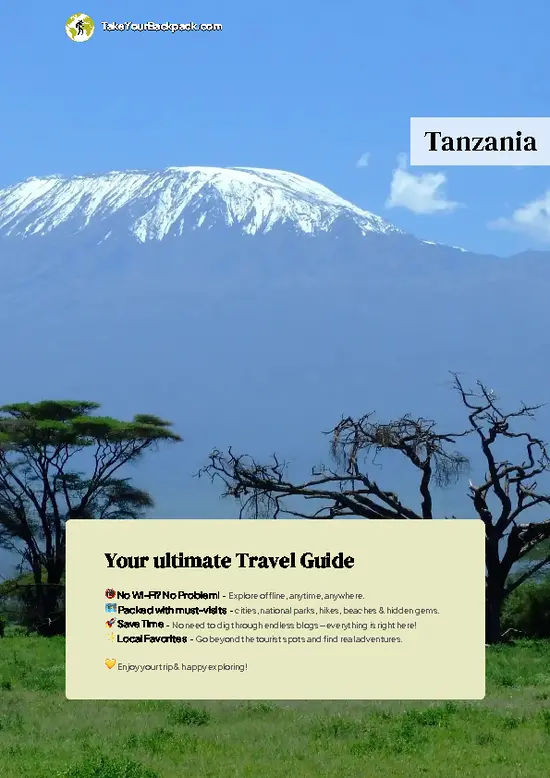
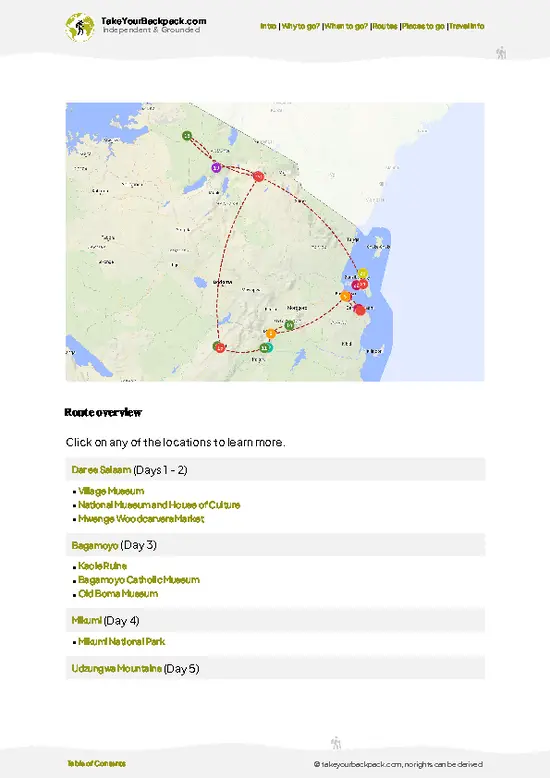
example page 0 from our offline Travel Guide for Tanzania
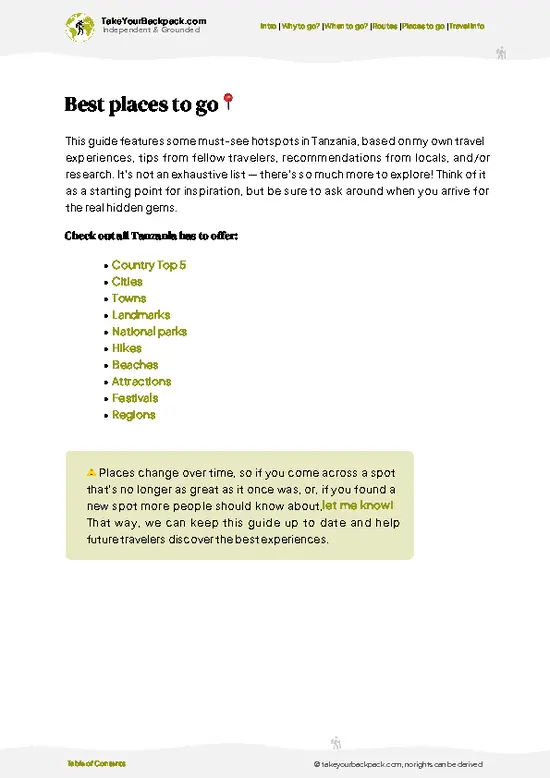
example page 1 from our offline Travel Guide for Tanzania
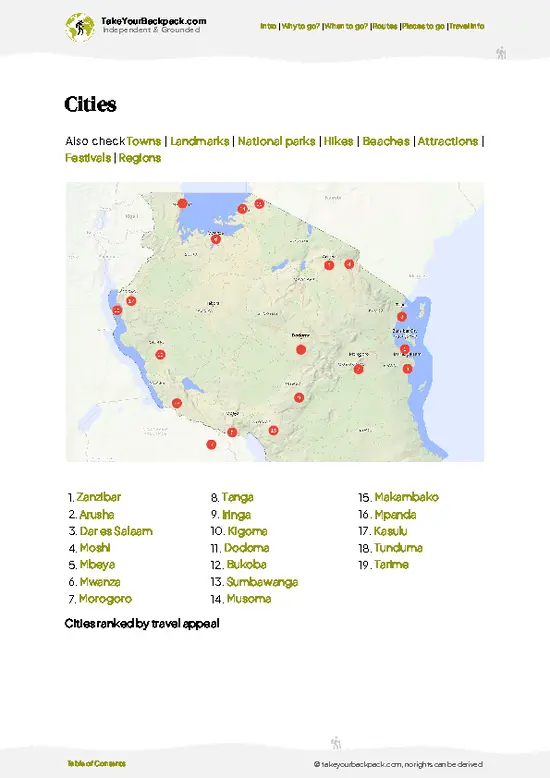
example page 2 from our offline Travel Guide for Tanzania
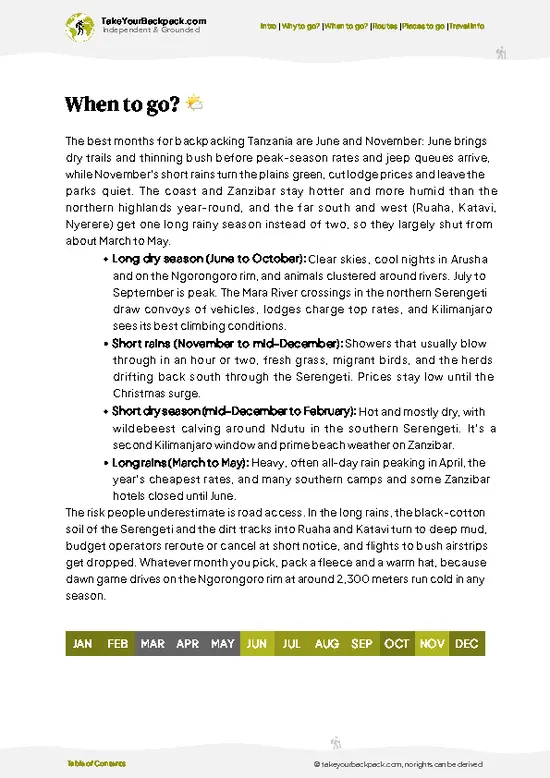
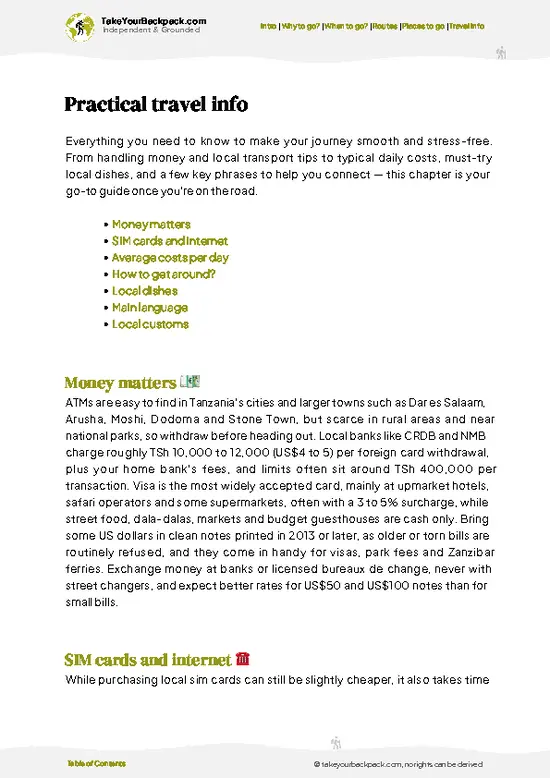
example page 3 from our offline Travel Guide for Tanzania
example page 4 from our offline Travel Guide for Tanzania
example page 5 from our offline Travel Guide for Tanzania
example page 6 from our offline Travel Guide for Tanzania
example page 7 from our offline Travel Guide for Tanzania
Loading the map 🌍
CLICK TO FILTER
cities
towns
landmarks
national parks
hikes
beaches
attractions
festivals
regions
SHOW COUNTRY’S BESTSHOW ALL

✨ Why go?
Ranked #8 festival in Tanzania
What makes it a must-see festival

Nane Nane Agricultural Show gives you something rare in Tanzania: a day where the country shows you how it actually feeds itself. Travelers plan around it because the regional pavilions put farmers from different parts of the country in one place. You can talk to a coffee grower from Kilimanjaro or a cashew producer from the south, then buy what they brought. Most of that talk happens in Swahili, so even a few greetings open conversations, and people are proud to explain their crops.

The other pull is the crowd. This is a public holiday with August 8 as its anchor, so locals come in their best clothes to eat, shop and listen to music. Foreigners are few, which means you get curious questions instead of sales pitches. It also fits neatly into a trip through the highlands or a stop in the capital, … read more 👉
Nane Nane Agricultural Show gives you something rare in Tanzania: a day where the country shows you how it actually feeds itself. Travelers plan around it because the regional pavilions put farmers from different parts of the country in one place. You can talk to a coffee grower from Kilimanjaro or a cashew producer from the south, then buy what they brought. Most of that talk happens in Swahili, so even a few greetings open conversations, and people are proud to explain their crops.

The other pull is the crowd. This is a public holiday with August 8 as its anchor, so locals come in their best clothes to eat, shop and listen to music. Foreigners are few, which means you get curious questions instead of sales pitches. It also fits neatly into a trip through the highlands or a stop in the capital, and entry is cheap compared with any music festival.

💡 HighlightsTop highlights of Nane Nane Agricultural Show

  1. Regional Pavilions: Each region and many cooperatives stage their own stand, and this is the heart of the show. You taste local coffee, tea, spices, rice and honey straight from producers, and the displays show what each area is known for.
  2. Livestock Exhibition: Pens hold Tanzanian cattle, goats, sheep and poultry, with breeders explaining their crossbreeding. Judged animals get ribbons, and the atmosphere is part auction, part gossip session.
  3. Farm Machinery Displays: Tractors, irrigation pumps and processing equipment are lined up for demonstrations. Even if you know nothing about farming, watching farmers haggle and test controls shows how much is at stake.
  4. Nyama Choma Stalls: Grilled goat and beef are sold by weight, served with kachumbari and ugali or roasted bananas. Sit at a shared table,
… read more 👉
  1. Regional Pavilions: Each region and many cooperatives stage their own stand, and this is the heart of the show. You taste local coffee, tea, spices, rice and honey straight from producers, and the displays show what each area is known for.
  2. Livestock Exhibition: Pens hold Tanzanian cattle, goats, sheep and poultry, with breeders explaining their crossbreeding. Judged animals get ribbons, and the atmosphere is part auction, part gossip session.
  3. Farm Machinery Displays: Tractors, irrigation pumps and processing equipment are lined up for demonstrations. Even if you know nothing about farming, watching farmers haggle and test controls shows how much is at stake.
  4. Nyama Choma Stalls: Grilled goat and beef are sold by weight, served with kachumbari and ugali or roasted bananas. Sit at a shared table, eat with your hands and hear the day’s conversations.
  5. Stage Entertainment: Traditional dance troupes, school groups and local music acts perform through the day. The mood is relaxed and family-friendly, and you can watch from the grass with a cold soda.
Start with the regional pavilions in the morning, before the crowds thicken and while exhibitors still have energy to talk and hand out samples.
Spotted a mistake or missing something? Contact us.

🌤️ When to go?When is the celebration of Nane Nane Agricultural Show?

Nane Nane Agricultural Show runs every year from late July to August 8 (Nane Nane means the eighth of the eighth month), with national events held in places such as Dodoma’s Nzuguni grounds, Morogoro, Mbeya and Arusha, and in Dar es Salaam at the Mwalimu Nyerere grounds on Kilimanjaro Road.
  • Best day: August 8 is the official climax, with speeches, awards and the biggest crowds. Weekdays earlier in the week are calmer for walking the livestock and crop pavilions.
  • Weather: Expect dry, sunny days of roughly 22 to 30°C (72 to 86°F), cooler mornings in highland towns like Mbeya, and strong dust. Bring a hat, sunscreen, a light layer and a scarf or buff.
  • Booking: Reserve beds two to three weeks ahead in Dodoma and Morogoro. Rooms can cost 20 to 40 percent more around August 8.
  • Crowds: Arrive before
… read more 👉
Nane Nane Agricultural Show runs every year from late July to August 8 (Nane Nane means the eighth of the eighth month), with national events held in places such as Dodoma’s Nzuguni grounds, Morogoro, Mbeya and Arusha, and in Dar es Salaam at the Mwalimu Nyerere grounds on Kilimanjaro Road.
  • Best day: August 8 is the official climax, with speeches, awards and the biggest crowds. Weekdays earlier in the week are calmer for walking the livestock and crop pavilions.
  • Weather: Expect dry, sunny days of roughly 22 to 30°C (72 to 86°F), cooler mornings in highland towns like Mbeya, and strong dust. Bring a hat, sunscreen, a light layer and a scarf or buff.
  • Booking: Reserve beds two to three weeks ahead in Dodoma and Morogoro. Rooms can cost 20 to 40 percent more around August 8.
  • Crowds: Arrive before 10 am to beat the traffic and heat. Leave by mid-afternoon, since daladalas and bajaji fill fast at closing.
Arrive on a weekday morning if you want conversations with farmers rather than crowds.


source: climatestotravel.comJANJanuary: not recommended for travelingFEBFebruary: not recommended for travelingMARMarch: not recommended for travelingAPRApril: not recommended for travelingMAYMay: not recommended for travelingJUNJune: not recommended for travelingJULJuly: not recommended for travelingAUGAugust: excellent for travelingSEPSeptember: excellent for travelingOCTOctober: not recommended for travelingNOVNovember: not recommended for travelingDECDecember: not recommended for traveling

✈️ The backpacker research shortcutTanzania Travel Guide

An offline-friendly backpacking guide with optimized travel routes, ranked highlights, transport advice, and the best areas to stay.
example page 0 from our offline Travel Guide for Tanzania
example page 1 from our offline Travel Guide for Tanzania
example page 2 from our offline Travel Guide for Tanzania
example page 3 from our offline Travel Guide for Tanzania
example page 4 from our offline Travel Guide for Tanzania
example page 5 from our offline Travel Guide for Tanzania
example page 6 from our offline Travel Guide for Tanzania
example page 7 from our offline Travel Guide for Tanzania
The digital guide (396 pages) contains:
✅ 103 highlights, ranked by travel appeal
✅ Optimized 7, 14 & 21-day travel routes
✅ Cities, national parks, landmarks, beaches
✅ How to get around
✅ Offline-friendly for travel without Wi-Fi
👉 Click to see all 30+ guide features

📅 Plan smarter in minutes, not weeks
✅ Month by month travel advice
✅ Festivals & national holidays
✅ Budget expectations

🗺️ Go to the right places, skip the overrated ones
✅ Honest pros & cons of destinations
✅ Top hikes, parks & viewpoints
✅ Lesser-known places most travelers miss
✅ Clear “worth it vs skip it” guidance

🛏️ Travel smoothly without rookie mistakes
✅ Best areas to stay
✅ Transport systems explained simply
✅ Common scams & safety advice
✅ SIM cards, money & practical tips

🌍 Understand the country, not just visit it
✅ Culture & traditions
✅ 52 Essential phrases & customs
✅ Festivals worth planning around
✅ Traveler-friendly historical context
✅ Insights that make places more meaningful

📱 Built for real travel conditions
✅ Fully downloadable PDF
✅ Works completely offline
✅ Optimized for phone use
✅ Useful in remote areas & buses
✅ Everything in one place
Stop searching, start planning
Get instant access to your full guide. 30‑day money-back guarantee.
+ Add another guide for just

By proceeding you agree to our terms.
Sent to your inbox immediately after payment • 100% Secure Checkout
Best Backpacking Travel Advisor 2025 tourism awardBest Backpacking
Travel Advisor
2025
What others say about Take Your Backpack Guides:
⭐⭐⭐⭐⭐
Fantastic, amazing amount of information!
⭐⭐⭐⭐⭐
My goodness this is amazing, it's what I've been looking for hats off too you!
⭐⭐⭐⭐⭐
I think this is absolutely BRILLIANT
⭐⭐⭐⭐
Very complete and informative. It's still missing places, but I gotta to commend you
⭐⭐⭐⭐⭐
This is truly amazing, thank you, can't wait to explore it with my kids!
⭐⭐⭐⭐⭐
Awesome resource, thank you!
⭐⭐⭐⭐⭐
This is amazing! Can't wait to explore the ones I haven't seen
⭐⭐⭐⭐
I love this! Well done, great idea.
⭐⭐⭐⭐⭐
Thanks for taking the time to make this gem!
⭐⭐⭐⭐⭐
This might be the best website I've ever seen.
⭐⭐⭐⭐⭐
Congratulations, and thank you so much for your work; it's incredibly valuable.
⭐⭐⭐⭐
In all seriousness I think you did a great job pointing out the important spots
⭐⭐⭐⭐⭐
10/10 very good
⭐⭐⭐⭐⭐
As someone who's only just starting to visit regularly this is awesome, thank you.
⭐⭐⭐⭐
Thank you very much! I'm going to visit my dad, it's going to be very useful!
⭐⭐⭐⭐⭐
This is really cool! We'll be travelling for the first time and this definitely come in handy.
⭐⭐⭐⭐⭐
You are now our minister of culture, congratulations 👨‍💼
⭐⭐⭐⭐⭐
Just wanted to tell you that this is a pearl! Going to follow your recommendations.
⭐⭐⭐⭐⭐
This is so cool. I'll definitely be using the resource for my travels soon.
⭐⭐⭐⭐⭐
This is very impressive! Good work.
⭐⭐⭐⭐⭐
This is an amazing and informative site. Very well done!

🛏️ Where to stay?Best areas to stay in Tanzania

The best base for most backpackers is the town center of whichever host city you choose, because showgrounds sit a short ride from the main markets and bus stands, and that is where budget guesthouses cluster.

In Dodoma, the central area around the Jamatini and Kuu Street districts is the easiest. It has guesthouses, food stalls and plenty of bajaji drivers who know the Nzuguni route, and it feels safe for walking in the evening.

In Morogoro, stay near the town center and the bus stand. You can reach the grounds by daladala, and travelers heading to the Uluguru Mountains often stop here, so … read more 👉
The best base for most backpackers is the town center of whichever host city you choose, because showgrounds sit a short ride from the main markets and bus stands, and that is where budget guesthouses cluster.

In Dodoma, the central area around the Jamatini and Kuu Street districts is the easiest. It has guesthouses, food stalls and plenty of bajaji drivers who know the Nzuguni route, and it feels safe for walking in the evening.

In Morogoro, stay near the town center and the bus stand. You can reach the grounds by daladala, and travelers heading to the Uluguru Mountains often stop here, so you will meet other budget travelers over cheap pilau and chai.

In Dar es Salaam, Kijitonyama and Mikocheni are practical for the Kilimanjaro Road grounds, while Kariakoo suits the tightest budgets but is hectic at night. Social solo travelers usually do better in Mikocheni or Sinza, with bars and restaurants within walking distance.

Mbeya and Arusha both have compact centers where hostels and guesthouses sit close to transport. Use registered taxis after dark in all of these places.

👛 Costs (as of 22 October 2026)Typical daily expenses

Nane Nane Agricultural Show costs most independent travelers about US$30 to 55 per day, including a mid-range guesthouse bed.
CategoryBudget RangeLocal Reality
Festival ticketsUS$0.40 to 2Entry at the main grounds is usually a token fee, and some regional sites are free. Pay in cash at the gate.
AccommodationUS$10 to 35Guesthouse rooms are at the low end in normal weeks. Around August 8, expect high season rates in Dodoma and Morogoro.
Local transportUS$2 to 8Daladala rides cost under US$0.50. Bajaji and motorbike taxis cost US$1 to 4 for a trip to the grounds.
Food & drinksUS$5 to 12Grilled meat plates cost US$2 to 5, and juice or soda costs US$0.40 to 1.
Miscellaneous expensesUS$3 to 8Honey, spices, crafts and sunscreen. Bargaining is normal, and small notes help.
Total Daily BudgetUS$30 to 55Based
… read more 👉
Nane Nane Agricultural Show costs most independent travelers about US$30 to 55 per day, including a mid-range guesthouse bed.
CategoryBudget RangeLocal Reality
Festival ticketsUS$0.40 to 2Entry at the main grounds is usually a token fee, and some regional sites are free. Pay in cash at the gate.
AccommodationUS$10 to 35Guesthouse rooms are at the low end in normal weeks. Around August 8, expect high season rates in Dodoma and Morogoro.
Local transportUS$2 to 8Daladala rides cost under US$0.50. Bajaji and motorbike taxis cost US$1 to 4 for a trip to the grounds.
Food & drinksUS$5 to 12Grilled meat plates cost US$2 to 5, and juice or soda costs US$0.40 to 1.
Miscellaneous expensesUS$3 to 8Honey, spices, crafts and sunscreen. Bargaining is normal, and small notes help.
Total Daily BudgetUS$30 to 55Based on high season accommodation and moderate spending.
⚠️ Prices can change and everyone travels differently, so take this as a rough guide. Hope it helps you plan your adventure!

🍲 FoodEating & Drinking in Nane Nane Agricultural Show

Food at Nane Nane Agricultural Show is farm-driven, so the stalls tell you what the region grows. Expect nyama choma (grilled goat or beef) sold by weight, mishkaki skewers, chipsi mayai (a fries omelet), roasted maize and sweet cassava with chili and lime.

The best experience is at the regional pavilions, where cooperatives sell what they grow. Try fresh sugarcane juice, passion fruit and tamarind drinks, and honey sold in recycled bottles, plus local cheese and yogurt from dairy farmers. In Morogoro and Mbeya, look for bananas cooked with beef (ndizi nyama), and in Dodoma try sunflower oil snacks and local wine.

Cash is the rule. Carry small notes, because vendors often lack change, though mobile money such as M-Pesa is accepted at many stalls. Portions are generous and made for sharing, … read more 👉
Food at Nane Nane Agricultural Show is farm-driven, so the stalls tell you what the region grows. Expect nyama choma (grilled goat or beef) sold by weight, mishkaki skewers, chipsi mayai (a fries omelet), roasted maize and sweet cassava with chili and lime.

The best experience is at the regional pavilions, where cooperatives sell what they grow. Try fresh sugarcane juice, passion fruit and tamarind drinks, and honey sold in recycled bottles, plus local cheese and yogurt from dairy farmers. In Morogoro and Mbeya, look for bananas cooked with beef (ndizi nyama), and in Dodoma try sunflower oil snacks and local wine.

Cash is the rule. Carry small notes, because vendors often lack change, though mobile money such as M-Pesa is accepted at many stalls. Portions are generous and made for sharing, so order one plate between two people and move on to the next stall. Lines form around grills at lunch, so eat before noon. Drink bottled water, and ask the price of meat before the knife comes down.

FAQTraveler FAQ

Nane Nane Agricultural Show is held every year from around late July through August 8, the date that gives it its name (the eighth of the eighth month). Host cities include Dodoma (Nzuguni grounds), Morogoro, Mbeya, Arusha and Dar es Salaam. Peak crowds arrive on August 8 itself, when awards and official speeches take place.
Entry to Nane Nane Agricultural Show is cheap, usually about US$0.40 to 2 at the gate, with some regional grounds free. A realistic day budget is US$30 to 55 including a guesthouse bed, grilled meat plates at US$2 to 5 and daladala rides under US$0.50. Bring cash in small notes, although mobile money works at many stalls.
Nane Nane Agricultural Show does not normally require advance tickets, since you pay a small fee in cash at the gate on the day. Arrive before 10 am on August 8 to avoid queues and traffic. What you should book ahead is a bed, ideally two to three weeks before in Dodoma and Morogoro, where rooms can cost 20 to 40 percent more.
⚠️ Things can change over time, so always validate details locally before you go.

Other Tanzanian festivals near Nane Nane Agricultural Show

Explore more nearby:


💡 Not sure where to go next?
Create a personalized itinerary for Tanzania including Nane Nane Agricultural Show and the places that fit your trip.

Generate my itinerary

👉 Discover all festivals

Or checkout all Tanzania has to offer (think cities, towns, villages, national parks, hikes, beaches, festivals)
Country photo of Tanzania

We 💚 feedbackWhat to keep in mind

Nane Nane Agricultural Show suits curious travelers who like markets, food and talking to strangers more than polished entertainment. Farmers, gardeners and anyone planning to eat their way through Tanzania will have the best time. Bring small bills, sunscreen and a hat, go early, and let a vendor choose your first snack.

✍️ Help improve this page!
The information on this page is based on in-depth research, insights shared by experienced travelers, and feedback from the local travel community in Tanzania. While every effort is made to keep the information accurate and current, conditions can change — so if you spot anything incorrect or outdated, please get in touch.


🙋‍♂️ Give feedback

👋 Meet the founderWho’s Behind Take Your Backpack?

Johan, backpacker and founder of TakeYourBackpackHi, I’m Johan (Netherlands 🇳🇱), the creator of TakeYourBackpack. Over the past 3 decades, I’ve backpacked through 90+ countries across six continents, gaining extensive experience with independent travel, long-term trips, and overland routes.

This site is built on a combination of firsthand travel experience and carefully curated insights from other backpackers. Many guides are based on places I’ve personally visited, while others bring together tips, observations, and practical advice shared by trusted travelers I’ve met along the way.

The goal is to provide realistic, experience-driven guidance — not generic itineraries — so you can explore destinations with better context, clearer expectations, and more confidence.