×

Tanzania🇹🇿 | attractionsOld Slave Market & Anglican Cathedralunderground chambers, abolition memorials, stained glass | things to do and best time to go

Explore Old Boma MuseumExplore Palace Museum

Backpacking in Old Slave Market & Anglican Cathedral
🏆 Top pickattraction ranked #3
By Johan Kruseman 🇳🇱 | Updated September 3, 2026

Your sweat cools instantly as you step down into the stone chamber, the air thick with salt and something older—fear, maybe, or memory. Your fingers graze the rough wall, and the guide’s voice bounces off the low ceiling: “Fifty people. In this space.” Outside, the Zanzibar sun is blinding, but in here, the past presses in close.

Old Slave Market & Anglican Cathedral sits in the heart of Stone Town, Zanzibar, just a few blocks from the sea and the chaos of Darajani Market. Here’s the truth: this isn’t a ‘pretty’ stop, and it’s not meant to be. The crowds ebb and flow with the ferry schedule, and yes, you’ll pay a modest entry fee, but the real cost is emotional. Backpackers come for the history lesson, but what you get is a gut punch—raw, unfiltered, and necessary. Compared to Tanzania’s safari showstoppers or Kilimanjaro’s summit fever, this place is quieter, heavier, and infinitely more human. The cathedral’s stained glass glows, but it’s the silence in the slave chambers that lingers longest.

Discover everything you want to know in the 📖 Tanzania Travel Guide.
Loading the map 🌍
CLICK TO FILTER
cities
towns
landmarks
national parks
hikes
beaches
attractions
festivals
SHOW COUNTRY’S BESTSHOW ALL

✨ Why go?
Ranked #3 attraction in Tanzania
What makes this attraction worth visiting

The Old Slave Market & Anglican Cathedral in Tanzania isn’t just another photo op on your route—it’s a brutal, unvarnished checkpoint in the country’s tangled history. Sure, it’s crowded, and yes, the entrance fee can sting compared to other spots, but that’s part of the deal when you’re standing where history’s darkest chapters played out. This isn’t a sanitized tourist trap; it’s a raw reminder of the human cost behind the region’s colonial past. The Old Slave Market grounds force you to confront the scale of suffering that shaped modern Tanzania, while the Anglican Cathedral nearby offers a stark contrast—a symbol of resilience and faith rising from that pain.

Backpackers who make time here aren’t just ticking off a landmark; they’re engaging with a pivotal story that’s often glossed over. … read more 👉
The Old Slave Market & Anglican Cathedral in Tanzania isn’t just another photo op on your route—it’s a brutal, unvarnished checkpoint in the country’s tangled history. Sure, it’s crowded, and yes, the entrance fee can sting compared to other spots, but that’s part of the deal when you’re standing where history’s darkest chapters played out. This isn’t a sanitized tourist trap; it’s a raw reminder of the human cost behind the region’s colonial past. The Old Slave Market grounds force you to confront the scale of suffering that shaped modern Tanzania, while the Anglican Cathedral nearby offers a stark contrast—a symbol of resilience and faith rising from that pain.

Backpackers who make time here aren’t just ticking off a landmark; they’re engaging with a pivotal story that’s often glossed over. It’s a mental and emotional workout, but the payoff is a deeper understanding of the country’s soul. This site is a major milestone on the East African trail, grounding your journey in something real and heavy before you move on to the natural wonders. If you want your trip to mean more than pretty pictures, this is where you pause, reflect, and let the weight of history sink in.
Want to include Old Slave Market & Anglican Cathedral in your Tanzania route?
Create a personalized Tanzania itinerary that includes Old Slave Market & Anglican Cathedral and the places that fit your trip — based on your travel style, budget, and available time. Get your route in seconds.

Generate my trip

💡 HighlightsDon't-miss highlights and experiences

The Underground Slave Chambers
Forget the sanitized Instagram shots of stone arches and filtered sunlight. The real gut-punch is underground. The slave chambers are cramped, dark, and suffocating—deliberately so. You’ll see the stone platforms where men, women, and children were chained, sometimes for days, waiting to be sold. It’s not a comfortable experience, and that’s the point. The air is thick with history that refuses to be prettified. If you want to understand the true cost of Zanzibar’s beauty, this is where you start.


The Cathedral’s High Altar—Built on Suffering
The Anglican Cathedral isn’t just another colonial church. Its high altar stands exactly where the whipping post once was. That’s not a poetic flourish; it’s a deliberate act of reclamation. The symbolism is heavy: a place … read more 👉
The Underground Slave Chambers
Forget the sanitized Instagram shots of stone arches and filtered sunlight. The real gut-punch is underground. The slave chambers are cramped, dark, and suffocating—deliberately so. You’ll see the stone platforms where men, women, and children were chained, sometimes for days, waiting to be sold. It’s not a comfortable experience, and that’s the point. The air is thick with history that refuses to be prettified. If you want to understand the true cost of Zanzibar’s beauty, this is where you start.


The Cathedral’s High Altar—Built on Suffering
The Anglican Cathedral isn’t just another colonial church. Its high altar stands exactly where the whipping post once was. That’s not a poetic flourish; it’s a deliberate act of reclamation. The symbolism is heavy: a place of violence transformed into a site of hope and forgiveness. The stained glass and gothic arches are impressive, but it’s the knowledge of what lies beneath your feet that gives the space its gravity. You can’t help but feel the collision of past and present.


The Memorial Sculpture
Outside, you’ll find a bronze sculpture of five enslaved people in a pit, their faces carved with exhaustion and defiance, iron collars locked around their necks. It’s not subtle, and it shouldn’t be. This isn’t a photo op—it’s a confrontation. The artist, Clara Sörnäs, didn’t flinch from the brutality, and neither should you. Stand here for a minute and let the discomfort do its work.


The Cathedral’s Architecture—Coral Stone and Local Labor
Look up and you’ll see a roof built from mangrove poles and coral stone, a fusion of European ambition and East African craftsmanship. The cathedral was constructed by freed slaves, and the mix of local materials with Victorian design is a physical record of cultural collision. The columns are slightly uneven, a reminder that this was built by hand, not machine. It’s imperfect, and that’s what makes it real.


The Baptismal Font—A Nod to David Livingstone
Near the entrance sits a simple baptismal font, carved from local stone. It’s said to be a tribute to David Livingstone, the abolitionist explorer whose relentless campaigning helped end the slave trade in East Africa. The font is unassuming, but it’s a quiet anchor to the story of resistance and change. If you’re looking for a symbol of hope amid all the darkness, this is it.


The Market Site Plaques—Names, Not Numbers
Scattered around the grounds are plaques and markers with names, dates, and details that cut through the abstraction of “history.” These aren’t just statistics—they’re reminders that every number was a life, a family, a story interrupted. Take the time to read them. It’s the antidote to tourist amnesia.
Spotted a mistake or missing something? Contact us.

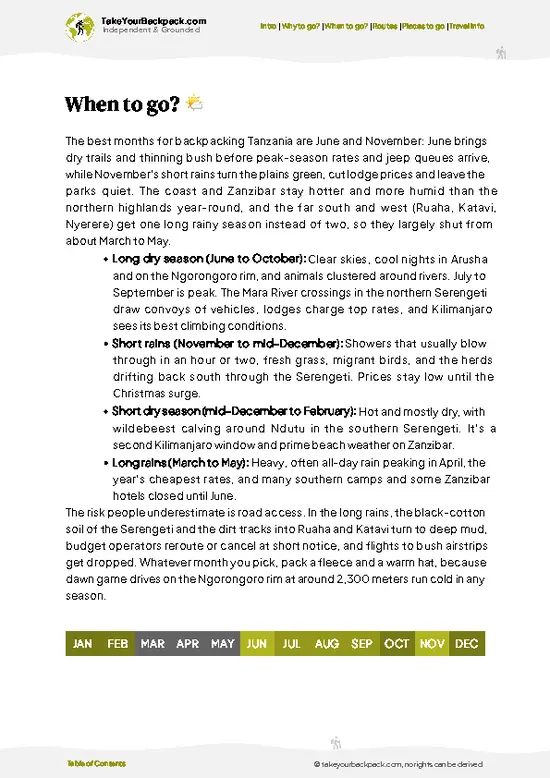
🌤️ When to go?Weather, crowds, and seasonal trade-offs


  • Weather: The best window is June to October, Tanzania’s dry season. Expect clear skies and minimal rain, which means less mud and more walking freedom around the Old Slave Market and Anglican Cathedral. Avoid the heavy rains of March to May when trails get sloppy and some sites might close.

  • Temperature: From June to October, daytime temps hover around 20-25°C (68-77°F), perfect for exploring without overheating. The rest of the year, especially December to February, can spike into the high 30s°C (90s°F), making midday visits brutal.

  • Daylight Hours: Tanzania enjoys roughly 12 hours of daylight year-round, but June to August offers slightly longer mornings and evenings, giving you more time to soak in the sites without rushing.

  • Crowds: Peak tourist season aligns with the dry months,
read more 👉

  • Weather: The best window is June to October, Tanzania’s dry season. Expect clear skies and minimal rain, which means less mud and more walking freedom around the Old Slave Market and Anglican Cathedral. Avoid the heavy rains of March to May when trails get sloppy and some sites might close.

  • Temperature: From June to October, daytime temps hover around 20-25°C (68-77°F), perfect for exploring without overheating. The rest of the year, especially December to February, can spike into the high 30s°C (90s°F), making midday visits brutal.

  • Daylight Hours: Tanzania enjoys roughly 12 hours of daylight year-round, but June to August offers slightly longer mornings and evenings, giving you more time to soak in the sites without rushing.

  • Crowds: Peak tourist season aligns with the dry months, so expect more visitors from July to September. If you want fewer people, aim for June or October—still dry but less packed.

  • Seasonal Activities: The dry season also coincides with local cultural festivals and market days around Stone Town, adding layers to your visit beyond the main sites.

  • Price Fluctuations: Accommodation and tours spike during July and August. Booking in June or October can save you a decent chunk without sacrificing weather quality.


Pro-tip: Visit early morning during the shoulder months (June or October) to dodge crowds, enjoy cooler temps, and catch the cathedral’s stained glass in the best light.


source: climatestotravel.comJANJanuary: fair for travelingFEBFebruary: fair for travelingMARMarch: below average for travelingAPRApril: below average for travelingMAYMay: below average for travelingJUNJune: excellent for travelingJULJuly: highly recommended for travelingAUGAugust: highly recommended for travelingSEPSeptember: highly recommended for travelingOCTOctober: excellent for travelingNOVNovember: good for travelingDECDecember: fair for traveling
when-to-go

✈️ The backpacker research shortcutTanzania Travel Guide

An offline-friendly backpacking guide with optimized travel routes, ranked highlights, transport advice, and the best areas to stay.
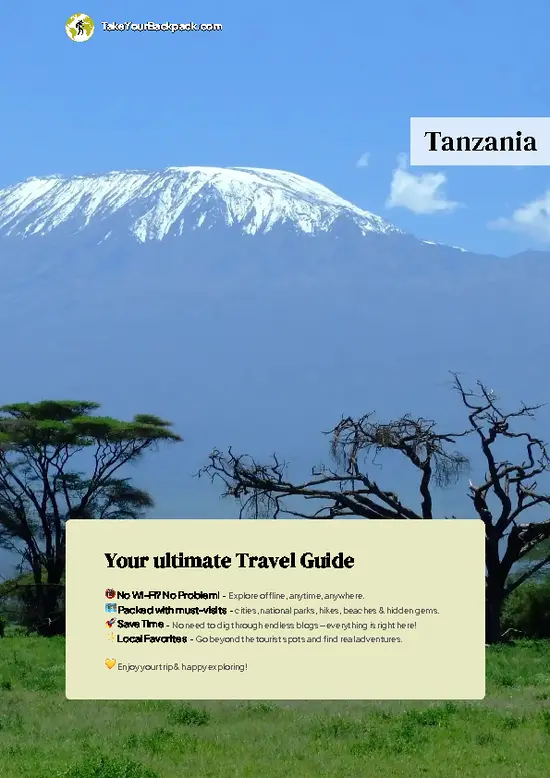
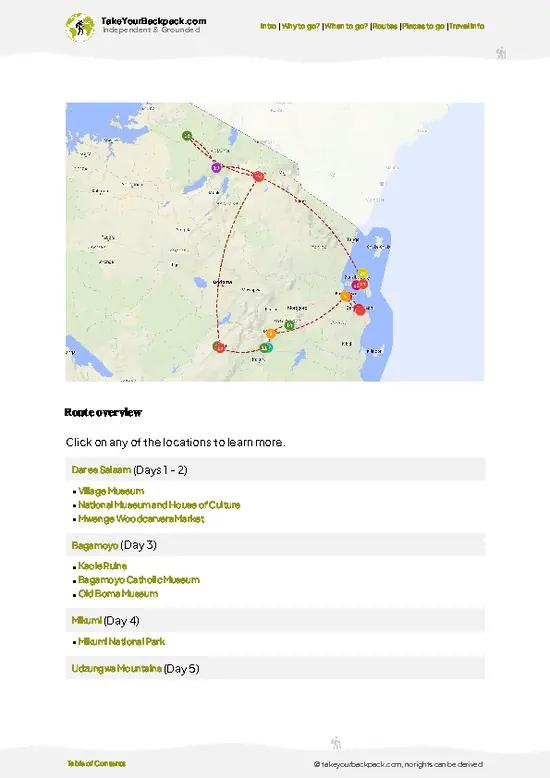
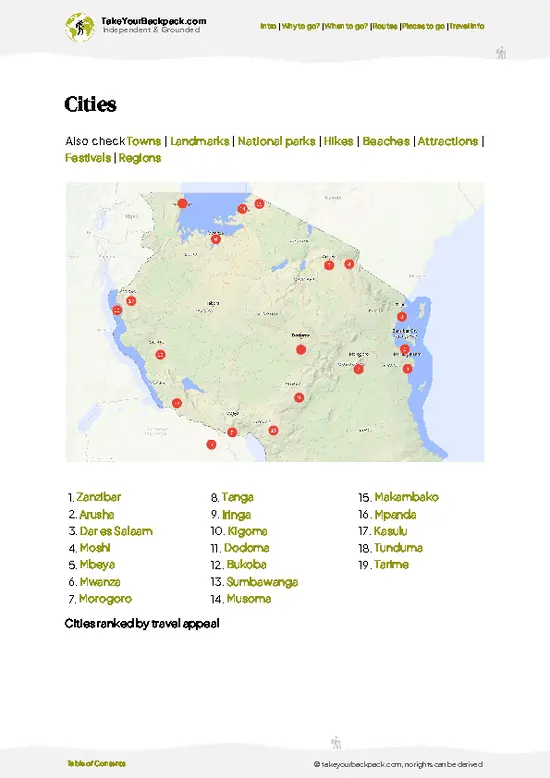
example page 0 from our offline Travel Guide for Tanzania
example page 1 from our offline Travel Guide for Tanzania
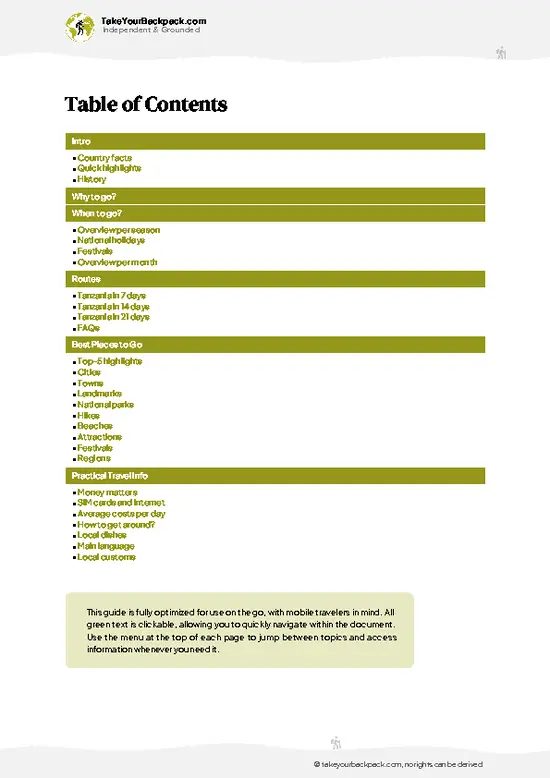
example page 2 from our offline Travel Guide for Tanzania
example page 3 from our offline Travel Guide for Tanzania
example page 4 from our offline Travel Guide for Tanzania
example page 5 from our offline Travel Guide for Tanzania
example page 6 from our offline Travel Guide for Tanzania
example page 7 from our offline Travel Guide for Tanzania
The digital guide (377 pages) contains:
100 highlights, ranked by travel appeal
Optimized 7, 14 & 21-day travel routes
Cities, national parks, landmarks, beaches
How to get around
Offline-friendly for travel without Wi-Fi
👉 Click to see all 30+ guide features

📅 Plan smarter in minutes, not weeks
Month by month travel advice
Festivals & national holidays
Budget expectations

🗺️ Go to the right places, skip the overrated ones
Honest pros & cons of destinations
Top hikes, parks & viewpoints
Lesser-known places most travelers miss
Clear “worth it vs skip it” guidance

🛏️ Travel smoothly without rookie mistakes
Best areas to stay
Transport systems explained simply
Common scams & safety advice
SIM cards, money & practical tips

🌍 Understand the country, not just visit it
Culture & traditions
52 Essential phrases & customs
Festivals worth planning around
Traveler-friendly historical context
Insights that make places more meaningful

📱 Built for real travel conditions
Fully downloadable PDF
Works completely offline
Optimized for phone use
Useful in remote areas & buses
Everything in one place
Save weeks of stressful planning
Get instant access to your full guide. 30‑day money-back guarantee.
+ Add another guide for just US$7.80

By proceeding you agree to our terms.
Sent to your inbox immediately after payment • 100% Secure Checkout
Best Backpacking Travel Advisor 2025 tourism awardBest Backpacking
Travel Advisor
2025
What others say about Take Your Backpack Guides:
⭐⭐⭐⭐⭐
Fantastic, amazing amount of information!
⭐⭐⭐⭐⭐
My goodness this is amazing, it's what I've been looking for hats off too you!
⭐⭐⭐⭐⭐
I think this is absolutely BRILLIANT
⭐⭐⭐⭐
Very complete and informative. It's still missing places, but I gotta to commend you
⭐⭐⭐⭐⭐
This is truly amazing, thank you, can't wait to explore it with my kids!
⭐⭐⭐⭐⭐
Awesome resource, thank you!
⭐⭐⭐⭐⭐
This is amazing! Can't wait to explore the ones I haven't seen
⭐⭐⭐⭐
I love this! Well done, great idea.
⭐⭐⭐⭐⭐
Thanks for taking the time to make this gem!
⭐⭐⭐⭐⭐
This might be the best website I've ever seen.
⭐⭐⭐⭐⭐
Congratulations, and thank you so much for your work; it's incredibly valuable.
⭐⭐⭐⭐
In all seriousness I think you did a great job pointing out the important spots
⭐⭐⭐⭐⭐
10/10 very good
⭐⭐⭐⭐⭐
As someone who's only just starting to visit regularly this is awesome, thank you.
⭐⭐⭐⭐
Thank you very much! I'm going to visit my dad, it's going to be very useful!
⭐⭐⭐⭐⭐
This is really cool! We'll be travelling for the first time and this definitely come in handy.
⭐⭐⭐⭐⭐
You are now our minister of culture, congratulations 👨‍💼
⭐⭐⭐⭐⭐
Just wanted to tell you that this is a pearl! Going to follow your recommendations.
⭐⭐⭐⭐⭐
This is so cool. I'll definitely be using the resource for my travels soon.
⭐⭐⭐⭐⭐
This is very impressive! Good work.
⭐⭐⭐⭐⭐
This is an amazing and informative site. Very well done!

🛏️ Where to stay?Choosing the right base

The Old Slave Market and Anglican Cathedral in Stone Town, Zanzibar, are iconic, no doubt. But let’s cut through the postcard-perfect hype: this area is packed. Tour groups swarm daily, and prices around the immediate vicinity spike because of it. If you’re chasing solitude or a bargain, the streets right next to these landmarks won’t deliver.

Instead, look just a few blocks out, where the real pulse of Stone Town beats. The neighborhoods south and east of the Old Slave Market offer a gritty, authentic vibe that’s magnetic for backpackers. Here, you’ll find narrow alleys lined with local eateries, … read more 👉
The Old Slave Market and Anglican Cathedral in Stone Town, Zanzibar, are iconic, no doubt. But let’s cut through the postcard-perfect hype: this area is packed. Tour groups swarm daily, and prices around the immediate vicinity spike because of it. If you’re chasing solitude or a bargain, the streets right next to these landmarks won’t deliver.

Instead, look just a few blocks out, where the real pulse of Stone Town beats. The neighborhoods south and east of the Old Slave Market offer a gritty, authentic vibe that’s magnetic for backpackers. Here, you’ll find narrow alleys lined with local eateries, tiny shops, and guesthouses that don’t gouge your wallet. It’s safe enough—Zanzibar’s tourist police keep a watchful eye—but you’re also rubbing shoulders with locals and fellow travelers, which is where the magic happens.

These areas are social hubs without the polished tourist veneer. You’ll hear Swahili chatter, smell spices from street vendors, and catch impromptu music sessions at night. It’s a place where you can swap stories with solo backpackers over a cheap plate of pilau or join a group heading out to less-trodden beaches.

So, skip the overpriced, crowded core and settle where the city’s soul is raw and real. That’s where you’ll find the stories worth telling.

👛 Costs (as of 3 September 2026)What things cost and how to budget

As of the most recent estimates, the entrance fee for the Old Slave Market & Anglican Cathedral in Zanzibar is approximately $5 USD per person. This fee grants access to the cathedral, the former slave market site, and the associated museum. Guided tours are available for an additional fee, typically around $5 USD, and are often provided by local guides at the entrance. It's advisable to dress modestly when visiting, as the site is a place of historical significance and reflection.

source: tripadvisor.com
⚠️ Prices can change and everyone travels differently, so take this as a rough guide. Hope it helps you plan your adventure!

FAQTraveler FAQ

Visiting the Old Slave Market & Anglican Cathedral typically takes about 1 to 2 hours. This allows enough time to explore the historical site and understand its significance without rushing. Allocate extra time if you want to join a guided tour for deeper insight.
Yes, the Old Slave Market & Anglican Cathedral is worth the entrance fee, which is usually around 10,000 Tanzanian Shillings (approximately 4-5 USD). The site offers a powerful historical experience and a chance to reflect on the region's past. The fee supports preservation efforts and local guides.
To get to the Old Slave Market & Anglican Cathedral, head to Stone Town in Zanzibar. The site is centrally located and easily reachable on foot from most parts of Stone Town. Alternatively, use a local dala-dala (minibus) or taxi from the main ferry terminal or airport, typically within 5 kilometers.
⚠️ Things can change over time, so always validate details locally before you go.

Other Tanzanian attractions near Old Slave Market & Anglican Cathedral

Explore more nearby:


💡 Not sure where to go next?
Create a personalized itinerary for Tanzania including Old Slave Market & Anglican Cathedral and the places that fit your trip.

Generate my itinerary

👉 Discover all attractions

Or checkout all Tanzania has to offer (think cities, towns, villages, national parks, hikes, beaches, festivals)
Country photo of Tanzania

We 💚 feedbackIs it worth it?

The Old Slave Market and Anglican Cathedral in Stone Town aren’t just photo ops—they’re heavy with history that hits you in the gut. Yes, it gets crowded, and yes, there’s a tourist price tag, but the real magic is in the raw stories carved into the walls and the quiet moments inside the cathedral where you can almost hear the past whisper. Don’t rush it. Take a breath, let the weight settle, and you’ll leave with something that sticks—more than just a snapshot.

✍️ Help improve this page!
The information on this page is based on in-depth research, insights shared by experienced travelers, and feedback from the local travel community in Tanzania. While every effort is made to keep the information accurate and current, conditions can change — so if you spot anything incorrect or outdated, please get in touch.


🙋‍♂️ Give feedback

👋 Meet the founderWho’s Behind Take Your Backpack?

Johan, backpacker and founder of TakeYourBackpackHi, I’m Johan (Netherlands 🇳🇱), the creator of TakeYourBackpack. Over the past decade, I’ve backpacked through 80+ countries across six continents, gaining extensive experience with independent travel, long-term trips, and overland routes.

This site is built on a combination of firsthand travel experience and carefully curated insights from other backpackers. Many guides are based on places I’ve personally visited, while others bring together tips, observations, and practical advice shared by trusted travelers I’ve met along the way.

The goal is to provide realistic, experience-driven guidance — not generic itineraries — so you can explore destinations with better context, clearer expectations, and more confidence.

Get full Tanzania guide •
Instant download • 100 highlights • Full Offline guide