
×

Tanzania🇹🇿 | townsPanganiSwahili ruins, German boma, river estuary, customs house | things to do and best time to go

Explore Mafia IslandExplore Bagamoyo

Backpacking in Pangani
👍 Recommendedtown ranked #8
By Johan Kruseman 🇳🇱 | Updated October 22, 2026

Pangani was once the end of the line for the caravan trade, a port where ivory and enslaved people were shipped out to Zanzibar. Today it is a sleepy Swahili town of crumbling coral-stone houses, with no touts and almost no tour buses. It sits on the Indian Ocean coast in the northeast of Tanzania, on the south bank of the Pangani River. Come for the atmosphere, the old German and Omani buildings and the slow river-and-beach days. Skip it if you want nightlife or a polished resort scene, because evenings are quiet and run on fish dinners and chatting in guesthouse gardens. Getting here takes some effort, which keeps the crowds out, and you will meet only a handful of other travelers. At dusk, fishermen haul dhows onto the sand below the old customs house.

Discover everything you want to know in the 📖 Tanzania Travel Guide.


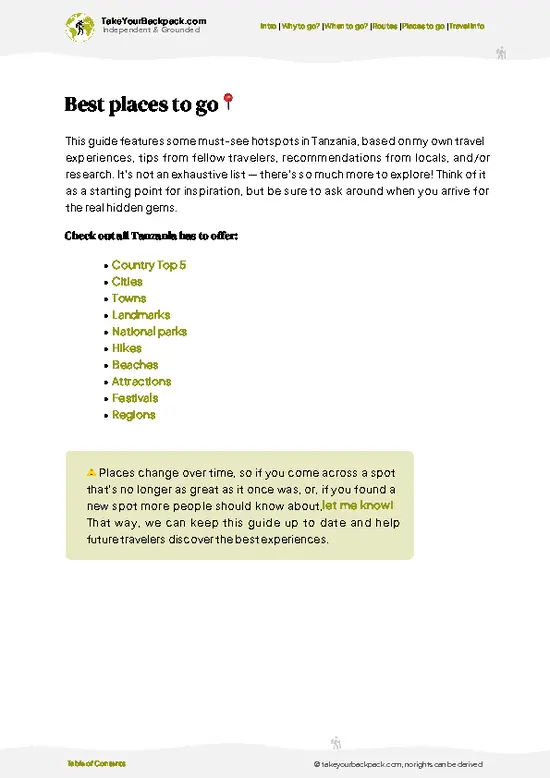
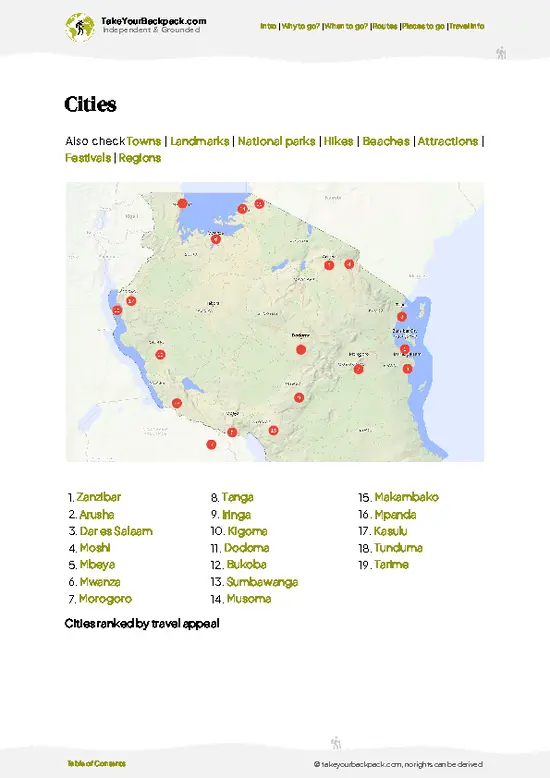
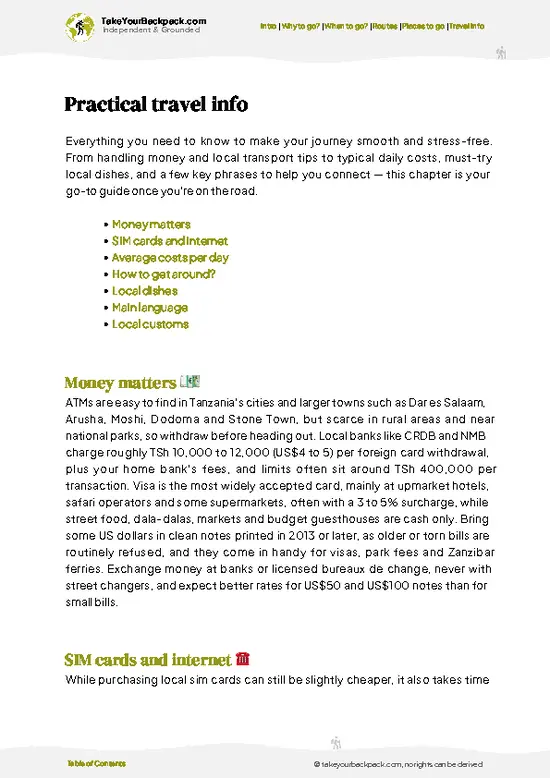
example page 0 from our offline Travel Guide for Tanzania
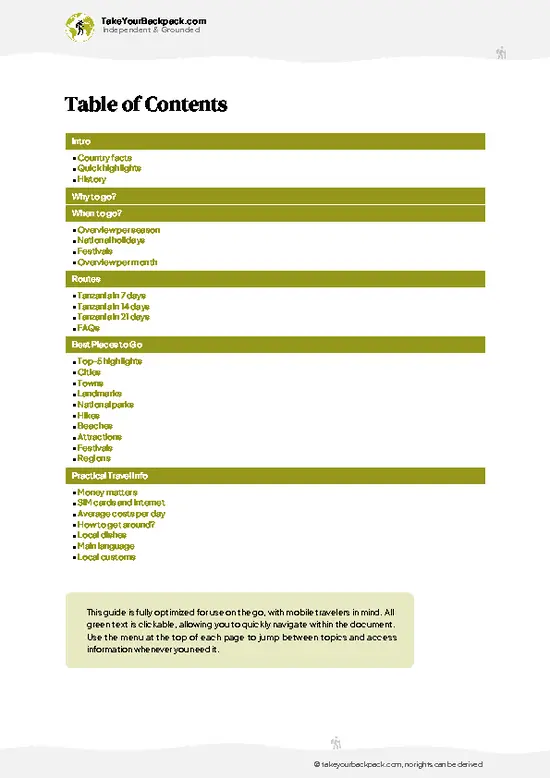
example page 1 from our offline Travel Guide for Tanzania
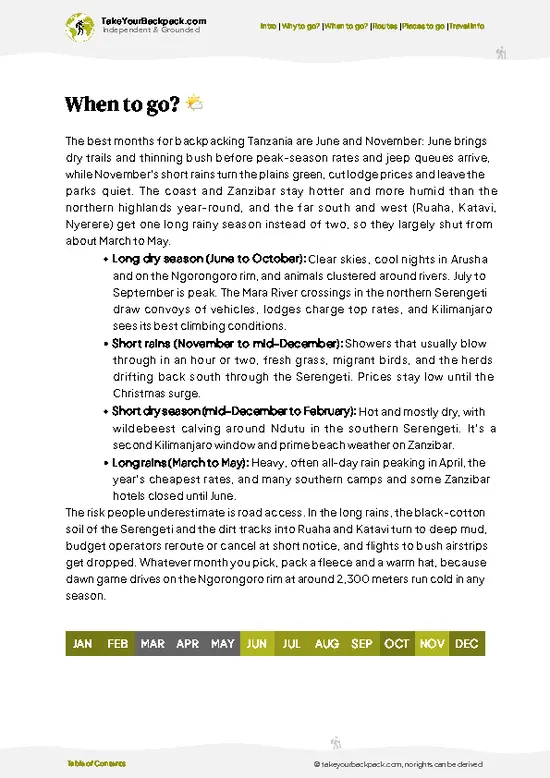
example page 2 from our offline Travel Guide for Tanzania
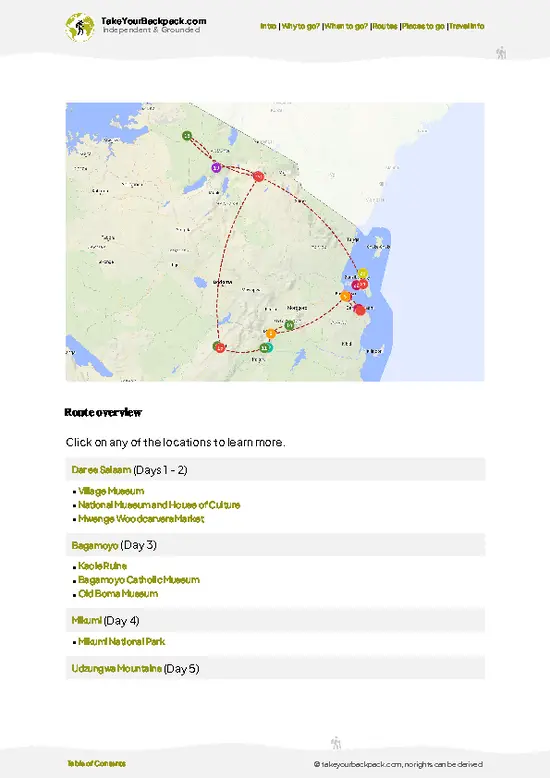
example page 3 from our offline Travel Guide for Tanzania
example page 4 from our offline Travel Guide for Tanzania
example page 5 from our offline Travel Guide for Tanzania
example page 6 from our offline Travel Guide for Tanzania
example page 7 from our offline Travel Guide for Tanzania
Loading the map 🌍
CLICK TO FILTER
cities
towns
landmarks
national parks
hikes
beaches
attractions
festivals
regions
SHOW COUNTRY’S BESTSHOW ALL

✨ Why go?
Ranked #8 town in Tanzania
The unique appeal for travelers

Pangani rewards backpackers who like towns that move at the speed of a ferry crossing. The main draw is the old quarter, where you can wander for an hour past carved doors, the Boma and the former slave-trade warehouses without seeing another visitor. Add the Pangani River estuary for dhow trips, and the empty beaches across the water at Ushongo, and you have three or four easy days of doing very little. Most people stay two nights, and the ones who linger usually end up on a beach-side bandas for longer. It is social in a low-key way, mostly over shared meals at a few small guesthouses rather than in bars. Solo travelers, slow travelers and anyone who likes history with their sunsets will be happy here. If you need constant activity or a lively hostel scene, treat it as a short stop. The … read more 👉
Pangani rewards backpackers who like towns that move at the speed of a ferry crossing. The main draw is the old quarter, where you can wander for an hour past carved doors, the Boma and the former slave-trade warehouses without seeing another visitor. Add the Pangani River estuary for dhow trips, and the empty beaches across the water at Ushongo, and you have three or four easy days of doing very little. Most people stay two nights, and the ones who linger usually end up on a beach-side bandas for longer. It is social in a low-key way, mostly over shared meals at a few small guesthouses rather than in bars. Solo travelers, slow travelers and anyone who likes history with their sunsets will be happy here. If you need constant activity or a lively hostel scene, treat it as a short stop. The coconut palms and the Swahili coast light do the rest.

💡 HighlightsTop highlights of Pangani

  1. Old Pangani Town Walk: The best-known draw is the historic quarter, with Swahili, Arab and Indian-style houses, many half-ruined and some restored. Go early morning or late afternoon for cooler air and softer light. Free, 1.5 to 2 hours.
  2. Pangani Boma: This German colonial administration building, dating from around the 1890s, stands near the waterfront. You can view the exterior and the rough interior freely, and locals are happy to explain its past. Free, 20 to 30 minutes.
  3. Customs House and Slave Trade Sites: The old customs area and nearby warehouses recall the caravan trade that made Pangani rich and cruel. A local guide helps connect the buildings to the stories. Guides cost roughly US$5 to 10, 1 hour.
  4. Pangani River Dhow Trip: Local boatmen take you along mangrove-lined banks and out to the
… read more 👉
  1. Old Pangani Town Walk: The best-known draw is the historic quarter, with Swahili, Arab and Indian-style houses, many half-ruined and some restored. Go early morning or late afternoon for cooler air and softer light. Free, 1.5 to 2 hours.
  2. Pangani Boma: This German colonial administration building, dating from around the 1890s, stands near the waterfront. You can view the exterior and the rough interior freely, and locals are happy to explain its past. Free, 20 to 30 minutes.
  3. Customs House and Slave Trade Sites: The old customs area and nearby warehouses recall the caravan trade that made Pangani rich and cruel. A local guide helps connect the buildings to the stories. Guides cost roughly US$5 to 10, 1 hour.
  4. Pangani River Dhow Trip: Local boatmen take you along mangrove-lined banks and out to the estuary mouth, with a chance to see birds and fishing boats. Late afternoon is best for light and breeze. Roughly US$15 to 30 per boat, 2 to 3 hours.
  5. Ferry Crossing and Fish Landing: The small ferry across the river is a daily ritual, and the beach landing at the fish market is lively in the early morning when catches arrive. Ferry fares are well under US$1, and a visit takes 30 to 60 minutes.
Day trips from Pangani include the beaches of Ushongo, the Maziwe Island marine reserve for snorkeling, and the Saadani National Park coast to the south. Of these, Maziwe Island needs a boat booked ahead through a guesthouse or dive operator, while the town sights need no ticket.
Spotted a mistake or missing something? Contact us.

Things to do near Pangani

Ratings based on Tripadvisor reviews. When you book through this link, you support our work at no extra cost to you.

🏘️ NeighborhoodsKey areas and districts to know

Pangani is small enough to cover on foot in an afternoon, and every part of it hugs the Pangani River mouth. Head straight for the places that matter and skip the rest.
  • Old Town waterfront: This is the main event. Wander the lanes of crumbling Swahili and Arab-era coral stone houses, carved doors and the old German-era buildings, then stand at the river edge where dhows load. Allow two to three hours. Fresh grilled fish and octopus show up at small stalls here in the evening.
  • Customs House and Slave Market area: Push on to the restored Customs House and the ruined buildings tied to the old caravan and slave trade. They deserve a visit for the history, and they sit a few minutes from each other, so you can stack them in one loop.
  • Market and bus stand: Loud, dusty and worth a quick lap for fruit,
… read more 👉
Pangani is small enough to cover on foot in an afternoon, and every part of it hugs the Pangani River mouth. Head straight for the places that matter and skip the rest.
  • Old Town waterfront: This is the main event. Wander the lanes of crumbling Swahili and Arab-era coral stone houses, carved doors and the old German-era buildings, then stand at the river edge where dhows load. Allow two to three hours. Fresh grilled fish and octopus show up at small stalls here in the evening.
  • Customs House and Slave Market area: Push on to the restored Customs House and the ruined buildings tied to the old caravan and slave trade. They deserve a visit for the history, and they sit a few minutes from each other, so you can stack them in one loop.
  • Market and bus stand: Loud, dusty and worth a quick lap for fruit, cassava, spices and mandazi at breakfast. Don’t linger past that. There is little else to see.
  • Bweni and the beach strip: Cross the river by ferry to Bweni and keep going. Palm-lined sand, empty stretches and a few quiet lodges make this the place to unwind. Nightlife is almost nonexistent; expect stars, the sea and a cold drink at your lodge.

⌛️ 1 dayHow to make the most of one day

8:00 AM, Old Town and Customs House: Start with the historic quarter while the air is cool. Wander the lanes toward the waterfront, looking at carved doors and the old customs area, and hire a local guide if you want the slave-trade history explained.
10:00 AM, Pangani Boma: Walk a few minutes to the German-era administrative building. It is rough around the edges, but the setting by the river makes it worth a short stop.
11:00 AM, Fish Landing and Back Lanes: Skip the main road and follow the lanes behind the market to the beach, where fishermen sort catches and repair nets. This is less visited and gives a real picture of daily life.
1:00 PM, Lunch: Eat grilled fish, rice or coconut-based dishes at a simple local eatery, then rest through the hottest hours.
3:30 PM, Ferry Crossing: Take the … read more 👉
8:00 AM, Old Town and Customs House: Start with the historic quarter while the air is cool. Wander the lanes toward the waterfront, looking at carved doors and the old customs area, and hire a local guide if you want the slave-trade history explained.
10:00 AM, Pangani Boma: Walk a few minutes to the German-era administrative building. It is rough around the edges, but the setting by the river makes it worth a short stop.
11:00 AM, Fish Landing and Back Lanes: Skip the main road and follow the lanes behind the market to the beach, where fishermen sort catches and repair nets. This is less visited and gives a real picture of daily life.
1:00 PM, Lunch: Eat grilled fish, rice or coconut-based dishes at a simple local eatery, then rest through the hottest hours.
3:30 PM, Ferry Crossing: Take the small ferry over the river for a view back at the town, then wander the sandy track on the far side toward the quieter beaches.
5:00 PM, Dhow Trip: Hire a boatman for a gentle ride through the estuary and mangroves as the day cools.
7:00 PM, Dinner: Finish with a fish dinner at your guesthouse and an early night to the sound of palms.

🌤️ When to go?When to go for the best experience

June to October is the easiest window for Pangani, with dry days and sea breezes that keep highs near 28 to 30°C (82 to 86°F) and nights around 20 to 22°C (68 to 72°F).
  • Long rains (March to May): Heavy downpours turn dirt roads to mud, humidity climbs and some lodges close. Rates drop sharply, and the beach is nearly empty.
  • Short rains (November and December): Brief afternoon showers, hotter days of 30 to 33°C (86 to 91°F) and calmer crowds. Good value.
  • January and February: The hottest, driest stretch, with strong sun and busy holiday weeks around Christmas and New Year when prices rise.
  • Daylight: Days run close to 12 hours all year, so plan sightseeing for the cooler morning.
Book beachfront rooms early for late December, and aim for September if you want dry weather without the peak crowds.

source: climatestotravel.comJANJanuary: good for travelingFEBFebruary: good for travelingMARMarch: fair for travelingAPRApril: below average for travelingMAYMay: good for travelingJUNJune: excellent for travelingJULJuly: excellent for travelingAUGAugust: excellent for travelingSEPSeptember: excellent for travelingOCTOctober: excellent for travelingNOVNovember: good for travelingDECDecember: good for traveling
when-to-go

✈️ The backpacker research shortcutTanzania Travel Guide

An offline-friendly backpacking guide with optimized travel routes, ranked highlights, transport advice, and the best areas to stay.
example page 0 from our offline Travel Guide for Tanzania
example page 1 from our offline Travel Guide for Tanzania
example page 2 from our offline Travel Guide for Tanzania
example page 3 from our offline Travel Guide for Tanzania
example page 4 from our offline Travel Guide for Tanzania
example page 5 from our offline Travel Guide for Tanzania
example page 6 from our offline Travel Guide for Tanzania
example page 7 from our offline Travel Guide for Tanzania
The digital guide (396 pages) contains:
✅ 103 highlights, ranked by travel appeal
✅ Optimized 7, 14 & 21-day travel routes
✅ Cities, national parks, landmarks, beaches
✅ How to get around
✅ Offline-friendly for travel without Wi-Fi
👉 Click to see all 30+ guide features

📅 Plan smarter in minutes, not weeks
✅ Month by month travel advice
✅ Festivals & national holidays
✅ Budget expectations

🗺️ Go to the right places, skip the overrated ones
✅ Honest pros & cons of destinations
✅ Top hikes, parks & viewpoints
✅ Lesser-known places most travelers miss
✅ Clear “worth it vs skip it” guidance

🛏️ Travel smoothly without rookie mistakes
✅ Best areas to stay
✅ Transport systems explained simply
✅ Common scams & safety advice
✅ SIM cards, money & practical tips

🌍 Understand the country, not just visit it
✅ Culture & traditions
✅ 52 Essential phrases & customs
✅ Festivals worth planning around
✅ Traveler-friendly historical context
✅ Insights that make places more meaningful

📱 Built for real travel conditions
✅ Fully downloadable PDF
✅ Works completely offline
✅ Optimized for phone use
✅ Useful in remote areas & buses
✅ Everything in one place
Stop searching, start planning
Get instant access to your full guide. 30‑day money-back guarantee.
+ Add another guide for just

By proceeding you agree to our terms.
Sent to your inbox immediately after payment • 100% Secure Checkout
Best Backpacking Travel Advisor 2025 tourism awardBest Backpacking
Travel Advisor
2025
What others say about Take Your Backpack Guides:
⭐⭐⭐⭐⭐
Fantastic, amazing amount of information!
⭐⭐⭐⭐⭐
My goodness this is amazing, it's what I've been looking for hats off too you!
⭐⭐⭐⭐⭐
I think this is absolutely BRILLIANT
⭐⭐⭐⭐
Very complete and informative. It's still missing places, but I gotta to commend you
⭐⭐⭐⭐⭐
This is truly amazing, thank you, can't wait to explore it with my kids!
⭐⭐⭐⭐⭐
Awesome resource, thank you!
⭐⭐⭐⭐⭐
This is amazing! Can't wait to explore the ones I haven't seen
⭐⭐⭐⭐
I love this! Well done, great idea.
⭐⭐⭐⭐⭐
Thanks for taking the time to make this gem!
⭐⭐⭐⭐⭐
This might be the best website I've ever seen.
⭐⭐⭐⭐⭐
Congratulations, and thank you so much for your work; it's incredibly valuable.
⭐⭐⭐⭐
In all seriousness I think you did a great job pointing out the important spots
⭐⭐⭐⭐⭐
10/10 very good
⭐⭐⭐⭐⭐
As someone who's only just starting to visit regularly this is awesome, thank you.
⭐⭐⭐⭐
Thank you very much! I'm going to visit my dad, it's going to be very useful!
⭐⭐⭐⭐⭐
This is really cool! We'll be travelling for the first time and this definitely come in handy.
⭐⭐⭐⭐⭐
You are now our minister of culture, congratulations 👨‍💼
⭐⭐⭐⭐⭐
Just wanted to tell you that this is a pearl! Going to follow your recommendations.
⭐⭐⭐⭐⭐
This is so cool. I'll definitely be using the resource for my travels soon.
⭐⭐⭐⭐⭐
This is very impressive! Good work.
⭐⭐⭐⭐⭐
This is an amazing and informative site. Very well done!

🛏️ Where to stay?How to pick the right area

The best budget base is the old town and waterfront, with Bweni across the river as the second choice. Pangani has only a handful of guesthouses and simple lodges, so beds are limited and dorm-style hostels are almost nonexistent. Expect small private rooms with a fan and net for about US$10 to 25.
The old town puts you on foot to restaurants, the market, the bus stand and the ferry. Nights are quiet, streets are mostly empty after dark and local guesthouse staff keep an eye out. Noise comes from morning prayer calls and roosters, not parties. This is the more practical option if you rely on public … read more 👉
The best budget base is the old town and waterfront, with Bweni across the river as the second choice. Pangani has only a handful of guesthouses and simple lodges, so beds are limited and dorm-style hostels are almost nonexistent. Expect small private rooms with a fan and net for about US$10 to 25.
The old town puts you on foot to restaurants, the market, the bus stand and the ferry. Nights are quiet, streets are mostly empty after dark and local guesthouse staff keep an eye out. Noise comes from morning prayer calls and roosters, not parties. This is the more practical option if you rely on public transport.
Bweni suits you if you want sand outside the door and silence at night. Rooms and campsites tend to cost more, and you will eat mainly at your lodge or cross the ferry to town, so it works best if you stay a few days. Walking home after dark here is better done with a torch and company. Book ahead from December to February and in July and August.

🚌 Getting aroundMoving around without the hassle

From the bus stand in Pangani, the old town and waterfront sit about a 5 to 10 minute walk away, so most arrivals skip a ride altogether. Roads are quiet, traffic is light and everything central can be covered on foot. Public transport is basic but it works, and you will lean on a few modes to reach the beaches and the coast.
  • Walking: This is the best way to see the old town. Streets are flat, shady in spots and short, and you can loop the main sights in two to three hours.
  • Bajaji (tuk-tuk): Short hops around town cost about US$0.80 to 2, and rides to nearby beaches run US$2 to 5. Agree the fare before you climb in. They run from early morning until about 8 pm.
  • Boda-boda (motorbike taxi): The fastest and cheapest option for distance, around US$0.40 to 2 for local trips. They are everywhere, but
… read more 👉
From the bus stand in Pangani, the old town and waterfront sit about a 5 to 10 minute walk away, so most arrivals skip a ride altogether. Roads are quiet, traffic is light and everything central can be covered on foot. Public transport is basic but it works, and you will lean on a few modes to reach the beaches and the coast.
  • Walking: This is the best way to see the old town. Streets are flat, shady in spots and short, and you can loop the main sights in two to three hours.
  • Bajaji (tuk-tuk): Short hops around town cost about US$0.80 to 2, and rides to nearby beaches run US$2 to 5. Agree the fare before you climb in. They run from early morning until about 8 pm.
  • Boda-boda (motorbike taxi): The fastest and cheapest option for distance, around US$0.40 to 2 for local trips. They are everywhere, but helmets are rare, so ask for a slow ride on the dirt tracks.
  • Minibus (daladala) and coach: Vehicles to Tanga take roughly 1.5 to 2 hours and cost US$2 to 4. Services toward Dar es Salaam via Chalinze take 5 to 6 hours for about US$7 to 10, and the earliest depart around 6 am. Leave by early afternoon, since evening departures thin out.
  • River ferry: The small car and passenger ferry across the Pangani River to Bweni costs well under US$1 for foot passengers. It is worth riding for the view alone, and it runs through the day until early evening.

👛 Costs (as of 22 October 2026)Money, prices, and spending tips

Pangani costs about US$31 to 63 a day for a backpacker, with most of that spent on a private room because dorm beds barely exist. The figures below reflect typical rates for independent travelers.
CategoryBudget RangeLocal Reality
Accommodation (high season)US$12 to 25Simple guesthouse room with fan and net; low season can drop to US$8 to 15
MealsUS$6 to 12Fish, rice, chapati and street grills at local eateries; tourist lodges charge more
Local transportUS$2 to 6Bajaji and boda-boda for short trips; ferry costs well under US$1
Basic activities and entry feesUS$8 to 15Town sites cost a few dollars; boat trips and snorkeling cost more
MiscellaneousUS$3 to 5Water, SIM data, snacks and tips
Total Daily BudgetUS$31 to 63About US$47 on a typical day
Eat where the fishermen eat and negotiate boat trips as … read more 👉
Pangani costs about US$31 to 63 a day for a backpacker, with most of that spent on a private room because dorm beds barely exist. The figures below reflect typical rates for independent travelers.
CategoryBudget RangeLocal Reality
Accommodation (high season)US$12 to 25Simple guesthouse room with fan and net; low season can drop to US$8 to 15
MealsUS$6 to 12Fish, rice, chapati and street grills at local eateries; tourist lodges charge more
Local transportUS$2 to 6Bajaji and boda-boda for short trips; ferry costs well under US$1
Basic activities and entry feesUS$8 to 15Town sites cost a few dollars; boat trips and snorkeling cost more
MiscellaneousUS$3 to 5Water, SIM data, snacks and tips
Total Daily BudgetUS$31 to 63About US$47 on a typical day
Eat where the fishermen eat and negotiate boat trips as a group of three or four, since you split a fixed boat fee.
⚠️ Prices can change and everyone travels differently, so take this as a rough guide. Hope it helps you plan your adventure!

🚌 Day tripsWhere to go beyond the main area

Pangani works well as a base for short coastal and wildlife outings, though most need a guide or hired transport since public services are sparse.Maziwe Island Marine Reserve: A sandbank that appears at low tide, with sea-turtle sightings and clear snorkeling in the surrounding reef. Boats leave from Pangani and take about 45 minutes to an hour. Budget US$40 to 70 per person with gear and a fee, less if you split the boat. Go between June and March when seas are calmer, and check the tide, since the sand disappears when it rises.
Pangani River Safari: A half-day boat ride through mangroves and along the river to spot hippos, crocodiles and many birds. Costs run about US$25 to 50 per person depending on group size. Go early, when animals are active and the air is still cool, and bring a hat … read more 👉
Pangani works well as a base for short coastal and wildlife outings, though most need a guide or hired transport since public services are sparse.Maziwe Island Marine Reserve: A sandbank that appears at low tide, with sea-turtle sightings and clear snorkeling in the surrounding reef. Boats leave from Pangani and take about 45 minutes to an hour. Budget US$40 to 70 per person with gear and a fee, less if you split the boat. Go between June and March when seas are calmer, and check the tide, since the sand disappears when it rises.
Pangani River Safari: A half-day boat ride through mangroves and along the river to spot hippos, crocodiles and many birds. Costs run about US$25 to 50 per person depending on group size. Go early, when animals are active and the air is still cool, and bring a hat because there is little shade on the water.
Tongoni Ruins: Ruined 14th and 15th century Swahili tombs and a mosque among baobabs, set by the sea north of town toward Tanga. Allow about 1 to 1.5 hours each way by boda-boda or bajaji for roughly US$8 to 15 round trip, plus a small entry fee. Hire the caretaker as a guide, because the signs are few and the site is easy to wander without understanding.
Saadani National Park: A coastal park where beach meets bush, with giraffes and elephants. It takes about 2 to 3 hours each way by car, and day-trip costs with transport and park fees often reach US$100 or more per person. Start before dawn, and book a driver in advance.
👉 Explore Saadani National Park

🛡️ SafetyScams, Hazards, and Annoyances

Pangani is a calm, low-crime town, and most problems come from carelessness, not menace. Keep phones and cameras out of sight on the beach, and don’t leave bags on the sand while you swim. Bweni’s unlit paths and the stretch between the market and the old town are better walked with a torch after dark, ideally not alone. Solo women usually get friendly attention, not trouble, though dressing modestly in town keeps unwanted comments down. Beach touts and boat operators sometimes quote inflated prices, so agree the full cost for a trip, including fuel and fees, before you board. Motorbike taxis rarely carry helmets, so go slowly or choose a bajaji. Drink only bottled or boiled water and use mosquito repellent, especially at dusk.

FAQTraveler FAQ

Pangani is worth a stop of its own, especially if you like quiet coast and history more than nightlife. The old town has Swahili coral-stone houses, a restored Customs House and slave-trade ruins, and Bweni beach lies across a short ferry ride. Maziwe Island snorkeling costs roughly US$40 to 70, so it adds real reason to stay.
Two to three days suits Pangani well. One day covers the old town and Customs House on foot, while a second fits Maziwe Island or a river safari for about US$25 to 70. Add a third day if you want to rest on Bweni beach or visit the Tongoni Ruins.
Pangani can be done as a day trip from Tanga, since the road takes about 1.5 to 2 hours each way and minibuses cost US$2 to 4. That gives you only a few hours for the old town, so skip the island or beach. From Dar es Salaam it is 5 to 6 hours each way, so staying at least one night makes far more sense.
⚠️ Things can change over time, so always validate details locally before you go.

Other Tanzanian towns near Pangani

Explore more nearby:

  • Korogwe—Usambara gateway, produce market, river plain, old rail station| 65 km away
  • Lushoto—Cliff viewpoints, terraced hikes, cool mist, farm cheese| 103 km away
  • Bagamoyo—Caravan Serai, Kaole ruins, dhow landing, slave-trade museum| 114 km away

💡 Not sure where to go next?
Create a personalized itinerary for Tanzania including Pangani and the places that fit your trip.

Generate my itinerary

👉 Discover all towns

Or checkout all Tanzania has to offer (think cities, towns, villages, national parks, hikes, beaches, festivals)
Country photo of Tanzania

We 💚 feedbackWhat to keep in mind

Pangani suits two or three nights, and I would plan three if you like beaches, since the first day goes to adjusting to the pace. Skip rushing it as a one-night stop. Bring cash and insect repellent, and book a boat trip the evening before you want it.

✍️ Help improve this page!
The information on this page is based on in-depth research, insights shared by experienced travelers, and feedback from the local travel community in Tanzania. While every effort is made to keep the information accurate and current, conditions can change — so if you spot anything incorrect or outdated, please get in touch.


🙋‍♂️ Give feedback

👋 Meet the founderWho’s Behind Take Your Backpack?

Johan, backpacker and founder of TakeYourBackpackHi, I’m Johan (Netherlands 🇳🇱), the creator of TakeYourBackpack. Over the past 3 decades, I’ve backpacked through 90+ countries across six continents, gaining extensive experience with independent travel, long-term trips, and overland routes.

This site is built on a combination of firsthand travel experience and carefully curated insights from other backpackers. Many guides are based on places I’ve personally visited, while others bring together tips, observations, and practical advice shared by trusted travelers I’ve met along the way.

The goal is to provide realistic, experience-driven guidance — not generic itineraries — so you can explore destinations with better context, clearer expectations, and more confidence.