×

Tanzania🇹🇿 | best townsDiscover the 7 Best towns Across Tanzania

Tanzania is a tapestry of towns, each offering unique flavors of culture, charm, and adventure. From the bustling streets of Dar es Salaam to the serene shores of Zanzibar, your choice of town can dramatically shape your backpacking experience. Regional differences are pronounced; the northern circuit is a hub for wildlife enthusiasts, while the southern regions offer a more laid-back vibe, perfect for those seeking solitude.

Timing matters too. The dry season brings vibrant markets and lively festivals, while the rainy months can slow travel and dampen spirits. Safety varies by area, impacting your comfort level and ease of exploration. Budget considerations also play a role; some towns are more backpacker-friendly than others, with affordable accommodations and local eateries that invite cultural immersion.

Choosing the right town is not just about where to sleep; it’s about crafting a journey that resonates with your travel style and aspirations.

By Johan Kruseman 🇳🇱 | Updated September 4, 2026
Explore the best villages in Tanzania

Why go?Why Travelers Love These Spots

Tanzania’s towns pulse with a unique rhythm, shaped by their rich cultural tapestry and diverse landscapes. Each town offers a distinct flavor, influenced by local traditions, historical narratives, and geographic positioning. This diversity sets Tanzania apart from other countries, where towns often blend into a more uniform experience. Here, the pace of life varies dramatically, from the bustling markets of urban centers to the tranquil, sun-soaked streets of rural areas.

Travelers face a crucial trade-off: time versus depth of exploration. While it’s tempting to zip between towns, lingering in one allows for a deeper connection with the local culture. Engaging with residents, sampling regional dishes, and participating in community events can transform a fleeting visit into a meaningful … read more 👉
Tanzania’s towns pulse with a unique rhythm, shaped by their rich cultural tapestry and diverse landscapes. Each town offers a distinct flavor, influenced by local traditions, historical narratives, and geographic positioning. This diversity sets Tanzania apart from other countries, where towns often blend into a more uniform experience. Here, the pace of life varies dramatically, from the bustling markets of urban centers to the tranquil, sun-soaked streets of rural areas.

Travelers face a crucial trade-off: time versus depth of exploration. While it’s tempting to zip between towns, lingering in one allows for a deeper connection with the local culture. Engaging with residents, sampling regional dishes, and participating in community events can transform a fleeting visit into a meaningful experience. However, the infrastructure can be a double-edged sword. Some towns are well-connected, making them easy to reach, while others require more effort to access, often resulting in longer travel times. This can lead to a choice between convenience and the chance to uncover hidden local treasures.

The climatic conditions also play a role. Coastal towns offer a warm, humid atmosphere, perfect for relaxation, while inland areas can be cooler and more temperate, inviting exploration. Each climate shapes the local lifestyle and culinary offerings, creating a rich palette of experiences.

Ultimately, understanding these dynamics is essential for crafting an itinerary that balances accessibility with immersive experiences. The towns of Tanzania are not just stops along the way; they are vibrant communities that invite travelers to slow down and savor the journey. The choices made here will define the quality of the adventure, making it imperative to weigh the trade-offs carefully.
Our Approach to Ranking
The list of best towns in Tanzania is created based on charm, local culture, atmosphere, hidden gems, and visitor appeal. If you feel a town is missing in this list, please let us know.

When to go?Seasonal Guide to Visiting

Seasonality and Local Life


Tanzania’s towns pulse with life, and the rhythm of that life shifts dramatically with the seasons. The dry season, typically from June to October, brings clear skies and comfortable temperatures. This is when towns come alive with vibrant markets and bustling street life. Travelers can expect a lively atmosphere, as both locals and visitors flock to enjoy outdoor activities and cultural events. However, this peak season also means higher prices and larger crowds.

Optimal Months


The months just before and after the dry season—often referred to as the shoulder seasons—offer a different experience. From late March to May, the long rains transform the landscape, making it lush and green. While some towns may feel quieter, this is a time for authentic interactions. … read more 👉

Seasonality and Local Life


Tanzania’s towns pulse with life, and the rhythm of that life shifts dramatically with the seasons. The dry season, typically from June to October, brings clear skies and comfortable temperatures. This is when towns come alive with vibrant markets and bustling street life. Travelers can expect a lively atmosphere, as both locals and visitors flock to enjoy outdoor activities and cultural events. However, this peak season also means higher prices and larger crowds.

Optimal Months


The months just before and after the dry season—often referred to as the shoulder seasons—offer a different experience. From late March to May, the long rains transform the landscape, making it lush and green. While some towns may feel quieter, this is a time for authentic interactions. Local festivals celebrating the harvest can provide unique insights into the culture. Prices tend to drop, but travelers should prepare for occasional downpours and muddy conditions.

Weather Patterns


The short rainy season from November to December brings a different charm. Towns may be less crowded, and the air is fresh and cool. However, the unpredictability of rain can disrupt plans. Travelers should weigh the trade-offs: fewer tourists and lower costs against the potential for wet weather.

Peak Periods


January and February see a surge in visitors, coinciding with wildlife migrations in nearby areas. While towns may be lively, the influx can lead to higher accommodation costs and limited availability. Understanding these seasonal patterns allows for informed decisions, ensuring that the experience aligns with personal preferences for comfort, cost, and local engagement.

town hoppingOptimizing Your Multi-Stop Itinerary

Regional Clustering
Tanzania’s towns pulse with unique character, making strategic grouping essential. Start in the north with Arusha, the gateway to Kilimanjaro and the Serengeti. From there, swing to Moshi for a taste of local coffee culture and stunning views of the mountain. This route maximizes your wildlife experience while keeping travel time manageable.

Next, head south to the cultural heart of Bagamoyo, where history and coastal charm collide. This transition allows for a refreshing change of scenery, balancing the ruggedness of the north with coastal relaxation.

Optimal Sequencing
Travelers should consider the direction of travel. Moving from north to south or vice versa minimizes backtracking and maximizes exploration. Each stop should ideally be spaced to allow for at least … read more 👉
Regional Clustering
Tanzania’s towns pulse with unique character, making strategic grouping essential. Start in the north with Arusha, the gateway to Kilimanjaro and the Serengeti. From there, swing to Moshi for a taste of local coffee culture and stunning views of the mountain. This route maximizes your wildlife experience while keeping travel time manageable.

Next, head south to the cultural heart of Bagamoyo, where history and coastal charm collide. This transition allows for a refreshing change of scenery, balancing the ruggedness of the north with coastal relaxation.

Optimal Sequencing
Travelers should consider the direction of travel. Moving from north to south or vice versa minimizes backtracking and maximizes exploration. Each stop should ideally be spaced to allow for at least two nights, giving time to soak in local life without feeling rushed.

Common Planning Mistakes
One common pitfall is overloading the itinerary. Trying to squeeze in too many towns leads to fatigue and missed experiences. Instead, focus on quality over quantity. Prioritize towns that resonate with your interests, whether it’s wildlife, culture, or relaxation.

Trade-Offs and Constraints
Speed often sacrifices depth. Rushing through towns means skimming the surface of local culture. Budget constraints can also impact comfort; opting for cheaper accommodations may lead to a less enjoyable experience. Balance your choices by considering what truly enhances your journey.

Flexibility is key. Allow for spontaneous detours or extended stays in towns that captivate you. This approach transforms travel from a checklist into an engaging adventure, where every stop enriches the overall experience.

The ListMust-Visit towns in Tanzania

1 Bagamoyo

coastal ruins, Swahili heritage, colonial relics

Wander through faded colonial streets, discover centuries-old ruins, and sense the layered history along the Indian Ocean shoreline.

2 Kilwa Masoko

Swahili ruins, Indian Ocean coast, dhow harbor, fishing community

Wander ancient ruins, watch wooden boats unload the day’s catch, and experience the rhythms of a working coastal port.

3 Lushoto

Usambara Mountains, forest trails, local markets, cool climate

Hike through misty highland forests, meet farmers at bustling markets, and enjoy panoramic views from quiet mountain villages.

4 Mikumi

wildlife corridor, park gateway, highway town, local eateries

Spot elephants near the main road, refuel at roadside cafes, and use Mikumi as a practical base for park safaris.

5 Ujiji

Lake Tanganyika shore, historical sites, old trading port, palm groves

Visit a lakeside town with deep trading roots, shaded by palms and known for its place in East African history.

6 Korogwe

railway junction, Tanga access, river valley, agricultural hub

Connect to northern routes, explore the fertile valley, and observe daily life in a town built around transport and farming.

7 Vwawa

Mbeya region, grain markets, rural crossroads, upland climate

Pause at a highland market town where grain is traded, buses connect rural routes, and the air stays cool year-round.

Loading the map 🌍

Expert viewInsights from Locals and Experts

Trade-Off Map


Tanzania’s towns pulse with life, each offering a unique rhythm that reflects the country’s rich tapestry of cultures. To truly savor what this vibrant land has to offer, aim to explore at least four to six towns. This range allows you to experience diverse local flavors without feeling rushed. Each town has its own character, and the journey between them is just as rewarding as the destinations themselves.

Time


Time is your most precious resource. The distances can be deceptive; while Tanzania is not the largest country, the infrastructure can be a challenge. Roads vary from well-paved highways to rugged paths that test your patience. Expect travel times to stretch longer than anticipated, especially if you venture off the beaten path.

Prioritize your towns based on what … read more 👉

Trade-Off Map


Tanzania’s towns pulse with life, each offering a unique rhythm that reflects the country’s rich tapestry of cultures. To truly savor what this vibrant land has to offer, aim to explore at least four to six towns. This range allows you to experience diverse local flavors without feeling rushed. Each town has its own character, and the journey between them is just as rewarding as the destinations themselves.

Time


Time is your most precious resource. The distances can be deceptive; while Tanzania is not the largest country, the infrastructure can be a challenge. Roads vary from well-paved highways to rugged paths that test your patience. Expect travel times to stretch longer than anticipated, especially if you venture off the beaten path.

Prioritize your towns based on what you want to experience. If you’re drawn to the coast, you might spend more time in seaside towns, soaking in the sun and local cuisine. Alternatively, if you’re after the cultural heart of Tanzania, focus on towns known for their markets and festivals. Each choice will affect your overall itinerary.

Consider this: spending an extra day in a town can deepen your understanding of local customs and allow for spontaneous adventures. However, this comes at the cost of time spent traveling to the next destination. Balance is key; don’t rush through towns just to check them off your list.

Money


Budgeting in Tanzania can be a balancing act. While some towns are more tourist-friendly and offer a range of accommodations and dining options, others may require a bit more financial flexibility. In more remote areas, local guesthouses provide an authentic experience but may lack the amenities you’re used to.

Factor in the costs of transportation. Public transport is often the most economical choice, but it can be time-consuming and less comfortable. If you opt for private transport, you’ll save time but at a higher price. Weigh the trade-off: do you want to splurge on comfort and speed, or are you willing to embrace the local experience, even if it means sacrificing some convenience?

Dining can also vary widely. Street food is both delicious and affordable, but be mindful of hygiene. Eating at local restaurants can be a fantastic way to immerse yourself in the culture, but prices can rise in tourist-heavy areas.

Comfort


Comfort levels fluctuate dramatically across Tanzania’s towns. In urban centers, you’ll find modern amenities, but as you venture into smaller towns, the experience can shift. Embrace the local charm, but be prepared for varying levels of comfort.

If you’re used to luxury, you might find some accommodations lacking. However, the trade-off is often worth it. Staying in a local guesthouse can lead to unexpected connections with residents and a deeper understanding of their way of life.

Safety is another consideration. While many towns are welcoming, some areas may require extra caution, especially after dark. Research local customs and be respectful. Engaging with locals can enhance your experience, but always remain aware of your surroundings.

Regional Variation


Tanzania’s towns are not just geographical points; they embody the spirit of their regions. Northern towns often cater to tourists heading to national parks, while southern towns may offer a more laid-back vibe. Each region has its own cultural nuances, from language to culinary traditions.

Plan your route to reflect these regional differences. If you’re interested in wildlife, prioritize towns near parks. If you’re drawn to history, seek out towns with rich cultural heritage. The trade-off here is between adventure and relaxation; some towns are bustling with activity, while others provide a serene escape.

Logistics can be tricky. Some towns are well-connected, while others may require more effort to reach. Be prepared for unexpected delays, and allow for flexibility in your plans.

Local Charm


The charm of Tanzania’s towns lies in their authenticity. Markets buzz with energy, and local artisans showcase their crafts. Engage with the community; a simple conversation can lead to a deeper appreciation of their culture.

However, this local charm often comes with a trade-off in terms of comfort and convenience. You might find that the best experiences are in places that lack the polish of tourist hotspots. Embrace the quirks; they often lead to the most memorable moments.

In summary, navigating Tanzania’s towns is a balancing act between time, money, and comfort. Each choice shapes your experience, so be intentional about your priorities. The journey is as much about the people you meet and the stories you gather as it is about the places you visit. Embrace the adventure, and let the rhythm of Tanzania guide you.

✈️ The backpacker research shortcutTanzania Travel Guide

An offline-friendly backpacking guide with optimized travel routes, ranked highlights, transport advice, and the best areas to stay.
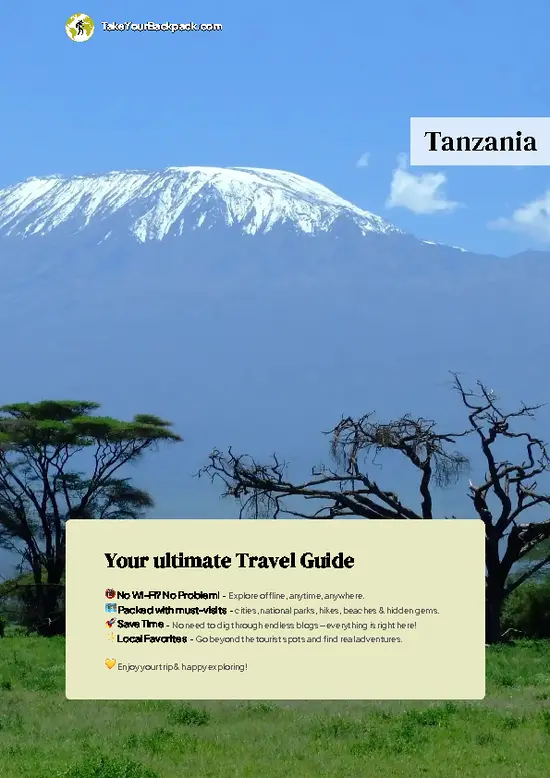
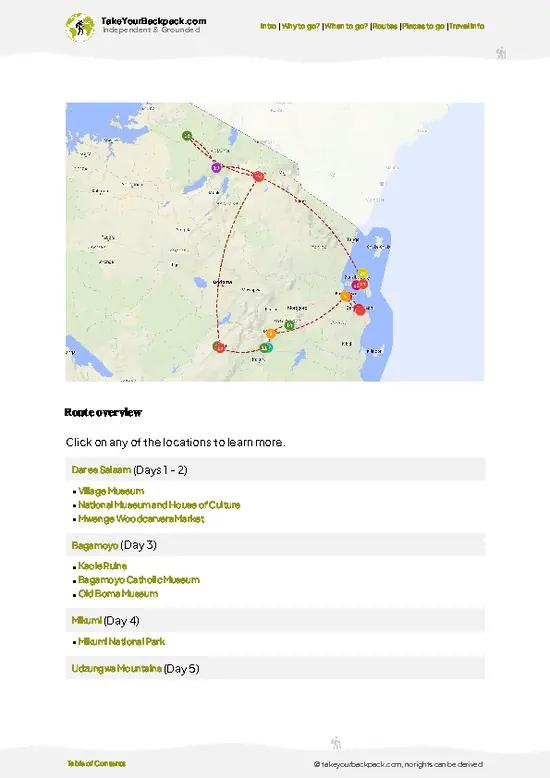
example page 0 from our offline Travel Guide for Tanzania
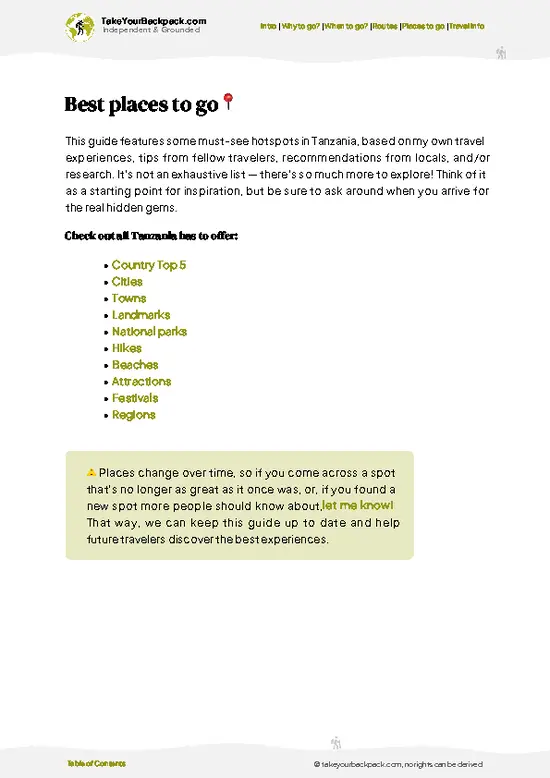
example page 1 from our offline Travel Guide for Tanzania
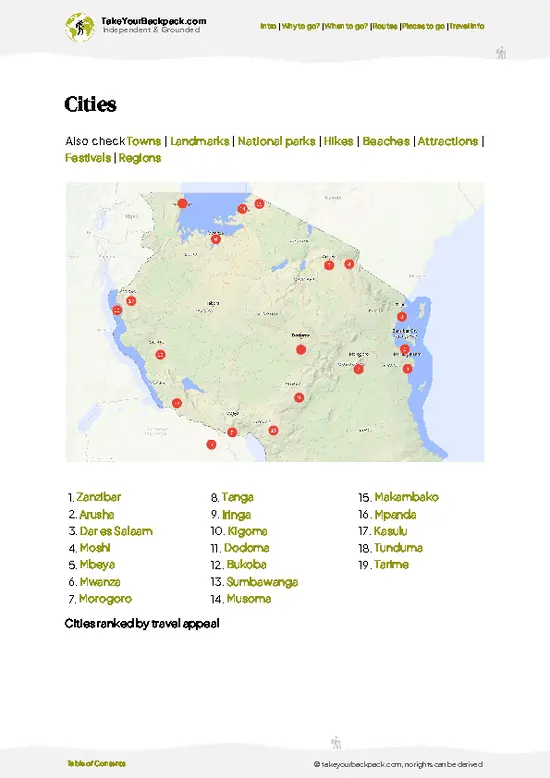
example page 2 from our offline Travel Guide for Tanzania
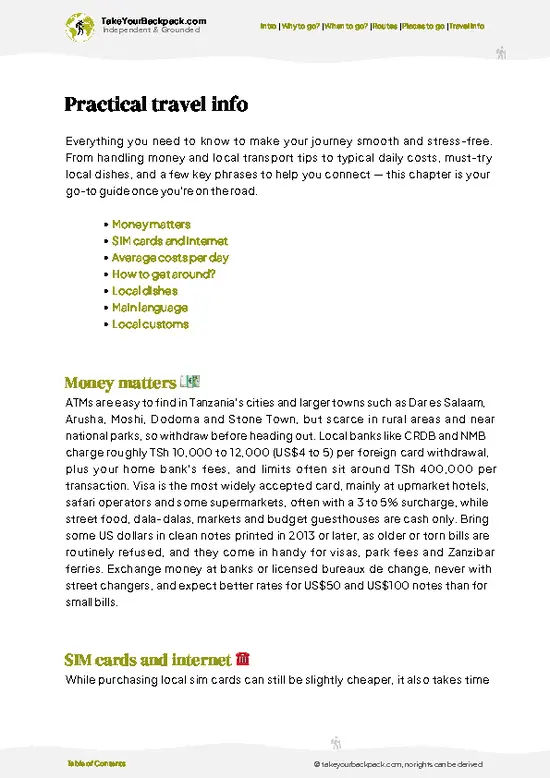
example page 3 from our offline Travel Guide for Tanzania
example page 4 from our offline Travel Guide for Tanzania
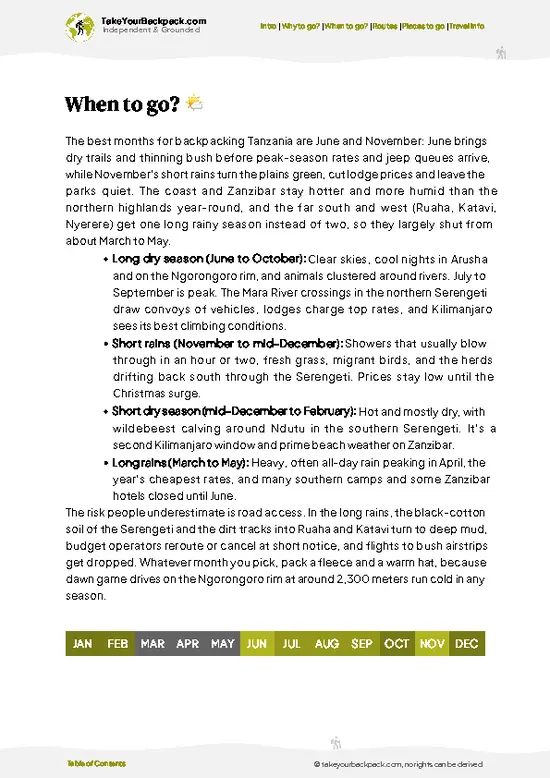
example page 5 from our offline Travel Guide for Tanzania
example page 6 from our offline Travel Guide for Tanzania
example page 7 from our offline Travel Guide for Tanzania
The digital guide (377 pages) contains:
100 highlights, ranked by travel appeal
Optimized 7, 14 & 21-day travel routes
Cities, national parks, landmarks, beaches
How to get around
Offline-friendly for travel without Wi-Fi
👉 Click to see all 30+ guide features

📅 Plan smarter in minutes, not weeks
Month by month travel advice
Festivals & national holidays
Budget expectations

🗺️ Go to the right places, skip the overrated ones
Honest pros & cons of destinations
Top hikes, parks & viewpoints
Lesser-known places most travelers miss
Clear “worth it vs skip it” guidance

🛏️ Travel smoothly without rookie mistakes
Best areas to stay
Transport systems explained simply
Common scams & safety advice
SIM cards, money & practical tips

🌍 Understand the country, not just visit it
Culture & traditions
52 Essential phrases & customs
Festivals worth planning around
Traveler-friendly historical context
Insights that make places more meaningful

📱 Built for real travel conditions
Fully downloadable PDF
Works completely offline
Optimized for phone use
Useful in remote areas & buses
Everything in one place
Save weeks of stressful planning
Get instant access to your full guide. 30‑day money-back guarantee.
+ Add another guide for just US$7.80

By proceeding you agree to our terms.
Sent to your inbox immediately after payment • 100% Secure Checkout
Best Backpacking Travel Advisor 2025 tourism awardBest Backpacking
Travel Advisor
2025
What others say about Take Your Backpack Guides:
⭐⭐⭐⭐⭐
Fantastic, amazing amount of information!
⭐⭐⭐⭐⭐
My goodness this is amazing, it's what I've been looking for hats off too you!
⭐⭐⭐⭐⭐
I think this is absolutely BRILLIANT
⭐⭐⭐⭐
Very complete and informative. It's still missing places, but I gotta to commend you
⭐⭐⭐⭐⭐
This is truly amazing, thank you, can't wait to explore it with my kids!
⭐⭐⭐⭐⭐
Awesome resource, thank you!
⭐⭐⭐⭐⭐
This is amazing! Can't wait to explore the ones I haven't seen
⭐⭐⭐⭐
I love this! Well done, great idea.
⭐⭐⭐⭐⭐
Thanks for taking the time to make this gem!
⭐⭐⭐⭐⭐
This might be the best website I've ever seen.
⭐⭐⭐⭐⭐
Congratulations, and thank you so much for your work; it's incredibly valuable.
⭐⭐⭐⭐
In all seriousness I think you did a great job pointing out the important spots
⭐⭐⭐⭐⭐
10/10 very good
⭐⭐⭐⭐⭐
As someone who's only just starting to visit regularly this is awesome, thank you.
⭐⭐⭐⭐
Thank you very much! I'm going to visit my dad, it's going to be very useful!
⭐⭐⭐⭐⭐
This is really cool! We'll be travelling for the first time and this definitely come in handy.
⭐⭐⭐⭐⭐
You are now our minister of culture, congratulations 👨‍💼
⭐⭐⭐⭐⭐
Just wanted to tell you that this is a pearl! Going to follow your recommendations.
⭐⭐⭐⭐⭐
This is so cool. I'll definitely be using the resource for my travels soon.
⭐⭐⭐⭐⭐
This is very impressive! Good work.
⭐⭐⭐⭐⭐
This is an amazing and informative site. Very well done!

🛏️ Where to stay?Top Places to Consider Staying

Yes — hostels and budget accommodation are common across Tanzania, especially in Dar es Salaam (city centre and Msasani/Oysterbay), Arusha and Moshi (Kilimanjaro gateway), and on Zanzibar in Stone Town, Nungwi and Paje.
Dar gives easy transport links and nightlife but has heavy traffic and mixed neighbourhood safety; Arusha and Moshi put you closest to safaris and Kilimanjaro with quieter streets and basic services; Stone Town is best for ferries and historic access but has cramped, noisy alleys, while Nungwi is beach-party lively and Paje is windier and more chilled for kitesurfing.
Expect basic standards, book dorms well in advance for high season, bring a mosquito net and padlock, and … read more 👉
Yes — hostels and budget accommodation are common across Tanzania, especially in Dar es Salaam (city centre and Msasani/Oysterbay), Arusha and Moshi (Kilimanjaro gateway), and on Zanzibar in Stone Town, Nungwi and Paje.
Dar gives easy transport links and nightlife but has heavy traffic and mixed neighbourhood safety; Arusha and Moshi put you closest to safaris and Kilimanjaro with quieter streets and basic services; Stone Town is best for ferries and historic access but has cramped, noisy alleys, while Nungwi is beach-party lively and Paje is windier and more chilled for kitesurfing.
Expect basic standards, book dorms well in advance for high season, bring a mosquito net and padlock, and prioritise places near ferry terminals or park gates to avoid expensive transfers.

If you enjoy meeting fellow travelers, consider choosing hostels with high ratings for atmosphere. On the other hand, if you prefer having your own space, a hotel might be a better option.

TanzaniaMore Places Across Tanzania

👋 Meet the founderWho’s Behind Take Your Backpack?

Johan, backpacker and founder of TakeYourBackpackHi, I’m Johan (Netherlands 🇳🇱), the creator of TakeYourBackpack. Over the past decade, I’ve backpacked through 80+ countries across six continents, gaining extensive experience with independent travel, long-term trips, and overland routes.

This site is built on a combination of firsthand travel experience and carefully curated insights from other backpackers. Many guides are based on places I’ve personally visited, while others bring together tips, observations, and practical advice shared by trusted travelers I’ve met along the way.

The goal is to provide realistic, experience-driven guidance — not generic itineraries — so you can explore destinations with better context, clearer expectations, and more confidence.

Get full Tanzania guide •
Instant download • 100 highlights • Full Offline guide