×

Tanzania🇹🇿 | townsLushotoCliff viewpoints, terraced hikes, cool mist, farm cheese | things to do and best time to go

Explore BagamoyoExplore Mikumi

Backpacking in Lushoto
🏆 Top picktown ranked #3
By Johan Kruseman 🇳🇱 | Updated October 22, 2026

Lushoto sits at around 1,400 meters, so evenings are chilly and mornings arrive in mist, a surprise for anyone expecting Tanzania’s coastal heat. You’ll find it in the north of Tanzania, in the West Usambara Mountains of Tanga Region. Roads and minibuses reach it easily from the main northeastern highway, and the town itself is small, walkable and friendly. The upside is hiking from your guesthouse door, through terraced farms, forest edges and cliff viewpoints. The downside is that town has little to see by itself, and trails are unmarked. Hire a local guide through the tourist information office, because paths braid through farmland and a guide explains the villages along the way. Evenings are quiet and social in a low-key way: a few guesthouses, shared tables, early nights. Hikers and slow travelers will love it. Anyone chasing nightlife or ticking off big-ticket sights will not.

Discover everything you want to know in the 📖 Tanzania Travel Guide.


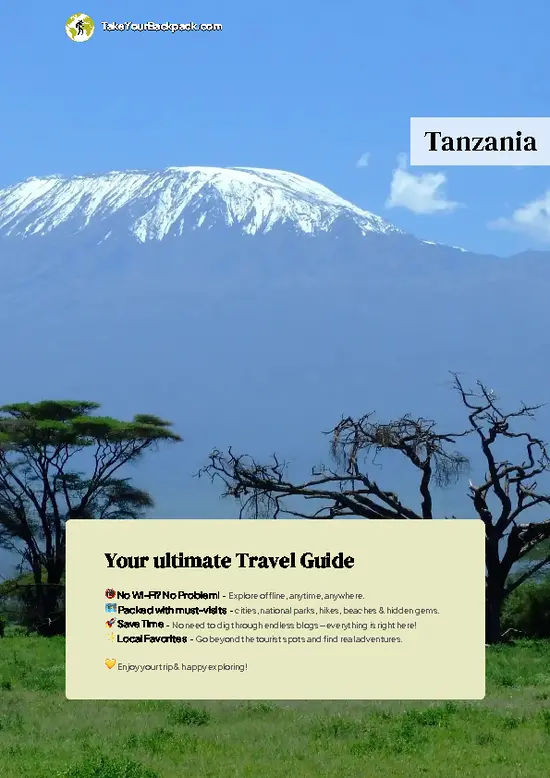
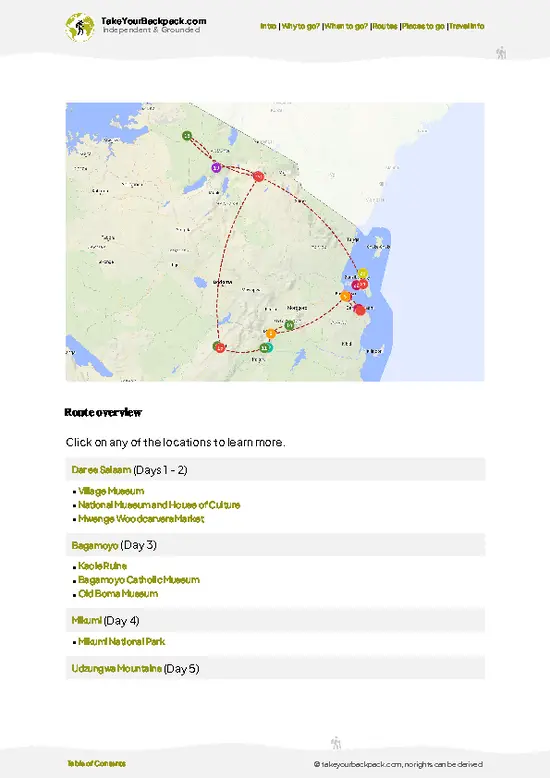
example page 0 from our offline Travel Guide for Tanzania
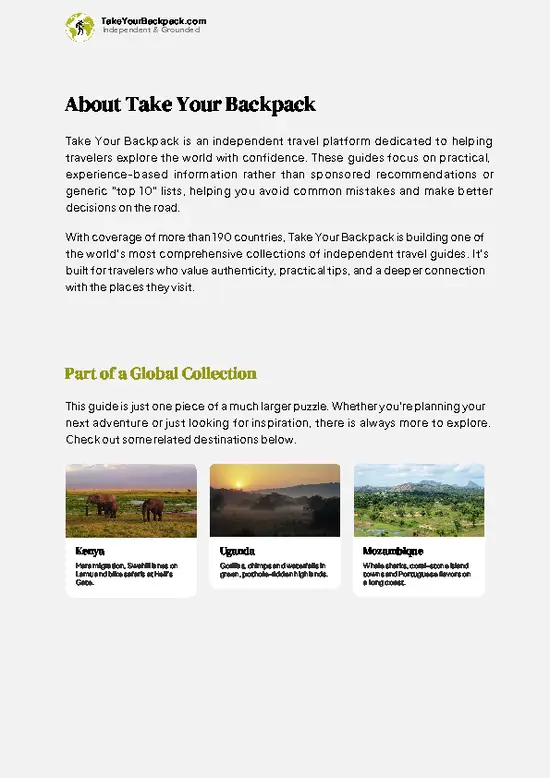
example page 1 from our offline Travel Guide for Tanzania
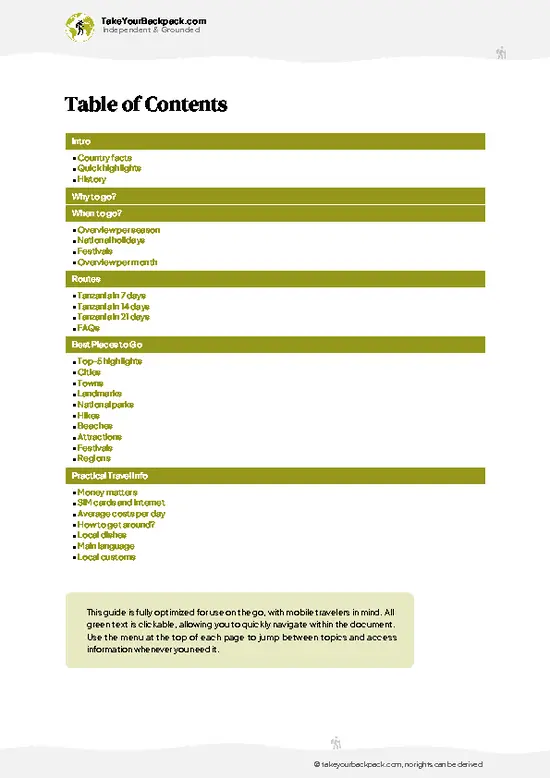
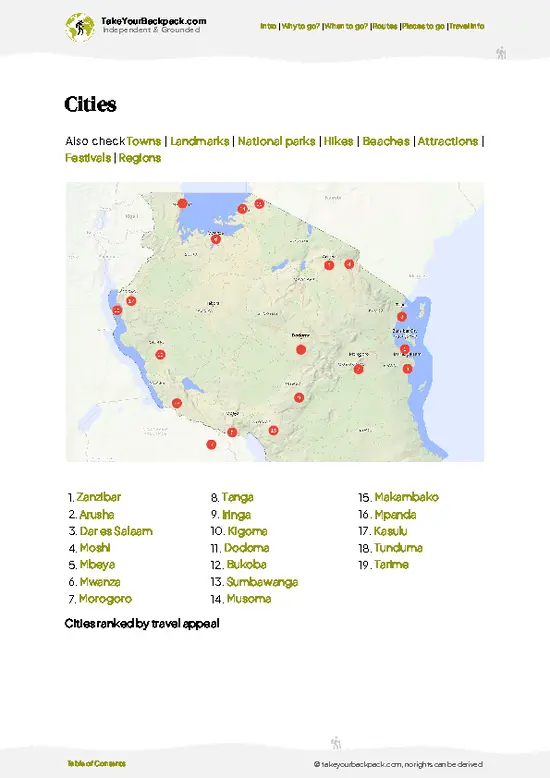
example page 2 from our offline Travel Guide for Tanzania
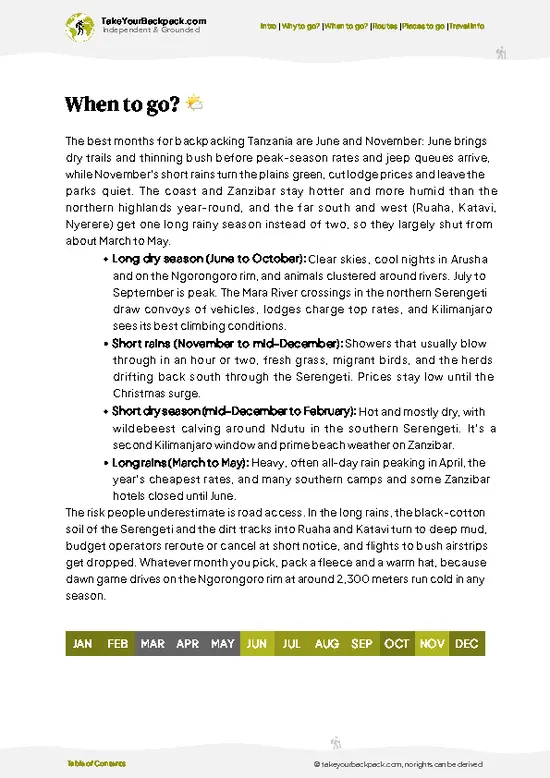
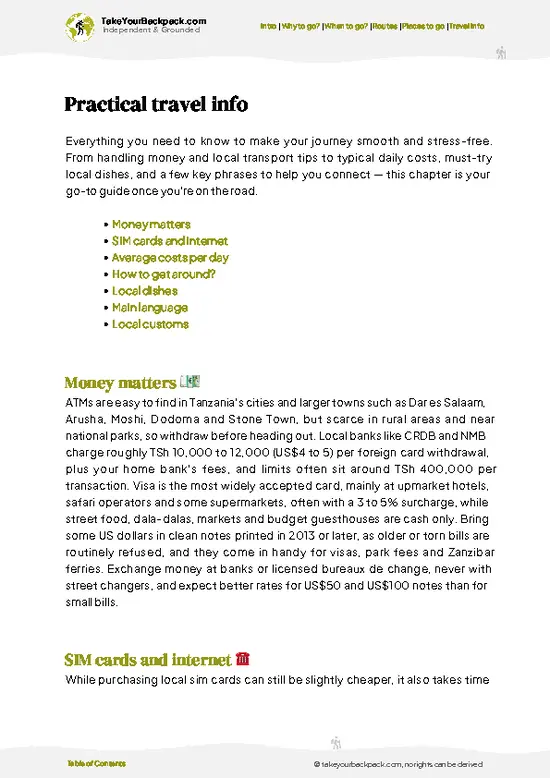
example page 3 from our offline Travel Guide for Tanzania
example page 4 from our offline Travel Guide for Tanzania
example page 5 from our offline Travel Guide for Tanzania
example page 6 from our offline Travel Guide for Tanzania
example page 7 from our offline Travel Guide for Tanzania
Loading the map 🌍
CLICK TO FILTER
cities
towns
landmarks
national parks
hikes
beaches
attractions
festivals
regions
SHOW COUNTRY’S BESTSHOW ALL

✨ Why go?
Ranked #3 town in Tanzania
The unique appeal for travelers

Lushoto earns its place on a northern Tanzania route because it swaps safari-circuit logistics for walking. You climb out of town on footpaths that link Shambaa villages, drop to the Irente cliffs, and sleep in small guesthouses where the owner often knows the route you’re about to take. Most backpackers stay two or three nights, and many stretch to five once they realize each day hike goes somewhere different. The cool air and slow pace suit travelers who want recovery time between Dar es Salaam, Tanga or Arusha. Solo travelers meet people easily, since hikers cluster at the same few cafés and guides pair up strangers into small groups. Fresh produce is the other draw, with fruit, vegetables and cheese from the highland farms on sale daily. If you need beaches, big museums or late bars, treat … read more 👉
Lushoto earns its place on a northern Tanzania route because it swaps safari-circuit logistics for walking. You climb out of town on footpaths that link Shambaa villages, drop to the Irente cliffs, and sleep in small guesthouses where the owner often knows the route you’re about to take. Most backpackers stay two or three nights, and many stretch to five once they realize each day hike goes somewhere different. The cool air and slow pace suit travelers who want recovery time between Dar es Salaam, Tanga or Arusha. Solo travelers meet people easily, since hikers cluster at the same few cafés and guides pair up strangers into small groups. Fresh produce is the other draw, with fruit, vegetables and cheese from the highland farms on sale daily. If you need beaches, big museums or late bars, treat Lushoto as a short stop. If you want fresh legs, mist and a village-to-village trail, give it longer.

💡 HighlightsPlaces and moments you shouldn't skip

  1. Irente Viewpoint: The sight most people come for, a sheer drop on the edge of the Usambara range with the Maasai plains laid out far below. Walk up from town with a guide for the best views, usually clearest in the morning before haze builds. Expect to pay a small entry fee of roughly US$2 to 4 and allow 2 to 3 hours including the walk.
  2. Irente Farm: A working farm close to the viewpoint, known for cheese, jam, bread and honey. Lunch on the terrace is the main reason to stop, and the shop is good for picnic supplies. Visit late morning, budget about US$5 to 10 for a meal, and plan 1 to 2 hours.
  3. Lushoto Market: A noisy, practical market where highland farmers sell tomatoes, pears, plums, cabbage, spices and secondhand clothes. Go early, when the produce is freshest and the buyers are most active.
… read more 👉
  1. Irente Viewpoint: The sight most people come for, a sheer drop on the edge of the Usambara range with the Maasai plains laid out far below. Walk up from town with a guide for the best views, usually clearest in the morning before haze builds. Expect to pay a small entry fee of roughly US$2 to 4 and allow 2 to 3 hours including the walk.
  2. Irente Farm: A working farm close to the viewpoint, known for cheese, jam, bread and honey. Lunch on the terrace is the main reason to stop, and the shop is good for picnic supplies. Visit late morning, budget about US$5 to 10 for a meal, and plan 1 to 2 hours.
  3. Lushoto Market: A noisy, practical market where highland farmers sell tomatoes, pears, plums, cabbage, spices and secondhand clothes. Go early, when the produce is freshest and the buyers are most active. Entry is free, and an hour is plenty unless you’re buying food for a trek.
  4. Lawns Hotel: A colonial-era hotel with lawns and a quiet bar, a relic of the town’s days as a retreat from the lowland heat. Stop for tea or a beer in the afternoon rather than staying overnight. A drink costs about US$1 to 3, and an hour suits it.
  5. Lushoto Tourist Information Centre: The place to book licensed local guides for village walks, farm visits and longer hikes. It’s useful at the start of your stay, because staff can match routes to your fitness and time. Half-day guiding generally runs about US$10 to 25, and booking takes 15 to 30 minutes.
From Lushoto, the best day trips head to Magamba Forest, the Mambo viewpoint, Soni Falls and the Mlalo area.
For a first visit, start with Irente Viewpoint, because it gives you the whole drop of the mountains at once.
Spotted a mistake or missing something? Contact us.

Things to do around Lushoto

Ratings based on Tripadvisor reviews. When you book through this link, you support our work at no extra cost to you.

🏘️ NeighborhoodsUnderstanding the local layout

Lushoto sits in the Western Usambara Mountains, and the whole town is small enough to cover on foot, so lace up and go by area. Steep hills are the reason walking here feels like cardio; pace yourself and start downhill so the climb home comes last.
  • Town Center and Main Market: The flat core around the bus stand and the Magamba road is where you change money at the ATMs, buy a SIM, and eat. Stalls sell piles of plums, pears and cabbages grown on the surrounding slopes, and small canteens serve chips mayai, grilled meat and ugali with beans. It is loud by day and quiet by 9 pm, so do your errands early.
  • Irente Road: A ridge road heading out toward the Irente Viewpoint, lined with farm shops. A cooperative-style farm sells cheese, bread and jam, which makes it the best breakfast stop around. Walk
… read more 👉
Lushoto sits in the Western Usambara Mountains, and the whole town is small enough to cover on foot, so lace up and go by area. Steep hills are the reason walking here feels like cardio; pace yourself and start downhill so the climb home comes last.
  • Town Center and Main Market: The flat core around the bus stand and the Magamba road is where you change money at the ATMs, buy a SIM, and eat. Stalls sell piles of plums, pears and cabbages grown on the surrounding slopes, and small canteens serve chips mayai, grilled meat and ugali with beans. It is loud by day and quiet by 9 pm, so do your errands early.
  • Irente Road: A ridge road heading out toward the Irente Viewpoint, lined with farm shops. A cooperative-style farm sells cheese, bread and jam, which makes it the best breakfast stop around. Walk it in under two hours each way or hire a motorbike, because the views over the Maasai Steppe open up fast.
  • Magamba and Forest Edge: Uphill and cooler, with pine and cedar plantations and trailheads into Magamba Forest Reserve. Chameleons and colobus monkeys live in the trees. Go with a local guide, since paths split constantly and mist rolls in without warning.
  • Mlalo and Villages: Farming villages reached by shared transport or by hiking trails. Expect market days, tiny shops and no nightlife at all. Carry cash and water, because services thin out quickly.

⌛️ 1 daySeeing the highlights in 24 hours

8:00 AM, Lushoto Market: Begin among the produce stalls, because the market is busiest in the morning and you can grab fruit, bread and water for the day. Chat with vendors, then walk to the tourist information office to meet your guide.

9:00 AM, Walk to Irente Viewpoint: Follow footpaths out of town with your guide, passing vegetable plots, eucalyptus and village homes. The route climbs gently and gives you time to ask about crops and local life before the main view.

11:00 AM, Irente Viewpoint: Stand on the cliff edge and look over the plains. Morning light is clearer, so take photos first and rest afterward.

12:30 PM, Irente Farm: Walk a short way to the farm for lunch. Try the cheese, fresh bread and jam, then browse the shop for picnic supplies.

2:30 PM, Village walk off the main track: … read more 👉
8:00 AM, Lushoto Market: Begin among the produce stalls, because the market is busiest in the morning and you can grab fruit, bread and water for the day. Chat with vendors, then walk to the tourist information office to meet your guide.

9:00 AM, Walk to Irente Viewpoint: Follow footpaths out of town with your guide, passing vegetable plots, eucalyptus and village homes. The route climbs gently and gives you time to ask about crops and local life before the main view.

11:00 AM, Irente Viewpoint: Stand on the cliff edge and look over the plains. Morning light is clearer, so take photos first and rest afterward.

12:30 PM, Irente Farm: Walk a short way to the farm for lunch. Try the cheese, fresh bread and jam, then browse the shop for picnic supplies.

2:30 PM, Village walk off the main track: Ask your guide to take the quieter route back through a Shambaa hamlet instead of the direct road. This is where you see terraced farms, school kids, small churches and people drying crops, and where the day feels least touristy.

4:30 PM, Lawns Hotel: Finish with tea or a drink on the lawn. It’s a calm place to rest tired legs and look at the old colonial-era building.

6:00 PM, Dinner in town: Walk back to the center for a local meal, then turn in early. Mornings start cold, and your legs will want the rest.

🌤️ When to go?When to go for the best experience

June to October is the easiest window for hiking Lushoto, with dry trails and crisp mornings.
  • Cool Dry Season (June to October): Days reach 20 to 25°C (68 to 77°F) and nights drop to 10 to 14°C (50 to 57°F). Views from Irente are clearest, and this is the busiest period, though crowds stay small.
  • Short Rains (November to December): Showers arrive in the afternoon, temperatures run 22 to 27°C (72 to 81°F), and hillsides turn deep green. Trails get slick but are passable.
  • Hot Dry Spell (January to February): Warm and mostly bright, with highs of 25 to 29°C (77 to 84°F). Good for hiking early in the day.
  • Long Rains (March to May): Heavy downpours, mud, and cloud over the viewpoints. Some trails become hard to walk, but guesthouse prices are lowest and the town is nearly empty.
Daylight stays close … read more 👉
June to October is the easiest window for hiking Lushoto, with dry trails and crisp mornings.
  • Cool Dry Season (June to October): Days reach 20 to 25°C (68 to 77°F) and nights drop to 10 to 14°C (50 to 57°F). Views from Irente are clearest, and this is the busiest period, though crowds stay small.
  • Short Rains (November to December): Showers arrive in the afternoon, temperatures run 22 to 27°C (72 to 81°F), and hillsides turn deep green. Trails get slick but are passable.
  • Hot Dry Spell (January to February): Warm and mostly bright, with highs of 25 to 29°C (77 to 84°F). Good for hiking early in the day.
  • Long Rains (March to May): Heavy downpours, mud, and cloud over the viewpoints. Some trails become hard to walk, but guesthouse prices are lowest and the town is nearly empty.
Daylight stays close to 12 hours all year, so start hikes by 8 am to finish before afternoon cloud.


source: climatestotravel.comJANJanuary: fair for travelingFEBFebruary: fair for travelingMARMarch: fair for travelingAPRApril: fair for travelingMAYMay: good for travelingJUNJune: highly recommended for travelingJULJuly: excellent for travelingAUGAugust: excellent for travelingSEPSeptember: excellent for travelingOCTOctober: highly recommended for travelingNOVNovember: fair for travelingDECDecember: fair for traveling
when-to-go

✈️ The backpacker research shortcutTanzania Travel Guide

An offline-friendly backpacking guide with optimized travel routes, ranked highlights, transport advice, and the best areas to stay.
example page 0 from our offline Travel Guide for Tanzania
example page 1 from our offline Travel Guide for Tanzania
example page 2 from our offline Travel Guide for Tanzania
example page 3 from our offline Travel Guide for Tanzania
example page 4 from our offline Travel Guide for Tanzania
example page 5 from our offline Travel Guide for Tanzania
example page 6 from our offline Travel Guide for Tanzania
example page 7 from our offline Travel Guide for Tanzania
The digital guide (396 pages) contains:
✅ 103 highlights, ranked by travel appeal
✅ Optimized 7, 14 & 21-day travel routes
✅ Cities, national parks, landmarks, beaches
✅ How to get around
✅ Offline-friendly for travel without Wi-Fi
👉 Click to see all 30+ guide features

📅 Plan smarter in minutes, not weeks
✅ Month by month travel advice
✅ Festivals & national holidays
✅ Budget expectations

🗺️ Go to the right places, skip the overrated ones
✅ Honest pros & cons of destinations
✅ Top hikes, parks & viewpoints
✅ Lesser-known places most travelers miss
✅ Clear “worth it vs skip it” guidance

🛏️ Travel smoothly without rookie mistakes
✅ Best areas to stay
✅ Transport systems explained simply
✅ Common scams & safety advice
✅ SIM cards, money & practical tips

🌍 Understand the country, not just visit it
✅ Culture & traditions
✅ 52 Essential phrases & customs
✅ Festivals worth planning around
✅ Traveler-friendly historical context
✅ Insights that make places more meaningful

📱 Built for real travel conditions
✅ Fully downloadable PDF
✅ Works completely offline
✅ Optimized for phone use
✅ Useful in remote areas & buses
✅ Everything in one place
Stop searching, start planning
Get instant access to your full guide. 30‑day money-back guarantee.
+ Add another guide for just

By proceeding you agree to our terms.
Sent to your inbox immediately after payment • 100% Secure Checkout
Best Backpacking Travel Advisor 2025 tourism awardBest Backpacking
Travel Advisor
2025
What others say about Take Your Backpack Guides:
⭐⭐⭐⭐⭐
Fantastic, amazing amount of information!
⭐⭐⭐⭐⭐
My goodness this is amazing, it's what I've been looking for hats off too you!
⭐⭐⭐⭐⭐
I think this is absolutely BRILLIANT
⭐⭐⭐⭐
Very complete and informative. It's still missing places, but I gotta to commend you
⭐⭐⭐⭐⭐
This is truly amazing, thank you, can't wait to explore it with my kids!
⭐⭐⭐⭐⭐
Awesome resource, thank you!
⭐⭐⭐⭐⭐
This is amazing! Can't wait to explore the ones I haven't seen
⭐⭐⭐⭐
I love this! Well done, great idea.
⭐⭐⭐⭐⭐
Thanks for taking the time to make this gem!
⭐⭐⭐⭐⭐
This might be the best website I've ever seen.
⭐⭐⭐⭐⭐
Congratulations, and thank you so much for your work; it's incredibly valuable.
⭐⭐⭐⭐
In all seriousness I think you did a great job pointing out the important spots
⭐⭐⭐⭐⭐
10/10 very good
⭐⭐⭐⭐⭐
As someone who's only just starting to visit regularly this is awesome, thank you.
⭐⭐⭐⭐
Thank you very much! I'm going to visit my dad, it's going to be very useful!
⭐⭐⭐⭐⭐
This is really cool! We'll be travelling for the first time and this definitely come in handy.
⭐⭐⭐⭐⭐
You are now our minister of culture, congratulations 👨‍💼
⭐⭐⭐⭐⭐
Just wanted to tell you that this is a pearl! Going to follow your recommendations.
⭐⭐⭐⭐⭐
This is so cool. I'll definitely be using the resource for my travels soon.
⭐⭐⭐⭐⭐
This is very impressive! Good work.
⭐⭐⭐⭐⭐
This is an amazing and informative site. Very well done!

🛏️ Where to stay?How to pick the right area

Stay in or within a few minutes of the town center if you want the easiest budget beds, with the Irente Road side as the quieter alternative. The center has the largest number of basic guesthouses and a couple of backpacker-friendly options, and everything from the bus stand to ATMs and restaurants is a short walk away. Dorm beds are rare, so most budget travelers take a simple private room with shared or private bath, and prices are low outside the main season. Expect noise from the market and minibuses early in the morning, so earplugs help. Streets are lit enough for short evening walks, though … read more 👉
Stay in or within a few minutes of the town center if you want the easiest budget beds, with the Irente Road side as the quieter alternative. The center has the largest number of basic guesthouses and a couple of backpacker-friendly options, and everything from the bus stand to ATMs and restaurants is a short walk away. Dorm beds are rare, so most budget travelers take a simple private room with shared or private bath, and prices are low outside the main season. Expect noise from the market and minibuses early in the morning, so earplugs help. Streets are lit enough for short evening walks, though you should not wander far after dark.

The Irente Road side suits anyone who prefers a calm night, fresh mountain air and views over the plains. You will be a 20 to 40 minute walk or a short motorbike ride from town, and it is handy for hikes starting from the ridge. Options are fewer and some are further apart, so book ahead in July, August and around Christmas. Bus connections are better from the center, so if you leave at dawn, spend your last night in town.

🚌 Getting aroundHow to get around Lushoto

Taking a taxi or private car from Dar es Salaam or Tanga all the way to Lushoto is the costliest mistake, when a bus covers the same road for a fraction of the price. Once you arrive, ditch wheels altogether, because the town is small and compact and your boots are the best transport here. Traffic is light, but the hills are steep and roads beyond town turn rough.
  • Walking: Free and fastest for anything inside town. Trails to Irente Viewpoint take 1.5 to 2 hours one way. Carry water and start early, since afternoon cloud often rolls in and hides the views.
  • Pikipiki (motorbike taxi): The workhorse for hilltop villages and viewpoints. Short rides in town cost US$0.50 to 1, and longer trips such as Irente or Magamba run US$2 to 5. Agree the price before you climb on, and ask for a helmet. Drivers
… read more 👉
Taking a taxi or private car from Dar es Salaam or Tanga all the way to Lushoto is the costliest mistake, when a bus covers the same road for a fraction of the price. Once you arrive, ditch wheels altogether, because the town is small and compact and your boots are the best transport here. Traffic is light, but the hills are steep and roads beyond town turn rough.
  • Walking: Free and fastest for anything inside town. Trails to Irente Viewpoint take 1.5 to 2 hours one way. Carry water and start early, since afternoon cloud often rolls in and hides the views.
  • Pikipiki (motorbike taxi): The workhorse for hilltop villages and viewpoints. Short rides in town cost US$0.50 to 1, and longer trips such as Irente or Magamba run US$2 to 5. Agree the price before you climb on, and ask for a helmet. Drivers go home around dusk, so book your return ahead.
  • Daladala and minibus: Shared minibuses run to nearby villages like Mlalo and Soni for US$1 to 3 depending on the distance. They leave when full, so mornings are the most reliable, and the last ones head back by mid-afternoon. Expect tight seating and luggage on laps.
  • Long-distance buses: Coaches link Lushoto with Dar es Salaam (about 6 to 8 hours, US$8 to 12), Arusha, and Tanga (about 3 hours, US$4 to 6). Book morning departures, because they fill up and early arrival leaves daylight to find a bed. Buy tickets at the stand rather than from touts who tout inflated prices.
  • Hired guide with vehicle: For remote corners like Magamba Forest, a local driver with 4WD costs around US$30 to 60 a day. Share it with other travelers to split the bill, and confirm what is included before leaving.

👛 Costs (as of 22 October 2026)Typical daily expenses

Lushoto costs a backpacker about US$24 to 48 a day, with a typical high-season day around US$36. Highland farming keeps food very cheap, and the main variable is whether you hire guides and motorbikes. Travelers pay in Tanzanian shillings, and card acceptance is rare, so carry cash from the town ATMs.
CategoryBudget RangeLocal Reality
Dorm accommodationUS$8 to 15 (high season)Dorms are rare, so a simple private room with a shared bath is the norm. Low season rooms drop to US$6 to 10.
MealsUS$6 to 10Chips mayai, ugali with beans or stew, and fruit from the market cost US$1.50 to 3 each. Farm cheese and bread cost extra.
Local transportUS$2 to 6Motorbike rides to viewpoints and minibuses to villages. Walking is free.
Basic activities/entry feesUS$5 to 12Forest reserve fees, a local guide for a half-day
… read more 👉
Lushoto costs a backpacker about US$24 to 48 a day, with a typical high-season day around US$36. Highland farming keeps food very cheap, and the main variable is whether you hire guides and motorbikes. Travelers pay in Tanzanian shillings, and card acceptance is rare, so carry cash from the town ATMs.
CategoryBudget RangeLocal Reality
Dorm accommodationUS$8 to 15 (high season)Dorms are rare, so a simple private room with a shared bath is the norm. Low season rooms drop to US$6 to 10.
MealsUS$6 to 10Chips mayai, ugali with beans or stew, and fruit from the market cost US$1.50 to 3 each. Farm cheese and bread cost extra.
Local transportUS$2 to 6Motorbike rides to viewpoints and minibuses to villages. Walking is free.
Basic activities/entry feesUS$5 to 12Forest reserve fees, a local guide for a half-day hike, and viewpoint entry.
Miscellaneous expensesUS$3 to 5Water, SIM data, snacks and the occasional beer.
Total Daily BudgetUS$24 to 48Around US$36 on a typical high-season day.
Buy fruit and snacks at the central market instead of tourist stalls, since prices are noticeably lower and the produce is fresher.
⚠️ Prices can change and everyone travels differently, so take this as a rough guide. Hope it helps you plan your adventure!

🚌 Day tripsWhere to go beyond the main area

Lushoto works well as a base because most trips are hikes or short motorbike rides, and nothing requires an overnight stay.
Irente Viewpoint:
A ridge walk or bike ride along Irente Road leads to a cliff edge with a drop down to the Maasai Steppe. It takes about 1.5 to 2 hours on foot each way, or 20 minutes by motorbike for US$2 to 5, with a small entry fee. Go before 10 am, as cloud often covers the view by noon. First-timers often turn up late and see only mist.

Magamba Forest Reserve:
This cool montane forest above town shelters Abbott's duiker, colobus monkeys and chameleons, with trails shaded by tall trees. A guide is worth hiring at roughly US$10 to 20 plus the reserve fee, because paths are confusing. Plan a half day, and go in the dry months when the ground is firm. Wear shoes with … read more 👉
Lushoto works well as a base because most trips are hikes or short motorbike rides, and nothing requires an overnight stay.
Irente Viewpoint:
A ridge walk or bike ride along Irente Road leads to a cliff edge with a drop down to the Maasai Steppe. It takes about 1.5 to 2 hours on foot each way, or 20 minutes by motorbike for US$2 to 5, with a small entry fee. Go before 10 am, as cloud often covers the view by noon. First-timers often turn up late and see only mist.

Magamba Forest Reserve:
This cool montane forest above town shelters Abbott's duiker, colobus monkeys and chameleons, with trails shaded by tall trees. A guide is worth hiring at roughly US$10 to 20 plus the reserve fee, because paths are confusing. Plan a half day, and go in the dry months when the ground is firm. Wear shoes with grip, since mud makes slopes slippery.

Mlalo and Rangwi Villages:
Minibuses wind down terraced valleys to farming villages where you can wander markets, see vegetable plots and drink tea with locals. Travel takes about 1 to 1.5 hours each way for US$1 to 3. Plan so you are back before the late-afternoon departures end. Many travelers underestimate how few vehicles return after 4 pm.

Soni Falls:
A short minibus ride toward Soni leads to a waterfall set among banana fields. Allow half a day, with costs under US$10 including a local guide. It flows strongest from April to June and in the short rains, but paths get slick then.

🛡️ SafetyScams, Hazards, and Annoyances

Lushoto is a calm highland town, and most problems come down to petty theft and hiking logistics rather than violence. Keep phones and cash tucked away in the market and around the bus stand, where crowds make pickpocketing possible. Touts at the bus stand may offer inflated guide prices or rides, so agree on the cost before moving and ask your guesthouse for typical rates. Solo travelers, including women, generally find locals welcoming, though it is wise to skip unlit paths after dark and use a motorbike or walk with others in the evening. Hike with a local guide in the forest reserves, since trails branch and mist drops fast, and tell your guesthouse where you are going. Carry a rain jacket and water, and keep a torch, as power cuts do happen.

FAQCommon questions from travelers

Lushoto rewards a stay of at least two nights, so treat it as a destination rather than a stopover. The Usambara Mountains around it hold Irente Viewpoint, the Magamba Rainforest and villages linked by trails, with cool air at roughly 1,400 meters. Most travelers come for walking, since guided hikes run about US$15 to 30 a day. The road from the coast is a long haul, which makes a night or two here a better use of the journey than a quick pass-through.
Lushoto works best with 2 to 3 days. One day covers the Irente Viewpoint walk (about 1.5 hours each way from town), a second suits a village hike toward Lushoto’s surrounding hills such as Mtae or Magamba, and a third lets you rest or do a longer trek. Budget about US$25 to 40 a day including a guide. Hikers linking several villages on foot can stretch this to 4 or 5 days.
Lushoto is a poor fit for a day trip from Tanga, Moshi or Dar es Salaam because the minibus and bus rides take roughly 2 to 3 hours from Korogwe, plus another leg to reach Korogwe itself. From Tanga the trip is about 3 to 4 hours each way, and from Dar es Salaam it is 6 to 8 hours, leaving almost no time on the trails. Staying at least one night lets you use the full day for Irente and the nearby villages, with bus fares from Korogwe costing around US$3 to 5.
⚠️ Things can change over time, so always validate details locally before you go.

Other Tanzanian towns near Lushoto

Explore more nearby:

  • Korogwe—Usambara gateway, produce market, river plain, old rail station| 45 km away
  • Same—Mkomazi gate, Pare foothills, dry savanna, rhino sanctuary| 101 km away
  • Pangani—Swahili ruins, German boma, river estuary, customs house| 103 km away

💡 Not sure where to go next?
Create a personalized itinerary for Tanzania including Lushoto and the places that fit your trip.

Generate my itinerary

👉 Discover all towns

Or checkout all Tanzania has to offer (think cities, towns, villages, national parks, hikes, beaches, festivals)
Country photo of Tanzania

We 💚 feedbackIs it worth it?

Lushoto works best as the cool, slow stretch between a safari or a beach stop, so pair it with Tanga’s coast or the Arusha area rather than treating it as a standalone trip. I’d bring a fleece and rain jacket, and I’d book a guide on day one. Skip racing through, since two nights is the minimum.

✍️ Help improve this page!
The information on this page is based on in-depth research, insights shared by experienced travelers, and feedback from the local travel community in Tanzania. While every effort is made to keep the information accurate and current, conditions can change — so if you spot anything incorrect or outdated, please get in touch.


🙋‍♂️ Give feedback

👋 Meet the founderWho’s Behind Take Your Backpack?

Johan, backpacker and founder of TakeYourBackpackHi, I’m Johan (Netherlands 🇳🇱), the creator of TakeYourBackpack. Over the past 3 decades, I’ve backpacked through 90+ countries across six continents, gaining extensive experience with independent travel, long-term trips, and overland routes.

This site is built on a combination of firsthand travel experience and carefully curated insights from other backpackers. Many guides are based on places I’ve personally visited, while others bring together tips, observations, and practical advice shared by trusted travelers I’ve met along the way.

The goal is to provide realistic, experience-driven guidance — not generic itineraries — so you can explore destinations with better context, clearer expectations, and more confidence.