×

Tanzania🇹🇿 | townsUramboTobacco barns, frontier road, miombo tracks, church choirs | things to do and best time to go

Explore UjijiExplore Usa River

Backpacking in Urambo
👀 For curious travelerstown ranked #26
By Johan Kruseman 🇳🇱 | Updated October 22, 2026

Urambo suits travelers who like dusty frontier-style roads, tobacco country and zero crowds, and slow-travel types hunting real Tanzanian town life. Sightseers wanting museums, beaches or safari lodges will find it thin. Urambo sits in Tabora Region in western Tanzania, west of Tabora town along the road toward Kigoma. Expect a few simple guesthouses, roadside grills and a lively market, but few backpackers. Unlike Tabora, Urambo has no colonial landmarks, so treat it as a stopover and a look at working rural life.

Discover everything you want to know in the 📖 Tanzania Travel Guide.


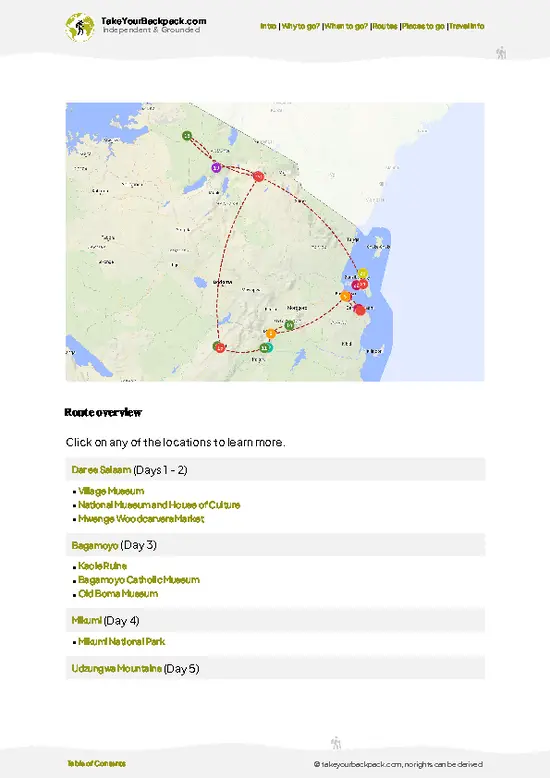
example page 0 from our offline Travel Guide for Tanzania
example page 1 from our offline Travel Guide for Tanzania
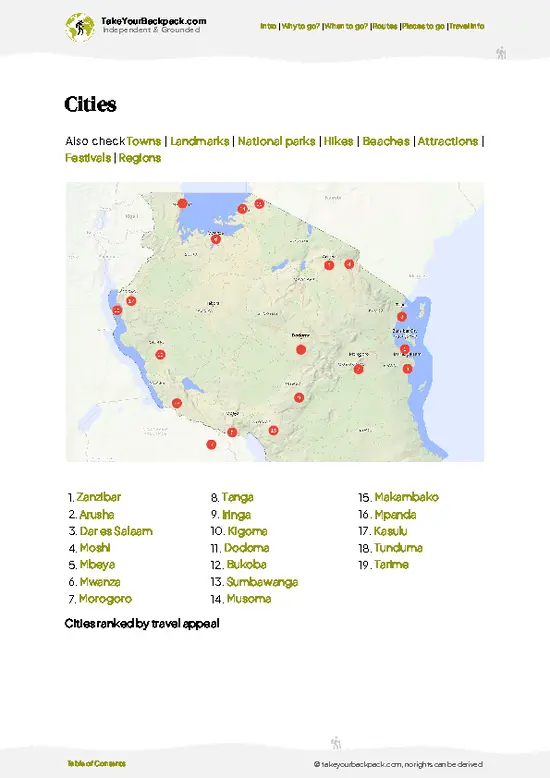
example page 2 from our offline Travel Guide for Tanzania
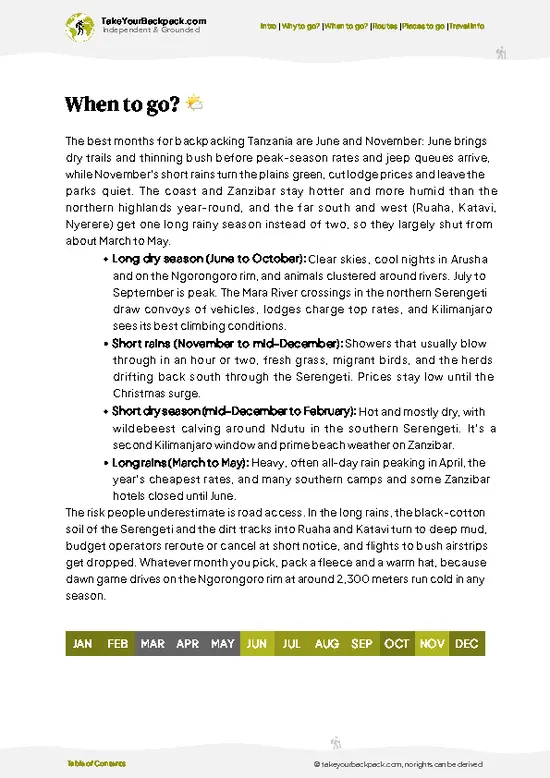
example page 3 from our offline Travel Guide for Tanzania
example page 4 from our offline Travel Guide for Tanzania
example page 5 from our offline Travel Guide for Tanzania
example page 6 from our offline Travel Guide for Tanzania
example page 7 from our offline Travel Guide for Tanzania
Loading the map 🌍
CLICK TO FILTER
cities
towns
landmarks
national parks
hikes
beaches
attractions
festivals
regions
SHOW COUNTRY’S BESTSHOW ALL

✨ Why go?
Ranked #26 town in Tanzania
What makes this town worth visiting

Urambo works as a break on the long western route, not a destination to linger in. Its pull is the tobacco economy: the surrounding farms and curing barns shape the whole town, and the central market shows how people here live and eat. Guesthouses are small and cheap, and locals are curious and quick to chat in Swahili. Solo travelers and slow-travel types who enjoy ordinary places will like one night. Anyone after sights, hiking or nightlife should keep rolling to Tabora or Kigoma.

💡 HighlightsPlaces and moments you shouldn't skip

  1. Urambo Central Market: The town’s main draw, with tobacco-season traders, piles of tomatoes, maize and dried fish, and cheap snack stalls. Go in the morning when it is busiest. Entry is free; allow 1 to 2 hours.
  2. Tobacco curing barns on the town outskirts: Brick barns dot the farmland, and in the curing season you can see leaves being hung and tended. Ask a local to point you to a farm and offer a small tip, around US$2 to 4. Allow 1 to 2 hours, best from mid-morning.
  3. Urambo main road food stalls: Evening grills serve nyama choma, chipsi mayai and fresh chapati for about US$1 to 4. Go after dusk and allow an hour.
  4. Local Sunday church services: Congregations sing with great energy, and visitors are welcomed quietly at the back. Free, about 1 to 2 hours, mornings only.
  5. Miombo woodland walks around
… read more 👉
  1. Urambo Central Market: The town’s main draw, with tobacco-season traders, piles of tomatoes, maize and dried fish, and cheap snack stalls. Go in the morning when it is busiest. Entry is free; allow 1 to 2 hours.
  2. Tobacco curing barns on the town outskirts: Brick barns dot the farmland, and in the curing season you can see leaves being hung and tended. Ask a local to point you to a farm and offer a small tip, around US$2 to 4. Allow 1 to 2 hours, best from mid-morning.
  3. Urambo main road food stalls: Evening grills serve nyama choma, chipsi mayai and fresh chapati for about US$1 to 4. Go after dusk and allow an hour.
  4. Local Sunday church services: Congregations sing with great energy, and visitors are welcomed quietly at the back. Free, about 1 to 2 hours, mornings only.
  5. Miombo woodland walks around town: Dirt tracks lead into woodland where birds and bee-keepers’ hives are common. Free, best early morning or late afternoon, 1 to 2 hours.
The market and the food stalls combine well in one day, with shopping in the morning and grilled meat at dusk. For day trips, Urambo is close enough to reach the Ugalla River Game Reserve area and the old caravan town of Tabora with its Livingstone-era Kwihara house.
Spotted a mistake or missing something? Contact us.

🏘️ NeighborhoodsWhere things are and how it's laid out

Urambo is small enough to cover on foot in an afternoon, so pick your targets and go. Here is where to spend your time.
  • Main market and bus stand area: This is the town’s engine, and it deserves your first hour. Stalls stack tomatoes, dried fish, cassava and secondhand clothes, and grilled maize and chapati vendors keep you fed for pennies. Walk it, haggle gently, move on.
  • Tobacco buying sheds on the outskirts: Urambo lives on tobacco, and in the buying season the trucks and bales make the edges of town worth a look. Go by boda-boda, not on foot.
  • Residential streets and guesthouse strip: Quiet, dusty and unhurried. Skip it for sightseeing, but nightfall brings a few bars with cold Safari lager and loud Bongo Flava.

⌛️ 1 day1-day itinerary for Urambo

Urambo is best done on foot, with a long lunch break to dodge the afternoon heat, and a boda-boda for the farm outskirts.
7:30 AM, Guesthouse breakfast: Start with chai and mandazi at a roadside stall, then stroll to the market.
9:00 AM, Central Market: Wander the stalls, try fresh fruit and chat with traders. It is lively before the sun gets strong.
11:00 AM, Tobacco barns: Take a boda-boda to a nearby farm outside the usual path, and ask to see leaf curing.
1:00 PM, Lunch and rest: Eat rice and beans, then rest in the shade.
4:30 PM, Miombo woodland track: Walk the edges of town for birds and quiet.
7:00 PM, Main road grills: Finish with nyama choma and a cold soda.

🌤️ When to go?Seasonal considerations and timing

  • Dry season (June to October): Roads are firm, skies stay clear, and days run about 27 to 32°C (81 to 90°F) with cool nights near 14°C (57°F). This is also tobacco season, so trucks and traders fill town and rooms tighten.
  • Short rains (November to December): Warm, around 28 to 31°C (82 to 88°F), with afternoon storms that soften dirt roads.
  • Long rains (February to May): Heavy downpours, mud and slow transport. Prices stay flat, but travel gets harder.
Book a bed ahead if you arrive between July and September.

source: climatestotravel.comJANJanuary: fair for travelingFEBFebruary: fair for travelingMARMarch: below average for travelingAPRApril: below average for travelingMAYMay: fair for travelingJUNJune: excellent for travelingJULJuly: excellent for travelingAUGAugust: highly recommended for travelingSEPSeptember: highly recommended for travelingOCTOctober: highly recommended for travelingNOVNovember: good for travelingDECDecember: good for traveling
when-to-go

✈️ The backpacker research shortcutTanzania Travel Guide

An offline-friendly backpacking guide with optimized travel routes, ranked highlights, transport advice, and the best areas to stay.
example page 0 from our offline Travel Guide for Tanzania
example page 1 from our offline Travel Guide for Tanzania
example page 2 from our offline Travel Guide for Tanzania
example page 3 from our offline Travel Guide for Tanzania
example page 4 from our offline Travel Guide for Tanzania
example page 5 from our offline Travel Guide for Tanzania
example page 6 from our offline Travel Guide for Tanzania
example page 7 from our offline Travel Guide for Tanzania
The digital guide (396 pages) contains:
✅ 103 highlights, ranked by travel appeal
✅ Optimized 7, 14 & 21-day travel routes
✅ Cities, national parks, landmarks, beaches
✅ How to get around
✅ Offline-friendly for travel without Wi-Fi
👉 Click to see all 30+ guide features

📅 Plan smarter in minutes, not weeks
✅ Month by month travel advice
✅ Festivals & national holidays
✅ Budget expectations

🗺️ Go to the right places, skip the overrated ones
✅ Honest pros & cons of destinations
✅ Top hikes, parks & viewpoints
✅ Lesser-known places most travelers miss
✅ Clear “worth it vs skip it” guidance

🛏️ Travel smoothly without rookie mistakes
✅ Best areas to stay
✅ Transport systems explained simply
✅ Common scams & safety advice
✅ SIM cards, money & practical tips

🌍 Understand the country, not just visit it
✅ Culture & traditions
✅ 52 Essential phrases & customs
✅ Festivals worth planning around
✅ Traveler-friendly historical context
✅ Insights that make places more meaningful

📱 Built for real travel conditions
✅ Fully downloadable PDF
✅ Works completely offline
✅ Optimized for phone use
✅ Useful in remote areas & buses
✅ Everything in one place
Stop searching, start planning
Get instant access to your full guide. 30‑day money-back guarantee.
+ Add another guide for just

By proceeding you agree to our terms.
Sent to your inbox immediately after payment • 100% Secure Checkout
Best Backpacking Travel Advisor 2025 tourism awardBest Backpacking
Travel Advisor
2025
What others say about Take Your Backpack Guides:
⭐⭐⭐⭐⭐
Fantastic, amazing amount of information!
⭐⭐⭐⭐⭐
My goodness this is amazing, it's what I've been looking for hats off too you!
⭐⭐⭐⭐⭐
I think this is absolutely BRILLIANT
⭐⭐⭐⭐
Very complete and informative. It's still missing places, but I gotta to commend you
⭐⭐⭐⭐⭐
This is truly amazing, thank you, can't wait to explore it with my kids!
⭐⭐⭐⭐⭐
Awesome resource, thank you!
⭐⭐⭐⭐⭐
This is amazing! Can't wait to explore the ones I haven't seen
⭐⭐⭐⭐
I love this! Well done, great idea.
⭐⭐⭐⭐⭐
Thanks for taking the time to make this gem!
⭐⭐⭐⭐⭐
This might be the best website I've ever seen.
⭐⭐⭐⭐⭐
Congratulations, and thank you so much for your work; it's incredibly valuable.
⭐⭐⭐⭐
In all seriousness I think you did a great job pointing out the important spots
⭐⭐⭐⭐⭐
10/10 very good
⭐⭐⭐⭐⭐
As someone who's only just starting to visit regularly this is awesome, thank you.
⭐⭐⭐⭐
Thank you very much! I'm going to visit my dad, it's going to be very useful!
⭐⭐⭐⭐⭐
This is really cool! We'll be travelling for the first time and this definitely come in handy.
⭐⭐⭐⭐⭐
You are now our minister of culture, congratulations 👨‍💼
⭐⭐⭐⭐⭐
Just wanted to tell you that this is a pearl! Going to follow your recommendations.
⭐⭐⭐⭐⭐
This is so cool. I'll definitely be using the resource for my travels soon.
⭐⭐⭐⭐⭐
This is very impressive! Good work.
⭐⭐⭐⭐⭐
This is an amazing and informative site. Very well done!

🛏️ Where to stay?Best areas to stay in Tanzania

The streets around the main market and bus stand are the best bet for a budget bed in Urambo. Simple guesthouses cluster there at roughly US$6 to 15 a night, usually with private rooms rather than dorms, since hostels do not exist here. You can walk to food stalls, ATMs and early buses, and the busy streets feel safe after dark. Expect some noise from traffic, bars and early-morning vendors, so pack earplugs. Quieter residential streets just back from the center cost about the same, but a boda-boda ride is needed after dark. Fans and mosquito nets are worth checking before you pay.

🚌 Getting aroundHow to get around Urambo

Urambo’s center is compact enough to cross on foot in 15 to 20 minutes, but walking stops making sense once you head for the tobacco farms or villages beyond the edge of town, where distances stretch and dust and heat build. Roads outside the main strip are mostly unpaved, and public transport is informal rather than scheduled.
  • Walking: Free, and the best way to cover the market, bus stand and guesthouse streets. Go early or late to dodge midday heat.
  • Boda-boda (motorcycle taxis): The workhorse. Rides in town cost roughly US$0.40 to 1, and farm or village trips US$1 to 3. Agree the price first and ask for a helmet.
  • Bajaji (three-wheelers): Handy with luggage or in rain, around US$0.80 to 2 per ride. They are fewer than motorbikes, so wait at the stand.
  • Buses and minibuses: Connections to Tabora,
… read more 👉
Urambo’s center is compact enough to cross on foot in 15 to 20 minutes, but walking stops making sense once you head for the tobacco farms or villages beyond the edge of town, where distances stretch and dust and heat build. Roads outside the main strip are mostly unpaved, and public transport is informal rather than scheduled.
  • Walking: Free, and the best way to cover the market, bus stand and guesthouse streets. Go early or late to dodge midday heat.
  • Boda-boda (motorcycle taxis): The workhorse. Rides in town cost roughly US$0.40 to 1, and farm or village trips US$1 to 3. Agree the price first and ask for a helmet.
  • Bajaji (three-wheelers): Handy with luggage or in rain, around US$0.80 to 2 per ride. They are fewer than motorbikes, so wait at the stand.
  • Buses and minibuses: Connections to Tabora, Kaliua and beyond leave mostly from the bus stand in the morning. Tabora takes roughly 1.5 to 2.5 hours for about US$3 to 5. Leave early because buses fill up and depart when full, and few run after mid-afternoon.

👛 Costs (as of 22 October 2026)Typical daily expenses

Urambo costs a backpacker roughly US$24 to 42 a day, and the table shows a high-season total of US$38.
CategoryBudget RangeLocal Reality
Dorm accommodationUS$6 to 15No hostels, so a basic private guesthouse room; prices rise in tobacco season
MealsUS$4 to 9Ugali with beans, chapati, rice and grilled meat at local eateries
Local transportUS$2 to 6Boda-boda rides and the odd bajaji
Basic activities/entry feesUS$0 to 5Markets and village walks are free; small fees at sites
MiscellaneousUS$3 to 6Water, SIM data, snacks and cold sodas
Total Daily BudgetUS$38High-season figure
Eat where locals queue at lunchtime, since food is fresher and cheaper than at guesthouse kitchens.
⚠️ Prices can change and everyone travels differently, so take this as a rough guide. Hope it helps you plan your adventure!

🚌 Day tripsShort trips worth adding

Urambo works as a base for rural day trips rather than famous sights, and everything depends on boda-boda or shared transport. Start early and be back before dark.Tabora town: Tabora is the regional hub, with Livingstone’s old Kwihara house museum and German colonial buildings. Buses take about 1.5 to 2.5 hours each way, and a full day costs roughly US$12 to 20. First-timers often leave too late and miss the last ride home. Dry season is easiest.
Ugalla River Game Reserve edge: Ugalla sits to the south, a wild miombo woodland with hippos and birds. Reaching it independently is slow, and park fees add up, so most visitors join a ride arranged locally. Go in the dry season when animals gather at water.
Kaliua: Kaliua is a rail and road junction north of town, about an hour by bus for US$2 to 3. … read more 👉
Urambo works as a base for rural day trips rather than famous sights, and everything depends on boda-boda or shared transport. Start early and be back before dark.Tabora town: Tabora is the regional hub, with Livingstone’s old Kwihara house museum and German colonial buildings. Buses take about 1.5 to 2.5 hours each way, and a full day costs roughly US$12 to 20. First-timers often leave too late and miss the last ride home. Dry season is easiest.
Ugalla River Game Reserve edge: Ugalla sits to the south, a wild miombo woodland with hippos and birds. Reaching it independently is slow, and park fees add up, so most visitors join a ride arranged locally. Go in the dry season when animals gather at water.
Kaliua: Kaliua is a rail and road junction north of town, about an hour by bus for US$2 to 3. It has a lively market and a taste of railway life. Go on a weekday morning.

🍲 FoodLocal Flavors for Backpackers

In Urambo, food is a straightforward celebration of local staples. Expect to dive into ugali, a dense maize porridge that’s the backbone of every meal, paired with flavorful nyama choma—grilled meat that’s smoky, tender, and often shared around a fire. The markets pulse with life, where you’ll find fresh matoke (steamed plantains) and spicy beans cooked in coconut milk, dishes that carry the earthy warmth of the region.

Backpackers usually gather at bustling street stalls or casual eateries where the air is thick with the scent of charcoal and simmering spices. Drinking here is simple—freshly brewed chai or locally brewed pombe (fermented banana beer) often flow in communal settings, inviting conversation. Remember, eating is a social act; sharing plates and passing food around is the norm, … read more 👉
In Urambo, food is a straightforward celebration of local staples. Expect to dive into ugali, a dense maize porridge that’s the backbone of every meal, paired with flavorful nyama choma—grilled meat that’s smoky, tender, and often shared around a fire. The markets pulse with life, where you’ll find fresh matoke (steamed plantains) and spicy beans cooked in coconut milk, dishes that carry the earthy warmth of the region.

Backpackers usually gather at bustling street stalls or casual eateries where the air is thick with the scent of charcoal and simmering spices. Drinking here is simple—freshly brewed chai or locally brewed pombe (fermented banana beer) often flow in communal settings, inviting conversation. Remember, eating is a social act; sharing plates and passing food around is the norm, so come ready to connect through taste and tradition.

🛡️ SafetyStaying Safe: What Travelers Should Know

Urambo is a quiet, low-key town where problems are mostly petty. Keep your phone and cash out of sight in the crowded market and around the bus stand. After dark, take a boda-boda instead of walking unlit streets, and avoid isolated stretches alone. Solo travelers, including women, usually find locals curious and friendly. Overcharging happens, so agree prices for rides before you start. Carry small bills, because change is often scarce.

FAQTraveler FAQ

Urambo is mostly a stopover, and a good one for seeing working Tanzanian life rather than sights. Its market, tobacco farming landscape and cheap local food fill an afternoon, and Tabora is about 1.5 to 2.5 hours away by bus for the bigger attractions. Come if you are crossing the western interior or want to skip tourist crowds.
One night and a day is plenty in Urambo. That gives you time for the market, a boda-boda ride out to the tobacco farms and an easy evening of grilled meat and a cold beer. Add a second day only if you plan a trip to Kaliua or Tabora, each reachable in roughly 1 to 2.5 hours.
Urambo is hard to do as a day trip from a major city, since Tabora is the nearest large town at about 1.5 to 2.5 hours each way by bus (US$3 to 5). A round trip leaves little time on the ground, and buses thin out by mid-afternoon. Sleeping over for US$6 to 15 makes the visit more relaxed.
⚠️ Things can change over time, so always validate details locally before you go.

Other Tanzanian towns near Urambo

Explore more nearby:

  • Nzega—Gold-country supplies, boda-boda lanes, grain market, mud-brick backstreets| 156 km away
  • Ujiji—Livingstone memorial, Tanganyika dhow yards, dagaa market, caravan history| 266 km away
  • Biharamulo—Highway stopover, game reserve edge, nyama choma, bus stand| 284 km away

💡 Not sure where to go next?
Create a personalized itinerary for Tanzania including Urambo and the places that fit your trip.

Generate my itinerary

👉 Discover all towns

Or checkout all Tanzania has to offer (think cities, towns, villages, national parks, hikes, beaches, festivals)
Country photo of Tanzania

We 💚 feedbackFinal thoughts on visiting Urambo

Travelers often treat Urambo as a pit stop and rush through. Urambo rewards one slow evening at the grills and a morning at the market, so stay a night and greet people in Swahili.

✍️ Help improve this page!
The information on this page is based on in-depth research, insights shared by experienced travelers, and feedback from the local travel community in Tanzania. While every effort is made to keep the information accurate and current, conditions can change — so if you spot anything incorrect or outdated, please get in touch.


🙋‍♂️ Give feedback

👋 Meet the founderWho’s Behind Take Your Backpack?

Johan, backpacker and founder of TakeYourBackpackHi, I’m Johan (Netherlands 🇳🇱), the creator of TakeYourBackpack. Over the past 3 decades, I’ve backpacked through 90+ countries across six continents, gaining extensive experience with independent travel, long-term trips, and overland routes.

This site is built on a combination of firsthand travel experience and carefully curated insights from other backpackers. Many guides are based on places I’ve personally visited, while others bring together tips, observations, and practical advice shared by trusted travelers I’ve met along the way.

The goal is to provide realistic, experience-driven guidance — not generic itineraries — so you can explore destinations with better context, clearer expectations, and more confidence.