×

Tanzania🇹🇿 | townsUsa RiverMeru slopes, coffee farms, Lake Duluti, forest walks | things to do and best time to go

Explore UramboExplore Vwawa

Backpacking in Usa River
👀 For curious travelerstown ranked #27
By Johan Kruseman 🇳🇱 | Updated October 22, 2026

Usa River suits slow travelers, overlanders and volunteers who want coffee farms, forest walks and quiet evenings between Arusha and Kilimanjaro. Party seekers and sightseers hunting monuments will find it thin. You’ll find it in the north of Tanzania, on the slopes below Mount Meru, east of Arusha. Hostels are few, so meeting backpackers means chatting at lodges and cafés. Skip the town center, which is a roadside strip, and go explore the lanes and farms. Unlike Arusha, it’s calm, green and cooler.

Discover everything you want to know in the 📖 Tanzania Travel Guide.


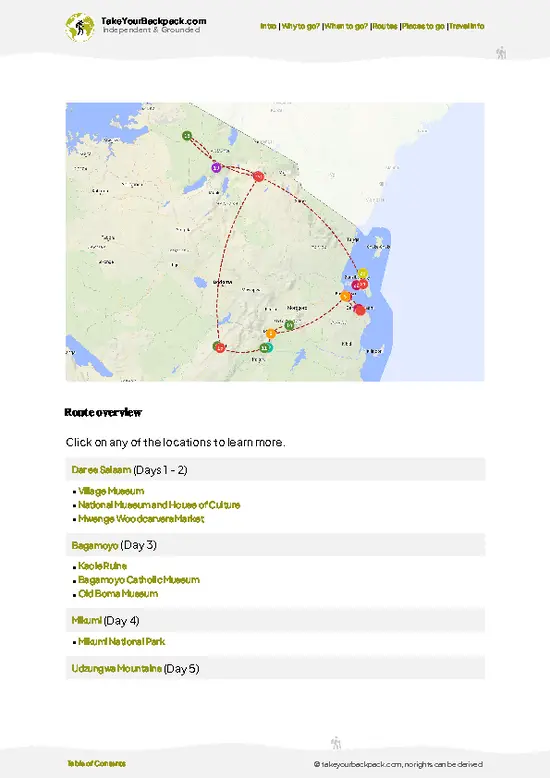
example page 0 from our offline Travel Guide for Tanzania
example page 1 from our offline Travel Guide for Tanzania
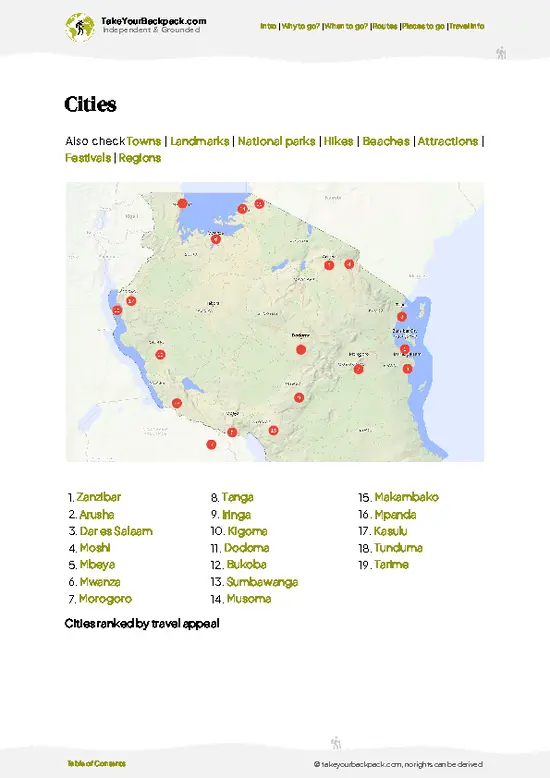
example page 2 from our offline Travel Guide for Tanzania
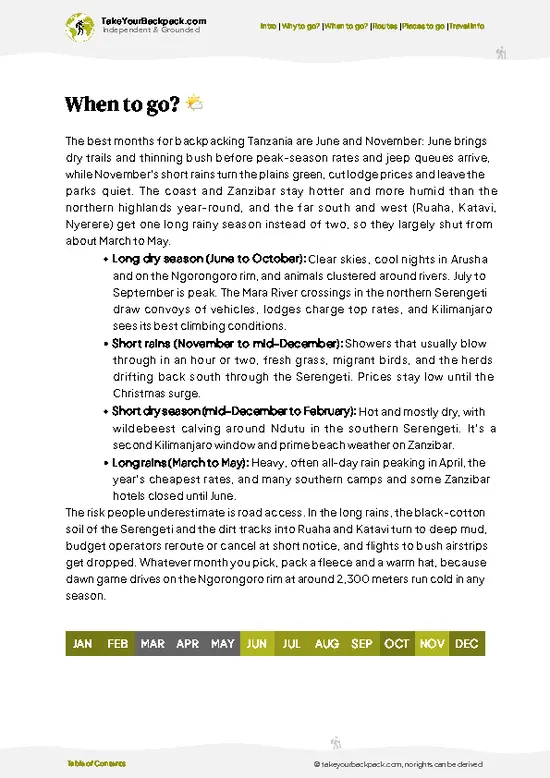
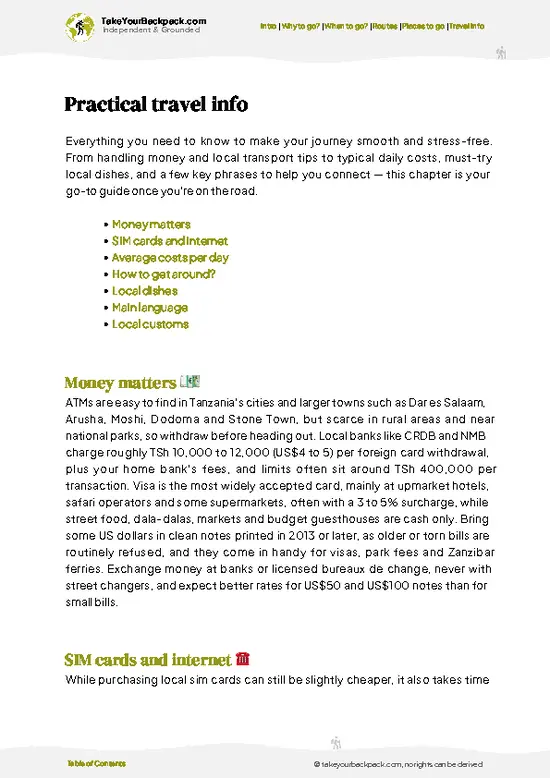
example page 3 from our offline Travel Guide for Tanzania
example page 4 from our offline Travel Guide for Tanzania
example page 5 from our offline Travel Guide for Tanzania
example page 6 from our offline Travel Guide for Tanzania
example page 7 from our offline Travel Guide for Tanzania
Loading the map 🌍
CLICK TO FILTER
cities
towns
landmarks
national parks
hikes
beaches
attractions
festivals
regions
SHOW COUNTRY’S BESTSHOW ALL

✨ Why go?
Ranked #27 town in Tanzania
Reasons people choose to visit here

Usa River gives you Mount Meru views, shady lanes and farm country without Arusha’s traffic and touts. Most travelers stay one to three nights, usually to recover after a safari or before climbing, and the pace suits slow travelers, couples and solo walkers who like quiet. You can wander coffee plantations on foot, visit the Meru foothills villages and eat at small roadside grills. Evenings are low-key, with a drink at a lodge garden and an early night.

💡 HighlightsWhat this place is best known for

  1. Meru Forest and Arboretum area walks: Shaded tracks near the Ngare Sero side of town, with colobus monkeys and birdsong. Go early morning. Small village or guide fees, roughly US$5 to 15, 2 to 3 hours.
  2. Local coffee farm visits: Small growers and estates on the slopes let you see picking, drying and roasting, then taste the result. Harvest runs roughly June to October. Tours cost about US$10 to 25, 1.5 to 2 hours.
  3. Usa River Sunday market area: Stalls of produce, secondhand clothes and household goods along the main road, where you can try roasted maize and fresh fruit. Go in the morning. Free to browse, 1 hour.
  4. Lake Duluti shore walk: A crater lake ringed by forest with a path around it, good for kingfishers and monkeys. Mornings are coolest. Entry about US$5 to 10, 1 to 2 hours.
  5. Sunset views of
… read more 👉
  1. Meru Forest and Arboretum area walks: Shaded tracks near the Ngare Sero side of town, with colobus monkeys and birdsong. Go early morning. Small village or guide fees, roughly US$5 to 15, 2 to 3 hours.
  2. Local coffee farm visits: Small growers and estates on the slopes let you see picking, drying and roasting, then taste the result. Harvest runs roughly June to October. Tours cost about US$10 to 25, 1.5 to 2 hours.
  3. Usa River Sunday market area: Stalls of produce, secondhand clothes and household goods along the main road, where you can try roasted maize and fresh fruit. Go in the morning. Free to browse, 1 hour.
  4. Lake Duluti shore walk: A crater lake ringed by forest with a path around it, good for kingfishers and monkeys. Mornings are coolest. Entry about US$5 to 10, 1 to 2 hours.
  5. Sunset views of Mount Meru from the farm lanes: Quiet dirt roads give open views of the peak when clouds clear, usually early morning or late afternoon. Free, 1 hour.
Around Usa River, day trips reach Arusha National Park, Mount Meru’s lower trails and the Maasai Boma cultural visits nearby. The market stroll and the sunset views of Mount Meru cost nothing.
Spotted a mistake or missing something? Contact us.

Things to do near Usa River

Ratings based on Tripadvisor reviews. When you book through this link, you support our work at no extra cost to you.

🏘️ NeighborhoodsKey areas and districts to know

Usa River stretches along the Arusha-Moshi highway, so pick your patch and walk it. Everything worth seeing sits within a few kilometers.
  • Highway Strip: This is the noisy spine, with the daladala stops, produce stalls, roadside grills and phone shops. Grab nyama choma and chips here, then move on. Walkable, but dusty and loud.
  • Momella Road and the Coffee Estates: Head north toward the mountain. Quiet lanes, coffee farms, flower greenhouses and Mount Meru views on clear mornings. Walk it early, before the heat builds.
  • Lake Duluti Side: Skip nothing here. The forest-ringed crater lake has a shaded trail and a calm, birdy feel, and it is easy to reach by short ride.
  • Tengeru Market Area: Go on market day for fruit, vegetables and a proper local crowd. Evenings stay sleepy everywhere, so nightlife means a cold Kilimanjaro beer on a veranda.

⌛️ 1 daySeeing the highlights in 24 hours

A slow farm-and-forest day. 8:00 AM, Breakfast on the main road: Start with chapati and chai at a roadside café, then walk toward the lanes. 9:00 AM, Coffee farm tour: Follow the tracks to a small grower, watch the roasting and taste a cup. 11:30 AM, Meru foothill lanes: Walk the quiet back roads past banana plots and village homes, an area few visitors bother with. 1:00 PM, Lunch: Eat grilled meat and ugali at a local grill. 3:00 PM, Forest walk: Take a short ride to the shaded forest tracks and look for monkeys. 5:30 PM, Mountain views: Settle in a lodge garden and watch Meru clear of cloud.

🌤️ When to go?Choosing the right time of year

Dry months from late June to October suit backpackers best, with cool mornings and Meru and Kilimanjaro often showing.
  • Dry and Cool (Jun to Oct): Days reach 24 to 28°C (75 to 82°F), nights drop to 12 to 15°C (54 to 59°F). Safari traffic lifts prices.
  • Hot Season (Dec to Feb): Highs of 28 to 32°C (82 to 90°F), short showers, clear peaks.
  • Long Rains (Mar to May): Heavy afternoon downpours, muddy roads, cheapest beds, few crowds.
  • Short Rains (Nov): Light, brief showers.
Daylight stays close to 12 hours all year, so plan walks before late afternoon.

source: climatestotravel.comJANJanuary: fair for travelingFEBFebruary: fair for travelingMARMarch: fair for travelingAPRApril: fair for travelingMAYMay: fair for travelingJUNJune: highly recommended for travelingJULJuly: excellent for travelingAUGAugust: excellent for travelingSEPSeptember: highly recommended for travelingOCTOctober: excellent for travelingNOVNovember: fair for travelingDECDecember: fair for traveling
when-to-go

✈️ The backpacker research shortcutTanzania Travel Guide

An offline-friendly backpacking guide with optimized travel routes, ranked highlights, transport advice, and the best areas to stay.
example page 0 from our offline Travel Guide for Tanzania
example page 1 from our offline Travel Guide for Tanzania
example page 2 from our offline Travel Guide for Tanzania
example page 3 from our offline Travel Guide for Tanzania
example page 4 from our offline Travel Guide for Tanzania
example page 5 from our offline Travel Guide for Tanzania
example page 6 from our offline Travel Guide for Tanzania
example page 7 from our offline Travel Guide for Tanzania
The digital guide (396 pages) contains:
✅ 103 highlights, ranked by travel appeal
✅ Optimized 7, 14 & 21-day travel routes
✅ Cities, national parks, landmarks, beaches
✅ How to get around
✅ Offline-friendly for travel without Wi-Fi
👉 Click to see all 30+ guide features

📅 Plan smarter in minutes, not weeks
✅ Month by month travel advice
✅ Festivals & national holidays
✅ Budget expectations

🗺️ Go to the right places, skip the overrated ones
✅ Honest pros & cons of destinations
✅ Top hikes, parks & viewpoints
✅ Lesser-known places most travelers miss
✅ Clear “worth it vs skip it” guidance

🛏️ Travel smoothly without rookie mistakes
✅ Best areas to stay
✅ Transport systems explained simply
✅ Common scams & safety advice
✅ SIM cards, money & practical tips

🌍 Understand the country, not just visit it
✅ Culture & traditions
✅ 52 Essential phrases & customs
✅ Festivals worth planning around
✅ Traveler-friendly historical context
✅ Insights that make places more meaningful

📱 Built for real travel conditions
✅ Fully downloadable PDF
✅ Works completely offline
✅ Optimized for phone use
✅ Useful in remote areas & buses
✅ Everything in one place
Stop searching, start planning
Get instant access to your full guide. 30‑day money-back guarantee.
+ Add another guide for just

By proceeding you agree to our terms.
Sent to your inbox immediately after payment • 100% Secure Checkout
Best Backpacking Travel Advisor 2025 tourism awardBest Backpacking
Travel Advisor
2025
What others say about Take Your Backpack Guides:
⭐⭐⭐⭐⭐
Fantastic, amazing amount of information!
⭐⭐⭐⭐⭐
My goodness this is amazing, it's what I've been looking for hats off too you!
⭐⭐⭐⭐⭐
I think this is absolutely BRILLIANT
⭐⭐⭐⭐
Very complete and informative. It's still missing places, but I gotta to commend you
⭐⭐⭐⭐⭐
This is truly amazing, thank you, can't wait to explore it with my kids!
⭐⭐⭐⭐⭐
Awesome resource, thank you!
⭐⭐⭐⭐⭐
This is amazing! Can't wait to explore the ones I haven't seen
⭐⭐⭐⭐
I love this! Well done, great idea.
⭐⭐⭐⭐⭐
Thanks for taking the time to make this gem!
⭐⭐⭐⭐⭐
This might be the best website I've ever seen.
⭐⭐⭐⭐⭐
Congratulations, and thank you so much for your work; it's incredibly valuable.
⭐⭐⭐⭐
In all seriousness I think you did a great job pointing out the important spots
⭐⭐⭐⭐⭐
10/10 very good
⭐⭐⭐⭐⭐
As someone who's only just starting to visit regularly this is awesome, thank you.
⭐⭐⭐⭐
Thank you very much! I'm going to visit my dad, it's going to be very useful!
⭐⭐⭐⭐⭐
This is really cool! We'll be travelling for the first time and this definitely come in handy.
⭐⭐⭐⭐⭐
You are now our minister of culture, congratulations 👨‍💼
⭐⭐⭐⭐⭐
Just wanted to tell you that this is a pearl! Going to follow your recommendations.
⭐⭐⭐⭐⭐
This is so cool. I'll definitely be using the resource for my travels soon.
⭐⭐⭐⭐⭐
This is very impressive! Good work.
⭐⭐⭐⭐⭐
This is an amazing and informative site. Very well done!

🛏️ Where to stay?Where staying makes the most sense

Choose the Momella Road side or the stretch near Lake Duluti for a budget stay. Both are quiet at night, with green compounds, small guesthouses and a few backpacker-friendly options, though dorm beds are limited, so book ahead in high season. Prices stay below those of Arusha. Highway-side spots offer easy minibus access but carry truck noise through the night. If you want nightlife and a wider hostel choice, sleep in Arusha and treat this area as a calmer alternative, about 30 to 45 minutes away by minibus.

🚌 Getting aroundGetting around like a local

Taking a private taxi from the highway for every hop is the costliest habit here, when shared minibuses cost a fraction. Usa River sits on the main road between Arusha and Moshi, so movement is easy and cheap. The center is small and walkable, but the estates and Lake Duluti are too spread out to cover on foot alone.
  • Daladala (minibus): The best value. Rides to Arusha cost US$0.50 to 1 and take 30 to 45 minutes, running roughly from dawn to early evening. Expect packed seats and loud music.
  • Bodaboda (motorcycle taxi): Perfect for the side roads to Lake Duluti or Momella Road, usually US$1 to 3. Agree the price first and ask for a helmet.
  • Taxi: Worth it only after dark or with heavy bags. Arusha costs about US$15 to 25, and Kilimanjaro Airport about US$10 to 15, since it is very close.
  • Walking:
… read more 👉
Taking a private taxi from the highway for every hop is the costliest habit here, when shared minibuses cost a fraction. Usa River sits on the main road between Arusha and Moshi, so movement is easy and cheap. The center is small and walkable, but the estates and Lake Duluti are too spread out to cover on foot alone.
  • Daladala (minibus): The best value. Rides to Arusha cost US$0.50 to 1 and take 30 to 45 minutes, running roughly from dawn to early evening. Expect packed seats and loud music.
  • Bodaboda (motorcycle taxi): Perfect for the side roads to Lake Duluti or Momella Road, usually US$1 to 3. Agree the price first and ask for a helmet.
  • Taxi: Worth it only after dark or with heavy bags. Arusha costs about US$15 to 25, and Kilimanjaro Airport about US$10 to 15, since it is very close.
  • Walking: Use it for the highway strip and quiet lanes. Go early, before sun and dust get serious.

👛 Costs (as of 22 October 2026)Typical daily expenses

Usa River costs about US$28 to 58 a day for a backpacker, depending on how often you eat out and how many activities you add.
CategoryBudget RangeLocal Reality
Dorm accommodationUS$10 to 18Limited dorms; basic guesthouse rooms are common and cheaper than in Arusha.
MealsUS$8 to 14Plates of rice, beans or nyama choma cost US$2 to 4 locally.
Local transportUS$2 to 5Daladalas cost less than US$1; bodabodas US$1 to 3.
Basic activities/entry feesUS$5 to 15Lake Duluti and local walks are cheap; national parks cost far more.
MiscellaneousUS$3 to 6Water, SIM data, snacks and tips.
Total Daily BudgetUS$28 to 58Per person, per day, in high season.
Eat where the drivers eat and carry change, because daladala fares are cheaper in small coins.
⚠️ Prices can change and everyone travels differently, so take this as a rough guide. Hope it helps you plan your adventure!

🚌 Day tripsExploring the surroundings

Usa River works well as a calm base, with daladalas and motorcycle taxis reaching most nearby sights in under an hour.Lake Duluti: Only a short ride away, this forested crater lake has a trail around it and canoes for paddling. Allow half a day and US$10 to 20 including entry and a boat. Go in the morning for birds and cooler air.
Arusha National Park: Giraffes, colobus monkeys and Meru views sit about 40 minutes away. Park fees are steep, roughly US$50 to 60 per person plus vehicle fees, so split a driver with others. Many first-timers forget that you cannot enter without a vehicle.
Arusha City: Minibuses cost US$0.50 to 1 for the 30 to 45 minute ride. Spend a day on the Central Market, the Cultural Heritage Centre and cheap lunches. Return before dark.
👉 Explore ArushaMoshi: About an hour east … read more 👉
Usa River works well as a calm base, with daladalas and motorcycle taxis reaching most nearby sights in under an hour.Lake Duluti: Only a short ride away, this forested crater lake has a trail around it and canoes for paddling. Allow half a day and US$10 to 20 including entry and a boat. Go in the morning for birds and cooler air.
Arusha National Park: Giraffes, colobus monkeys and Meru views sit about 40 minutes away. Park fees are steep, roughly US$50 to 60 per person plus vehicle fees, so split a driver with others. Many first-timers forget that you cannot enter without a vehicle.
Arusha City: Minibuses cost US$0.50 to 1 for the 30 to 45 minute ride. Spend a day on the Central Market, the Cultural Heritage Centre and cheap lunches. Return before dark.
👉 Explore ArushaMoshi: About an hour east by minibus for US$2 to 3. Go for the relaxed streets and Kilimanjaro views, especially in dry months.
👉 Explore Moshi

🍲 FoodWhat to Eat & Drink

In Usa River, food is a lively negotiation between tradition and fresh, local ingredients. You’ll want to dive into nyama choma—grilled meat, usually goat or beef, smoky and tender, often served with a side of ugali, a dense maize porridge that’s the backbone of many meals here. It’s simple but grounding, perfect for soaking up the rich flavors. Don’t miss out on mchicha, a spinach-like green cooked with peanuts or coconut milk, adding a creamy, earthy contrast.

Backpackers find their rhythm in the bustling markets and street stalls, where the air is thick with the scent of spices and sizzling charcoal. These spots are social hubs, informal and unpretentious, where locals gather over plates piled high. Casual eateries offer a chance to sit down and watch the world go by, often with a cold … read more 👉
In Usa River, food is a lively negotiation between tradition and fresh, local ingredients. You’ll want to dive into nyama choma—grilled meat, usually goat or beef, smoky and tender, often served with a side of ugali, a dense maize porridge that’s the backbone of many meals here. It’s simple but grounding, perfect for soaking up the rich flavors. Don’t miss out on mchicha, a spinach-like green cooked with peanuts or coconut milk, adding a creamy, earthy contrast.

Backpackers find their rhythm in the bustling markets and street stalls, where the air is thick with the scent of spices and sizzling charcoal. These spots are social hubs, informal and unpretentious, where locals gather over plates piled high. Casual eateries offer a chance to sit down and watch the world go by, often with a cold Tanzanian beer or a sweet, spiced chai in hand.

Eating here is relaxed but communal. Sharing food is common, and it’s polite to accept at least a taste when offered. Meals aren’t rushed; they’re moments to connect, so slow down and savor the textures and stories behind each bite.

🛡️ SafetyTraveler Safety Guide

Usa River is calm and low-key, and most problems are petty. Keep phones out of sight near the highway, where bag snatching from motorcycles can happen. Walk in daylight and take a taxi or bodaboda after dark, as lanes have little lighting. Solo travelers, including women, generally report few issues, but dress modestly. Touts around the highway may overcharge on tours and rides, so agree prices upfront and book safaris through licensed operators.

FAQTraveler FAQ

Usa River is worth a stop of a night or two if you like quiet, green settings and easy access to Arusha National Park and Lake Duluti. It is no party town, and sights are low-key. Its calm pace and cheaper beds than Arusha suit travelers preparing for or recovering from a safari.
Two to three days is enough for Usa River. That covers Lake Duluti, a walk through coffee estates on Momella Road, and a day trip to Arusha National Park (park fees around US$50 to 60). Add a day if you want Moshi or a slower pace.
Yes, Usa River works as a day trip from Arusha, about 30 to 45 minutes by daladala for US$0.50 to 1. Moshi is about an hour away by road. Most visitors use it as a calm base instead, since it lies conveniently between both and near Kilimanjaro Airport.
⚠️ Things can change over time, so always validate details locally before you go.

Other Tanzanian towns near Usa River

Explore more nearby:

  • Same—Mkomazi gate, Pare foothills, dry savanna, rhino sanctuary| 125 km away
  • Lushoto—Cliff viewpoints, terraced hikes, cool mist, farm cheese| 224 km away
  • Korogwe—Usambara gateway, produce market, river plain, old rail station| 266 km away

💡 Not sure where to go next?
Create a personalized itinerary for Tanzania including Usa River and the places that fit your trip.

Generate my itinerary

👉 Discover all towns

Or checkout all Tanzania has to offer (think cities, towns, villages, national parks, hikes, beaches, festivals)
Country photo of Tanzania

We 💚 feedbackIs it worth it?

Usa River trips go wrong when travelers rush through in an hour on the way to Arusha. Stay a night, rise early for clear Meru views, and bring a light jacket for the cool evenings.

✍️ Help improve this page!
The information on this page is based on in-depth research, insights shared by experienced travelers, and feedback from the local travel community in Tanzania. While every effort is made to keep the information accurate and current, conditions can change — so if you spot anything incorrect or outdated, please get in touch.


🙋‍♂️ Give feedback

👋 Meet the founderWho’s Behind Take Your Backpack?

Johan, backpacker and founder of TakeYourBackpackHi, I’m Johan (Netherlands 🇳🇱), the creator of TakeYourBackpack. Over the past 3 decades, I’ve backpacked through 90+ countries across six continents, gaining extensive experience with independent travel, long-term trips, and overland routes.

This site is built on a combination of firsthand travel experience and carefully curated insights from other backpackers. Many guides are based on places I’ve personally visited, while others bring together tips, observations, and practical advice shared by trusted travelers I’ve met along the way.

The goal is to provide realistic, experience-driven guidance — not generic itineraries — so you can explore destinations with better context, clearer expectations, and more confidence.