×

Thailand🇹🇭 | citiesChiang Raihill tribe markets, borderland temples, Mekong views | things to do and best time to go

Explore PhuketExplore Mae Hong Son

Backpacking in Chiang Rai
🏆 Top pickcity ranked #5
By Johan Kruseman 🇳🇱 | Updated June 6, 2026

Ten years ago Chiang Rai felt like Chiang Mai’s sleepy cousin at the end of the road; a few guesthouses, a bus station, and long quiet nights. Today it’s still calmer than Chiang Mai, but the secret’s out: more cafés, more boutique stays, more people coming just for the White Temple and zipping off again. You’re in Thailand’s far north, close to Laos and Myanmar, which makes it a smart overland hub, not just a temple stop. For backpackers, it’s cheap, walkable, and safe, with a compact center, a mellow night bazaar, and just enough bars to be social without turning into a party circus. Meeting other travelers is easy in hostels, harder on the streets. The trade-off: fewer “wow” sights than Chiang Mai or Pai, but more breathing room, more local life, and slower, quieter nights.

Discover everything you want to know in the 📖 Thailand Travel Guide.
Loading the map 🌍
CLICK TO FILTER
cities
towns
landmarks
national parks
hikes
beaches
attractions
festivals
regions
SHOW COUNTRY’S BESTSHOW ALL

✨ Why go?
Ranked #5 city in Thailand
Why visitors keep coming back

Chiang Rai is a strategic stop on your backpacking route through Thailand, offering a blend of highlights and affordability. The city is compact and walkable, making it easy to explore on foot. You’ll find a range of hostels that cater to budget travelers, providing a solid basecamp for day trips. The food scene is a delight, with street vendors serving up local dishes that won’t break the bank.

While Chiang Rai may not have the same nightlife buzz as its neighbors, it offers a laid-back vibe perfect for unwinding after a day of exploration. The city’s proximity to stunning natural landscapes and cultural sites means you can easily venture out for day trips without losing too much time.

If you’re looking for a place that balances comfort and value, Chiang Rai fits the bill. It’s ideal … read more 👉
Chiang Rai is a strategic stop on your backpacking route through Thailand, offering a blend of highlights and affordability. The city is compact and walkable, making it easy to explore on foot. You’ll find a range of hostels that cater to budget travelers, providing a solid basecamp for day trips. The food scene is a delight, with street vendors serving up local dishes that won’t break the bank.

While Chiang Rai may not have the same nightlife buzz as its neighbors, it offers a laid-back vibe perfect for unwinding after a day of exploration. The city’s proximity to stunning natural landscapes and cultural sites means you can easily venture out for day trips without losing too much time.

If you’re looking for a place that balances comfort and value, Chiang Rai fits the bill. It’s ideal for those who want to soak in local culture without the chaos of larger cities. Whether you stay a few days or just overnight, you’ll find it’s a worthwhile piece of your journey.
Want to include Chiang Rai in your Thailand route?
Create a personalized Thailand itinerary that includes Chiang Rai and the places that fit your trip — based on your travel style, budget, and available time. Get your route in seconds.

Generate my trip

💡 HighlightsWhat this place is best known for

Wat Rong Khun (The White Temple)
Chiang Rai’s most famous landmark is not your average temple—it’s a fever dream in white plaster and mirrored glass, designed by Thai artist Chalermchai Kositpipat. The architecture is both surreal and symbolic, with hands reaching from the underworld and pop-culture cameos hidden in the murals. Arrive early (doors open at 8:00 AM) to dodge the tour buses and catch the temple glowing in the morning light. Entry is about 100 THB. You’ll want at least 60-90 minutes to wander, gawk, and decode the details. The trade-off: you sacrifice solitude for spectacle, but the artistry is worth the crowd.

Wat Phra Kaew
Not to be confused with Bangkok’s Grand Palace, this is the original home of the Emerald Buddha. The temple grounds are lush and peaceful, with a museum that … read more 👉
Wat Rong Khun (The White Temple)
Chiang Rai’s most famous landmark is not your average temple—it’s a fever dream in white plaster and mirrored glass, designed by Thai artist Chalermchai Kositpipat. The architecture is both surreal and symbolic, with hands reaching from the underworld and pop-culture cameos hidden in the murals. Arrive early (doors open at 8:00 AM) to dodge the tour buses and catch the temple glowing in the morning light. Entry is about 100 THB. You’ll want at least 60-90 minutes to wander, gawk, and decode the details. The trade-off: you sacrifice solitude for spectacle, but the artistry is worth the crowd.

Wat Phra Kaew
Not to be confused with Bangkok’s Grand Palace, this is the original home of the Emerald Buddha. The temple grounds are lush and peaceful, with a museum that quietly outclasses most in northern Thailand for its collection of Lanna artifacts. Free entry, and you can see everything in 45-60 minutes. Go in the late afternoon when the light is soft and the monks are chanting. This is where you trade flash for authenticity—no Instagram mobs, just a living piece of Thai history.

Chiang Rai Night Bazaar
This is where the city’s pulse beats loudest after dark. The bazaar is compact but packed with local food stalls, handicrafts, and live music. Skip dinner elsewhere and graze your way through grilled river fish, sticky rice, and spicy sausage for under 200 THB. Arrive around 6:30 PM for the freshest food and best people-watching. Give yourself 1-2 hours. The trade-off: comfort is low (plastic stools, crowds), but the flavor and atmosphere are pure Chiang Rai.

Baan Dam Museum (The Black House)
Part art installation, part gothic fever dream, this sprawling compound by artist Thawan Duchanee is a counterpoint to the White Temple. Expect animal bones, dark teak halls, and a sense of beautiful unease. Entry is 80 THB. Best visited mid-morning before the heat peaks. Allow 60-90 minutes. You trade a bit of travel time (20 minutes from the center by tuk-tuk) for a truly unique experience.

Wat Rong Suea Ten (Blue Temple)
A riot of sapphire and gold, this newer temple is a visual punch—think Buddhist tradition meets psychedelic color theory. Free to enter, and you can see it in 30-45 minutes. Go just before sunset for the best photos and a quieter vibe. The trade-off: it’s less historic, but the artistry and energy are undeniable.

Oub Kham Museum
A private collection of Lanna and Shan artifacts, this museum is a deep dive into the region’s past. Guided tours (in English) are included in the 300 THB entry, and you’ll need about 90 minutes. Visit in the heat of the day when outdoor sights are less appealing. You trade a bit of cash and time for a richer understanding of northern Thai culture.

Chiang Rai is compact, but if you’re itching for more, the region’s heavy hitters—like the Golden Triangle, Doi Tung Royal Villa, and the mountain tea fields of Doi Mae Salong—are all easy day trips. Doi Mae Salong, with its misty hills and Yunnanese noodles, is my personal favorite for a taste of the borderlands.
Spotted a mistake or missing something? Contact us.

Things to do in Chiang Rai

Ratings based on Tripadvisor reviews. When you book through this link, you support our work at no extra cost to you.

🏘️ NeighborhoodsNeighborhood guide to Chiang Rai

Chiang Rai offers a blend of culture and convenience, making it a backpacker’s playground. Here’s how the neighborhoods stack up:

City Center: This is the heartbeat of Chiang Rai. It’s walkable, with street food stalls and local markets around every corner. Costs are moderate, and you can find budget hostels and guesthouses. The nightlife is low-key, perfect for unwinding after a day of exploring. Great for short stays, as everything is within reach.

Rim Kok: A bit more upscale, Rim Kok has a relaxed vibe with lush surroundings. It’s slightly pricier, but you’ll find charming cafes and boutique accommodations. Walkability is decent, though you might need a bike or tuk-tuk for longer distances. Ideal for longer stays if you want a quieter atmosphere.

San Khong: This area is a hidden treasure … read more 👉
Chiang Rai offers a blend of culture and convenience, making it a backpacker’s playground. Here’s how the neighborhoods stack up:

City Center: This is the heartbeat of Chiang Rai. It’s walkable, with street food stalls and local markets around every corner. Costs are moderate, and you can find budget hostels and guesthouses. The nightlife is low-key, perfect for unwinding after a day of exploring. Great for short stays, as everything is within reach.

Rim Kok: A bit more upscale, Rim Kok has a relaxed vibe with lush surroundings. It’s slightly pricier, but you’ll find charming cafes and boutique accommodations. Walkability is decent, though you might need a bike or tuk-tuk for longer distances. Ideal for longer stays if you want a quieter atmosphere.

San Khong: This area is a hidden treasure for those seeking local experiences. It’s less touristy, with affordable lodging and authentic eateries. The vibe is laid-back, and you can easily walk to nearby attractions. Perfect for backpackers looking to immerse themselves in local life for a few days.

Mae Fah Luang University Area: A bit further out, this area is vibrant with student life. Costs are low, and the energy is youthful. Public transport is accessible, making it easy to explore. Best for longer stays if you enjoy a lively atmosphere and cultural exchanges.

⌛️ 1 dayA smart one-day plan

Chiang Rai is a treasure trove of culture and creativity, often overshadowed by its more famous neighbors. This city is a canvas painted with unique temples, vibrant markets, and a laid-back vibe that invites exploration. You can easily spend a day here soaking in its charm without feeling rushed.

Start your morning at the iconic White Temple, or Wat Rong Khun. Arrive early to beat the crowds and marvel at its intricate designs that blend traditional Thai architecture with modern art. The dazzling white exterior, adorned with mirrored glass, is a sight that feels almost otherworldly. After soaking in the temple’s beauty, grab a quick breakfast at a nearby café. Try some khao soi, a local noodle dish that’s both comforting and delicious.

In the afternoon, head to the Blue Temple, or Wat Rong … read more 👉
Chiang Rai is a treasure trove of culture and creativity, often overshadowed by its more famous neighbors. This city is a canvas painted with unique temples, vibrant markets, and a laid-back vibe that invites exploration. You can easily spend a day here soaking in its charm without feeling rushed.

Start your morning at the iconic White Temple, or Wat Rong Khun. Arrive early to beat the crowds and marvel at its intricate designs that blend traditional Thai architecture with modern art. The dazzling white exterior, adorned with mirrored glass, is a sight that feels almost otherworldly. After soaking in the temple’s beauty, grab a quick breakfast at a nearby café. Try some khao soi, a local noodle dish that’s both comforting and delicious.

In the afternoon, head to the Blue Temple, or Wat Rong Suea Ten. Its striking blue hues and intricate murals offer a stark contrast to the White Temple, making it a perfect follow-up. Spend some time wandering through the nearby neighborhood, where you can find local artisans selling handmade crafts. This area is often overlooked by tourists, but it’s a great spot to pick up unique souvenirs and support local talent.

As evening approaches, make your way to the Chiang Rai Night Bazaar. This bustling market is a feast for the senses, with street food stalls serving everything from grilled meats to sweet desserts. Grab a plate of som tam (papaya salad) and enjoy the lively atmosphere. If you’re feeling adventurous, try the local specialty, fried insects—just for the experience!

Chiang Rai may be small, but it’s packed with character. By focusing on these key spots, you’ll leave with a deeper appreciation for the city’s unique blend of tradition and modernity.
Turn your Chiang Rai visit into an Thailand adventure
Build a complete Thailand route with Chiang Rai, hidden gems, must-see destinations, and realistic travel times included.

Generate my trip

🌤️ When to go?When to go for the best experience


  • Topic: Weather – Chiang Rai’s climate swings between a dry season (November to February) and a hot season (March to May), followed by a rainy monsoon (June to October). The dry season offers clear skies and minimal rain, perfect for trekking and exploring.

  • Topic: Temperature – During the dry season, expect comfortable highs around 25-28°C (77-82°F) and cooler nights dipping to 15-18°C (59-64°F). The hot season can push highs above 35°C (95°F), which drains energy fast if you’re hiking or sightseeing.

  • Topic: Daylight Hours – Daylight remains fairly consistent year-round, roughly 11 to 12 hours daily. This steady rhythm means you can plan early starts or late afternoons without worrying about losing daylight abruptly.

  • Topic: Crowds – Tourist numbers peak in the dry season, especially
read more 👉

  • Topic: Weather – Chiang Rai’s climate swings between a dry season (November to February) and a hot season (March to May), followed by a rainy monsoon (June to October). The dry season offers clear skies and minimal rain, perfect for trekking and exploring.

  • Topic: Temperature – During the dry season, expect comfortable highs around 25-28°C (77-82°F) and cooler nights dipping to 15-18°C (59-64°F). The hot season can push highs above 35°C (95°F), which drains energy fast if you’re hiking or sightseeing.

  • Topic: Daylight Hours – Daylight remains fairly consistent year-round, roughly 11 to 12 hours daily. This steady rhythm means you can plan early starts or late afternoons without worrying about losing daylight abruptly.

  • Topic: Crowds – Tourist numbers peak in the dry season, especially December and January, when the weather is ideal. This means higher prices and busier sites but also more social energy and events.

  • Topic: Seasonal Activities – The dry season hosts cultural festivals like the Flower Festival in February, adding local color. The rainy season, while less popular, offers lush landscapes and fewer tourists, but some trails may be slippery or closed.

  • Topic: Price Fluctuations – Accommodation and tours spike in the dry season due to demand. The rainy season sees significant discounts, but you trade off some comfort and accessibility.


Pro-tip: Aim for late November to early February to balance cool, dry weather with manageable crowds and prices—this window turns Chiang Rai’s rugged charm into a smooth, rewarding adventure.


source: climatestotravel.comJANJanuary: excellent for travelingFEBFebruary: excellent for travelingMARMarch: good for travelingAPRApril: fair for travelingMAYMay: fair for travelingJUNJune: fair for travelingJULJuly: fair for travelingAUGAugust: fair for travelingSEPSeptember: fair for travelingOCTOctober: good for travelingNOVNovember: highly recommended for travelingDECDecember: excellent for traveling
when-to-go

✈️ The backpacker research shortcutThailand Travel Guide

An offline-friendly backpacking guide with optimized travel routes, ranked highlights, transport advice, and the best areas to stay.
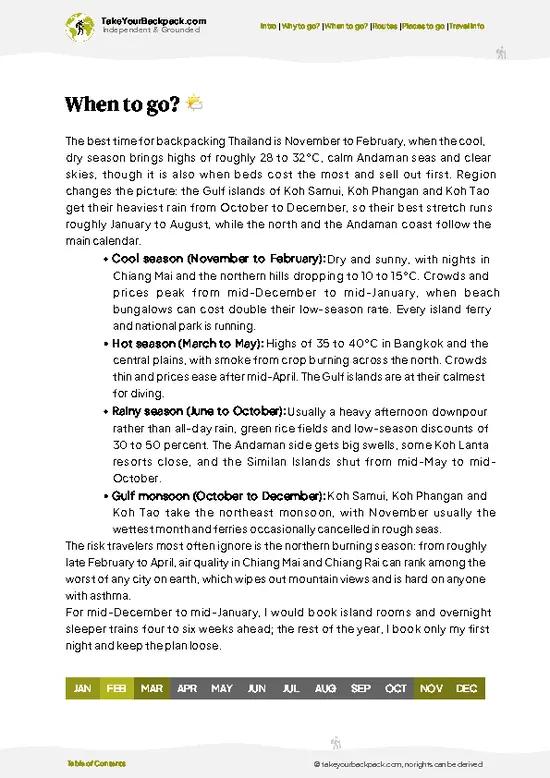
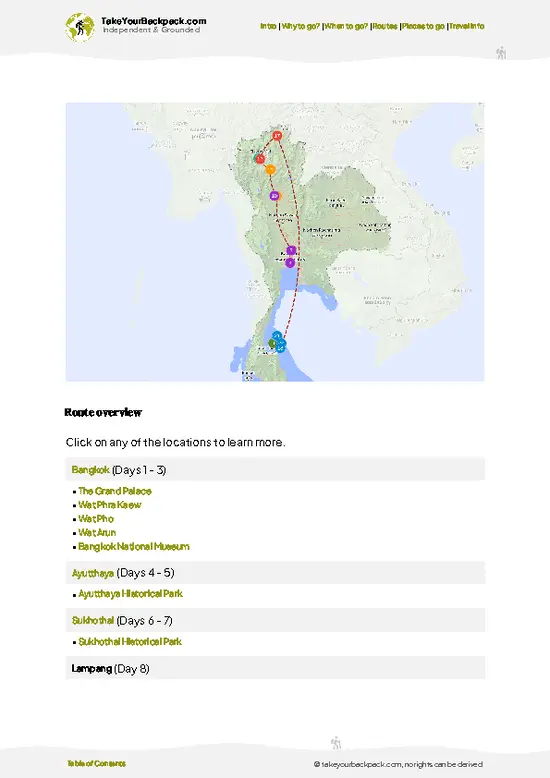
example page 0 from our offline Travel Guide for Thailand
example page 1 from our offline Travel Guide for Thailand
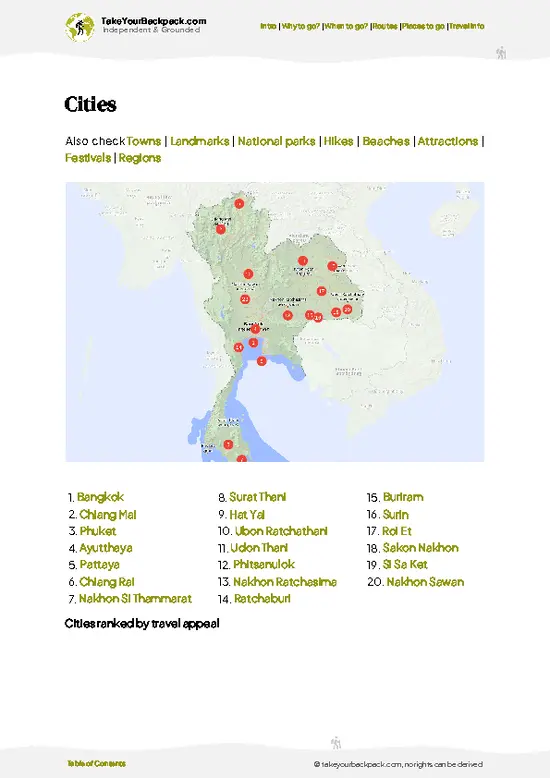
example page 2 from our offline Travel Guide for Thailand
example page 3 from our offline Travel Guide for Thailand
example page 4 from our offline Travel Guide for Thailand
example page 5 from our offline Travel Guide for Thailand
example page 6 from our offline Travel Guide for Thailand
example page 7 from our offline Travel Guide for Thailand
The digital guide (510 pages) contains:
139 highlights, ranked by travel appeal
Optimized 7, 14 & 21-day travel routes
Cities, national parks, landmarks, beaches
How to get around
Offline-friendly for travel without Wi-Fi
👉 Click to see all 30+ guide features

📅 Plan smarter in minutes, not weeks
Month by month travel advice
Festivals & national holidays
Budget expectations

🗺️ Go to the right places, skip the overrated ones
Honest pros & cons of destinations
Top hikes, parks & viewpoints
Lesser-known places most travelers miss
Clear “worth it vs skip it” guidance

🛏️ Travel smoothly without rookie mistakes
Best areas to stay
Transport systems explained simply
Common scams & safety advice
SIM cards, money & practical tips

🌍 Understand the country, not just visit it
Culture & traditions
52 Essential phrases & customs
Festivals worth planning around
Traveler-friendly historical context
Insights that make places more meaningful

📱 Built for real travel conditions
Fully downloadable PDF
Works completely offline
Optimized for phone use
Useful in remote areas & buses
Everything in one place
Save weeks of stressful planning
Get instant access to your full guide. 30‑day money-back guarantee.


By proceeding you agree to our terms.
Sent to your inbox immediately after payment • 100% Secure Checkout
Best Backpacking Travel Advisor 2025 tourism awardBest Backpacking
Travel Advisor
2025
What others say about Take Your Backpack Guides:
⭐⭐⭐⭐⭐
Fantastic, amazing amount of information!
⭐⭐⭐⭐⭐
My goodness this is amazing, it's what I've been looking for hats off too you!
⭐⭐⭐⭐⭐
I think this is absolutely BRILLIANT
⭐⭐⭐⭐
Very complete and informative. It's still missing places, but I gotta to commend you
⭐⭐⭐⭐⭐
This is truly amazing, thank you, can't wait to explore it with my kids!
⭐⭐⭐⭐⭐
Awesome resource, thank you!
⭐⭐⭐⭐⭐
This is amazing! Can't wait to explore the ones I haven't seen
⭐⭐⭐⭐
I love this! Well done, great idea.
⭐⭐⭐⭐⭐
Thanks for taking the time to make this gem!
⭐⭐⭐⭐⭐
This might be the best website I've ever seen.
⭐⭐⭐⭐⭐
Congratulations, and thank you so much for your work; it's incredibly valuable.
⭐⭐⭐⭐
In all seriousness I think you did a great job pointing out the important spots
⭐⭐⭐⭐⭐
10/10 very good
⭐⭐⭐⭐⭐
As someone who's only just starting to visit regularly this is awesome, thank you.
⭐⭐⭐⭐
Thank you very much! I'm going to visit my dad, it's going to be very useful!
⭐⭐⭐⭐⭐
This is really cool! We'll be travelling for the first time and this definitely come in handy.
⭐⭐⭐⭐⭐
You are now our minister of culture, congratulations 👨‍💼
⭐⭐⭐⭐⭐
Just wanted to tell you that this is a pearl! Going to follow your recommendations.
⭐⭐⭐⭐⭐
This is so cool. I'll definitely be using the resource for my travels soon.
⭐⭐⭐⭐⭐
This is very impressive! Good work.
⭐⭐⭐⭐⭐
This is an amazing and informative site. Very well done!

🛏️ Where to stay?How to pick the right area

Chiang Rai’s backpacker sweet spot is the area around the Night Bazaar and the Old City. This zone nails the balance between safety, social buzz, and budget-friendly options. You’ll find a cluster of hostels here, which means easy access to fellow travelers without the isolation of more residential neighborhoods. The vibe is relaxed but lively, with street food stalls, cafes, and bars that encourage mingling after a day of exploring.

Compared to the quieter, more local-focused neighborhoods on the city’s outskirts, this central pocket offers a clear advantage: convenience. You’re a short walk … read more 👉
Chiang Rai’s backpacker sweet spot is the area around the Night Bazaar and the Old City. This zone nails the balance between safety, social buzz, and budget-friendly options. You’ll find a cluster of hostels here, which means easy access to fellow travelers without the isolation of more residential neighborhoods. The vibe is relaxed but lively, with street food stalls, cafes, and bars that encourage mingling after a day of exploring.

Compared to the quieter, more local-focused neighborhoods on the city’s outskirts, this central pocket offers a clear advantage: convenience. You’re a short walk from key temples and the bus station, which cuts down on transport time and costs. The streets are well-lit and busy enough to feel secure, but not so crowded that you lose the laid-back charm Chiang Rai is known for.

If you stray too far north or east, you’ll hit areas that are quieter and cheaper but lack the social infrastructure backpackers thrive on. So, if your goal is to meet people, swap stories, and keep your logistics tight, the Night Bazaar-Old City corridor is your strategic base camp. It’s where comfort, cost, and connection intersect without compromise.

🚌 Getting aroundMoving around without the hassle

Chiang Rai moves at its own rhythm—less a strict timetable and more a pulse you tune into. It’s not about catching the exact bus at the exact minute; it’s about reading the flow of the streets, the ebb and swell of locals and tourists alike. The city’s transit system is a blend of laid-back timing and practical hustle, where a little patience often wins you a smoother ride. Your choices here are a dance between saving time, spending less, and grabbing comfort when you can. Knowing the trade-offs means you’re not just getting from A to B—you’re mastering the city’s tempo.


  • Walking: Chiang Rai’s compact downtown is a walker’s playground. No cost, full control over your pace, and the best way to soak in street life and local markets. Expect to spend 10-30 minutes between major spots. Comfort
read more 👉
Chiang Rai moves at its own rhythm—less a strict timetable and more a pulse you tune into. It’s not about catching the exact bus at the exact minute; it’s about reading the flow of the streets, the ebb and swell of locals and tourists alike. The city’s transit system is a blend of laid-back timing and practical hustle, where a little patience often wins you a smoother ride. Your choices here are a dance between saving time, spending less, and grabbing comfort when you can. Knowing the trade-offs means you’re not just getting from A to B—you’re mastering the city’s tempo.


  • Walking: Chiang Rai’s compact downtown is a walker’s playground. No cost, full control over your pace, and the best way to soak in street life and local markets. Expect to spend 10-30 minutes between major spots. Comfort is high if you like fresh air and zero waiting, but it’s slower and can be hot midday.


  • Songthaews (Red Trucks): The backbone of local transit. These shared pickup trucks run on flexible routes with no fixed schedules, usually starting around 6 AM and winding down by 9 PM. Fares hover around 20-30 THB per ride. They’re cheap and frequent but can get crowded and offer minimal comfort. Speed depends on how many stops they make, so factor in some unpredictability.


  • Local Buses: Limited but useful for longer hauls, like trips to the airport or outskirts. They run on rough schedules, roughly 6 AM to 6 PM, with fares around 30-50 THB. Slower than songthaews but more comfortable and air-conditioned. Ideal if you want a break from the heat and don’t mind a longer ride.


  • Motorbike Taxis: The fastest way to cut through traffic and reach off-route destinations. Available 24/7, prices start at about 40 THB for short trips. They offer speed and door-to-door convenience but sacrifice safety and comfort. Perfect for solo travelers who value time over a smooth ride.


  • Grab (Ride-Hailing App): For those moments when you want a private, air-conditioned ride without the hassle of haggling. Prices vary but expect to pay 2-3 times more than songthaews. Available most of the day, it’s the comfort and reliability option that costs you time saved and a bigger chunk of your budget.

👛 Costs (as of 14 June 2026)Typical daily expenses

Backpacking in Chiang Rai offers a clear trade-off between cost and comfort, with prices that let you stretch your budget or indulge a bit without breaking the bank. Here’s the breakdown of what you’re likely to spend daily as an independent traveler navigating this northern Thai city.
  • Dorm Accommodation (High Season): Expect to pay around $6 to $10 per night. High season pushes prices up slightly due to demand, but dorms remain basic—clean, fan-cooled rooms with shared bathrooms. It’s a no-frills setup that keeps your lodging budget lean.
  • Dorm Accommodation (Off-Season): Prices drop to about $4 to $7 per night. The off-season brings quieter hostels and better bargaining power. You might snag a fan dorm bed for less than $5 if you hunt around.
  • Meals: Street food and local eateries dominate
read more 👉
Backpacking in Chiang Rai offers a clear trade-off between cost and comfort, with prices that let you stretch your budget or indulge a bit without breaking the bank. Here’s the breakdown of what you’re likely to spend daily as an independent traveler navigating this northern Thai city.
  • Dorm Accommodation (High Season): Expect to pay around $6 to $10 per night. High season pushes prices up slightly due to demand, but dorms remain basic—clean, fan-cooled rooms with shared bathrooms. It’s a no-frills setup that keeps your lodging budget lean.
  • Dorm Accommodation (Off-Season): Prices drop to about $4 to $7 per night. The off-season brings quieter hostels and better bargaining power. You might snag a fan dorm bed for less than $5 if you hunt around.
  • Meals: Street food and local eateries dominate here. Budget around $3 to $6 per day if you stick to simple dishes like khao soi or grilled meats. Splurging on a western-style meal or a nicer café might push you closer to $8 or $10, but it’s easy to keep food costs low without sacrificing flavor.
  • Local Transport: Tuk-tuks and songthaews (shared pickup trucks) are the go-to. A typical short ride costs about $0.50 to $1.50. Budget $2 to $4 daily if you’re hopping around town frequently.
  • City Transport Pass: Chiang Rai doesn’t have a formal city transport pass like bigger cities. Instead, rely on cash fares for tuk-tuks or rent a motorbike for roughly $6 to $10 per day if you want freedom and speed.
  • Basic Activities/Entry Fees: Temples and local museums usually charge between $1 and $3. More touristy spots or guided tours can run $5 to $10. Budget $5 to $8 daily if you plan to explore a few sites.
  • Miscellaneous Expenses: This covers bottled water, snacks, occasional coffee, or small souvenirs. Around $2 to $4 daily keeps you covered without surprises.

Add it all up, and you’re looking at a daily budget roughly between $15 and $30. The lower end means embracing the simplest dorms, street food, and minimal transport, while the upper end lets you enjoy a bit more comfort and flexibility. Chiang Rai’s charm is accessible without a hefty price tag, but knowing where your money goes lets you decide if you want to save or savor.
⚠️ Prices can change and everyone travels differently, so take this as a rough guide. Hope it helps you plan your adventure!

🚌 Day tripsShort trips worth adding

Chiang Rai is a backpacker’s dream base for day trips, offering a mix of culture, nature, and adventure without breaking the bank. Here are some standout options that are worth your time and energy.

**White Temple (Wat Rong Khun)**
This surreal masterpiece is not just a temple; it’s an artistic statement. The dazzling white exterior, adorned with mirrored glass, creates a striking contrast against the lush surroundings. It’s about a 30-minute drive from Chiang Rai, making it an easy morning excursion. Expect to spend around 50 baht for entry, and don’t forget your camera—this place is Instagram gold. A common mistake is underestimating the time needed to explore; plan for at least two hours to soak it all in.


**Golden Triangle**
Dive into the history of opium trade at this iconic … read more 👉
Chiang Rai is a backpacker’s dream base for day trips, offering a mix of culture, nature, and adventure without breaking the bank. Here are some standout options that are worth your time and energy.

**White Temple (Wat Rong Khun)**
This surreal masterpiece is not just a temple; it’s an artistic statement. The dazzling white exterior, adorned with mirrored glass, creates a striking contrast against the lush surroundings. It’s about a 30-minute drive from Chiang Rai, making it an easy morning excursion. Expect to spend around 50 baht for entry, and don’t forget your camera—this place is Instagram gold. A common mistake is underestimating the time needed to explore; plan for at least two hours to soak it all in.


**Golden Triangle**
Dive into the history of opium trade at this iconic meeting point of Thailand, Laos, and Myanmar. The drive takes about an hour and a half, but the views along the Mekong River are worth every minute. You can explore local markets and even take a boat ride for around 300 baht. The best time to visit is early morning to avoid the heat and crowds. Many first-timers miss the chance to visit the Hall of Opium Museum—don’t skip it; it adds depth to the experience.


**Baan Dam Museum (Black House)**
This unique collection of structures showcases the darker side of Thai art. It’s about a 30-minute ride from Chiang Rai, and the entry fee is around 50 baht. The museum’s eerie yet captivating vibe offers a stark contrast to the White Temple. Aim for a visit in the afternoon when the light plays beautifully on the architecture. A common pitfall is rushing through; take your time to appreciate the intricate details and stories behind each piece.


**Doi Tung**
For nature lovers, Doi Tung is a must. This mountain area features stunning gardens and a royal villa, all about an hour’s drive away. The entrance is free, but you might spend a bit on snacks or souvenirs. The best time to go is during the cool season, from November to February. Many backpackers overlook the hiking trails; don’t miss them—they offer breathtaking views and a chance to connect with the local flora.


**Khun Korn Waterfall**
A hidden treasure, this waterfall is a refreshing escape. It’s about a 30-minute drive, followed by a short hike. The entrance is free, and you can enjoy a picnic by the water. The rainy season (May to October) makes the falls more impressive, but be cautious of slippery paths. First-timers often underestimate the hike; wear good shoes and bring water.
Want to know what more Thailand offers?
The Thailand Travel Guide describes 139 highlights, from cities to national parks, from beaches to hikes

Get the Travel Guide -

🍲 FoodLocal Cuisine & Drinks

In **Chiang Rai**, the food scene is a vibrant tapestry of flavors that beckons every backpacker. Start with the **Khao Soi**, a creamy coconut curry noodle soup that’s both comforting and spicy. The aroma of fried shallots on top is enough to make your mouth water. Pair it with a side of **som tam**, a zesty green papaya salad that packs a punch.

Street food is where the magic happens. Wander through bustling **night markets** where sizzling skewers of grilled meat and fresh spring rolls fill the air with enticing scents. Don’t miss the **local rice dishes**; sticky rice served with mango is a sweet treat that’s hard to resist.

When it comes to drinks, grab a **Thai iced tea** or a refreshing **coconut shake** from a street vendor. The locals often sip on these while chatting with friends, … read more 👉
In **Chiang Rai**, the food scene is a vibrant tapestry of flavors that beckons every backpacker. Start with the **Khao Soi**, a creamy coconut curry noodle soup that’s both comforting and spicy. The aroma of fried shallots on top is enough to make your mouth water. Pair it with a side of **som tam**, a zesty green papaya salad that packs a punch.

Street food is where the magic happens. Wander through bustling **night markets** where sizzling skewers of grilled meat and fresh spring rolls fill the air with enticing scents. Don’t miss the **local rice dishes**; sticky rice served with mango is a sweet treat that’s hard to resist.

When it comes to drinks, grab a **Thai iced tea** or a refreshing **coconut shake** from a street vendor. The locals often sip on these while chatting with friends, creating a laid-back atmosphere that invites you to join in.

Etiquette is simple: eat with your hands when it feels right, and don’t be shy about sharing dishes. This communal spirit enhances the experience, making every meal a celebration of flavors and connections.

🛡️ SafetySafety Tips and Common Scams in Chiang Rai

Chiang Rai is generally safe, but a few areas require a sharper eye. The night market is lively, but keep your belongings close. Solo travelers should stick to well-lit streets after dark.

Common scams include tuk-tuk drivers offering “special” tours that lead to overpriced shops. Always agree on a fare beforehand or use a ride-hailing app.

Watch for overly friendly locals who might offer unsolicited help; they often expect a tip. Street vendors can be persistent, but a polite “no, thank you” usually does the trick.

Stay aware of your surroundings, especially in crowded places. Trust your instincts—if something feels off, it probably is. By being mindful and prepared, you can navigate Chiang Rai’s charm without unnecessary hassle.

Other Thai cities near Chiang Rai

Explore more nearby:

  • Phayao—lakeside promenade, mountain backdrop, local fishing| 83 km away
  • Chiang Mai—old city moat, night bazaars, mountain temples| 154 km away
  • Nan—mountain backdrop, mural temples, Tai Lue culture| 159 km away

💡 Not sure where to go next?
Create a personalized itinerary for Thailand including Chiang Rai and the places that fit your trip.

Generate my itinerary

👉 Discover all cities

Or checkout all Thailand has to offer (think cities, towns, villages, national parks, hikes, beaches, festivals)
Country photo of Thailand

We 💚 feedbackIs it worth it?

Chiang Rai is a treasure trove of unique temples, especially the White Temple, which feels like stepping into a dream. The artistry is mind-blowing and worth every minute spent exploring. But be ready for the heat and humidity; it can be stifling, especially in the summer. Embrace the sweat, and you’ll find that the experience is as rich as the local culture. Just pack plenty of water and a good hat!

✈️ When did I visit Thailand?
Before visiting Vietnam (1998), I had some time in Thailand to explore the country.

✍️ Help improve this page!
The information on this page is based on my own backpacking experience in Thailand, supplemented with up-to-date research and feedback from other travelers. Travel details can change, so if you notice anything outdated or incomplete, feel free to let me know.


🙋‍♂️ Give feedback

👋 Meet the founderWho’s Behind Take Your Backpack?

Johan, backpacker and founder of TakeYourBackpackHi, I’m Johan (Netherlands 🇳🇱), the creator of TakeYourBackpack. Over the past decade, I’ve backpacked through 80+ countries across six continents, gaining extensive experience with independent travel, long-term trips, and overland routes.

This site is built on a combination of firsthand travel experience and carefully curated insights from other backpackers. Many guides are based on places I’ve personally visited, while others bring together tips, observations, and practical advice shared by trusted travelers I’ve met along the way.

The goal is to provide realistic, experience-driven guidance — not generic itineraries — so you can explore destinations with better context, clearer expectations, and more confidence.

Get full Thailand guide •
Instant download • 139 highlights • Full Offline guide