×

Thailand🇹🇭 | citiesChiang Maiold city moat, night bazaars, mountain temples | things to do and best time to go

Explore BangkokExplore Nakhon Si Thammarat

Backpacking in Chiang Mai
🏆 Top pickcity ranked #2
By Johan Kruseman 🇳🇱 | Updated June 3, 2026

Most people arrive in Chiang Mai expecting a sleepy “spiritual retreat with cheap smoothies.” That version exists, but it’s only one slice of a city that’s busier, sharper, and more layered than the Instagram feed suggests. Chiang Mai sits in northern Thailand, up in the hills, a long way from Bangkok’s coast-and-islands circuit. For backpackers, it’s a high-value base: the Old City’s temple maze (Wat Phra Singh, Wat Chedi Luang), the night markets, and Nimmanhaemin’s cafés give you plenty to do without burning cash. It’s easy to move around, buses and songthaews are simple, and hostels make meeting people almost automatic. Downsides: air quality is rough in burning season, some “elephant sanctuaries” are ethically sketchy, and nightlife is tamer than Bangkok or Pai. It feels safer and calmer than those spots, more lived-in than pretty, and if you like slow-burn cities where you build routines, Chiang Mai quietly hooks you.

Discover everything you want to know in the 📖 Thailand Travel Guide.
Loading the map 🌍
CLICK TO FILTER
cities
towns
landmarks
national parks
hikes
beaches
attractions
festivals
regions
SHOW COUNTRY’S BESTSHOW ALL

✨ Why go?
Ranked #2 city in Thailand
Why visitors keep coming back

Chiang Mai is a backpacker’s haven for several compelling reasons. First, the city serves as a basecamp for day trips into the surrounding mountains and jungles, making it easy to explore without the hassle of constant packing and unpacking. The hostel scene here is vibrant and affordable, offering a mix of social atmospheres and private options, perfect for meeting fellow travelers or enjoying some solitude.

Food is another highlight; you can feast on street food that’s both delicious and cheap, allowing you to indulge without breaking the bank. The city is incredibly walkable, so you can easily navigate its charming streets, soaking in the local culture without needing a vehicle.

When the sun sets, Chiang Mai’s nightlife offers a range of options, from laid-back bars to lively night … read more 👉
Chiang Mai is a backpacker’s haven for several compelling reasons. First, the city serves as a basecamp for day trips into the surrounding mountains and jungles, making it easy to explore without the hassle of constant packing and unpacking. The hostel scene here is vibrant and affordable, offering a mix of social atmospheres and private options, perfect for meeting fellow travelers or enjoying some solitude.

Food is another highlight; you can feast on street food that’s both delicious and cheap, allowing you to indulge without breaking the bank. The city is incredibly walkable, so you can easily navigate its charming streets, soaking in the local culture without needing a vehicle.

When the sun sets, Chiang Mai’s nightlife offers a range of options, from laid-back bars to lively night markets, ensuring you can unwind after a day of exploration. Plus, it’s a convenient stop for onward travel, with connections to other parts of Thailand and beyond.

In short, Chiang Mai balances time, money, and comfort beautifully, making it a strategic stop on your backpacking route or a destination worth lingering in.
Want to include Chiang Mai in your Thailand route?
Create a personalized Thailand itinerary that includes Chiang Mai and the places that fit your trip — based on your travel style, budget, and available time. Get your route in seconds.

Generate my trip

💡 HighlightsEssential experiences to have while visiting Chiang Mai

  • Wat Phra Singh — A textbook Lanna temple tucked inside the old city walls, famous for its gilded Phra Singh Buddha and incredibly detailed mural work. It’s active, photogenic, and a great place to watch monks and locals go about daily rituals.
  • Wat Chedi Luang — The ruined, partially-collapsed chedi is atmospheric and steeped in Chiang Mai’s 14th-15th century history. Wander the terrace, feel the scale of old city power, and catch small prayer ceremonies or local festivals held nearby.
  • Wat Sri Suphan (Silver Temple) — This temple’s exterior and craftsmanship are covered in ornate silverwork from the local silversmithing district, so it’s a rare mix of sacred space and living craft tradition. Even if the main ordination hall has visiting restrictions at times, the surrounding workshops and
read more 👉
  • Wat Phra Singh — A textbook Lanna temple tucked inside the old city walls, famous for its gilded Phra Singh Buddha and incredibly detailed mural work. It’s active, photogenic, and a great place to watch monks and locals go about daily rituals.
  • Wat Chedi Luang — The ruined, partially-collapsed chedi is atmospheric and steeped in Chiang Mai’s 14th-15th century history. Wander the terrace, feel the scale of old city power, and catch small prayer ceremonies or local festivals held nearby.
  • Wat Sri Suphan (Silver Temple) — This temple’s exterior and craftsmanship are covered in ornate silverwork from the local silversmithing district, so it’s a rare mix of sacred space and living craft tradition. Even if the main ordination hall has visiting restrictions at times, the surrounding workshops and streets are worth exploring.
  • Sunday Walking Street (Ratchadamnoen Road) — A weekly explosion of local crafts, street food, performers and makers that sprawls from Tha Phae Gate into the old city. Tourist-leaning but still full of unique handicrafts and small stalls you won’t find elsewhere.
  • Warorot Market (Kad Luang) — Real local life: fresh produce, northern Thai snacks, textiles, and small wholesale stalls packed into a tight, chaotic market. Go early for the best food and to see Chiang Mai residents doing their daily shopping.
  • Three Kings Monument & Lanna Folklife Museum — The monument marks the city’s legendary founders and stands beside a small museum that explains Lanna history and customs. It’s short, sharp cultural context right in the heart of town.
  • Nimmanhaemin Road (Nimman) — Chiang Mai’s creative, cafe-heavy neighborhood where indie designers, galleries and modern Thai restaurants collide. Good for people-watching, specialty coffee, and a different, younger side of the city.
  • Wat Suan Dok — A wide temple compound with a striking white chedi holding royal ashes and several chedis you can walk among. It’s calm at sunset and used by students and monks from the nearby universities, so you get both architecture and quiet daily life.
  • Buak Hard Public Park — A small oasis inside the old city walls; joggers, chess players, and families hang out here. It’s great for a slow afternoon and sometimes hosts local events or small Muay Thai exhibitions.
  • Baan Kang Wat — A low-key artists’ village and cluster of craft studios on the city’s northwest side, perfect for slow browsing and meeting makers. Fewer crowds than the main markets and a surprisingly good spot for original ceramics, prints and coffee.
For close day trips outside the city, most people head to Wat Phra That Doi Suthep, Doi Inthanon National Park, the Elephant Nature Park (rescue center), or the Bua Thong “Sticky” Waterfalls — all easily reachable as full-day outings from Chiang Mai.
Spotted a mistake or missing something? Contact us.

Things to do in Chiang Mai

Ratings based on Tripadvisor reviews. When you book through this link, you support our work at no extra cost to you.

🏘️ NeighborhoodsNeighborhood guide to Chiang Mai

Chiang Mai is a backpacker’s playground, blending rich culture with a laid-back vibe. Here’s how to navigate its neighborhoods for the best experience.

Old City: This is the heart of Chiang Mai, where ancient temples and street markets collide. The vibe is vibrant yet relaxed, perfect for those who want to soak in history. Costs are moderate, with plenty of budget hostels and street food. Walkability is high; you can easily explore on foot. Nightlife is low-key, with a few bars and cafes. Ideal for short stays, as you can hit the main attractions quickly.

Nimmanhaemin: Known for its hipster scene, this area is packed with trendy cafes, boutiques, and art galleries. It’s a bit pricier but worth it for the atmosphere. Walkability is decent, though you might want a bike for longer distances. … read more 👉
Chiang Mai is a backpacker’s playground, blending rich culture with a laid-back vibe. Here’s how to navigate its neighborhoods for the best experience.

Old City: This is the heart of Chiang Mai, where ancient temples and street markets collide. The vibe is vibrant yet relaxed, perfect for those who want to soak in history. Costs are moderate, with plenty of budget hostels and street food. Walkability is high; you can easily explore on foot. Nightlife is low-key, with a few bars and cafes. Ideal for short stays, as you can hit the main attractions quickly.

Nimmanhaemin: Known for its hipster scene, this area is packed with trendy cafes, boutiques, and art galleries. It’s a bit pricier but worth it for the atmosphere. Walkability is decent, though you might want a bike for longer distances. Nightlife here is lively, with bars that attract a younger crowd. Great for longer stays if you enjoy a modern twist on traditional culture.

Chang Phuak: This neighborhood offers a more local experience, with street food stalls and markets. Costs are lower, making it budget-friendly. It’s walkable, but public transport is handy for reaching further spots. The vibe is quieter, perfect for those seeking a break from the tourist hustle. Suitable for longer stays, especially if you want to immerse yourself in local life.

Tha Phae Gate: A bustling area that serves as a gateway to the Old City. It’s lively, with plenty of shops and eateries. Costs are moderate, and it’s highly walkable. Nightlife is vibrant, with many options for evening entertainment. Ideal for short stays, as you can easily access major attractions.

⌛️ 1 dayHow to make the most of one day

Chiang Mai is a treasure trove of culture, history, and culinary delights, nestled in the mountains of northern Thailand. It’s a city where ancient temples coexist with vibrant street markets, and the scent of fresh spices fills the air. You can easily spend a day here, soaking in the essence of this charming locale without feeling rushed.

Start your morning in the Old City, where the remnants of ancient walls and moats whisper stories of the past. Grab a traditional Thai breakfast at a local spot like Khao Soi Khun Yai, where the rich, coconut curry noodle soup will kickstart your day. After breakfast, wander over to Wat Phra Singh, one of the city’s most revered temples. The intricate Lanna architecture and serene atmosphere make it a perfect spot for reflection.

As the sun climbs higher, … read more 👉
Chiang Mai is a treasure trove of culture, history, and culinary delights, nestled in the mountains of northern Thailand. It’s a city where ancient temples coexist with vibrant street markets, and the scent of fresh spices fills the air. You can easily spend a day here, soaking in the essence of this charming locale without feeling rushed.

Start your morning in the Old City, where the remnants of ancient walls and moats whisper stories of the past. Grab a traditional Thai breakfast at a local spot like Khao Soi Khun Yai, where the rich, coconut curry noodle soup will kickstart your day. After breakfast, wander over to Wat Phra Singh, one of the city’s most revered temples. The intricate Lanna architecture and serene atmosphere make it a perfect spot for reflection.

As the sun climbs higher, head to the Nimmanhaemin neighborhood, known for its trendy cafes and art galleries. Spend your afternoon exploring the local boutiques and perhaps indulge in a refreshing iced coffee at Ristr8to, a cafe famous for its artisanal brews. If you’re feeling adventurous, take a short ride to the nearby Huay Tung Tao Lake. It’s a bit off the typical tourist path, but the peaceful surroundings and bamboo huts make it a fantastic place to unwind and enjoy a picnic.

As evening approaches, return to the Old City for the Sunday Walking Street Market (if you’re there on a Sunday). The streets come alive with local artisans, street food vendors, and musicians. Sample everything from mango sticky rice to grilled skewers while soaking in the lively atmosphere.

Chiang Mai is a city that rewards those who take the time to explore its nooks and crannies. By focusing on these neighborhoods and experiences, you’ll leave with a deeper appreciation for its unique charm.
Turn your Chiang Mai visit into an Thailand adventure
Build a complete Thailand route with Chiang Mai, hidden gems, must-see destinations, and realistic travel times included.

Generate my trip

🌤️ When to go?Seasonal considerations and timing


  • Weather: Chiang Mai’s dry season from November to early February offers crisp, clear skies and minimal rain, making trekking and exploring a breeze. The wet season, May to October, brings heavy monsoon rains that can disrupt plans but also cool the air and green the landscape.

  • Temperature: During the cool season, expect daytime highs around 25-28°C (77-82°F) and nights dropping to 15°C (59°F), perfect for outdoor activities. The hot season (March-April) pushes temps up to 35-40°C (95-104°F), which can sap your energy fast.

  • Daylight Hours: Chiang Mai enjoys roughly 11-12 hours of daylight year-round, with slight variations. Longer daylight in the dry season means more time for hikes and markets before sunset.

  • Crowds: Peak tourist influx aligns with the cool, dry months, especially
read more 👉

  • Weather: Chiang Mai’s dry season from November to early February offers crisp, clear skies and minimal rain, making trekking and exploring a breeze. The wet season, May to October, brings heavy monsoon rains that can disrupt plans but also cool the air and green the landscape.

  • Temperature: During the cool season, expect daytime highs around 25-28°C (77-82°F) and nights dropping to 15°C (59°F), perfect for outdoor activities. The hot season (March-April) pushes temps up to 35-40°C (95-104°F), which can sap your energy fast.

  • Daylight Hours: Chiang Mai enjoys roughly 11-12 hours of daylight year-round, with slight variations. Longer daylight in the dry season means more time for hikes and markets before sunset.

  • Crowds: Peak tourist influx aligns with the cool, dry months, especially around Loy Krathong and New Year, so expect busier streets and higher prices. The wet season sees fewer travelers, offering a quieter, more local vibe.

  • Seasonal Activities: The cool season hosts major festivals like Yi Peng Lantern Festival, a visual feast worth timing your visit for. The hot season is quieter but great for off-peak deals and less crowded temples.

  • Price Fluctuations: Accommodation and flights spike during the cool season’s peak months. The wet season offers the best bargains but comes with the trade-off of unpredictable weather.


Pro-tip: Aim for late November to early December—cool, dry, festival-rich, and just before the tourist rush peaks—maximizing comfort and cultural immersion without the crowd chaos.


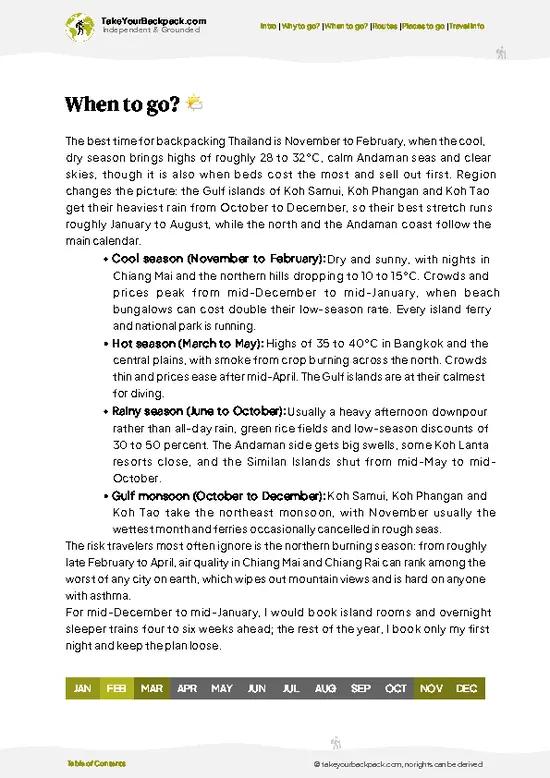
source: climatestotravel.comJANJanuary: excellent for travelingFEBFebruary: excellent for travelingMARMarch: good for travelingAPRApril: fair for travelingMAYMay: fair for travelingJUNJune: fair for travelingJULJuly: fair for travelingAUGAugust: fair for travelingSEPSeptember: fair for travelingOCTOctober: good for travelingNOVNovember: highly recommended for travelingDECDecember: highly recommended for traveling
when-to-go

✈️ The backpacker research shortcutThailand Travel Guide

An offline-friendly backpacking guide with optimized travel routes, ranked highlights, transport advice, and the best areas to stay.
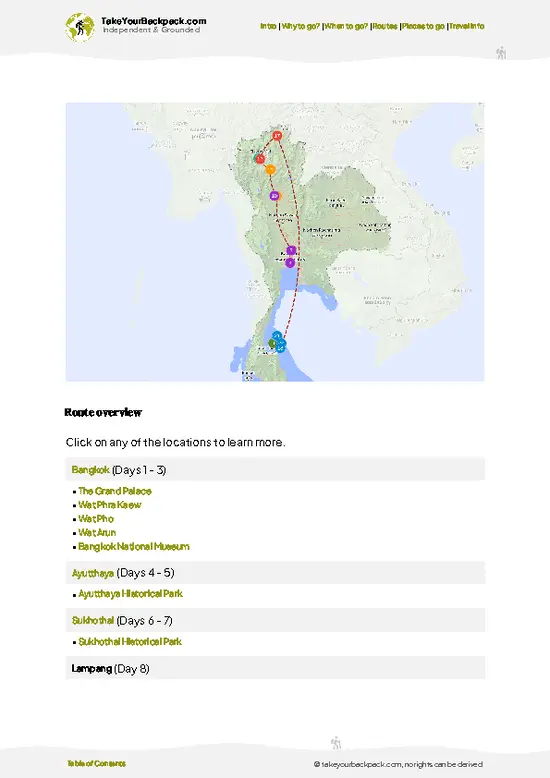
example page 0 from our offline Travel Guide for Thailand
example page 1 from our offline Travel Guide for Thailand
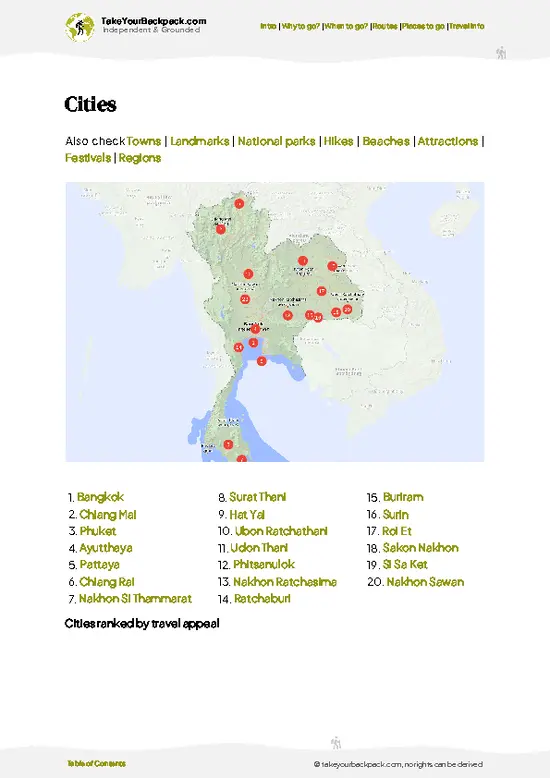
example page 2 from our offline Travel Guide for Thailand
example page 3 from our offline Travel Guide for Thailand
example page 4 from our offline Travel Guide for Thailand
example page 5 from our offline Travel Guide for Thailand
example page 6 from our offline Travel Guide for Thailand
example page 7 from our offline Travel Guide for Thailand
The digital guide (510 pages) contains:
139 highlights, ranked by travel appeal
Optimized 7, 14 & 21-day travel routes
Cities, national parks, landmarks, beaches
How to get around
Offline-friendly for travel without Wi-Fi
👉 Click to see all 30+ guide features

📅 Plan smarter in minutes, not weeks
Month by month travel advice
Festivals & national holidays
Budget expectations

🗺️ Go to the right places, skip the overrated ones
Honest pros & cons of destinations
Top hikes, parks & viewpoints
Lesser-known places most travelers miss
Clear “worth it vs skip it” guidance

🛏️ Travel smoothly without rookie mistakes
Best areas to stay
Transport systems explained simply
Common scams & safety advice
SIM cards, money & practical tips

🌍 Understand the country, not just visit it
Culture & traditions
52 Essential phrases & customs
Festivals worth planning around
Traveler-friendly historical context
Insights that make places more meaningful

📱 Built for real travel conditions
Fully downloadable PDF
Works completely offline
Optimized for phone use
Useful in remote areas & buses
Everything in one place
Save weeks of stressful planning
Get instant access to your full guide. 30‑day money-back guarantee.


By proceeding you agree to our terms.
Sent to your inbox immediately after payment • 100% Secure Checkout
Best Backpacking Travel Advisor 2025 tourism awardBest Backpacking
Travel Advisor
2025
What others say about Take Your Backpack Guides:
⭐⭐⭐⭐⭐
Fantastic, amazing amount of information!
⭐⭐⭐⭐⭐
My goodness this is amazing, it's what I've been looking for hats off too you!
⭐⭐⭐⭐⭐
I think this is absolutely BRILLIANT
⭐⭐⭐⭐
Very complete and informative. It's still missing places, but I gotta to commend you
⭐⭐⭐⭐⭐
This is truly amazing, thank you, can't wait to explore it with my kids!
⭐⭐⭐⭐⭐
Awesome resource, thank you!
⭐⭐⭐⭐⭐
This is amazing! Can't wait to explore the ones I haven't seen
⭐⭐⭐⭐
I love this! Well done, great idea.
⭐⭐⭐⭐⭐
Thanks for taking the time to make this gem!
⭐⭐⭐⭐⭐
This might be the best website I've ever seen.
⭐⭐⭐⭐⭐
Congratulations, and thank you so much for your work; it's incredibly valuable.
⭐⭐⭐⭐
In all seriousness I think you did a great job pointing out the important spots
⭐⭐⭐⭐⭐
10/10 very good
⭐⭐⭐⭐⭐
As someone who's only just starting to visit regularly this is awesome, thank you.
⭐⭐⭐⭐
Thank you very much! I'm going to visit my dad, it's going to be very useful!
⭐⭐⭐⭐⭐
This is really cool! We'll be travelling for the first time and this definitely come in handy.
⭐⭐⭐⭐⭐
You are now our minister of culture, congratulations 👨‍💼
⭐⭐⭐⭐⭐
Just wanted to tell you that this is a pearl! Going to follow your recommendations.
⭐⭐⭐⭐⭐
This is so cool. I'll definitely be using the resource for my travels soon.
⭐⭐⭐⭐⭐
This is very impressive! Good work.
⭐⭐⭐⭐⭐
This is an amazing and informative site. Very well done!

🛏️ Where to stay?Choosing the right base

Chiang Mai’s Old City is the undeniable hub for backpackers who want to maximize social energy without breaking the bank. It’s a compact, walled area where you can walk everywhere—temples, markets, street food stalls, and nightlife all within easy reach. The vibe here is a mix of chill and lively, with plenty of hostels that cater specifically to solo travelers and budget adventurers. You’ll find communal spaces that encourage meeting others, from rooftop bars to shared kitchens. Staying here means sacrificing a bit of quiet—expect some street noise and crowds—but you gain unbeatable convenience … read more 👉
Chiang Mai’s Old City is the undeniable hub for backpackers who want to maximize social energy without breaking the bank. It’s a compact, walled area where you can walk everywhere—temples, markets, street food stalls, and nightlife all within easy reach. The vibe here is a mix of chill and lively, with plenty of hostels that cater specifically to solo travelers and budget adventurers. You’ll find communal spaces that encourage meeting others, from rooftop bars to shared kitchens. Staying here means sacrificing a bit of quiet—expect some street noise and crowds—but you gain unbeatable convenience and a built-in social scene.

Just outside the Old City, the Nimmanhaemin neighborhood offers a different flavor. It’s more modern and trendy, with cafes, boutique shops, and a younger, more digital-nomad crowd. Hostels here tend to be a little pricier but offer more comfort and style. If you want to trade some budget for a hip atmosphere and a slightly quieter night’s sleep, this is your spot. It’s still walkable to the Old City but requires a short tuk-tuk ride or bike trip.

Other areas, like the Night Bazaar district, are more commercial and less backpacker-friendly. They’re noisy, crowded, and lack the community feel that makes Chiang Mai special for solo travelers. So, your choice boils down to the Old City for raw, social backpacker energy or Nimman for a polished, comfortable vibe with a price bump. Both deliver safety and accessibility, but your trade-off is between budget and atmosphere.

🚌 Getting aroundMoving around without the hassle

Chiang Mai moves at its own rhythm—a blend of old-world calm and bursts of modern hustle. It’s not a city where trains run like clockwork or where every bus arrives on the dot. Instead, it’s a place where intuition and local knowledge often trump rigid schedules. You’ll find that timing here is flexible, and the flow of the city’s transit reflects that: expect a little waiting, a little bargaining, and a lot of adapting. This isn’t a place to stress over missed connections; it’s a place to read the room, watch the streets, and slot yourself into the city’s pulse. Your choices between time, money, and comfort will shape your experience—knowing the trade-offs turns you from a tourist into a strategist.


  • Walking: The ultimate budget option and the best way to soak in Chiang Mai’s Old City
read more 👉
Chiang Mai moves at its own rhythm—a blend of old-world calm and bursts of modern hustle. It’s not a city where trains run like clockwork or where every bus arrives on the dot. Instead, it’s a place where intuition and local knowledge often trump rigid schedules. You’ll find that timing here is flexible, and the flow of the city’s transit reflects that: expect a little waiting, a little bargaining, and a lot of adapting. This isn’t a place to stress over missed connections; it’s a place to read the room, watch the streets, and slot yourself into the city’s pulse. Your choices between time, money, and comfort will shape your experience—knowing the trade-offs turns you from a tourist into a strategist.


  • Walking: The ultimate budget option and the best way to soak in Chiang Mai’s Old City charm. Most attractions are within a 20- to 30-minute stroll of each other. Zero cost, full control over your pace, and the freedom to detour into alleys and markets. Downsides? Heat and humidity can sap energy, and distances get less friendly if you’re venturing outside the core.


  • Red Songthaews (Shared Pickup Trucks): The backbone of local transit. These run on flexible routes, often without fixed schedules, and cost about 20-40 THB per ride. They’re slow compared to private taxis but cheap and plentiful. Comfort is basic—open-air benches with no air conditioning—but the real trade-off is time: you’ll stop frequently to pick up and drop off passengers, so plan for unpredictability.


  • Grab (Ride-Hailing App): Your shortcut to comfort and speed without the hassle of haggling. Prices vary but expect around 100-200 THB for typical city trips. Available 24/7, it’s faster and more comfortable than songthaews, with air conditioning and door-to-door service. The trade-off? It’s pricier and less immersive, but perfect when time is tight or the heat is brutal.


  • Local Buses (Blue Buses): A lesser-known option with fixed routes and schedules, running roughly from 6 AM to 7 PM. Fares are low, around 20 THB, but routes are limited and buses infrequent. They offer a glimpse into daily life but require patience and some route research. Comfort is basic, and speed is moderate—best for travelers prioritizing budget over convenience.


  • Motorbike Rentals: For those comfortable on two wheels, renting a motorbike offers unmatched freedom and speed. Daily rates start around 200 THB. You control your schedule and can reach spots outside the city center quickly. The trade-off is safety risk and the need for local driving savvy. Not for everyone, but a high-value choice if you want to maximize exploration without paying for taxis.

👛 Costs (as of 14 June 2026)How expensive it really is

Chiang Mai offers a backpacking budget that’s refreshingly manageable, but knowing where your money goes lets you play the system smartly.
  • Dorm Accommodation (High Season): Expect to pay around $8 to $12 per night for a bed in a clean, well-located dorm. High season (November to February) pushes prices up due to demand, especially in popular hostels near the Old City.
  • Dorm Accommodation (Off-Season): From May to October, prices drop to about $5 to $8 per night. Rainy season means fewer tourists, so you can snag better deals or even negotiate longer stays.
  • Meals: Street food and local eateries dominate here. You’ll spend roughly $1.50 to $3 for a solid meal—think khao soi or pad thai. If you opt for western-style cafes or restaurants, expect $4 to $7 per meal.
  • Local Transport: Songthaews
read more 👉
Chiang Mai offers a backpacking budget that’s refreshingly manageable, but knowing where your money goes lets you play the system smartly.
  • Dorm Accommodation (High Season): Expect to pay around $8 to $12 per night for a bed in a clean, well-located dorm. High season (November to February) pushes prices up due to demand, especially in popular hostels near the Old City.
  • Dorm Accommodation (Off-Season): From May to October, prices drop to about $5 to $8 per night. Rainy season means fewer tourists, so you can snag better deals or even negotiate longer stays.
  • Meals: Street food and local eateries dominate here. You’ll spend roughly $1.50 to $3 for a solid meal—think khao soi or pad thai. If you opt for western-style cafes or restaurants, expect $4 to $7 per meal.
  • Local Transport: Songthaews (red trucks) are the go-to for short hops, costing about $0.50 to $1 per ride within the city. Tuk-tuks are pricier, around $2 to $4, but useful if you’re in a hurry or traveling late.
  • City Transport Pass: Chiang Mai doesn’t have a formal city transport pass like bigger cities. Budgeting around $3 to $5 per day for multiple rides is realistic if you’re moving around a lot.
  • Basic Activities/Entry Fees: Temples are mostly free or ask for a small donation ($0.50 to $1). Paid attractions like museums or elephant sanctuaries range from $5 to $15. Cooking classes or guided tours start around $20 but can be worth the splurge.
  • Miscellaneous Expenses: This covers bottled water, snacks, laundry, and occasional treats. Around $2 to $5 daily keeps you covered without surprises.

Add it all up, and you’re looking at a daily spend between $15 and $35 depending on your comfort level and activity choices. Chiang Mai’s charm is that you can stretch your dollar without feeling like you’re missing out—whether you’re crashing in a budget dorm or indulging in a few splurges here and there.
⚠️ Prices can change and everyone travels differently, so take this as a rough guide. Hope it helps you plan your adventure!

🚌 Day tripsBest day trips from Chiang Mai

Chiang Mai is a fantastic launchpad for day trips that blend adventure and culture, all while keeping your budget intact. Here’s how to make the most of your time and money while exploring the surrounding wonders.

**Doi Inthanon National Park**
Just a couple of hours from Chiang Mai, Doi Inthanon is Thailand’s highest peak and a must-see for nature lovers. The park is a treasure trove of waterfalls, hiking trails, and stunning viewpoints. You can easily spend a day trekking through lush forests and visiting the twin pagodas at the summit. Expect to spend around 300-500 THB for transportation and entrance fees. The best time to visit is during the cool season (November to February) when the weather is perfect for hiking. A common mistake? Underestimating the park’s size; plan your hikes … read more 👉
Chiang Mai is a fantastic launchpad for day trips that blend adventure and culture, all while keeping your budget intact. Here’s how to make the most of your time and money while exploring the surrounding wonders.

**Doi Inthanon National Park**
Just a couple of hours from Chiang Mai, Doi Inthanon is Thailand’s highest peak and a must-see for nature lovers. The park is a treasure trove of waterfalls, hiking trails, and stunning viewpoints. You can easily spend a day trekking through lush forests and visiting the twin pagodas at the summit. Expect to spend around 300-500 THB for transportation and entrance fees. The best time to visit is during the cool season (November to February) when the weather is perfect for hiking. A common mistake? Underestimating the park’s size; plan your hikes accordingly to avoid rushing.


**Elephant Nature Park**
For a heartwarming experience, head to the Elephant Nature Park, about an hour from the city. This sanctuary rescues elephants from abusive situations, and you’ll get to feed and bathe them. The day trip typically costs around 2,500 THB, including transportation and lunch. It’s best to book in advance, especially during peak tourist season (November to February). Many first-timers overlook the emotional impact of this experience; come prepared to connect with these gentle giants.


**Pai**
A bit further afield, the quirky town of Pai is worth the winding drive (about 3 hours). Known for its laid-back vibe, Pai offers hot springs, waterfalls, and stunning rice fields. You can rent a scooter for around 150 THB to explore at your own pace. Total costs for the day can range from 500 to 1,000 THB, depending on your activities. The rainy season (June to October) can make some roads tricky, so plan accordingly. Many backpackers rush through; take your time to soak in the atmosphere.
👉 Explore Pai

**Chiang Rai**
A day trip to Chiang Rai, roughly 3 hours away, is perfect for art and architecture enthusiasts. The White Temple (Wat Rong Khun) is a surreal masterpiece that’s worth the visit. Expect to spend about 600-800 THB for transportation and entrance fees. The cooler months are ideal for this trip. A common oversight is not allowing enough time to explore; the temple is just the beginning—check out the Blue Temple and the Black House too.
👉 Explore Chiang Rai

**Sukhothai Historical Park**
If history is your jam, Sukhothai Historical Park is a fantastic option, about 4 hours from Chiang Mai. This UNESCO World Heritage site is filled with ancient ruins and serene landscapes. Rent a bike for around 30 THB to navigate the park. Total costs can be around 800-1,200 THB for the day. The best time to visit is during the cooler months. Many travelers underestimate the park’s size; give yourself plenty of time to explore.
Want to know what more Thailand offers?
The Thailand Travel Guide describes 139 highlights, from cities to national parks, from beaches to hikes

Get the Travel Guide -

🍲 FoodLocal Flavors for Backpackers

In **Chiang Mai**, food is a vibrant tapestry of flavors that beckons every backpacker to dive in. Start with **Khao Soi**, a creamy coconut curry noodle soup that’s both spicy and comforting. The crunch of fried noodles on top adds a delightful texture. Don’t skip the **Som Tam**, a zesty green papaya salad that packs a punch, balancing sweetness, sourness, and heat in every bite.

Street food is where the magic happens. Wander through bustling **night markets** or grab a bite from a roadside stall. The sizzling sounds and aromatic spices create an atmosphere that’s electric. You’ll find vendors serving everything from grilled skewers to **Sai Oua**, a fragrant Northern Thai sausage that’s bursting with herbs.

When it comes to drinks, try **Thai iced tea**—a sweet, creamy concoction that’s … read more 👉
In **Chiang Mai**, food is a vibrant tapestry of flavors that beckons every backpacker to dive in. Start with **Khao Soi**, a creamy coconut curry noodle soup that’s both spicy and comforting. The crunch of fried noodles on top adds a delightful texture. Don’t skip the **Som Tam**, a zesty green papaya salad that packs a punch, balancing sweetness, sourness, and heat in every bite.

Street food is where the magic happens. Wander through bustling **night markets** or grab a bite from a roadside stall. The sizzling sounds and aromatic spices create an atmosphere that’s electric. You’ll find vendors serving everything from grilled skewers to **Sai Oua**, a fragrant Northern Thai sausage that’s bursting with herbs.

When it comes to drinks, try **Thai iced tea**—a sweet, creamy concoction that’s perfect for cooling off. If you’re feeling adventurous, sample some local **craft beers** at a casual bar.

Etiquette is laid-back; share dishes and enjoy the communal vibe. Don’t be surprised if you’re invited to join a table or share a drink. Embrace the warmth of the locals, and let the flavors of Chiang Mai guide your journey.

🛡️ SafetySafety Tips and Common Scams in Chiang Mai

Chiang Mai is generally safe, but a few areas require extra awareness. Stick to well-lit streets in the Old City at night, especially if you’re solo. The night markets are lively but can get crowded; keep your belongings close.

Common scams include tuk-tuk drivers offering “special” tours that lead to overpriced shops. Always negotiate fares upfront or use ride-hailing apps for transparency. Street food is a highlight, but choose stalls with a steady stream of locals; it’s a good sign of freshness.

Annoyances like persistent sellers can test your patience. A polite but firm “no, thank you” usually does the trick. Trust your instincts; if something feels off, it probably is.

Overall, carry yourself with confidence, stay aware of your surroundings, and you’ll navigate Chiang Mai like a pro.

Other Thai cities near Chiang Mai

Explore more nearby:

  • Phayao—lakeside promenade, mountain backdrop, local fishing| 106 km away
  • Mae Hong Son—mountain valleys, Shan temples, misty mornings| 117 km away
  • Chiang Rai—hill tribe markets, borderland temples, Mekong views| 154 km away

💡 Not sure where to go next?
Create a personalized itinerary for Thailand including Chiang Mai and the places that fit your trip.

Generate my itinerary

👉 Discover all cities

Or checkout all Thailand has to offer (think cities, towns, villages, national parks, hikes, beaches, festivals)
Country photo of Thailand

We 💚 feedbackIs it worth it?

Chiang Mai is a treasure trove of culture and adventure. The night markets pulse with life, offering everything from street food to handmade crafts. But here’s the kicker: it can get crowded, especially during festivals. You’ll sacrifice some peace for that vibrant energy. Embrace the chaos, and you’ll find the heart of Thailand. Just know that if you crave solitude, you might need to venture a bit outside the city.

✈️ When did I visit Thailand?
Before visiting Vietnam (1998), I had some time in Thailand to explore the country.

✍️ Help improve this page!
The information on this page is based on my own backpacking experience in Thailand, supplemented with up-to-date research and feedback from other travelers. Travel details can change, so if you notice anything outdated or incomplete, feel free to let me know.


🙋‍♂️ Give feedback

👋 Meet the founderWho’s Behind Take Your Backpack?

Johan, backpacker and founder of TakeYourBackpackHi, I’m Johan (Netherlands 🇳🇱), the creator of TakeYourBackpack. Over the past decade, I’ve backpacked through 80+ countries across six continents, gaining extensive experience with independent travel, long-term trips, and overland routes.

This site is built on a combination of firsthand travel experience and carefully curated insights from other backpackers. Many guides are based on places I’ve personally visited, while others bring together tips, observations, and practical advice shared by trusted travelers I’ve met along the way.

The goal is to provide realistic, experience-driven guidance — not generic itineraries — so you can explore destinations with better context, clearer expectations, and more confidence.

Get full Thailand guide •
Instant download • 139 highlights • Full Offline guide