×

Togo🇹🇬 | townsKotovillage setting, traditional compounds, rural landscapes | things to do and best time to go

Explore AnehoExplore Kpalime

Backpacking in Koto
👀 For curious travelerstown ranked #14
By Johan Kruseman 🇳🇱 | Updated September 3, 2026

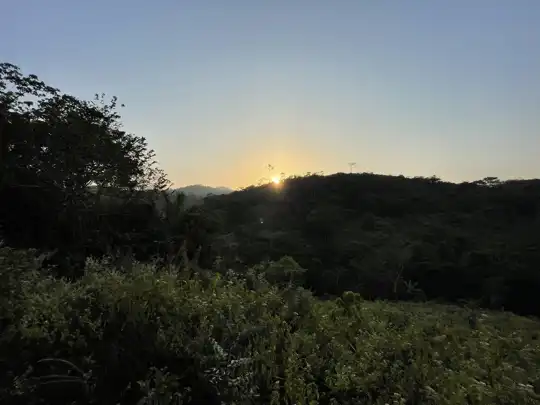
The first real fork in the road at Koto is whether to linger or just pass through. That choice matters: Koto sits in Togo’s Plateau Region, a few hours north of Lomé, and it’s the kind of place that rewards patience but doesn’t beg for it. The air smells of woodsmoke and red earth, and mornings start slow—roosters, not engines. Koto isn’t a hub; it’s a pause. You’ll find a low-key market, a handful of simple guesthouses, and trails that slip into green hills. It’s quieter than Atakpamé, less polished than Kpalimé, and far more relaxed than Lomé. Buses stop here, but you’ll walk most places. Nights are calm, social only if you make the first move. Costs are low, safety is standard rural Togo—watch your bag, but don’t stress. Koto works best as a base for hiking or as a soft landing between bigger towns, not for nightlife or urban buzz.

Discover everything you want to know in the 📖 Togo Travel Guide.


Get your Togo guide
49 ranked highlights, routes & tips, works offline (215 pages)
Loading the map 🌍
CLICK TO FILTER
cities
towns
landmarks
national parks
hikes
beaches
attractions
festivals
regions
SHOW COUNTRY’S BESTSHOW ALL

✨ Why go?
Ranked #14 town in Togo
What makes it a must-see town

Backpackers flock to Koto for its strategic location along the route to stunning hikes and serene beaches. It’s a gateway to the lush landscapes of Togo, making it easy to dive into nature without the hassle of long travel days. The walkable streets invite exploration, with small-scale hostels and guesthouses offering a cozy, communal vibe. You’ll find local food stalls serving up spicy stews and fresh grilled fish, perfect for fueling your adventures. Travelers often linger here for a few days, soaking in the friendly atmosphere and connecting with fellow explorers. This town suits slow travelers and solo adventurers looking for a blend of culture and nature, while those seeking vibrant nightlife might want to keep moving.
Want to include Koto in your Togo route?
Create a personalized Togo itinerary that includes Koto and the places that fit your trip — based on your travel style, budget, and available time. Get your route in seconds.

Generate my trip

💡 HighlightsMust-see experiences and standout moments

    Nearby day trips that are real and visitable include Lomé’s Grand Market and the Akodessawa Fetish Market, the lakeside historic town of Togoville, the waterfalls and craft village around Kpalimé, and Mount Agou.
    Spotted a mistake or missing something? Contact us.

    🏘️ NeighborhoodsHow different areas shape the experience

    Koto is a vibrant hub in Togo, where the pulse of local life meets the charm of its surroundings. Each neighborhood offers a unique flavor for backpackers.

    Centre Ville: This is the heart of Koto. You’ll find bustling markets and street vendors serving up local delicacies. It’s walkable, with plenty of budget-friendly accommodations. The nightlife here is lively, with bars and music spilling into the streets, making it ideal for short stays.

    Quartier des Artisans: Known for its artisan shops, this area has a quieter vibe. It’s perfect for those who want to soak in local culture without the chaos. Prices are reasonable, and you can easily stroll to nearby attractions. This is a great spot for longer stays if you appreciate craftsmanship and community.

    Zone de Loisirs: If you’re looking for … read more 👉
    Koto is a vibrant hub in Togo, where the pulse of local life meets the charm of its surroundings. Each neighborhood offers a unique flavor for backpackers.

    Centre Ville: This is the heart of Koto. You’ll find bustling markets and street vendors serving up local delicacies. It’s walkable, with plenty of budget-friendly accommodations. The nightlife here is lively, with bars and music spilling into the streets, making it ideal for short stays.

    Quartier des Artisans: Known for its artisan shops, this area has a quieter vibe. It’s perfect for those who want to soak in local culture without the chaos. Prices are reasonable, and you can easily stroll to nearby attractions. This is a great spot for longer stays if you appreciate craftsmanship and community.

    Zone de Loisirs: If you’re looking for a more laid-back atmosphere, this neighborhood offers parks and cafes. It’s less touristy, making it a peaceful retreat. Transport options are limited, but it’s a short walk to the main areas. Ideal for those wanting a slower pace.

    ⌛️ 1 daySeeing the highlights in 24 hours

    Koto, Togo, is a vibrant town that pulses with local life, where the air is rich with the scent of spices and the sounds of laughter echo through the streets. It’s a place where you can experience authentic Togolese culture without the tourist crowds.

    Start your morning at the bustling market in the heart of Koto. The early light filters through colorful awnings, illuminating stalls brimming with fresh produce and handmade crafts. Engage with the vendors; their smiles are as warm as the bread baking nearby. Grab a flaky, golden “boulangerie” pastry to fuel your day.

    In the afternoon, wander through the quiet streets of the Agbodrafo neighborhood. Here, you’ll find the lesser-known but captivating Lake Togo. Rent a canoe and paddle out to soak in the serene beauty. The gentle lapping of water … read more 👉
    Koto, Togo, is a vibrant town that pulses with local life, where the air is rich with the scent of spices and the sounds of laughter echo through the streets. It’s a place where you can experience authentic Togolese culture without the tourist crowds.

    Start your morning at the bustling market in the heart of Koto. The early light filters through colorful awnings, illuminating stalls brimming with fresh produce and handmade crafts. Engage with the vendors; their smiles are as warm as the bread baking nearby. Grab a flaky, golden “boulangerie” pastry to fuel your day.

    In the afternoon, wander through the quiet streets of the Agbodrafo neighborhood. Here, you’ll find the lesser-known but captivating Lake Togo. Rent a canoe and paddle out to soak in the serene beauty. The gentle lapping of water against the boat and the distant calls of birds create a peaceful backdrop. This spot is often overlooked, but it offers a refreshing escape.

    As evening approaches, head to the lively “Place de la Paix.” The atmosphere shifts as locals gather to share stories and enjoy street food. Try the grilled fish seasoned with local spices, paired with a cold palm wine. The sunset casts a golden hue over the town, wrapping up your day with a sense of connection and joy.
    Turn your Koto visit into an Togo adventure
    Build a complete Togo route with Koto, hidden gems, must-see destinations, and realistic travel times included.

    Generate my trip

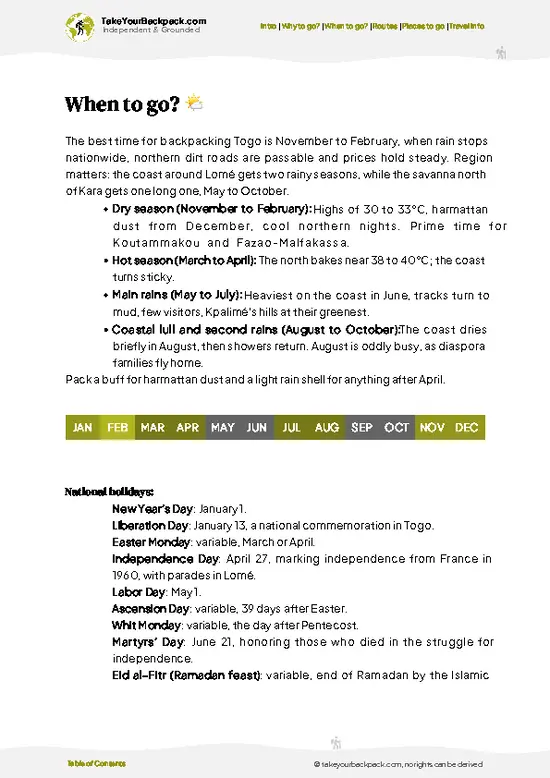
    🌤️ When to go?Best time to visit Koto


    • Weather: Koto’s dry season from November to March offers clear skies and minimal rain, making trails less slippery and the air easier to breathe. The wet season, April to October, brings heavy rains that can turn paths to mud and swell rivers, complicating travel.

    • Temperature: Expect daytime highs around 30–33°C (86–91°F) in the dry season, with cooler nights dipping to 20°C (68°F). The wet season feels hotter and more humid, often pushing 35°C (95°F), which can sap your energy fast.

    • Daylight Hours: Daylight stays steady year-round, roughly 12 hours, but the dry season’s clearer skies mean more usable daylight for hiking and exploring without the threat of sudden downpours.

    • Crowds: Tourist numbers peak in the dry months, especially December and January, so expect more fellow travelers
    read more 👉

    • Weather: Koto’s dry season from November to March offers clear skies and minimal rain, making trails less slippery and the air easier to breathe. The wet season, April to October, brings heavy rains that can turn paths to mud and swell rivers, complicating travel.

    • Temperature: Expect daytime highs around 30–33°C (86–91°F) in the dry season, with cooler nights dipping to 20°C (68°F). The wet season feels hotter and more humid, often pushing 35°C (95°F), which can sap your energy fast.

    • Daylight Hours: Daylight stays steady year-round, roughly 12 hours, but the dry season’s clearer skies mean more usable daylight for hiking and exploring without the threat of sudden downpours.

    • Crowds: Tourist numbers peak in the dry months, especially December and January, so expect more fellow travelers but also better infrastructure and guided options. The wet season sees fewer visitors, offering solitude but less support.

    • Seasonal Activities: Dry season is prime for outdoor festivals and village markets, where you can soak in local culture without weather interruptions. Wet season activities focus more on indoor crafts and storytelling, less ideal for backpackers craving movement.

    • Price Fluctuations: Accommodation and transport costs rise during the dry season due to demand. The wet season offers bargains but at the cost of comfort and accessibility.


    Pro-tip: Aim for late November or early March—when the rains have just stopped or are about to start—to catch manageable weather, fewer crowds, and better prices, turning the tricky timing into a strategic win.


    source: climatestotravel.comJANJanuary: excellent for travelingFEBFebruary: excellent for travelingMARMarch: highly recommended for travelingAPRApril: fair for travelingMAYMay: fair for travelingJUNJune: fair for travelingJULJuly: fair for travelingAUGAugust: fair for travelingSEPSeptember: fair for travelingOCTOctober: fair for travelingNOVNovember: highly recommended for travelingDECDecember: excellent for traveling
    when-to-go

    ✈️ The backpacker research shortcutTogo Travel Guide

    An offline-friendly backpacking guide with optimized travel routes, ranked highlights, transport advice, and the best areas to stay.
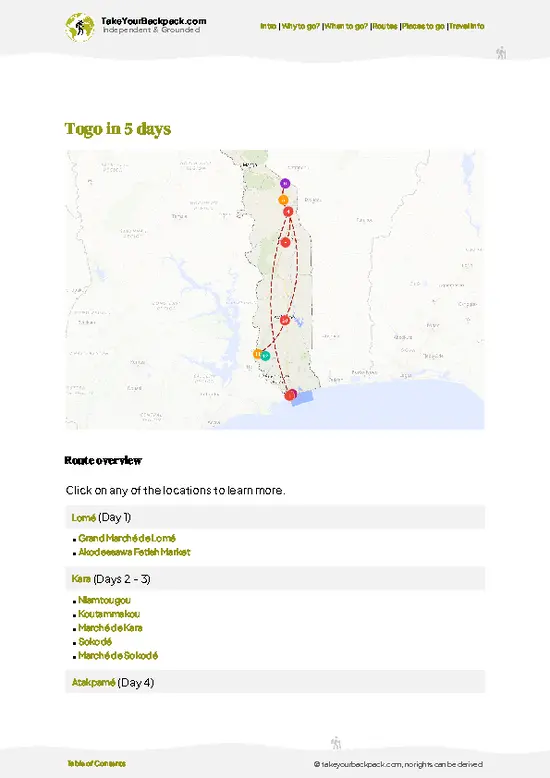
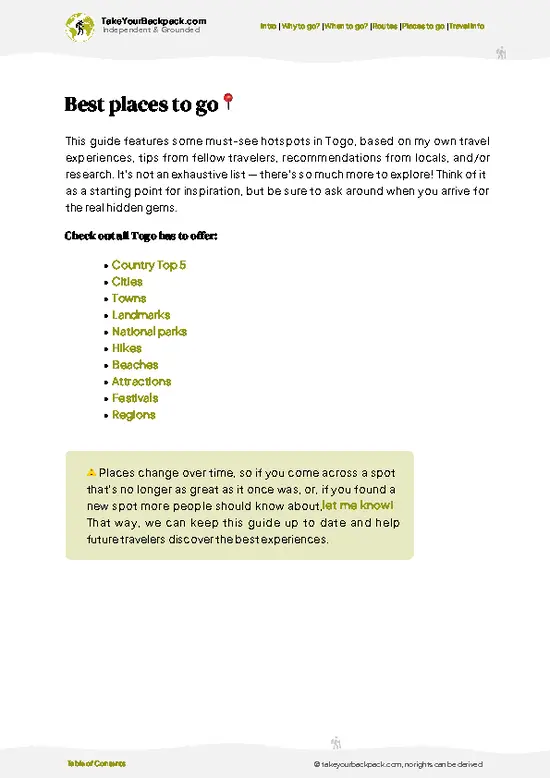
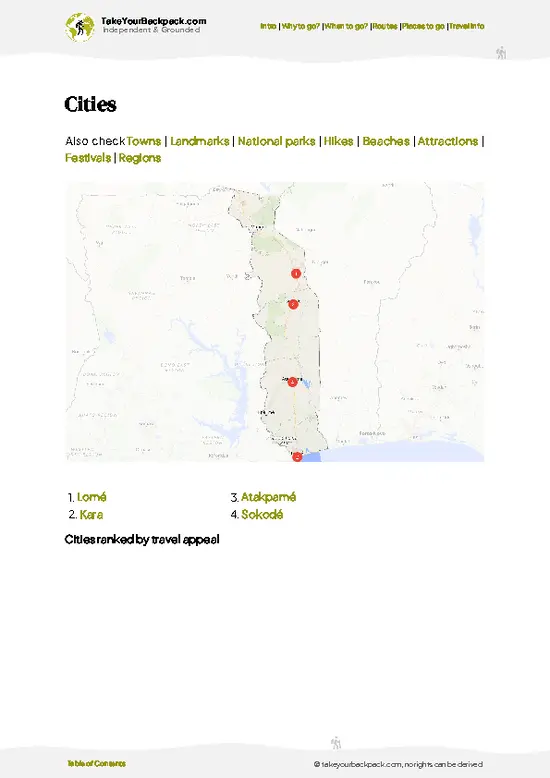
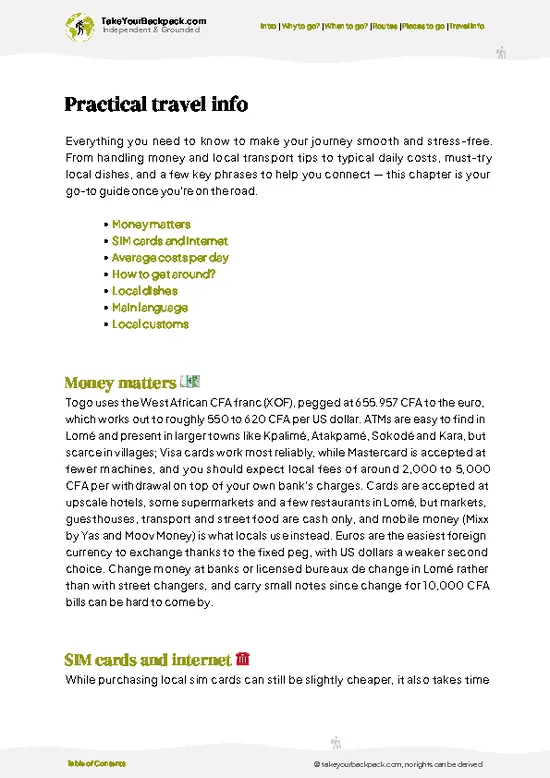
    example page 0 from our offline Travel Guide for Togo
    example page 1 from our offline Travel Guide for Togo
    example page 2 from our offline Travel Guide for Togo
    example page 3 from our offline Travel Guide for Togo
    example page 4 from our offline Travel Guide for Togo
    example page 5 from our offline Travel Guide for Togo
    example page 6 from our offline Travel Guide for Togo
    example page 7 from our offline Travel Guide for Togo
    The digital guide (215 pages) contains:
    49 highlights, ranked by travel appeal
    Optimized 2, 3 & 5-day travel routes
    Cities, national parks, landmarks, beaches
    How to get around
    Offline-friendly for travel without Wi-Fi
    👉 Click to see all 30+ guide features

    📅 Plan smarter in minutes, not weeks
    Month by month travel advice
    Festivals & national holidays
    Budget expectations

    🗺️ Go to the right places, skip the overrated ones
    Honest pros & cons of destinations
    Top hikes, parks & viewpoints
    Lesser-known places most travelers miss
    Clear “worth it vs skip it” guidance

    🛏️ Travel smoothly without rookie mistakes
    Best areas to stay
    Transport systems explained simply
    Common scams & safety advice
    SIM cards, money & practical tips

    🌍 Understand the country, not just visit it
    Culture & traditions
    52 Essential phrases & customs
    Festivals worth planning around
    Traveler-friendly historical context
    Insights that make places more meaningful

    📱 Built for real travel conditions
    Fully downloadable PDF
    Works completely offline
    Optimized for phone use
    Useful in remote areas & buses
    Everything in one place
    Save weeks of stressful planning
    Get instant access to your full guide. 30‑day money-back guarantee.
    + Add another guide for just US$7.80

    By proceeding you agree to our terms.
    Sent to your inbox immediately after payment • 100% Secure Checkout
    Best Backpacking Travel Advisor 2025 tourism awardBest Backpacking
    Travel Advisor
    2025
    What others say about Take Your Backpack Guides:
    ⭐⭐⭐⭐⭐
    Fantastic, amazing amount of information!
    ⭐⭐⭐⭐⭐
    My goodness this is amazing, it's what I've been looking for hats off too you!
    ⭐⭐⭐⭐⭐
    I think this is absolutely BRILLIANT
    ⭐⭐⭐⭐
    Very complete and informative. It's still missing places, but I gotta to commend you
    ⭐⭐⭐⭐⭐
    This is truly amazing, thank you, can't wait to explore it with my kids!
    ⭐⭐⭐⭐⭐
    Awesome resource, thank you!
    ⭐⭐⭐⭐⭐
    This is amazing! Can't wait to explore the ones I haven't seen
    ⭐⭐⭐⭐
    I love this! Well done, great idea.
    ⭐⭐⭐⭐⭐
    Thanks for taking the time to make this gem!
    ⭐⭐⭐⭐⭐
    This might be the best website I've ever seen.
    ⭐⭐⭐⭐⭐
    Congratulations, and thank you so much for your work; it's incredibly valuable.
    ⭐⭐⭐⭐
    In all seriousness I think you did a great job pointing out the important spots
    ⭐⭐⭐⭐⭐
    10/10 very good
    ⭐⭐⭐⭐⭐
    As someone who's only just starting to visit regularly this is awesome, thank you.
    ⭐⭐⭐⭐
    Thank you very much! I'm going to visit my dad, it's going to be very useful!
    ⭐⭐⭐⭐⭐
    This is really cool! We'll be travelling for the first time and this definitely come in handy.
    ⭐⭐⭐⭐⭐
    You are now our minister of culture, congratulations 👨‍💼
    ⭐⭐⭐⭐⭐
    Just wanted to tell you that this is a pearl! Going to follow your recommendations.
    ⭐⭐⭐⭐⭐
    This is so cool. I'll definitely be using the resource for my travels soon.
    ⭐⭐⭐⭐⭐
    This is very impressive! Good work.
    ⭐⭐⭐⭐⭐
    This is an amazing and informative site. Very well done!

    🛏️ Where to stay?Best areas to stay in Togo

    In Koto, the heartbeat for backpackers pulses strongest in the central district around the market square. This area hums with life from dawn till dusk—vendors shouting, spices scenting the air, and locals weaving through narrow streets. It’s where you’ll find the most budget-friendly hostels, often with communal spaces that invite easy conversations and shared meals. Safety here is a step above the outskirts, thanks to the steady flow of people and a watchful local presence.

    Venture a bit east toward the riverside quarter for a quieter vibe that still keeps you connected to the city’s rhythm. … read more 👉
    In Koto, the heartbeat for backpackers pulses strongest in the central district around the market square. This area hums with life from dawn till dusk—vendors shouting, spices scenting the air, and locals weaving through narrow streets. It’s where you’ll find the most budget-friendly hostels, often with communal spaces that invite easy conversations and shared meals. Safety here is a step above the outskirts, thanks to the steady flow of people and a watchful local presence.

    Venture a bit east toward the riverside quarter for a quieter vibe that still keeps you connected to the city’s rhythm. It’s less crowded but offers a chance to mingle with solo travelers who’ve traded the chaos for calm without losing the social pulse. Other neighborhoods tend to be either too residential or too isolated, making these two spots the sweet spots for anyone chasing connection without sacrificing comfort.

    🚌 Getting aroundHow to get from A to B

    Koto moves at its own rhythm—a blend of precise efficiency and laid-back moments where time seems to pause. The streets hum with the steady pulse of commuters, but there’s no rush that feels forced. Morning light filters through the glass towers, casting sharp shadows on the canals, while evenings soften the edges with lantern glows and the scent of grilled street food. Navigating Koto isn’t about beating the clock; it’s about syncing with its flow. You’ll find that understanding the transit options here is less about rigid schedules and more about knowing when and where to catch the right ride to keep your day seamless.


    • Toei Subway Lines: Runs from 5 AM to midnight, with trains every 3-5 minutes during peak hours. Tickets start around 170 yen, making it the fastest and most reliable way
    read more 👉
    Koto moves at its own rhythm—a blend of precise efficiency and laid-back moments where time seems to pause. The streets hum with the steady pulse of commuters, but there’s no rush that feels forced. Morning light filters through the glass towers, casting sharp shadows on the canals, while evenings soften the edges with lantern glows and the scent of grilled street food. Navigating Koto isn’t about beating the clock; it’s about syncing with its flow. You’ll find that understanding the transit options here is less about rigid schedules and more about knowing when and where to catch the right ride to keep your day seamless.


    • Toei Subway Lines: Runs from 5 AM to midnight, with trains every 3-5 minutes during peak hours. Tickets start around 170 yen, making it the fastest and most reliable way to cover long distances across Koto without breaking the bank.

    • JR Keiyo Line: Connects Koto to central Tokyo and Tokyo Bay areas. Trains run roughly every 10 minutes from 5 AM to midnight. Slightly pricier than the subway but faster for longer hauls, especially if you’re heading toward Tokyo Station or Maihama (Disneyland).

    • Water Bus (Tokyo Cruise): A scenic, slower option that runs from morning until early evening. Tickets cost about 400-700 yen depending on the route. It’s a budget-friendly way to enjoy the canals and waterfront views, perfect for when you want transit to double as sightseeing.

    • City Buses: Extensive network with fares around 210 yen per ride. Buses run from early morning to around 11 PM but can be slower due to traffic. Great for reaching spots the subway doesn’t touch, especially residential or less touristy areas.

    • Walking: Koto’s flat terrain and well-marked paths make walking a solid choice for short hops. The air carries a mix of salty bay breeze and urban energy, and strolling lets you catch street-level details—murals, local markets, and the occasional whiff of fresh yakitori—that transit misses.

    👛 Costs (as of 3 September 2026)Travel costs and budget guide for Koto

    Backpacking in Koto, Togo, offers a raw, authentic experience where your budget stretches if you know the local rhythm and where to spend smartly.
    • Dorm Accommodation: Expect to pay around €5 to €10 per night for a bed in a basic guesthouse dorm. These places are simple—think mosquito nets, a fan, and a shared bathroom. It’s not luxury, but it’s clean enough to recharge after a day in the heat.
    • Meals: Street food and local eateries dominate here. For €2 to €4, you can get a hearty plate of grilled fish or chicken with a side of fufu or rice. Fresh fruit and snacks from market stalls cost less than a euro. Avoid tourist spots if you want to keep costs down and flavors authentic.
    • Local Transport: The main mode is shared taxis or minibus taxis, which cost about €0.30 to €0.50 per trip within
    read more 👉
    Backpacking in Koto, Togo, offers a raw, authentic experience where your budget stretches if you know the local rhythm and where to spend smartly.
    • Dorm Accommodation: Expect to pay around €5 to €10 per night for a bed in a basic guesthouse dorm. These places are simple—think mosquito nets, a fan, and a shared bathroom. It’s not luxury, but it’s clean enough to recharge after a day in the heat.
    • Meals: Street food and local eateries dominate here. For €2 to €4, you can get a hearty plate of grilled fish or chicken with a side of fufu or rice. Fresh fruit and snacks from market stalls cost less than a euro. Avoid tourist spots if you want to keep costs down and flavors authentic.
    • Local Transport: The main mode is shared taxis or minibus taxis, which cost about €0.30 to €0.50 per trip within town. They’re crowded and noisy but a direct window into daily life. For short distances, walking is often the best way to soak in the atmosphere and save money.
    • Basic Activities/Entry Fees: Entry fees to local attractions or cultural sites are minimal, usually under €2. Markets, village visits, and natural spots often have no charge, but a small tip or donation is appreciated. Guided tours are rare and usually arranged informally, so budget around €5 if you want a local guide for a half-day.
    • Miscellaneous Expenses: Bottled water, snacks, and occasional phone credit top up will add about €1 to €3 daily. Keep cash handy as card payments are rare, and small change is king for bargaining and tipping.

    In total, you’re looking at roughly €10 to €20 per day to cover the essentials in Koto. This range lets you live comfortably without cutting corners, giving you access to the town’s pulse without the tourist markup. The modest costs reflect the straightforward lifestyle here—no frills, just the basics done well enough to keep you moving and exploring.
    ⚠️ Prices can change and everyone travels differently, so take this as a rough guide. Hope it helps you plan your adventure!

    🚌 Day tripsBest day trips from Koto

    Koto, Togo, is a backpacker’s dream base for day trips, offering a mix of culture, nature, and adventure just a stone’s throw away.

    Mount Agou
    A hike up Mount Agou, Togo’s highest peak, is a must. The trail winds through lush forests, where the air is thick with the scent of damp earth and wildflowers. Expect to spend about 2-3 hours reaching the summit, where you’ll be rewarded with sweeping views of the surrounding landscape. The best time to go is early morning to catch the sunrise; it’s cooler and the light is magical. Budget around $5 for transport and snacks. A common mistake? Underestimating the trail’s difficulty—wear sturdy shoes and bring plenty of water.
    👉 Explore Mount Agou

    Lake Togo
    Just a short ride from Koto, Lake Togo offers a serene escape. Spend your day kayaking … read more 👉
    Koto, Togo, is a backpacker’s dream base for day trips, offering a mix of culture, nature, and adventure just a stone’s throw away.

    Mount Agou
    A hike up Mount Agou, Togo’s highest peak, is a must. The trail winds through lush forests, where the air is thick with the scent of damp earth and wildflowers. Expect to spend about 2-3 hours reaching the summit, where you’ll be rewarded with sweeping views of the surrounding landscape. The best time to go is early morning to catch the sunrise; it’s cooler and the light is magical. Budget around $5 for transport and snacks. A common mistake? Underestimating the trail’s difficulty—wear sturdy shoes and bring plenty of water.
    👉 Explore Mount Agou

    Lake Togo
    Just a short ride from Koto, Lake Togo offers a serene escape. Spend your day kayaking or simply lounging by the water, soaking in the tranquil atmosphere. The lake is surrounded by palm trees, and the gentle lapping of water creates a soothing backdrop. Plan for a 30-minute drive and expect to spend about $10 for a kayak rental. The best time to visit is during the dry season, from November to March, when the weather is perfect. Many first-timers miss out on the local fish market nearby—don’t skip it; the fresh catch is a treat.
    👉 Explore Lake Togo

    Kpalimé Market
    Dive into the vibrant Kpalimé market, where the colors and sounds are a feast for the senses. It’s a 45-minute bus ride from Koto, and you’ll want to budget around $2 for transport. The market is bustling with vendors selling everything from textiles to spices, and the aroma of street food wafts through the air. Go early to avoid the crowds and get the freshest produce. A common pitfall is not bargaining—haggling is part of the experience, so don’t shy away!


    Agbodrafo Beach
    For a taste of coastal life, head to Agbodrafo Beach. It’s about an hour away, and the ride costs around $3. The beach is less crowded, with soft sand and warm waves inviting you to relax. Bring a book or just enjoy the sound of the surf. The best time to visit is late afternoon when the sun casts a golden glow. Many travelers overlook the nearby fishing village; take a stroll to connect with locals and learn about their way of life.
    Want to know what more Togo offers?
    The Togo Travel Guide describes 49 highlights, from cities to national parks, from beaches to hikes

    Get the Travel Guide -

    🛡️ SafetyStaying Safe: What Travelers Should Know

    Koto, Togo, is generally safe, but a few practical tips can enhance your experience. Stay aware in crowded markets; pickpockets can be sneaky. When wandering solo, especially at night, stick to well-lit areas and keep your belongings close.

    Common scams include overly friendly locals offering unsolicited help, which often leads to a demand for payment. A polite but firm “no, thank you” usually suffices.

    Annoyances like aggressive taxi drivers can be managed by agreeing on fares before getting in. Trust your instincts; if something feels off, it probably is. Embrace the vibrant atmosphere, but stay grounded in your surroundings.

    FAQTraveler FAQ

    Koto is primarily a stopover rather than a major destination. It offers basic local markets and a glimpse of rural Togolese life but lacks significant tourist attractions. Most travelers pass through on their way to more prominent sites in the region.
    One day is sufficient to explore Koto, as the town is small and activities are limited. This allows time to visit the market and interact with locals without feeling rushed. Overnight stays are usually unnecessary unless using it as a rest point.
    Yes, Koto can be visited as a day trip from nearby cities like Sokodé, which is about 40 kilometers away. The trip typically takes around an hour by car or bush taxi, making it feasible for a quick cultural stop. Plan for early departure to maximize time in Koto.
    ⚠️ Things can change over time, so always validate details locally before you go.

    Other Togolese towns near Koto

    Explore more nearby:

    • Kpalime—forest hills, waterfalls, artisan workshops, cocoa farms
    • Aneho—lagoon shore, colonial buildings, fishing port
    • Togoville—lakefront, sacred sites, colonial church

    💡 Not sure where to go next?
    Create a personalized itinerary for Togo including Koto and the places that fit your trip.

    Generate my itinerary

    👉 Discover all towns

    Or checkout all Togo has to offer (think cities, towns, villages, national parks, hikes, beaches, festivals)
    Country photo of Togo

    We 💚 feedbackIs it worth it?

    Koto has a raw, electric vibe that pulses with life. The best surprise? The local markets, where the air is thick with spices and laughter. But watch your step; the roads can be tricky. Embrace the chaos. It’s all part of the experience, and trust me, the warmth of the people makes it worth every bump.

    ✍️ Help improve this page!
    The information on this page is based on in-depth research, insights shared by experienced travelers, and feedback from the local travel community in Togo. While every effort is made to keep the information accurate and current, conditions can change — so if you spot anything incorrect or outdated, please get in touch.


    🙋‍♂️ Give feedback

    👋 Meet the founderWho’s Behind Take Your Backpack?

    Johan, backpacker and founder of TakeYourBackpackHi, I’m Johan (Netherlands 🇳🇱), the creator of TakeYourBackpack. Over the past decade, I’ve backpacked through 80+ countries across six continents, gaining extensive experience with independent travel, long-term trips, and overland routes.

    This site is built on a combination of firsthand travel experience and carefully curated insights from other backpackers. Many guides are based on places I’ve personally visited, while others bring together tips, observations, and practical advice shared by trusted travelers I’ve met along the way.

    The goal is to provide realistic, experience-driven guidance — not generic itineraries — so you can explore destinations with better context, clearer expectations, and more confidence.

    Get full Togo guide •
    Instant download • 49 highlights • Full Offline guide