×

Togo🇹🇬 | townsKpéléPlateau village, dirt lanes, farm tracks, small produce market | things to do and best time to go

Explore KpaliméExplore Togoville

Backpacking in Kpélé
👀 For curious travelerstown ranked #13
By Johan Kruseman 🇳🇱 | Updated October 22, 2026

Kpélé lies on the flat, red-earth plateau of the Plateaux Region in Togo, a short ride from Notsé and well away from the Kpalimé hills. Expect a quiet village, not a destination with a hostel scene. Lanes are packed dirt, orange dust coats your shoes, and mornings smell of woodsmoke and frying dough. Motorbike taxis hum along the main road. Other backpackers are rare, and the reward is easy conversation in French or Ewe over a plastic-table breakfast. It works best as a slow stop on the road north from Lomé. In the afternoon heat, goats doze in the shade of mango trees.

Discover everything you want to know in the 📖 Togo Travel Guide.


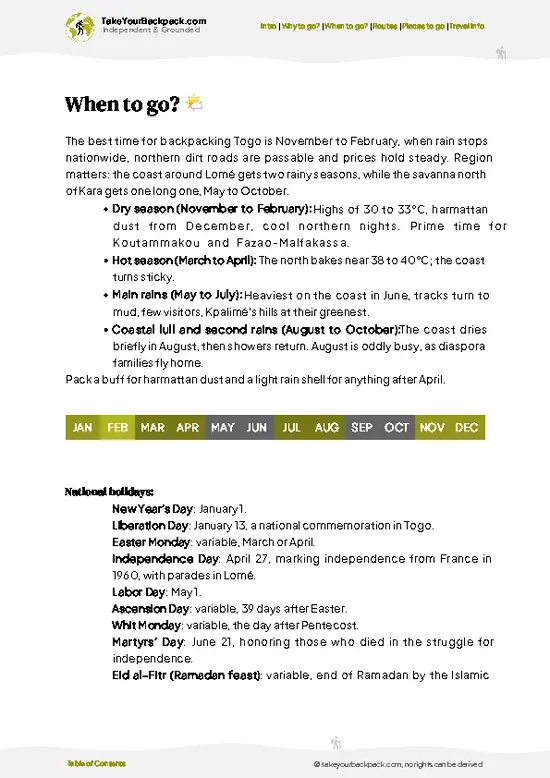
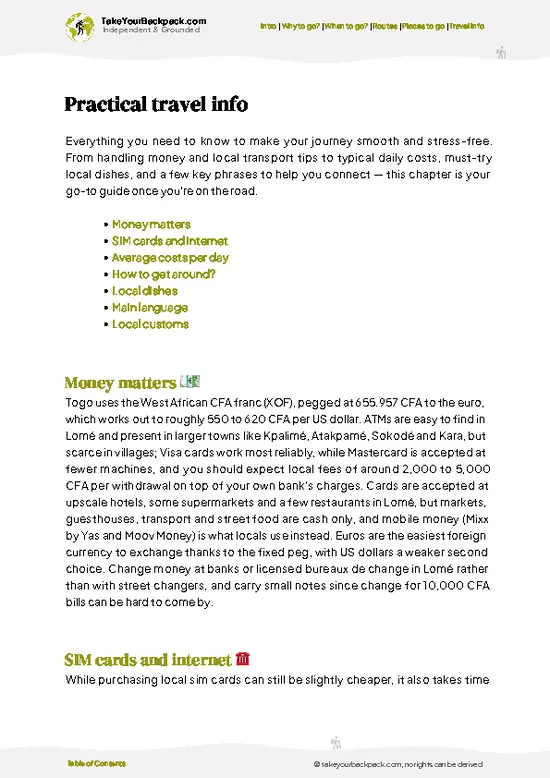
example page 0 from our offline Travel Guide for Togo
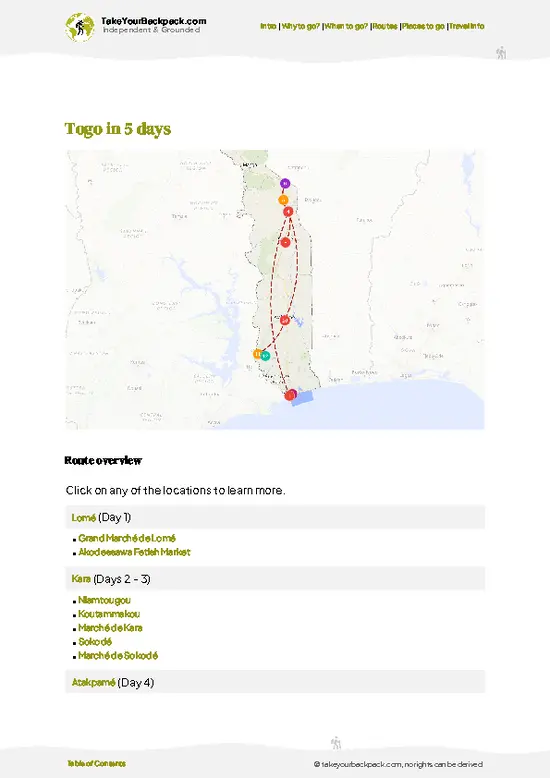
example page 1 from our offline Travel Guide for Togo
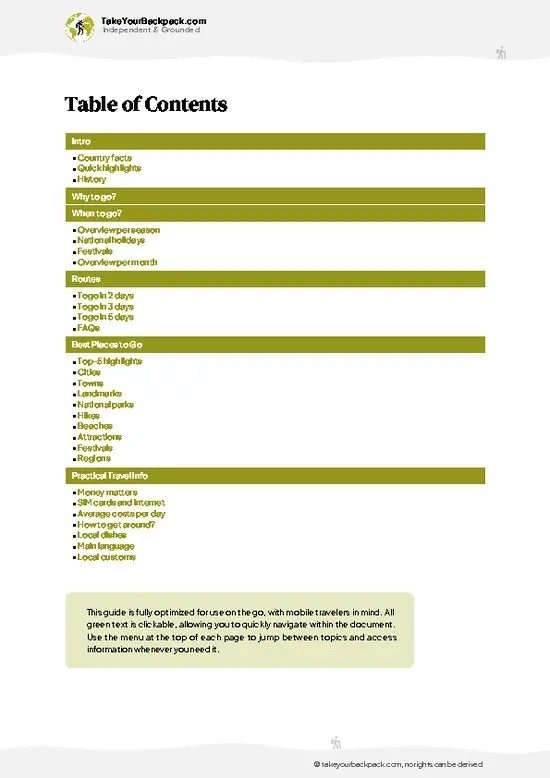
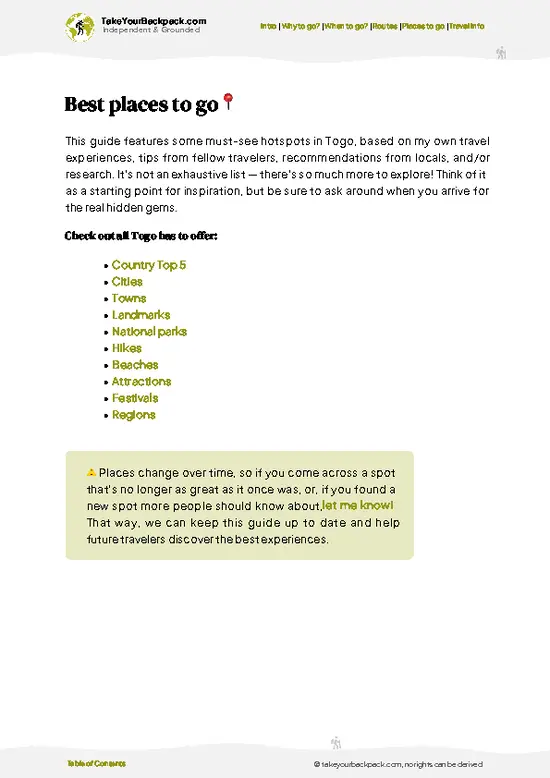
example page 2 from our offline Travel Guide for Togo
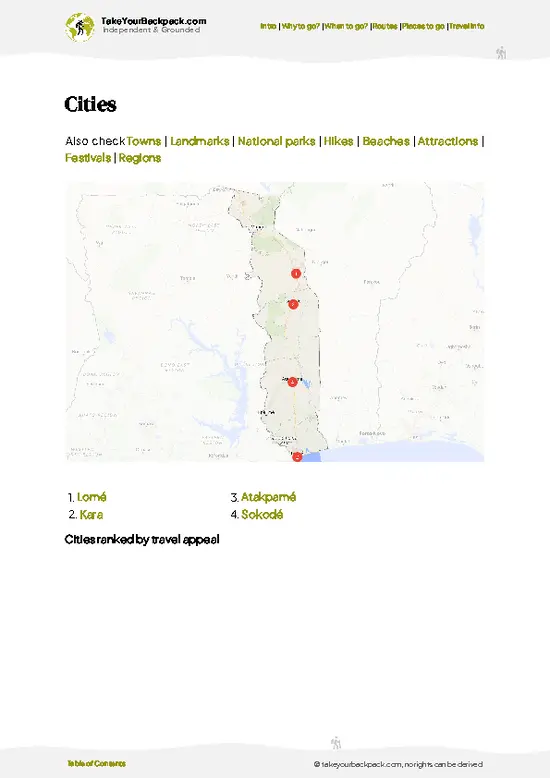
example page 3 from our offline Travel Guide for Togo
example page 4 from our offline Travel Guide for Togo
example page 5 from our offline Travel Guide for Togo
example page 6 from our offline Travel Guide for Togo
example page 7 from our offline Travel Guide for Togo
Loading the map 🌍
CLICK TO FILTER
cities
towns
landmarks
national parks
hikes
beaches
attractions
festivals
regions
SHOW COUNTRY’S BESTSHOW ALL

✨ Why go?
Ranked #13 town in Togo
What makes it a must-see town

Kpélé suits travelers who want a day or two away from the coastal crush, using the plateau as a calm pause on the way to bigger stops. The main draw is its position near Notsé, the old Ewe capital, whose earthen wall remnants make a worthwhile side trip. Nights are quiet and basic, so slow travelers, solo wanderers and anyone curious about village life will get the most from it. You wake to roosters, walk farm tracks past maize and cassava, and eat what neighbors cook at roadside stalls. Nightlife is absent, and that is exactly the point. Come with a flexible plan, a little French, and patience for slow mornings.

💡 HighlightsThe experiences that define the visit

  1. Village lanes of Kpélé: A walk through the red-dirt streets shows daily life: women pounding yams, kids playing football, workshops by the road. Go early morning or late afternoon when it is cooler. Free, 1 to 2 hours.
  2. Kpélé market area: Small-scale trading brings together farmers selling cassava, maize, peppers and local produce. Morning is liveliest and freshest. Bring small change; buying snacks costs well under €1. Allow 45 minutes to 1 hour.
  3. Farm tracks around Kpélé: Paths lead into fields and palm groves, giving open plateau views and birdsong. Start early before the heat builds. Free, 1 to 2 hours.
Kpélé is a good base for day trips to Notsé, with its historic Agbogbo wall linked to the Ewe exodus, and to Atakpamé further north. The lanes walk and the market pair well in one morning, leaving the afternoon free for the farm tracks.
Spotted a mistake or missing something? Contact us.

Things to do near Kpélé

Ratings based on Tripadvisor reviews. When you book through this link, you support our work at no extra cost to you.

🏘️ NeighborhoodsWhere things are and how it's laid out

Kpélé is really a cluster of village quarters in the green Plateaux hills near Kpalimé and the Ghana border, so everything is on foot and the pace is slow. Red laterite lanes link the areas, and rain turns them slick.
  • Village center and market lanes: Roadside stalls sell fried plantain, grilled corn, peanuts and local sodabi in small bottles, with motorbike engines and radio music over the top. It takes ten minutes to cross on foot, and you leave with a cheap, hot snack and a few greetings in Ewe.
  • Forest-edge farm paths: Behind the houses, trails run through cocoa, coffee and banana plots under shade trees. Mornings smell of wet leaves and woodsmoke, and mud clings to your shoes after rain. You reach quiet ridgelines with views over folded green hills.
  • Main road junction: This is the noisy edge,
… read more 👉
Kpélé is really a cluster of village quarters in the green Plateaux hills near Kpalimé and the Ghana border, so everything is on foot and the pace is slow. Red laterite lanes link the areas, and rain turns them slick.
  • Village center and market lanes: Roadside stalls sell fried plantain, grilled corn, peanuts and local sodabi in small bottles, with motorbike engines and radio music over the top. It takes ten minutes to cross on foot, and you leave with a cheap, hot snack and a few greetings in Ewe.
  • Forest-edge farm paths: Behind the houses, trails run through cocoa, coffee and banana plots under shade trees. Mornings smell of wet leaves and woodsmoke, and mud clings to your shoes after rain. You reach quiet ridgelines with views over folded green hills.
  • Main road junction: This is the noisy edge, with shared taxis, dust, diesel and moto drivers calling out. It is not pretty, but it is where you find water, phone credit and a ride onward.

⌛️ 1 dayA smart one-day plan

7:00 AM, Village lanes: Start with a slow walk through Kpélé while it is cool. Watch compounds wake up, people sweeping yards and stoves being lit. Greet everyone; a simple “bonjour” opens doors.
8:30 AM, Breakfast stall: Sit down at a roadside stand for fried dough, sweet bean porridge or eggs with bread, and a hot drink. It is the easiest way to start a conversation.
10:00 AM, Market area: Stroll the stalls while sellers are busiest. Look at piles of cassava, tomatoes and peppers, and try seasonal fruit.
12:30 PM, Midday meal: Eat local, such as pâte with sauce, and rest in the shade through the hottest hours.
3:30 PM, Farm tracks: This is the off-route stop. Walk the paths out of the village between fields and mango trees, where you will meet farmers heading home and see the plateau open up. … read more 👉
7:00 AM, Village lanes: Start with a slow walk through Kpélé while it is cool. Watch compounds wake up, people sweeping yards and stoves being lit. Greet everyone; a simple “bonjour” opens doors.
8:30 AM, Breakfast stall: Sit down at a roadside stand for fried dough, sweet bean porridge or eggs with bread, and a hot drink. It is the easiest way to start a conversation.
10:00 AM, Market area: Stroll the stalls while sellers are busiest. Look at piles of cassava, tomatoes and peppers, and try seasonal fruit.
12:30 PM, Midday meal: Eat local, such as pâte with sauce, and rest in the shade through the hottest hours.
3:30 PM, Farm tracks: This is the off-route stop. Walk the paths out of the village between fields and mango trees, where you will meet farmers heading home and see the plateau open up.
6:00 PM, Main road: Return for a cold drink at a simple roadside spot and watch motorbikes pass as the day ends.

🌤️ When to go?Seasonal considerations and timing

  • Main dry spell (November to February): Hazy mornings with Harmattan dust, days around 28 to 33°C (82 to 91°F), cooler nights near 20°C (68°F). Trails are firm and prices stay steady.
  • Hot months (March to April): Humid, 30 to 35°C (86 to 95°F), with storms building. Walk early.
  • Rainy season (May to July, September to October): Everything turns lush, around 25 to 30°C (77 to 86°F), but red paths turn slippery and some are impassable.
  • Short break (August): Cooler and cloudy, with fewer crowds and about 12 hours of daylight.
Aim for December or January for hiking, and book transport a day ahead around Christmas.

source: climatestotravel.comJANJanuary: excellent for travelingFEBFebruary: excellent for travelingMARMarch: highly recommended for travelingAPRApril: fair for travelingMAYMay: fair for travelingJUNJune: fair for travelingJULJuly: fair for travelingAUGAugust: fair for travelingSEPSeptember: fair for travelingOCTOctober: good for travelingNOVNovember: excellent for travelingDECDecember: highly recommended for traveling
when-to-go

✈️ The backpacker research shortcutTogo Travel Guide

An offline-friendly backpacking guide with optimized travel routes, ranked highlights, transport advice, and the best areas to stay.
example page 0 from our offline Travel Guide for Togo
example page 1 from our offline Travel Guide for Togo
example page 2 from our offline Travel Guide for Togo
example page 3 from our offline Travel Guide for Togo
example page 4 from our offline Travel Guide for Togo
example page 5 from our offline Travel Guide for Togo
example page 6 from our offline Travel Guide for Togo
example page 7 from our offline Travel Guide for Togo
The digital guide (194 pages) contains:
✅ 42 highlights, ranked by travel appeal
✅ Optimized 2, 3 & 5-day travel routes
✅ Cities, national parks, landmarks, beaches
✅ How to get around
✅ Offline-friendly for travel without Wi-Fi
👉 Click to see all 30+ guide features

📅 Plan smarter in minutes, not weeks
✅ Month by month travel advice
✅ Festivals & national holidays
✅ Budget expectations

🗺️ Go to the right places, skip the overrated ones
✅ Honest pros & cons of destinations
✅ Top hikes, parks & viewpoints
✅ Lesser-known places most travelers miss
✅ Clear “worth it vs skip it” guidance

🛏️ Travel smoothly without rookie mistakes
✅ Best areas to stay
✅ Transport systems explained simply
✅ Common scams & safety advice
✅ SIM cards, money & practical tips

🌍 Understand the country, not just visit it
✅ Culture & traditions
✅ 52 Essential phrases & customs
✅ Festivals worth planning around
✅ Traveler-friendly historical context
✅ Insights that make places more meaningful

📱 Built for real travel conditions
✅ Fully downloadable PDF
✅ Works completely offline
✅ Optimized for phone use
✅ Useful in remote areas & buses
✅ Everything in one place
Stop searching, start planning
Get instant access to your full guide. 30‑day money-back guarantee.
+ Add another guide for just

By proceeding you agree to our terms.
Sent to your inbox immediately after payment • 100% Secure Checkout
Best Backpacking Travel Advisor 2025 tourism awardBest Backpacking
Travel Advisor
2025
What others say about Take Your Backpack Guides:
⭐⭐⭐⭐⭐
Fantastic, amazing amount of information!
⭐⭐⭐⭐⭐
My goodness this is amazing, it's what I've been looking for hats off too you!
⭐⭐⭐⭐⭐
I think this is absolutely BRILLIANT
⭐⭐⭐⭐
Very complete and informative. It's still missing places, but I gotta to commend you
⭐⭐⭐⭐⭐
This is truly amazing, thank you, can't wait to explore it with my kids!
⭐⭐⭐⭐⭐
Awesome resource, thank you!
⭐⭐⭐⭐⭐
This is amazing! Can't wait to explore the ones I haven't seen
⭐⭐⭐⭐
I love this! Well done, great idea.
⭐⭐⭐⭐⭐
Thanks for taking the time to make this gem!
⭐⭐⭐⭐⭐
This might be the best website I've ever seen.
⭐⭐⭐⭐⭐
Congratulations, and thank you so much for your work; it's incredibly valuable.
⭐⭐⭐⭐
In all seriousness I think you did a great job pointing out the important spots
⭐⭐⭐⭐⭐
10/10 very good
⭐⭐⭐⭐⭐
As someone who's only just starting to visit regularly this is awesome, thank you.
⭐⭐⭐⭐
Thank you very much! I'm going to visit my dad, it's going to be very useful!
⭐⭐⭐⭐⭐
This is really cool! We'll be travelling for the first time and this definitely come in handy.
⭐⭐⭐⭐⭐
You are now our minister of culture, congratulations 👨‍💼
⭐⭐⭐⭐⭐
Just wanted to tell you that this is a pearl! Going to follow your recommendations.
⭐⭐⭐⭐⭐
This is so cool. I'll definitely be using the resource for my travels soon.
⭐⭐⭐⭐⭐
This is very impressive! Good work.
⭐⭐⭐⭐⭐
This is an amazing and informative site. Very well done!

🛏️ Where to stay?Best areas to stay in Togo

Kpélé itself has little formal lodging, so the best budget base is nearby Kpalimé, about a short ride away by shared taxi or moto. It has the most dorm-style hostels, guesthouses and simple rooms in the Plateaux region, and rooms with fans typically cost €8 to 20. Choose streets near the central market or the main road, where there is lighting, food stalls open late and taxis at hand. These spots are noisy with early roosters and engines, so earplugs help. Hillside guesthouses outside the center are quieter and greener, but you depend on moto rides after dark. Within Kpélé, a basic homestay arranged … read more 👉
Kpélé itself has little formal lodging, so the best budget base is nearby Kpalimé, about a short ride away by shared taxi or moto. It has the most dorm-style hostels, guesthouses and simple rooms in the Plateaux region, and rooms with fans typically cost €8 to 20. Choose streets near the central market or the main road, where there is lighting, food stalls open late and taxis at hand. These spots are noisy with early roosters and engines, so earplugs help. Hillside guesthouses outside the center are quieter and greener, but you depend on moto rides after dark. Within Kpélé, a basic homestay arranged through a local contact is possible and costs about €5 to 10. Water and power cuts happen, so keep a headlamp and a charged power bank handy.

🚌 Getting aroundTransportation options and practical tips

Kpélé punishes anyone who hires a private moto or taxi from the first junction without agreeing the fare, because drivers quote foreigner prices of €5 to 10 for rides that cost locals a fraction. Settle the price before you climb on, and carry small coins. Most of the village is walkable, and the surrounding lanes are quiet apart from the occasional motorbike. Public transport is informal, with no timetables.
  • Walking: Free and the best way to see the farm paths. Start by 7 am for cool air, birdsong and a view across the ridges, and expect red mud after rain.
  • Moto-taxi (zémidjan): The everyday option, about €0.40 to 1.50 for short hops and €2 to 4 to nearby towns. You feel every rut, and your clothes will carry dust, but you reach remote trailheads quickly. Ask for a helmet.
  • Shared taxi: Cars
… read more 👉
Kpélé punishes anyone who hires a private moto or taxi from the first junction without agreeing the fare, because drivers quote foreigner prices of €5 to 10 for rides that cost locals a fraction. Settle the price before you climb on, and carry small coins. Most of the village is walkable, and the surrounding lanes are quiet apart from the occasional motorbike. Public transport is informal, with no timetables.
  • Walking: Free and the best way to see the farm paths. Start by 7 am for cool air, birdsong and a view across the ridges, and expect red mud after rain.
  • Moto-taxi (zémidjan): The everyday option, about €0.40 to 1.50 for short hops and €2 to 4 to nearby towns. You feel every rut, and your clothes will carry dust, but you reach remote trailheads quickly. Ask for a helmet.
  • Shared taxi: Cars and minibuses run along the main road toward Kpalimé and the border area, about €1 to 2.50 per seat. They leave when full, usually from early morning until late afternoon, so packed seats and slow waits are normal.
  • Private taxi hire: About €15 to 30 for a half day, handy for combining waterfalls or villages. Negotiate hard and confirm the return trip.

👛 Costs (as of 22 October 2026)Travel costs and budget guide for Kpélé

Kpélé costs around €24 to 39 a day for a backpacker, with most of the money going to food and a bed in nearby Kpalimé.
CategoryBudget RangeLocal Reality
Dorm accommodation€8 to 15Few formal dorms exist, so simple fan rooms in Kpalimé are the norm.
Meals€5 to 9Rice, fufu or grilled fish at roadside stalls costs €1.50 to 3.
Local transport€2 to 5Moto-taxis and shared cars cover short hops.
Basic activities/entry fees€2 to 6Guides for hikes cost a few euros, and forest paths are free.
Miscellaneous expenses€2 to 4Water, phone credit and small tips.
Total Daily Budget€24 to 39About €30 for most travelers.
Eat where locals queue at lunchtime, since portions are larger and prices lower than anywhere near the main road.
⚠️ Prices can change and everyone travels differently, so take this as a rough guide. Hope it helps you plan your adventure!

🚌 Day tripsShort trips worth adding

Kpélé works well as a base for short outings, since the Plateaux hills have forest, waterfalls and markets within an hour or two.
Kpalimé and the market: Craft stalls, a lively central market and good street food make a half-day easy. Shared taxi costs about €1 to 2.50 each way, with a total spend near €8 to 12 including lunch. Go in the morning, when produce is fresh.
👉 Explore Kpalimé
Wli Waterfalls: The tallest waterfall in West Africa sits across the border in Ghana, so this requires visa and border paperwork, which many first-timers forget to prepare. Count on a full day, around €20 to 35 with transport and fees. The dry season gives the best trail conditions.

Mount Agou: Togo’s highest peak, about 986 meters, rewards you with views over green valleys. The climb is short but steep, and … read more 👉
Kpélé works well as a base for short outings, since the Plateaux hills have forest, waterfalls and markets within an hour or two.
Kpalimé and the market: Craft stalls, a lively central market and good street food make a half-day easy. Shared taxi costs about €1 to 2.50 each way, with a total spend near €8 to 12 including lunch. Go in the morning, when produce is fresh.
👉 Explore Kpalimé
Wli Waterfalls: The tallest waterfall in West Africa sits across the border in Ghana, so this requires visa and border paperwork, which many first-timers forget to prepare. Count on a full day, around €20 to 35 with transport and fees. The dry season gives the best trail conditions.

Mount Agou: Togo’s highest peak, about 986 meters, rewards you with views over green valleys. The climb is short but steep, and you need a moto or taxi to the base (around €5 to 12 return). Start early before haze and heat build, and hire a local guide.
👉 Explore Mount Agou
Kloto and Adeta area: Cocoa and coffee villages with forest walks, quieter than the towns. Budget €6 to 15. Rain makes paths slick.

🛡️ SafetyStaying Safe: What Travelers Should Know

Kpélé is calm and rural, and the usual problems are small ones. Moto drivers overcharge visitors, so agree fares first, and keep valuables out of sight at the junction and in crowded markets. Walk the farm paths in daylight and tell someone your route, since there are few streetlights and mud makes the footing treacherous after dark. Solo travelers, including women, generally report friendly curiosity, though persistent offers of guiding services are common and easily declined with a smile. Avoid border-area side tracks without a local guide. Carry small change, a headlamp and a basic medical kit, and use bottled or purified water.

FAQCommon questions from travelers

Kpélé is worth a stop if you like green hills, farm trails and village life without crowds. It suits a night or two, with walks through cocoa and coffee plots and easy access to Kpalimé’s market. Facilities are minimal, so expect simple food around €1.50 to 3 a plate.
Two days is enough for Kpélé: one for village and farm paths, and one for a hike up Mount Agou or a trip to Kpalimé. Add a third day if you plan a Ghana border outing to Wli Waterfalls. Rain can slow trails between May and October.
Yes, Kpélé can be done in a day from Kpalimé, which is a short shared-taxi ride of about €1 to 2.50. Lomé is roughly 120 km away, around three hours by road, so a day trip from there is tiring and leaves little time. Staying in Kpalimé gives you a much more relaxed schedule.
⚠️ Things can change over time, so always validate details locally before you go.

Other Togolese towns near Kpélé

Explore more nearby:

  • Kpalimé—Craft center, wax-print cloth, tailor lanes, coffee market| 61 km away
  • Vogan—Inland market, metal workshops, Ewe church singing, open-air bars| 69 km away
  • Amlamé—Cocoa and coffee plantations, red-earth tracks, morning market, street grills| 73 km away

💡 Not sure where to go next?
Create a personalized itinerary for Togo including Kpélé and the places that fit your trip.

Generate my itinerary

👉 Discover all towns

Or checkout all Togo has to offer (think cities, towns, villages, national parks, hikes, beaches, festivals)
Country photo of Togo

We 💚 feedbackKey takeaways before you go

Kpélé deserves one night, two if you like village rhythm and slow walks. Stay longer only if you want to use it as a base for Notsé. I would bring small bills, a few French phrases and a good hat.

✍️ Help improve this page!
The information on this page is based on in-depth research, insights shared by experienced travelers, and feedback from the local travel community in Togo. While every effort is made to keep the information accurate and current, conditions can change — so if you spot anything incorrect or outdated, please get in touch.


🙋‍♂️ Give feedback

👋 Meet the founderWho’s Behind Take Your Backpack?

Johan, backpacker and founder of TakeYourBackpackHi, I’m Johan (Netherlands 🇳🇱), the creator of TakeYourBackpack. Over the past 3 decades, I’ve backpacked through 90+ countries across six continents, gaining extensive experience with independent travel, long-term trips, and overland routes.

This site is built on a combination of firsthand travel experience and carefully curated insights from other backpackers. Many guides are based on places I’ve personally visited, while others bring together tips, observations, and practical advice shared by trusted travelers I’ve met along the way.

The goal is to provide realistic, experience-driven guidance — not generic itineraries — so you can explore destinations with better context, clearer expectations, and more confidence.