×

Togo🇹🇬 | townsAmlamemountain pass, small town center, roadside fruit stands | things to do and best time to go

Explore TchambaExplore Vogan

Backpacking in Amlame
👀 For curious travelerstown ranked #13
By Johan Kruseman 🇳🇱 | Updated June 19, 2026

Everyone hears about Amlame’s waterfalls, but the real reason to stop here isn’t a single photo op—it’s the slow, lived-in rhythm of a Togolese hill town that hasn’t bent itself into a tourist caricature. Amlame sits in the Plateaux Region, halfway between Atakpamé and Kpalimé, and it feels like a pause button on the usual West African rush. For backpackers, it’s less a destination than a reset: a place to catch your breath, wander the market’s earthy maze, and plan hikes into the lush, misty hills that frame the town. Transport is simple—shared taxis and bush buses drop you right in the center, and you can walk most places, though the real adventures start when you head out of town. Nights are quiet, hostels are rare, and you’ll likely be the only foreigner at the bar, which makes every conversation count. Compared to Kpalimé’s backpacker buzz, Amlame is gentler, cheaper, and more honest—if you’re after nightlife or a scene, keep moving, but if you want to feel the air cool as dusk settles over red dirt and green hills, this is the spot. Safety is straightforward: keep your wits, but the vibe is more sleepy than sketchy.

Discover everything you want to know in the 📖 Togo Travel Guide.


Get your Togo guide
55 ranked highlights, routes & tips, works offline (234 pages)
Loading the map 🌍
CLICK TO FILTER
cities
towns
landmarks
national parks
hikes
beaches
attractions
festivals
regions
SHOW COUNTRY’S BESTSHOW ALL

✨ Why go?
Ranked #13 town in Togo
What makes this town worth visiting

Amlame is a strategic stop for backpackers weaving through Togo. Its proximity to hikes like the nearby Mount Agou makes it a launching pad for those craving adventure. The local guesthouses offer a cozy, intimate vibe, perfect for solo travelers or small groups looking to connect. Streets are walkable, lined with stalls where you can savor local dishes—think spicy stews and fresh plantains. The atmosphere is friendly, encouraging conversations with locals and fellow travelers alike. Most backpackers tend to linger a few days, soaking in the cultural richness and the slower pace. If you’re a slow traveler or a hiker, Amlame feels like a welcoming embrace rather than just a pit stop.
Want to include Amlame in your Togo route?
Create a personalized Togo itinerary that includes Amlame and the places that fit your trip — based on your travel style, budget, and available time. Get your route in seconds.

Generate my trip

💡 HighlightsWhat this place is best known for

  • Marché central d’Amlamé (Central Market) — The town’s busiest place: fresh produce, small-scale cocoa and coffee bags, local snacks, and textiles. It’s the best spot to watch daily life, haggle for essentials, and pick up cheap travel snacks or a handwoven cloth.
  • Préfecture / Place du marché (Administrative square) — The civic heart where people gather, local notices are posted, and informal deals happen. Good for seeing local bureaucracy in action, catching communal events, and orienting yourself before heading into nearby villages.
  • Gare routière d’Amlamé (Transport hub) — The bus/taxi station where bush taxis connect Amlamé with Kpalimé, Lomé and surrounding villages. Visiting the gare gives a real sense of travel rhythms in Togo and is essential for arranging cheap day trips and onward
read more 👉
  • Marché central d’Amlamé (Central Market) — The town’s busiest place: fresh produce, small-scale cocoa and coffee bags, local snacks, and textiles. It’s the best spot to watch daily life, haggle for essentials, and pick up cheap travel snacks or a handwoven cloth.
  • Préfecture / Place du marché (Administrative square) — The civic heart where people gather, local notices are posted, and informal deals happen. Good for seeing local bureaucracy in action, catching communal events, and orienting yourself before heading into nearby villages.
  • Gare routière d’Amlamé (Transport hub) — The bus/taxi station where bush taxis connect Amlamé with Kpalimé, Lomé and surrounding villages. Visiting the gare gives a real sense of travel rhythms in Togo and is essential for arranging cheap day trips and onward transport.
  • Palais du chef / Cour traditionnelle — The traditional chief’s compound (accessible with respect) is where local customs, oral history and community decisions happen. It’s the best place to see authentic rituals, meet elders, and learn about tonal histories and local kinship structures.
A few real, visitable highlights just outside Amlamé that make excellent day trips are the town of Kpalimé, Mont Agou (Togo’s highest peak), and the Badou/Dimala waterfall area.
Spotted a mistake or missing something? Contact us.

🏘️ NeighborhoodsWhere things are and how it's laid out

Amlame is a vibrant tapestry of culture and community, perfect for backpackers seeking authentic experiences. Here’s how to navigate its neighborhoods:

Centre Ville: This is the heart of Amlame. The vibe is bustling, with local markets and street vendors filling the air with the scent of grilled plantains. It’s walkable, making it easy to explore shops and eateries. Costs are moderate, and you’ll find a mix of budget accommodations. Nightlife is lively but not overwhelming, perfect for a short stay.

Quartier des Artisans: Known for its artisan workshops, this area has a creative, laid-back atmosphere. It’s quieter, ideal for longer stays where you can soak in the local craft scene. Transport access is decent, but you might prefer walking to truly appreciate the art. Costs are slightly higher, … read more 👉
Amlame is a vibrant tapestry of culture and community, perfect for backpackers seeking authentic experiences. Here’s how to navigate its neighborhoods:

Centre Ville: This is the heart of Amlame. The vibe is bustling, with local markets and street vendors filling the air with the scent of grilled plantains. It’s walkable, making it easy to explore shops and eateries. Costs are moderate, and you’ll find a mix of budget accommodations. Nightlife is lively but not overwhelming, perfect for a short stay.

Quartier des Artisans: Known for its artisan workshops, this area has a creative, laid-back atmosphere. It’s quieter, ideal for longer stays where you can soak in the local craft scene. Transport access is decent, but you might prefer walking to truly appreciate the art. Costs are slightly higher, reflecting the unique offerings.

Zone de Marché: This neighborhood is a sensory overload, with vibrant colors and sounds. It’s a great spot for budget travelers, with affordable guesthouses. The nightlife is minimal, making it suitable for those seeking peace. Walkability is high, and you can easily access public transport for day trips.

⌛️ 1 day1-day itinerary for Amlame

Amlame, Togo, is a vibrant tapestry of culture and community, where the air is thick with the scent of spices and the sounds of laughter spill from every corner. This town, often overlooked by travelers, offers a genuine glimpse into daily life in Togo, making it a rewarding stop.

Start your morning at the bustling local market. The sun filters through the colorful awnings, illuminating stalls brimming with fresh produce and handmade crafts. Engage with vendors; their smiles and stories add flavor to your experience. Grab a warm baguette from a nearby bakery and enjoy it with a cup of sweet, spiced tea.

In the afternoon, wander through the residential neighborhoods, where you’ll find the stunning architecture of traditional mud houses adorned with intricate patterns. Visit the nearby village … read more 👉
Amlame, Togo, is a vibrant tapestry of culture and community, where the air is thick with the scent of spices and the sounds of laughter spill from every corner. This town, often overlooked by travelers, offers a genuine glimpse into daily life in Togo, making it a rewarding stop.

Start your morning at the bustling local market. The sun filters through the colorful awnings, illuminating stalls brimming with fresh produce and handmade crafts. Engage with vendors; their smiles and stories add flavor to your experience. Grab a warm baguette from a nearby bakery and enjoy it with a cup of sweet, spiced tea.

In the afternoon, wander through the residential neighborhoods, where you’ll find the stunning architecture of traditional mud houses adorned with intricate patterns. Visit the nearby village of Kpalimé, just a short walk away, where you can explore the lush surroundings and perhaps catch a glimpse of artisans at work. This detour is often missed by tourists but offers a richer understanding of local craftsmanship.

As evening approaches, head to the town square. The golden light casts long shadows as families gather, sharing meals and stories. Join them for a plate of fufu and a local stew, savoring the flavors that define this region. Amlame may not be on every tourist’s radar, but it’s a place where every moment feels like a warm embrace, inviting you to linger just a little longer.
Turn your Amlame visit into an Togo adventure
Build a complete Togo route with Amlame, hidden gems, must-see destinations, and realistic travel times included.

Generate my trip

🌤️ When to go?When to go for the best experience


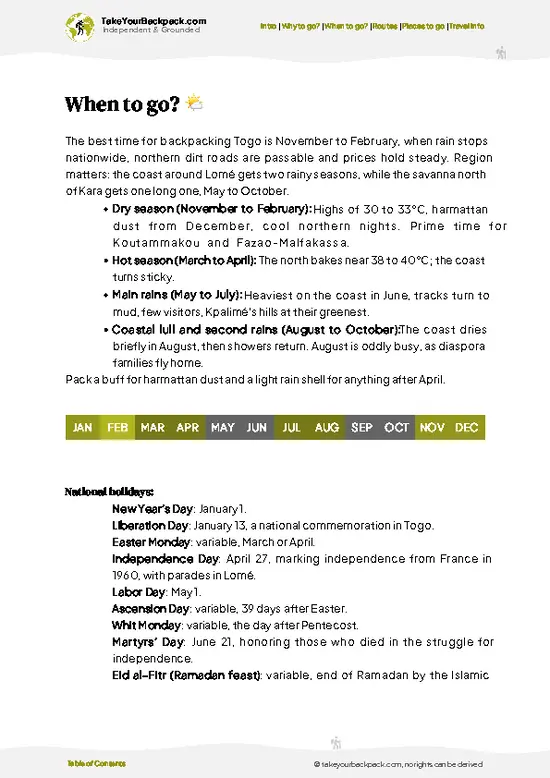
  • Weather: The dry season from November to March is your best bet. Expect clear skies and minimal rain, making trails less slippery and the air crisp rather than muggy.

  • Temperature: Daytime highs hover around 28-32°C (82-90°F), cooling to 20-24°C (68-75°F) at night. This range keeps hiking comfortable without the oppressive heat of the rainy season.

  • Daylight Hours: Roughly 11 to 12 hours of daylight year-round, but the dry season offers more consistent, bright mornings perfect for early starts and long treks.

  • Crowds: Amlame is off the beaten path, so crowds are light year-round. However, the dry season sees a slight uptick as regional travelers escape the rains.

  • Seasonal Activities: Dry months align with local festivals and market days, giving you a richer cultural experience alongside
read more 👉

  • Weather: The dry season from November to March is your best bet. Expect clear skies and minimal rain, making trails less slippery and the air crisp rather than muggy.

  • Temperature: Daytime highs hover around 28-32°C (82-90°F), cooling to 20-24°C (68-75°F) at night. This range keeps hiking comfortable without the oppressive heat of the rainy season.

  • Daylight Hours: Roughly 11 to 12 hours of daylight year-round, but the dry season offers more consistent, bright mornings perfect for early starts and long treks.

  • Crowds: Amlame is off the beaten path, so crowds are light year-round. However, the dry season sees a slight uptick as regional travelers escape the rains.

  • Seasonal Activities: Dry months align with local festivals and market days, giving you a richer cultural experience alongside your backpacking.

  • Price Fluctuations: Accommodation and transport costs rise modestly during the dry season due to demand but remain reasonable compared to major tourist hubs.


Pro-tip: Aim for late November or early December—when the air is fresh, the trails firm, and the local scene buzzes quietly without the peak-season price hike.


source: climatestotravel.comJANJanuary: excellent for travelingFEBFebruary: excellent for travelingMARMarch: excellent for travelingAPRApril: fair for travelingMAYMay: fair for travelingJUNJune: fair for travelingJULJuly: fair for travelingAUGAugust: fair for travelingSEPSeptember: fair for travelingOCTOctober: good for travelingNOVNovember: highly recommended for travelingDECDecember: excellent for traveling
when-to-go

✈️ The backpacker research shortcutTogo Travel Guide

An offline-friendly backpacking guide with optimized travel routes, ranked highlights, transport advice, and the best areas to stay.
example page 0 from our offline Travel Guide for Togo
example page 1 from our offline Travel Guide for Togo
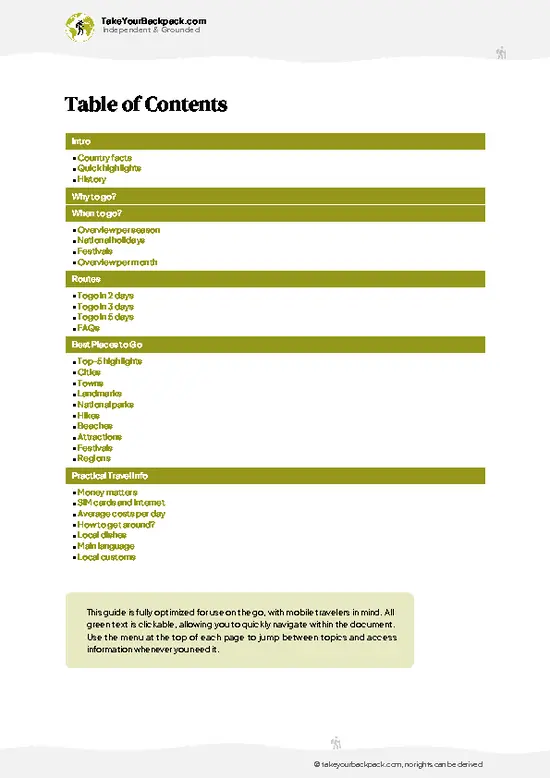
example page 2 from our offline Travel Guide for Togo
example page 3 from our offline Travel Guide for Togo
example page 4 from our offline Travel Guide for Togo
example page 5 from our offline Travel Guide for Togo
example page 6 from our offline Travel Guide for Togo
example page 7 from our offline Travel Guide for Togo
The digital guide (234 pages) contains:
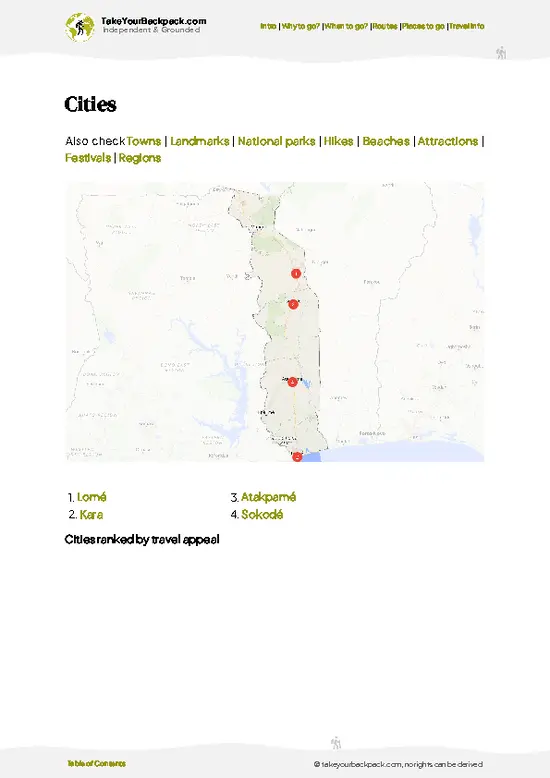
55 highlights, ranked by travel appeal
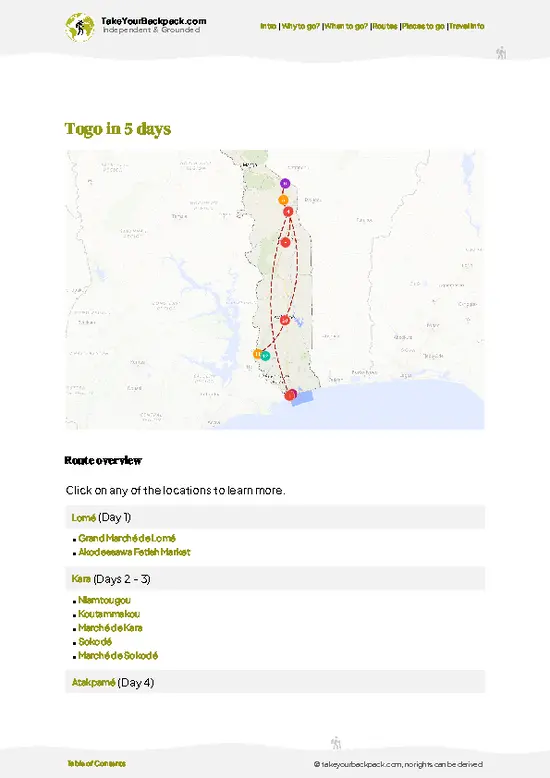
Optimized 2, 3 & 5-day travel routes
Cities, national parks, landmarks, beaches
How to get around
Offline-friendly for travel without Wi-Fi
👉 Click to see all 30+ guide features

📅 Plan smarter in minutes, not weeks
Month by month travel advice
Festivals & national holidays
Budget expectations

🗺️ Go to the right places, skip the overrated ones
Honest pros & cons of destinations
Top hikes, parks & viewpoints
Lesser-known places most travelers miss
Clear “worth it vs skip it” guidance

🛏️ Travel smoothly without rookie mistakes
Best areas to stay
Transport systems explained simply
Common scams & safety advice
SIM cards, money & practical tips

🌍 Understand the country, not just visit it
Culture & traditions
52 Essential phrases & customs
Festivals worth planning around
Traveler-friendly historical context
Insights that make places more meaningful

📱 Built for real travel conditions
Fully downloadable PDF
Works completely offline
Optimized for phone use
Useful in remote areas & buses
Everything in one place
Save weeks of stressful planning
Get instant access to your full guide. 30‑day money-back guarantee.


By proceeding you agree to our terms.
Sent to your inbox immediately after payment • 100% Secure Checkout
Best Backpacking Travel Advisor 2025 tourism awardBest Backpacking
Travel Advisor
2025
What others say about Take Your Backpack Guides:
⭐⭐⭐⭐⭐
Fantastic, amazing amount of information!
⭐⭐⭐⭐⭐
My goodness this is amazing, it's what I've been looking for hats off too you!
⭐⭐⭐⭐⭐
I think this is absolutely BRILLIANT
⭐⭐⭐⭐
Very complete and informative. It's still missing places, but I gotta to commend you
⭐⭐⭐⭐⭐
This is truly amazing, thank you, can't wait to explore it with my kids!
⭐⭐⭐⭐⭐
Awesome resource, thank you!
⭐⭐⭐⭐⭐
This is amazing! Can't wait to explore the ones I haven't seen
⭐⭐⭐⭐
I love this! Well done, great idea.
⭐⭐⭐⭐⭐
Thanks for taking the time to make this gem!
⭐⭐⭐⭐⭐
This might be the best website I've ever seen.
⭐⭐⭐⭐⭐
Congratulations, and thank you so much for your work; it's incredibly valuable.
⭐⭐⭐⭐
In all seriousness I think you did a great job pointing out the important spots
⭐⭐⭐⭐⭐
10/10 very good
⭐⭐⭐⭐⭐
As someone who's only just starting to visit regularly this is awesome, thank you.
⭐⭐⭐⭐
Thank you very much! I'm going to visit my dad, it's going to be very useful!
⭐⭐⭐⭐⭐
This is really cool! We'll be travelling for the first time and this definitely come in handy.
⭐⭐⭐⭐⭐
You are now our minister of culture, congratulations 👨‍💼
⭐⭐⭐⭐⭐
Just wanted to tell you that this is a pearl! Going to follow your recommendations.
⭐⭐⭐⭐⭐
This is so cool. I'll definitely be using the resource for my travels soon.
⭐⭐⭐⭐⭐
This is very impressive! Good work.
⭐⭐⭐⭐⭐
This is an amazing and informative site. Very well done!

🛏️ Where to stay?Where staying makes the most sense

In Amlame, the heartbeat for backpackers pulses strongest in the central district near the main market and bus station. This area hums with life from dawn till dusk—vendors shouting, spices scenting the air, and locals weaving through narrow streets. It’s where you’ll find the most budget-friendly guesthouses and a handful of hostels that double as social hubs, perfect for solo travelers craving connection without the tourist gloss. Staying here means easy access to transport and the chance to soak in daily Togolese rhythms without feeling like an outsider.

Venture beyond this core, and the vibe … read more 👉
In Amlame, the heartbeat for backpackers pulses strongest in the central district near the main market and bus station. This area hums with life from dawn till dusk—vendors shouting, spices scenting the air, and locals weaving through narrow streets. It’s where you’ll find the most budget-friendly guesthouses and a handful of hostels that double as social hubs, perfect for solo travelers craving connection without the tourist gloss. Staying here means easy access to transport and the chance to soak in daily Togolese rhythms without feeling like an outsider.

Venture beyond this core, and the vibe shifts. Residential neighborhoods offer quiet but lack the buzz and safety that come with numbers. The outskirts can feel isolated, with fewer options for mingling or grabbing a quick meal. For a backpacker, the central district isn’t just about convenience—it’s about stepping into the city’s pulse, where every corner invites a story and every evening promises new faces.

🚌 Getting aroundHow to get around Amlame

Amlame moves at its own rhythm—neither frantic nor slow, but deliberate, like a well-worn path through a forest where every step counts. The town’s pulse is set by the sun’s arc and the chatter of locals rather than strict timetables. You won’t find digital boards or loud announcements here; instead, you’ll catch the scent of fresh earth and hear the soft clatter of wheels on dusty roads. This is a place where intuition and patience pay off, where knowing when to move is as much about reading the atmosphere as it is about clocks. Embrace the flow, and you’ll find the town’s transit options are less about rigid schedules and more about practical rhythms that reward the traveler who’s tuned in.


  • Walking: The heart of Amlame is compact enough to explore on foot, with dirt paths and shaded
read more 👉
Amlame moves at its own rhythm—neither frantic nor slow, but deliberate, like a well-worn path through a forest where every step counts. The town’s pulse is set by the sun’s arc and the chatter of locals rather than strict timetables. You won’t find digital boards or loud announcements here; instead, you’ll catch the scent of fresh earth and hear the soft clatter of wheels on dusty roads. This is a place where intuition and patience pay off, where knowing when to move is as much about reading the atmosphere as it is about clocks. Embrace the flow, and you’ll find the town’s transit options are less about rigid schedules and more about practical rhythms that reward the traveler who’s tuned in.


  • Walking: The heart of Amlame is compact enough to explore on foot, with dirt paths and shaded lanes that reveal local life in vivid detail. Walking costs nothing, offers the richest sensory experience, and lets you pause for roadside fruit stands or impromptu conversations.


  • Shared Taxis (Zémidjans): These motorcycle taxis are the town’s lifeline, darting through narrow streets with surprising agility. Expect to pay around 200-300 CFA per short ride. They run from dawn until late evening but don’t follow a fixed schedule—just flag one down and hop on. Quick, nimble, and perfect for short hops when your feet need a break.


  • Minibus Vans: For trips to nearby villages or the regional hub, minibuses leave once they fill up, usually between 7 a.m. and 5 p.m. Fares hover around 500-1000 CFA depending on distance. They’re slower and less comfortable than taxis but unbeatable for budget travelers needing to cover longer ground.


  • Bicycle Rentals: If you want to cover more ground at your own pace, renting a bicycle is a smart move. Rates are roughly 1000 CFA per day. The terrain is mostly flat with occasional hills, so it’s a good workout without being punishing. Plus, you control your stops and timing—ideal for chasing golden hour light or escaping midday heat.

👛 Costs (as of 3 June 2026)Money, prices, and spending tips

Backpacking in Amlame, Togo, offers a raw, grounded experience where every dollar stretches into authentic local life. Here’s what you can expect to spend daily as an independent traveler.
  • Dorm Accommodation: Basic guesthouses or small hostels in Amlame typically charge between €5 and €10 per night. These places are simple—think mosquito nets, shared bathrooms, and the occasional rooster crowing at dawn. It’s not luxury, but it’s clean and safe enough to recharge after a day of exploring.
  • Meals: Street food and local eateries dominate here. A filling meal of grilled fish, rice, and vegetables will run you about €1.50 to €3. If you opt for a small restaurant, expect to pay up to €5 for a more varied plate. Fresh fruit and snacks from markets are even cheaper, perfect for quick energy boosts.
read more 👉
Backpacking in Amlame, Togo, offers a raw, grounded experience where every dollar stretches into authentic local life. Here’s what you can expect to spend daily as an independent traveler.
  • Dorm Accommodation: Basic guesthouses or small hostels in Amlame typically charge between €5 and €10 per night. These places are simple—think mosquito nets, shared bathrooms, and the occasional rooster crowing at dawn. It’s not luxury, but it’s clean and safe enough to recharge after a day of exploring.
  • Meals: Street food and local eateries dominate here. A filling meal of grilled fish, rice, and vegetables will run you about €1.50 to €3. If you opt for a small restaurant, expect to pay up to €5 for a more varied plate. Fresh fruit and snacks from markets are even cheaper, perfect for quick energy boosts.
  • Local Transport: Transport is mostly by shared taxis or minibuses, which cost around €0.30 to €0.70 per trip within town or to nearby villages. If you’re heading further out or want a private ride, prices can jump to €5 or more, but that’s rare for typical backpacker routes.
  • Basic Activities/Entry Fees: Most local attractions are low-cost or free. Visiting markets, walking through villages, or exploring natural spots usually costs nothing. If there’s a small entry fee for a cultural site or park, it’s generally under €2. This keeps your adventure authentic and budget-friendly.
  • Miscellaneous Expenses: This covers essentials like bottled water (€0.50), occasional snacks, or small souvenirs. Budget around €1 to €2 daily here, as these little extras add up but remain modest.

All told, you’re looking at roughly €10 to €20 per day to live comfortably and independently in Amlame. This range gives you enough to cover basics without scrimping on the experience, letting you soak in the town’s atmosphere without constant money stress.
⚠️ Prices can change and everyone travels differently, so take this as a rough guide. Hope it helps you plan your adventure!

🚌 Day tripsEasy escapes and nearby places

Amlame, Togo, is a fantastic base for exploring the region’s rich culture and stunning landscapes. Here are some day trips that will elevate your experience.

Mount Agou
Just a short ride from Amlame, Mount Agou offers a rewarding hike with panoramic views that make the effort worthwhile. The trail winds through lush forests, where the air is thick with the scent of damp earth and wildflowers. Expect about 3-4 hours of hiking, and pack a lunch to enjoy at the summit. The best time to go is during the dry season, from November to March, when the trails are less muddy. A common mistake is underestimating the trail’s difficulty; wear sturdy shoes and bring plenty of water.
👉 Explore Mount Agou

Kpalimé Market
A vibrant hub of local life, Kpalimé Market is a sensory overload of colors and … read more 👉
Amlame, Togo, is a fantastic base for exploring the region’s rich culture and stunning landscapes. Here are some day trips that will elevate your experience.

Mount Agou
Just a short ride from Amlame, Mount Agou offers a rewarding hike with panoramic views that make the effort worthwhile. The trail winds through lush forests, where the air is thick with the scent of damp earth and wildflowers. Expect about 3-4 hours of hiking, and pack a lunch to enjoy at the summit. The best time to go is during the dry season, from November to March, when the trails are less muddy. A common mistake is underestimating the trail’s difficulty; wear sturdy shoes and bring plenty of water.
👉 Explore Mount Agou

Kpalimé Market
A vibrant hub of local life, Kpalimé Market is a sensory overload of colors and sounds. Just a 30-minute drive from Amlame, this bustling market is perfect for picking up handmade crafts and sampling street food. Plan to spend a few hours here, ideally on a Saturday when the market is at its liveliest. Budget around $5 for snacks and souvenirs. First-timers often miss the best stalls tucked away in corners, so take your time to explore every nook.


Womé Waterfalls
About an hour from Amlame, Womé Waterfalls is a hidden treasure. The sound of cascading water fills the air as you approach, and the mist creates a refreshing escape from the heat. The hike to the falls is relatively easy, taking about 30 minutes, and costs around $2 for entry. Visit in the morning to avoid crowds and catch the sunlight filtering through the trees. Many overlook the trail leading to the upper falls, which offers a more secluded experience.


Lake Togo
A scenic hour’s drive will take you to Lake Togo, where you can unwind by the water’s edge. The lake is perfect for a leisurely afternoon of swimming or renting a canoe. Expect to spend around $10 for a canoe rental and snacks. The best time to visit is during the late afternoon when the sun sets, casting a golden glow over the water. A common rookie mistake is not checking the weather; storms can roll in quickly, so keep an eye on the sky.
👉 Explore Lake Togo

These day trips from Amlame not only showcase the beauty of Togo but also provide a deeper connection to its culture and landscapes.
Want to know what more Togo offers?
The Togo Travel Guide describes 55 highlights, from cities to national parks, from beaches to hikes

Get the Travel Guide -

🛡️ SafetyStaying Safe: What Travelers Should Know

Amlame is generally safe, but staying aware is key. The market area can get crowded, so keep your belongings close. If you’re solo, avoid wandering too far after dark; stick to well-lit paths and familiar spots.

Scams are rare, but some vendors may inflate prices for tourists. A friendly smile and a firm, polite negotiation can go a long way. Expect the occasional hassle from overly eager guides; a simple “no, thank you” usually suffices.

Embrace the local vibe, but trust your instincts. Carry yourself with confidence, and you’ll navigate Amlame like a pro.

Other Togolese towns near Amlame

Explore more nearby:

  • Badou—waterfalls, cocoa plantations, forested hills| 36 km away
  • Kpalime—forest hills, waterfalls, artisan workshops, cocoa farms| 68 km away
  • Kpélé—coffee farms, Ewe villages, rolling hills| 73 km away

💡 Not sure where to go next?
Create a personalized itinerary for Togo including Amlame and the places that fit your trip.

Generate my itinerary

👉 Discover all towns

Or checkout all Togo has to offer (think cities, towns, villages, national parks, hikes, beaches, festivals)
Country photo of Togo

We 💚 feedbackFinal thoughts on visiting Amlame

Amlame pulses with a raw, vibrant energy that feels alive. The scent of fresh palm oil wafts through the air, mingling with laughter from the market. Don’t miss the local dance performances; they’ll catch you off guard with their intensity. Just be ready for the heat—stay hydrated, and embrace the sweat. It’s part of the experience.

✍️ Help improve this page!
The information on this page is based on in-depth research, insights shared by experienced travelers, and feedback from the local travel community in Togo. While every effort is made to keep the information accurate and current, conditions can change — so if you spot anything incorrect or outdated, please get in touch.


🙋‍♂️ Give feedback

👋 Meet the founderWho’s Behind Take Your Backpack?

Johan, backpacker and founder of TakeYourBackpackHi, I’m Johan (Netherlands 🇳🇱), the creator of TakeYourBackpack. Over the past decade, I’ve backpacked through 80+ countries across six continents, gaining extensive experience with independent travel, long-term trips, and overland routes.

This site is built on a combination of firsthand travel experience and carefully curated insights from other backpackers. Many guides are based on places I’ve personally visited, while others bring together tips, observations, and practical advice shared by trusted travelers I’ve met along the way.

The goal is to provide realistic, experience-driven guidance — not generic itineraries — so you can explore destinations with better context, clearer expectations, and more confidence.

Get full Togo guide •
Instant download • 55 highlights • Full Offline guide