×

Tonga🇹🇴 | regionsNiuatoputapuFar-north lagoon, Falehau wharf, plantation walks | things to do and best time to go

Explore Uoleva IslandExplore Tafahi Island

Backpacking in Niuatoputapu
👌 Worth visitingregion ranked #6
By Johan Kruseman 🇳🇱 | Updated October 15, 2026

Shallow reef water at low tide turns the lagoon edge into a silver mirror, and the walk along the road to Falehau shows it off with pigs, chickens and children's laughter drifting from the villages. Niuatoputapu sits in the far north of Tonga, close to Samoa, and it is about as far from Nuku’alofa's rhythm as you can get. The island is small and green, with Hihifo and Falehau as the main settlements, a lagoon, sandy beaches and the central hill rising behind. Flights are rare and the ferry is slow, so you arrive tired and stay put. Shops are tiny, power and internet are patchy, and nothing is polished. That is the appeal, since people wave, ask your name, and invite you to church or a meal. Plan a first day around a slow walk from Hihifo to the beach, a swim in warm water, and fish for dinner.

Discover everything you want to know in the 📖 Tonga Travel Guide.


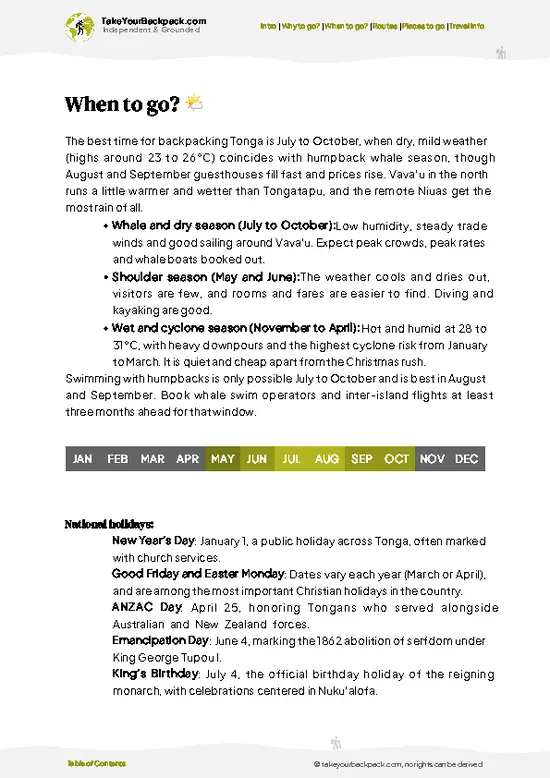
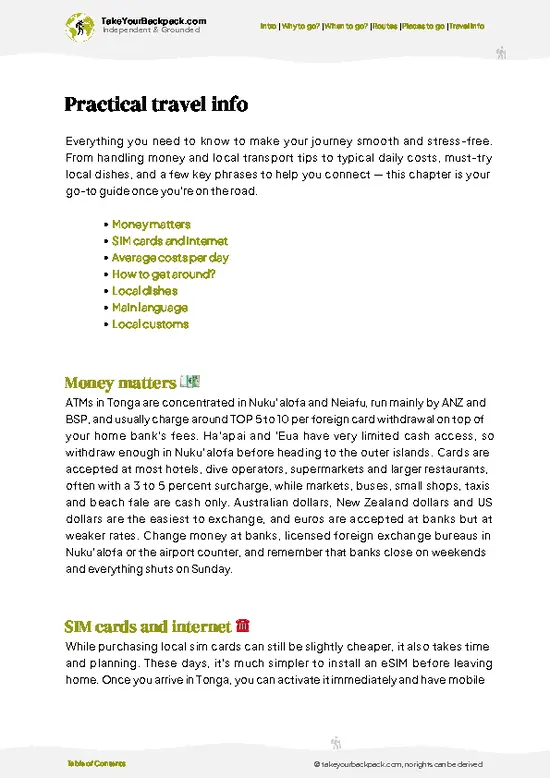
example page 0 from our offline Travel Guide for Tonga
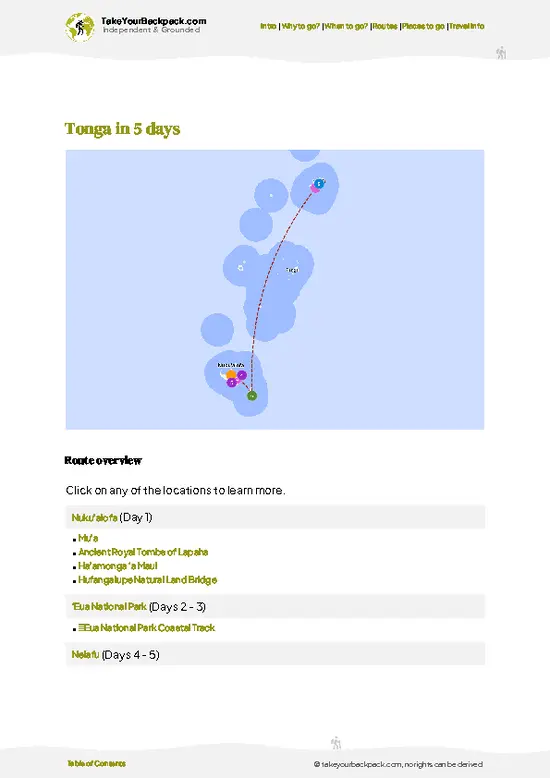
example page 1 from our offline Travel Guide for Tonga
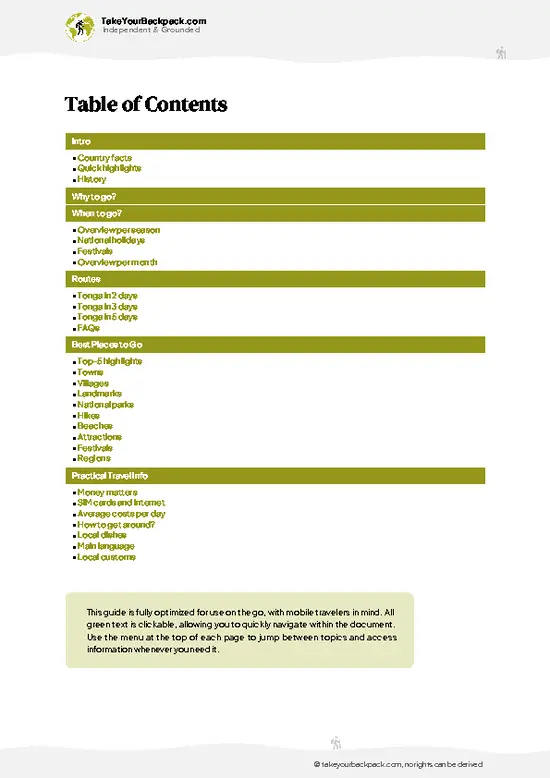
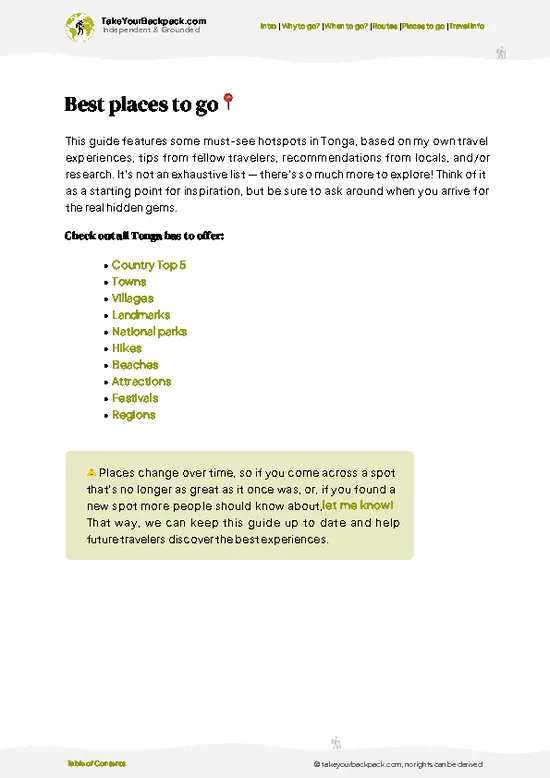
example page 2 from our offline Travel Guide for Tonga
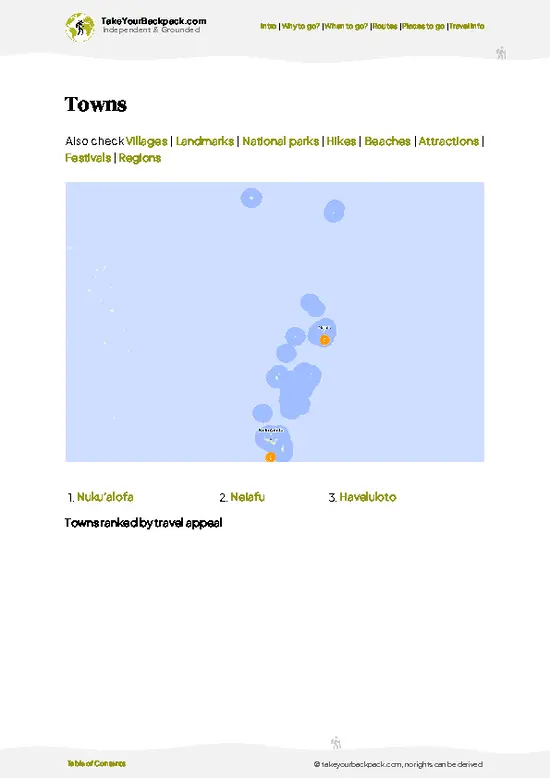
example page 3 from our offline Travel Guide for Tonga
example page 4 from our offline Travel Guide for Tonga
example page 5 from our offline Travel Guide for Tonga
example page 6 from our offline Travel Guide for Tonga
example page 7 from our offline Travel Guide for Tonga
Loading the map 🌍
CLICK TO FILTER
towns
villages
landmarks
national parks
hikes
beaches
attractions
festivals
regions
SHOW COUNTRY’S BESTSHOW ALL

✨ Why go?
Ranked #6 region in Tonga
Reasons people choose to visit here

Backpackers come to Niuatoputapu because it is one of the few places in Tonga where the island is small enough to cross on foot, yet still holds a lagoon, a volcanic hill and several villages. You can swim, snorkel, climb and visit homes without ever needing a vehicle or a plan. Distance from the main islands keeps visitor numbers very low, so you meet people as guests, not as customers. Many homestays arrange fishing trips, village meals and walks, so one base covers everything. Tsunami history adds depth: the 2009 tsunami hit the island hard, and locals will tell you how the community rebuilt. Slow travel here is the only option, and the island suits it well. Bring cash, patience and snacks, since supplies depend on the boat. The reward is quiet evenings, strong stars and a rare sense of having a Pacific island almost to yourself.

💡 HighlightsKey sights and experiences for travelers

  1. Hihifo village: the main settlement, with the small shops, churches and a slow, friendly daily rhythm that shows how islanders really live.
  2. Falehau wharf: the landing area where boats and ferries arrive, ideal for watching fishers and sunsets.
  3. Island summit: the island's green hill, a short, steep walk through plantations to a view across lagoon and reef.
  4. Lagoon beaches: long pale sand and calm, shallow water for swimming and wading.
  5. Reef snorkeling: colorful corals and small fish close to shore, best when arranged with a local boat owner.
  6. Tsunami memorial sites: places in the villages where residents recall the 2009 disaster, best visited respectfully with a local guide.
  7. Village churches on Sunday: hearing harmonized hymns is a highlight, and visitors are usually welcome if dressed modestly.
  8. Plantation
… read more 👉
  1. Hihifo village: the main settlement, with the small shops, churches and a slow, friendly daily rhythm that shows how islanders really live.
  2. Falehau wharf: the landing area where boats and ferries arrive, ideal for watching fishers and sunsets.
  3. Island summit: the island's green hill, a short, steep walk through plantations to a view across lagoon and reef.
  4. Lagoon beaches: long pale sand and calm, shallow water for swimming and wading.
  5. Reef snorkeling: colorful corals and small fish close to shore, best when arranged with a local boat owner.
  6. Tsunami memorial sites: places in the villages where residents recall the 2009 disaster, best visited respectfully with a local guide.
  7. Village churches on Sunday: hearing harmonized hymns is a highlight, and visitors are usually welcome if dressed modestly.
  8. Plantation walks: tracks through taro, coconut and banana gardens, where farmers often stop to chat.
  9. Fishing outing with a local: a lagoon trip where you can catch or help catch dinner, then eat it on the shore.
All of it fits comfortably into three or four slow days.
Spotted a mistake or missing something? Contact us.

⌛️ 5 daysSeeing the highlights in 5 days

Day 1: Hihifo: Start in Hihifo, the one stop not to skip, because the whole island makes sense here. Walk the lanes, greet people, visit the shop and learn who can arrange boats and meals. Everything depends on the irregular flights and ferry, so build days around the weather and boats, not a timetable.
Day 2: The island summit: Climb early before the heat. The track is short but steep and muddy after rain. From the top you see how reef, lagoon and villages fit together. Spend the afternoon on a beach, since your legs will want it.
Day 3: Lagoon and Falehau: Walk or hitch toward Falehau and spend the day on the water with a local boat owner for snorkeling or fishing. The wharf at the end is the place for the late light. Ask your host to cook what you catch.
Day 4: Villages: Spend a slow day on … read more 👉
Day 1: Hihifo: Start in Hihifo, the one stop not to skip, because the whole island makes sense here. Walk the lanes, greet people, visit the shop and learn who can arrange boats and meals. Everything depends on the irregular flights and ferry, so build days around the weather and boats, not a timetable.
Day 2: The island summit: Climb early before the heat. The track is short but steep and muddy after rain. From the top you see how reef, lagoon and villages fit together. Spend the afternoon on a beach, since your legs will want it.
Day 3: Lagoon and Falehau: Walk or hitch toward Falehau and spend the day on the water with a local boat owner for snorkeling or fishing. The wharf at the end is the place for the late light. Ask your host to cook what you catch.
Day 4: Villages: Spend a slow day on the plantation tracks and the coast road, talking to farmers and stopping at memorial sites. This is the detour: a walk to the quieter end of the island away from the main road, adding calm and views without needing transport.
Day 5: Sunday or departure: If it is Sunday, go to church and rest, as little else happens. Otherwise pack early and stay near the airstrip or wharf. The one day that justifies the trip is Day 3, when the lagoon, the catch and the sunset come together.

🌤️ When to go?Best time to visit Niuatoputapu

May to October is the most comfortable window for Niuatoputapu, with the least rain and lower humidity. Plan around the flights, since the island is remote and seats are limited.
  • Dry Season (May to October): Highs of 26 to 29°C (79 to 84°F), nights near 21°C (70°F), and breezy trade winds. Days run about 11 to 12 hours. Whale season here runs roughly July to October, and humpbacks pass the reef. Flights fill early and the few guesthouses book up.
  • Wet Season (November to April): Highs of 29 to 32°C (84 to 90°F), sticky air, and heavy downpours that can turn the dirt tracks to mud. Daylight stretches to about 13 hours. Cyclones are possible, mostly January to March, and flights can be canceled. Prices barely change, but the island is quiet.
  • Shoulder Months (April and November): Showers ease or
… read more 👉
May to October is the most comfortable window for Niuatoputapu, with the least rain and lower humidity. Plan around the flights, since the island is remote and seats are limited.
  • Dry Season (May to October): Highs of 26 to 29°C (79 to 84°F), nights near 21°C (70°F), and breezy trade winds. Days run about 11 to 12 hours. Whale season here runs roughly July to October, and humpbacks pass the reef. Flights fill early and the few guesthouses book up.
  • Wet Season (November to April): Highs of 29 to 32°C (84 to 90°F), sticky air, and heavy downpours that can turn the dirt tracks to mud. Daylight stretches to about 13 hours. Cyclones are possible, mostly January to March, and flights can be canceled. Prices barely change, but the island is quiet.
  • Shoulder Months (April and November): Showers ease or begin, and the lagoon stays warm for snorkeling at 27 to 29°C (81 to 84°F).
Book your flight first, then build the rest of the trip around it.


source: climatestotravel.comJANJanuary: fair for travelingFEBFebruary: fair for travelingMARMarch: fair for travelingAPRApril: fair for travelingMAYMay: highly recommended for travelingJUNJune: excellent for travelingJULJuly: excellent for travelingAUGAugust: excellent for travelingSEPSeptember: excellent for travelingOCTOctober: highly recommended for travelingNOVNovember: fair for travelingDECDecember: fair for traveling
tonga-region-niuatoputapu
© Google | Masayuki Kotani

✈️ The backpacker research shortcutTonga Travel Guide

An offline-friendly backpacking guide with optimized travel routes, ranked highlights, transport advice, and the best areas to stay.
example page 0 from our offline Travel Guide for Tonga
example page 1 from our offline Travel Guide for Tonga
example page 2 from our offline Travel Guide for Tonga
example page 3 from our offline Travel Guide for Tonga
example page 4 from our offline Travel Guide for Tonga
example page 5 from our offline Travel Guide for Tonga
example page 6 from our offline Travel Guide for Tonga
example page 7 from our offline Travel Guide for Tonga
The digital guide (128 pages) contains:
✅ 31 highlights, ranked by travel appeal
✅ Optimized 2, 3 & 5-day travel routes
✅ Cities, national parks, landmarks, beaches
✅ How to get around
✅ Offline-friendly for travel without Wi-Fi
👉 Click to see all 30+ guide features

📅 Plan smarter in minutes, not weeks
✅ Month by month travel advice
✅ Festivals & national holidays
✅ Budget expectations

🗺️ Go to the right places, skip the overrated ones
✅ Honest pros & cons of destinations
✅ Top hikes, parks & viewpoints
✅ Lesser-known places most travelers miss
✅ Clear “worth it vs skip it” guidance

🛏️ Travel smoothly without rookie mistakes
✅ Best areas to stay
✅ Transport systems explained simply
✅ Common scams & safety advice
✅ SIM cards, money & practical tips

🌍 Understand the country, not just visit it
✅ Culture & traditions
✅ 52 Essential phrases & customs
✅ Festivals worth planning around
✅ Traveler-friendly historical context
✅ Insights that make places more meaningful

📱 Built for real travel conditions
✅ Fully downloadable PDF
✅ Works completely offline
✅ Optimized for phone use
✅ Useful in remote areas & buses
✅ Everything in one place
Stop searching, start planning
Get instant access to your full guide. 30‑day money-back guarantee.
+ Add another guide for just

By proceeding you agree to our terms.
Sent to your inbox immediately after payment • 100% Secure Checkout
Best Backpacking Travel Advisor 2025 tourism awardBest Backpacking
Travel Advisor
2025
What others say about Take Your Backpack Guides:
⭐⭐⭐⭐⭐
Fantastic, amazing amount of information!
⭐⭐⭐⭐⭐
My goodness this is amazing, it's what I've been looking for hats off too you!
⭐⭐⭐⭐⭐
I think this is absolutely BRILLIANT
⭐⭐⭐⭐
Very complete and informative. It's still missing places, but I gotta to commend you
⭐⭐⭐⭐⭐
This is truly amazing, thank you, can't wait to explore it with my kids!
⭐⭐⭐⭐⭐
Awesome resource, thank you!
⭐⭐⭐⭐⭐
This is amazing! Can't wait to explore the ones I haven't seen
⭐⭐⭐⭐
I love this! Well done, great idea.
⭐⭐⭐⭐⭐
Thanks for taking the time to make this gem!
⭐⭐⭐⭐⭐
This might be the best website I've ever seen.
⭐⭐⭐⭐⭐
Congratulations, and thank you so much for your work; it's incredibly valuable.
⭐⭐⭐⭐
In all seriousness I think you did a great job pointing out the important spots
⭐⭐⭐⭐⭐
10/10 very good
⭐⭐⭐⭐⭐
As someone who's only just starting to visit regularly this is awesome, thank you.
⭐⭐⭐⭐
Thank you very much! I'm going to visit my dad, it's going to be very useful!
⭐⭐⭐⭐⭐
This is really cool! We'll be travelling for the first time and this definitely come in handy.
⭐⭐⭐⭐⭐
You are now our minister of culture, congratulations 👨‍💼
⭐⭐⭐⭐⭐
Just wanted to tell you that this is a pearl! Going to follow your recommendations.
⭐⭐⭐⭐⭐
This is so cool. I'll definitely be using the resource for my travels soon.
⭐⭐⭐⭐⭐
This is very impressive! Good work.
⭐⭐⭐⭐⭐
This is an amazing and informative site. Very well done!

🛏️ Where to stay?How to pick the right area

Hihifo is the best base on Niuatoputapu, with the greatest concentration of guesthouses and the island’s small shops. Falehau, the eastern village, is the other choice. The island has only a handful of places to sleep, so this is a decision between two villages rather than a long list of towns.
In Hihifo you are close to the airstrip, the clinic, the post office and the few stores selling canned goods, rice and bread. Evenings are social in the village way: neighbors stop to chat, kava circles form and church singing carries across the yard on Sundays. It is safe enough to walk at night, and solo … read more 👉
Hihifo is the best base on Niuatoputapu, with the greatest concentration of guesthouses and the island’s small shops. Falehau, the eastern village, is the other choice. The island has only a handful of places to sleep, so this is a decision between two villages rather than a long list of towns.
In Hihifo you are close to the airstrip, the clinic, the post office and the few stores selling canned goods, rice and bread. Evenings are social in the village way: neighbors stop to chat, kava circles form and church singing carries across the yard on Sundays. It is safe enough to walk at night, and solo travelers are quickly known by name. You are also near the lagoon edge for easy snorkeling.
Falehau is quieter, set on the shore facing the channel to Tafahi, with the best sunrise views and a ferry-style wharf where fishing boats come in. It suits those who want silence and sea light over company. Boat trips to Tafahi often leave from here.
Backpackers meet mostly at shared guesthouse tables, so staying in Hihifo gives you the best odds of finding company for boat charters and whale outings.

🚌 Getting aroundTransportation options and practical tips

A ride in a local pickup or a neighbor’s truck on Niuatoputapu usually costs T$2 to 5 (about US$1 to 2), paid in cash straight to the driver, and often there is no fixed price at all. Most visitors walk. The island is only about 15 square kilometers, and the main road runs between the villages of Hihifo and Falehau with the lagoon flashing blue through the coconut palms. Everything is informal, so nothing runs on a timetable.
  • Walking: Free, and the best way to cover the 7 to 8 km along the coast road in two or three hours. You pass pigs rooting under breadfruit trees, kids waving from yards, and the smell of woodsmoke from umu ovens, and you end at a quiet beach with nobody else on it.
  • Hitching or local pickup: T$2 to 5 a ride. Wave a hand and a truck usually stops, bed packed with taro, kids
… read more 👉
A ride in a local pickup or a neighbor’s truck on Niuatoputapu usually costs T$2 to 5 (about US$1 to 2), paid in cash straight to the driver, and often there is no fixed price at all. Most visitors walk. The island is only about 15 square kilometers, and the main road runs between the villages of Hihifo and Falehau with the lagoon flashing blue through the coconut palms. Everything is informal, so nothing runs on a timetable.
  • Walking: Free, and the best way to cover the 7 to 8 km along the coast road in two or three hours. You pass pigs rooting under breadfruit trees, kids waving from yards, and the smell of woodsmoke from umu ovens, and you end at a quiet beach with nobody else on it.
  • Hitching or local pickup: T$2 to 5 a ride. Wave a hand and a truck usually stops, bed packed with taro, kids and dogs. You get a ride at a gravel crawl and a conversation you would not get otherwise.
  • Bicycle: Some guesthouses lend or rent bikes for roughly T$10 to 20 a day. The road is flat but sandy and potholed in places, and a wet afternoon turns it to slick mud. In return you reach the far-end beaches by midmorning, before the heat builds.
  • Boat charters: Local fishermen take visitors to the reef, the sandbars or nearby Tafahi for about T$150 to 400 depending on distance and fuel. The ride is salty and loud with engine noise, and it drops you into water clear enough to see coral heads ten meters down.
  • Domestic flights: Small planes from Tongatapu via Vava’u arrive only a few times a week, and tickets cost roughly US$250 to 450 one way. Landing on the short strip you watch the reef ring the island below, and the seats vanish quickly.
Carry small bills and agree on a price before any boat trip, because change is scarce and fuel is expensive.

🍲 FoodLocal Flavors for Backpackers

Eating on Niuatoputapu means root crops, fish and coconut, cooked simply and often shared. The island is known for taro, cassava and yams pulled from family plots, boiled or baked in an umu earth oven until smoky and soft. Fresh reef fish comes grilled over coals or as ota ika, raw fish cured in lime juice and finished with coconut cream, sharp and cool. Coconut crab turns up occasionally, rich and sweet. Lu pulu, corned beef baked in taro leaves with coconut milk, is the Sunday standard.
There are no restaurant rows. Most meals are served at your guesthouse, usually ordered ahead, and a few small shops sell instant noodles, crackers, bread and tinned fish. Stock up before you arrive if you want variety, because shelves empty between supply boats. Drink coconut water cut fresh from the tree, … read more 👉
Eating on Niuatoputapu means root crops, fish and coconut, cooked simply and often shared. The island is known for taro, cassava and yams pulled from family plots, boiled or baked in an umu earth oven until smoky and soft. Fresh reef fish comes grilled over coals or as ota ika, raw fish cured in lime juice and finished with coconut cream, sharp and cool. Coconut crab turns up occasionally, rich and sweet. Lu pulu, corned beef baked in taro leaves with coconut milk, is the Sunday standard.
There are no restaurant rows. Most meals are served at your guesthouse, usually ordered ahead, and a few small shops sell instant noodles, crackers, bread and tinned fish. Stock up before you arrive if you want variety, because shelves empty between supply boats. Drink coconut water cut fresh from the tree, and in the evening join a kava circle, where the muddy, numbing brew is passed in a coconut shell.
Expect food to be served in generous amounts, and eat what you are given. Sunday is a rest day, so cooking and trading nearly stop, and asking about meals in advance matters. Accept food with both hands and a quiet thank you, or malo ‘aupito.

FAQCommon questions from travelers

Three to five days is enough for Niuatoputapu, mostly because flights from Tongatapu or Vava’u arrive only a few times a week, so the schedule sets your stay. In that time you can walk the coast road between Hihifo and Falehau, snorkel the lagoon, and arrange a boat trip to Tafahi. Add a day or two if you want whale watching between July and October.
On Niuatoputapu you walk, borrow a bike or catch lifts in local pickups. Walking the coast road between Hihifo and Falehau takes two to three hours, a pickup ride usually costs T$2 to 5, and bikes run roughly T$10 to 20 a day at some guesthouses. Boat charters to the reef or Tafahi cost about T$150 to 400.
Niuatoputapu is known for its remoteness, a sheltered lagoon with clear water and thin white beaches, and the volcanic cone of neighboring Tafahi rising from the sea. The island is also known for humpback whales passing from July to October and for its taro farming and village life. It was hit hard by the 2009 tsunami, and its small population of roughly 700 people still welcomes visitors warmly.
⚠️ Things can change over time, so always validate details locally before you go.

Other Tongan regions near Niuatoputapu

Explore more nearby:

  • Tafahi Island—Volcanic cone, kava slopes, surf landing| 12 km away
  • Vava’u—Neiafu harbor, sea caves, sheltered channels, whale swimming| 300 km away
  • Ha’apai—Whale swims, Lifuka-Foa cycling, Uoleva beach fales, Tofua crater| 426 km away

💡 Not sure where to go next?
Create a personalized itinerary for Tonga including Niuatoputapu and the places that fit your trip.

Generate my itinerary

👉 Discover all regions

Or checkout all Tonga has to offer (think cities, towns, villages, national parks, hikes, beaches, festivals)
Country photo of Tonga

We 💚 feedbackKey takeaways before you go

Give Niuatoputapu four or five days, because transport is unpredictable and the island rewards slowing down. Two days feels rushed, and a week is fine if you like quiet. Bring cash, snacks and a book, and book your homestay meals ahead. I would also pack a small gift for your host.

✍️ Help improve this page!
The information on this page is based on in-depth research, insights shared by experienced travelers, and feedback from the local travel community in Tonga. While every effort is made to keep the information accurate and current, conditions can change — so if you spot anything incorrect or outdated, please get in touch.


🙋‍♂️ Give feedback

👋 Meet the founderWho’s Behind Take Your Backpack?

Johan, backpacker and founder of TakeYourBackpackHi, I’m Johan (Netherlands 🇳🇱), the creator of TakeYourBackpack. Over the past 3 decades, I’ve backpacked through 90+ countries across six continents, gaining extensive experience with independent travel, long-term trips, and overland routes.

This site is built on a combination of firsthand travel experience and carefully curated insights from other backpackers. Many guides are based on places I’ve personally visited, while others bring together tips, observations, and practical advice shared by trusted travelers I’ve met along the way.

The goal is to provide realistic, experience-driven guidance — not generic itineraries — so you can explore destinations with better context, clearer expectations, and more confidence.