×

Tunisia🇹🇳 | attractionsDar Ben Abdallah Museum of Traditional Arts and TraditionsMedina townhouse, folk costumes, crafts displays | things to do and best time to go

Explore National Theatre of TunisExplore Carthage National Museum

Backpacking in Dar Ben Abdallah Museum of Traditional Arts and Traditions
👌 Worth visitingattraction ranked #9
By Johan Kruseman 🇳🇱 | Updated April 18, 2026

A sandal scuffs across cool, patterned tiles. The air smells faintly of old cedar and rosewater. Somewhere, a distant radio crackles through a courtyard window, mixing with the hush of your own footsteps as you peer into a salon frozen in time—embroidered silks, battered copper trays, and the ghost of a family’s laughter echoing off painted ceilings. This is Dar Ben Abdallah, tucked deep in the tangled alleys of Tunis’s medina, a world away from the tourist conveyor belt of Carthage or the beach clubs of Sousse.

Here’s the straight deal: Dar Ben Abdallah isn’t flashy. You won’t get adrenaline spikes or Instagram bragging rights. But if you want to feel the pulse of old Tunis—how real people lived, celebrated, and schemed—this place delivers. It’s cheap, rarely crowded, and the staff will leave you alone to wander. The downside? It’s easy to miss, and the signage is cryptic at best. But for the price of a coffee, you get a portal into the city’s soul—no filter, no hype.

Discover everything you want to know in the 📖 Tunisia Travel Guide.


Get your Tunisia guide
97 ranked highlights, routes & tips, works offline (372 pages)
Loading the map 🌍
CLICK TO FILTER
cities
towns
villages
landmarks
national parks
hikes
beaches
attractions
festivals
regions
SHOW COUNTRY’S BESTSHOW ALL

✨ Why go?
Ranked #9 attraction in Tunisia
What sets this place apart

The Dar Ben Abdallah Museum of Traditional Arts and Traditions isn’t just another stop on Tunisia’s tourist circuit—it’s a checkpoint for anyone serious about understanding the country beyond the postcards. Sure, it’s not hidden from the crowds, especially in peak season, but that’s because it holds a piece of Tunisian soul you won’t find elsewhere. This museum is housed in a beautifully preserved 18th-century mansion, which alone is worth the visit. But it’s the layers inside—the intricate ceramics, traditional costumes, and everyday objects—that tell the real story of Tunisian life through centuries.

Backpackers who make time here aren’t just ticking a box; they’re diving into a cultural deep end that’s both accessible and rich. The museum’s collection isn’t flashy, but it’s authentic, … read more 👉
The Dar Ben Abdallah Museum of Traditional Arts and Traditions isn’t just another stop on Tunisia’s tourist circuit—it’s a checkpoint for anyone serious about understanding the country beyond the postcards. Sure, it’s not hidden from the crowds, especially in peak season, but that’s because it holds a piece of Tunisian soul you won’t find elsewhere. This museum is housed in a beautifully preserved 18th-century mansion, which alone is worth the visit. But it’s the layers inside—the intricate ceramics, traditional costumes, and everyday objects—that tell the real story of Tunisian life through centuries.

Backpackers who make time here aren’t just ticking a box; they’re diving into a cultural deep end that’s both accessible and rich. The museum’s collection isn’t flashy, but it’s authentic, offering a tactile connection to Tunisia’s artisan heritage. It’s a major milestone on the classic Tunisia route because it bridges the gap between the ancient medina’s chaos and the modern city’s pulse. The effort to navigate the narrow streets and pay the modest entry fee is minimal compared to the payoff: a genuine, unvarnished look at tradition that Instagram can’t capture. If you want to feel Tunisia’s heartbeat, this museum is where it pulses strongest.
Want to include Dar Ben Abdallah Museum of Traditional Arts and Traditions in your Tunisia route?
Create a personalized Tunisia itinerary that includes Dar Ben Abdallah Museum of Traditional Arts and Traditions and the places that fit your trip — based on your travel style, budget, and available time. Get your route in seconds.

Generate my trip

💡 HighlightsEssential experiences to have while visiting Dar Ben Abdallah Museum of Traditional Arts and Traditions

The Courtyard: The Heartbeat of the Medina Mansion
Forget the filtered photos of empty, sun-drenched tiles. The real courtyard at Dar Ben Abdallah is a living snapshot of old Tunisian aristocracy—think carved stucco, geometric tiles, and the kind of silence that makes you hear your own footsteps. This isn’t just a pretty patio; it’s a stage where family dramas, business deals, and daily rituals played out for centuries. The architecture is a masterclass in how to keep cool before air conditioning, and the interplay of light and shadow is pure North African poetry. If you want to feel the pulse of a Tunis medina palace, stand here at midday and let the city’s chaos fade behind those thick walls.


The Reception Rooms: Where Status Was Everything
Instagram will show you the ornate ceilings and … read more 👉
The Courtyard: The Heartbeat of the Medina Mansion
Forget the filtered photos of empty, sun-drenched tiles. The real courtyard at Dar Ben Abdallah is a living snapshot of old Tunisian aristocracy—think carved stucco, geometric tiles, and the kind of silence that makes you hear your own footsteps. This isn’t just a pretty patio; it’s a stage where family dramas, business deals, and daily rituals played out for centuries. The architecture is a masterclass in how to keep cool before air conditioning, and the interplay of light and shadow is pure North African poetry. If you want to feel the pulse of a Tunis medina palace, stand here at midday and let the city’s chaos fade behind those thick walls.


The Reception Rooms: Where Status Was Everything
Instagram will show you the ornate ceilings and gold accents, but it won’t tell you how these rooms were designed to impress, intimidate, and seduce. The reception salons are decked out with intricate woodwork, painted ceilings, and enough bling to make a sultan jealous. But the real entertainment is in the details: the way the furniture is arranged to signal hierarchy, the subtle separation of men’s and women’s spaces, and the artifacts that hint at the daily lives of the Tunisian elite. This is social theater, not just interior design.


The Costume and Jewelry Collection: Bling with a Backstory
You’ll see more than just pretty dresses behind glass. The museum’s collection of traditional costumes and jewelry is a crash course in Tunisian identity—wedding finery, ceremonial robes, and enough silver to weigh down a camel. Each piece tells a story about class, region, and the rituals that shaped people’s lives. If you’re bored by mannequins, look closer: the embroidery, the filigree, the sheer weight of some necklaces. This is wearable history, and it’s got more personality than half the influencers in your feed.


The Everyday Objects: The Real Lives of the Not-So-Rich
Skip the temptation to breeze past the kitchenware and household tools. This is where the museum gets honest. You’ll find battered copper pots, hand-carved utensils, and the kind of humble objects that never make it onto postcards. These artifacts are the antidote to the palace’s grandeur—they’re proof that real life happened here, with all its mess and improvisation. If you want to understand Tunisia beyond the clichés, linger here.


The Building Itself: A Survivor of the Medina
Dar Ben Abdallah isn’t just a container for artifacts—it’s an artifact in its own right. Surviving centuries of political upheaval, urban sprawl, and the slow creep of modernity, the mansion is a rare example of 18th-century Tunisian architecture that hasn’t been sanitized for tourists. The creaking doors, the uneven floors, the faint smell of old plaster—these are the museum’s most honest storytellers. If you’re hunting for authenticity, this building delivers it in spades.
Spotted a mistake or missing something? Contact us.

Things to do around Dar Ben Abdallah Museum of Traditional Arts and Traditions

Ratings based on Tripadvisor reviews. When you book through this link, you support our work at no extra cost to you.

🌤️ When to go?When to go for the best experience


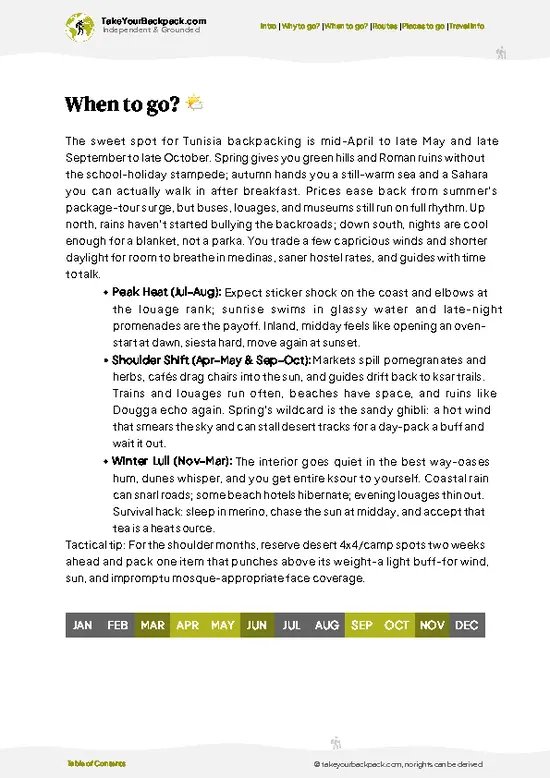
  • Weather: The best weather hits between March and May or September and November. You’ll dodge the brutal summer heat that can spike above 35°C (95°F), making wandering the museum less enjoyable. Winters are mild but can be damp, with temperatures around 12°C (54°F).

  • Temperature: Spring and fall offer comfortable highs around 20-25°C (68-77°F), perfect for exploring without sweating buckets or freezing your fingers off. Summer’s scorchers push past 35°C (95°F), which is brutal for indoor and outdoor activities alike.

  • Daylight Hours: From April to September, expect long days with up to 14 hours of daylight, giving you plenty of time to soak in the museum and nearby medina without rushing. Winter days shrink to about 10 hours, which can cramp your sightseeing plans.

  • Crowds: Peak tourist
read more 👉

  • Weather: The best weather hits between March and May or September and November. You’ll dodge the brutal summer heat that can spike above 35°C (95°F), making wandering the museum less enjoyable. Winters are mild but can be damp, with temperatures around 12°C (54°F).

  • Temperature: Spring and fall offer comfortable highs around 20-25°C (68-77°F), perfect for exploring without sweating buckets or freezing your fingers off. Summer’s scorchers push past 35°C (95°F), which is brutal for indoor and outdoor activities alike.

  • Daylight Hours: From April to September, expect long days with up to 14 hours of daylight, giving you plenty of time to soak in the museum and nearby medina without rushing. Winter days shrink to about 10 hours, which can cramp your sightseeing plans.

  • Crowds: Peak tourist season in July and August means the museum and surrounding medina get packed, losing some of their charm. Visiting in shoulder seasons like April or October means fewer tourists, more breathing room, and a more authentic vibe.

  • Seasonal Activities: Spring and fall bring local festivals and cultural events that can enrich your visit with traditional music, crafts, and food markets. Summer’s heat often sidelines these, and winter’s chill limits outdoor happenings.

  • Price Fluctuations: Expect higher prices for accommodation and tours during summer and major holidays. Shoulder seasons offer better deals, making your backpacking budget stretch further without sacrificing experience quality.


Pro-tip: Aim for April or October to balance great weather, manageable crowds, and wallet-friendly prices—this is when the Dar Ben Abdallah Museum feels like a genuine dive into Tunisian culture, not just a tourist checkbox.


source: climatestotravel.comJANJanuary: fair for travelingFEBFebruary: good for travelingMARMarch: highly recommended for travelingAPRApril: excellent for travelingMAYMay: highly recommended for travelingJUNJune: good for travelingJULJuly: fair for travelingAUGAugust: fair for travelingSEPSeptember: highly recommended for travelingOCTOctober: excellent for travelingNOVNovember: highly recommended for travelingDECDecember: fair for traveling
when-to-go

✈️ The backpacker research shortcutTunisia Travel Guide

An offline-friendly backpacking guide with optimized travel routes, ranked highlights, transport advice, and the best areas to stay.
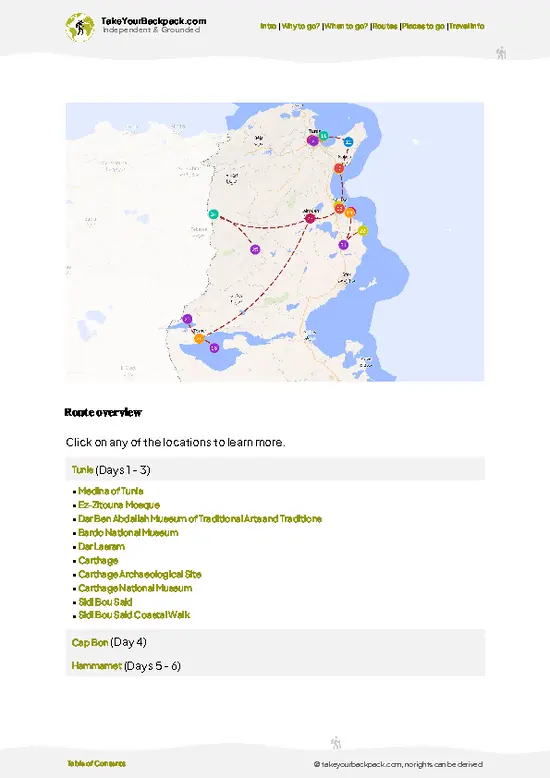
example page 0 from our offline Travel Guide for Tunisia
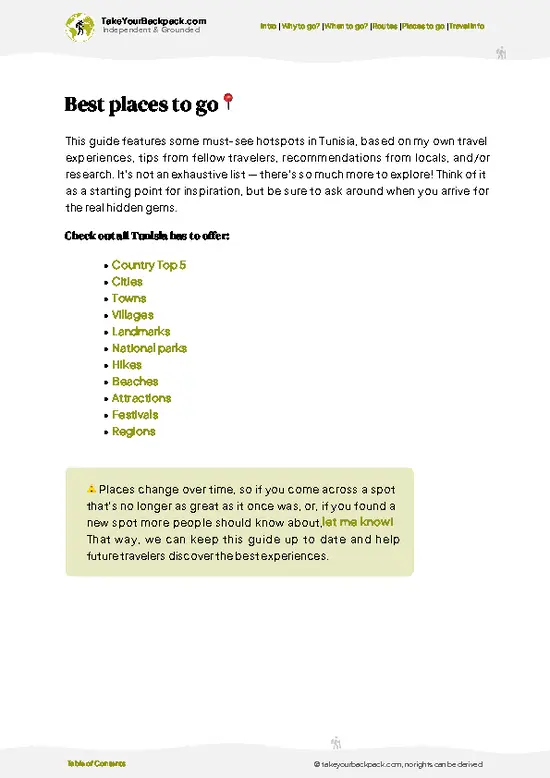
example page 1 from our offline Travel Guide for Tunisia
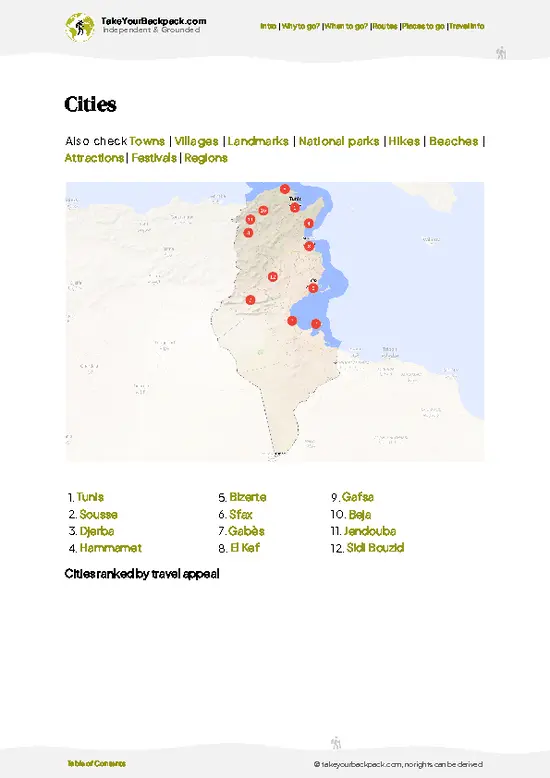
example page 2 from our offline Travel Guide for Tunisia
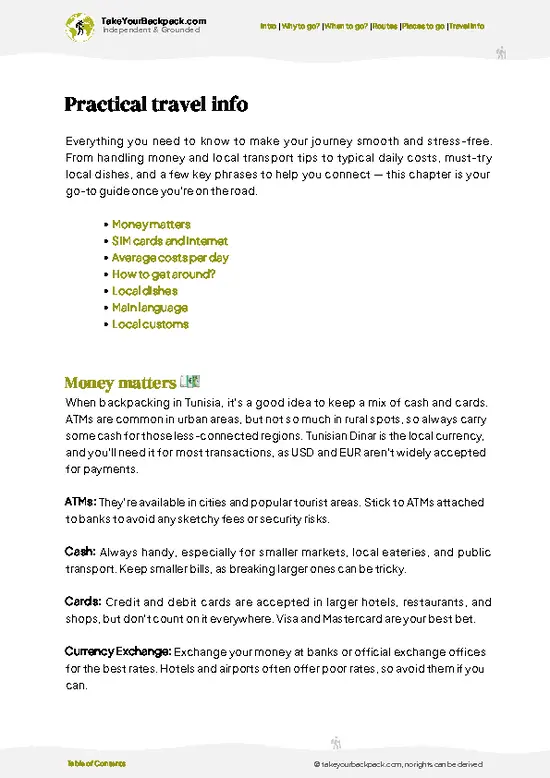
example page 3 from our offline Travel Guide for Tunisia
example page 4 from our offline Travel Guide for Tunisia
example page 5 from our offline Travel Guide for Tunisia
example page 6 from our offline Travel Guide for Tunisia
example page 7 from our offline Travel Guide for Tunisia
The digital guide (372 pages) contains:
97 highlights, ranked by travel appeal
Optimized 5, 10 & 15-day travel routes
Cities, national parks, landmarks, beaches
How to get around
Offline-friendly for travel without Wi-Fi
👉 Click to see all 30+ guide features

📅 Plan smarter in minutes, not weeks
Month by month travel advice
Festivals & national holidays
Budget expectations

🗺️ Go to the right places, skip the overrated ones
Honest pros & cons of destinations
Top hikes, parks & viewpoints
Lesser-known places most travelers miss
Clear “worth it vs skip it” guidance

🛏️ Travel smoothly without rookie mistakes
Best areas to stay
Transport systems explained simply
Common scams & safety advice
SIM cards, money & practical tips

🌍 Understand the country, not just visit it
Culture & traditions
52 Essential phrases & customs
Festivals worth planning around
Traveler-friendly historical context
Insights that make places more meaningful

📱 Built for real travel conditions
Fully downloadable PDF
Works completely offline
Optimized for phone use
Useful in remote areas & buses
Everything in one place
Save weeks of stressful planning
Get instant access to your full guide. 30‑day money-back guarantee.


By proceeding you agree to our terms.
Sent to your inbox immediately after payment • 100% Secure Checkout
Best Backpacking Travel Advisor 2025 tourism awardBest Backpacking
Travel Advisor
2025
What others say about Take Your Backpack Guides:
⭐⭐⭐⭐⭐
Fantastic, amazing amount of information!
⭐⭐⭐⭐⭐
My goodness this is amazing, it's what I've been looking for hats off too you!
⭐⭐⭐⭐⭐
I think this is absolutely BRILLIANT
⭐⭐⭐⭐
Very complete and informative. It's still missing places, but I gotta to commend you
⭐⭐⭐⭐⭐
This is truly amazing, thank you, can't wait to explore it with my kids!
⭐⭐⭐⭐⭐
Awesome resource, thank you!
⭐⭐⭐⭐⭐
This is amazing! Can't wait to explore the ones I haven't seen
⭐⭐⭐⭐
I love this! Well done, great idea.
⭐⭐⭐⭐⭐
Thanks for taking the time to make this gem!
⭐⭐⭐⭐⭐
This might be the best website I've ever seen.
⭐⭐⭐⭐⭐
Congratulations, and thank you so much for your work; it's incredibly valuable.
⭐⭐⭐⭐
In all seriousness I think you did a great job pointing out the important spots
⭐⭐⭐⭐⭐
10/10 very good
⭐⭐⭐⭐⭐
As someone who's only just starting to visit regularly this is awesome, thank you.
⭐⭐⭐⭐
Thank you very much! I'm going to visit my dad, it's going to be very useful!
⭐⭐⭐⭐⭐
This is really cool! We'll be travelling for the first time and this definitely come in handy.
⭐⭐⭐⭐⭐
You are now our minister of culture, congratulations 👨‍💼
⭐⭐⭐⭐⭐
Just wanted to tell you that this is a pearl! Going to follow your recommendations.
⭐⭐⭐⭐⭐
This is so cool. I'll definitely be using the resource for my travels soon.
⭐⭐⭐⭐⭐
This is very impressive! Good work.
⭐⭐⭐⭐⭐
This is an amazing and informative site. Very well done!

🛏️ Where to stay?Choosing the right base

If you’re aiming to soak up the real vibe around the Dar Ben Abdallah Museum of Traditional Arts and Traditions, forget the glossy tourist traps. The best spots for backpackers aren’t flashy hotels but the neighborhoods where locals live, breathe, and hustle. The Medina of Tunis is your prime pick. It’s a labyrinth of narrow alleys, buzzing markets, and tiny cafés where you can strike up conversations with artisans or fellow travelers without the forced friendliness of tourist zones. It’s safe enough if you keep your wits about you, and the energy is unmatched—especially at dawn when the city … read more 👉
If you’re aiming to soak up the real vibe around the Dar Ben Abdallah Museum of Traditional Arts and Traditions, forget the glossy tourist traps. The best spots for backpackers aren’t flashy hotels but the neighborhoods where locals live, breathe, and hustle. The Medina of Tunis is your prime pick. It’s a labyrinth of narrow alleys, buzzing markets, and tiny cafés where you can strike up conversations with artisans or fellow travelers without the forced friendliness of tourist zones. It’s safe enough if you keep your wits about you, and the energy is unmatched—especially at dawn when the city wakes up with the smell of fresh bread and spices.

Staying in the Medina means you’re a stone’s throw from the museum, but more importantly, you’re immersed in the daily rhythm of Tunisian life. This is where you’ll find budget guesthouses and small inns that cater to solo travelers and backpackers who want to connect rather than just crash. The social scene here isn’t about organized tours or hostel parties; it’s about sharing mint tea with shopkeepers or swapping stories with other wanderers in communal courtyards.

If you want something a bit quieter but still close, the area around Bab El Bhar (the Sea Gate) offers a good balance. It’s less chaotic than the Medina but still packed with affordable eateries and easy access to the museum. You’ll dodge the worst of the tourist crush while staying in a lively, authentic part of town. This is where you get the real deal—no Instagram filters, just raw, unpolished Tunis.

👛 Costs (as of 21 April 2025)What things cost and how to budget

As of the most recent estimates, the Dar Ben Abdallah Museum of Traditional Arts and Traditions in Tunis charges an entrance fee of 10 Tunisian Dinars (approximately €3) for adults. Reduced rates are available for students and seniors, and children under 12 enter free. Additional costs may include guided tours, which are available by reservation, and purchases from the museum's shop or cafeteria.

source: audiala.com
⚠️ Prices can change and everyone travels differently, so take this as a rough guide. Hope it helps you plan your adventure!

Other Tunisian attractions near Dar Ben Abdallah Museum of Traditional Arts and Traditions

Explore more nearby:


💡 Not sure where to go next?
Create a personalized itinerary for Tunisia including Dar Ben Abdallah Museum of Traditional Arts and Traditions and the places that fit your trip.

Generate my itinerary

👉 Discover all attractions

Or checkout all Tunisia has to offer (think cities, towns, villages, national parks, hikes, beaches, festivals)
Country photo of Tunisia

We 💚 feedbackKey takeaways before you go

The Dar Ben Abdallah Museum isn’t going to wow you with crowds or flashy exhibits—expect a quiet, almost meditative space where the real charm is in the details. The best surprise? The way everyday objects—pots, textiles, tools—suddenly tell stories about Tunisian life that no glossy Instagram post captures. It’s not for the impatient or those chasing big thrills, but if you slow down, you’ll find a genuine pulse of tradition that feels like a secret handshake with the past. Worth every dinar if you’re curious beyond the surface.

✍️ Help improve this page!
The information on this page is based on in-depth research, insights shared by experienced travelers, and feedback from the local travel community in Tunisia. While every effort is made to keep the information accurate and current, conditions can change — so if you spot anything incorrect or outdated, please get in touch.


🙋‍♂️ Give feedback

👋 Meet the founderWho’s Behind Take Your Backpack?

Johan, backpacker and founder of TakeYourBackpackHi, I’m Johan (Netherlands 🇳🇱), the creator of TakeYourBackpack. Over the past decade, I’ve backpacked through 80+ countries across six continents, gaining extensive experience with independent travel, long-term trips, and overland routes.

This site is built on a combination of firsthand travel experience and carefully curated insights from other backpackers. Many guides are based on places I’ve personally visited, while others bring together tips, observations, and practical advice shared by trusted travelers I’ve met along the way.

The goal is to provide realistic, experience-driven guidance — not generic itineraries — so you can explore destinations with better context, clearer expectations, and more confidence.

Get full Tunisia guide •
Instant download • 97 highlights • Full Offline guide