×

Tunisia🇹🇳 | attractionsDar Ben Abdallah MuseumTiled patio, bridal costume tableau, painted ceilings, Medina rooftop | things to do and best time to go

Explore National Theatre of TunisExplore Carthage National Museum

Backpacking in Dar Ben Abdallah Museum
👍 Recommendedattraction ranked #9
By Johan Kruseman 🇳🇱 | Updated October 22, 2026

Entry costs next to nothing, and the museum sits right in the Medina, so you can slot it in between wrong turns. Dar Ben Abdallah Museum is in Tunis, Tunisia’s capital, on Rue Sidi Kacem a few steps from the Zitouna Mosque district. Why is it small? It is a restored 18th-century town house, so the rooms are intimate and you finish in under an hour; pair it with the souks instead of planning a full day. Why does the signage disappear? Medina alleys ignore maps, so follow the lanes uphill from the souks and ask a shopkeeper. Crowds are thin, which is a relief after the souks. Unlike the grander Bardo Museum, this one shows daily life through mannequins, not mosaics.

Discover everything you want to know in the 📖 Tunisia Travel Guide.


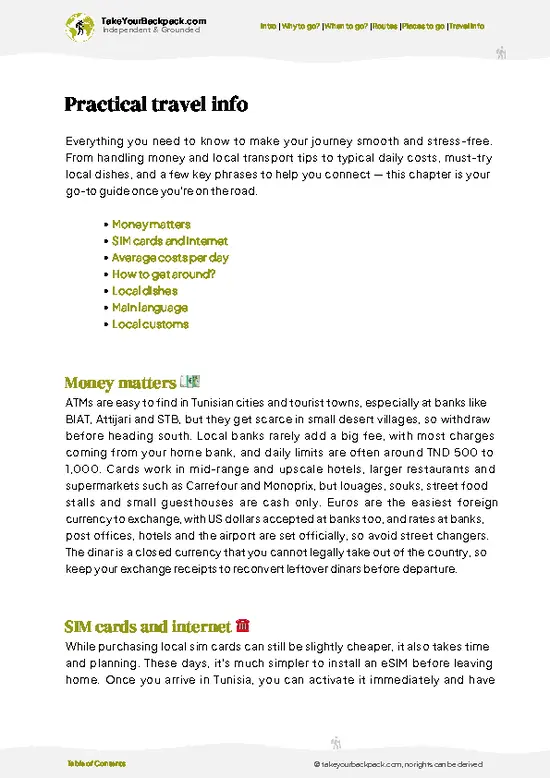
example page 0 from our offline Travel Guide for Tunisia
example page 1 from our offline Travel Guide for Tunisia
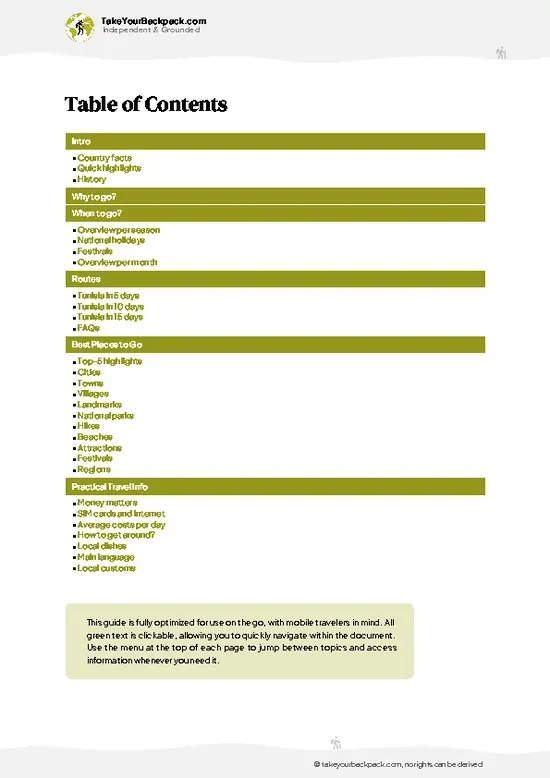
example page 2 from our offline Travel Guide for Tunisia
example page 3 from our offline Travel Guide for Tunisia
example page 4 from our offline Travel Guide for Tunisia
example page 5 from our offline Travel Guide for Tunisia
example page 6 from our offline Travel Guide for Tunisia
example page 7 from our offline Travel Guide for Tunisia
Loading the map 🌍
CLICK TO FILTER
cities
towns
villages
landmarks
national parks
hikes
beaches
attractions
festivals
regions
SHOW COUNTRY’S BESTSHOW ALL

✨ Why go?
Ranked #9 attraction in Tunisia
Why Dar Ben Abdallah Museum should be on your travel list

Dar Ben Abdallah Museum shows you how a well-off Tunis family actually lived, and no mosaic gallery does that. The house dates to the 1790s, and its courtyard, tiled walls, carved plaster and painted wooden ceilings are the real ones, not a reconstruction behind glass. The rooms hold mannequin scenes of Tunisian traditions such as a bride being dressed and a hammam visit, which turn the dry word “heritage” into something you can picture.
It also works as a calm pause in the Medina. After the pressure of the souks, the cool central courtyard lets you sit down and look at proportions and craft. For a country route that moves from Roman ruins to desert, this is the stop that explains the Ottoman-era city life in between. You will leave better able to read the doors, tiles and courtyards you see … read more 👉
Dar Ben Abdallah Museum shows you how a well-off Tunis family actually lived, and no mosaic gallery does that. The house dates to the 1790s, and its courtyard, tiled walls, carved plaster and painted wooden ceilings are the real ones, not a reconstruction behind glass. The rooms hold mannequin scenes of Tunisian traditions such as a bride being dressed and a hammam visit, which turn the dry word “heritage” into something you can picture.
It also works as a calm pause in the Medina. After the pressure of the souks, the cool central courtyard lets you sit down and look at proportions and craft. For a country route that moves from Roman ruins to desert, this is the stop that explains the Ottoman-era city life in between. You will leave better able to read the doors, tiles and courtyards you see in every other old quarter in Tunisia, which makes the Medina of Tunis easier to enjoy afterward.

💡 HighlightsDon't-miss highlights and experiences

  1. The central courtyard (patio): Arcaded, tiled and open to the sky, it is the house’s heart and the best place to see the Tunisian blue and white tile work up close.
  2. Bride’s dressing scene: Mannequins in embroidered wedding costume show how a Tunis bride was prepared, with jewelry and layered fabrics in detail.
  3. Painted wooden ceilings: Look up in the reception rooms for the intricate floral and geometric patterns in faded reds, greens and gold.
  4. Carved stucco and plasterwork: Lace-like plaster niches and arches show the skill of local craftsmen, and each room has a different pattern.
  5. Hammam and bath tableau: A staged scene of traditional bathing explains the social role of the bathhouse, which you can then compare to a real one nearby.
  6. Traditional costume displays: Robes, embroidered vests and headwear
… read more 👉
  1. The central courtyard (patio): Arcaded, tiled and open to the sky, it is the house’s heart and the best place to see the Tunisian blue and white tile work up close.
  2. Bride’s dressing scene: Mannequins in embroidered wedding costume show how a Tunis bride was prepared, with jewelry and layered fabrics in detail.
  3. Painted wooden ceilings: Look up in the reception rooms for the intricate floral and geometric patterns in faded reds, greens and gold.
  4. Carved stucco and plasterwork: Lace-like plaster niches and arches show the skill of local craftsmen, and each room has a different pattern.
  5. Hammam and bath tableau: A staged scene of traditional bathing explains the social role of the bathhouse, which you can then compare to a real one nearby.
  6. Traditional costume displays: Robes, embroidered vests and headwear show how dress varied by occasion and status in old Tunis.
  7. Rooftop and upper terrace views: Climb up for a look across the Medina’s flat roofs toward minarets and domes, a break from the narrow lanes below.
Dar Ben Abdallah Museum costs only a few dollars to enter, and wandering the courtyard and looking at the ceilings is the cheapest part of the visit, with the small ticket being the only fee.
Spotted a mistake or missing something? Contact us.

Things to do near Dar Ben Abdallah Museum

Ratings based on Tripadvisor reviews. When you book through this link, you support our work at no extra cost to you.

🌤️ When to go?Best time to visit Dar Ben Abdallah Museum

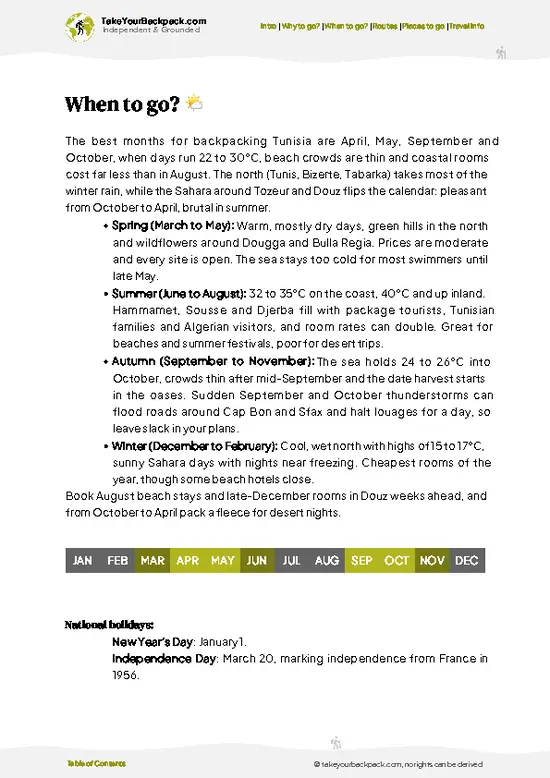
  • Spring (March to May): Daytime highs run 18 to 26°C (64 to 79°F), and the courtyard rooms stay comfortable. Tour groups peak around Easter, but the museum rarely feels packed.
  • Summer (June to August): Highs of 31 to 35°C (88 to 95°F) make the narrow medina lanes sticky by midday. Thick walls keep the interior cooler, and prices for beds are at their lowest in the city center outside beach areas.
  • Autumn (September to November): Highs sit at 20 to 29°C (68 to 84°F), with daylight lasting about 11 to 13 hours. Light showers start in late October.
  • Winter (December to February): Highs of 12 to 16°C (54 to 61°F) and regular rain, yet the museum is quiet and you get rooms to yourself.
Arrive right at opening, since the museum closes on Mondays and stays shut for much of the afternoon in some seasons.

source: climatestotravel.comJANJanuary: fair for travelingFEBFebruary: good for travelingMARMarch: highly recommended for travelingAPRApril: excellent for travelingMAYMay: highly recommended for travelingJUNJune: good for travelingJULJuly: fair for travelingAUGAugust: fair for travelingSEPSeptember: highly recommended for travelingOCTOctober: excellent for travelingNOVNovember: highly recommended for travelingDECDecember: fair for traveling
when-to-go

✈️ The backpacker research shortcutTunisia Travel Guide

An offline-friendly backpacking guide with optimized travel routes, ranked highlights, transport advice, and the best areas to stay.
example page 0 from our offline Travel Guide for Tunisia
example page 1 from our offline Travel Guide for Tunisia
example page 2 from our offline Travel Guide for Tunisia
example page 3 from our offline Travel Guide for Tunisia
example page 4 from our offline Travel Guide for Tunisia
example page 5 from our offline Travel Guide for Tunisia
example page 6 from our offline Travel Guide for Tunisia
example page 7 from our offline Travel Guide for Tunisia
The digital guide (355 pages) contains:
✅ 90 highlights, ranked by travel appeal
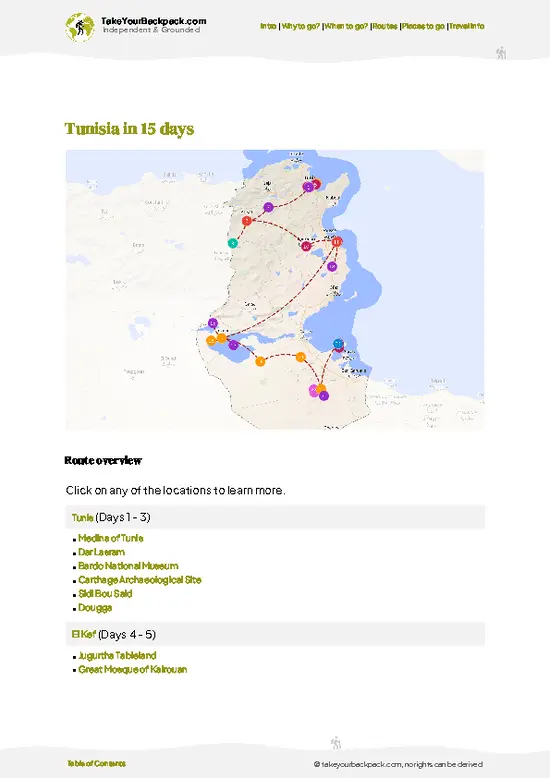
✅ Optimized 5, 10 & 15-day travel routes
✅ Cities, national parks, landmarks, beaches
✅ How to get around
✅ Offline-friendly for travel without Wi-Fi
👉 Click to see all 30+ guide features

📅 Plan smarter in minutes, not weeks
✅ Month by month travel advice
✅ Festivals & national holidays
✅ Budget expectations

🗺️ Go to the right places, skip the overrated ones
✅ Honest pros & cons of destinations
✅ Top hikes, parks & viewpoints
✅ Lesser-known places most travelers miss
✅ Clear “worth it vs skip it” guidance

🛏️ Travel smoothly without rookie mistakes
✅ Best areas to stay
✅ Transport systems explained simply
✅ Common scams & safety advice
✅ SIM cards, money & practical tips

🌍 Understand the country, not just visit it
✅ Culture & traditions
✅ 52 Essential phrases & customs
✅ Festivals worth planning around
✅ Traveler-friendly historical context
✅ Insights that make places more meaningful

📱 Built for real travel conditions
✅ Fully downloadable PDF
✅ Works completely offline
✅ Optimized for phone use
✅ Useful in remote areas & buses
✅ Everything in one place
Stop searching, start planning
Get instant access to your full guide. 30‑day money-back guarantee.
+ Add another guide for just

By proceeding you agree to our terms.
Sent to your inbox immediately after payment • 100% Secure Checkout
Best Backpacking Travel Advisor 2025 tourism awardBest Backpacking
Travel Advisor
2025
What others say about Take Your Backpack Guides:
⭐⭐⭐⭐⭐
Fantastic, amazing amount of information!
⭐⭐⭐⭐⭐
My goodness this is amazing, it's what I've been looking for hats off too you!
⭐⭐⭐⭐⭐
I think this is absolutely BRILLIANT
⭐⭐⭐⭐
Very complete and informative. It's still missing places, but I gotta to commend you
⭐⭐⭐⭐⭐
This is truly amazing, thank you, can't wait to explore it with my kids!
⭐⭐⭐⭐⭐
Awesome resource, thank you!
⭐⭐⭐⭐⭐
This is amazing! Can't wait to explore the ones I haven't seen
⭐⭐⭐⭐
I love this! Well done, great idea.
⭐⭐⭐⭐⭐
Thanks for taking the time to make this gem!
⭐⭐⭐⭐⭐
This might be the best website I've ever seen.
⭐⭐⭐⭐⭐
Congratulations, and thank you so much for your work; it's incredibly valuable.
⭐⭐⭐⭐
In all seriousness I think you did a great job pointing out the important spots
⭐⭐⭐⭐⭐
10/10 very good
⭐⭐⭐⭐⭐
As someone who's only just starting to visit regularly this is awesome, thank you.
⭐⭐⭐⭐
Thank you very much! I'm going to visit my dad, it's going to be very useful!
⭐⭐⭐⭐⭐
This is really cool! We'll be travelling for the first time and this definitely come in handy.
⭐⭐⭐⭐⭐
You are now our minister of culture, congratulations 👨‍💼
⭐⭐⭐⭐⭐
Just wanted to tell you that this is a pearl! Going to follow your recommendations.
⭐⭐⭐⭐⭐
This is so cool. I'll definitely be using the resource for my travels soon.
⭐⭐⭐⭐⭐
This is very impressive! Good work.
⭐⭐⭐⭐⭐
This is an amazing and informative site. Very well done!

🛏️ Where to stay?Best areas to stay in Tunisia

The medina of Tunis is the best base, because Dar Ben Abdallah Museum sits inside it on Rue Sidi Ben Arous, a few minutes’ walk from the Zitouna Mosque. Budget travelers do well in the lanes around Rue Jemaa Zitouna and Bab Souika, where small guesthouses in restored houses and simple hostels cost roughly US$12 to 35 a night. The area is lively until early evening, then empties out, so go back before dark and keep to the main lanes. The alternative is the Ville Nouvelle around Avenue Habib Bourguiba and Place de Barcelone. It is 15 to 20 minutes’ walk from the medina gate at Bab Bhar, has more … read more 👉
The medina of Tunis is the best base, because Dar Ben Abdallah Museum sits inside it on Rue Sidi Ben Arous, a few minutes’ walk from the Zitouna Mosque. Budget travelers do well in the lanes around Rue Jemaa Zitouna and Bab Souika, where small guesthouses in restored houses and simple hostels cost roughly US$12 to 35 a night. The area is lively until early evening, then empties out, so go back before dark and keep to the main lanes. The alternative is the Ville Nouvelle around Avenue Habib Bourguiba and Place de Barcelone. It is 15 to 20 minutes’ walk from the medina gate at Bab Bhar, has more cafes open late, sits beside the train and metro stations, and suits solo travelers who want a more relaxed feel at night. La Marsa and Sidi Bou Said have a beachy atmosphere but cost more and sit a 40-minute train ride away, so they make poor bases for the museum.

👛 Costs (as of 22 October 2026)Travel costs and budget guide for Dar Ben Abdallah Museum

Dar Ben Abdallah Museum costs about US$17 a day for a backpacker, including a bed, food and local transport. Entry is low and you pay in Tunisian dinars.
CategoryBudget RangeLocal Reality
Museum entryUS$2 to 3Small fee at the door, camera permits can add a little extra
Accommodation (high season)US$12 to 35Dorm beds or simple guesthouse rooms in the medina, lower in winter
FoodUS$5 to 10Street sandwiches, tabouna bread and a sit-down lunch of couscous or ojja
Local transportUS$0.5 to 2Metro light rail, tram or short taxi rides within central Tunis
ExtrasUS$1 to 3Mint tea in a medina cafe, small tips for guides
Total Daily BudgetUS$21 to 53Lower end with a dorm bed and street food


source: audiala.com
⚠️ Prices can change and everyone travels differently, so take this as a rough guide. Hope it helps you plan your adventure!

FAQCommon questions from travelers

Allow 45 minutes to 1 hour inside Dar Ben Abdallah Museum, which is a restored 18th-century house with a few rooms around a courtyard. Pair it with the Zitouna Mosque and the souks nearby for a half-day medina wander. The museum closes on Mondays, so plan around that.
Yes, Dar Ben Abdallah Museum is worth the small entry fee of roughly US$2 to 3. You get tiled courtyards, carved plasterwork and period mannequins showing daily life in a wealthy Tunis family home, which is hard to see elsewhere in the medina. It is quiet, so you can photograph rooms without crowds.
Dar Ben Abdallah Museum is in the Tunis medina on Rue Sidi Ben Arous, a 10-minute walk from the Bab Bhar gate. From the center, take the metro light rail to Place de Barcelone or a taxi for US$1 to 3, then walk in through Bab Bhar or Place de la Kasbah. Tunis-Carthage Airport is about 15 minutes by taxi away.
⚠️ Things can change over time, so always validate details locally before you go.

Other Tunisian attractions near Dar Ben Abdallah Museum

Explore more nearby:

  • Dar Lasram—Marble courtyard, painted beams, studded door, conservation plans| 1 km away
  • National Theatre of Tunis—Neo-Baroque facade, horseshoe auditorium, Bourguiba promenade, evening drama| 2 km away
  • Bardo National Museum—Roman mosaic halls, Mahdia shipwreck bronzes, beylical palace ceilings, Virgil panel| 4 km away

💡 Not sure where to go next?
Create a personalized itinerary for Tunisia including Dar Ben Abdallah Museum and the places that fit your trip.

Generate my itinerary

👉 Discover all attractions

Or checkout all Tunisia has to offer (think cities, towns, villages, national parks, hikes, beaches, festivals)
Country photo of Tunisia

We 💚 feedbackParting advice and final tips

Dar Ben Abdallah Museum fits neatly into a morning in the Medina: start at the Zitouna Mosque, wander the souks, then step in here to cool off. Follow it with lunch nearby and an afternoon at the Bardo Museum for the Roman mosaics. I would bring small change for the ticket and skip the guides who appear in the lanes.

✍️ Help improve this page!
The information on this page is based on in-depth research, insights shared by experienced travelers, and feedback from the local travel community in Tunisia. While every effort is made to keep the information accurate and current, conditions can change — so if you spot anything incorrect or outdated, please get in touch.


🙋‍♂️ Give feedback

👋 Meet the founderWho’s Behind Take Your Backpack?

Johan, backpacker and founder of TakeYourBackpackHi, I’m Johan (Netherlands 🇳🇱), the creator of TakeYourBackpack. Over the past 3 decades, I’ve backpacked through 90+ countries across six continents, gaining extensive experience with independent travel, long-term trips, and overland routes.

This site is built on a combination of firsthand travel experience and carefully curated insights from other backpackers. Many guides are based on places I’ve personally visited, while others bring together tips, observations, and practical advice shared by trusted travelers I’ve met along the way.

The goal is to provide realistic, experience-driven guidance — not generic itineraries — so you can explore destinations with better context, clearer expectations, and more confidence.