×

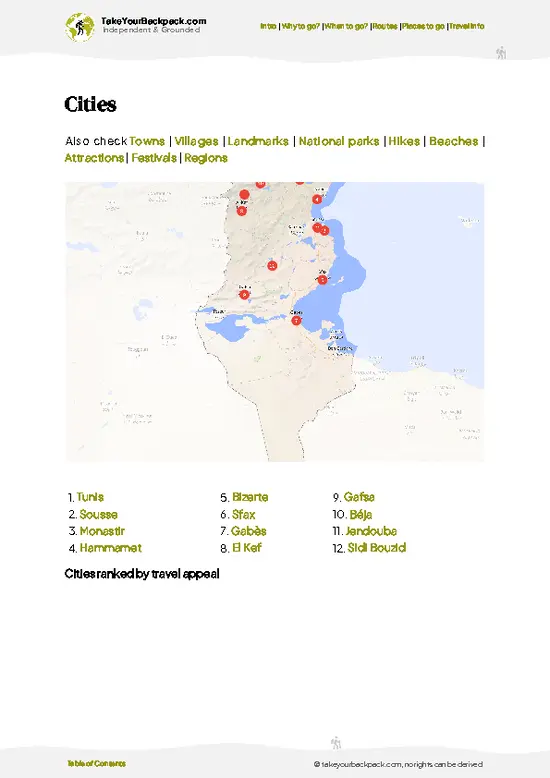
Tunisia🇹🇳 | citiesGafsaWarm Roman pools, oasis gardens, prehistoric finds, mining town | things to do and best time to go

Explore MonastirExplore Gabès

Backpacking in Gafsa
👌 Worth visitingcity ranked #9
By Johan Kruseman 🇳🇱 | Updated October 22, 2026

Gafsa gives you a real Tunisian oasis town without a single tour-bus queue, which is a rare luxury in a country that loves a coach party. It sits in the southwest of Tunisia, on the road between the coast and the Sahara. The Roman pools and the old kasbah area deserve your time, and the palm gardens are pleasant for an hour of pointless, happy wandering. The modern center is mostly mining-town concrete, and you can safely skip it after finding lunch. Gafsa suits travelers who like a town where being a foreigner still starts conversations, but anyone wanting resorts or a polished medina will be bored. Compared with nearby Tozeur, Gafsa has less polish and fewer hotels, and it feels more like a place where people actually live.

Discover everything you want to know in the 📖 Tunisia Travel Guide.


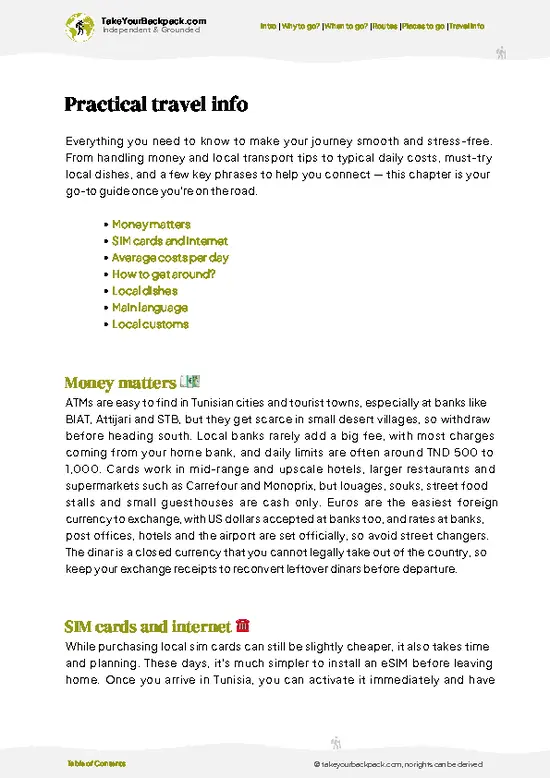
example page 0 from our offline Travel Guide for Tunisia
example page 1 from our offline Travel Guide for Tunisia
example page 2 from our offline Travel Guide for Tunisia
example page 3 from our offline Travel Guide for Tunisia
example page 4 from our offline Travel Guide for Tunisia
example page 5 from our offline Travel Guide for Tunisia
example page 6 from our offline Travel Guide for Tunisia
example page 7 from our offline Travel Guide for Tunisia
Loading the map 🌍
CLICK TO FILTER
cities
towns
villages
landmarks
national parks
hikes
beaches
attractions
festivals
regions
SHOW COUNTRY’S BESTSHOW ALL

✨ Why go?
Ranked #9 city in Tunisia
What makes this city worth visiting

Gafsa works because it breaks up the long haul between the coast and the desert south. Backpackers come for a Roman bath pool still in use in the middle of town, and for the chance to see a working oasis city with almost no hustle. It has a modest, workable range of budget beds, and the compact center is easy to cover on foot in a few hours, so you will not need to plan around it. Onward travel is easy: louages and trains fan out toward the mountain oases near the Algerian border and the lakes and salt flats farther south. Many people use Gafsa as a one-night pause rather than a destination. That is the right scale. Expect a quiet evening, strong coffee in local cafés and very little nightlife, so come for the texture, not for entertainment.

💡 HighlightsWhat this place is best known for

  1. Roman Baths (Piscines Romaines): The best-known sight, two square pools fed by a warm spring near the kasbah. Local boys still jump in, so expect an audience. Go in the evening when the light is soft and the town is out. Free to look, about 20 to 30 minutes.
  2. Gafsa Kasbah: A fortress rebuilt over the centuries on Roman and Byzantine foundations. The walls and courtyard are worth a short walk for the views over the rooftops. Mornings are cooler. Entry is free or a small fee of about US$1 to 2, 30 minutes.
  3. Dar Loussif Museum of Gafsa: A small museum of local archaeology, including Capsian prehistoric finds from the region and Roman mosaics. A good way to understand why this area matters in prehistory. Tickets run about US$2 to 3, allow 45 to 60 minutes.
  4. Great Mosque of Gafsa: A historic mosque in
… read more 👉
  1. Roman Baths (Piscines Romaines): The best-known sight, two square pools fed by a warm spring near the kasbah. Local boys still jump in, so expect an audience. Go in the evening when the light is soft and the town is out. Free to look, about 20 to 30 minutes.
  2. Gafsa Kasbah: A fortress rebuilt over the centuries on Roman and Byzantine foundations. The walls and courtyard are worth a short walk for the views over the rooftops. Mornings are cooler. Entry is free or a small fee of about US$1 to 2, 30 minutes.
  3. Dar Loussif Museum of Gafsa: A small museum of local archaeology, including Capsian prehistoric finds from the region and Roman mosaics. A good way to understand why this area matters in prehistory. Tickets run about US$2 to 3, allow 45 to 60 minutes.
  4. Great Mosque of Gafsa: A historic mosque in the old quarter. Non-Muslims generally admire it from outside, so it is a brief stop. Free, 10 minutes, best between prayer times.
  5. Gafsa Oasis Gardens: Palm groves with fruit trees and irrigation channels on the edge of town. It is a calm place to walk in the shade. Go in the morning, free, 1 hour.
  6. Old Medina and Souk: Narrow lanes near the kasbah with spice, textile and household stalls. Prices are low and sellers are relaxed. Mornings are busiest. Free to wander, 1 hour.
  7. Sidi Boubaker Mosque Quarter: A quiet corner of the old town with traditional doors and courtyards, which almost no tourists visit. It makes a good photo walk in the afternoon, free, 30 minutes.
Gafsa has plenty of day-trip options nearby, including the mountain oases of Chebika, Tamerza and Mides, and the salt lake Chott el Jerid. The Roman baths and the kasbah pair neatly in a single evening walk.
Spotted a mistake or missing something? Contact us.

Things to do near Gafsa

Ratings based on Tripadvisor reviews. When you book through this link, you support our work at no extra cost to you.

🏘️ NeighborhoodsUnderstanding the local layout

Gafsa is compact, and you can cover the useful parts on foot in a day, which is good news because there is no hidden second city waiting.
  • Medina and Place des Piscines Romaines: The old core is the one area that deserves your time. The Roman pools sit in a sunken courtyard beside the Kasbah walls, and the water is surprisingly clear. Pools are small, so allow 20 minutes, not an afternoon. Lanes around it are good for aimless wandering and a tea.
  • Avenue Habib Bourguiba and the center: Banks, ATMs, cafés full of men watching other men, and the louage and bus access. It is functional rather than pretty. Come here to get things done, then leave.
  • Souk and market streets: Gafsa is known for its woven rugs and for dates, so the stalls here are the place to haggle gently and snack. Walkable, loud and
… read more 👉
Gafsa is compact, and you can cover the useful parts on foot in a day, which is good news because there is no hidden second city waiting.
  • Medina and Place des Piscines Romaines: The old core is the one area that deserves your time. The Roman pools sit in a sunken courtyard beside the Kasbah walls, and the water is surprisingly clear. Pools are small, so allow 20 minutes, not an afternoon. Lanes around it are good for aimless wandering and a tea.
  • Avenue Habib Bourguiba and the center: Banks, ATMs, cafés full of men watching other men, and the louage and bus access. It is functional rather than pretty. Come here to get things done, then leave.
  • Souk and market streets: Gafsa is known for its woven rugs and for dates, so the stalls here are the place to haggle gently and snack. Walkable, loud and best before lunch, when shutters start coming down.
  • Outskirts and the phosphate belt: Mining towns around Gafsa make interesting context but have no sights and little transport for visitors. Skip them unless you have a specific reason.
Nightlife is basically tea, cards and an early night, so plan accordingly.

⌛️ 1 dayHow to make the most of one day

8:00 AM: Roman Baths Start with the pools before traffic builds. The spring water is warm even in cool mornings, and you can stand on the edge and watch the town wake. It takes about 20 minutes, then walk uphill a few minutes to the kasbah.
9:00 AM: Gafsa Kasbah Climb the walls for the best rooftop view in town and read the Roman and later traces in the stonework. Then wander down into the old quarter.
10:30 AM: Old Medina and Souk Browse the lanes, buy dates or spices, and stop for a coffee at a local café. This is where the town feels most alive.
12:30 PM: Lunch Find a simple grill or sandwich place near the center. Grilled meat and fresh bread are the safest and tastiest bet.
2:00 PM: Dar Loussif Museum Cool off inside among Capsian tools and Roman mosaics. Allow an hour, then walk to the oasis … read more 👉
8:00 AM: Roman Baths Start with the pools before traffic builds. The spring water is warm even in cool mornings, and you can stand on the edge and watch the town wake. It takes about 20 minutes, then walk uphill a few minutes to the kasbah.
9:00 AM: Gafsa Kasbah Climb the walls for the best rooftop view in town and read the Roman and later traces in the stonework. Then wander down into the old quarter.
10:30 AM: Old Medina and Souk Browse the lanes, buy dates or spices, and stop for a coffee at a local café. This is where the town feels most alive.
12:30 PM: Lunch Find a simple grill or sandwich place near the center. Grilled meat and fresh bread are the safest and tastiest bet.
2:00 PM: Dar Loussif Museum Cool off inside among Capsian tools and Roman mosaics. Allow an hour, then walk to the oasis edge.
4:00 PM: Gafsa Oasis Gardens Walk the irrigation paths under the palms, which is far off the standard tourist route and nearly empty. Fruit trees grow in the understory and farmers are usually happy to say hello.
6:30 PM: Sidi Boubaker Quarter Finish with a quiet stroll through the old doors and courtyards, then return to the baths for the evening crowd.

🌤️ When to go?Choosing the right time of year

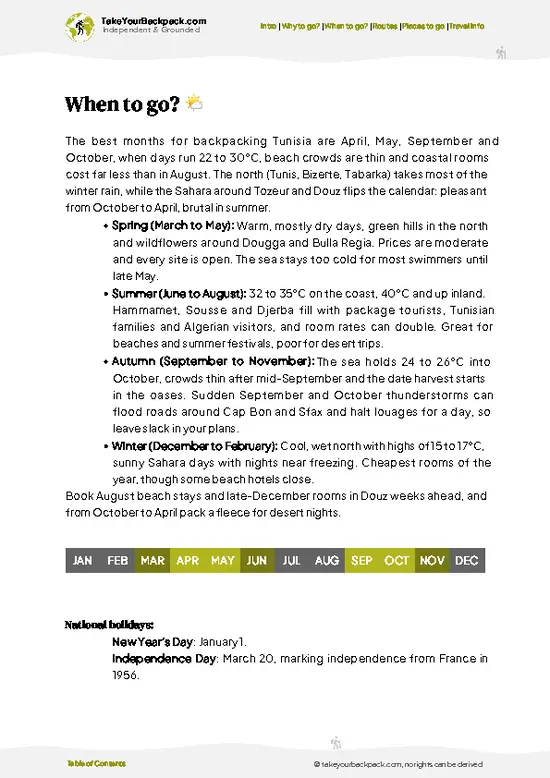
Spring and autumn are the easiest seasons for Gafsa, with daytime highs around 20 to 28°C (68 to 82°F).
  • Spring (March to May): Warm days, cool evenings and long daylight make this the best window for walking the medina and heading to the nearby oases. Prices stay flat.
  • Summer (June to August): Gafsa sits on the edge of the Sahara, so highs often reach 38 to 44°C (100 to 111°F). Sightseeing is only comfortable at dawn and dusk. Crowds are minimal and rooms are easy to find.
  • Autumn (September to November): Heat eases by October to around 22 to 30°C (72 to 86°F), and the date harvest begins.
  • Winter (December to February): Days of 12 to 17°C (54 to 63°F) and chilly nights of 3 to 6°C (37 to 43°F). Quiet, dry and cheap.
Book nothing ahead outside the Tunisian school holidays and the Ramadan period, when opening hours shift.

source: climatestotravel.comJANJanuary: good for travelingFEBFebruary: good for travelingMARMarch: excellent for travelingAPRApril: excellent for travelingMAYMay: highly recommended for travelingJUNJune: fair for travelingJULJuly: below average for travelingAUGAugust: below average for travelingSEPSeptember: highly recommended for travelingOCTOctober: excellent for travelingNOVNovember: highly recommended for travelingDECDecember: good for traveling
when-to-go

✈️ The backpacker research shortcutTunisia Travel Guide

An offline-friendly backpacking guide with optimized travel routes, ranked highlights, transport advice, and the best areas to stay.
example page 0 from our offline Travel Guide for Tunisia
example page 1 from our offline Travel Guide for Tunisia
example page 2 from our offline Travel Guide for Tunisia
example page 3 from our offline Travel Guide for Tunisia
example page 4 from our offline Travel Guide for Tunisia
example page 5 from our offline Travel Guide for Tunisia
example page 6 from our offline Travel Guide for Tunisia
example page 7 from our offline Travel Guide for Tunisia
The digital guide (355 pages) contains:
✅ 90 highlights, ranked by travel appeal
✅ Optimized 5, 10 & 15-day travel routes
✅ Cities, national parks, landmarks, beaches
✅ How to get around
✅ Offline-friendly for travel without Wi-Fi
👉 Click to see all 30+ guide features

📅 Plan smarter in minutes, not weeks
✅ Month by month travel advice
✅ Festivals & national holidays
✅ Budget expectations

🗺️ Go to the right places, skip the overrated ones
✅ Honest pros & cons of destinations
✅ Top hikes, parks & viewpoints
✅ Lesser-known places most travelers miss
✅ Clear “worth it vs skip it” guidance

🛏️ Travel smoothly without rookie mistakes
✅ Best areas to stay
✅ Transport systems explained simply
✅ Common scams & safety advice
✅ SIM cards, money & practical tips

🌍 Understand the country, not just visit it
✅ Culture & traditions
✅ 52 Essential phrases & customs
✅ Festivals worth planning around
✅ Traveler-friendly historical context
✅ Insights that make places more meaningful

📱 Built for real travel conditions
✅ Fully downloadable PDF
✅ Works completely offline
✅ Optimized for phone use
✅ Useful in remote areas & buses
✅ Everything in one place
Stop searching, start planning
Get instant access to your full guide. 30‑day money-back guarantee.
+ Add another guide for just

By proceeding you agree to our terms.
Sent to your inbox immediately after payment • 100% Secure Checkout
Best Backpacking Travel Advisor 2025 tourism awardBest Backpacking
Travel Advisor
2025
What others say about Take Your Backpack Guides:
⭐⭐⭐⭐⭐
Fantastic, amazing amount of information!
⭐⭐⭐⭐⭐
My goodness this is amazing, it's what I've been looking for hats off too you!
⭐⭐⭐⭐⭐
I think this is absolutely BRILLIANT
⭐⭐⭐⭐
Very complete and informative. It's still missing places, but I gotta to commend you
⭐⭐⭐⭐⭐
This is truly amazing, thank you, can't wait to explore it with my kids!
⭐⭐⭐⭐⭐
Awesome resource, thank you!
⭐⭐⭐⭐⭐
This is amazing! Can't wait to explore the ones I haven't seen
⭐⭐⭐⭐
I love this! Well done, great idea.
⭐⭐⭐⭐⭐
Thanks for taking the time to make this gem!
⭐⭐⭐⭐⭐
This might be the best website I've ever seen.
⭐⭐⭐⭐⭐
Congratulations, and thank you so much for your work; it's incredibly valuable.
⭐⭐⭐⭐
In all seriousness I think you did a great job pointing out the important spots
⭐⭐⭐⭐⭐
10/10 very good
⭐⭐⭐⭐⭐
As someone who's only just starting to visit regularly this is awesome, thank you.
⭐⭐⭐⭐
Thank you very much! I'm going to visit my dad, it's going to be very useful!
⭐⭐⭐⭐⭐
This is really cool! We'll be travelling for the first time and this definitely come in handy.
⭐⭐⭐⭐⭐
You are now our minister of culture, congratulations 👨‍💼
⭐⭐⭐⭐⭐
Just wanted to tell you that this is a pearl! Going to follow your recommendations.
⭐⭐⭐⭐⭐
This is so cool. I'll definitely be using the resource for my travels soon.
⭐⭐⭐⭐⭐
This is very impressive! Good work.
⭐⭐⭐⭐⭐
This is an amazing and informative site. Very well done!

🛏️ Where to stay?Choosing the right base

The area around Avenue Habib Bourguiba in the center is the best base, with dorm-style beds scarce but simple budget rooms at about US$15 to 30 a night. Gafsa has very few hostels, so most backpackers book basic private rooms and split the cost. Staying central means you can walk to the louage and bus stations, banks and cafés, and it keeps taxi use to a minimum after dark.

The quarter near the medina is the second choice. It is quieter at night, with calls to prayer rather than traffic as your alarm, and a few guesthouses sit in it. Lanes can be dim late in the evening, so it suits those who … read more 👉
The area around Avenue Habib Bourguiba in the center is the best base, with dorm-style beds scarce but simple budget rooms at about US$15 to 30 a night. Gafsa has very few hostels, so most backpackers book basic private rooms and split the cost. Staying central means you can walk to the louage and bus stations, banks and cafés, and it keeps taxi use to a minimum after dark.

The quarter near the medina is the second choice. It is quieter at night, with calls to prayer rather than traffic as your alarm, and a few guesthouses sit in it. Lanes can be dim late in the evening, so it suits those who are back by dark. The streets by the main avenue stay lit and active longer, which makes them feel more comfortable if you arrive late or travel alone. Noise in both areas is modest by Tunisian standards, though cafés near the avenue chatter into the evening. Book ahead only in school holidays, when rooms fill with visiting families and workers.

🚌 Getting aroundHow to get around Gafsa

From the bus station or the louage stand, the center is a walk of about 10 to 20 minutes or a short taxi ride of US$1 to 2, and nobody will make you feel foolish for taking one with a backpack. Gafsa is small, flat and mostly walkable, with light traffic apart from a bit of honking near the market. Public transport inside town is thin, so you will lean on your feet and taxis.
  • Walking: Free and the best option. The medina, Roman pools, Kasbah and main avenue all sit within about 1.5 kilometers of each other. Skip the walk at midday in summer unless you enjoy being slow-roasted.
  • Yellow taxis: Most rides in town cost US$1 to 3. Ask for the meter to be switched on. After dark, fares are higher and fewer cars are about, so it helps to have your hotel call one.
  • Louages (shared vans): The practical
… read more 👉
From the bus station or the louage stand, the center is a walk of about 10 to 20 minutes or a short taxi ride of US$1 to 2, and nobody will make you feel foolish for taking one with a backpack. Gafsa is small, flat and mostly walkable, with light traffic apart from a bit of honking near the market. Public transport inside town is thin, so you will lean on your feet and taxis.
  • Walking: Free and the best option. The medina, Roman pools, Kasbah and main avenue all sit within about 1.5 kilometers of each other. Skip the walk at midday in summer unless you enjoy being slow-roasted.
  • Yellow taxis: Most rides in town cost US$1 to 3. Ask for the meter to be switched on. After dark, fares are higher and fewer cars are about, so it helps to have your hotel call one.
  • Louages (shared vans): The practical choice for other towns. Fares run roughly US$2 to 8 to places like Tozeur, Metlaoui, Sfax or Tunis, and vans leave when full, mainly from early morning to mid afternoon. Few go late.
  • Buses and trains: Regional buses are cheap, at about US$2 to 10 depending on destination, but slower and less frequent. The train to Metlaoui and the Red Lizard route is a scenic detour that mostly runs for tourists, so check days in advance.
Go for louages for speed, taxis for convenience and your own feet for everything else.

👛 Costs (as of 22 October 2026)Typical daily expenses

Gafsa costs about US$38 to 55 a day for a backpacker, and the total here is US$45 a day. Rooms are the main expense since hostels barely exist.
CategoryBudget RangeLocal Reality
Dorm or budget bed (high season)US$15 to 22Basic private rooms are the norm
Dorm or budget bed (off-season)US$10 to 16Easy to bargain in summer
MealsUS$8 to 14Sandwiches, couscous, grilled meat and tea
Local transportUS$2 to 5Short taxi rides cost US$1 to 3
City transport passNot availableWalking and taxis cover everything
Activities and entry feesUS$2 to 6Roman pools and museum are cheap
MiscellaneousUS$3 to 6Water, SIM data, souvenirs
Total Daily BudgetUS$45Mid-range of the budget style
Share a taxi or louage with other travelers to cut transport costs on day trips.
⚠️ Prices can change and everyone travels differently, so take this as a rough guide. Hope it helps you plan your adventure!

🚌 Day tripsShort trips worth adding

Gafsa works well as a base for desert and oasis day trips because louages run to nearby towns every morning.
Metlaoui and the Red Lizard Train: Metlaoui is a phosphate town about 40 kilometers away with the Seldja Gorge, where a vintage train runs through red rock canyons. Louage fare is about US$1 to 2 each way, while the train costs roughly US$10 to 20 and operates on set days, so confirm in advance. Go in spring or autumn. First-timers often arrive without checking the schedule.
👉 Explore Metlaoui
Tozeur: Palm groves, brick-patterned old quarter and salt-flat views make this worth the 1.5 to 2 hour trip. Louages cost about US$4 to 6 each way, and a full day with a meal and a palm grove entry comes to roughly US$20 to 30. Winter is best since summers are brutal. Leave early so you are not stuck … read more 👉
Gafsa works well as a base for desert and oasis day trips because louages run to nearby towns every morning.
Metlaoui and the Red Lizard Train: Metlaoui is a phosphate town about 40 kilometers away with the Seldja Gorge, where a vintage train runs through red rock canyons. Louage fare is about US$1 to 2 each way, while the train costs roughly US$10 to 20 and operates on set days, so confirm in advance. Go in spring or autumn. First-timers often arrive without checking the schedule.
👉 Explore Metlaoui
Tozeur: Palm groves, brick-patterned old quarter and salt-flat views make this worth the 1.5 to 2 hour trip. Louages cost about US$4 to 6 each way, and a full day with a meal and a palm grove entry comes to roughly US$20 to 30. Winter is best since summers are brutal. Leave early so you are not stuck without a return van.
👉 Explore Tozeur
Chebika, Tamerza and Mides: Mountain oases at the Algerian border, with waterfalls and canyon walks. The trip takes roughly 2 hours by louage via Tozeur or Metlaoui, then a shared taxi or tour for around US$15 to 30. Go before the heat. Many people try to see all three in a hurry, so choose two.

El Guettar: A nearby oasis town with a short route among palms and springs, about 25 minutes by louage for US$1 to 2. Easy half-day outing in cooler months.

🍲 FoodEating & Drinking in Gafsa

Gafsa is known for its dates and for Gafsa-style rugs in the markets, and its dining reflects the oasis: dates stuffed with almonds, pistachio-laced sweets and fresh palm sap in season. Look for mloukhia, a dark slow-cooked stew, and osban, sausage-like tripe stuffed with herbs, which are southern specialties. Try bread baked in sand or ash, sometimes called mella, with spiced meat if a family kitchen offers it.

Backpackers eat mostly at small cafés and grill counters along the main avenue and near the souk, where a sandwich, plate of grilled meat or couscous costs about US$2 to 6. The morning market is the place for olives, fresh bread and cheap fruit. Alcohol is hard to find in town. Mint tea with pine nuts, served in small glasses, is the social drink, and men gather in cafés for hours over it. Bring small coins for the café tab.

🛡️ SafetyTraveler Safety Guide

Gafsa is broadly safe for travelers, and the usual trouble is minor hassle rather than danger. The mining region has seen labor protests, so avoid gatherings and roadblocks and keep to the center if one starts. Solo travelers, including women, will get stares and calls in the market, and a firm greeting and steady walking pace usually ends it. After dark the streets empty early, so take a taxi if your lodging is far. Agree a price or insist on the meter, as drivers sometimes quote tourist rates. Carry cash discreetly in the souk, and treat offers of free guiding with polite refusal. Check your government’s advice for the border areas toward Algeria before heading to remote oases.

FAQTraveler FAQ

Two days is enough for Gafsa itself, covering the Roman pools, Kasbah, medina and souk in about half a day. Add a day for Metlaoui and the Seldja Gorge, 40 kilometers away, or for Tozeur, 1.5 to 2 hours by louage at around US$4 to 6. Most travelers use Gafsa as a stopover between Tunis, Sfax and the southern oases.
Yes, Gafsa is generally safe for solo backpackers, including women, though expect attention in the souk. Streets empty early, so take a taxi (US$1 to 3) after dark. Avoid any protests, which occasionally happen in the mining region. Gafsa is quieter and less hassle-prone than major tourist hubs.
Gafsa is known for its Roman pools in the old center, its Kasbah and its phosphate mining basin. It is also a gateway to desert oases like Metlaoui, Tozeur and Tamerza, and to the Red Lizard train. Dates, handwoven rugs and a laid-back local pace round out the picture.
⚠️ Things can change over time, so always validate details locally before you go.

Other Tunisian cities near Gafsa

Explore more nearby:

  • Sidi Bouzid—Uprising memorials, orchard country, charcoal grills, central market| 93 km away
  • Gabès—Seaside oasis, henna, palm-grove irrigation, southern crossroads| 136 km away
  • Sfax—Intact ninth-century walls, olive-oil port, merchant houses, fish auctions| 185 km away

💡 Not sure where to go next?
Create a personalized itinerary for Tunisia including Gafsa and the places that fit your trip.

Generate my itinerary

👉 Discover all cities

Or checkout all Tunisia has to offer (think cities, towns, villages, national parks, hikes, beaches, festivals)
Country photo of Tunisia

We 💚 feedbackSumming up the experience

Gafsa works best as a one-night pause between the coast and the desert, paired with Tozeur or the mountain oases for contrast. I would arrive in the afternoon, do the baths at dusk, and leave next morning. Skip the new town, and bring cash because cards are rare.

✍️ Help improve this page!
The information on this page is based on in-depth research, insights shared by experienced travelers, and feedback from the local travel community in Tunisia. While every effort is made to keep the information accurate and current, conditions can change — so if you spot anything incorrect or outdated, please get in touch.


🙋‍♂️ Give feedback

👋 Meet the founderWho’s Behind Take Your Backpack?

Johan, backpacker and founder of TakeYourBackpackHi, I’m Johan (Netherlands 🇳🇱), the creator of TakeYourBackpack. Over the past 3 decades, I’ve backpacked through 90+ countries across six continents, gaining extensive experience with independent travel, long-term trips, and overland routes.

This site is built on a combination of firsthand travel experience and carefully curated insights from other backpackers. Many guides are based on places I’ve personally visited, while others bring together tips, observations, and practical advice shared by trusted travelers I’ve met along the way.

The goal is to provide realistic, experience-driven guidance — not generic itineraries — so you can explore destinations with better context, clearer expectations, and more confidence.