×

Tunisia🇹🇳 | citiesSfaxIntact ninth-century walls, olive-oil port, merchant houses, fish auctions | things to do and best time to go

Explore TunisExplore El Kef

Backpacking in Sfax
👍 Recommendedcity ranked #6
By Johan Kruseman 🇳🇱 | Updated October 22, 2026

Sfax Medina’s walls were built in the ninth century and are still intact, and the stone gate of Bab Diwan is where the old city begins. Sfax sits on the Gulf of Gabès on Tunisia’s east coast, south of Sousse and the Sahel resorts. It is the country’s second city and runs on industry, olive oil and fishing, so nobody here performs for tourists. That suits travelers who like a working town, and it bores anyone chasing beaches or nightlife. The medina is real, the souks sell to locals, and prices are not inflated. The modern center is traffic and concrete. Shops in the medina shut for a long midday pause and on Sundays, so plan your wandering for mornings and weekdays instead of arriving at lunchtime to rolled-down shutters.

Discover everything you want to know in the 📖 Tunisia Travel Guide.


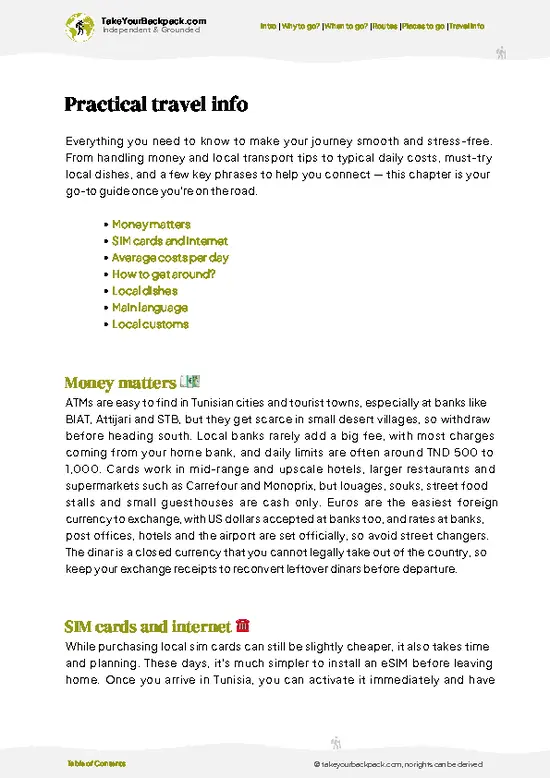
example page 0 from our offline Travel Guide for Tunisia
example page 1 from our offline Travel Guide for Tunisia
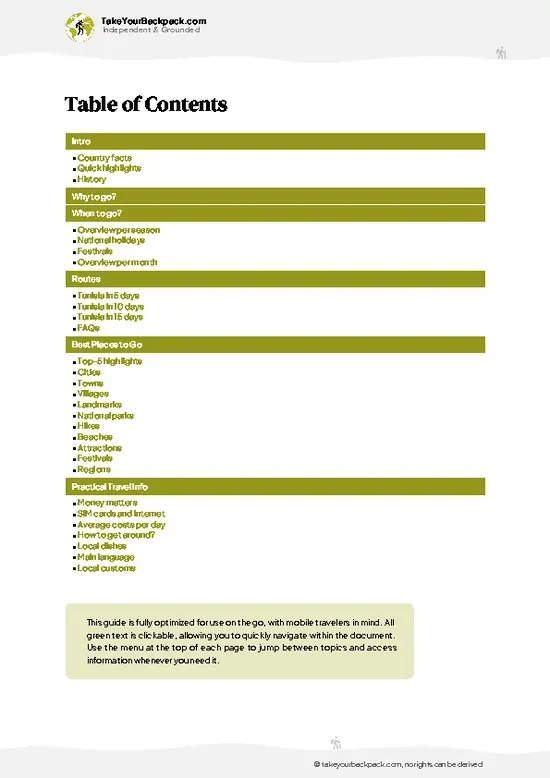
example page 2 from our offline Travel Guide for Tunisia
example page 3 from our offline Travel Guide for Tunisia
example page 4 from our offline Travel Guide for Tunisia
example page 5 from our offline Travel Guide for Tunisia
example page 6 from our offline Travel Guide for Tunisia
example page 7 from our offline Travel Guide for Tunisia
Loading the map 🌍
CLICK TO FILTER
cities
towns
villages
landmarks
national parks
hikes
beaches
attractions
festivals
regions
SHOW COUNTRY’S BESTSHOW ALL

✨ Why go?
Ranked #6 city in Tunisia
Why visitors keep coming back

Sfax rewards backpackers who want Tunisia without the tour buses. The main draw is a walled medina that still functions as a working market, with almost no one hassling you to buy. The city is also a practical hinge on the east coast, with trains and louages (shared vans) running north to Sousse and Tunis and south toward Gabès, and boats leaving for the Kerkennah Islands, which gives you a slow sea break between mainland legs. Food is a real reason to stay: this is a fish and seafood town with its own recipes, and you eat well in small local places. Hostels are few, so expect modest hotels. Walkability is good in the center. Give it a night or two as a stop, not a base for weeks.

💡 HighlightsThe experiences that define the visit

  1. Medina of Sfax: ninth-century walls enclose lanes of working souks, from spices to copper and fabric. Go on a weekday morning when the shutters are up. Entry is free, and 2 to 3 hours is enough.
  2. Kasbah and Museum of Traditional Architecture: a fortress in the medina’s southwest corner with a small museum of local crafts and old domestic life. Tickets are around US$2 to 3. Allow 1 hour, and visit in the morning.
  3. Great Mosque of Sfax: a ninth-century mosque with a notable minaret rising above the medina. Non-Muslims view it from outside, so 20 minutes is plenty. It is free, and good light comes in the morning.
  4. Dar Jellouli Museum: a restored traditional merchant house with carved wood, tiles and period rooms that show how wealthy Sfaxians lived. Expect about US$2 to 3 and 1 hour. Go in the morning.
… read more 👉
  1. Medina of Sfax: ninth-century walls enclose lanes of working souks, from spices to copper and fabric. Go on a weekday morning when the shutters are up. Entry is free, and 2 to 3 hours is enough.
  2. Kasbah and Museum of Traditional Architecture: a fortress in the medina’s southwest corner with a small museum of local crafts and old domestic life. Tickets are around US$2 to 3. Allow 1 hour, and visit in the morning.
  3. Great Mosque of Sfax: a ninth-century mosque with a notable minaret rising above the medina. Non-Muslims view it from outside, so 20 minutes is plenty. It is free, and good light comes in the morning.
  4. Dar Jellouli Museum: a restored traditional merchant house with carved wood, tiles and period rooms that show how wealthy Sfaxians lived. Expect about US$2 to 3 and 1 hour. Go in the morning.
  5. Bab Diwan: the main gate, with its crenellated stonework, and the busiest entry to the old town. Free, 15 minutes, and the lively hour is mid-morning.
  6. Fish Market and Port Area: auctions and stalls of the day’s catch, which is how the city really earns its living. Free, and you need 45 minutes. Early morning is best.
  7. Sfax Archaeological Museum: a modest collection of Roman mosaics and finds from nearby Thyna. Tickets run about US$2 to 3, and it takes about 1 hour. Go in the morning.
Start with the medina on a weekday morning, because the souks close up in the early afternoon and the walls make a good orientation before you pick the museums. Sfax makes a handy base for day trips to the Kerkennah Islands, the Roman amphitheater of El Jem and the pottery town of Sidi Bouzid’s neighbor, Thyna’s ruins.
Spotted a mistake or missing something? Contact us.

Things to do near Sfax

Ratings based on Tripadvisor reviews. When you book through this link, you support our work at no extra cost to you.

🏘️ NeighborhoodsUnderstanding the local layout

Sfax is a working port city, so its neighborhoods sort themselves into old, new and seaside, and none of them will try to sell you a camel.
  • The Medina: Walled in the 9th century and still lived in, so shops shut for the midday meal and Friday prayers. Go in the morning, when the souks for cloth, spices and olive-wood goods are open and the lanes are shaded. Walkable in an hour, and getting lost is the standard way to see it. Leave when the shutters come down.
  • Bab Diwan and the Kasbah edge: The main gate opens onto cafés and stalls selling fried snacks. It works as the meeting point because everyone else uses it too. Cheap sandwich counters cluster here.
  • Ville Nouvelle: The French-era grid around Avenue Habib Bourguiba has banks, pastry shops and wide pavements. It is quiet after dark by design,
… read more 👉
Sfax is a working port city, so its neighborhoods sort themselves into old, new and seaside, and none of them will try to sell you a camel.
  • The Medina: Walled in the 9th century and still lived in, so shops shut for the midday meal and Friday prayers. Go in the morning, when the souks for cloth, spices and olive-wood goods are open and the lanes are shaded. Walkable in an hour, and getting lost is the standard way to see it. Leave when the shutters come down.
  • Bab Diwan and the Kasbah edge: The main gate opens onto cafés and stalls selling fried snacks. It works as the meeting point because everyone else uses it too. Cheap sandwich counters cluster here.
  • Ville Nouvelle: The French-era grid around Avenue Habib Bourguiba has banks, pastry shops and wide pavements. It is quiet after dark by design, since Sfax is a city of commerce, not clubbing. Everything is walkable and easy to read.
  • Sfax El Jadida and the Corniche: Newer, modern, spread out. Taxis make more sense than walking. Sea-facing cafés are the evening plan here, with no fuss and plenty of plastic chairs.
  • The Port: Ferries to the Kerkennah Islands leave from here. Look, then catch a boat; the area itself is industrial and not made for strolling.

⌛️ 1 day1-day itinerary for Sfax

Sfax is best done on foot, with a taxi for the longer hops and a long break when the medina shuts and the afternoon heat sets in. Short rides cost little.
8:30 AM: Bab Diwan. Start at the main gate and walk through as the souks open. Notice how the wall frames the lanes and watch the day begin.
9:30 AM: Medina Souks. Follow the lanes past the spice, textile and copper sellers toward the Great Mosque. Pause for a coffee at a local café.
11:00 AM: Kasbah and Museum of Traditional Architecture. Walk to the southwest corner for the fortress ramparts and the domestic displays.
12:30 PM: Dar Jellouli. Visit the restored house before it closes for midday, then eat a grilled fish lunch nearby.
2:00 PM: Rest. Retreat to your hotel while the town sleeps.
4:30 PM: Fish Market and Port. This is the less-visited … read more 👉
Sfax is best done on foot, with a taxi for the longer hops and a long break when the medina shuts and the afternoon heat sets in. Short rides cost little.
8:30 AM: Bab Diwan. Start at the main gate and walk through as the souks open. Notice how the wall frames the lanes and watch the day begin.
9:30 AM: Medina Souks. Follow the lanes past the spice, textile and copper sellers toward the Great Mosque. Pause for a coffee at a local café.
11:00 AM: Kasbah and Museum of Traditional Architecture. Walk to the southwest corner for the fortress ramparts and the domestic displays.
12:30 PM: Dar Jellouli. Visit the restored house before it closes for midday, then eat a grilled fish lunch nearby.
2:00 PM: Rest. Retreat to your hotel while the town sleeps.
4:30 PM: Fish Market and Port. This is the less-visited stop. Take a short taxi to the harbor and see boats unloading and stalls still active, a part of Sfax visitors rarely see.
6:30 PM: Ville Nouvelle. Stroll the colonial boulevards and settle into a café for the evening.

🌤️ When to go?Seasonal considerations and timing

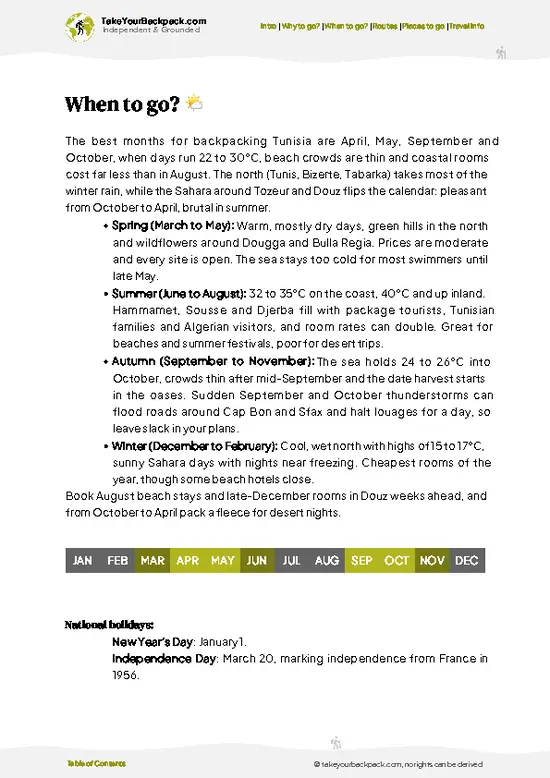
Spring and autumn give you the easiest weather in Sfax, with highs of 20 to 28°C (68 to 82°F) and little rain.
  • Spring (March to May): Warm and dry, 17 to 27°C (63 to 81°F), with long daylight for the medina. Prices stay steady.
  • Summer (June to August): Hot and humid, 28 to 35°C (82 to 95°F). Locals head to the coast and Kerkennah beaches; the medina feels sleepy at midday. Ferries and beach rooms cost more.
  • Autumn (September to November): Sea still warm, 20 to 30°C (68 to 86°F), and the olive harvest begins late in the season, with first rains in November.
  • Winter (December to February): Mild but wet, 8 to 17°C (46 to 63°F), with short days and the lowest prices. Bring a rain jacket.
Avoid Ramadan if you want restaurants open at lunchtime; dates shift each year.

source: climatestotravel.comJANJanuary: good for travelingFEBFebruary: good for travelingMARMarch: highly recommended for travelingAPRApril: excellent for travelingMAYMay: excellent for travelingJUNJune: highly recommended for travelingJULJuly: fair for travelingAUGAugust: fair for travelingSEPSeptember: excellent for travelingOCTOctober: excellent for travelingNOVNovember: good for travelingDECDecember: good for traveling
when-to-go

✈️ The backpacker research shortcutTunisia Travel Guide

An offline-friendly backpacking guide with optimized travel routes, ranked highlights, transport advice, and the best areas to stay.
example page 0 from our offline Travel Guide for Tunisia
example page 1 from our offline Travel Guide for Tunisia
example page 2 from our offline Travel Guide for Tunisia
example page 3 from our offline Travel Guide for Tunisia
example page 4 from our offline Travel Guide for Tunisia
example page 5 from our offline Travel Guide for Tunisia
example page 6 from our offline Travel Guide for Tunisia
example page 7 from our offline Travel Guide for Tunisia
The digital guide (355 pages) contains:
✅ 90 highlights, ranked by travel appeal
✅ Optimized 5, 10 & 15-day travel routes
✅ Cities, national parks, landmarks, beaches
✅ How to get around
✅ Offline-friendly for travel without Wi-Fi
👉 Click to see all 30+ guide features

📅 Plan smarter in minutes, not weeks
✅ Month by month travel advice
✅ Festivals & national holidays
✅ Budget expectations

🗺️ Go to the right places, skip the overrated ones
✅ Honest pros & cons of destinations
✅ Top hikes, parks & viewpoints
✅ Lesser-known places most travelers miss
✅ Clear “worth it vs skip it” guidance

🛏️ Travel smoothly without rookie mistakes
✅ Best areas to stay
✅ Transport systems explained simply
✅ Common scams & safety advice
✅ SIM cards, money & practical tips

🌍 Understand the country, not just visit it
✅ Culture & traditions
✅ 52 Essential phrases & customs
✅ Festivals worth planning around
✅ Traveler-friendly historical context
✅ Insights that make places more meaningful

📱 Built for real travel conditions
✅ Fully downloadable PDF
✅ Works completely offline
✅ Optimized for phone use
✅ Useful in remote areas & buses
✅ Everything in one place
Stop searching, start planning
Get instant access to your full guide. 30‑day money-back guarantee.
+ Add another guide for just

By proceeding you agree to our terms.
Sent to your inbox immediately after payment • 100% Secure Checkout
Best Backpacking Travel Advisor 2025 tourism awardBest Backpacking
Travel Advisor
2025
What others say about Take Your Backpack Guides:
⭐⭐⭐⭐⭐
Fantastic, amazing amount of information!
⭐⭐⭐⭐⭐
My goodness this is amazing, it's what I've been looking for hats off too you!
⭐⭐⭐⭐⭐
I think this is absolutely BRILLIANT
⭐⭐⭐⭐
Very complete and informative. It's still missing places, but I gotta to commend you
⭐⭐⭐⭐⭐
This is truly amazing, thank you, can't wait to explore it with my kids!
⭐⭐⭐⭐⭐
Awesome resource, thank you!
⭐⭐⭐⭐⭐
This is amazing! Can't wait to explore the ones I haven't seen
⭐⭐⭐⭐
I love this! Well done, great idea.
⭐⭐⭐⭐⭐
Thanks for taking the time to make this gem!
⭐⭐⭐⭐⭐
This might be the best website I've ever seen.
⭐⭐⭐⭐⭐
Congratulations, and thank you so much for your work; it's incredibly valuable.
⭐⭐⭐⭐
In all seriousness I think you did a great job pointing out the important spots
⭐⭐⭐⭐⭐
10/10 very good
⭐⭐⭐⭐⭐
As someone who's only just starting to visit regularly this is awesome, thank you.
⭐⭐⭐⭐
Thank you very much! I'm going to visit my dad, it's going to be very useful!
⭐⭐⭐⭐⭐
This is really cool! We'll be travelling for the first time and this definitely come in handy.
⭐⭐⭐⭐⭐
You are now our minister of culture, congratulations 👨‍💼
⭐⭐⭐⭐⭐
Just wanted to tell you that this is a pearl! Going to follow your recommendations.
⭐⭐⭐⭐⭐
This is so cool. I'll definitely be using the resource for my travels soon.
⭐⭐⭐⭐⭐
This is very impressive! Good work.
⭐⭐⭐⭐⭐
This is an amazing and informative site. Very well done!

🛏️ Where to stay?Best areas to stay in Tunisia

Stay inside or beside the medina, near Bab Diwan, for the cheapest beds and the shortest walk to everything. Budget guesthouses and a few hostel-style rooms cluster here, usually at US$12 to 25 a night, and the area has the best transport links to the train station and louage points by taxi.

The second-best option is the Ville Nouvelle around Avenue Habib Bourguiba. Rooms tend to be more modern, with air conditioning, and prices run US$20 to 35. The area is quiet and feels safe at night, with well-lit streets and cafés open late, and taxis are easy to find. Noise is mild, mostly traffic.

Dorm … read more 👉
Stay inside or beside the medina, near Bab Diwan, for the cheapest beds and the shortest walk to everything. Budget guesthouses and a few hostel-style rooms cluster here, usually at US$12 to 25 a night, and the area has the best transport links to the train station and louage points by taxi.

The second-best option is the Ville Nouvelle around Avenue Habib Bourguiba. Rooms tend to be more modern, with air conditioning, and prices run US$20 to 35. The area is quiet and feels safe at night, with well-lit streets and cafés open late, and taxis are easy to find. Noise is mild, mostly traffic.

Dorm beds are limited, because Sfax sees more business travelers than backpackers. Book ahead in summer and during national holidays. The medina can be silent after dark and its alleys are dim, so walk back before late evening or take a taxi for the last stretch. Light sleepers should ask for rooms away from the call to prayer.

🚌 Getting aroundTransportation options and practical tips

Sfax medina and the surrounding city center are walkable in an easy morning, and walking stops making sense once you head to the coast road, the train station area at the southern edge, or anywhere after midday heat in summer.
  • Walking: Free, and the medina is pedestrian anyway. The grid streets of the new town are flat and easy, though crossing a road is a lesson in confidence. Step out steadily and drivers will adjust.
  • Yellow taxis: Metered in theory. Fares across town run US$1 to 3. Insist on the meter or agree a price before you get in; drivers sometimes forget the meter exists, so a gentle reminder works. Taxis are scarce at night, so ask your host to call one.
  • Local buses: Operated by the city transport company, with fares around US$0.30 to 0.60. They run roughly 6 am to 8 pm, are crowded
… read more 👉
Sfax medina and the surrounding city center are walkable in an easy morning, and walking stops making sense once you head to the coast road, the train station area at the southern edge, or anywhere after midday heat in summer.
  • Walking: Free, and the medina is pedestrian anyway. The grid streets of the new town are flat and easy, though crossing a road is a lesson in confidence. Step out steadily and drivers will adjust.
  • Yellow taxis: Metered in theory. Fares across town run US$1 to 3. Insist on the meter or agree a price before you get in; drivers sometimes forget the meter exists, so a gentle reminder works. Taxis are scarce at night, so ask your host to call one.
  • Local buses: Operated by the city transport company, with fares around US$0.30 to 0.60. They run roughly 6 am to 8 pm, are crowded at rush hour, and have no English signs. Useful for the suburbs and for beaches; otherwise skip them.
  • Louages (shared taxis): Cars and vans that leave once full, to cities such as Mahdia, Sousse and Gabes. Fares are US$3 to 8 depending on distance. Go to the louage station, tell the dispatcher your destination and wait. They stop in the early evening, so do not plan late arrivals.
  • Trains and ferries: Trains link Sfax with Sousse and Tunis (about 3 to 4 hours to Tunis, US$8 to 12 in second class). Boats to Kerkennah take about 1 to 1.5 hours and cost about US$1 to 3 per person; timetables run throughout the day but sell out on summer weekends.

👛 Costs (as of 22 October 2026)How expensive it really is

Sfax costs about US$31 to 57 a day for a backpacker, making it one of the cheaper stops on the Tunisian coast. Prices below are rough ranges for independent travelers.
CategoryBudget RangeLocal Reality
Dorm accommodation (high season)US$12 to 20Few true dorms; budget guesthouse beds or basic private rooms fill the gap.
Dorm accommodation (off-season)US$8 to 14Easier to negotiate in winter.
MealsUS$8 to 15Sandwiches and market fish are cheap, restaurant seafood is more.
Local transportUS$2 to 5Short taxi rides and buses; louages for other cities cost more.
City transport passUS$0 to 3No tourist pass; pay per ride or buy a bus ticket.
Basic activities/entry feesUS$3 to 8Medina museums and sights are inexpensive.
MiscellaneousUS$3 to 6Water, SIM data, tea and snacks.
Total Daily BudgetUS$31 to 57Roughly
… read more 👉
Sfax costs about US$31 to 57 a day for a backpacker, making it one of the cheaper stops on the Tunisian coast. Prices below are rough ranges for independent travelers.
CategoryBudget RangeLocal Reality
Dorm accommodation (high season)US$12 to 20Few true dorms; budget guesthouse beds or basic private rooms fill the gap.
Dorm accommodation (off-season)US$8 to 14Easier to negotiate in winter.
MealsUS$8 to 15Sandwiches and market fish are cheap, restaurant seafood is more.
Local transportUS$2 to 5Short taxi rides and buses; louages for other cities cost more.
City transport passUS$0 to 3No tourist pass; pay per ride or buy a bus ticket.
Basic activities/entry feesUS$3 to 8Medina museums and sights are inexpensive.
MiscellaneousUS$3 to 6Water, SIM data, tea and snacks.
Total Daily BudgetUS$31 to 57Roughly US$44 on a typical day.
Eat your main meal at lunch from market stalls, since many cafés sell cheaper set menus before 3 pm.
⚠️ Prices can change and everyone travels differently, so take this as a rough guide. Hope it helps you plan your adventure!

🚌 Day tripsEasy escapes and nearby places

Sfax works well for day trips, with ferries, trains and louages all leaving daily and nothing needing an overnight.Kerkennah Islands: Flat palm-covered islands with fishing villages, octopus pots and quiet beaches. The ferry takes 1 to 1.5 hours; budget US$10 to 20 for a day with bike hire and lunch. Go May to October for swimming, and book the return boat early, as first-timers often miss the last sailing.
El Jem: A Roman amphitheater bigger than most of Italy’s survivors, standing in a small farm town. Louage from Sfax takes about 1 hour and costs US$2 to 4; entry is around US$4 to 6. Visit in spring or autumn, and give it two hours rather than twenty minutes.
Mahdia: A Fatimid-era port with a calm old quarter, a fish market and a swimmable beach. Louage takes about 1.5 to 2 hours; total costs … read more 👉
Sfax works well for day trips, with ferries, trains and louages all leaving daily and nothing needing an overnight.Kerkennah Islands: Flat palm-covered islands with fishing villages, octopus pots and quiet beaches. The ferry takes 1 to 1.5 hours; budget US$10 to 20 for a day with bike hire and lunch. Go May to October for swimming, and book the return boat early, as first-timers often miss the last sailing.
El Jem: A Roman amphitheater bigger than most of Italy’s survivors, standing in a small farm town. Louage from Sfax takes about 1 hour and costs US$2 to 4; entry is around US$4 to 6. Visit in spring or autumn, and give it two hours rather than twenty minutes.
Mahdia: A Fatimid-era port with a calm old quarter, a fish market and a swimmable beach. Louage takes about 1.5 to 2 hours; total costs US$10 to 15. Spring and early autumn are best. Many people rush it; wander the cemetery by the sea before leaving.
Sousse: A coastal city with a UNESCO medina and a ribat that you can climb for views. The train takes about 2 hours and costs US$4 to 6. Visit outside July and August, and do not try to fit Monastir in as well.
👉 Explore Sousse

🍲 FoodLocal Cuisine & Drinks

Sfax has a reputation as the best-fed city in Tunisia, and locals argue that point with feeling. The signature is seafood: grilled fish, octopus and squid pulled from the Gulf of Gabes, often served in kamounia-style spicy stews or with a rich tomato sauce. Try chorba with fish and tajine sfaxien, a baked dish dense with spices. Sweet baklawa and ghraiba biscuits come from the medina’s pastry shops, scented with orange blossom and almonds. Olive oil from the surrounding groves is the star of nearly everything, so ask for bread and dip it.

For cheap meals, head to the central market and the stalls around Bab Diwan, where fresh fish is fried while you wait for US$3 to 6. Casual seafood restaurants near the port and along the Corniche cost US$8 to 15. Cafés are the social heart, and mint tea … read more 👉
Sfax has a reputation as the best-fed city in Tunisia, and locals argue that point with feeling. The signature is seafood: grilled fish, octopus and squid pulled from the Gulf of Gabes, often served in kamounia-style spicy stews or with a rich tomato sauce. Try chorba with fish and tajine sfaxien, a baked dish dense with spices. Sweet baklawa and ghraiba biscuits come from the medina’s pastry shops, scented with orange blossom and almonds. Olive oil from the surrounding groves is the star of nearly everything, so ask for bread and dip it.

For cheap meals, head to the central market and the stalls around Bab Diwan, where fresh fish is fried while you wait for US$3 to 6. Casual seafood restaurants near the port and along the Corniche cost US$8 to 15. Cafés are the social heart, and mint tea with pine nuts is the local twist. Alcohol is limited in Sfax, so do not plan a bar crawl.

🛡️ SafetyScams, Hazards, and Annoyances

Sfax is broadly safe, with less tourist hassle than Tunis or the resorts. Petty theft happens in crowded souks and on buses, so keep your phone in a front pocket and your bag zipped. Solo travelers, including women, usually find the medina fine by day, though staring and unwanted comments can occur, and a firm, polite no works. After dark, stay on the main avenues of the new town, and take a taxi through the medina rather than walking its dim lanes. Taxi drivers sometimes skip the meter, so agree the fare first. Few people speak English, which makes you an easy target for overpricing, so check prices before ordering or buying. Pharmacies are plentiful, and tap water is not recommended for drinking.

FAQCommon questions from travelers

Two days is enough for Sfax itself, covering the medina, the central market and the Archaeological Museum. Add a third day for the Kerkennah Islands by ferry (about 1 to 1.5 hours each way) or El Jem by louage (about 1 hour, US$2 to 4). Sfax works well as a base, as these trips need no overnight.
Yes, Sfax is generally safe for solo backpackers, including women, with less hassle than the tourist resorts. Pickpockets operate in the medina and on buses, so keep valuables close. Avoid dim medina lanes late at night and take a taxi (US$1 to 3 across town), agreeing the fare first if the meter is off.
Sfax is known for its walled 9th-century medina, its olive oil and its seafood, and it is Tunisia’s second city and an industrial port. Locals are famed as business people, and its food is considered among the country’s best. It is also the departure point for ferries to the Kerkennah Islands, about 1 to 1.5 hours away.
⚠️ Things can change over time, so always validate details locally before you go.

Other Tunisian cities near Sfax

Explore more nearby:

  • Gabès—Seaside oasis, henna, palm-grove irrigation, southern crossroads| 113 km away
  • Monastir—Ribat watchtower, Bourguiba mausoleum, Skanes sands, marina| 114 km away
  • Sidi Bouzid—Uprising memorials, orchard country, charcoal grills, central market| 121 km away

💡 Not sure where to go next?
Create a personalized itinerary for Tunisia including Sfax and the places that fit your trip.

Generate my itinerary

👉 Discover all cities

Or checkout all Tunisia has to offer (think cities, towns, villages, national parks, hikes, beaches, festivals)
Country photo of Tunisia

We 💚 feedbackSumming up the experience

Sfax will suit you if you like places where locals outnumber travelers and a market is just a market. Skip it if you need beaches or a party scene. I would come on a weekday, eat fish at lunch, and carry small change for the souks.

✍️ Help improve this page!
The information on this page is based on in-depth research, insights shared by experienced travelers, and feedback from the local travel community in Tunisia. While every effort is made to keep the information accurate and current, conditions can change — so if you spot anything incorrect or outdated, please get in touch.


🙋‍♂️ Give feedback

👋 Meet the founderWho’s Behind Take Your Backpack?

Johan, backpacker and founder of TakeYourBackpackHi, I’m Johan (Netherlands 🇳🇱), the creator of TakeYourBackpack. Over the past 3 decades, I’ve backpacked through 90+ countries across six continents, gaining extensive experience with independent travel, long-term trips, and overland routes.

This site is built on a combination of firsthand travel experience and carefully curated insights from other backpackers. Many guides are based on places I’ve personally visited, while others bring together tips, observations, and practical advice shared by trusted travelers I’ve met along the way.

The goal is to provide realistic, experience-driven guidance — not generic itineraries — so you can explore destinations with better context, clearer expectations, and more confidence.