×

Tunisia🇹🇳 | national parksMghilla National ParkAleppo pine slopes, Barbary macaques, thyme-scented tracks, steppe views | things to do and best time to go

Explore Jebel Zaghouan National ParkExplore Zembra and Zembretta National Park

Backpacking in Mghilla
👀 For curious travelersnational park ranked #11
By Johan Kruseman 🇳🇱 | Updated October 22, 2026

Mghilla National Park is a small, low-profile reserve of Aleppo pine and holm oak forest, so the Sahara-and-camels picture some travelers carry is wrong. It sits in the central west of Tunisia, in the Sidi Bouzid governorate, on the slopes of the Jebel Mghila range. Hikes are modest and wander through woodland and rocky ridges, with views over the steppe plains below. Wildlife is shy, birds are the likeliest sighting, and crowds are near zero, which is lovely until you need a signpost. Public transport stops well short of the forest, so hire a local driver rather than waiting for a bus that does not exist. Compared with busier Chambi National Park nearby, Mghilla is lower, quieter and far less visited.

Discover everything you want to know in the 📖 Tunisia Travel Guide.


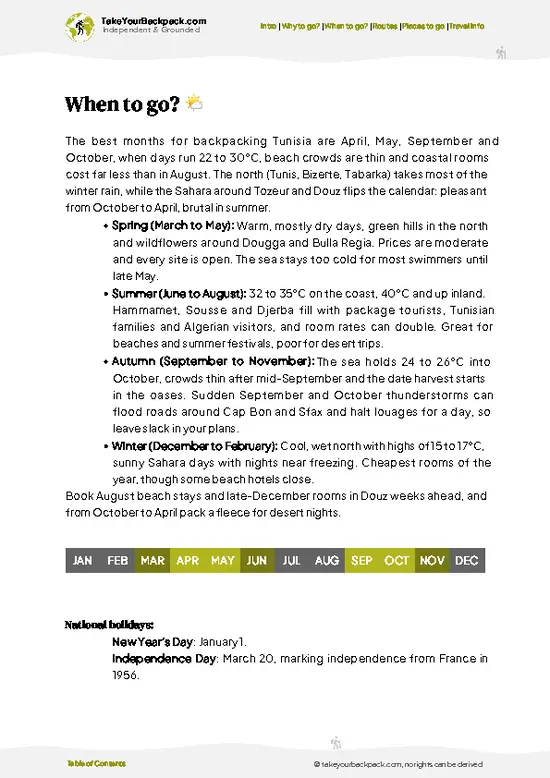
example page 0 from our offline Travel Guide for Tunisia
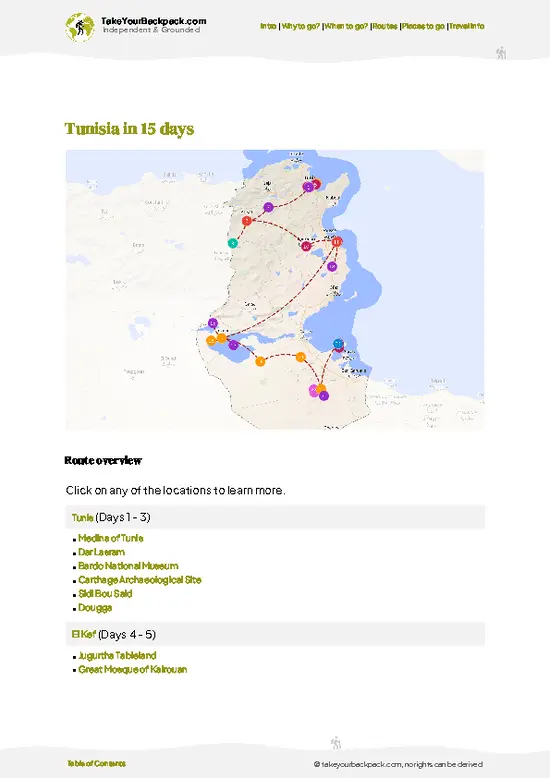
example page 1 from our offline Travel Guide for Tunisia
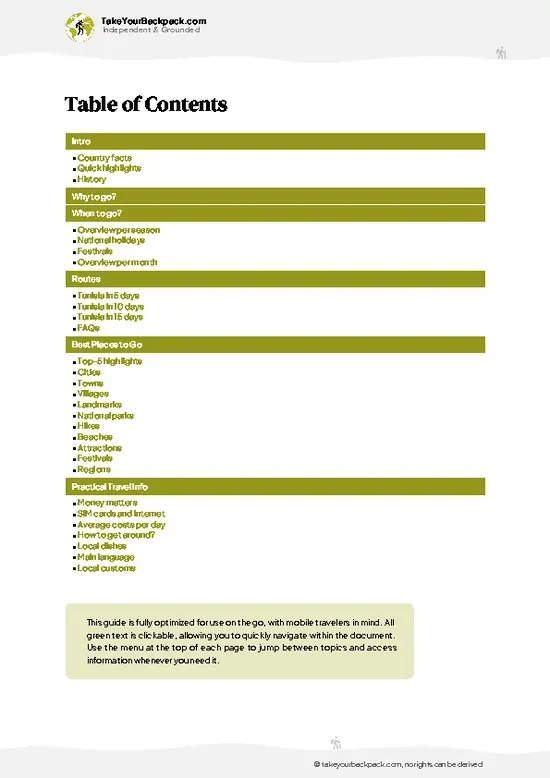
example page 2 from our offline Travel Guide for Tunisia
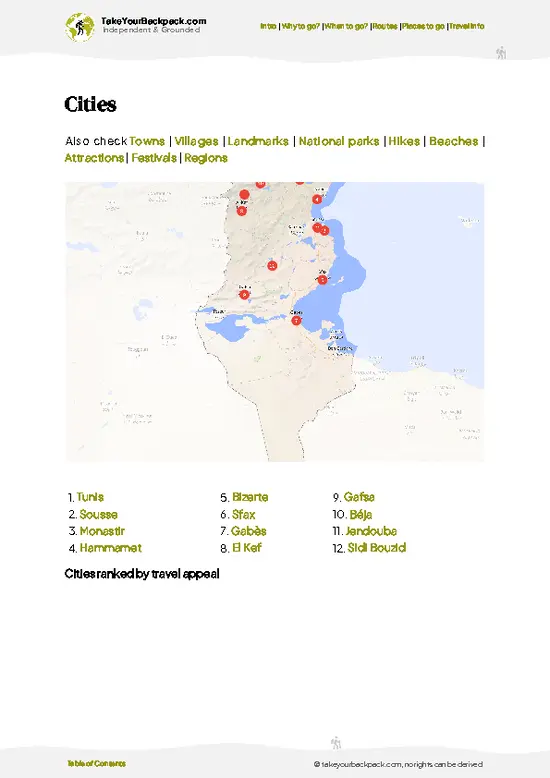
example page 3 from our offline Travel Guide for Tunisia
example page 4 from our offline Travel Guide for Tunisia
example page 5 from our offline Travel Guide for Tunisia
example page 6 from our offline Travel Guide for Tunisia
example page 7 from our offline Travel Guide for Tunisia
Loading the map 🌍
CLICK TO FILTER
cities
towns
villages
landmarks
national parks
hikes
beaches
attractions
festivals
regions
SHOW COUNTRY’S BESTSHOW ALL

✨ Why go?
Ranked #11 national park in Tunisia
What makes this national park worth exploring

Mghilla National Park suits backpackers who like to find their own way. There are no tour buses, no ticket queues and no crowds of selfie sticks, just Aleppo pine and holm oak forest on the Jebel Mghila ridges, with open steppe stretching out below. You set the pace, pick a ridge, and walk until the view feels earned. A local guide or driver from the nearest town helps with route-finding, and having one also gets you chatting with people who rarely meet foreign hikers. The park rewards self-guided travelers who bring their own water, a map saved offline and a flexible plan. It also pairs well with a longer overland loop through central Tunisia, where few backpackers venture and every conversation starts from scratch.

💡 HighlightsMust-see experiences and standout moments

  1. Aleppo pine forest on Jebel Mghilla: The park protects a mountain of Aleppo pine and holm oak in the Kasserine Governorate, and the resin smell on a warm slope is the first thing you notice. The trees give shade that is rare in this part of central Tunisia.
  2. Summit ridge views: The upper ridge looks over the steppe plains toward Sbeitla and the Algerian border ranges. On a clear day the horizon is a long, flat sweep of olive grey, and the wind up top is steady.
  3. Barbary macaque habitat: Mghilla is among the places in Tunisia where these tailless monkeys live. Sightings are never guaranteed, so scan the rocky clearings quietly and keep your food in your pack.
  4. Birdlife of the forest edge: Raptors ride the thermals above the ridge, and woodland species work the pines below. Binoculars matter more
… read more 👉
  1. Aleppo pine forest on Jebel Mghilla: The park protects a mountain of Aleppo pine and holm oak in the Kasserine Governorate, and the resin smell on a warm slope is the first thing you notice. The trees give shade that is rare in this part of central Tunisia.
  2. Summit ridge views: The upper ridge looks over the steppe plains toward Sbeitla and the Algerian border ranges. On a clear day the horizon is a long, flat sweep of olive grey, and the wind up top is steady.
  3. Barbary macaque habitat: Mghilla is among the places in Tunisia where these tailless monkeys live. Sightings are never guaranteed, so scan the rocky clearings quietly and keep your food in your pack.
  4. Birdlife of the forest edge: Raptors ride the thermals above the ridge, and woodland species work the pines below. Binoculars matter more here than a telephoto lens.
  5. Ridge and forest tracks: Unpaved forestry tracks climb through the pines and make easy, self-guided walking. Expect dust, loose stones and almost no signage, so download an offline map first.
  6. Wild thyme and rosemary slopes: The understory is full of aromatic shrubs. Crush a sprig between your fingers and you know what the local herbal tea tastes like before you ever drink it.
  7. Spring wildflower meadows: In the cooler months the clearings turn green and speckled with blooms, a sharp contrast to the dry plains around. It is the best season for photos.
Mghilla National Park has no ticket booth that I could point you to, so the walks, ridge views and wildlife watching above cost nothing, and the only possible expense is a driver or local guide if you want one.
Spotted a mistake or missing something? Contact us.

🌤️ When to go?Best time to explore Mghilla

  • Spring (March to May): Daytime highs of 18 to 27°C (64 to 81°F), green hillsides of Aleppo pine and juniper, and wildflowers on the lower slopes. Days run about 12 to 14 hours, which gives long walking windows.
  • Summer (June to August): Highs of 33 to 38°C (91 to 100°F) with little shade on exposed ridges. Quiet trails, but the heat makes midday walking unpleasant.
  • Autumn (September to November): Highs of 20 to 30°C (68 to 86°F), cooler nights and few other visitors. Occasional heavy storms arrive from late October.
  • Winter (December to February): Highs of 10 to 15°C (50 to 59°F) and nights near freezing at altitude. Days are short at about 10 hours, and rain can make tracks muddy.
Aim for April or October, and carry water whatever the month, since park trails have no refill points.

source: climatestotravel.comJANJanuary: fair for travelingFEBFebruary: fair for travelingMARMarch: highly recommended for travelingAPRApril: excellent for travelingMAYMay: highly recommended for travelingJUNJune: fair for travelingJULJuly: below average for travelingAUGAugust: below average for travelingSEPSeptember: highly recommended for travelingOCTOctober: excellent for travelingNOVNovember: highly recommended for travelingDECDecember: fair for traveling
when-to-go

✈️ The backpacker research shortcutTunisia Travel Guide

An offline-friendly backpacking guide with optimized travel routes, ranked highlights, transport advice, and the best areas to stay.
example page 0 from our offline Travel Guide for Tunisia
example page 1 from our offline Travel Guide for Tunisia
example page 2 from our offline Travel Guide for Tunisia
example page 3 from our offline Travel Guide for Tunisia
example page 4 from our offline Travel Guide for Tunisia
example page 5 from our offline Travel Guide for Tunisia
example page 6 from our offline Travel Guide for Tunisia
example page 7 from our offline Travel Guide for Tunisia
The digital guide (355 pages) contains:
✅ 90 highlights, ranked by travel appeal
✅ Optimized 5, 10 & 15-day travel routes
✅ Cities, national parks, landmarks, beaches
✅ How to get around
✅ Offline-friendly for travel without Wi-Fi
👉 Click to see all 30+ guide features

📅 Plan smarter in minutes, not weeks
✅ Month by month travel advice
✅ Festivals & national holidays
✅ Budget expectations

🗺️ Go to the right places, skip the overrated ones
✅ Honest pros & cons of destinations
✅ Top hikes, parks & viewpoints
✅ Lesser-known places most travelers miss
✅ Clear “worth it vs skip it” guidance

🛏️ Travel smoothly without rookie mistakes
✅ Best areas to stay
✅ Transport systems explained simply
✅ Common scams & safety advice
✅ SIM cards, money & practical tips

🌍 Understand the country, not just visit it
✅ Culture & traditions
✅ 52 Essential phrases & customs
✅ Festivals worth planning around
✅ Traveler-friendly historical context
✅ Insights that make places more meaningful

📱 Built for real travel conditions
✅ Fully downloadable PDF
✅ Works completely offline
✅ Optimized for phone use
✅ Useful in remote areas & buses
✅ Everything in one place
Stop searching, start planning
Get instant access to your full guide. 30‑day money-back guarantee.
+ Add another guide for just

By proceeding you agree to our terms.
Sent to your inbox immediately after payment • 100% Secure Checkout
Best Backpacking Travel Advisor 2025 tourism awardBest Backpacking
Travel Advisor
2025
What others say about Take Your Backpack Guides:
⭐⭐⭐⭐⭐
Fantastic, amazing amount of information!
⭐⭐⭐⭐⭐
My goodness this is amazing, it's what I've been looking for hats off too you!
⭐⭐⭐⭐⭐
I think this is absolutely BRILLIANT
⭐⭐⭐⭐
Very complete and informative. It's still missing places, but I gotta to commend you
⭐⭐⭐⭐⭐
This is truly amazing, thank you, can't wait to explore it with my kids!
⭐⭐⭐⭐⭐
Awesome resource, thank you!
⭐⭐⭐⭐⭐
This is amazing! Can't wait to explore the ones I haven't seen
⭐⭐⭐⭐
I love this! Well done, great idea.
⭐⭐⭐⭐⭐
Thanks for taking the time to make this gem!
⭐⭐⭐⭐⭐
This might be the best website I've ever seen.
⭐⭐⭐⭐⭐
Congratulations, and thank you so much for your work; it's incredibly valuable.
⭐⭐⭐⭐
In all seriousness I think you did a great job pointing out the important spots
⭐⭐⭐⭐⭐
10/10 very good
⭐⭐⭐⭐⭐
As someone who's only just starting to visit regularly this is awesome, thank you.
⭐⭐⭐⭐
Thank you very much! I'm going to visit my dad, it's going to be very useful!
⭐⭐⭐⭐⭐
This is really cool! We'll be travelling for the first time and this definitely come in handy.
⭐⭐⭐⭐⭐
You are now our minister of culture, congratulations 👨‍💼
⭐⭐⭐⭐⭐
Just wanted to tell you that this is a pearl! Going to follow your recommendations.
⭐⭐⭐⭐⭐
This is so cool. I'll definitely be using the resource for my travels soon.
⭐⭐⭐⭐⭐
This is very impressive! Good work.
⭐⭐⭐⭐⭐
This is an amazing and informative site. Very well done!

🛏️ Where to stay?Choosing the right base

No lodging operates inside Mghilla National Park, so most backpackers sleep in nearby towns and arrive by taxi or on foot. Sbeitla, roughly 60 km north, is the most useful base: it has a few simple hotels and guesthouses at US$20 to 40 a night for a private room, plus the Roman ruins to fill an afternoon. Sidi Bouzid, to the east, has more choice, including mid-range city hotels at US$30 to 55 and cafes open late. Kasserine, in the northwest, suits you if you plan to approach from the Chaambi side, with basic hotels at US$15 to 35. Closer to the park, small villages offer little beyond a shop … read more 👉
No lodging operates inside Mghilla National Park, so most backpackers sleep in nearby towns and arrive by taxi or on foot. Sbeitla, roughly 60 km north, is the most useful base: it has a few simple hotels and guesthouses at US$20 to 40 a night for a private room, plus the Roman ruins to fill an afternoon. Sidi Bouzid, to the east, has more choice, including mid-range city hotels at US$30 to 55 and cafes open late. Kasserine, in the northwest, suits you if you plan to approach from the Chaambi side, with basic hotels at US$15 to 35. Closer to the park, small villages offer little beyond a shop and a cafe, though locals sometimes arrange a spare room or a family home stay if you ask politely. Wild camping is possible away from farmland, but there are no facilities, so bring all your own water and food.

👛 Costs (as of 22 October 2026)Money, prices, and spending tips

A day in Mghilla National Park typically costs around US$38 for a backpacker, covering a basic room, local food and shared transport.
CategoryBudget RangeLocal Reality
Entrance feeUS$0 to 2Access is usually informal, with little or no ticketing.
Accommodation (high season)US$15 to 25Simple hotels in nearby towns; there is no lodging inside the park.
Accommodation (low season)US$12 to 20Rooms are easy to find and haggling is possible.
Local transportUS$4 to 10Shared louages between towns, then a taxi or lift to the park edge.
Food and suppliesUS$6 to 10Sandwiches, grilled meat and couscous in local cafes; buy water in town.
Guide (optional)US$0 to 15Local guides can be arranged informally for the day.
Total Daily BudgetUS$38Pay in cash in Tunisian dinars.
⚠️ Prices can change and everyone travels differently, so take this as a rough guide. Hope it helps you plan your adventure!

🥾 TrailsWhere to hike in Mghilla: trails for every level

Mghilla National Park is walked mostly on informal tracks rather than signed, named trails, so plan your route with a local before setting out.
  • Forest track loop: Starts at the forest edge and winds through Aleppo pine and holm oak, typically two to three hours at an easy to moderate level, on packed earth and loose stone.
  • Ridge walk: A steeper climb along the Jebel Mghila crest, three to four hours round trip, moderate difficulty, rocky underfoot with open views over the steppe.
  • Lower slope wander: A gentle ramble among the trees, around an hour, suited to birdwatching and picnics.
  • Wildlife: Expect
… read more 👉
Mghilla National Park is walked mostly on informal tracks rather than signed, named trails, so plan your route with a local before setting out.
  • Forest track loop: Starts at the forest edge and winds through Aleppo pine and holm oak, typically two to three hours at an easy to moderate level, on packed earth and loose stone.
  • Ridge walk: A steeper climb along the Jebel Mghila crest, three to four hours round trip, moderate difficulty, rocky underfoot with open views over the steppe.
  • Lower slope wander: A gentle ramble among the trees, around an hour, suited to birdwatching and picnics.
  • Wildlife: Expect birds, especially raptors, and the occasional small mammal. Large animals are rarely seen.
  • Terrain: Dry, stony ground with little shade above the tree line, so carry plenty of water and sun protection.
Getting there is the hard part. Public transport reaches the nearby towns of the region, but the last stretch to the forest usually needs a hired taxi or a local driver, and agreeing the return trip in advance is wise. Crowds are essentially nonexistent, so you may have whole slopes to yourself. Entry is generally free and informal. Wear sturdy shoes, download an offline map and tell someone your route, because mobile coverage can be patchy and signage is minimal.
⚠️ Hiking info can sometimes be outdated or inaccurate. Before you hit the trail, check the latest conditions with locals. If you do spot anything that's off, I'd love to hear from you, so I can update it for fellow travelers.

🛡️ SafetyTraveler Safety Guide

Mghilla National Park is a quiet, lightly visited area of dry mountains where the main hazards are heat, sun and getting short of water. Summer temperatures climb fast, so start walking at first light and carry at least 3 liters per person. Trails are often unmarked goat tracks with loose stone underfoot, so download an offline map and sturdy boots help. Wildlife is modest, with wild boar, foxes and the occasional snake, and you rarely meet any if you make some noise. Mobile signal is patchy. Tell your guesthouse where you are heading, and check current local advice for the Kasserine region, since some border-adjacent mountain zones have restricted access. Ask rangers or local drivers before you set out.

FAQTraveler FAQ

One full day covers the main walking at Mghilla National Park, though two days let you hike without rushing. Most travelers arrive from Sbeitla, about 60 km away, and Sidi Bouzid and Kasserine are also within a couple of hours by road. Add a third day if you want to combine it with the Roman ruins of Sbeitla.
Reaching Mghilla National Park without a car is possible but slow. Take a shared louage from Sbeitla, Sidi Bouzid or Kasserine to the nearest village, usually US$2 to 6, then hire a local taxi or walk the final stretch. Plan for a full travel day each way from Tunis, around 4 to 5 hours by road.
Mghilla National Park generally has no strict ticketing, and entry is free or costs only a token amount of up to about US$2. Permits are not normally required for day walks, but check current regional access advice in Kasserine or Sbeitla before heading into remote mountain areas. Carry your passport and some cash in dinars for any local fees.
⚠️ Things can change over time, so always validate details locally before you go.

Other Tunisian national parks near Mghilla

Explore more nearby:


💡 Not sure where to go next?
Create a personalized itinerary for Tunisia including Mghilla and the places that fit your trip.

Generate my itinerary

👉 Discover all national parks

Or checkout all Tunisia has to offer (think cities, towns, villages, national parks, hikes, beaches, festivals)
Country photo of Tunisia

We 💚 feedbackKey takeaways before you go

Mghilla National Park is at its best in spring, when the forest floor greens up and the steppe below still holds some color, and the cooler hours of the day make the ridges comfortable. I would skip midsummer entirely and bring far more water than seems sensible.

✍️ Help improve this page!
The information on this page is based on in-depth research, insights shared by experienced travelers, and feedback from the local travel community in Tunisia. While every effort is made to keep the information accurate and current, conditions can change — so if you spot anything incorrect or outdated, please get in touch.


🙋‍♂️ Give feedback

👋 Meet the founderWho’s Behind Take Your Backpack?

Johan, backpacker and founder of TakeYourBackpackHi, I’m Johan (Netherlands 🇳🇱), the creator of TakeYourBackpack. Over the past 3 decades, I’ve backpacked through 90+ countries across six continents, gaining extensive experience with independent travel, long-term trips, and overland routes.

This site is built on a combination of firsthand travel experience and carefully curated insights from other backpackers. Many guides are based on places I’ve personally visited, while others bring together tips, observations, and practical advice shared by trusted travelers I’ve met along the way.

The goal is to provide realistic, experience-driven guidance — not generic itineraries — so you can explore destinations with better context, clearer expectations, and more confidence.