×

Tunisia🇹🇳 | best national parksDiscover the 11 Best national parks Across Tunisia

Tunisia’s national parks offer a captivating blend of landscapes, wildlife, and adventure opportunities that cater to every backpacker’s taste. Defined by their unique ecosystems, these parks range from the rugged Atlas Mountains to the arid Sahara Desert, each presenting distinct seasonal nuances that can dramatically affect your experience.

Choosing the right park impacts everything from vibe and budget to safety and cultural immersion. For instance, Ichkeul National Park is a birdwatcher’s paradise in spring, while Bou-Hedma offers a quieter, more remote experience. Understanding these differences is key for independent travel, ensuring you navigate Tunisia’s diverse offerings with confidence and ease.

By Johan Kruseman 🇳🇱 | Updated June 1, 2026
Explore the best hikes in Tunisia

Why go?What Makes Them Special

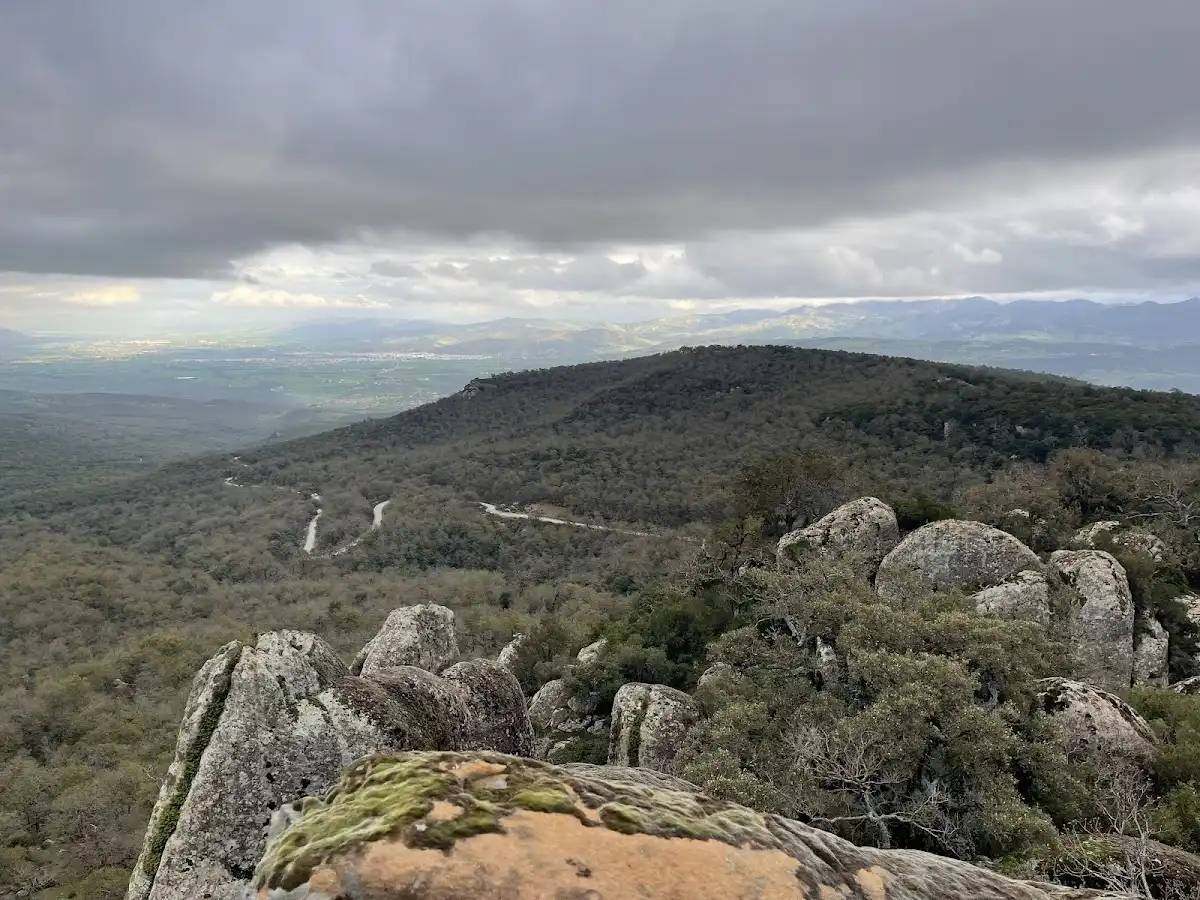
National parks in Tunisia are a fascinating blend of landscapes, biodiversity, and cultural history that set them apart from other countries. The geographic diversity ranges from the Sahara’s vast dunes to lush Mediterranean coastlines, offering a unique backdrop for exploration. However, the infrastructure can be a mixed bag. While some parks are relatively accessible, others require a bit of grit and determination to reach, which can lead to a more immersive experience.

Travelers should weigh the trade-offs between accessibility and the depth of exploration. A longer journey might mean fewer crowds and a chance to connect with the local flora and fauna, but it can also mean navigating less-developed roads and facilities. The climatic conditions can be extreme, with scorching summers and … read more 👉
National parks in Tunisia are a fascinating blend of landscapes, biodiversity, and cultural history that set them apart from other countries. The geographic diversity ranges from the Sahara’s vast dunes to lush Mediterranean coastlines, offering a unique backdrop for exploration. However, the infrastructure can be a mixed bag. While some parks are relatively accessible, others require a bit of grit and determination to reach, which can lead to a more immersive experience.

Travelers should weigh the trade-offs between accessibility and the depth of exploration. A longer journey might mean fewer crowds and a chance to connect with the local flora and fauna, but it can also mean navigating less-developed roads and facilities. The climatic conditions can be extreme, with scorching summers and chilly winters, so timing your visit is crucial for a comfortable experience.

Culturally, Tunisia’s parks are steeped in history, often showcasing ancient ruins alongside natural wonders. This juxtaposition enriches the experience but can also lead to crowded sites during peak tourist seasons. Understanding these dynamics is essential for making the most of your adventure. Ultimately, Tunisia’s national parks offer a unique opportunity to engage with nature and history, but preparation and flexibility are key to unlocking their true magic.
Behind the Scenes of Selection
The list of best national parks in Tunisia is created based on landscapes, wildlife, adventure opportunities, facilities, and overall experience. If you feel a national park is missing in this list, please let us know.

When to go?Timing Your Visit for the Best Experience

Timing Your Adventure


Visiting national parks in Tunisia is a game of timing. The weather can swing from scorching heat to chilly nights, so understanding the seasons is crucial.

Spring, particularly from March to May, offers mild temperatures and blooming landscapes. Wildlife is more active, making it a prime time for spotting animals. However, this is also when the crowds start to swell. Expect trails to be busier, especially during school holidays.

Summer brings the heat, with temperatures soaring. Many parks become less accessible due to the sweltering sun, and wildlife tends to retreat into the shade. If you’re brave enough to venture out, early mornings or late afternoons are your best bets. Just be prepared for the sweat and the occasional sunburn.

Autumn, from September to … read more 👉

Timing Your Adventure


Visiting national parks in Tunisia is a game of timing. The weather can swing from scorching heat to chilly nights, so understanding the seasons is crucial.

Spring, particularly from March to May, offers mild temperatures and blooming landscapes. Wildlife is more active, making it a prime time for spotting animals. However, this is also when the crowds start to swell. Expect trails to be busier, especially during school holidays.

Summer brings the heat, with temperatures soaring. Many parks become less accessible due to the sweltering sun, and wildlife tends to retreat into the shade. If you’re brave enough to venture out, early mornings or late afternoons are your best bets. Just be prepared for the sweat and the occasional sunburn.

Autumn, from September to November, is another sweet spot. The weather cools down, and the crowds thin out. It’s a great time for those who want to enjoy the scenery without feeling like they’re in a conga line.

Winter can be a mixed bag. Some parks may be less accessible due to rain, while others offer a serene, quiet experience. Just remember, temperatures can drop significantly at night, so pack accordingly.

Each season has its trade-offs. Choose wisely to make the most of your Tunisian adventure.

national park hoppingSuggested Travel Strategies

Combining national parks in Tunisia requires a bit of strategy and a healthy dose of flexibility. Start by clustering parks regionally. The north is home to parks like Ichkeul and Boukornine, while the south boasts the vast landscapes of Chott el Jerid and the unique features of Jebel Chambi. This regional approach minimizes travel time and maximizes exploration.

Typical visits should allow for at least half a day in each park, but this varies. Ichkeul, with its birdwatching opportunities, might tempt a longer stay, while a quick hike in Boukornine could suffice. Balancing time spent in each park is crucial; rushing through can lead to missing the subtle beauty that makes each unique.

Common pitfalls include over-scheduling. Trying to cram too many parks into a short timeframe often leads read more 👉
Combining national parks in Tunisia requires a bit of strategy and a healthy dose of flexibility. Start by clustering parks regionally. The north is home to parks like Ichkeul and Boukornine, while the south boasts the vast landscapes of Chott el Jerid and the unique features of Jebel Chambi. This regional approach minimizes travel time and maximizes exploration.

Typical visits should allow for at least half a day in each park, but this varies. Ichkeul, with its birdwatching opportunities, might tempt a longer stay, while a quick hike in Boukornine could suffice. Balancing time spent in each park is crucial; rushing through can lead to missing the subtle beauty that makes each unique.

Common pitfalls include over-scheduling. Trying to cram too many parks into a short timeframe often leads to fatigue and frustration. Instead, prioritize depth over speed. Consider the trade-offs: a longer stay in one park means a richer experience, while hopping between parks can feel like a whirlwind tour.

Budget and comfort also play a role. Some parks have limited facilities, so plan accordingly. Embrace the unpredictability of travel; sometimes the best moments come from unplanned detours. With a bit of planning and a sense of adventure, the journey through Tunisia’s national parks can be both rewarding and memorable.

The ListTop national parks of Tunisia

1 Ichkeul National Park

seasonal lake, migratory birds, reed beds

Witness thousands of waterfowl descend on a shifting wetland, where freshwater and saltwater shape a rare ecological crossroads.

2 Chambi National Park

highest peak, juniper woodland, Barbary sheep

Climb to Tunisia’s highest summit through cool forests, keeping an eye out for elusive mountain wildlife along the way.

3 Zembra and Zembretta National Park

island cliffs, seabird colonies, underwater meadows

Sail to remote islands where steep cliffs host nesting birds and clear waters reveal vibrant marine life below the surface.

4 Boukornine National Park

limestone peaks, Aleppo pine forest, Mediterranean coastline

Hike through pine-scented slopes and rocky outcrops, then watch the sea meet the mountains just outside bustling Tunis.

5 Bouhedma national parc

steppe grassland, acacia woodland, addax antelope

Experience open grasslands and scattered trees, where endangered antelope graze and the landscape shifts with the seasons.

tunisia-national-park-bouhedma-national-parc
© Google |

6 El Feija

dense beech forest, Barbary deer, mountain streams

Wander through cool, shaded woods and listen for the calls of rare deer along clear streams in the northwest highlands.

tunisia-national-park-el-feija
© Google |

7 Jebel Zaghouan National Park

limestone massif, Roman aqueduct source, aromatic herbs

Follow mountain paths scented with wild thyme and discover springs that once supplied ancient Carthage with water.

8 Jebel Chitana-Cap Négro National Park

cork oak forest, coastal cliffs, wild boar

Walk shaded trails beneath ancient oaks, then emerge onto windswept cliffs overlooking the northern Mediterranean.

9 Jebel Serj National Park

karst caves, wild olive groves, rugged escarpments

Venture into a landscape of hidden caves and steep ridges, where ancient trees and dramatic geology define the terrain.

10 Sidi Toui National Park

semi-arid steppe, acacia savanna, gazelle habitat

Traverse open plains dotted with acacias and spot native antelope, experiencing the quiet expanse of southern Tunisia’s steppe.

11 Mghilla National Park

arid hills, juniper stands, rare flora

Roam through dry uplands where hardy plants and scattered trees shelter unique species adapted to harsh conditions.

Loading the map 🌍

Expert viewInsights from Locals and Experts

Terrain
Tunisia’s national parks are a mixed bag of landscapes that range from the arid expanses of the Sahara to lush, green hills. You’ll find yourself hiking through rocky trails, sandy dunes, and even some surprisingly verdant valleys. Each park has its own character, but the terrain can be unforgiving. If you’re not prepared for the heat or the occasional steep climb, you might find yourself questioning your life choices. The trade-off here is clear: the more diverse the terrain, the more varied your experience, but also the more you’ll need to adapt your gear and mindset.

Park Infrastructure
Let’s talk about infrastructure. Some parks are well-equipped with visitor centers, marked trails, and even the occasional café where you can sip mint tea while contemplating your next move. … read more 👉
Terrain
Tunisia’s national parks are a mixed bag of landscapes that range from the arid expanses of the Sahara to lush, green hills. You’ll find yourself hiking through rocky trails, sandy dunes, and even some surprisingly verdant valleys. Each park has its own character, but the terrain can be unforgiving. If you’re not prepared for the heat or the occasional steep climb, you might find yourself questioning your life choices. The trade-off here is clear: the more diverse the terrain, the more varied your experience, but also the more you’ll need to adapt your gear and mindset.

Park Infrastructure
Let’s talk about infrastructure. Some parks are well-equipped with visitor centers, marked trails, and even the occasional café where you can sip mint tea while contemplating your next move. Others? Not so much. You might find yourself navigating unmarked paths or dealing with limited facilities. This can be a double-edged sword. On one hand, it adds to the adventure; on the other, it can lead to some frustrating moments when you’re trying to find a restroom or a place to refill your water bottle. Plan accordingly: bring your own supplies, and don’t rely on park amenities to be up to par.

Wildlife Activity
Wildlife in Tunisia’s parks can be a delightful surprise. You might spot a Barbary macaque swinging through the trees or a variety of birds flitting about. However, wildlife sightings can be hit or miss. If you’re hoping for a safari-like experience, temper your expectations. Animals are often elusive, and the best times to see them are early morning or late afternoon. The trade-off here is time: if you want to maximize your chances of spotting wildlife, you’ll need to invest those early mornings, which can cut into your park-hopping schedule.

Time Spent vs. Multiple Parks
Now, let’s get to the crux of the matter: how many parks should you visit? Ideally, aim for two to three parks if you want to savor the experience without feeling rushed. Each park deserves a solid day or two to really soak in the atmosphere and explore its unique offerings. If you try to cram in more, you’ll likely end up feeling like a tourist on a treadmill, missing the real magic of each place. The trade-off is clear: more parks mean less depth of experience. Choose wisely based on what you want to see and do.

Planning and Prioritizing
When planning your itinerary, consider regional variations. Some parks are more accessible than others, and travel times can be deceptive. What looks like a short distance on a map can turn into a lengthy journey on the ground, thanks to winding roads and local traffic. Factor in cultural considerations, too. Be respectful of local customs and practices, especially in more remote areas. This isn’t just about being polite; it can also enhance your experience. Engaging with locals can lead to unexpected adventures and insights that you won’t find in any guidebook.

Safety & Cultural Considerations
Safety is paramount. While Tunisia is generally safe for travelers, always stay aware of your surroundings, especially in less populated areas. Carry a basic first-aid kit, and don’t underestimate the power of sunscreen and hydration. Cultural sensitivity is equally important. Dress modestly, especially in rural areas, and be mindful of local customs. This isn’t just about avoiding awkward moments; it’s about enriching your experience and connecting with the people and places you encounter.

In the end, Tunisia’s national parks offer a rich tapestry of experiences, but they require a bit of planning and a willingness to embrace the unexpected. The grind can be part of the gold if you let it.

✈️ The backpacker research shortcutTunisia Travel Guide

An offline-friendly backpacking guide with optimized travel routes, ranked highlights, transport advice, and the best areas to stay.
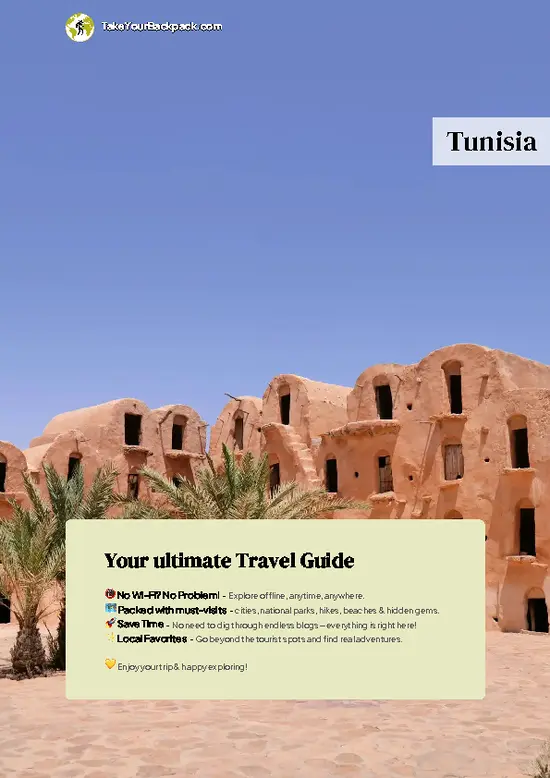
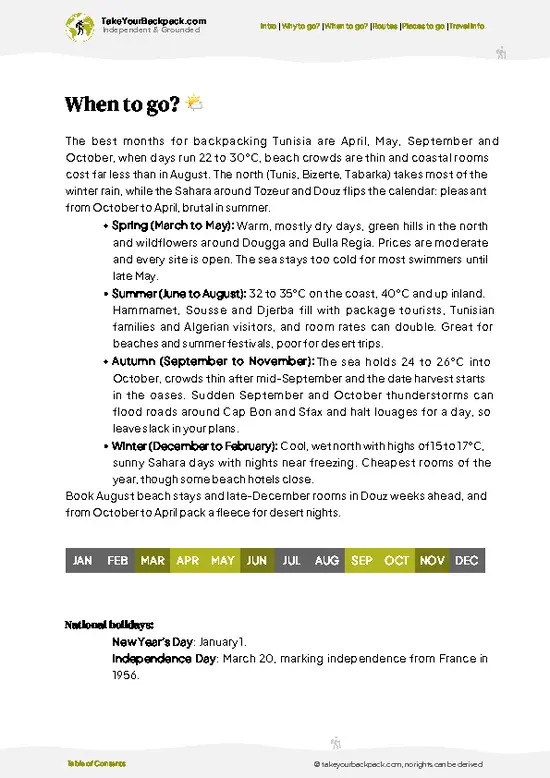
example page 0 from our offline Travel Guide for Tunisia
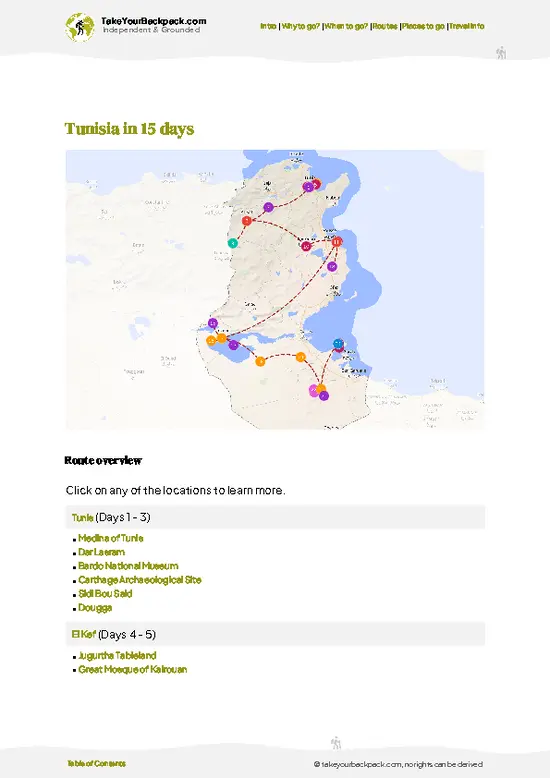
example page 1 from our offline Travel Guide for Tunisia
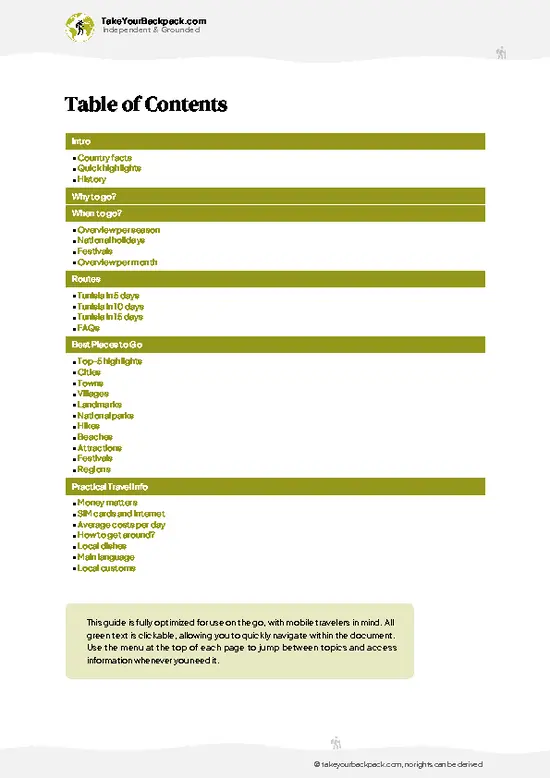
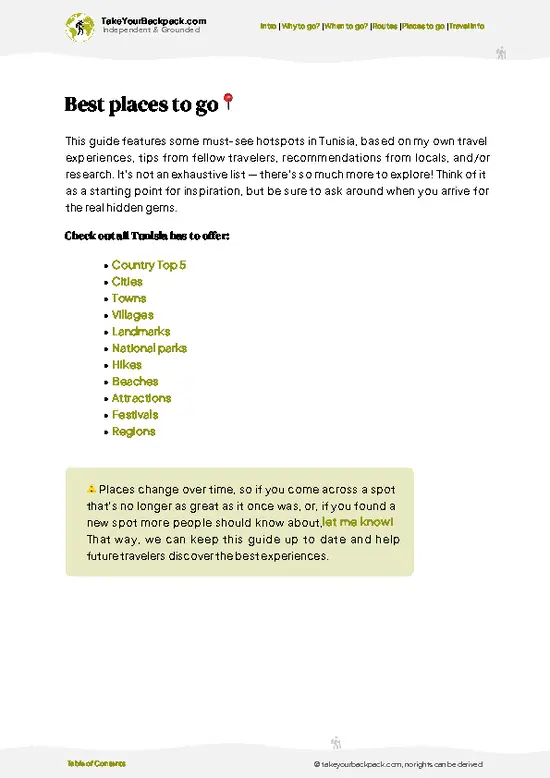
example page 2 from our offline Travel Guide for Tunisia
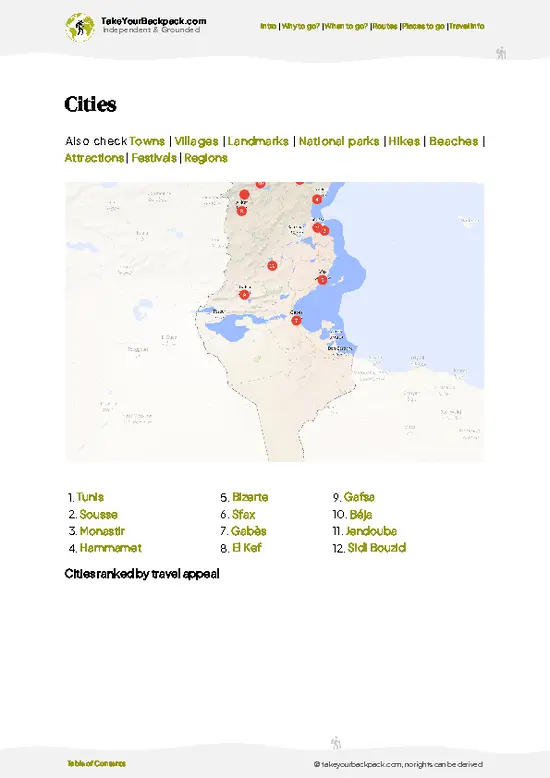
example page 3 from our offline Travel Guide for Tunisia
example page 4 from our offline Travel Guide for Tunisia
example page 5 from our offline Travel Guide for Tunisia
example page 6 from our offline Travel Guide for Tunisia
example page 7 from our offline Travel Guide for Tunisia
The digital guide (372 pages) contains:
97 highlights, ranked by travel appeal
Optimized 5, 10 & 15-day travel routes
Cities, national parks, landmarks, beaches
How to get around
Offline-friendly for travel without Wi-Fi
👉 Click to see all 30+ guide features

📅 Plan smarter in minutes, not weeks
Month by month travel advice
Festivals & national holidays
Budget expectations

🗺️ Go to the right places, skip the overrated ones
Honest pros & cons of destinations
Top hikes, parks & viewpoints
Lesser-known places most travelers miss
Clear “worth it vs skip it” guidance

🛏️ Travel smoothly without rookie mistakes
Best areas to stay
Transport systems explained simply
Common scams & safety advice
SIM cards, money & practical tips

🌍 Understand the country, not just visit it
Culture & traditions
52 Essential phrases & customs
Festivals worth planning around
Traveler-friendly historical context
Insights that make places more meaningful

📱 Built for real travel conditions
Fully downloadable PDF
Works completely offline
Optimized for phone use
Useful in remote areas & buses
Everything in one place
Save weeks of stressful planning
Get instant access to your full guide. 30‑day money-back guarantee.


By proceeding you agree to our terms.
Sent to your inbox immediately after payment • 100% Secure Checkout
Best Backpacking Travel Advisor 2025 tourism awardBest Backpacking
Travel Advisor
2025
What others say about Take Your Backpack Guides:
⭐⭐⭐⭐⭐
Fantastic, amazing amount of information!
⭐⭐⭐⭐⭐
My goodness this is amazing, it's what I've been looking for hats off too you!
⭐⭐⭐⭐⭐
I think this is absolutely BRILLIANT
⭐⭐⭐⭐
Very complete and informative. It's still missing places, but I gotta to commend you
⭐⭐⭐⭐⭐
This is truly amazing, thank you, can't wait to explore it with my kids!
⭐⭐⭐⭐⭐
Awesome resource, thank you!
⭐⭐⭐⭐⭐
This is amazing! Can't wait to explore the ones I haven't seen
⭐⭐⭐⭐
I love this! Well done, great idea.
⭐⭐⭐⭐⭐
Thanks for taking the time to make this gem!
⭐⭐⭐⭐⭐
This might be the best website I've ever seen.
⭐⭐⭐⭐⭐
Congratulations, and thank you so much for your work; it's incredibly valuable.
⭐⭐⭐⭐
In all seriousness I think you did a great job pointing out the important spots
⭐⭐⭐⭐⭐
10/10 very good
⭐⭐⭐⭐⭐
As someone who's only just starting to visit regularly this is awesome, thank you.
⭐⭐⭐⭐
Thank you very much! I'm going to visit my dad, it's going to be very useful!
⭐⭐⭐⭐⭐
This is really cool! We'll be travelling for the first time and this definitely come in handy.
⭐⭐⭐⭐⭐
You are now our minister of culture, congratulations 👨‍💼
⭐⭐⭐⭐⭐
Just wanted to tell you that this is a pearl! Going to follow your recommendations.
⭐⭐⭐⭐⭐
This is so cool. I'll definitely be using the resource for my travels soon.
⭐⭐⭐⭐⭐
This is very impressive! Good work.
⭐⭐⭐⭐⭐
This is an amazing and informative site. Very well done!

🛏️ Where to stay?Best Stay Options in Tunisia

Yes — hostels and budget accommodation are widely available in Tunisia, concentrated in Tunis (Medina and Ville Nouvelle), Sousse (Medina and waterfront), Hammamet, Djerba, with smaller backpacker options in Tozeur and Kairouan.
Medina areas put you within historic highlights and cheap local food but expect narrow streets, basic rooms and limited nightlife; Ville Nouvelle and Sousse waterfront offer easier transport, more social hostels and livelier evenings at slightly higher rates; Hammamet and Djerba are quieter beach bases with seasonal service drops and fewer cheap beds outside high season.
Budget places usually mean communal bathrooms, simple cleaning standards and crowded summer months, … read more 👉
Yes — hostels and budget accommodation are widely available in Tunisia, concentrated in Tunis (Medina and Ville Nouvelle), Sousse (Medina and waterfront), Hammamet, Djerba, with smaller backpacker options in Tozeur and Kairouan.
Medina areas put you within historic highlights and cheap local food but expect narrow streets, basic rooms and limited nightlife; Ville Nouvelle and Sousse waterfront offer easier transport, more social hostels and livelier evenings at slightly higher rates; Hammamet and Djerba are quieter beach bases with seasonal service drops and fewer cheap beds outside high season.
Budget places usually mean communal bathrooms, simple cleaning standards and crowded summer months, so book early in peak season, carry cash, and bring a light sleeping liner and mosquito protection to avoid common small-trip mistakes.

If you enjoy meeting fellow travelers, consider choosing hostels with high ratings for atmosphere. On the other hand, if you prefer having your own space, a hotel might be a better option.

TunisiaWhere to Go Next

👋 Meet the founderWho’s Behind Take Your Backpack?

Johan, backpacker and founder of TakeYourBackpackHi, I’m Johan (Netherlands 🇳🇱), the creator of TakeYourBackpack. Over the past decade, I’ve backpacked through 80+ countries across six continents, gaining extensive experience with independent travel, long-term trips, and overland routes.

This site is built on a combination of firsthand travel experience and carefully curated insights from other backpackers. Many guides are based on places I’ve personally visited, while others bring together tips, observations, and practical advice shared by trusted travelers I’ve met along the way.

The goal is to provide realistic, experience-driven guidance — not generic itineraries — so you can explore destinations with better context, clearer expectations, and more confidence.

Get full Tunisia guide •
Instant download • 97 highlights • Full Offline guide