×

Tunisia🇹🇳 | citiesTunisLabyrinthine medina, French quarter, Bardo Museum, city trams | things to do and best time to go

Explore SousseExplore Sfax

Backpacking in Tunis
🏆 Top pickcity ranked #1
By Johan Kruseman 🇳🇱 | Updated June 9, 2026

A swirl of mint tea steam rises as the call to prayer threads through the medina’s alleys, mixing with the clang of tram bells and the sharp scent of grilled sardines. You’re in Tunis—northern Tunisia’s capital, pressed between the Mediterranean and the ruins of Carthage. Tunis is a city that rewards curiosity but doesn’t coddle. The medina’s maze is a living museum, where centuries-old mosques and palaces hide behind battered doors, and the Bardo Museum’s mosaics genuinely earn their reputation. Backpackers will find costs refreshingly low—street food, shared taxis, and even hostels are bargains compared to Sousse or Hammamet. It’s easy to meet other travelers in the medina’s cafés or at the city’s handful of hostels, though the scene is quieter than in Morocco’s big cities. Safety is generally solid, but petty theft can spike in crowded markets. The vibe? A little gritty, a little grand, always real—Tunis is for those who like their capitals with character, not polish.

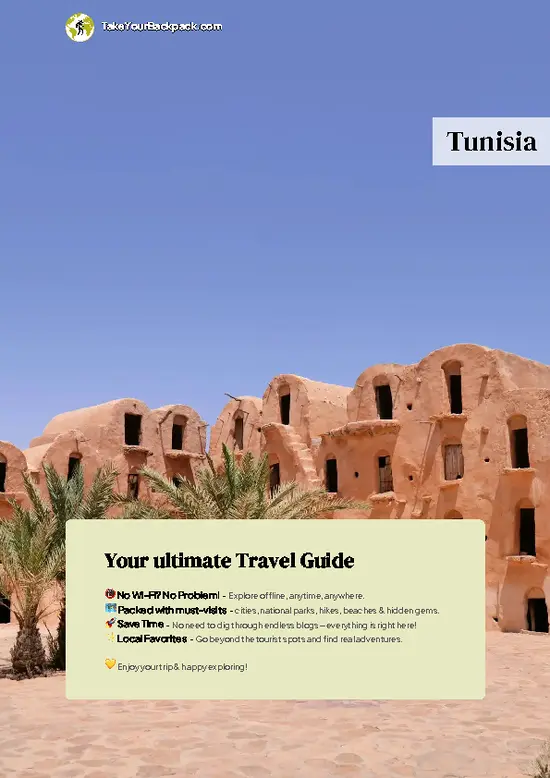
Discover everything you want to know in the 📖 Tunisia Travel Guide.


Get your Tunisia guide
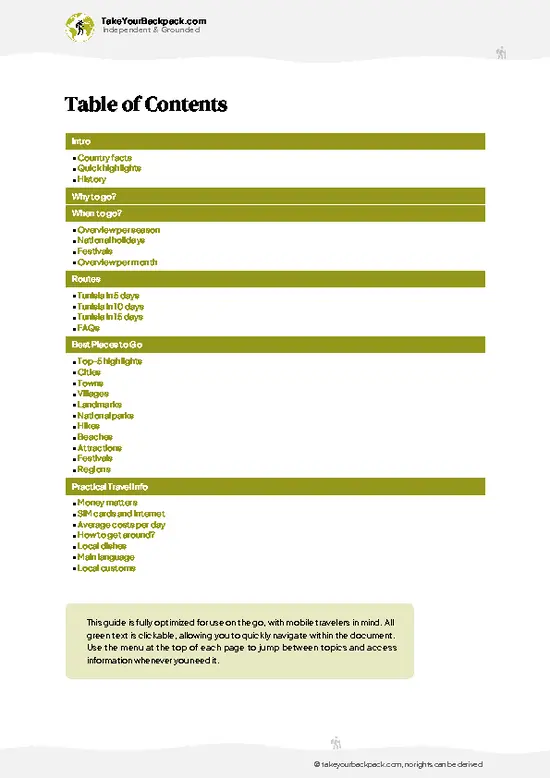
97 ranked highlights, routes & tips, works offline (372 pages)
Loading the map 🌍
CLICK TO FILTER
cities
towns
villages
landmarks
national parks
hikes
beaches
attractions
festivals
regions
SHOW COUNTRY’S BESTSHOW ALL

✨ Why go?
Ranked #1 city in Tunisia
Why visitors keep coming back

Tunis is a strategic hub for backpackers, offering a blend of affordability and accessibility that makes it a smart stop on your journey. The city is packed with highlights that cater to various interests, from history buffs to foodies. You’ll find that the hostel scene is vibrant and budget-friendly, making it easy to meet fellow travelers and share tips over a cup of mint tea.

One of the best parts? Tunis is incredibly walkable. You can explore the winding streets of the medina or stroll along the waterfront without breaking a sweat. This ease of movement means you can maximize your time soaking in the local culture rather than wasting it on transport.

When it comes to food, the options are diverse and delicious, from street vendors to cozy cafes. Plus, the nightlife offers a mix of laid-back … read more 👉
Tunis is a strategic hub for backpackers, offering a blend of affordability and accessibility that makes it a smart stop on your journey. The city is packed with highlights that cater to various interests, from history buffs to foodies. You’ll find that the hostel scene is vibrant and budget-friendly, making it easy to meet fellow travelers and share tips over a cup of mint tea.

One of the best parts? Tunis is incredibly walkable. You can explore the winding streets of the medina or stroll along the waterfront without breaking a sweat. This ease of movement means you can maximize your time soaking in the local culture rather than wasting it on transport.

When it comes to food, the options are diverse and delicious, from street vendors to cozy cafes. Plus, the nightlife offers a mix of laid-back bars and lively spots, perfect for unwinding after a day of exploration.

As a base for day trips, Tunis opens doors to stunning nearby sites, making it a practical choice for those wanting to dive deeper into Tunisia. Whether you linger or just pass through, Tunis has a way of enriching your travel experience.
Want to include Tunis in your Tunisia route?
Create a personalized Tunisia itinerary that includes Tunis and the places that fit your trip — based on your travel style, budget, and available time. Get your route in seconds.

Generate my trip

💡 HighlightsMust-see experiences and standout moments

  1. Medina of Tunis & Zitouna Mosque — The labyrinthine old city is the heart of Tunis: narrow alleys, centuries-old houses, and the Zitouna University/Mosque at its center. Wander to feel the living history—prayer calls, scholars, tiny workshops—and respect the mosque’s prayer times if you want to step inside.
  2. Souks of the Medina (El Attarine, Souk el Berka, Chéchia) — Not just shopping: these markets are a sensory map of local crafts and trades—spices, perfumes, metalwork and the traditional chéchia cap. Haggle a little, buy a small memento, and watch artisans at work for the best cultural payoff.
  3. Bab el Bhar (Porte de France) — The stone gate that marks the edge between old and new Tunis; an immediate snapshot of the city’s layered history and a handy meeting/photo spot. Walk through it
read more 👉
  1. Medina of Tunis & Zitouna Mosque — The labyrinthine old city is the heart of Tunis: narrow alleys, centuries-old houses, and the Zitouna University/Mosque at its center. Wander to feel the living history—prayer calls, scholars, tiny workshops—and respect the mosque’s prayer times if you want to step inside.
  2. Souks of the Medina (El Attarine, Souk el Berka, Chéchia) — Not just shopping: these markets are a sensory map of local crafts and trades—spices, perfumes, metalwork and the traditional chéchia cap. Haggle a little, buy a small memento, and watch artisans at work for the best cultural payoff.
  3. Bab el Bhar (Porte de France) — The stone gate that marks the edge between old and new Tunis; an immediate snapshot of the city’s layered history and a handy meeting/photo spot. Walk through it to feel that switch from medina lanes to modern boulevards.
  4. Avenue Habib Bourguiba — Tunis’s main artery: cafés, bakeries, colonial-era buildings, street life and occasional demonstrations. Ideal for people-watching, a late-afternoon coffee, and getting a sense of modern Tunisian urban rhythm.
  5. Cathédrale de Saint-Vincent-de-Paul — A striking neo-Romanesque cathedral on Avenue Habib Bourguiba with atmospheric interiors and a surprisingly calm courtyard. It shows the city’s multi-confessional past and is easy to combine with a stroll along the avenue.
  6. Parc du Belvédère & Musée des Beaux-Arts — The city’s biggest green lung with sculptures, jogging paths and shady spots to relax; the adjacent Musée des Beaux-Arts has good 19th-20th century Tunisian and European pieces. Great for a mellow afternoon away from the crowds.
  7. Dar Ben Abdallah (Museum of Popular Arts & Traditions) — A restored 18th-century house-turned-museum in the medina that offers a compact, very human view of everyday Tunisian life through costumes, household objects and reconstructed rooms. Small but rich in context.
  8. Tourbet el Bey — The Ottoman-era royal mausoleum with finely carved stonework and tiled interiors; quiet and evocative, it’s a tangible link to the ruling families who shaped Tunisia’s capital. It’s right in the medina and often much less crowded than other sites.
  9. Kasbah and Kasbah Mosque — The historic seat of power: fortified walls, narrow streets and the Kasbah Mosque. The square around the Kasbah is where politics and history meet daily life, and it’s a good starting point for exploring nearby ministries and old residences.
  10. Sidi Mahrez Mosque — A neighborhood favorite and one of Tunis’s most photogenic mosques, known for its colorful tiles and graceful dome (Sidi Mahrez is the city’s patron saint). It’s quieter than the big monuments and offers a real local atmosphere.
A few excellent day trips just outside Tunis: the ancient ruins of Carthage, the white-and-blue cliff village of Sidi Bou Said, and the Bardo Museum (for its world-class mosaics) are all close enough for easy half- or full-day visits.
Spotted a mistake or missing something? Contact us.

Things to do in Tunis

Ratings based on Tripadvisor reviews. When you book through this link, you support our work at no extra cost to you.

🏘️ NeighborhoodsKey areas and districts to know

Tunis is a vibrant city where history and modernity collide, making it a fascinating base for backpackers. Here’s a breakdown of key neighborhoods to help you navigate your stay.

Medina: This is the heart of Tunis, where narrow alleys are lined with souks and historic architecture. The vibe is bustling yet charming, perfect for those who want to soak in local culture. Costs can vary, but you’ll find budget-friendly hostels. Walkability is high; you can easily explore on foot. Nightlife is low-key, with a few cafes and bars, making it suitable for short stays focused on culture.

La Marsa: A coastal suburb that offers a more relaxed atmosphere. It’s a bit pricier, especially near the beach, but the views are worth it. Walkability is decent, though public transport is needed for longer distances. … read more 👉
Tunis is a vibrant city where history and modernity collide, making it a fascinating base for backpackers. Here’s a breakdown of key neighborhoods to help you navigate your stay.

Medina: This is the heart of Tunis, where narrow alleys are lined with souks and historic architecture. The vibe is bustling yet charming, perfect for those who want to soak in local culture. Costs can vary, but you’ll find budget-friendly hostels. Walkability is high; you can easily explore on foot. Nightlife is low-key, with a few cafes and bars, making it suitable for short stays focused on culture.

La Marsa: A coastal suburb that offers a more relaxed atmosphere. It’s a bit pricier, especially near the beach, but the views are worth it. Walkability is decent, though public transport is needed for longer distances. The nightlife here is more vibrant, with beach bars and restaurants. Ideal for longer stays if you want a mix of beach and city life.

Belvédère: This area is known for its parks and green spaces, providing a quieter escape from the city buzz. Costs are moderate, with a mix of hostels and guesthouses. It’s walkable, but you’ll want to use public transport for major attractions. Nightlife is minimal, making it perfect for those seeking a peaceful retreat while still being close to the action.

Carthage: Rich in history, this area is a must-visit for archaeology buffs. It’s more upscale, so expect higher prices. Walkability is good, but you’ll need transport to reach the city center. Nightlife is subdued, focusing more on dining experiences. Best for short stays if you’re keen on exploring ancient ruins.

⌛️ 1 dayA smart one-day plan

Tunis is a city where ancient history meets vibrant modern life, a place where the echoes of Carthage linger in the air while bustling markets pulse with energy. You can feel the layers of time as you wander through its streets, making it an ideal spot for a day of exploration.

Start your morning in the Medina, a UNESCO World Heritage site. The narrow, winding alleys are filled with the scent of spices and fresh bread. Grab a traditional breakfast at a local café—think warm, flaky brik filled with egg and herbs, paired with a strong mint tea. After fueling up, dive into the souks. Here, you can haggle for handcrafted ceramics or intricate textiles, all while soaking in the lively atmosphere. Don’t miss the stunning Mosque of Zitouna, a serene spot that offers a glimpse into the city’s Islamic … read more 👉
Tunis is a city where ancient history meets vibrant modern life, a place where the echoes of Carthage linger in the air while bustling markets pulse with energy. You can feel the layers of time as you wander through its streets, making it an ideal spot for a day of exploration.

Start your morning in the Medina, a UNESCO World Heritage site. The narrow, winding alleys are filled with the scent of spices and fresh bread. Grab a traditional breakfast at a local café—think warm, flaky brik filled with egg and herbs, paired with a strong mint tea. After fueling up, dive into the souks. Here, you can haggle for handcrafted ceramics or intricate textiles, all while soaking in the lively atmosphere. Don’t miss the stunning Mosque of Zitouna, a serene spot that offers a glimpse into the city’s Islamic heritage.

As the sun climbs higher, make your way to the Bardo National Museum, home to one of the world’s largest collections of Roman mosaics. This is a must-see, yet often overlooked by tourists. The museum’s stunning displays will give you a deeper appreciation for Tunisia’s rich history. Afterward, stroll through the nearby Belvedere Park, where you can relax and enjoy views of the city.

In the evening, head to the vibrant neighborhood of La Marsa, located along the coast. This area is known for its laid-back vibe and seaside charm. Enjoy dinner at a local seafood restaurant, where you can savor fresh catch while watching the sun dip below the horizon. If you’re up for it, take a leisurely walk along the beach, soaking in the sounds of the waves and the laughter of locals.

By the end of your day, you’ll have experienced the heart of Tunis—its history, culture, and warmth—making your trip not just a visit, but a meaningful adventure.
Turn your Tunis visit into an Tunisia adventure
Build a complete Tunisia route with Tunis, hidden gems, must-see destinations, and realistic travel times included.

Generate my trip

🌤️ When to go?Seasonal considerations and timing


  • Weather: Tunis enjoys a Mediterranean climate. Spring (March to May) and autumn (September to November) offer mild, pleasant weather—think 15-25°C (59-77°F). Summers scorch with highs often hitting 30-35°C (86-95°F), which can drain your energy fast.

  • Temperature: Winters are mild but can dip to 8-12°C (46-54°F) at night, which is manageable but less ideal for long days outdoors. Spring and fall strike the sweet spot, warm enough for exploring but cool enough to avoid sweat-soaked misery.

  • Daylight Hours: In spring and fall, you get roughly 11-13 hours of daylight—enough time to pack in sightseeing without rushing. Summer days stretch longer but come with the heat penalty.

  • Crowds: Peak tourist season is summer, especially July and August, when beaches and markets fill up. Spring and
read more 👉

  • Weather: Tunis enjoys a Mediterranean climate. Spring (March to May) and autumn (September to November) offer mild, pleasant weather—think 15-25°C (59-77°F). Summers scorch with highs often hitting 30-35°C (86-95°F), which can drain your energy fast.

  • Temperature: Winters are mild but can dip to 8-12°C (46-54°F) at night, which is manageable but less ideal for long days outdoors. Spring and fall strike the sweet spot, warm enough for exploring but cool enough to avoid sweat-soaked misery.

  • Daylight Hours: In spring and fall, you get roughly 11-13 hours of daylight—enough time to pack in sightseeing without rushing. Summer days stretch longer but come with the heat penalty.

  • Crowds: Peak tourist season is summer, especially July and August, when beaches and markets fill up. Spring and fall see fewer tourists, letting you enjoy the city’s rhythm without elbowing through crowds.

  • Seasonal Activities: Spring brings blooming gardens and cultural festivals, while autumn hosts harvest celebrations and cooler evenings perfect for café hopping. Summer’s beach vibe is great if you’re after sun and sea but expect higher prices.

  • Price Fluctuations: Accommodation and flights spike in summer. Shoulder seasons (spring and fall) offer better deals and more availability, making your budget stretch further without sacrificing experience.


Pro-tip: Target spring or fall for the smartest balance—comfort, cost, and crowd control all align, letting you savor Tunis without the usual tourist trade-offs.


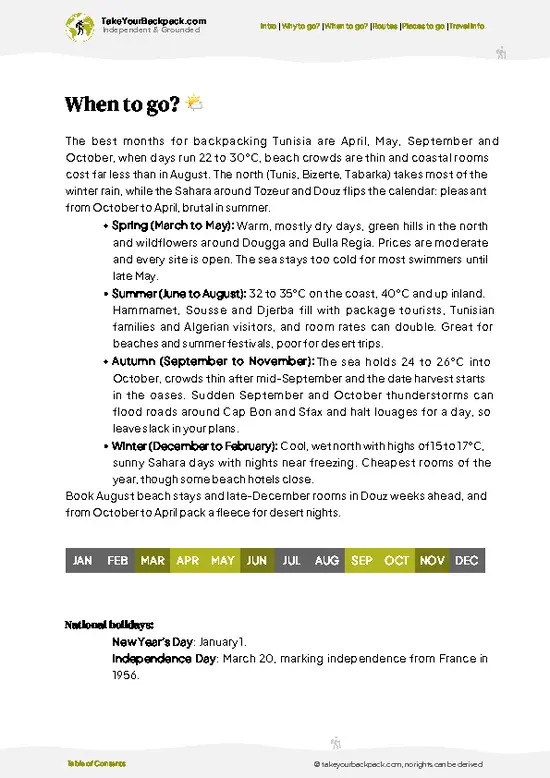
source: climatestotravel.comJANJanuary: good for travelingFEBFebruary: good for travelingMARMarch: excellent for travelingAPRApril: excellent for travelingMAYMay: excellent for travelingJUNJune: good for travelingJULJuly: fair for travelingAUGAugust: fair for travelingSEPSeptember: excellent for travelingOCTOctober: excellent for travelingNOVNovember: highly recommended for travelingDECDecember: good for traveling
when-to-go

✈️ The backpacker research shortcutTunisia Travel Guide

An offline-friendly backpacking guide with optimized travel routes, ranked highlights, transport advice, and the best areas to stay.
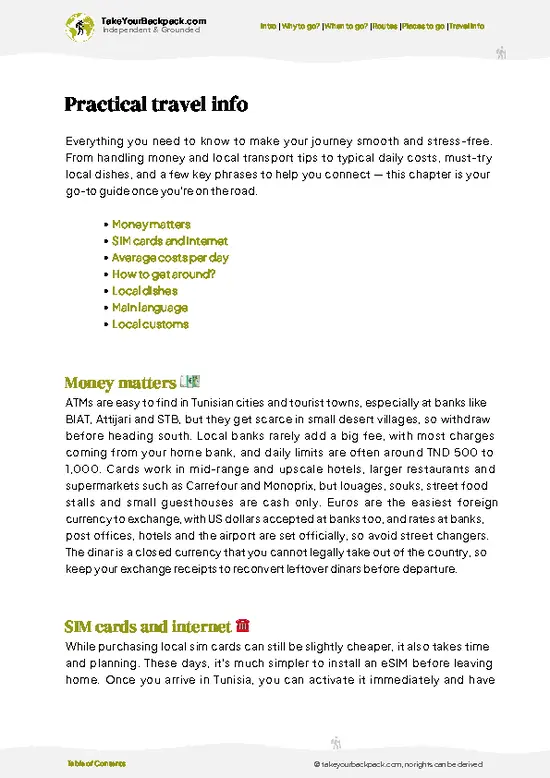
example page 0 from our offline Travel Guide for Tunisia
example page 1 from our offline Travel Guide for Tunisia
example page 2 from our offline Travel Guide for Tunisia
example page 3 from our offline Travel Guide for Tunisia
example page 4 from our offline Travel Guide for Tunisia
example page 5 from our offline Travel Guide for Tunisia
example page 6 from our offline Travel Guide for Tunisia
example page 7 from our offline Travel Guide for Tunisia
The digital guide (372 pages) contains:
97 highlights, ranked by travel appeal
Optimized 5, 10 & 15-day travel routes
Cities, national parks, landmarks, beaches
How to get around
Offline-friendly for travel without Wi-Fi
👉 Click to see all 30+ guide features

📅 Plan smarter in minutes, not weeks
Month by month travel advice
Festivals & national holidays
Budget expectations

🗺️ Go to the right places, skip the overrated ones
Honest pros & cons of destinations
Top hikes, parks & viewpoints
Lesser-known places most travelers miss
Clear “worth it vs skip it” guidance

🛏️ Travel smoothly without rookie mistakes
Best areas to stay
Transport systems explained simply
Common scams & safety advice
SIM cards, money & practical tips

🌍 Understand the country, not just visit it
Culture & traditions
52 Essential phrases & customs
Festivals worth planning around
Traveler-friendly historical context
Insights that make places more meaningful

📱 Built for real travel conditions
Fully downloadable PDF
Works completely offline
Optimized for phone use
Useful in remote areas & buses
Everything in one place
Save weeks of stressful planning
Get instant access to your full guide. 30‑day money-back guarantee.


By proceeding you agree to our terms.
Sent to your inbox immediately after payment • 100% Secure Checkout
Best Backpacking Travel Advisor 2025 tourism awardBest Backpacking
Travel Advisor
2025
What others say about Take Your Backpack Guides:
⭐⭐⭐⭐⭐
Fantastic, amazing amount of information!
⭐⭐⭐⭐⭐
My goodness this is amazing, it's what I've been looking for hats off too you!
⭐⭐⭐⭐⭐
I think this is absolutely BRILLIANT
⭐⭐⭐⭐
Very complete and informative. It's still missing places, but I gotta to commend you
⭐⭐⭐⭐⭐
This is truly amazing, thank you, can't wait to explore it with my kids!
⭐⭐⭐⭐⭐
Awesome resource, thank you!
⭐⭐⭐⭐⭐
This is amazing! Can't wait to explore the ones I haven't seen
⭐⭐⭐⭐
I love this! Well done, great idea.
⭐⭐⭐⭐⭐
Thanks for taking the time to make this gem!
⭐⭐⭐⭐⭐
This might be the best website I've ever seen.
⭐⭐⭐⭐⭐
Congratulations, and thank you so much for your work; it's incredibly valuable.
⭐⭐⭐⭐
In all seriousness I think you did a great job pointing out the important spots
⭐⭐⭐⭐⭐
10/10 very good
⭐⭐⭐⭐⭐
As someone who's only just starting to visit regularly this is awesome, thank you.
⭐⭐⭐⭐
Thank you very much! I'm going to visit my dad, it's going to be very useful!
⭐⭐⭐⭐⭐
This is really cool! We'll be travelling for the first time and this definitely come in handy.
⭐⭐⭐⭐⭐
You are now our minister of culture, congratulations 👨‍💼
⭐⭐⭐⭐⭐
Just wanted to tell you that this is a pearl! Going to follow your recommendations.
⭐⭐⭐⭐⭐
This is so cool. I'll definitely be using the resource for my travels soon.
⭐⭐⭐⭐⭐
This is very impressive! Good work.
⭐⭐⭐⭐⭐
This is an amazing and informative site. Very well done!

🛏️ Where to stay?Choosing the right base

In Tunis, the backpacker sweet spot is the Medina and the adjacent Ville Nouvelle. The Medina is the heartbeat of the city—labyrinthine streets, buzzing markets, and a palpable sense of history. It’s safe enough if you stick to the main arteries and well-trodden paths, and it’s where you’ll find the most authentic social scenes. Hostels here tend to be small but lively, perfect for solo travelers wanting to dive into local culture without the tourist gloss. The trade-off? Narrow alleys and older buildings mean less comfort and modern amenities, but you gain immersion and a social vibe that’s hard … read more 👉
In Tunis, the backpacker sweet spot is the Medina and the adjacent Ville Nouvelle. The Medina is the heartbeat of the city—labyrinthine streets, buzzing markets, and a palpable sense of history. It’s safe enough if you stick to the main arteries and well-trodden paths, and it’s where you’ll find the most authentic social scenes. Hostels here tend to be small but lively, perfect for solo travelers wanting to dive into local culture without the tourist gloss. The trade-off? Narrow alleys and older buildings mean less comfort and modern amenities, but you gain immersion and a social vibe that’s hard to beat.

Just a short walk away, Ville Nouvelle offers a different flavor. It’s more spacious, with wide boulevards and a European flair, making it feel safer and more comfortable for those who want a bit more breathing room. Hostels here are often newer, with better facilities and a more international crowd. The social scene is still vibrant but leans toward cafes and bars rather than street markets. You pay a slight premium in cost and lose some of the raw, chaotic charm of the Medina, but you gain comfort and a more predictable environment.

Other neighborhoods like La Marsa or Carthage are quieter and pricier, better for day trips or splurges but less ideal for the budget-conscious, social backpacker. So, your choice boils down to this: dive deep into the Medina’s authentic chaos or opt for Ville Nouvelle’s balanced comfort and social ease. Both deliver value, just in different currencies—culture versus comfort.

🚌 Getting aroundTransportation options and practical tips

Tunis moves with a pulse that’s part clockwork, part improvisation. The city’s rhythm is a dance between the old medina’s labyrinthine alleys—where time bends to the flow of conversation and commerce—and the more modern districts, where schedules try to impose order but often fall short. Here, your travel choices aren’t just about getting from A to B; they’re about reading the city’s tempo and deciding how much time, money, and comfort you’re willing to trade for the experience. The transit system reflects this duality: some options run like clockwork, others are a bit of a gamble, and all come with their own price tags in patience and pocket change.


  • Walking: The ultimate budget option and the best way to absorb Tunis’s character. The medina and central neighborhoods are compact enough
read more 👉
Tunis moves with a pulse that’s part clockwork, part improvisation. The city’s rhythm is a dance between the old medina’s labyrinthine alleys—where time bends to the flow of conversation and commerce—and the more modern districts, where schedules try to impose order but often fall short. Here, your travel choices aren’t just about getting from A to B; they’re about reading the city’s tempo and deciding how much time, money, and comfort you’re willing to trade for the experience. The transit system reflects this duality: some options run like clockwork, others are a bit of a gamble, and all come with their own price tags in patience and pocket change.


  • Walking: The ultimate budget option and the best way to absorb Tunis’s character. The medina and central neighborhoods are compact enough to explore on foot, saving money and letting you catch spontaneous moments. It’s free, zero emissions, and offers maximum immersion, but expect uneven sidewalks and occasional crowds.


  • Metro (TGM Line): Runs from Tunis city center to the coastal suburb of La Marsa. Trains start around 5:30 AM and run until about 10:30 PM, with intervals of 15-30 minutes. Tickets cost roughly 1.5 TND (about 0.50 USD), making it a fast, reliable, and affordable choice for longer distances. Comfort is basic but consistent, and it’s a solid bet if you want to avoid traffic snarls.


  • Tramway: A modern addition connecting key districts like the city center, suburbs, and the airport. Operating hours are roughly 5:00 AM to midnight, with frequent service every 10-15 minutes. Tickets are around 1.5 TND. It’s more comfortable than buses, with air conditioning and smooth rides, but slightly pricier than minibuses. Ideal if you value speed and a predictable schedule.


  • Louage (Shared Minibuses): The quintessential Tunisian transit experience. Louages run on flexible schedules, departing when full, which means you might wait or jump on immediately. Prices vary but are generally cheap (around 1-3 TND for city routes). They’re fast and cover routes beyond the reach of metro or tram, but comfort is minimal and the ride can be bumpy. Perfect if you want to blend local hustle with budget travel.


  • Standard City Buses: Cover most urban areas with a dense network. They run from early morning until about 9 or 10 PM. Tickets cost about 1 TND. Buses are slower due to frequent stops and traffic, and comfort levels vary widely. They’re a good fallback if you’re not in a rush and want to save money, but expect unpredictability in timing.


Understanding these options is like cracking the city’s code. You can choose to spend more time walking and soaking in the atmosphere, or pay a bit more for speed and comfort. Louages offer a wild card—sometimes you win with a quick ride, sometimes you wait. The metro and tramway are your anchors of reliability, while buses fill in the gaps. Your trip’s flow depends on how you balance these trade-offs—time, money, and comfort—turning transit into a strategic part of your Tunis adventure.

👛 Costs (as of 13 June 2025)Money, prices, and spending tips

Backpacking in Tunis offers a clear trade-off between cost and comfort, with prices that reflect the city’s blend of North African charm and Mediterranean accessibility. Here’s the breakdown to help you navigate your budget like a pro:
  • Dorm Accommodation (High Season): Expect to pay around €12-€18 per night. High season, typically spring and fall, pushes prices up due to increased tourist demand and events.
  • Dorm Accommodation (Off-Season): Prices drop to about €8-€12 per night. Winter months see fewer visitors, so hostels lower rates to fill beds.
  • Meals: Street food and local cafés offer hearty meals for €2-€5. Dining at mid-range restaurants can cost €7-€12 per meal. Tunisian cuisine is flavorful and affordable if you avoid tourist traps.
  • Local Transport: Single bus or tram rides cost
read more 👉
Backpacking in Tunis offers a clear trade-off between cost and comfort, with prices that reflect the city’s blend of North African charm and Mediterranean accessibility. Here’s the breakdown to help you navigate your budget like a pro:
  • Dorm Accommodation (High Season): Expect to pay around €12-€18 per night. High season, typically spring and fall, pushes prices up due to increased tourist demand and events.
  • Dorm Accommodation (Off-Season): Prices drop to about €8-€12 per night. Winter months see fewer visitors, so hostels lower rates to fill beds.
  • Meals: Street food and local cafés offer hearty meals for €2-€5. Dining at mid-range restaurants can cost €7-€12 per meal. Tunisian cuisine is flavorful and affordable if you avoid tourist traps.
  • Local Transport: Single bus or tram rides cost around €0.30-€0.50. These are the backbone of getting around cheaply but can be slow during rush hours.
  • City Transport Pass: A daily pass for unlimited bus and tram rides runs about €1.50-€2. This is a smart buy if you plan multiple trips in a day.
  • Basic Activities/Entry Fees: Museums and historical sites typically charge €2-€5. Some major attractions might be slightly higher but remain budget-friendly compared to Western Europe.
  • Miscellaneous Expenses: Budget around €2-€5 for essentials like bottled water, snacks, or small souvenirs. This category can fluctuate based on your personal habits.

In total, a backpacker in Tunis can expect to spend roughly €20-€35 per day, depending on season and lifestyle choices. This range balances the essentials without sacrificing the experience, letting you stretch your budget while still soaking in the city’s unique vibe.
⚠️ Prices can change and everyone travels differently, so take this as a rough guide. Hope it helps you plan your adventure!

🚌 Day tripsEasy escapes and nearby places

Tunis is a fantastic launchpad for day trips that blend culture, history, and stunning landscapes. Here’s how to make the most of your time without breaking the bank.

Carthage
Just a short train ride from Tunis, Carthage is a must-see for history buffs. You’ll wander through ancient ruins that whisper tales of a once-great civilization. The stunning views of the Mediterranean from the hilltops are a bonus. Expect to spend around 10 TND on the train and a few dinars for entry fees. The best time to visit is spring or fall when the weather is mild. A common mistake? Skipping the nearby Antonine Baths; they’re a highlight that often gets overlooked.
👉 Explore Carthage

Sidi Bou Said
This charming coastal village is a quick hop from Tunis and feels like stepping into a postcard. The blue … read more 👉
Tunis is a fantastic launchpad for day trips that blend culture, history, and stunning landscapes. Here’s how to make the most of your time without breaking the bank.

Carthage
Just a short train ride from Tunis, Carthage is a must-see for history buffs. You’ll wander through ancient ruins that whisper tales of a once-great civilization. The stunning views of the Mediterranean from the hilltops are a bonus. Expect to spend around 10 TND on the train and a few dinars for entry fees. The best time to visit is spring or fall when the weather is mild. A common mistake? Skipping the nearby Antonine Baths; they’re a highlight that often gets overlooked.
👉 Explore Carthage

Sidi Bou Said
This charming coastal village is a quick hop from Tunis and feels like stepping into a postcard. The blue and white buildings, narrow streets, and vibrant bougainvillea create a picturesque setting. Grab a coffee at Café des Nattes and soak in the views. You can easily do this trip for under 20 TND, including transport and snacks. Aim for early morning or late afternoon to avoid the crowds and catch that golden light. Many first-timers miss the chance to explore the local artisan shops; don’t just stick to the main square!
👉 Explore Sidi Bou Said

Kairouan
For a deeper dive into Tunisia’s Islamic heritage, Kairouan is worth the journey. About 2.5 hours from Tunis, this city is home to one of the world’s oldest mosques. The atmosphere is rich with history, and the medina is a labyrinth of local culture. Budget around 30 TND for transport and meals. Spring is ideal, as the city hosts vibrant festivals. A common pitfall? Not dressing appropriately for mosque visits; be sure to cover up to show respect.


Bardo National Museum
If you’re short on time, the Bardo Museum is a gem right in Tunis. It houses one of the largest collections of Roman mosaics in the world. You can easily spend a few hours here, and entry is around 12 TND. The museum is best visited in the morning to avoid the afternoon rush. Many backpackers overlook this spot, thinking it’s just another museum, but it’s a treasure trove of history that’s not to be missed.
👉 Explore Bardo National Museum
Want to know what more Tunisia offers?
The Tunisia Travel Guide describes 97 highlights, from cities to national parks, from beaches to hikes

Get the Travel Guide -

🍲 FoodLocal Flavors for Backpackers

In Tunis, food is a vibrant tapestry of flavors that tells the story of its rich history. You can’t visit without trying couscous, the national dish, often served with tender lamb or fish and a medley of vegetables. The grains are fluffy, soaking up the savory broth, and it’s a communal dish that invites sharing.

Then there’s brik, a crispy pastry filled with egg and herbs, often enjoyed as a snack from street vendors. The crunch and warmth are irresistible, especially when paired with a squeeze of lemon. Don’t skip the harissa, a spicy chili paste that adds a kick to almost anything. It’s a staple condiment that locals slather on everything from sandwiches to grilled meats.

For drinks, seek out mint tea, a sweet, refreshing brew served in ornate glasses. It’s more than just a drink; it’s … read more 👉
In Tunis, food is a vibrant tapestry of flavors that tells the story of its rich history. You can’t visit without trying couscous, the national dish, often served with tender lamb or fish and a medley of vegetables. The grains are fluffy, soaking up the savory broth, and it’s a communal dish that invites sharing.

Then there’s brik, a crispy pastry filled with egg and herbs, often enjoyed as a snack from street vendors. The crunch and warmth are irresistible, especially when paired with a squeeze of lemon. Don’t skip the harissa, a spicy chili paste that adds a kick to almost anything. It’s a staple condiment that locals slather on everything from sandwiches to grilled meats.

For drinks, seek out mint tea, a sweet, refreshing brew served in ornate glasses. It’s more than just a drink; it’s a ritual. You’ll find it in bustling cafés where locals gather to chat and unwind.

Eating customs here lean towards the communal. Meals are often shared, and it’s polite to wait for the eldest to start. Street food is a must—grab a bite at the medina and soak in the lively atmosphere. Embrace the chaos; it’s part of the charm. This isn’t just food; it’s a taste of Tunisian life.

🛡️ SafetyTraveler Safety Guide

Tunis is generally safe for backpackers, but a few practical tips can enhance your experience. The Medina, with its winding alleys and vibrant markets, is a must-see, but keep your wits about you. Crowds can attract pickpockets, so wear a crossbody bag and keep your valuables close.

Solo travelers should be mindful at night. While the city is lively, some areas can feel deserted after dark. Stick to well-lit streets and consider using a taxi for late-night returns.

Scams do exist, often revolving around overly friendly locals offering unsolicited help or guiding you to shops where they earn a commission. Politely decline and trust your instincts.

Annoyances like aggressive street vendors can be common, but a firm “no, thank you” usually suffices. Embrace the local culture, but stay aware … read more 👉
Tunis is generally safe for backpackers, but a few practical tips can enhance your experience. The Medina, with its winding alleys and vibrant markets, is a must-see, but keep your wits about you. Crowds can attract pickpockets, so wear a crossbody bag and keep your valuables close.

Solo travelers should be mindful at night. While the city is lively, some areas can feel deserted after dark. Stick to well-lit streets and consider using a taxi for late-night returns.

Scams do exist, often revolving around overly friendly locals offering unsolicited help or guiding you to shops where they earn a commission. Politely decline and trust your instincts.

Annoyances like aggressive street vendors can be common, but a firm “no, thank you” usually suffices. Embrace the local culture, but stay aware of your surroundings. With a little caution, you’ll navigate Tunis smoothly and enjoy its rich history and warmth.

Other Tunisian cities near Tunis

Explore more nearby:

  • Hammamet—Sandy beaches, medina walls, resort hotels, citrus orchards| 59 km away
  • Bizerte—Mediterranean port, Ottoman forts, fishing harbor, French colonial streets| 59 km away
  • Beja—grain silos, Roman ruins, rolling farmland| 89 km away

💡 Not sure where to go next?
Create a personalized itinerary for Tunisia including Tunis and the places that fit your trip.

Generate my itinerary

👉 Discover all cities

Or checkout all Tunisia has to offer (think cities, towns, villages, national parks, hikes, beaches, festivals)
Country photo of Tunisia

We 💚 feedbackFinal thoughts on visiting Tunis

Tunis has a pulse that’s hard to ignore. The medina buzzes with life—vendors hawking spices and artisans crafting their wares. Don’t miss the Bardo Museum; it’s a treasure trove of mosaics that’ll leave you in awe. But here’s the kicker: be ready for the hustle. Negotiating prices is part of the game, so don’t shy away from a little back-and-forth. Embrace it. You’ll walk away with stories and maybe a unique piece of art. Just keep your wits about you, and enjoy the ride.

✍️ Help improve this page!
The information on this page is based on in-depth research, insights shared by experienced travelers, and feedback from the local travel community in Tunisia. While every effort is made to keep the information accurate and current, conditions can change — so if you spot anything incorrect or outdated, please get in touch.


🙋‍♂️ Give feedback

👋 Meet the founderWho’s Behind Take Your Backpack?

Johan, backpacker and founder of TakeYourBackpackHi, I’m Johan (Netherlands 🇳🇱), the creator of TakeYourBackpack. Over the past decade, I’ve backpacked through 80+ countries across six continents, gaining extensive experience with independent travel, long-term trips, and overland routes.

This site is built on a combination of firsthand travel experience and carefully curated insights from other backpackers. Many guides are based on places I’ve personally visited, while others bring together tips, observations, and practical advice shared by trusted travelers I’ve met along the way.

The goal is to provide realistic, experience-driven guidance — not generic itineraries — so you can explore destinations with better context, clearer expectations, and more confidence.

Get full Tunisia guide •
Instant download • 97 highlights • Full Offline guide