×

Uganda🇺🇬 | townsMorotoKaramoja plains, mountain backdrop, cattle markets | things to do and best time to go

Explore KabaleExplore Kitgum

Backpacking in Moroto
🏆 Top picktown ranked #8
By Johan Kruseman 🇳🇱 | Updated June 12, 2026

Most travelers only realize after arriving: Moroto’s slow pace is its secret weapon. You get time to actually connect—with the Karamojong herders, with the ochre-hued mountains, and with yourself, far from Uganda’s usual tourist conveyor belt. Moroto sits in the northeast, close to the Kenyan border, where the asphalt thins and the savanna takes over. For backpackers, it’s a trade: you sacrifice easy transport and nightlife for raw authenticity. The Karamoja Museum and the old colonial prison are worth a look, but the real highlight is hiking Mount Moroto or joining a village visit—experiences that feel more like invitations than transactions. It’s safe by Ugandan standards, but you’ll need patience for logistics and a willingness to be the only foreigner in the bar. Compared to Gulu or Mbale, Moroto is wilder, less polished, and infinitely more memorable if you lean in.

Discover everything you want to know in the 📖 Uganda Travel Guide.
Safety warning

The current risk level for Uganda is high. Check the advice before going.


Get your Uganda guide
109 ranked highlights, routes & tips, works offline (422 pages)
Loading the map 🌍
CLICK TO FILTER
cities
towns
landmarks
national parks
hikes
beaches
attractions
festivals
regions
SHOW COUNTRY’S BESTSHOW ALL

✨ Why go?
Ranked #8 town in Uganda
The unique appeal for travelers

Moroto is a strategic stop for backpackers weaving through Uganda. It serves as a basecamp for day trips into the surrounding landscapes, making it easy to explore without the hassle of constant packing. The hostels here are budget-friendly and foster a communal vibe, perfect for meeting fellow travelers. When it comes to food, you’ll find local eateries that offer hearty meals at prices that won’t break the bank. The city is walkable, allowing you to soak in the local culture without needing a vehicle. As for nightlife, it’s laid-back but lively enough to unwind after a day of adventure. Plus, Moroto’s easy onward travel options make it a practical choice for those heading deeper into the region. If you’re looking for a place that balances comfort and adventure, Moroto fits the bill.
Want to include Moroto in your Uganda route?
Create a personalized Uganda itinerary that includes Moroto and the places that fit your trip — based on your travel style, budget, and available time. Get your route in seconds.

Generate my trip

💡 HighlightsMust-see experiences and standout moments

  1. Mount Moroto (base and hike from town) — The giant ridge that looms over Moroto and where hikes start right from town; scrambling up gives panoramic views of the Karamoja plains, caves, and pockets of rock art, plus a real sense of why the mountain defines the town’s life and weather.
  2. Moroto Central Market — The noisy, colorful heart of the town where farmers, traders and herders converge; great for fresh produce, roasted maize, local spices, and watching the everyday trade rhythms that shape Moroto.
  3. Weekly livestock market — A live cultural event where Karamojong sell cattle, goats and don’t-miss traditional dress; the bargaining, cattle inspections and movement of herds are an unbeatable way to see local economy and status displayed in person.
  4. Karamojong homestead visits (kraals)
read more 👉
  1. Mount Moroto (base and hike from town) — The giant ridge that looms over Moroto and where hikes start right from town; scrambling up gives panoramic views of the Karamoja plains, caves, and pockets of rock art, plus a real sense of why the mountain defines the town’s life and weather.
  2. Moroto Central Market — The noisy, colorful heart of the town where farmers, traders and herders converge; great for fresh produce, roasted maize, local spices, and watching the everyday trade rhythms that shape Moroto.
  3. Weekly livestock market — A live cultural event where Karamojong sell cattle, goats and don’t-miss traditional dress; the bargaining, cattle inspections and movement of herds are an unbeatable way to see local economy and status displayed in person.
  4. Karamojong homestead visits (kraals) — Guided visits to local kraals on the town’s edge where elders demonstrate song, dance, spear-making, and pastoral life; you leave with a real, hands-on sense of Karamojong social structure and daily routines.
  5. Beadwork stalls and women’s craft cooperatives — Small shops and co-ops in town where women make and sell the region’s intricate bead jewelry and woven items; you can watch artisans work, buy authentic pieces cheaply, and support local livelihoods directly.
Pian Upe Wildlife Reserve, Mount Napak and Kidepo Valley National Park are all visitable day-trip options from Moroto; Pian Upe is my personal favorite.
Spotted a mistake or missing something? Contact us.

🏘️ NeighborhoodsUnderstanding the local layout

Moroto is a vibrant hub in northeastern Uganda, offering a unique blend of culture and adventure for backpackers. Here’s a breakdown of key neighborhoods to help you navigate your stay.

Central Moroto: This area is the heartbeat of the city. It’s bustling with local markets and eateries, making it perfect for budget travelers. Walkability is high, and you can easily hop between shops and street food stalls. Nightlife is low-key, with a few bars where you can unwind after a day of exploration. Ideal for short stays.

Moroto Hill: If you’re after stunning views and a quieter vibe, head here. It’s a bit more upscale, with guesthouses that offer comfort without breaking the bank. The area is less walkable, but the tranquility is worth it. Great for longer stays if you want to escape the hustle. … read more 👉
Moroto is a vibrant hub in northeastern Uganda, offering a unique blend of culture and adventure for backpackers. Here’s a breakdown of key neighborhoods to help you navigate your stay.

Central Moroto: This area is the heartbeat of the city. It’s bustling with local markets and eateries, making it perfect for budget travelers. Walkability is high, and you can easily hop between shops and street food stalls. Nightlife is low-key, with a few bars where you can unwind after a day of exploration. Ideal for short stays.

Moroto Hill: If you’re after stunning views and a quieter vibe, head here. It’s a bit more upscale, with guesthouses that offer comfort without breaking the bank. The area is less walkable, but the tranquility is worth it. Great for longer stays if you want to escape the hustle.

Karamoja Cultural Center: This area is rich in local culture and a must-visit for those interested in the indigenous communities. It’s walkable, with guided tours available. The nightlife is minimal, focusing more on cultural experiences. Perfect for a short, immersive stay.

⌛️ 1 dayA smart one-day plan

Moroto, Uganda, is a vibrant hub nestled in the Karamoja region, known for its rich culture and stunning landscapes. The city pulses with life, offering a unique blend of traditional and modern experiences.

Start your morning at the bustling Moroto Market. The aroma of fresh produce fills the air as you weave through stalls brimming with colorful fruits and local crafts. Engage with vendors; they’re often eager to share stories about their goods. Grab a chapati and some fresh fruit for breakfast—simple, but bursting with flavor.

In the afternoon, head to the nearby Mount Moroto. The hike is manageable and rewards you with panoramic views of the surrounding plains. Along the way, you might encounter local herders and their cattle, giving you a glimpse into the daily life of the Karamojong … read more 👉
Moroto, Uganda, is a vibrant hub nestled in the Karamoja region, known for its rich culture and stunning landscapes. The city pulses with life, offering a unique blend of traditional and modern experiences.

Start your morning at the bustling Moroto Market. The aroma of fresh produce fills the air as you weave through stalls brimming with colorful fruits and local crafts. Engage with vendors; they’re often eager to share stories about their goods. Grab a chapati and some fresh fruit for breakfast—simple, but bursting with flavor.

In the afternoon, head to the nearby Mount Moroto. The hike is manageable and rewards you with panoramic views of the surrounding plains. Along the way, you might encounter local herders and their cattle, giving you a glimpse into the daily life of the Karamojong people. This isn’t just a hike; it’s a cultural immersion.

As the sun sets, return to the city and visit the local pubs in the central area. Try some local brew while chatting with residents. If you’re feeling adventurous, seek out a small, lesser-known eatery in the Nakapelimoru neighborhood, where you can savor traditional dishes like posho and goat stew, often overlooked by tourists.

Moroto isn’t just a stop; it’s an experience that connects you to the heart of Uganda. Embrace the rhythm of the day, and you’ll leave with stories worth sharing.
Turn your Moroto visit into an Uganda adventure
Build a complete Uganda route with Moroto, hidden gems, must-see destinations, and realistic travel times included.

Generate my trip

🌤️ When to go?Choosing the right time of year


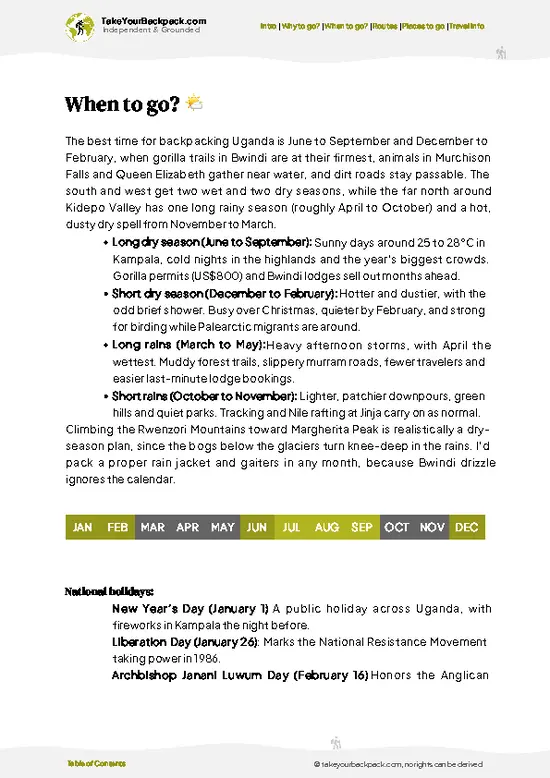
  • Topic: Weather – Moroto’s climate is semi-arid, so the dry season from December to February and June to August offers the most reliable hiking and outdoor conditions. Rainfall peaks between March and May, turning trails muddy and less accessible.

  • Topic: Temperature – Daytime highs hover around 28-32°C (82-90°F) year-round, but nights can drop to a cooler 15-18°C (59-64°F), especially in the dry months, making early mornings and evenings comfortable for trekking.

  • Topic: Daylight Hours – Near the equator, Moroto enjoys roughly 12 hours of daylight year-round, so timing your hikes is more about avoiding midday heat than chasing longer days.

  • Topic: Crowds – Tourist traffic is light year-round, but the dry season sees a slight uptick as regional travelers escape wetter areas. Expect more
read more 👉

  • Topic: Weather – Moroto’s climate is semi-arid, so the dry season from December to February and June to August offers the most reliable hiking and outdoor conditions. Rainfall peaks between March and May, turning trails muddy and less accessible.

  • Topic: Temperature – Daytime highs hover around 28-32°C (82-90°F) year-round, but nights can drop to a cooler 15-18°C (59-64°F), especially in the dry months, making early mornings and evenings comfortable for trekking.

  • Topic: Daylight Hours – Near the equator, Moroto enjoys roughly 12 hours of daylight year-round, so timing your hikes is more about avoiding midday heat than chasing longer days.

  • Topic: Crowds – Tourist traffic is light year-round, but the dry season sees a slight uptick as regional travelers escape wetter areas. Expect more local groups and fewer international backpackers.

  • Topic: Seasonal Activities – Dry months are prime for cultural visits and wildlife spotting, especially in Kidepo Valley nearby. The rainy season limits access but brings lush landscapes and birdwatching opportunities.

  • Topic: Price Fluctuations – Accommodation and transport costs dip during the rainy season due to lower demand, but the trade-off is less predictable conditions and some closed services.


Pro-tip: Aim for the shoulder months of June or September to balance fewer crowds, manageable weather, and better prices—this is when you outsmart the system and get the best of all worlds.


source: climatestotravel.comJANJanuary: excellent for travelingFEBFebruary: excellent for travelingMARMarch: fair for travelingAPRApril: fair for travelingMAYMay: fair for travelingJUNJune: highly recommended for travelingJULJuly: excellent for travelingAUGAugust: excellent for travelingSEPSeptember: highly recommended for travelingOCTOctober: good for travelingNOVNovember: good for travelingDECDecember: excellent for traveling
uganda-city-moroto
© Google |

✈️ The backpacker research shortcutUganda Travel Guide

An offline-friendly backpacking guide with optimized travel routes, ranked highlights, transport advice, and the best areas to stay.
example page 0 from our offline Travel Guide for Uganda
example page 1 from our offline Travel Guide for Uganda
example page 2 from our offline Travel Guide for Uganda
example page 3 from our offline Travel Guide for Uganda
example page 4 from our offline Travel Guide for Uganda
example page 5 from our offline Travel Guide for Uganda
example page 6 from our offline Travel Guide for Uganda
example page 7 from our offline Travel Guide for Uganda
The digital guide (422 pages) contains:
109 highlights, ranked by travel appeal
Optimized 5, 10 & 15-day travel routes
Cities, national parks, landmarks, beaches
How to get around
Offline-friendly for travel without Wi-Fi
👉 Click to see all 30+ guide features

📅 Plan smarter in minutes, not weeks
Month by month travel advice
Festivals & national holidays
Budget expectations

🗺️ Go to the right places, skip the overrated ones
Honest pros & cons of destinations
Top hikes, parks & viewpoints
Lesser-known places most travelers miss
Clear “worth it vs skip it” guidance

🛏️ Travel smoothly without rookie mistakes
Best areas to stay
Transport systems explained simply
Common scams & safety advice
SIM cards, money & practical tips

🌍 Understand the country, not just visit it
Culture & traditions
52 Essential phrases & customs
Festivals worth planning around
Traveler-friendly historical context
Insights that make places more meaningful

📱 Built for real travel conditions
Fully downloadable PDF
Works completely offline
Optimized for phone use
Useful in remote areas & buses
Everything in one place
Save weeks of stressful planning
Get instant access to your full guide. 30‑day money-back guarantee.


By proceeding you agree to our terms.
Sent to your inbox immediately after payment • 100% Secure Checkout
Best Backpacking Travel Advisor 2025 tourism awardBest Backpacking
Travel Advisor
2025
What others say about Take Your Backpack Guides:
⭐⭐⭐⭐⭐
Fantastic, amazing amount of information!
⭐⭐⭐⭐⭐
My goodness this is amazing, it's what I've been looking for hats off too you!
⭐⭐⭐⭐⭐
I think this is absolutely BRILLIANT
⭐⭐⭐⭐
Very complete and informative. It's still missing places, but I gotta to commend you
⭐⭐⭐⭐⭐
This is truly amazing, thank you, can't wait to explore it with my kids!
⭐⭐⭐⭐⭐
Awesome resource, thank you!
⭐⭐⭐⭐⭐
This is amazing! Can't wait to explore the ones I haven't seen
⭐⭐⭐⭐
I love this! Well done, great idea.
⭐⭐⭐⭐⭐
Thanks for taking the time to make this gem!
⭐⭐⭐⭐⭐
This might be the best website I've ever seen.
⭐⭐⭐⭐⭐
Congratulations, and thank you so much for your work; it's incredibly valuable.
⭐⭐⭐⭐
In all seriousness I think you did a great job pointing out the important spots
⭐⭐⭐⭐⭐
10/10 very good
⭐⭐⭐⭐⭐
As someone who's only just starting to visit regularly this is awesome, thank you.
⭐⭐⭐⭐
Thank you very much! I'm going to visit my dad, it's going to be very useful!
⭐⭐⭐⭐⭐
This is really cool! We'll be travelling for the first time and this definitely come in handy.
⭐⭐⭐⭐⭐
You are now our minister of culture, congratulations 👨‍💼
⭐⭐⭐⭐⭐
Just wanted to tell you that this is a pearl! Going to follow your recommendations.
⭐⭐⭐⭐⭐
This is so cool. I'll definitely be using the resource for my travels soon.
⭐⭐⭐⭐⭐
This is very impressive! Good work.
⭐⭐⭐⭐⭐
This is an amazing and informative site. Very well done!

🛏️ Where to stay?Choosing the right base

In Moroto, the best spot for backpackers is the town center area around the main market and trading hub. This zone strikes a smart balance between safety and social energy. It’s where locals and travelers intersect, making it easier to connect without feeling isolated or overwhelmed. You’ll find a handful of budget-friendly hostels here, which means you’re not just paying less—you’re buying into a community vibe that’s rare in more scattered parts of town.

Compared to the outskirts or newer developments, the town center offers a compact, walkable layout. That saves time and money on transport, … read more 👉
In Moroto, the best spot for backpackers is the town center area around the main market and trading hub. This zone strikes a smart balance between safety and social energy. It’s where locals and travelers intersect, making it easier to connect without feeling isolated or overwhelmed. You’ll find a handful of budget-friendly hostels here, which means you’re not just paying less—you’re buying into a community vibe that’s rare in more scattered parts of town.

Compared to the outskirts or newer developments, the town center offers a compact, walkable layout. That saves time and money on transport, which is a big win when every shilling counts. Plus, the street life pulses with everyday Ugandan rhythms—vendors, motorbikes, and casual hangouts—giving you a real feel for Moroto beyond the tourist checklist.

Other neighborhoods might promise quiet or comfort, but they often lack the social buzz and budget options that make backpacking worthwhile. In Moroto, staying central means you’re plugged into the city’s heartbeat, making your trip both efficient and rich with local flavor.

🚌 Getting aroundHow to get from A to B

Moroto moves at its own pace—less a clockwork machine and more a rhythm you learn by feeling the streets. It’s not about catching a train to the minute or a bus that won’t budge without a full load. Instead, it’s a dance between patience and intuition, where schedules are loose suggestions and the real timetable is the chatter of locals and the slow gathering of passengers. This is a place where time bends around the needs of the moment, and your best bet is to read the flow rather than fight it.


  • Walking: The simplest and most reliable way to get around Moroto, especially within the town center. Free, obviously, and perfect for soaking in the local vibe. Distances are manageable, but the midday sun can be brutal—plan your strolls for early morning or late afternoon.


  • Boda Bodas (Motorcycle
read more 👉
Moroto moves at its own pace—less a clockwork machine and more a rhythm you learn by feeling the streets. It’s not about catching a train to the minute or a bus that won’t budge without a full load. Instead, it’s a dance between patience and intuition, where schedules are loose suggestions and the real timetable is the chatter of locals and the slow gathering of passengers. This is a place where time bends around the needs of the moment, and your best bet is to read the flow rather than fight it.


  • Walking: The simplest and most reliable way to get around Moroto, especially within the town center. Free, obviously, and perfect for soaking in the local vibe. Distances are manageable, but the midday sun can be brutal—plan your strolls for early morning or late afternoon.


  • Boda Bodas (Motorcycle Taxis): Available from dawn till dusk, these are the city’s lifeblood for quick hops. Expect to pay around 1,000–2,000 UGX per short trip. They’re fast and flexible but come with a trade-off in comfort and safety—helmets aren’t always guaranteed, and the roads can be rough.


  • Matatus (Shared Minibuses): These operate on semi-fixed routes and leave when full, so timing is unpredictable. Fares hover around 2,000–3,000 UGX. They’re slower than boda bodas but more comfortable and cheaper than private taxis. Ideal if you’re not in a rush and want to blend in with locals.


  • Private Taxis: The priciest option, with fares starting at 10,000 UGX for short trips. They offer door-to-door comfort and air conditioning but are rarely necessary unless you’re hauling heavy gear or traveling at odd hours when other options dry up.


Understanding Moroto’s transit is about balancing your priorities: save money by walking and sharing rides, or spend a bit more for speed and comfort. The city rewards those who play the game smart—knowing when to wait, when to move, and when to simply enjoy the slow pulse of local life.

👛 Costs (as of 16 May 2026)What things cost and how to budget

Backpacking in Moroto, Uganda, demands a clear-eyed view of what your money buys you, so you can play the trade-off game smartly between time, comfort, and cost.
  • Dorm Accommodation (High Season and Off-Season): In high season, expect to pay around $8-$12 per night for a basic dorm bed. Off-season drops that to about $5-$8. These places are simple but clean, often with shared bathrooms and limited amenities, so you’re trading comfort for savings.
  • Meals: Local meals run roughly $2-$4 each. Sticking to street food or small local eateries keeps costs low and flavors authentic. Western-style or tourist-targeted meals can push $5-$8, which might save time but cost more.
  • Local Transport: Getting around town on boda-bodas (motorcycle taxis) or shared minibuses usually costs $0.50-$1 per trip. It’s
read more 👉
Backpacking in Moroto, Uganda, demands a clear-eyed view of what your money buys you, so you can play the trade-off game smartly between time, comfort, and cost.
  • Dorm Accommodation (High Season and Off-Season): In high season, expect to pay around $8-$12 per night for a basic dorm bed. Off-season drops that to about $5-$8. These places are simple but clean, often with shared bathrooms and limited amenities, so you’re trading comfort for savings.
  • Meals: Local meals run roughly $2-$4 each. Sticking to street food or small local eateries keeps costs low and flavors authentic. Western-style or tourist-targeted meals can push $5-$8, which might save time but cost more.
  • Local Transport: Getting around town on boda-bodas (motorcycle taxis) or shared minibuses usually costs $0.50-$1 per trip. It’s cheap but can be slow or uncomfortable, especially during peak hours or bad weather.
  • City Transport Pass: Moroto doesn’t have a formal city transport pass system. Budget travelers rely on single fares for each ride, so factor in multiple small payments rather than one upfront pass.
  • Basic Activities/Entry Fees: Visiting local cultural sites or natural attractions typically costs $3-$7. These fees support community projects or conservation, so they’re worth budgeting for if you want a meaningful experience.
  • Miscellaneous Expenses: Think water, snacks, occasional phone credit, or small tips—budget around $1-$3 daily. These add up quietly but are essential for smooth travel.

All told, a realistic daily budget for backpacking in Moroto ranges from about $12 on a shoestring to $25 if you lean toward a bit more comfort or convenience. Knowing these trade-offs upfront lets you decide where to tighten the belt and where to loosen it, turning your trip into a well-played strategy rather than a guessing game.


source: visituganda.com
⚠️ Prices can change and everyone travels differently, so take this as a rough guide. Hope it helps you plan your adventure!

🚌 Day tripsShort trips worth adding

Moroto, Uganda, is a fantastic base for day trips that blend adventure with cultural immersion. Here are some worthwhile excursions that will enrich your experience.

Mount Moroto
Just a short drive from the city, this hike is a must for those craving stunning views and a bit of a challenge. The trek takes about 4-6 hours round trip, and the panoramic vistas from the summit are worth every bead of sweat. Expect to pay around $5 for a local guide, which is essential for navigating the trails safely. The best time to hike is during the dry season, from December to February, when the paths are less muddy. A common mistake is underestimating the trail’s difficulty; come prepared with plenty of water and snacks.


Kidepo Valley National Park
This gem is about a 3-hour drive from Moroto and … read more 👉
Moroto, Uganda, is a fantastic base for day trips that blend adventure with cultural immersion. Here are some worthwhile excursions that will enrich your experience.

Mount Moroto
Just a short drive from the city, this hike is a must for those craving stunning views and a bit of a challenge. The trek takes about 4-6 hours round trip, and the panoramic vistas from the summit are worth every bead of sweat. Expect to pay around $5 for a local guide, which is essential for navigating the trails safely. The best time to hike is during the dry season, from December to February, when the paths are less muddy. A common mistake is underestimating the trail’s difficulty; come prepared with plenty of water and snacks.


Kidepo Valley National Park
This gem is about a 3-hour drive from Moroto and offers a chance to see wildlife in its natural habitat. You can spot elephants, lions, and various antelope species. A day trip will cost around $50, including park fees and transportation if you share a ride. The dry season, from June to September, is ideal for wildlife viewing. Many first-timers overlook the early morning hours; arriving at dawn maximizes your chances of seeing animals.
👉 Explore Kidepo Valley National Park

Karamoja Cultural Experience
Immerse yourself in the local culture with a visit to a Karamojong village, just a short drive from Moroto. Spend a few hours learning about traditional customs, crafts, and daily life. This experience usually costs around $10, and you can negotiate with local guides. Anytime is good, but mornings are best for engaging with the community. A common pitfall is not being respectful of local customs; always ask before taking photos or participating in activities.
Want to know what more Uganda offers?
The Uganda Travel Guide describes 109 highlights, from cities to national parks, from beaches to hikes

Get the Travel Guide -

🍲 FoodEating & Drinking in Moroto

In Moroto, the food scene is a vibrant tapestry of local flavors and communal experiences. Dive into posho, a staple made from maize flour, often served with a side of sukuma wiki (collard greens) or a hearty bean stew. These dishes are not just meals; they’re a way to connect with the culture.

Street food stalls are your best bet for authentic bites. Grab a role of chapati filled with spiced vegetables or meat, and don’t miss out on the kebab vendors that line the streets, sizzling with flavor.

When it comes to drinks, try the local ajon, a fermented millet brew that’s often shared among friends. It’s customary to drink from a communal pot, fostering a sense of togetherness.

Etiquette is simple: share your food and drinks, and don’t rush the meal. Enjoy the slow pace; it’s all part of the experience.

🛡️ SafetyScams, Hazards, and Annoyances

Moroto is generally safe, but staying aware is key. The market area can get busy; keep your belongings close and be mindful of your surroundings. Solo travelers should avoid wandering alone after dark, especially in less populated areas.

Common scams are rare, but be cautious of overly friendly locals who might offer unsolicited help, as they could expect a tip. Always negotiate prices upfront, whether for transport or goods.

Annoyances like persistent vendors can test your patience; a polite but firm “no” usually does the trick. Carry yourself confidently, and you’ll navigate Moroto smoothly, enjoying its unique vibe without unnecessary stress.

Other Ugandan towns near Moroto

Explore more nearby:

  • Amudat—Pokot culture, borderland, semi-arid plains| 71 km away
  • Nakapiripirit—Mount Kadam, Karimojong culture, remote outpost| 76 km away
  • Kotido—Karamoja plains, cattle markets, pastoralist culture| 81 km away

💡 Not sure where to go next?
Create a personalized itinerary for Uganda including Moroto and the places that fit your trip.

Generate my itinerary

👉 Discover all towns

Or checkout all Uganda has to offer (think cities, towns, villages, national parks, hikes, beaches, festivals)
Country photo of Uganda

We 💚 feedbackKey takeaways before you go

Moroto offers a raw, authentic glimpse into Karamoja culture that you won’t find in guidebooks. The vibrant local markets and warm community spirit are truly special. But be prepared: infrastructure can be rough. Expect delays and bumpy roads. Embrace the unpredictability; it’s part of the adventure. You’ll leave with stories that are worth every moment of discomfort.

✈️ When did I visit Uganda?
In September 2019 I have done a backpacking trip through Uganda. Seeing gorilla’s in the wild from up close was a pure unexpected highlight!

✍️ Help improve this page!
The information on this page is based on my own backpacking experience in Uganda, supplemented with up-to-date research and feedback from other travelers. Travel details can change, so if you notice anything outdated or incomplete, feel free to let me know.


🙋‍♂️ Give feedback

👋 Meet the founderWho’s Behind Take Your Backpack?

Johan, backpacker and founder of TakeYourBackpackHi, I’m Johan (Netherlands 🇳🇱), the creator of TakeYourBackpack. Over the past decade, I’ve backpacked through 80+ countries across six continents, gaining extensive experience with independent travel, long-term trips, and overland routes.

This site is built on a combination of firsthand travel experience and carefully curated insights from other backpackers. Many guides are based on places I’ve personally visited, while others bring together tips, observations, and practical advice shared by trusted travelers I’ve met along the way.

The goal is to provide realistic, experience-driven guidance — not generic itineraries — so you can explore destinations with better context, clearer expectations, and more confidence.

Get full Uganda guide •
Instant download • 109 highlights • Full Offline guide