×

Uganda🇺🇬 | townsNakapiripiritMount Kadam, Karimojong culture, remote outpost | things to do and best time to go

Explore KamwengeExplore Amudat

Backpacking in Nakapiripirit
👌 Worth visitingtown ranked #14
By Johan Kruseman 🇳🇱 | Updated September 3, 2026

You’re standing in the early morning haze, dust clinging to your boots, the scent of woodsmoke and millet porridge drifting from a roadside stall. Nakapiripirit sits in northeastern Uganda, at the foot of Mount Kadam, where the land feels wide and honest. This isn’t a town for nightlife or café-hopping; it’s a launchpad for hiking, market days, and glimpses of Karimojong life. Expect slow evenings, few fellow travelers, and basic but affordable guesthouses. Compared to Moroto, Nakapiripirit is quieter, less polished, and more about the journey than the scene. Buses arrive infrequently, and you’ll walk most places or hire a boda-boda. It’s safe if you keep your wits, but the real draw is the raw, open landscape—earned, not handed to you.

Discover everything you want to know in the 📖 Uganda Travel Guide.
Safety warning

The current risk level for Uganda is high. Check the advice before going.


Get your Uganda guide
106 ranked highlights, routes & tips, works offline (408 pages)
Loading the map 🌍
CLICK TO FILTER
cities
towns
landmarks
national parks
hikes
beaches
attractions
festivals
regions
SHOW COUNTRY’S BESTSHOW ALL

✨ Why go?
Ranked #14 town in Uganda
What makes it a must-see town

Nakapiripirit is a gateway for backpackers seeking adventure in Uganda. Its proximity to stunning hikes in the Mount Moroto area makes it a perfect base for those looking to explore rugged landscapes. The local guesthouses offer a cozy atmosphere, ideal for solo travelers or small groups wanting to connect over shared experiences. Streets are walkable, lined with stalls selling local food that bursts with flavor, making meals a cultural experience. While many pass through quickly, some linger to soak in the friendly vibe and engage with the community. This town suits slow travelers and hikers who appreciate a blend of convenience and authenticity.
Want to include Nakapiripirit in your Uganda route?
Create a personalized Uganda itinerary that includes Nakapiripirit and the places that fit your trip — based on your travel style, budget, and available time. Get your route in seconds.

Generate my trip

💡 HighlightsMust-see experiences and standout moments

Quick note: Nakapiripirit town is pretty small and most of the well-known, visitable highlights (Pian Upe, local kraals, mountain viewpoints) sit just outside the formal town limits. I can still put together a tight list of 10 meaningful, physically visitable spots—but several “town” experiences may be markets, community sites, churches, government/hospital buildings, and local meeting places rather than big-name tourist attractions. Do you want me to:

- stick strictly to places inside the municipal boundaries (I’ll be careful but the list may include more everyday/community spots), or
- include nearby highlights just outside town (within ~30-60 km) to reach a fuller, more interesting set of 10?

Which do you prefer?
Spotted a mistake or missing something? Contact us.

Things to do near Nakapiripirit

Ratings based on Tripadvisor reviews. When you book through this link, you support our work at no extra cost to you.

🏘️ NeighborhoodsWhere things are and how it's laid out

Nakapiripirit is a vibrant hub for backpackers seeking authentic Ugandan experiences. Each area has its own flavor, making it easy to find your niche.

Town Center: The heart of Nakapiripirit, buzzing with local markets and street food. It’s walkable, with affordable accommodations. Perfect for short stays, you’ll find lively nightlife, especially on weekends, but it quiets down by midnight.

Kasese: A bit more laid-back, this neighborhood offers a mix of guesthouses and homestays. It’s ideal for longer stays, with a friendly vibe and easy access to transport for day trips. The atmosphere is relaxed, making it great for unwinding after a day of exploration.

Ngora Road: This area is quieter, perfect for those seeking solitude. It’s less walkable but offers budget-friendly lodgings. Ideal for … read more 👉
Nakapiripirit is a vibrant hub for backpackers seeking authentic Ugandan experiences. Each area has its own flavor, making it easy to find your niche.

Town Center: The heart of Nakapiripirit, buzzing with local markets and street food. It’s walkable, with affordable accommodations. Perfect for short stays, you’ll find lively nightlife, especially on weekends, but it quiets down by midnight.

Kasese: A bit more laid-back, this neighborhood offers a mix of guesthouses and homestays. It’s ideal for longer stays, with a friendly vibe and easy access to transport for day trips. The atmosphere is relaxed, making it great for unwinding after a day of exploration.

Ngora Road: This area is quieter, perfect for those seeking solitude. It’s less walkable but offers budget-friendly lodgings. Ideal for longer stays, you can soak in the local culture without the hustle and bustle.

⌛️ 1 day1-day itinerary for Nakapiripirit

Nakapiripirit, Uganda, is a vibrant town that pulses with the spirit of the Karamoja region. It’s a place where the landscape shifts from rolling hills to the rugged beauty of the surrounding mountains, and the air is thick with the scent of earth after rain.

Start your morning with a stroll through the bustling market. The colors of fresh produce and handmade crafts are a feast for the eyes. Grab a cup of strong Ugandan coffee from a local vendor; the rich aroma will kickstart your day. Afterward, head to the nearby Karamojong Cultural Center. It’s often overlooked by tourists, but the traditional dances and stories shared by the locals offer a genuine glimpse into their way of life.

In the afternoon, take a hike up to the stunning Mount Moroto. The climb is challenging, but the panoramic … read more 👉
Nakapiripirit, Uganda, is a vibrant town that pulses with the spirit of the Karamoja region. It’s a place where the landscape shifts from rolling hills to the rugged beauty of the surrounding mountains, and the air is thick with the scent of earth after rain.

Start your morning with a stroll through the bustling market. The colors of fresh produce and handmade crafts are a feast for the eyes. Grab a cup of strong Ugandan coffee from a local vendor; the rich aroma will kickstart your day. Afterward, head to the nearby Karamojong Cultural Center. It’s often overlooked by tourists, but the traditional dances and stories shared by the locals offer a genuine glimpse into their way of life.

In the afternoon, take a hike up to the stunning Mount Moroto. The climb is challenging, but the panoramic views at the summit are worth every drop of sweat. As the sun begins to set, return to town and enjoy a meal at a local eatery. The taste of matoke and groundnut sauce will linger long after you leave.

As night falls, the town comes alive with laughter and music. Join in the festivities if you can; it’s a perfect way to end your day, surrounded by the warmth of the community.
Turn your Nakapiripirit visit into an Uganda adventure
Build a complete Uganda route with Nakapiripirit, hidden gems, must-see destinations, and realistic travel times included.

Generate my trip

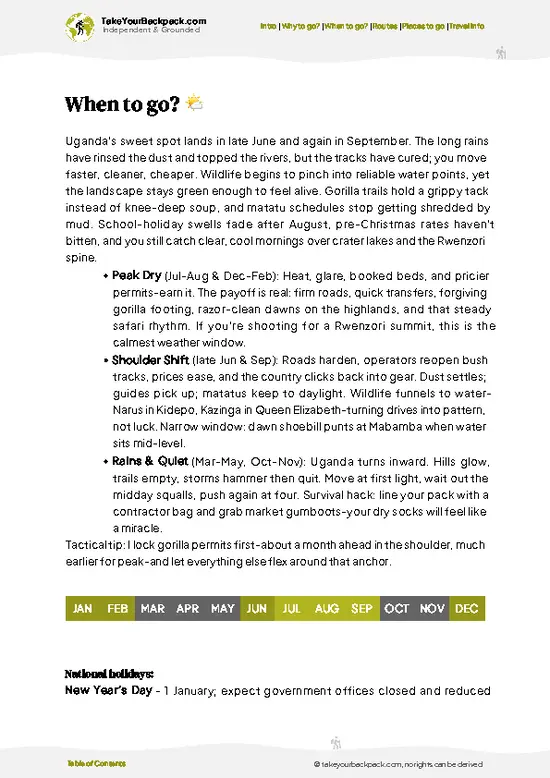
🌤️ When to go?Choosing the right time of year


  • Topic: Weather – Nakapiripirit’s dry season from December to February offers clear skies and dusty trails, perfect for trekking. The wet season (March to May) brings heavy rains, turning paths into slippery mud and limiting access.

  • Topic: Temperature – Daytime highs hover around 28-32°C (82-90°F) in dry months, cooling to 20-25°C (68-77°F) at night. Wet months feel cooler but damper, which can sap your energy faster.

  • Topic: Daylight Hours – Expect roughly 12 hours of daylight year-round, with sunrise around 6:30 AM and sunset near 6:30 PM, giving you a reliable window for hikes and village visits.

  • Topic: Crowds – Nakapiripirit remains off the beaten path, so crowds are minimal year-round. However, local festivals in dry months can bring a lively buzz worth timing your visit for.

read more 👉

  • Topic: Weather – Nakapiripirit’s dry season from December to February offers clear skies and dusty trails, perfect for trekking. The wet season (March to May) brings heavy rains, turning paths into slippery mud and limiting access.

  • Topic: Temperature – Daytime highs hover around 28-32°C (82-90°F) in dry months, cooling to 20-25°C (68-77°F) at night. Wet months feel cooler but damper, which can sap your energy faster.

  • Topic: Daylight Hours – Expect roughly 12 hours of daylight year-round, with sunrise around 6:30 AM and sunset near 6:30 PM, giving you a reliable window for hikes and village visits.

  • Topic: Crowds – Nakapiripirit remains off the beaten path, so crowds are minimal year-round. However, local festivals in dry months can bring a lively buzz worth timing your visit for.

  • Topic: Seasonal Activities – Dry months unlock access to the Pian Upe Wildlife Reserve and cultural tours, while wet months limit outdoor options but reveal lush landscapes and fewer tourists.

  • Topic: Price Fluctuations – Accommodation and guides tend to be pricier in the dry season due to demand, but the trade-off is smoother travel and better conditions for exploring.


Pro-tip: Aim for late January or early February—dusty trails, warm sun, and vibrant local life combine for a backpacking experience that feels earned, not just easy.


source: climatestotravel.comJANJanuary: excellent for travelingFEBFebruary: excellent for travelingMARMarch: fair for travelingAPRApril: fair for travelingMAYMay: fair for travelingJUNJune: good for travelingJULJuly: good for travelingAUGAugust: good for travelingSEPSeptember: highly recommended for travelingOCTOctober: highly recommended for travelingNOVNovember: highly recommended for travelingDECDecember: excellent for traveling
when-to-go

✈️ The backpacker research shortcutUganda Travel Guide

An offline-friendly backpacking guide with optimized travel routes, ranked highlights, transport advice, and the best areas to stay.
example page 0 from our offline Travel Guide for Uganda
example page 1 from our offline Travel Guide for Uganda
example page 2 from our offline Travel Guide for Uganda
example page 3 from our offline Travel Guide for Uganda
example page 4 from our offline Travel Guide for Uganda
example page 5 from our offline Travel Guide for Uganda
example page 6 from our offline Travel Guide for Uganda
example page 7 from our offline Travel Guide for Uganda
The digital guide (408 pages) contains:
106 highlights, ranked by travel appeal
Optimized 5, 10 & 15-day travel routes
Cities, national parks, landmarks, beaches
How to get around
Offline-friendly for travel without Wi-Fi
👉 Click to see all 30+ guide features

📅 Plan smarter in minutes, not weeks
Month by month travel advice
Festivals & national holidays
Budget expectations

🗺️ Go to the right places, skip the overrated ones
Honest pros & cons of destinations
Top hikes, parks & viewpoints
Lesser-known places most travelers miss
Clear “worth it vs skip it” guidance

🛏️ Travel smoothly without rookie mistakes
Best areas to stay
Transport systems explained simply
Common scams & safety advice
SIM cards, money & practical tips

🌍 Understand the country, not just visit it
Culture & traditions
52 Essential phrases & customs
Festivals worth planning around
Traveler-friendly historical context
Insights that make places more meaningful

📱 Built for real travel conditions
Fully downloadable PDF
Works completely offline
Optimized for phone use
Useful in remote areas & buses
Everything in one place
Save weeks of stressful planning
Get instant access to your full guide. 30‑day money-back guarantee.
+ Add another guide for just €6.50

By proceeding you agree to our terms.
Sent to your inbox immediately after payment • 100% Secure Checkout
Best Backpacking Travel Advisor 2025 tourism awardBest Backpacking
Travel Advisor
2025
What others say about Take Your Backpack Guides:
⭐⭐⭐⭐⭐
Fantastic, amazing amount of information!
⭐⭐⭐⭐⭐
My goodness this is amazing, it's what I've been looking for hats off too you!
⭐⭐⭐⭐⭐
I think this is absolutely BRILLIANT
⭐⭐⭐⭐
Very complete and informative. It's still missing places, but I gotta to commend you
⭐⭐⭐⭐⭐
This is truly amazing, thank you, can't wait to explore it with my kids!
⭐⭐⭐⭐⭐
Awesome resource, thank you!
⭐⭐⭐⭐⭐
This is amazing! Can't wait to explore the ones I haven't seen
⭐⭐⭐⭐
I love this! Well done, great idea.
⭐⭐⭐⭐⭐
Thanks for taking the time to make this gem!
⭐⭐⭐⭐⭐
This might be the best website I've ever seen.
⭐⭐⭐⭐⭐
Congratulations, and thank you so much for your work; it's incredibly valuable.
⭐⭐⭐⭐
In all seriousness I think you did a great job pointing out the important spots
⭐⭐⭐⭐⭐
10/10 very good
⭐⭐⭐⭐⭐
As someone who's only just starting to visit regularly this is awesome, thank you.
⭐⭐⭐⭐
Thank you very much! I'm going to visit my dad, it's going to be very useful!
⭐⭐⭐⭐⭐
This is really cool! We'll be travelling for the first time and this definitely come in handy.
⭐⭐⭐⭐⭐
You are now our minister of culture, congratulations 👨‍💼
⭐⭐⭐⭐⭐
Just wanted to tell you that this is a pearl! Going to follow your recommendations.
⭐⭐⭐⭐⭐
This is so cool. I'll definitely be using the resource for my travels soon.
⭐⭐⭐⭐⭐
This is very impressive! Good work.
⭐⭐⭐⭐⭐
This is an amazing and informative site. Very well done!

🛏️ Where to stay?How to pick the right area

Nakapiripirit’s town center is the natural hub for backpackers—compact, lively, and where you’ll find the few budget hostels that exist. Staying here means easy access to local markets, eateries, and the pulse of daily life, which is crucial since transport options are limited and scattered. The vibe is raw and unpolished, with dusty streets and the scent of roasting maize in the air, but it’s safe enough during daylight and early evening. Venturing outside this core risks isolation and fewer social opportunities, so if you want to swap stories with fellow travelers or locals, the town center … read more 👉
Nakapiripirit’s town center is the natural hub for backpackers—compact, lively, and where you’ll find the few budget hostels that exist. Staying here means easy access to local markets, eateries, and the pulse of daily life, which is crucial since transport options are limited and scattered. The vibe is raw and unpolished, with dusty streets and the scent of roasting maize in the air, but it’s safe enough during daylight and early evening. Venturing outside this core risks isolation and fewer social opportunities, so if you want to swap stories with fellow travelers or locals, the town center is your best bet. It’s not about luxury; it’s about connection and authenticity.

🚌 Getting aroundGetting around like a local

Nakapiripirit moves at its own rhythm—less a clock-driven town and more a place where the sun and the land set the pace. The air carries the dry, dusty scent of the Karamoja plains, and the streets hum with a mix of purposeful strides and spontaneous stops. Here, schedules are loose suggestions, and the real flow comes from reading the crowd and catching the right moment to move. It’s not about rushing but syncing with the local tempo, where patience unlocks smoother rides and better connections.


  • Walking: The most reliable way to navigate Nakapiripirit’s compact center, especially early morning or late afternoon when the light softens and the heat eases. Free, flexible, and perfect for soaking in the town’s raw textures.

  • Boda-boda (Motorcycle Taxi): Runs all day, roughly from 6 AM to
read more 👉
Nakapiripirit moves at its own rhythm—less a clock-driven town and more a place where the sun and the land set the pace. The air carries the dry, dusty scent of the Karamoja plains, and the streets hum with a mix of purposeful strides and spontaneous stops. Here, schedules are loose suggestions, and the real flow comes from reading the crowd and catching the right moment to move. It’s not about rushing but syncing with the local tempo, where patience unlocks smoother rides and better connections.


  • Walking: The most reliable way to navigate Nakapiripirit’s compact center, especially early morning or late afternoon when the light softens and the heat eases. Free, flexible, and perfect for soaking in the town’s raw textures.

  • Boda-boda (Motorcycle Taxi): Runs all day, roughly from 6 AM to 7 PM, fares start around 1,000 UGX for short hops. Quick and nimble through dusty lanes but hold tight—the ride is bumpy and the drivers know every shortcut.

  • Matatu (Shared Minibus): Main option for longer trips to nearby towns like Moroto or Soroti. Leaves when full, usually between 7 AM and 5 PM, costing about 5,000–10,000 UGX. Expect a slow, crowded ride with frequent stops, but it’s the budget traveler’s lifeline.

  • Private Taxi: Less common and pricier, around 30,000 UGX for a short trip. Best if you’re in a group or need to beat the heat midday. Offers more comfort but less local flavor.

👛 Costs (as of 3 September 2026)Travel costs and budget guide for Nakapiripirit

Backpacking in Nakapiripirit, Uganda, is a raw, grounded experience where your budget stretches further than in the big cities, but the trade-off is simplicity and a slower pace. Here’s what you can expect to spend day-to-day.
  • Dorm Accommodation: Expect to pay around $5 to $10 per night for a basic dorm bed. Lodgings here are modest—think simple rooms with a fan or a mosquito net, sometimes shared bathrooms. It’s not about luxury but about resting your head after a day in the dusty, sun-warmed streets.
  • Meals: Local eateries serve up hearty, filling meals for $2 to $4. Staples include posho (cornmeal), beans, and occasionally grilled meat or fish. Street food is cheaper but less predictable in quality. Fresh fruit and roadside snacks add variety without breaking the bank.
  • Local Transport:
read more 👉
Backpacking in Nakapiripirit, Uganda, is a raw, grounded experience where your budget stretches further than in the big cities, but the trade-off is simplicity and a slower pace. Here’s what you can expect to spend day-to-day.
  • Dorm Accommodation: Expect to pay around $5 to $10 per night for a basic dorm bed. Lodgings here are modest—think simple rooms with a fan or a mosquito net, sometimes shared bathrooms. It’s not about luxury but about resting your head after a day in the dusty, sun-warmed streets.
  • Meals: Local eateries serve up hearty, filling meals for $2 to $4. Staples include posho (cornmeal), beans, and occasionally grilled meat or fish. Street food is cheaper but less predictable in quality. Fresh fruit and roadside snacks add variety without breaking the bank.
  • Local Transport: Boda-bodas (motorcycle taxis) are the go-to for getting around town and nearby villages. A typical short ride costs about $0.50 to $1. For longer trips, shared minibuses run around $1 to $3 depending on distance. Walking is often the best way to soak in the atmosphere and save cash.
  • Basic Activities/Entry Fees: Nakapiripirit is more about the landscape and local culture than formal tourist sites. Entry fees to community-run cultural centers or natural spots hover around $2 to $5. Hiring a local guide for a day trek or cultural tour might cost $10 to $15, which supports the community directly.
  • Miscellaneous Expenses: Budget $1 to $3 for essentials like bottled water, snacks, or phone credit. Internet access is patchy and often requires buying data bundles from local providers, which are affordable but can add up if you rely heavily on connectivity.

All told, you’re looking at roughly $10 to $25 per day to cover the basics in Nakapiripirit. It’s a place where the modest budget matches the straightforward lifestyle, and every dollar spent feels like a direct investment in the local rhythm. The dust on your boots and the warmth of the sun make the simplicity feel earned, not lacking.


source: visituganda.com
⚠️ Prices can change and everyone travels differently, so take this as a rough guide. Hope it helps you plan your adventure!

🚌 Day tripsExploring the surroundings

Nakapiripirit is a backpacker’s dream base, offering easy access to stunning landscapes and rich cultural experiences. Here are some day trips that truly deliver.

Mount Moroto Hike
This trek is a must for those craving a challenge. The ascent takes about 4-5 hours, and the views from the summit are worth every drop of sweat. Expect to pay around $10 for a guide, which is essential for navigating the trails. The best time to go is during the dry season, from December to February. A common mistake? Underestimating the chill at the top—bring a light jacket.


Kidepo Valley National Park
A bit of a trek at about 2.5 hours by matatu, but the wildlife is spectacular. You’ll spot elephants, giraffes, and maybe even a lion if you’re lucky. Entry fees are around $40, but the experience is priceless. … read more 👉
Nakapiripirit is a backpacker’s dream base, offering easy access to stunning landscapes and rich cultural experiences. Here are some day trips that truly deliver.

Mount Moroto Hike
This trek is a must for those craving a challenge. The ascent takes about 4-5 hours, and the views from the summit are worth every drop of sweat. Expect to pay around $10 for a guide, which is essential for navigating the trails. The best time to go is during the dry season, from December to February. A common mistake? Underestimating the chill at the top—bring a light jacket.


Kidepo Valley National Park
A bit of a trek at about 2.5 hours by matatu, but the wildlife is spectacular. You’ll spot elephants, giraffes, and maybe even a lion if you’re lucky. Entry fees are around $40, but the experience is priceless. Go early to catch the sunrise over the savannah. Many first-timers miss the chance to hire a local guide, which enhances the experience tenfold.
👉 Explore Kidepo Valley National Park

Karamoja Cultural Experience
Just a short drive away, this trip immerses you in the vibrant culture of the Karamojong people. Spend a few hours learning traditional crafts and music for about $5. The best time to visit is during local festivals, which are often in the dry season. Don’t skip the chance to try local dishes—many overlook this culinary adventure.
Want to know what more Uganda offers?
The Uganda Travel Guide describes 106 highlights, from cities to national parks, from beaches to hikes

Get the Travel Guide -

🛡️ SafetyScams, Hazards, and Annoyances

Nakapiripirit is generally safe, but awareness is key. Stick to well-lit areas after dark; the streets can feel deserted, and a little caution goes a long way. Solo travelers should blend in—avoid flashy gear and keep your valuables close.

Watch for common scams, like overly eager guides offering unsolicited help. Politely decline and walk away if it feels off. The local vibe is friendly, but a firm stance helps maintain boundaries. Embrace the atmosphere, but stay grounded; it’s all part of the journey.

FAQFrequently asked questions about Nakapiripirit

Nakapiripirit is worth visiting for those interested in experiencing the culture of the Karamojong people and the unique semi-arid landscape. It is not just a stopover, as the town offers local markets and cultural insights that can be missed if rushed. Visitors often explore the nearby Pian Upe Wildlife Reserve, which adds to the appeal.
Two to three days are sufficient to explore Nakapiripirit and its surroundings, including the local markets and Pian Upe Wildlife Reserve. This allows time to engage with the local culture and enjoy some wildlife viewing without feeling rushed.
Yes, Nakapiripirit can be visited as a day trip from Moroto, which is about 70 kilometers away. However, the journey takes around 2 to 3 hours each way on rough roads, so a day trip can be long and tiring, making an overnight stay more practical for a fuller experience.
⚠️ Things can change over time, so always validate details locally before you go.

Other Ugandan towns near Nakapiripirit

Explore more nearby:

  • Amudat—Pokot culture, borderland, semi-arid plains| 27 km away
  • Kapchorwa—Sipi Falls, Sebei culture, mountain views| 59 km away
  • Moroto—Karamoja plains, mountain backdrop, cattle markets| 76 km away

💡 Not sure where to go next?
Create a personalized itinerary for Uganda including Nakapiripirit and the places that fit your trip.

Generate my itinerary

👉 Discover all towns

Or checkout all Uganda has to offer (think cities, towns, villages, national parks, hikes, beaches, festivals)
Country photo of Uganda

We 💚 feedbackParting advice and final tips

Nakapiripirit pulses with the warmth of its people and the thrill of the surrounding mountains. But be ready for the heat; it can be relentless. Embrace the sweat, and you’ll uncover a vibrant culture that makes every drop worth it.

✈️ When did I visit Uganda?
In September 2019 I have done a backpacking trip through Uganda. Seeing gorilla’s in the wild from up close was a pure unexpected highlight!

✍️ Help improve this page!
The information on this page is based on my own backpacking experience in Uganda, supplemented with up-to-date research and feedback from other travelers. Travel details can change, so if you notice anything outdated or incomplete, feel free to let me know.


🙋‍♂️ Give feedback

👋 Meet the founderWho’s Behind Take Your Backpack?

Johan, backpacker and founder of TakeYourBackpackHi, I’m Johan (Netherlands 🇳🇱), the creator of TakeYourBackpack. Over the past decade, I’ve backpacked through 80+ countries across six continents, gaining extensive experience with independent travel, long-term trips, and overland routes.

This site is built on a combination of firsthand travel experience and carefully curated insights from other backpackers. Many guides are based on places I’ve personally visited, while others bring together tips, observations, and practical advice shared by trusted travelers I’ve met along the way.

The goal is to provide realistic, experience-driven guidance — not generic itineraries — so you can explore destinations with better context, clearer expectations, and more confidence.

Get full Uganda guide •
Instant download • 106 highlights • Full Offline guide