v2.webp)
The Basilica of the Uganda Martyrs
Let’s cut through the Instagram filters: the Basilica is not just a photo op with a dramatic roofline. This is the spiritual heart of Namugongo, built on the very ground where St. Charles Lwanga and his companions were burned alive for their faith in 1886. The architecture is bold—think 22 copper pillars, each representing a martyr, and a roof that looks like a giant African hut, not a European transplant. The energy inside is thick with reverence, but also with the hum of real people—pilgrims, choirs, and families, not just tour groups. If you want to feel the weight of history and the pulse of modern Ugandan Catholicism in one place, this is it.
The Martyrs’ Lake
Forget the manicured lawns and fountains you might expect from a European shrine. The Martyrs’ … read more 👉
Let’s cut through the Instagram filters: the Basilica is not just a photo op with a dramatic roofline. This is the spiritual heart of Namugongo, built on the very ground where St. Charles Lwanga and his companions were burned alive for their faith in 1886. The architecture is bold—think 22 copper pillars, each representing a martyr, and a roof that looks like a giant African hut, not a European transplant. The energy inside is thick with reverence, but also with the hum of real people—pilgrims, choirs, and families, not just tour groups. If you want to feel the weight of history and the pulse of modern Ugandan Catholicism in one place, this is it.
The Martyrs’ Lake
Forget the manicured lawns and fountains you might expect from a European shrine. The Martyrs’ … read more 👉
The Basilica of the Uganda Martyrs
Let’s cut through the Instagram filters: the Basilica is not just a photo op with a dramatic roofline. This is the spiritual heart of Namugongo, built on the very ground where St. Charles Lwanga and his companions were burned alive for their faith in 1886. The architecture is bold—think 22 copper pillars, each representing a martyr, and a roof that looks like a giant African hut, not a European transplant. The energy inside is thick with reverence, but also with the hum of real people—pilgrims, choirs, and families, not just tour groups. If you want to feel the weight of history and the pulse of modern Ugandan Catholicism in one place, this is it.
The Martyrs’ Lake
Forget the manicured lawns and fountains you might expect from a European shrine. The Martyrs’ Lake is raw, muddy, and ringed with reeds. Pilgrims wade in, some barefoot, scooping water they believe is holy. It’s not about aesthetics; it’s about faith in motion. The lake is where the martyrs’ executioners washed their hands—literally. That’s the kind of unvarnished history you can’t fake for social media. If you want to see devotion stripped of spectacle, stand here at sunrise.
The Outdoor Mass Grounds
Every June 3rd, this place explodes. Over a million people—yes, a million—pack the open grounds for Martyrs’ Day. It’s not a quiet, meditative experience; it’s a full-on festival of faith, with singing, drumming, and a sea of color. Even if you’re not religious, the sheer scale and energy are electric. The logistics are wild (think: portable toilets, food stalls, and a crush of humanity), but the sense of unity is real. If you want to see what faith looks like when it’s lived out loud, this is the day to come.
The Martyrs’ Museum
This isn’t your average glass-case snooze-fest. The museum is compact but packs a punch: relics, original execution tools, and personal effects of the martyrs. The displays are blunt, sometimes graphic, and unapologetically local—no sugarcoating, no soft-focus lighting. You’ll leave with a visceral sense of what these young men endured, and why their story still matters. My personal favorite—because it’s the rawest, most unfiltered window into the past.
The Pilgrims’ Walk
This is not a tourist trail; it’s a living ritual. Every year, thousands of Ugandans walk for days—sometimes weeks—to reach Namugongo. You’ll see them on the roads, singing, praying, carrying banners. If you catch them arriving, the emotion is contagious. This is faith with blisters, not hashtags. It’s a reminder that the real magic here isn’t in the buildings, but in the people who come, year after year, to honor a story that changed a nation.
Let’s cut through the Instagram filters: the Basilica is not just a photo op with a dramatic roofline. This is the spiritual heart of Namugongo, built on the very ground where St. Charles Lwanga and his companions were burned alive for their faith in 1886. The architecture is bold—think 22 copper pillars, each representing a martyr, and a roof that looks like a giant African hut, not a European transplant. The energy inside is thick with reverence, but also with the hum of real people—pilgrims, choirs, and families, not just tour groups. If you want to feel the weight of history and the pulse of modern Ugandan Catholicism in one place, this is it.
The Martyrs’ Lake
Forget the manicured lawns and fountains you might expect from a European shrine. The Martyrs’ Lake is raw, muddy, and ringed with reeds. Pilgrims wade in, some barefoot, scooping water they believe is holy. It’s not about aesthetics; it’s about faith in motion. The lake is where the martyrs’ executioners washed their hands—literally. That’s the kind of unvarnished history you can’t fake for social media. If you want to see devotion stripped of spectacle, stand here at sunrise.
The Outdoor Mass Grounds
Every June 3rd, this place explodes. Over a million people—yes, a million—pack the open grounds for Martyrs’ Day. It’s not a quiet, meditative experience; it’s a full-on festival of faith, with singing, drumming, and a sea of color. Even if you’re not religious, the sheer scale and energy are electric. The logistics are wild (think: portable toilets, food stalls, and a crush of humanity), but the sense of unity is real. If you want to see what faith looks like when it’s lived out loud, this is the day to come.
The Martyrs’ Museum
This isn’t your average glass-case snooze-fest. The museum is compact but packs a punch: relics, original execution tools, and personal effects of the martyrs. The displays are blunt, sometimes graphic, and unapologetically local—no sugarcoating, no soft-focus lighting. You’ll leave with a visceral sense of what these young men endured, and why their story still matters. My personal favorite—because it’s the rawest, most unfiltered window into the past.
The Pilgrims’ Walk
This is not a tourist trail; it’s a living ritual. Every year, thousands of Ugandans walk for days—sometimes weeks—to reach Namugongo. You’ll see them on the roads, singing, praying, carrying banners. If you catch them arriving, the emotion is contagious. This is faith with blisters, not hashtags. It’s a reminder that the real magic here isn’t in the buildings, but in the people who come, year after year, to honor a story that changed a nation.
Spotted a mistake or missing something? Contact us.

Jinja day tour exploring the source of River Nile

Private 3 Day Gorilla Trekking Safari in Uganda

Unforgettable 3 days Murchison falls.

8-Day Classic Uganda Primates & Wildlife Tour

2 Days Family Safari to Murchison Falls Park Uganda

Affordable 2 days Murchison Falls and Wildlife Game Viewing

5 Days Uganda Gorilla, Chimpanzee and Wildlife Safari

5 days best wildlife experience in Uganda

Cooking Class for Typical Ugandan Food in Kampala




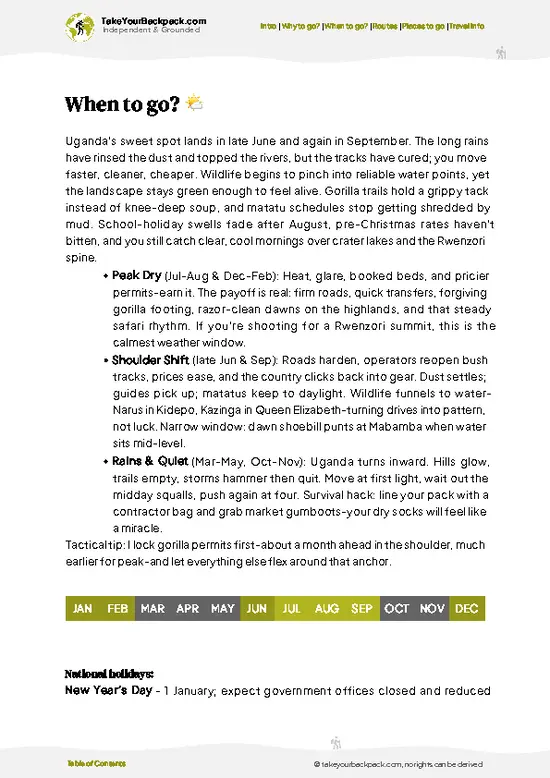



 Best Backpacking
.jpg) Hi, I’m Johan (Netherlands 🇳🇱), the creator of TakeYourBackpack. Over the past decade, I’ve backpacked through 80+ countries across six continents, gaining extensive experience with independent travel, long-term trips, and overland routes.
Hi, I’m Johan (Netherlands 🇳🇱), the creator of TakeYourBackpack. Over the past decade, I’ve backpacked through 80+ countries across six continents, gaining extensive experience with independent travel, long-term trips, and overland routes.