×

Uganda🇺🇬 | attractionsBatwa Cultural Experienceforest communities, indigenous heritage, traditional dwellings | things to do and best time to go

Explore Ndere Cultural CentreExplore Igongo Cultural Centre & Museum

Backpacking in Batwa Cultural Experience
👍 Recommendedattraction ranked #9
By Johan Kruseman 🇳🇱 | Updated May 26, 2026

Here’s what nobody tells you until you’re already there: the Batwa Cultural Experience is one of the rare Ugandan attractions where you can actually slow down, talk, and listen—without being herded through a photo-op parade. You’ll find it on the forested fringes of Bwindi Impenetrable National Park, southwest Uganda, where the Batwa people lived long before gorilla permits cost more than your flight. Let’s be blunt: this isn’t the glossy, choreographed “tribal dance” you might fear. It’s raw, sometimes awkward, and occasionally uncomfortable—because it’s real. You’ll hear stories of eviction and resilience, not just flute music. The wow-factor isn’t in costumes or acrobatics, but in the Batwa’s living memory of the forest and their unfiltered candor. Yes, it’s less adrenaline than tracking gorillas, and yes, you’ll pay a fee that feels steep for a “cultural tour.” But you won’t be elbowing through crowds, and the money actually supports the community. Compared to Uganda’s blockbuster wildlife draws, this is the deep cut—the track you brag about discovering before it went mainstream.

Discover everything you want to know in the 📖 Uganda Travel Guide.
Safety warning

The current risk level for Uganda is high. Check the advice before going.


Get your Uganda guide
109 ranked highlights, routes & tips, works offline (422 pages)
Loading the map 🌍
CLICK TO FILTER
cities
towns
landmarks
national parks
hikes
beaches
attractions
festivals
regions
SHOW COUNTRY’S BESTSHOW ALL

✨ Why go?
Ranked #9 attraction in Uganda
What sets this place apart

The Batwa Cultural Experience in Uganda isn’t your typical tourist stop where you snap a quick selfie and move on. Yes, it’s popular—crowded at times, and not exactly cheap—but that’s because it’s a rare window into a world most travelers never get to see. The Batwa people, often called pygmies, are one of Africa’s oldest indigenous groups, with a history stretching back thousands of years. Their survival story, shaped by displacement from their ancestral forest homes, adds a raw, emotional layer to the visit that no Instagram filter can capture.

This experience isn’t about polished performances; it’s about real, living culture. You’ll witness traditional songs, dances, and rituals that have been passed down through generations, often performed with a rawness that hits harder than any staged … read more 👉
The Batwa Cultural Experience in Uganda isn’t your typical tourist stop where you snap a quick selfie and move on. Yes, it’s popular—crowded at times, and not exactly cheap—but that’s because it’s a rare window into a world most travelers never get to see. The Batwa people, often called pygmies, are one of Africa’s oldest indigenous groups, with a history stretching back thousands of years. Their survival story, shaped by displacement from their ancestral forest homes, adds a raw, emotional layer to the visit that no Instagram filter can capture.

This experience isn’t about polished performances; it’s about real, living culture. You’ll witness traditional songs, dances, and rituals that have been passed down through generations, often performed with a rawness that hits harder than any staged show. The effort to get here—sometimes a bumpy ride through Uganda’s lush but rugged terrain—pays off with a deep connection to a culture that’s fighting to keep its identity alive amid modern pressures.

For backpackers threading through Uganda, the Batwa Cultural Experience is a milestone. It’s a moment to pause, reflect, and understand the complex layers of history and resilience that define this country beyond the usual safari clichés. It’s not easy or cheap, but it’s worth every bit of sweat and shilling.
Want to include Batwa Cultural Experience in your Uganda route?
Create a personalized Uganda itinerary that includes Batwa Cultural Experience and the places that fit your trip — based on your travel style, budget, and available time. Get your route in seconds.

Generate my trip

💡 HighlightsWhat this place is best known for

1. Traditional Batwa Storytelling by the Fire
Forget the staged “cultural performances” you’ve seen elsewhere. When the Batwa elders gather around a fire and launch into their oral histories, you’re not just a spectator—you’re a guest in a living archive. The stories are raw, sometimes funny, sometimes tragic, and always delivered with a rhythm that pulls you in. You’ll hear about the days before the forest was a park, about spirits, survival, and the heartbreak of eviction. This isn’t sanitized folklore; it’s the real, unfiltered voice of a people who once called the Bwindi Impenetrable Forest home. If you want to understand the Batwa, this is where you start.


2. Forest Walk with Batwa Guides
This isn’t a nature walk with a guide reciting Latin names. The Batwa know these forests like you … read more 👉
1. Traditional Batwa Storytelling by the Fire
Forget the staged “cultural performances” you’ve seen elsewhere. When the Batwa elders gather around a fire and launch into their oral histories, you’re not just a spectator—you’re a guest in a living archive. The stories are raw, sometimes funny, sometimes tragic, and always delivered with a rhythm that pulls you in. You’ll hear about the days before the forest was a park, about spirits, survival, and the heartbreak of eviction. This isn’t sanitized folklore; it’s the real, unfiltered voice of a people who once called the Bwindi Impenetrable Forest home. If you want to understand the Batwa, this is where you start.


2. Forest Walk with Batwa Guides
This isn’t a nature walk with a guide reciting Latin names. The Batwa know these forests like you know your own kitchen. You’ll see how they used to hunt, gather honey, and find medicine—skills that kept them alive for centuries. Watching a Batwa guide coax fire from sticks or point out edible roots isn’t just impressive; it’s a reminder of how much knowledge gets lost when cultures are pushed aside. The walk is hands-on, muddy, and sometimes a little wild. If you’re expecting a sanitized eco-tour, adjust your expectations. This is the forest on Batwa terms.


3. Traditional Music and Dance
Here’s the deal: you will see drums, you will hear singing, and you will probably be invited to join in. The Batwa don’t perform for applause—they perform because music is woven into every part of their lives. The rhythms are infectious, the dances are athletic, and the energy is contagious. It’s not about perfect choreography; it’s about joy, resilience, and community. If you’re the type who likes to sit back and watch, you’ll be outnumbered. Participation is half the fun.


4. Demonstration of Ancient Hunting Techniques
This is not a touristy archery lesson. The Batwa demonstrate how they used to hunt with bows, arrows, and ingenious traps—methods honed over generations. You’ll see how every tool has a story, every technique a purpose. There’s a bittersweet edge here: these skills are fading, and the Batwa know it. But for a few hours, you get a glimpse of a world where survival depended on stealth, patience, and deep respect for the forest.


5. Batwa Herbal Medicine Workshop
If you’ve ever rolled your eyes at “wellness tourism,” prepare to have your skepticism challenged. The Batwa’s knowledge of medicinal plants is encyclopedic, and they’re not shy about sharing it. You’ll learn which leaves soothe fevers, which roots treat infections, and why certain trees are sacred. This isn’t a spa day—it’s a crash course in survival, taught by people who lived it. My personal favorite, because it’s the closest you’ll get to seeing the forest through Batwa eyes: practical, humble, and quietly astonishing.
Spotted a mistake or missing something? Contact us.

Things to do near Batwa Cultural Experience

Ratings based on Tripadvisor reviews. When you book through this link, you support our work at no extra cost to you.

🌤️ When to go?When to go for the best experience


  • Weather: The Batwa Cultural Experience is best tackled during Uganda’s dry seasons, mainly from June to August and December to February. Rain can turn trails into mud pits and make the whole experience less enjoyable, so avoid the heavy rains of March to May and September to November.

  • Temperature: Expect daytime highs around 24-27°C (75-81°F) during the dry months, which is comfortable for trekking and outdoor activities. Nights can dip to 15°C (59°F), so pack a light jacket. The rainy season brings cooler, damp conditions that can sap your energy.

  • Daylight Hours: Uganda sits near the equator, so daylight is steady year-round—roughly 12 hours a day. This means you won’t lose precious daylight no matter when you visit, but early starts are still smart to maximize your time with the Batwa
read more 👉

  • Weather: The Batwa Cultural Experience is best tackled during Uganda’s dry seasons, mainly from June to August and December to February. Rain can turn trails into mud pits and make the whole experience less enjoyable, so avoid the heavy rains of March to May and September to November.

  • Temperature: Expect daytime highs around 24-27°C (75-81°F) during the dry months, which is comfortable for trekking and outdoor activities. Nights can dip to 15°C (59°F), so pack a light jacket. The rainy season brings cooler, damp conditions that can sap your energy.

  • Daylight Hours: Uganda sits near the equator, so daylight is steady year-round—roughly 12 hours a day. This means you won’t lose precious daylight no matter when you visit, but early starts are still smart to maximize your time with the Batwa community.

  • Crowds: The Batwa experience isn’t a tourist magnet like the gorilla treks, but expect a slight uptick in visitors during the dry season when most travelers hit Uganda. Visiting in shoulder months like February or late August can offer a quieter, more personal encounter.

  • Seasonal Activities: Dry months enhance access to forest trails and cultural performances. Some Batwa ceremonies and storytelling sessions align with traditional agricultural cycles, so timing your visit around harvest periods (July-August) can deepen your cultural insight.

  • Price Fluctuations: Prices for guides and community fees tend to rise during peak dry seasons due to higher demand. Visiting just before or after these peaks can save you some cash without sacrificing the quality of the experience.


Pro-tip: Aim for late July or early August—dry trails, active cultural events, and fewer crowds make it the sweet spot for truly connecting with the Batwa beyond the usual tourist snapshot.


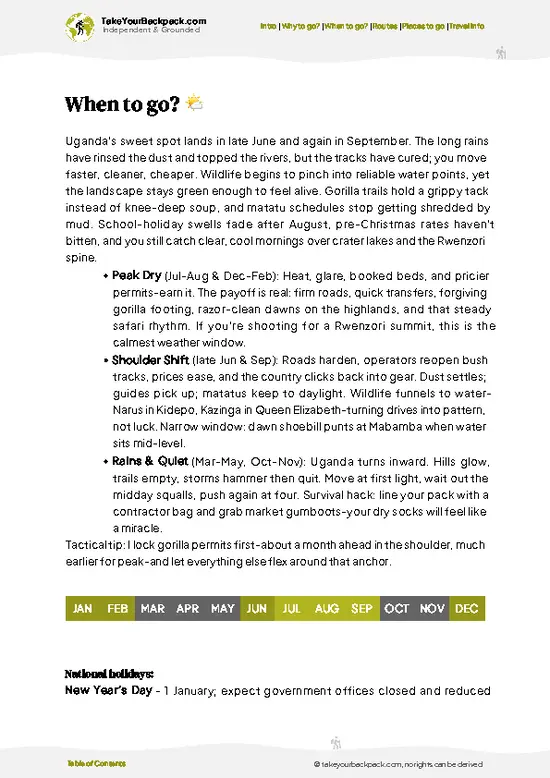
source: climatestotravel.comJANJanuary: excellent for travelingFEBFebruary: highly recommended for travelingMARMarch: fair for travelingAPRApril: below average for travelingMAYMay: fair for travelingJUNJune: excellent for travelingJULJuly: excellent for travelingAUGAugust: excellent for travelingSEPSeptember: fair for travelingOCTOctober: below average for travelingNOVNovember: fair for travelingDECDecember: excellent for traveling
when-to-go

✈️ The backpacker research shortcutUganda Travel Guide

An offline-friendly backpacking guide with optimized travel routes, ranked highlights, transport advice, and the best areas to stay.
example page 0 from our offline Travel Guide for Uganda
example page 1 from our offline Travel Guide for Uganda
example page 2 from our offline Travel Guide for Uganda
example page 3 from our offline Travel Guide for Uganda
example page 4 from our offline Travel Guide for Uganda
example page 5 from our offline Travel Guide for Uganda
example page 6 from our offline Travel Guide for Uganda
example page 7 from our offline Travel Guide for Uganda
The digital guide (422 pages) contains:
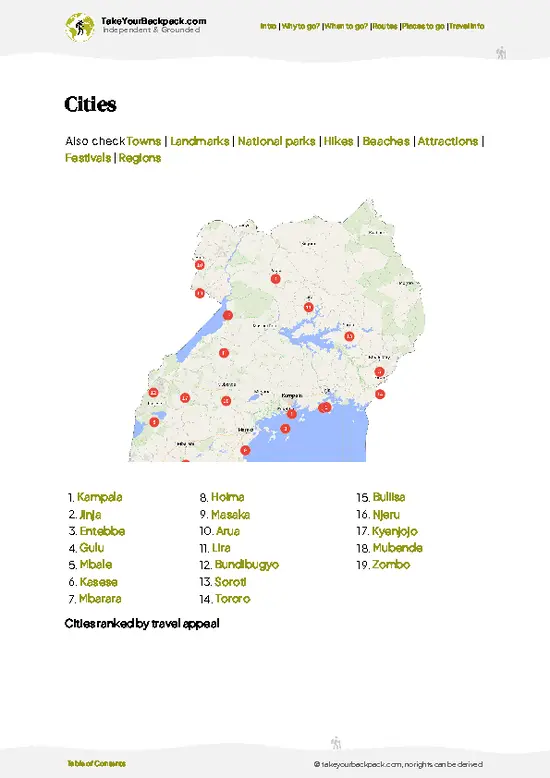
109 highlights, ranked by travel appeal
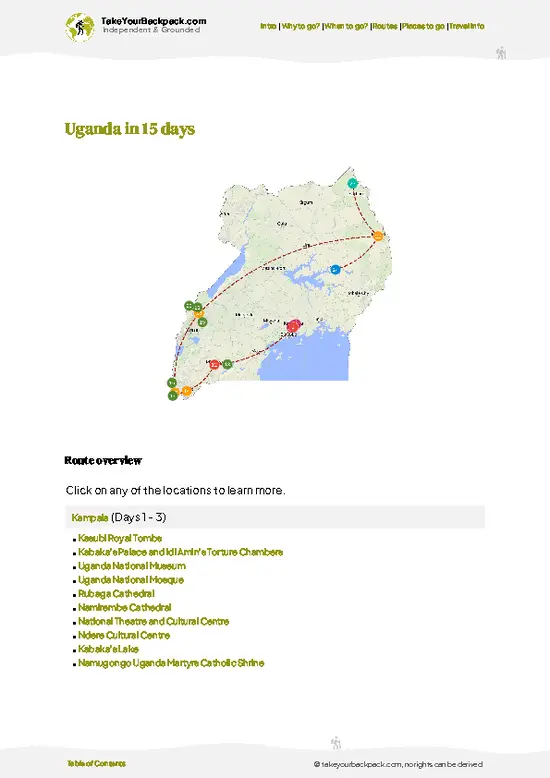
Optimized 5, 10 & 15-day travel routes
Cities, national parks, landmarks, beaches
How to get around
Offline-friendly for travel without Wi-Fi
👉 Click to see all 30+ guide features

📅 Plan smarter in minutes, not weeks
Month by month travel advice
Festivals & national holidays
Budget expectations

🗺️ Go to the right places, skip the overrated ones
Honest pros & cons of destinations
Top hikes, parks & viewpoints
Lesser-known places most travelers miss
Clear “worth it vs skip it” guidance

🛏️ Travel smoothly without rookie mistakes
Best areas to stay
Transport systems explained simply
Common scams & safety advice
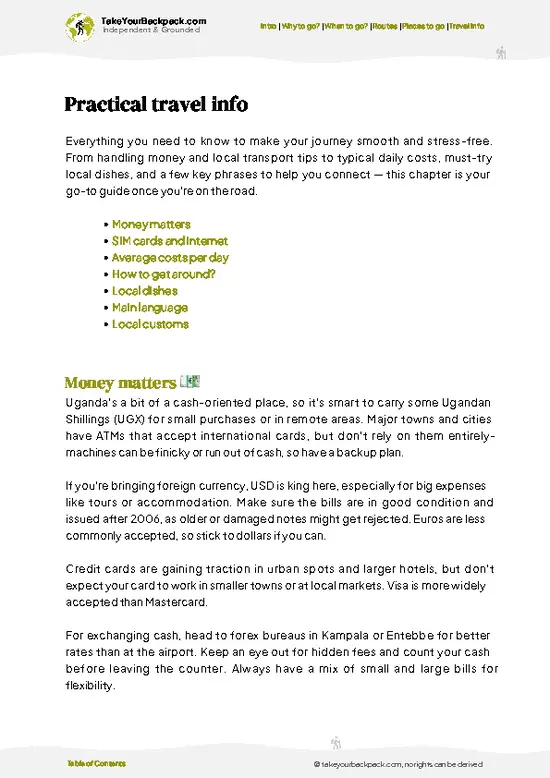
SIM cards, money & practical tips

🌍 Understand the country, not just visit it
Culture & traditions
52 Essential phrases & customs
Festivals worth planning around
Traveler-friendly historical context
Insights that make places more meaningful

📱 Built for real travel conditions
Fully downloadable PDF
Works completely offline
Optimized for phone use
Useful in remote areas & buses
Everything in one place
Save weeks of stressful planning
Get instant access to your full guide. 30‑day money-back guarantee.


By proceeding you agree to our terms.
Sent to your inbox immediately after payment • 100% Secure Checkout
Best Backpacking Travel Advisor 2025 tourism awardBest Backpacking
Travel Advisor
2025
What others say about Take Your Backpack Guides:
⭐⭐⭐⭐⭐
Fantastic, amazing amount of information!
⭐⭐⭐⭐⭐
My goodness this is amazing, it's what I've been looking for hats off too you!
⭐⭐⭐⭐⭐
I think this is absolutely BRILLIANT
⭐⭐⭐⭐
Very complete and informative. It's still missing places, but I gotta to commend you
⭐⭐⭐⭐⭐
This is truly amazing, thank you, can't wait to explore it with my kids!
⭐⭐⭐⭐⭐
Awesome resource, thank you!
⭐⭐⭐⭐⭐
This is amazing! Can't wait to explore the ones I haven't seen
⭐⭐⭐⭐
I love this! Well done, great idea.
⭐⭐⭐⭐⭐
Thanks for taking the time to make this gem!
⭐⭐⭐⭐⭐
This might be the best website I've ever seen.
⭐⭐⭐⭐⭐
Congratulations, and thank you so much for your work; it's incredibly valuable.
⭐⭐⭐⭐
In all seriousness I think you did a great job pointing out the important spots
⭐⭐⭐⭐⭐
10/10 very good
⭐⭐⭐⭐⭐
As someone who's only just starting to visit regularly this is awesome, thank you.
⭐⭐⭐⭐
Thank you very much! I'm going to visit my dad, it's going to be very useful!
⭐⭐⭐⭐⭐
This is really cool! We'll be travelling for the first time and this definitely come in handy.
⭐⭐⭐⭐⭐
You are now our minister of culture, congratulations 👨‍💼
⭐⭐⭐⭐⭐
Just wanted to tell you that this is a pearl! Going to follow your recommendations.
⭐⭐⭐⭐⭐
This is so cool. I'll definitely be using the resource for my travels soon.
⭐⭐⭐⭐⭐
This is very impressive! Good work.
⭐⭐⭐⭐⭐
This is an amazing and informative site. Very well done!

🛏️ Where to stay?Best areas and accommodation options

If you’re chasing the Batwa Cultural Experience in Uganda, brace yourself: this isn’t a polished tourist trap with cushy resorts and Instagram-perfect cafes. The real magic is raw, and so is the accommodation scene. You won’t find luxury here, but you will find places that feel like a base camp for genuine connection and adventure.

The best spots to stay are in the small towns and villages just outside Bwindi Impenetrable Forest, especially around Kisoro and Buhoma. These areas are the go-to for backpackers because they strike a balance between safety and social vibe without breaking the bank. … read more 👉
If you’re chasing the Batwa Cultural Experience in Uganda, brace yourself: this isn’t a polished tourist trap with cushy resorts and Instagram-perfect cafes. The real magic is raw, and so is the accommodation scene. You won’t find luxury here, but you will find places that feel like a base camp for genuine connection and adventure.

The best spots to stay are in the small towns and villages just outside Bwindi Impenetrable Forest, especially around Kisoro and Buhoma. These areas are the go-to for backpackers because they strike a balance between safety and social vibe without breaking the bank. Kisoro, in particular, is a hub for solo travelers and budget adventurers. It’s where you’ll meet others swapping stories over shared meals and planning early morning treks. The guesthouses and lodges here are simple but reliable—think clean beds, warm showers, and a chance to recharge before heading into the forest.

Buhoma, closer to the Batwa communities, offers a quieter, more intimate feel. It’s less about nightlife and more about early mornings filled with bird calls and the hum of the forest. Staying here means you’re right at the doorstep of the Batwa experience, which cuts down on travel time and lets you soak in the atmosphere without rushing.

Forget fancy amenities. The real value is in the people you meet, the stories you hear, and the chance to support local communities directly. This is where the Batwa Cultural Experience sheds its tourist gloss and becomes something you carry with you long after the trip ends.

👛 Costs (as of 27 April 2026)How expensive it really is

The Batwa Cultural Experience in Uganda varies by location. In Mgahinga Gorilla National Park, the fee is US$80 for foreign non-residents and residents, and UGX50,000 for East African citizens. In Bwindi Impenetrable Forest National Park, the fee is US$40 for foreign non-residents and residents, and UGX40,000 for East African citizens. In Semuliki National Park, the fee is US$10 for foreign non-residents and residents, and UGX10,000 for East African citizens. ([mgahinganationalparkuganda.com](https://www.mgahinganationalparkuganda.com/cultural-encounters/?utm_source=openai)) These fees typically include park entrance and guide fees. Additional costs may apply for activities such as filming, which can be up to US$400 per day. ([davsafaris.com](https://davsafaris.com/safari-updates/visit-batwa-forest-pygmies-of-bwindi-national-park? … read more 👉
The Batwa Cultural Experience in Uganda varies by location. In Mgahinga Gorilla National Park, the fee is US$80 for foreign non-residents and residents, and UGX50,000 for East African citizens. In Bwindi Impenetrable Forest National Park, the fee is US$40 for foreign non-residents and residents, and UGX40,000 for East African citizens. In Semuliki National Park, the fee is US$10 for foreign non-residents and residents, and UGX10,000 for East African citizens. ([mgahinganationalparkuganda.com](https://www.mgahinganationalparkuganda.com/cultural-encounters/?utm_source=openai)) These fees typically include park entrance and guide fees. Additional costs may apply for activities such as filming, which can be up to US$400 per day. ([davsafaris.com](https://davsafaris.com/safari-updates/visit-batwa-forest-pygmies-of-bwindi-national-park?utm_source=openai))
⚠️ Prices can change and everyone travels differently, so take this as a rough guide. Hope it helps you plan your adventure!

Other Ugandan attractions near Batwa Cultural Experience

Explore more nearby:


💡 Not sure where to go next?
Create a personalized itinerary for Uganda including Batwa Cultural Experience and the places that fit your trip.

Generate my itinerary

👉 Discover all attractions

Or checkout all Uganda has to offer (think cities, towns, villages, national parks, hikes, beaches, festivals)
Country photo of Uganda

We 💚 feedbackFinal thoughts on visiting Batwa Cultural Experience

The Batwa Cultural Experience isn’t a polished tourist show—it’s raw and real, with moments that hit you right in the chest. You’ll meet people whose history was nearly erased, yet their spirit and traditions pulse through every song and dance. But don’t expect crowds to be tiny or costs to be dirt cheap; this is a popular stop, and supporting the community means paying a fair price. It’s worth it if you want more than just a photo op.

✈️ When did I visit Uganda?
In September 2019 I have done a backpacking trip through Uganda. Seeing gorilla’s in the wild from up close was a pure unexpected highlight!

✍️ Help improve this page!
The information on this page is based on my own backpacking experience in Uganda, supplemented with up-to-date research and feedback from other travelers. Travel details can change, so if you notice anything outdated or incomplete, feel free to let me know.


🙋‍♂️ Give feedback

👋 Meet the founderWho’s Behind Take Your Backpack?

Johan, backpacker and founder of TakeYourBackpackHi, I’m Johan (Netherlands 🇳🇱), the creator of TakeYourBackpack. Over the past decade, I’ve backpacked through 80+ countries across six continents, gaining extensive experience with independent travel, long-term trips, and overland routes.

This site is built on a combination of firsthand travel experience and carefully curated insights from other backpackers. Many guides are based on places I’ve personally visited, while others bring together tips, observations, and practical advice shared by trusted travelers I’ve met along the way.

The goal is to provide realistic, experience-driven guidance — not generic itineraries — so you can explore destinations with better context, clearer expectations, and more confidence.

Get full Uganda guide •
Instant download • 109 highlights • Full Offline guide