v2.webp)
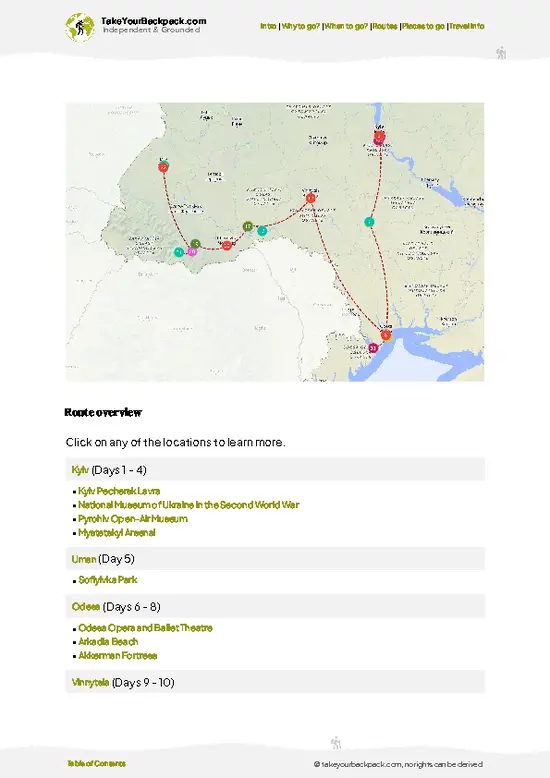
- Great Sand Sea (main dune field) — the heart of Oleshky Sands: a vast expanse of rolling, wind-sculpted dunes that feels more like a desert than a Ukrainian park. Walking the ridges gives that stark, almost otherworldly landscape you don’t expect in Europe; the sand is mobile, the shapes keep changing, and the scale is impressive.
- Dune ridge sunset viewpoints — climb a high dune late in the day and watch the light turn the sand from gold to copper. Sunsets here are cinematic, and with low light pollution the same ridges make great spots for stargazing once it gets dark.
- Psammophilous steppe and specialized plants — strips of sand-loving vegetation (think tough grasses, thyme-like herbs and salt-tolerant shrubs) cling to the dunes. These plants are adapted to shifting ground and drought,
- Great Sand Sea (main dune field) — the heart of Oleshky Sands: a vast expanse of rolling, wind-sculpted dunes that feels more like a desert than a Ukrainian park. Walking the ridges gives that stark, almost otherworldly landscape you don’t expect in Europe; the sand is mobile, the shapes keep changing, and the scale is impressive.
- Dune ridge sunset viewpoints — climb a high dune late in the day and watch the light turn the sand from gold to copper. Sunsets here are cinematic, and with low light pollution the same ridges make great spots for stargazing once it gets dark.
- Psammophilous steppe and specialized plants — strips of sand-loving vegetation (think tough grasses, thyme-like herbs and salt-tolerant shrubs) cling to the dunes. These plants are adapted to shifting ground and drought, and they create delicate ribbons of green and bloom against the sand.
- Wetland and reedbeds along the Dnipro floodplain — the park isn’t only sand: where it meets the Dnipro you get floodplain lagoons and dense reeds that attract a very different wildlife crowd. It’s a prime contrast — quiet waterfowl and reed birds next to the barren dunes.
- Solonchak salt flats and ephemeral ponds — salty depressions that fill after rains or floods create mirror-like surfaces and support halophilic (salt-loving) plants and invertebrates. They add texture and occasional flashes of colour to the otherwise monochrome sandscape.
- Steppe wildlife: reptiles, small mammals and raptors — look for lizards basking on warm sand, hares and small rodents in the grasses, and raptors circling above. Birdwatchers and herpetology fans will find interesting species tied to both the dune and floodplain habitats.
- Trails, 4x4 tracks and guided hikes — a mix of short walking routes and off-road tracks let you explore different habitats safely. Going with a local guide is especially handy here — the landscape is deceptively uniform and a guide keeps you oriented, points out microhabitats, and explains the park’s human-landscape history.
Spotted a mistake or missing something? Contact us.

 Best Backpacking
.jpg) Hi, I’m Johan (Netherlands 🇳🇱), the creator of TakeYourBackpack. Over the past 3 decades, I’ve backpacked through 90+ countries across six continents, gaining extensive experience with independent travel, long-term trips, and overland routes.
Hi, I’m Johan (Netherlands 🇳🇱), the creator of TakeYourBackpack. Over the past 3 decades, I’ve backpacked through 90+ countries across six continents, gaining extensive experience with independent travel, long-term trips, and overland routes.