×

the USA🇺🇸 | citiesNew OrleansFrench Quarter, jazz halls, Creole cuisine, bayou tours | things to do and best time to go

Explore MiamiExplore New York City

Backpacking in New Orleans
🏆 Top pickcity ranked #5
By Johan Kruseman 🇳🇱 | Updated September 4, 2026

Most people realize too late that New Orleans lets you “travel far” without burning days in transit: one compact core, walkable or streetcar-able, packs food, music, history, and nightlife into a few square miles. It sits in the deep south of the USA, along the lower Mississippi River in Louisiana. For backpackers, it’s intense and efficient: the French Quarter’s balconies and bars, live jazz on Frenchmen Street, cemeteries, the WWII Museum, and lazy hours in City Park or along the riverfront. Hostels and bars make it easy to meet people, but alcohol plus crowds mean petty crime and sketchy late-night blocks, so you need street sense. It’s pricier than most southern cities, cheaper than New York, and way weirder than almost anywhere in the USA.

Discover everything you want to know in the 📖 the USA Travel Guide.


Get your USA guide
161 ranked highlights, routes & tips, works offline (586 pages)
Loading the map 🌍
CLICK TO FILTER
cities
towns
villages
landmarks
national parks
hikes
beaches
attractions
festivals
regions
SHOW COUNTRY’S BESTSHOW ALL

✨ Why go?
Ranked #5 city in the USA
The unique appeal for travelers

New Orleans is a backpacker’s playground that balances time, money, and comfort in a way that feels just right. The city is packed with highlights and activities that cater to every taste, making it a vibrant stop on your route through the USA. You’ll find affordable hostels that foster a sense of community, perfect for swapping stories and tips with fellow travelers.

The food scene is a culinary adventure, offering everything from street vendors to sit-down restaurants that won’t break the bank. Plus, the city is incredibly walkable, allowing you to soak in the atmosphere without spending on transport.

When the sun sets, the nightlife kicks into high gear, with live music spilling into the streets, ensuring your evenings are as lively as your days. As a basecamp, New Orleans opens doors … read more 👉
New Orleans is a backpacker’s playground that balances time, money, and comfort in a way that feels just right. The city is packed with highlights and activities that cater to every taste, making it a vibrant stop on your route through the USA. You’ll find affordable hostels that foster a sense of community, perfect for swapping stories and tips with fellow travelers.

The food scene is a culinary adventure, offering everything from street vendors to sit-down restaurants that won’t break the bank. Plus, the city is incredibly walkable, allowing you to soak in the atmosphere without spending on transport.

When the sun sets, the nightlife kicks into high gear, with live music spilling into the streets, ensuring your evenings are as lively as your days. As a basecamp, New Orleans opens doors to day trips that showcase the surrounding beauty, making it easy to explore beyond the city limits.

Whether you’re here for a long stay or a quick stop, New Orleans offers a rich blend of experiences that can elevate your backpacking journey.
Want to include New Orleans in your the USA route?
Create a personalized the USA itinerary that includes New Orleans and the places that fit your trip — based on your travel style, budget, and available time. Get your route in seconds.

Generate my trip

💡 HighlightsKey sights and experiences for travelers

  1. Jackson Square & St. Louis Cathedral — The visual and spiritual heart of the French Quarter: street artists, horse-drawn carriages, and the iconic cathedral framing views of the Mississippi. Great people-watching and history rolled into one walkable plaza.
  2. Frenchmen Street — Where locals go for live music: tight clubs, horn-driven jazz, and a much more authentic night scene than Bourbon Street. Pop into several venues in one night and let the music lead you.
  3. Congo Square (Louis Armstrong Park) — A small park with a huge story: the place where African rhythms and community gatherings helped birth New Orleans music traditions. It’s a quiet, powerful reminder of the city’s roots.
  4. The National WWII Museum — One of the best modern history museums in the country; immersive exhibits, personal
read more 👉
  1. Jackson Square & St. Louis Cathedral — The visual and spiritual heart of the French Quarter: street artists, horse-drawn carriages, and the iconic cathedral framing views of the Mississippi. Great people-watching and history rolled into one walkable plaza.
  2. Frenchmen Street — Where locals go for live music: tight clubs, horn-driven jazz, and a much more authentic night scene than Bourbon Street. Pop into several venues in one night and let the music lead you.
  3. Congo Square (Louis Armstrong Park) — A small park with a huge story: the place where African rhythms and community gatherings helped birth New Orleans music traditions. It’s a quiet, powerful reminder of the city’s roots.
  4. The National WWII Museum — One of the best modern history museums in the country; immersive exhibits, personal stories, and theaters that help you understand why New Orleans remembers the war so deliberately.
  5. St. Charles Avenue streetcar & Garden District — Ride the historic streetcar beneath live oaks to see antebellum mansions, wrought-iron porches, and neighborhood cemeteries like Lafayette No.1 — a slow, scenic way to feel the city’s 19th-century side.
  6. City Park — New Orleans Museum of Art & Besthoff Sculpture Garden — Ancient oaks, joggers, and an excellent, free sculpture garden beside NOMA’s collection make this a peaceful cultural escape without leaving the city.
  7. Preservation Hall — Tiny, no-frills venue serving up intimate traditional jazz sets; the shows are short, the sound is raw, and the experience is pure New Orleans music history.
  8. French Market — A historic open-air market by the river where you can eat local food, buy crafts, and feel the city’s market culture; it’s part farmers’ market, part flea market, and full of flavor.
  9. Backstreet Cultural Museum (Tremé) — A small, powerful museum documenting Mardi Gras Indians, second-line culture, and Black social clubs — essential for understanding the ceremonies and costumes you see on the streets.
  10. Algiers Point & the Algiers Ferry — Take the free ferry for skyline photos, then wander the quiet, Victorian streets of Algiers Point; it’s a peaceful contrast to the French Quarter and easy to reach.
For day trips outside the city, consider Jean Lafitte National Historical Park (Barataria Preserve) for easy swamp trails and wildlife, Oak Alley Plantation for the classic river-road plantation experience, or a Honey Island Swamp tour for more hands-on nature — my personal favorite to explore is Barataria Preserve (best mix of wildlife, hiking, and proximity).
Spotted a mistake or missing something? Contact us.

Things to do in New Orleans

Ratings based on Tripadvisor reviews. When you book through this link, you support our work at no extra cost to you.

🏘️ NeighborhoodsHow different areas shape the experience

New Orleans is a city where every street tells a story, and each neighborhood has its own unique flavor. Here’s a breakdown to help you navigate your options.

French Quarter: The heart of New Orleans, this area is a sensory overload of jazz, vibrant nightlife, and historic architecture. Expect higher prices, especially for accommodations. It’s walkable, but the crowds can be intense. Perfect for short stays if you want to soak up the energy, but it can feel overwhelming for longer visits.

Marigny: Just a stone’s throw from the French Quarter, Marigny offers a more laid-back vibe with colorful shotgun houses and local music venues. Prices are generally lower, and it’s very walkable. Great for those who want nightlife without the chaos. Ideal for both short and longer stays, especially if … read more 👉
New Orleans is a city where every street tells a story, and each neighborhood has its own unique flavor. Here’s a breakdown to help you navigate your options.

French Quarter: The heart of New Orleans, this area is a sensory overload of jazz, vibrant nightlife, and historic architecture. Expect higher prices, especially for accommodations. It’s walkable, but the crowds can be intense. Perfect for short stays if you want to soak up the energy, but it can feel overwhelming for longer visits.

Marigny: Just a stone’s throw from the French Quarter, Marigny offers a more laid-back vibe with colorful shotgun houses and local music venues. Prices are generally lower, and it’s very walkable. Great for those who want nightlife without the chaos. Ideal for both short and longer stays, especially if you enjoy a mix of culture and relaxation.

Garden District: Known for its stunning mansions and oak-lined streets, this neighborhood is quieter and more residential. It’s a bit pricier, but you can find some budget options. Walkability is good, but you might need to hop on a streetcar for nightlife. Best for longer stays if you prefer a peaceful retreat.

Bywater: An up-and-coming area with an artsy vibe, Bywater is affordable and full of local charm. It’s walkable, but nightlife options are more limited. Perfect for longer stays if you want to immerse yourself in local culture without breaking the bank.

⌛️ 1 dayWhat you can realistically do in a day

New Orleans is a city that dances to its own rhythm, a vibrant mix of cultures, music, and culinary delights. It’s a place where the past meets the present, and every corner has a story to tell. With just one day, you can dive into its rich tapestry without feeling rushed.

Start your morning in the French Quarter, the heart of the city. Grab a beignet and café au lait at Café du Monde. The powdered sugar dusting is a must; it’s like a sweet welcome to the day. After indulging, stroll through Jackson Square, where street performers and artists bring the area to life. Don’t miss St. Louis Cathedral, a stunning piece of architecture that’s worth a few snaps.

As the sun climbs higher, head to the Marigny neighborhood. This area is known for its colorful Creole cottages and lively atmosphere. … read more 👉
New Orleans is a city that dances to its own rhythm, a vibrant mix of cultures, music, and culinary delights. It’s a place where the past meets the present, and every corner has a story to tell. With just one day, you can dive into its rich tapestry without feeling rushed.

Start your morning in the French Quarter, the heart of the city. Grab a beignet and café au lait at Café du Monde. The powdered sugar dusting is a must; it’s like a sweet welcome to the day. After indulging, stroll through Jackson Square, where street performers and artists bring the area to life. Don’t miss St. Louis Cathedral, a stunning piece of architecture that’s worth a few snaps.

As the sun climbs higher, head to the Marigny neighborhood. This area is known for its colorful Creole cottages and lively atmosphere. Stop by the Spotted Cat Music Club for a midday break; it’s a local favorite. Enjoy some live jazz while sipping on a refreshing drink. This is where you can soak in the authentic vibe, away from the typical tourist spots.

In the afternoon, make your way to the Garden District. The historic mansions and oak-lined streets are a feast for the eyes. Take a self-guided walking tour; the architecture here tells tales of old New Orleans. If you’re feeling adventurous, pop into the Lafayette Cemetery No. 1. It’s eerie yet fascinating, showcasing the city’s unique burial traditions.

As evening approaches, return to the French Quarter for dinner. Try Cochon for some mouthwatering Cajun cuisine. The pork belly is a standout. Afterward, let the music guide you to Frenchmen Street, where the nightlife pulses with energy. You’ll find everything from jazz to funk, and the atmosphere is electric.

In just one day, you’ve tasted the essence of New Orleans. Each choice you made—whether to indulge in a beignet or explore a lesser-known neighborhood—has woven a richer experience. Embrace the trade-offs; they’re what make your journey uniquely yours.
Turn your New Orleans visit into an the USA adventure
Build a complete the USA route with New Orleans, hidden gems, must-see destinations, and realistic travel times included.

Generate my trip

🌤️ When to go?Choosing the right time of year


  • Topic: Weather and Temperature – Spring (March to May) and fall (September to November) offer mild temperatures, ranging from 15°C to 27°C (59°F to 81°F). Summers scorch with humidity pushing highs above 32°C (90°F), while winters stay mild but damp, hovering around 10°C to 16°C (50°F to 61°F).

  • Topic: Daylight Hours – Longer days in spring and summer provide up to 14 hours of daylight, perfect for exploring. Winter days shrink to about 10 hours, limiting outdoor time but offering cooler strolls.

  • Topic: Crowds – Mardi Gras season (February to early March) floods the city with tourists, inflating prices and crowding streets. Off-peak months like late fall and winter see fewer visitors, making it easier to navigate and connect with locals.

  • Topic: Seasonal Activities – Spring and fall
read more 👉

  • Topic: Weather and Temperature – Spring (March to May) and fall (September to November) offer mild temperatures, ranging from 15°C to 27°C (59°F to 81°F). Summers scorch with humidity pushing highs above 32°C (90°F), while winters stay mild but damp, hovering around 10°C to 16°C (50°F to 61°F).

  • Topic: Daylight Hours – Longer days in spring and summer provide up to 14 hours of daylight, perfect for exploring. Winter days shrink to about 10 hours, limiting outdoor time but offering cooler strolls.

  • Topic: Crowds – Mardi Gras season (February to early March) floods the city with tourists, inflating prices and crowding streets. Off-peak months like late fall and winter see fewer visitors, making it easier to navigate and connect with locals.

  • Topic: Seasonal Activities – Spring and fall bring festivals beyond Mardi Gras, like the Jazz & Heritage Festival and Voodoo Fest, enriching your cultural dive. Winter is quieter but offers unique holiday events and lower competition for spots.

  • Topic: Price Fluctuations – Expect peak prices during Mardi Gras and major festivals. Shoulder seasons (spring and fall) balance decent weather with moderate rates. Winter offers the best deals but sacrifices some warmth and event buzz.


Pro-tip: Aim for late spring or early fall to maximize comfort, cultural richness, and budget—this sweet spot turns New Orleans into a playground you can actually enjoy without sweating the crowds or your wallet.


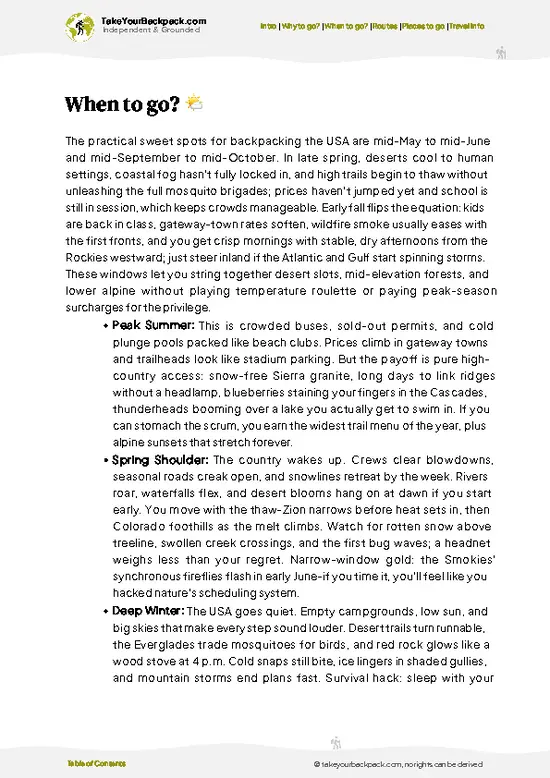
source: climatestotravel.comJANJanuary: good for travelingFEBFebruary: fair for travelingMARMarch: good for travelingAPRApril: excellent for travelingMAYMay: excellent for travelingJUNJune: fair for travelingJULJuly: below average for travelingAUGAugust: below average for travelingSEPSeptember: highly recommended for travelingOCTOctober: excellent for travelingNOVNovember: highly recommended for travelingDECDecember: good for traveling
when-to-go

✈️ The backpacker research shortcutthe USA Travel Guide

An offline-friendly backpacking guide with optimized travel routes, ranked highlights, transport advice, and the best areas to stay.
example page 0 from our offline Travel Guide for United States
example page 1 from our offline Travel Guide for United States
example page 2 from our offline Travel Guide for United States
example page 3 from our offline Travel Guide for United States
example page 4 from our offline Travel Guide for United States
example page 5 from our offline Travel Guide for United States
example page 6 from our offline Travel Guide for United States
example page 7 from our offline Travel Guide for United States
The digital guide (586 pages) contains:
161 highlights, ranked by travel appeal
Optimized 14, 21 & 30-day travel routes
Cities, national parks, landmarks, beaches
How to get around
Offline-friendly for travel without Wi-Fi
👉 Click to see all 30+ guide features

📅 Plan smarter in minutes, not weeks
Month by month travel advice
Festivals & national holidays
Budget expectations

🗺️ Go to the right places, skip the overrated ones
Honest pros & cons of destinations
Top hikes, parks & viewpoints
Lesser-known places most travelers miss
Clear “worth it vs skip it” guidance

🛏️ Travel smoothly without rookie mistakes
Best areas to stay
Transport systems explained simply
Common scams & safety advice
SIM cards, money & practical tips

🌍 Understand the country, not just visit it
Culture & traditions
Local customs
Festivals worth planning around
Traveler-friendly historical context
Insights that make places more meaningful

📱 Built for real travel conditions
Fully downloadable PDF
Works completely offline
Optimized for phone use
Useful in remote areas & buses
Everything in one place
Save weeks of stressful planning
Get instant access to your full guide. 30‑day money-back guarantee.
+ Add another guide for just US$7.80

By proceeding you agree to our terms.
Sent to your inbox immediately after payment • 100% Secure Checkout
Best Backpacking Travel Advisor 2025 tourism awardBest Backpacking
Travel Advisor
2025
What others say about Take Your Backpack Guides:
⭐⭐⭐⭐⭐
Fantastic, amazing amount of information!
⭐⭐⭐⭐⭐
My goodness this is amazing, it's what I've been looking for hats off too you!
⭐⭐⭐⭐⭐
I think this is absolutely BRILLIANT
⭐⭐⭐⭐
Very complete and informative. It's still missing places, but I gotta to commend you
⭐⭐⭐⭐⭐
This is truly amazing, thank you, can't wait to explore it with my kids!
⭐⭐⭐⭐⭐
Awesome resource, thank you!
⭐⭐⭐⭐⭐
This is amazing! Can't wait to explore the ones I haven't seen
⭐⭐⭐⭐
I love this! Well done, great idea.
⭐⭐⭐⭐⭐
Thanks for taking the time to make this gem!
⭐⭐⭐⭐⭐
This might be the best website I've ever seen.
⭐⭐⭐⭐⭐
Congratulations, and thank you so much for your work; it's incredibly valuable.
⭐⭐⭐⭐
In all seriousness I think you did a great job pointing out the important spots
⭐⭐⭐⭐⭐
10/10 very good
⭐⭐⭐⭐⭐
As someone who's only just starting to visit regularly this is awesome, thank you.
⭐⭐⭐⭐
Thank you very much! I'm going to visit my dad, it's going to be very useful!
⭐⭐⭐⭐⭐
This is really cool! We'll be travelling for the first time and this definitely come in handy.
⭐⭐⭐⭐⭐
You are now our minister of culture, congratulations 👨‍💼
⭐⭐⭐⭐⭐
Just wanted to tell you that this is a pearl! Going to follow your recommendations.
⭐⭐⭐⭐⭐
This is so cool. I'll definitely be using the resource for my travels soon.
⭐⭐⭐⭐⭐
This is very impressive! Good work.
⭐⭐⭐⭐⭐
This is an amazing and informative site. Very well done!

🛏️ Where to stay?Best areas to stay in the USA

French Quarter is the obvious magnet for backpackers in New Orleans, USA. It’s the heartbeat of the city—packed with energy, street music, and a nonstop social scene. Safety here is decent, especially around the main tourist corridors, but keep your wits about you after dark. Hostels and budget spots cluster near the Quarter’s edges, offering easy access to iconic bars and historic streets without the sky-high prices of hotels inside. The vibe is electric but can feel tourist-heavy, so it’s perfect if you want to dive into the city’s pulse and meet fellow travelers.

Just a short walk away, Faubourg read more 👉
French Quarter is the obvious magnet for backpackers in New Orleans, USA. It’s the heartbeat of the city—packed with energy, street music, and a nonstop social scene. Safety here is decent, especially around the main tourist corridors, but keep your wits about you after dark. Hostels and budget spots cluster near the Quarter’s edges, offering easy access to iconic bars and historic streets without the sky-high prices of hotels inside. The vibe is electric but can feel tourist-heavy, so it’s perfect if you want to dive into the city’s pulse and meet fellow travelers.

Just a short walk away, Faubourg Marigny offers a quieter, artsier alternative. It’s a bit more laid-back, with a strong local feel and plenty of live music venues that aren’t overrun by tourists. Hostels here are fewer but tend to attract solo travelers looking for a more authentic, social experience without sacrificing safety.

Compared to the Central Business District or Uptown, these two neighborhoods balance budget, social life, and safety best—letting you spend less time worrying and more time soaking in New Orleans’ unique rhythm.

🚌 Getting aroundGetting around like a local

New Orleans moves to a rhythm all its own. It’s not about strict timetables or sterile efficiency—this city breathes with a mix of old-school charm and spontaneous flow. You’ll find moments where the streetcar glides by right on schedule, then others where a jazz band’s impromptu set pulls the crowd into a slow, lazy groove. Time here is elastic. Your choices between speed, cost, and comfort aren’t just logistical—they’re part of the city’s character. Knowing what you’re trading off lets you play the system smart, turning transit into a strategic move rather than a frustrating hurdle.


  • Walking: The ultimate budget option and the best way to soak in the city’s soul. Most neighborhoods are compact, so you can cover a lot on foot. No cost, full control over pace, and you catch details missed
read more 👉
New Orleans moves to a rhythm all its own. It’s not about strict timetables or sterile efficiency—this city breathes with a mix of old-school charm and spontaneous flow. You’ll find moments where the streetcar glides by right on schedule, then others where a jazz band’s impromptu set pulls the crowd into a slow, lazy groove. Time here is elastic. Your choices between speed, cost, and comfort aren’t just logistical—they’re part of the city’s character. Knowing what you’re trading off lets you play the system smart, turning transit into a strategic move rather than a frustrating hurdle.


  • Walking: The ultimate budget option and the best way to soak in the city’s soul. Most neighborhoods are compact, so you can cover a lot on foot. No cost, full control over pace, and you catch details missed from a window. Just watch for uneven sidewalks and occasional streetcar tracks.


  • Streetcar: Runs from early morning (around 5:30 AM) until about midnight. A single ride costs $1.25, making it a cheap and iconic way to cover longer distances like the French Quarter to the Garden District. It’s slow but comfortable, with open windows for that breeze and city sounds. Expect occasional delays during peak tourist times.


  • Bus: Extensive network, fares at $1.25 per ride, with transfers available if you plan ahead. Buses run roughly from 5 AM to midnight but can be unpredictable in timing. They’re slower than streetcars but reach areas the streetcar doesn’t touch. Comfort varies—older buses can be cramped and noisy.


  • Rideshare (Uber/Lyft): More expensive, typically $10–$20 for common routes within the city, but unbeatable for speed and door-to-door convenience, especially late at night when public transit thins out. Comfort is high, but surge pricing can spike costs unpredictably.


  • Biking: A solid middle ground if you’re comfortable on two wheels. Bike rentals run about $15–$25 per day. Faster than walking, cheaper than rideshares, and you get to explore neighborhoods at your own pace. Watch for traffic and limited dedicated bike lanes in some areas.

👛 Costs (as of 4 September 2026)How expensive it really is

Backpacking in New Orleans, USA, means balancing your budget between the city’s unique vibe and practical costs. Here’s the breakdown of what you’ll typically spend each day:
  • Dorm Accommodation (High Season): Expect to pay around $40 to $60 per night. High season, usually spring and fall, pushes prices up due to festivals and events.
  • Dorm Accommodation (Off-Season): In quieter months, you can find beds for $25 to $40. It’s a solid saving if you’re flexible with timing.
  • Meals: Budget $15 to $30 daily. Street food and casual spots offer po’boys, beignets, and gumbo at reasonable prices, but dining at iconic places will push you toward the higher end.
  • Local Transport: Single streetcar or bus rides cost about $1.25 each. If you’re hopping around a few times a day, this adds up.
  • City Transport
read more 👉
Backpacking in New Orleans, USA, means balancing your budget between the city’s unique vibe and practical costs. Here’s the breakdown of what you’ll typically spend each day:
  • Dorm Accommodation (High Season): Expect to pay around $40 to $60 per night. High season, usually spring and fall, pushes prices up due to festivals and events.
  • Dorm Accommodation (Off-Season): In quieter months, you can find beds for $25 to $40. It’s a solid saving if you’re flexible with timing.
  • Meals: Budget $15 to $30 daily. Street food and casual spots offer po’boys, beignets, and gumbo at reasonable prices, but dining at iconic places will push you toward the higher end.
  • Local Transport: Single streetcar or bus rides cost about $1.25 each. If you’re hopping around a few times a day, this adds up.
  • City Transport Pass: A 1-day Jazzy Pass is $3, giving unlimited rides on streetcars and buses. It’s a no-brainer if you plan to explore extensively.
  • Basic Activities/Entry Fees: Museums and historic sites typically charge $5 to $15. Some jazz clubs or tours might be pricier, but many free or low-cost options exist.
  • Miscellaneous Expenses: Budget $5 to $10 for essentials like water, snacks, or a quick coffee. Always good to have a little buffer for unexpected finds.

All told, you’re looking at roughly $50 to $90 per day. The trade-off here is clear: spending a bit more on accommodation during high season means you’re right in the thick of the city’s energy, but off-season travel rewards you with savings and fewer crowds. Meals and transport are flexible knobs—eat street food and walk or use the Jazzy Pass to keep costs down without sacrificing the experience. This is where smart choices turn a trip into a win.


source: neworleans.com
⚠️ Prices can change and everyone travels differently, so take this as a rough guide. Hope it helps you plan your adventure!

🚌 Day tripsWhere to go beyond the main area

New Orleans is a fantastic launchpad for day trips that offer a taste of the diverse culture and natural beauty of the surrounding areas. Here are some standout options that pack a punch without draining your wallet or time.

Plantation Country
A visit to the historic plantations along River Road is a must. You’ll step back in time, exploring the grand homes and learning about the complex history of the South. The drive takes about an hour, and entry fees range from $20 to $30. Aim for spring or fall when the weather is mild and the gardens are in bloom. A common mistake? Many first-timers rush through the tours without taking the time to soak in the stories. Slow down and engage with the guides; it’s worth it.


Bayou Swamp Tour
Just a short drive from the city, the bayous offer a unique … read more 👉
New Orleans is a fantastic launchpad for day trips that offer a taste of the diverse culture and natural beauty of the surrounding areas. Here are some standout options that pack a punch without draining your wallet or time.

Plantation Country
A visit to the historic plantations along River Road is a must. You’ll step back in time, exploring the grand homes and learning about the complex history of the South. The drive takes about an hour, and entry fees range from $20 to $30. Aim for spring or fall when the weather is mild and the gardens are in bloom. A common mistake? Many first-timers rush through the tours without taking the time to soak in the stories. Slow down and engage with the guides; it’s worth it.


Bayou Swamp Tour
Just a short drive from the city, the bayous offer a unique ecosystem teeming with wildlife. Guided tours typically last around two hours and cost about $50. Spring and early summer are prime times to see alligators and migratory birds. Don’t forget your camera! A rookie error is thinking you can just show up; book in advance to secure your spot.


Lafayette
About two hours away, Lafayette is the heart of Cajun culture. Dive into local music, food, and festivals that celebrate this vibrant heritage. Expect to spend around $30 on gas and meals. The best time to visit is during the festivals, especially in the spring. Many backpackers overlook the local eateries, opting for chain restaurants instead. Seek out the small, family-run spots for authentic flavors.


Hiking at Fontainebleau State Park
Just over an hour from New Orleans, this park offers scenic trails and a chance to unwind by the lake. Entry is free, and you can easily spend a day hiking and picnicking. Fall is ideal for cooler temperatures and fewer bugs. A common pitfall is underestimating the park’s size; plan your route ahead to make the most of your time.


Mississippi River Cruise
For a different perspective, hop on a riverboat cruise. It’s a leisurely way to soak in the sights while learning about the river’s history. Cruises typically last about two hours and cost around $40. Spring and fall are best for comfortable weather. Many backpackers miss the sunset cruises, which offer stunning views and a magical atmosphere.
Want to know what more the USA offers?
The the USA Travel Guide describes 161 highlights, from cities to national parks, from beaches to hikes

Get the Travel Guide -

🍲 FoodLocal Flavors for Backpackers

In New Orleans, food and drink are more than sustenance; they’re a celebration of culture. Start with gumbo, a rich, hearty stew that blends flavors from French, Spanish, and African traditions. Each bowl tells a story, often featuring shrimp, sausage, or chicken, thickened with a dark roux. Then there’s jambalaya, a one-pot wonder that’s a spicy mix of rice, meat, and vegetables, perfect for sharing.

For drinks, you can’t miss the Sazerac, a cocktail that’s as complex as the city itself. Made with rye whiskey, absinthe, and a hint of bitters, it’s a sip of history. And don’t overlook the local coffee culture; a café au lait at a bustling café is a must, especially paired with a beignet, those fluffy, powdered sugar-dusted pastries.

Backpackers will find their culinary treasures in marketsread more 👉
In New Orleans, food and drink are more than sustenance; they’re a celebration of culture. Start with gumbo, a rich, hearty stew that blends flavors from French, Spanish, and African traditions. Each bowl tells a story, often featuring shrimp, sausage, or chicken, thickened with a dark roux. Then there’s jambalaya, a one-pot wonder that’s a spicy mix of rice, meat, and vegetables, perfect for sharing.

For drinks, you can’t miss the Sazerac, a cocktail that’s as complex as the city itself. Made with rye whiskey, absinthe, and a hint of bitters, it’s a sip of history. And don’t overlook the local coffee culture; a café au lait at a bustling café is a must, especially paired with a beignet, those fluffy, powdered sugar-dusted pastries.

Backpackers will find their culinary treasures in markets and street vendors. The French Market is a lively spot where you can sample everything from po’boys to fresh seafood. Casual eateries abound, often filled with locals sharing stories over plates of crawfish étouffée.

Etiquette here is relaxed; don’t be shy about sharing a table or striking up a conversation. Just remember, in New Orleans, food is a communal experience, and every bite is an invitation to connect.

🛡️ SafetySafety Tips and Common Scams in New Orleans

New Orleans is generally safe, but like any vibrant city, it has its quirks. Be aware in the French Quarter after dark; while it’s lively, pickpockets can lurk in crowded areas. Keep your belongings close and avoid flashy displays of wealth.

Solo travelers should stick to well-lit streets and trust their instincts. If something feels off, it probably is.

Common scams include street performers asking for money after a performance or “helping” you with directions only to expect a tip. Politely decline and keep moving.

Annoyances can pop up, too—like aggressive vendors or overly persistent tour guides. A firm “no, thank you” usually does the trick.

Overall, stay alert, engage with locals, and enjoy the unique rhythm of the city. You’ll find that with a little awareness, New Orleans offers a rich experience without the hassle.

FAQTraveler FAQ

3 to 4 days are sufficient to explore New Orleans' main attractions, including the French Quarter, Garden District, and local music venues. This allows time for a riverboat cruise and sampling Creole cuisine. Longer stays are recommended if attending festivals like Mardi Gras in February or Jazz Fest in April.
Yes, New Orleans is generally safe for solo backpackers if you stay in well-populated areas like the French Quarter and Garden District. Avoid walking alone late at night in less crowded neighborhoods and keep valuables secure. Use common sense and local advice to minimize risks.
New Orleans is known for its vibrant live jazz music scene, unique Creole and Cajun cuisine, and historic French Quarter architecture. It is also famous for Mardi Gras, an annual festival featuring parades and celebrations. The city’s cultural blend of French, Spanish, African, and American influences defines its character.
⚠️ Things can change over time, so always validate details locally before you go.

Other American cities near New Orleans

Explore more nearby:

  • Jackson—blues heritage, soul food, civil rights museums, capitol dome| 261 km away
  • Memphis—blues bars, barbecue, riverfront parks, civil rights sites| 578 km away
  • Atlanta—Peachtree streets, civil rights sites, urban forest| 683 km away

💡 Not sure where to go next?
Create a personalized itinerary for the USA including New Orleans and the places that fit your trip.

Generate my itinerary

👉 Discover all cities

Or checkout all the USA has to offer (think cities, towns, villages, national parks, hikes, beaches, festivals)
Country photo of the USA

We 💚 feedbackWhat to keep in mind

New Orleans is a sensory feast. The music, the food, the history—it’s a place where every corner tells a story. But be ready for the heat and humidity; it can be relentless. You’ll sweat through your shirt, but that’s part of the charm. Embrace the chaos and let the city’s rhythm pull you in. Just know, comfort might take a backseat to experience, and that’s a trade-off worth making.

✈️ When did I visit the USA?
In January 2023 I visited New York. Many years before, before digital cameras existed, I discovered most of the national parks in the West.

✍️ Help improve this page!
The information on this page is based on my own backpacking experience in the USA, supplemented with up-to-date research and feedback from other travelers. Travel details can change, so if you notice anything outdated or incomplete, feel free to let me know.


🙋‍♂️ Give feedback

👋 Meet the founderWho’s Behind Take Your Backpack?

Johan, backpacker and founder of TakeYourBackpackHi, I’m Johan (Netherlands 🇳🇱), the creator of TakeYourBackpack. Over the past decade, I’ve backpacked through 80+ countries across six continents, gaining extensive experience with independent travel, long-term trips, and overland routes.

This site is built on a combination of firsthand travel experience and carefully curated insights from other backpackers. Many guides are based on places I’ve personally visited, while others bring together tips, observations, and practical advice shared by trusted travelers I’ve met along the way.

The goal is to provide realistic, experience-driven guidance — not generic itineraries — so you can explore destinations with better context, clearer expectations, and more confidence.

Get full USA guide •
Instant download • 161 highlights • Full Offline guide