×
Yellowstone National Park

the USA🇺🇸 | national parksYellowstone National Parkgeysers, hot springs, roaming bison | things to do and best time to go

Explore Waterton Glacier International Peace ParkExplore Yosemite National Park

Backpacking in Yellowstone
UNESCO World Heritage site
🏆 Top picknational park ranked #2
By Johan Kruseman 🇳🇱 | Updated June 30, 2026

Most people realize too late that Yellowstone quietly trains you to plan like a pro: if you don’t think about distance, time, and closures before you arrive, the park’s size will eat your days and your gas money. Yellowstone National Park sits mostly in northwest Wyoming, spilling into Montana and Idaho in the USA. For backpackers, it’s a serious backcountry park disguised as a road-trip icon. The scenery is broad and varied—geysers, big valleys, deep forests—but you work for the solitude, especially with strict permits and bear rules. Wildlife is a highlight and a hazard; bison jams and grizzlies shape your itinerary more than you do. It’s pricier and more crowded at the roadside than nearby Grand Teton or Glacier, but cheaper once you’re deep in the backcountry. The vibe: part outdoor classroom, part traffic jam, with world-class multi-day routes if you’re patient and organized.

Discover everything you want to know in the 📖 the USA Travel Guide.


Get your USA guide
161 ranked highlights, routes & tips, works offline (586 pages)
Loading the map 🌍
CLICK TO FILTER
cities
towns
villages
landmarks
national parks
hikes
beaches
attractions
festivals
regions
SHOW COUNTRY’S BESTSHOW ALL

✨ Why go?
Ranked #2 national park in the USA
What makes this national park worth exploring

Yellowstone National Park draws backpackers for several compelling reasons. First, the independent exploration opportunities are vast. You can roam over 3,400 square miles, with trails that range from easy strolls to challenging hikes. This freedom allows you to tailor your adventure to your skill level and interests.

Budget-conscious travelers appreciate the camping options. There are numerous campgrounds within the park, and many are first-come, first-served, making it easy to find a spot without breaking the bank. Nearby towns also offer hostels and affordable lodging, perfect for those who want a bit of comfort after a long day on the trails.

The trail variety is another major draw. You can hike through geothermal wonders, lush forests, and stunning vistas, all in one trip. This diversity … read more 👉
Yellowstone National Park draws backpackers for several compelling reasons. First, the independent exploration opportunities are vast. You can roam over 3,400 square miles, with trails that range from easy strolls to challenging hikes. This freedom allows you to tailor your adventure to your skill level and interests.

Budget-conscious travelers appreciate the camping options. There are numerous campgrounds within the park, and many are first-come, first-served, making it easy to find a spot without breaking the bank. Nearby towns also offer hostels and affordable lodging, perfect for those who want a bit of comfort after a long day on the trails.

The trail variety is another major draw. You can hike through geothermal wonders, lush forests, and stunning vistas, all in one trip. This diversity keeps the experience fresh and exciting, catering to different hiking styles and preferences.

Yellowstone is particularly suited for self-guided travelers. While tours exist, the park’s layout and well-marked trails make it easy to navigate on your own. This independence not only saves money but also allows for spontaneous detours to soak in the beauty at your own pace.
Want to include Yellowstone National Park in your the USA route?
Create a personalized the USA itinerary that includes Yellowstone National Park and the places that fit your trip — based on your travel style, budget, and available time. Get your route in seconds.

Generate my trip

💡 HighlightsThe experiences that define the visit

  • Old Faithful Geyser — The classic: erupts predictably (roughly every 90 minutes), shooting a huge, photogenic plume of water and steam. The Upper Geyser Basin around it has boardwalks and a concentration of other geysers, so you can nerd out on geothermal drama without wandering off-trail.
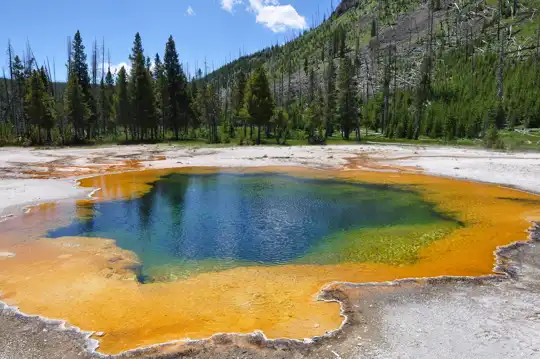
  • Grand Prismatic Spring — Riotous colors (from heat-loving microbes) in the largest hot spring in the U.S. Best appreciated from the overlook above the Midway Geyser Basin or the Fairy Falls trail — up close the steam obscures the colors, from above they explode.
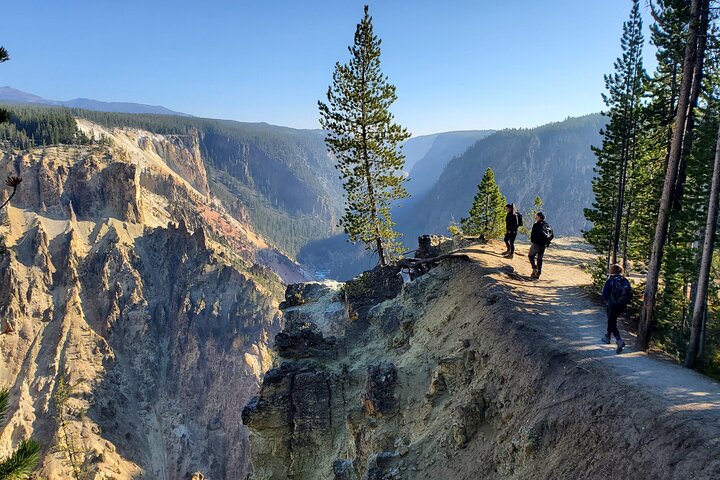
  • The Grand Canyon of the Yellowstone — Towering, painted canyon walls carved by the river and framed by the thunderous Lower Falls (about 308 feet). Artist Point and the various rim trails give dramatic, postcard-ready panoramas; great for afternoon
read more 👉
  • Old Faithful Geyser — The classic: erupts predictably (roughly every 90 minutes), shooting a huge, photogenic plume of water and steam. The Upper Geyser Basin around it has boardwalks and a concentration of other geysers, so you can nerd out on geothermal drama without wandering off-trail.
  • Grand Prismatic Spring — Riotous colors (from heat-loving microbes) in the largest hot spring in the U.S. Best appreciated from the overlook above the Midway Geyser Basin or the Fairy Falls trail — up close the steam obscures the colors, from above they explode.
  • The Grand Canyon of the Yellowstone — Towering, painted canyon walls carved by the river and framed by the thunderous Lower Falls (about 308 feet). Artist Point and the various rim trails give dramatic, postcard-ready panoramas; great for afternoon light and short hikes.
  • Lamar Valley — Wildlifing goldmine: wide, open valley where bison herds, elk, pronghorn and (if you’re lucky) wolves and bears show up at dawn and dusk. It’s like Yellowstone’s living room; you’ll want binoculars and patience. — Personal favorite.
  • Mammoth Hot Springs — Terraced travertine formations that look almost sculpted, with walkways weaving through steaming terraces. The historic Fort Yellowstone area nearby means you can combine geology with a bit of park history, and elk often loaf around town.
  • Mount Washburn — A popular, relatively short summit hike (roughly a 6-mile round trip on common routes) with sweeping views over the caldera and opportunities for wildflowers and pika sightings in summer. Great for sunrise or to scan for distant wildlife.
  • Norris Geyser Basin — One of the park’s hottest and most changeable thermal areas; prone to sudden new features. It’s home to Steamboat Geyser (the tallest active geyser on Earth) and a maze of trails that feel more raw and otherworldly than the busier spots.
Spotted a mistake or missing something? Contact us.

Things to do near Yellowstone National Park

Ratings based on Tripadvisor reviews. When you book through this link, you support our work at no extra cost to you.

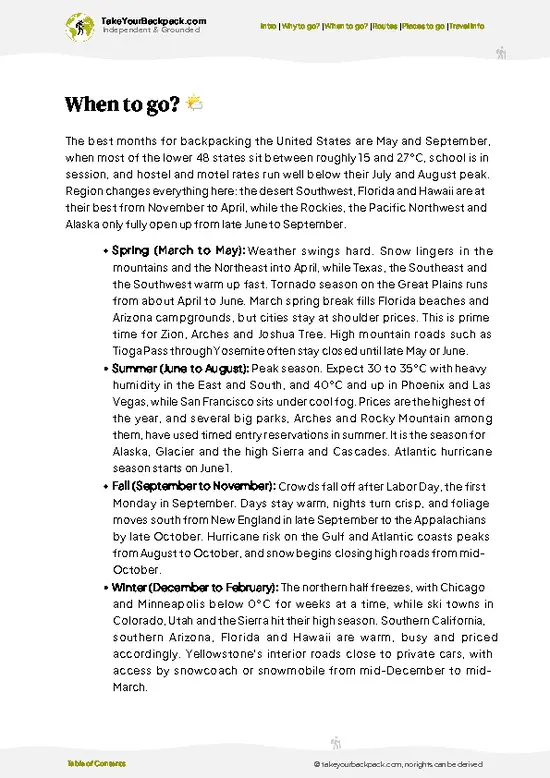
🌤️ When to go?Choosing the right time of year


  • Weather: Yellowstone’s weather is notoriously unpredictable. Late spring can still bring snow, while summer offers the most stable conditions. Early fall cools quickly, and winter is brutal, with heavy snow and limited access.

  • Temperature: Summer highs average 21-26°C (70-80°F), but nights can dip below freezing. Spring and fall see wider swings, often from -6°C (20°F) at night to 15°C (60°F) by day.

  • Daylight Hours: Peak summer days stretch to 15-16 hours, giving you plenty of time for long hikes. By late fall, daylight shrinks to around 9 hours, limiting your window for safe travel.

  • Crowds: July and August are packed, especially around popular spots. Early June and September offer thinner crowds but come with more variable weather.

  • Seasonal Activities: Summer is prime for hiking
read more 👉

  • Weather: Yellowstone’s weather is notoriously unpredictable. Late spring can still bring snow, while summer offers the most stable conditions. Early fall cools quickly, and winter is brutal, with heavy snow and limited access.

  • Temperature: Summer highs average 21-26°C (70-80°F), but nights can dip below freezing. Spring and fall see wider swings, often from -6°C (20°F) at night to 15°C (60°F) by day.

  • Daylight Hours: Peak summer days stretch to 15-16 hours, giving you plenty of time for long hikes. By late fall, daylight shrinks to around 9 hours, limiting your window for safe travel.

  • Crowds: July and August are packed, especially around popular spots. Early June and September offer thinner crowds but come with more variable weather.

  • Seasonal Activities: Summer is prime for hiking and wildlife viewing. Spring brings calving season but also muddy trails. Fall offers elk rut viewing but shorter days. Winter is mostly for snowshoeing and cross-country skiing.

  • Price Fluctuations: Accommodation and permit fees peak in summer. Booking early is essential. Shoulder seasons can save you money but expect fewer services.


Pro-tip: Aim for late June or early September to dodge crowds and balance weather reliability with longer daylight—your best bet for a smooth, rewarding backpacking trip in Yellowstone, USA.


source: climatestotravel.comJANJanuary: below average for travelingFEBFebruary: below average for travelingMARMarch: fair for travelingAPRApril: fair for travelingMAYMay: good for travelingJUNJune: highly recommended for travelingJULJuly: good for travelingAUGAugust: good for travelingSEPSeptember: highly recommended for travelingOCTOctober: fair for travelingNOVNovember: below average for travelingDECDecember: below average for traveling
United States - Yellowstone National Park

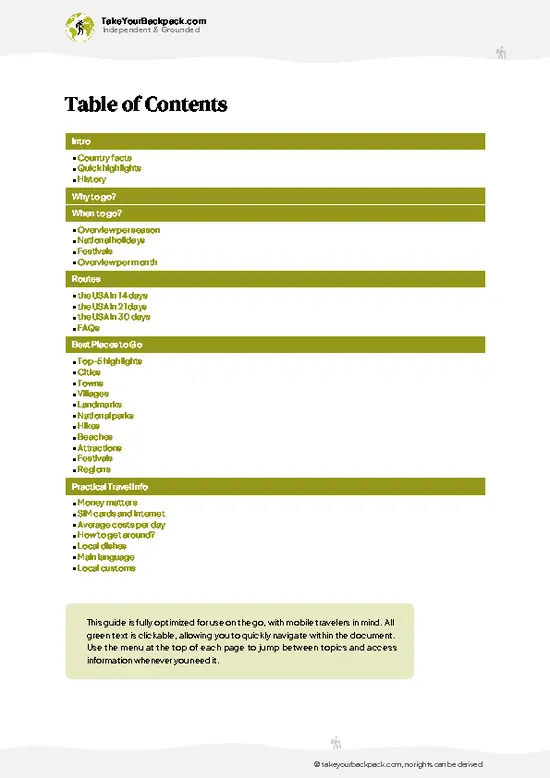
✈️ The backpacker research shortcutthe USA Travel Guide

An offline-friendly backpacking guide with optimized travel routes, ranked highlights, transport advice, and the best areas to stay.
example page 0 from our offline Travel Guide for United States
example page 1 from our offline Travel Guide for United States
example page 2 from our offline Travel Guide for United States
example page 3 from our offline Travel Guide for United States
example page 4 from our offline Travel Guide for United States
example page 5 from our offline Travel Guide for United States
example page 6 from our offline Travel Guide for United States
example page 7 from our offline Travel Guide for United States
The digital guide (586 pages) contains:
161 highlights, ranked by travel appeal
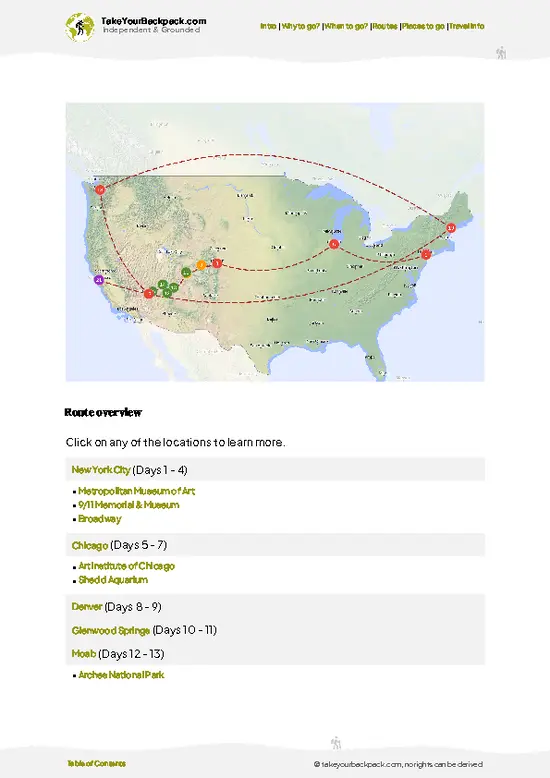
Optimized 14, 21 & 30-day travel routes
Cities, national parks, landmarks, beaches
How to get around
Offline-friendly for travel without Wi-Fi
👉 Click to see all 30+ guide features

📅 Plan smarter in minutes, not weeks
Month by month travel advice
Festivals & national holidays
Budget expectations

🗺️ Go to the right places, skip the overrated ones
Honest pros & cons of destinations
Top hikes, parks & viewpoints
Lesser-known places most travelers miss
Clear “worth it vs skip it” guidance

🛏️ Travel smoothly without rookie mistakes
Best areas to stay
Transport systems explained simply
Common scams & safety advice
SIM cards, money & practical tips

🌍 Understand the country, not just visit it
Culture & traditions
Local customs
Festivals worth planning around
Traveler-friendly historical context
Insights that make places more meaningful

📱 Built for real travel conditions
Fully downloadable PDF
Works completely offline
Optimized for phone use
Useful in remote areas & buses
Everything in one place
Save weeks of stressful planning
Get instant access to your full guide. 30‑day money-back guarantee.


By proceeding you agree to our terms.
Sent to your inbox immediately after payment • 100% Secure Checkout
Best Backpacking Travel Advisor 2025 tourism awardBest Backpacking
Travel Advisor
2025
What others say about Take Your Backpack Guides:
⭐⭐⭐⭐⭐
Fantastic, amazing amount of information!
⭐⭐⭐⭐⭐
My goodness this is amazing, it's what I've been looking for hats off too you!
⭐⭐⭐⭐⭐
I think this is absolutely BRILLIANT
⭐⭐⭐⭐
Very complete and informative. It's still missing places, but I gotta to commend you
⭐⭐⭐⭐⭐
This is truly amazing, thank you, can't wait to explore it with my kids!
⭐⭐⭐⭐⭐
Awesome resource, thank you!
⭐⭐⭐⭐⭐
This is amazing! Can't wait to explore the ones I haven't seen
⭐⭐⭐⭐
I love this! Well done, great idea.
⭐⭐⭐⭐⭐
Thanks for taking the time to make this gem!
⭐⭐⭐⭐⭐
This might be the best website I've ever seen.
⭐⭐⭐⭐⭐
Congratulations, and thank you so much for your work; it's incredibly valuable.
⭐⭐⭐⭐
In all seriousness I think you did a great job pointing out the important spots
⭐⭐⭐⭐⭐
10/10 very good
⭐⭐⭐⭐⭐
As someone who's only just starting to visit regularly this is awesome, thank you.
⭐⭐⭐⭐
Thank you very much! I'm going to visit my dad, it's going to be very useful!
⭐⭐⭐⭐⭐
This is really cool! We'll be travelling for the first time and this definitely come in handy.
⭐⭐⭐⭐⭐
You are now our minister of culture, congratulations 👨‍💼
⭐⭐⭐⭐⭐
Just wanted to tell you that this is a pearl! Going to follow your recommendations.
⭐⭐⭐⭐⭐
This is so cool. I'll definitely be using the resource for my travels soon.
⭐⭐⭐⭐⭐
This is very impressive! Good work.
⭐⭐⭐⭐⭐
This is an amazing and informative site. Very well done!

🛏️ Where to stay?Best areas and accommodation options

Yellowstone National Park offers a mix of options for backpackers, but you need to be strategic about where you stay to avoid unnecessary costs and energy drains.

Inside the park, there are campgrounds like Madison and Grant Village. These spots are budget-friendly and put you right in the heart of the action. Reservations are essential, especially in peak season. If you miss out, you might end up scrambling for a spot or paying inflated prices for last-minute accommodations.

For a bit more comfort, check out the park lodges, like Old Faithful Inn. They offer a unique experience but can be pricey. … read more 👉
Yellowstone National Park offers a mix of options for backpackers, but you need to be strategic about where you stay to avoid unnecessary costs and energy drains.

Inside the park, there are campgrounds like Madison and Grant Village. These spots are budget-friendly and put you right in the heart of the action. Reservations are essential, especially in peak season. If you miss out, you might end up scrambling for a spot or paying inflated prices for last-minute accommodations.

For a bit more comfort, check out the park lodges, like Old Faithful Inn. They offer a unique experience but can be pricey. Book well in advance to avoid sticker shock.

If you’re open to staying outside the park, towns like West Yellowstone and Gardiner are solid choices. West Yellowstone has a range of motels and hostels, perfect for backpackers. Gardiner offers a more laid-back vibe, with a few budget-friendly inns and easy access to the park’s north entrance.

Keep in mind that dining and supplies can be pricey inside the park. Stock up on food and gear in nearby towns before heading in. This way, you’ll save your budget for experiences that truly matter.

👛 Costs (as of 30 May 2026)Typical daily expenses

Visiting Yellowstone National Park in the USA comes with a few costs that can sneak up on you if you’re not prepared.

First, the entrance fee is straightforward. A single vehicle pass costs around $35 for a seven-day visit. If you’re traveling solo on foot or by bike, it’s about $20. Consider the annual pass if you plan multiple visits; it’s around $70.

Camping is another essential expense. Campground fees range from $15 to $30 per night, depending on the site. Some campgrounds are first-come, first-served, while others require reservations. Be ready for a potential booking fee if you go that route.

If you’re thinking about guided tours or activities, those can add up quickly. Expect to pay anywhere from $50 to $200 per person for ranger-led programs or wildlife tours.

Food costs vary … read more 👉
Visiting Yellowstone National Park in the USA comes with a few costs that can sneak up on you if you’re not prepared.

First, the entrance fee is straightforward. A single vehicle pass costs around $35 for a seven-day visit. If you’re traveling solo on foot or by bike, it’s about $20. Consider the annual pass if you plan multiple visits; it’s around $70.

Camping is another essential expense. Campground fees range from $15 to $30 per night, depending on the site. Some campgrounds are first-come, first-served, while others require reservations. Be ready for a potential booking fee if you go that route.

If you’re thinking about guided tours or activities, those can add up quickly. Expect to pay anywhere from $50 to $200 per person for ranger-led programs or wildlife tours.

Food costs vary widely. If you’re cooking, budget around $10 to $15 per day for groceries. Dining at park restaurants can push that to $20 to $40 per meal, depending on your choices.

Lastly, keep an eye on gas prices. Fueling up in or near the park can be pricier than in nearby towns.

Plan for these costs to keep your budget intact and your energy focused on enjoying the park’s natural wonders.


source: nps.gov
⚠️ Prices can change and everyone travels differently, so take this as a rough guide. Hope it helps you plan your adventure!

🥾 TrailsDiscover Yellowstone's top trails and natural wonders

Yellowstone National Park is a hiker’s dream, packed with stunning vistas, diverse wildlife, and all kinds of terrain to explore. You’ve got everything from lush forests to rugged mountains, plus geothermal features that’ll leave you scratching your head. Keep your eyes peeled for bison, elk, and maybe even a bear (from a safe distance, of course).

One of the standout trails is the Mount Washburn Trail. Here’s the lowdown:
  • Length: 6 miles round trip
  • Estimated Duration: 2-4 hours
  • Difficulty Level: Moderate
  • Key Features: Panoramic views, wildflowers, and a historic fire lookout
  • Terrain: Steep sections
read more 👉
Yellowstone National Park is a hiker’s dream, packed with stunning vistas, diverse wildlife, and all kinds of terrain to explore. You’ve got everything from lush forests to rugged mountains, plus geothermal features that’ll leave you scratching your head. Keep your eyes peeled for bison, elk, and maybe even a bear (from a safe distance, of course).

One of the standout trails is the Mount Washburn Trail. Here’s the lowdown:
  • Length: 6 miles round trip
  • Estimated Duration: 2-4 hours
  • Difficulty Level: Moderate
  • Key Features: Panoramic views, wildflowers, and a historic fire lookout
  • Terrain: Steep sections with rocky paths

Another great option is the Fairy Falls Trail:
  • Length: 5.4 miles round trip
  • Estimated Duration: 2-3 hours
  • Difficulty Level: Easy
  • Key Features: A stunning waterfall and views of the Grand Prismatic Spring
  • Terrain: Mostly flat with some dirt paths

Getting to Yellowstone can be a bit of a trek, especially if you’re relying on public transport. The nearest major airports are in Jackson, Wyoming, and Bozeman, Montana, but you’ll need a rental car or shuttle service to get into the park itself. As for crowds, it can get pretty busy in the summer, so starting your hikes early is a solid strategy. Entrance fees are around $35 per vehicle for a week, which isn’t too shabby considering the views you’re about to soak in.
⚠️ Hiking info can sometimes be outdated or inaccurate. Before you hit the trail, check the latest conditions with locals. If you do spot anything that's off, I'd love to hear from you, so I can update it for fellow travelers.

🛡️ SafetyTraveler Safety Guide

Yellowstone National Park offers a wealth of beauty, but it’s essential to approach it with a grounded mindset. Weather can shift rapidly, especially at higher elevations. Be prepared for sudden rain or temperature drops, even in summer. Layering your clothing is key; it helps you adapt to changing conditions without weighing you down.

The terrain varies significantly. Some trails are steep and rocky, demanding good footwear and steady footing. Navigation can be tricky in less-trafficked areas, so a reliable map or GPS is invaluable. River crossings may be necessary, and they can be swift after snowmelt—always assess the flow before attempting.

Wildlife encounters are part of the experience, but keep your distance. Bears and bison roam freely; maintain at least 100 yards from bears and 25 … read more 👉
Yellowstone National Park offers a wealth of beauty, but it’s essential to approach it with a grounded mindset. Weather can shift rapidly, especially at higher elevations. Be prepared for sudden rain or temperature drops, even in summer. Layering your clothing is key; it helps you adapt to changing conditions without weighing you down.

The terrain varies significantly. Some trails are steep and rocky, demanding good footwear and steady footing. Navigation can be tricky in less-trafficked areas, so a reliable map or GPS is invaluable. River crossings may be necessary, and they can be swift after snowmelt—always assess the flow before attempting.

Wildlife encounters are part of the experience, but keep your distance. Bears and bison roam freely; maintain at least 100 yards from bears and 25 yards from bison. Carry bear spray and know how to use it.

Finally, many first-timers underestimate the park’s vastness. Plan your hikes with ample time for breaks and exploration. Respect trail etiquette, and you’ll preserve your energy for the moments that truly matter.

Other American national parks near Yellowstone

Explore more nearby:


💡 Not sure where to go next?
Create a personalized itinerary for the USA including Yellowstone and the places that fit your trip.

Generate my itinerary

👉 Discover all national parks

Or checkout all the USA has to offer (think cities, towns, villages, national parks, hikes, beaches, festivals)
Country photo of the USA

We 💚 feedbackParting advice and final tips

Yellowstone is a must-visit for its raw, untamed beauty—think bubbling geysers and roaming bison. It’s a place that reminds you how small you are in the grand scheme of nature. But be ready for crowds, especially in summer. Those popular spots can feel like a theme park. Plan your visits for early mornings or late afternoons to snag some solitude. It’s all about timing—maximize your experience while minimizing the chaos.

✈️ When did I visit the USA?
In January 2023 I visited New York. Many years before, before digital cameras existed, I discovered most of the national parks in the West.

✍️ Help improve this page!
The information on this page is based on my own backpacking experience in the USA, supplemented with up-to-date research and feedback from other travelers. Travel details can change, so if you notice anything outdated or incomplete, feel free to let me know.


🙋‍♂️ Give feedback

👋 Meet the founderWho’s Behind Take Your Backpack?

Johan, backpacker and founder of TakeYourBackpackHi, I’m Johan (Netherlands 🇳🇱), the creator of TakeYourBackpack. Over the past decade, I’ve backpacked through 80+ countries across six continents, gaining extensive experience with independent travel, long-term trips, and overland routes.

This site is built on a combination of firsthand travel experience and carefully curated insights from other backpackers. Many guides are based on places I’ve personally visited, while others bring together tips, observations, and practical advice shared by trusted travelers I’ve met along the way.

The goal is to provide realistic, experience-driven guidance — not generic itineraries — so you can explore destinations with better context, clearer expectations, and more confidence.

Get full USA guide •
Instant download • 161 highlights • Full Offline guide